- Category
- Latest news
Baltic States Create Unified Military Mobility Zone to Speed Up NATO Troop Movements
 Prefer U24 Media on Google
- Authors


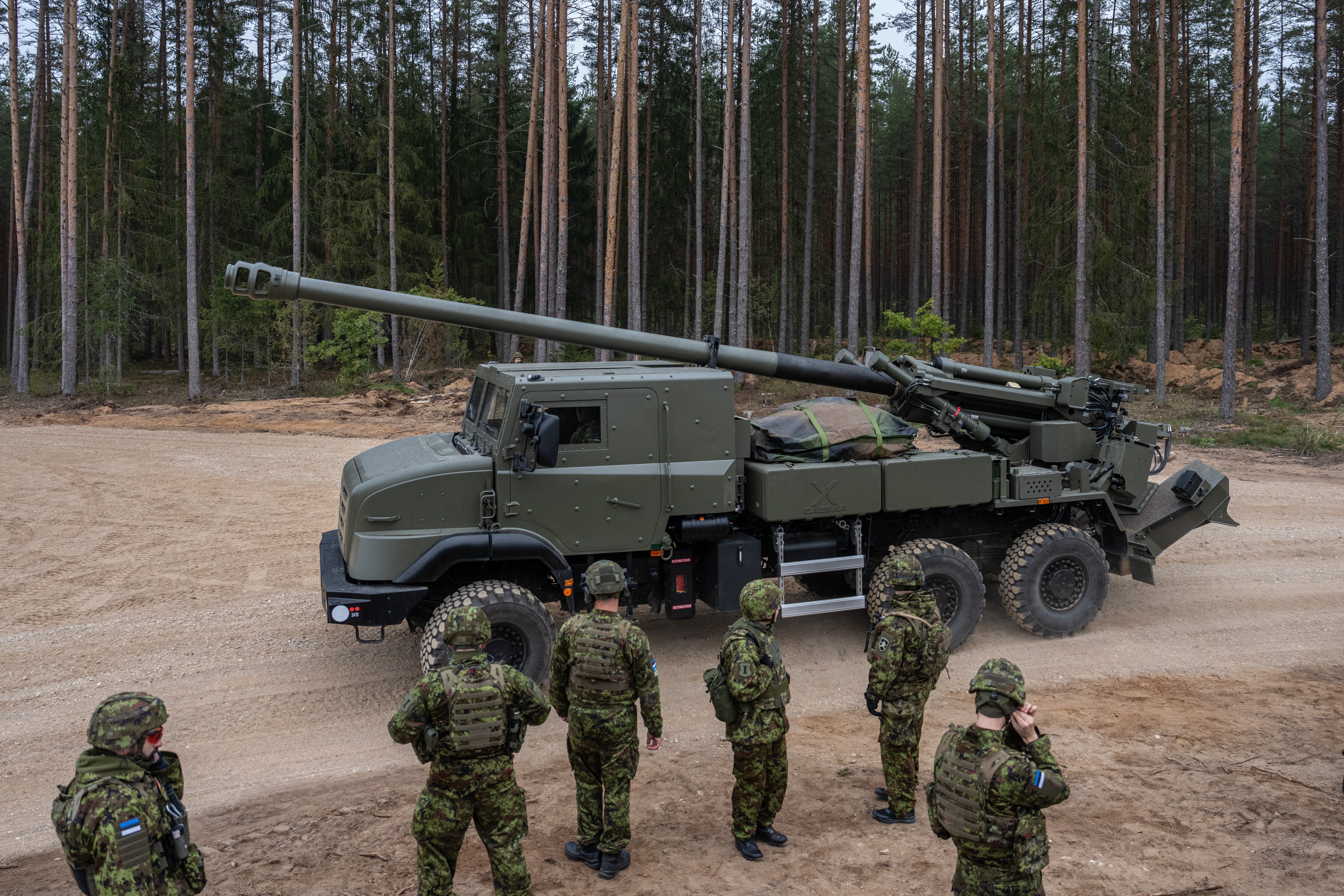
The defense ministers of Lithuania, Latvia, and Estonia have agreed to create a unified military mobility space aimed at simplifying troop movements and strengthening NATO’s eastern flank.
The agreement was signed on January 30 in Tallinn during a meeting of the three Baltic states’ defense ministries, Estonia’s Ministry of Defense said.
We bring you stories from the ground. Your support keeps our team in the field.
The deal is intended to reduce bureaucratic procedures related to joint procurement, the transfer of weapons, and the movement of military units across the Baltic region.
Estonian Defense Minister Hanno Pevkur noted that even participation in military exercises currently requires extensive paperwork. According to him, the new mechanism is designed to minimize—or, when necessary, completely eliminate—such administrative barriers.
“In order to deepen that cooperation, my fellow defenіe ministers and I have decided to establish a Baltic Military Mobility Area, which will allow our defenіe forces to move military equipment on a common, standardised basis,” he explained. “This is important in strengthening our defenіe posture, with the ultimate goal being to create a ‘military Schengen zone’ across Europe.”
The military mobility project was launched in 2023 under NATO coordination and aims to ensure the unhindered movement of armed forces among Alliance members and a rapid response to threats. In the longer term, the initiative is expected to expand across Europe.
Lithuanian Defense Minister Robertas Kaukas stressed that in a crisis, every hour is decisive.
“It means that, when necessary, Lithuanian military equipment can move freely to defend Riga, Estonian artillery can support Vilnius, Latvian forces can lend their strength to Tallinn and vice versa, with each nation’s capabilities seamlessly supporting the others,” he said.
Alongside the Baltic states’ push to streamline military mobility, Sweden has warned of potential escalation scenarios in the region. Sweden’s top military commander has outlined a hypothetical situation in which Russia could temporarily seize an island in the northern Baltic Sea as a way to raise tensions and test regional security.
Speaking at the Swedish Security Conference in Sälen, Commander of the Swedish Armed Forces Michael Claesson described a scenario in which Russian forces might briefly occupy an island in the Northern Archipelago. He suggested such an action could be framed by Moscow as a political or security measure, for example under the pretext of protecting maritime traffic or ensuring “freedom of navigation” in the Baltic Sea.

Claesson stressed that the scenario was speculative and not an indication of an imminent threat. He noted that the purpose of such a move would likely be less about holding territory and more about probing NATO’s ability to respond quickly and collectively under Article 5, the alliance’s mutual defense clause.
Earlier, Russia redeployed its small missile ship Amur, a Project 22800 Karakurt-class corvette, from the Caspian Sea to the Baltic.
The vessel was transferred through Russia’s inland waterways to Kronstadt near St. Petersburg, where it is expected to be incorporated into the Baltic Fleet.
Discuss this article:
-4a56a6b482ec132402c16ef6fcabf9a2.png)





-c439b7bd9030ecf9d5a4287dc361ba31.jpg "Photo of Katherina Popilnichenko")