- Category
- Latest news
Skyshield Needs Just 120 Warplanes to Stop Putin’s Drones Over Ukraine Before They Reach NATO
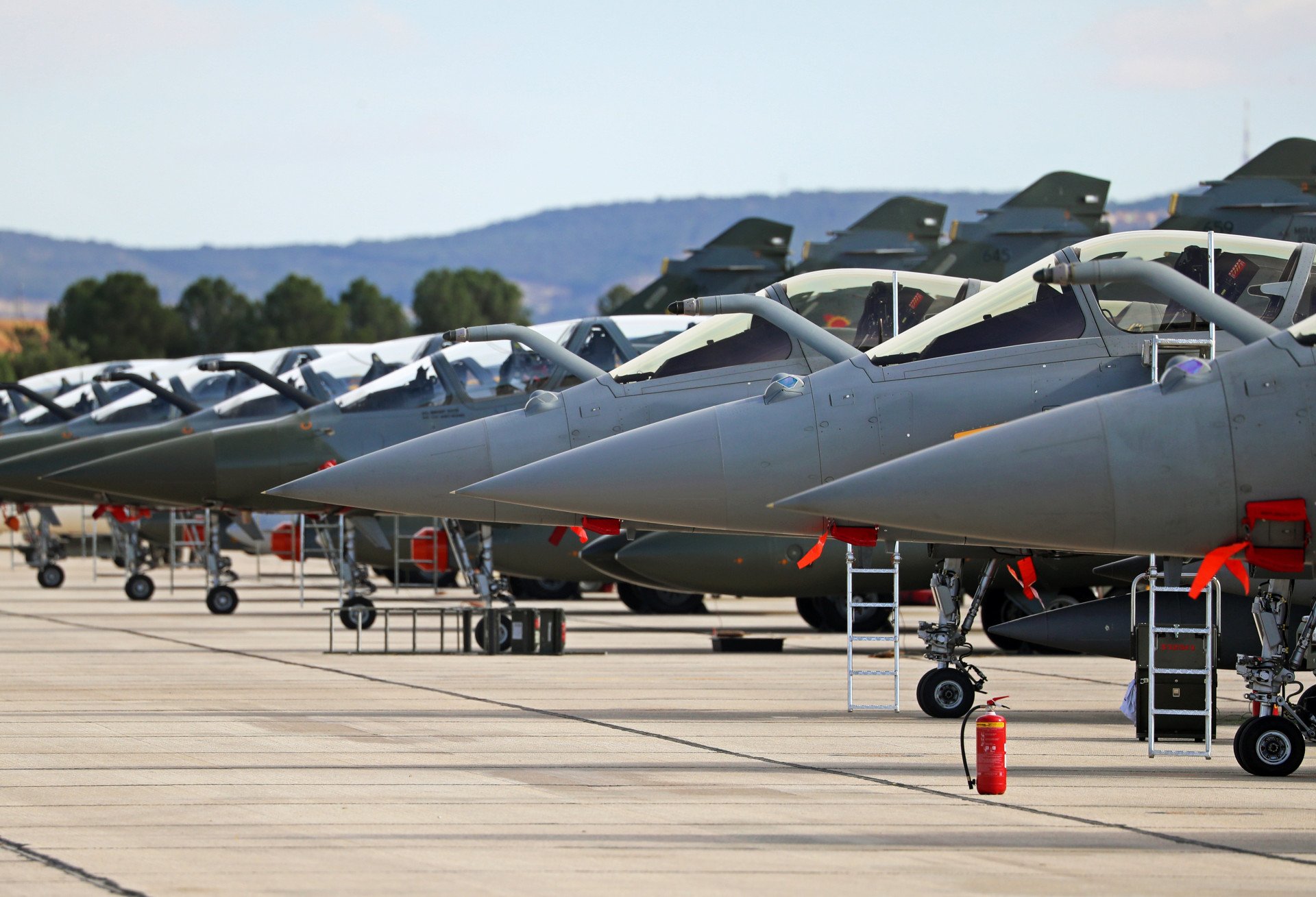
European military experts are warning that Moscow’s latest drone and missile incursions into NATO skies are no accident—they’re a test of Europe’s defenses. In response, a coalition of analysts and civic leaders is calling for the creation of Skyshield, a joint European air-defense zone that would intercept Russian threats over Ukraine before they reach EU borders.
 Prefer U24 Media on Google
- Authors


A coalition of military analysts and civil-society figures urged European governments to adopt a new air-defense posture they call Skyshield—an integrated, multinational air-protection zone that would use allied combat aircraft and sensors to intercept Russian missiles and drones over western Ukraine before they ever reach EU airspace.
The proposal appears in an opinion piece published in the French outlet Le Monde and has been promoted by the NGO Price of Freedom and a network of US and European officials and policymakers on September 15.
French air force Rafale jet fighters conducting a combat air patrol over Poland, following incursion by Russian drones. via @EtatMajorFR#France #Poland #NATO #EASTERNSENTRY pic.twitter.com/BZbw9Ouodz
— Tom Antonov (@Tom_Antonov) September 14, 2025
“Europe cannot rely on a defense strategy that waits to shoot down drones over its own territory,” the authors write.
“Waiting until Russian missiles cross our borders hands the initiative to the adversary. It is essential to protect Ukraine and its civilians by intercepting threats in Ukrainian airspace before they reach European frontiers.”
Below is a reworked, reader-friendly account of the Skyshield proposal and the case its backers lay out for urgent European action.
What Skyshield would do
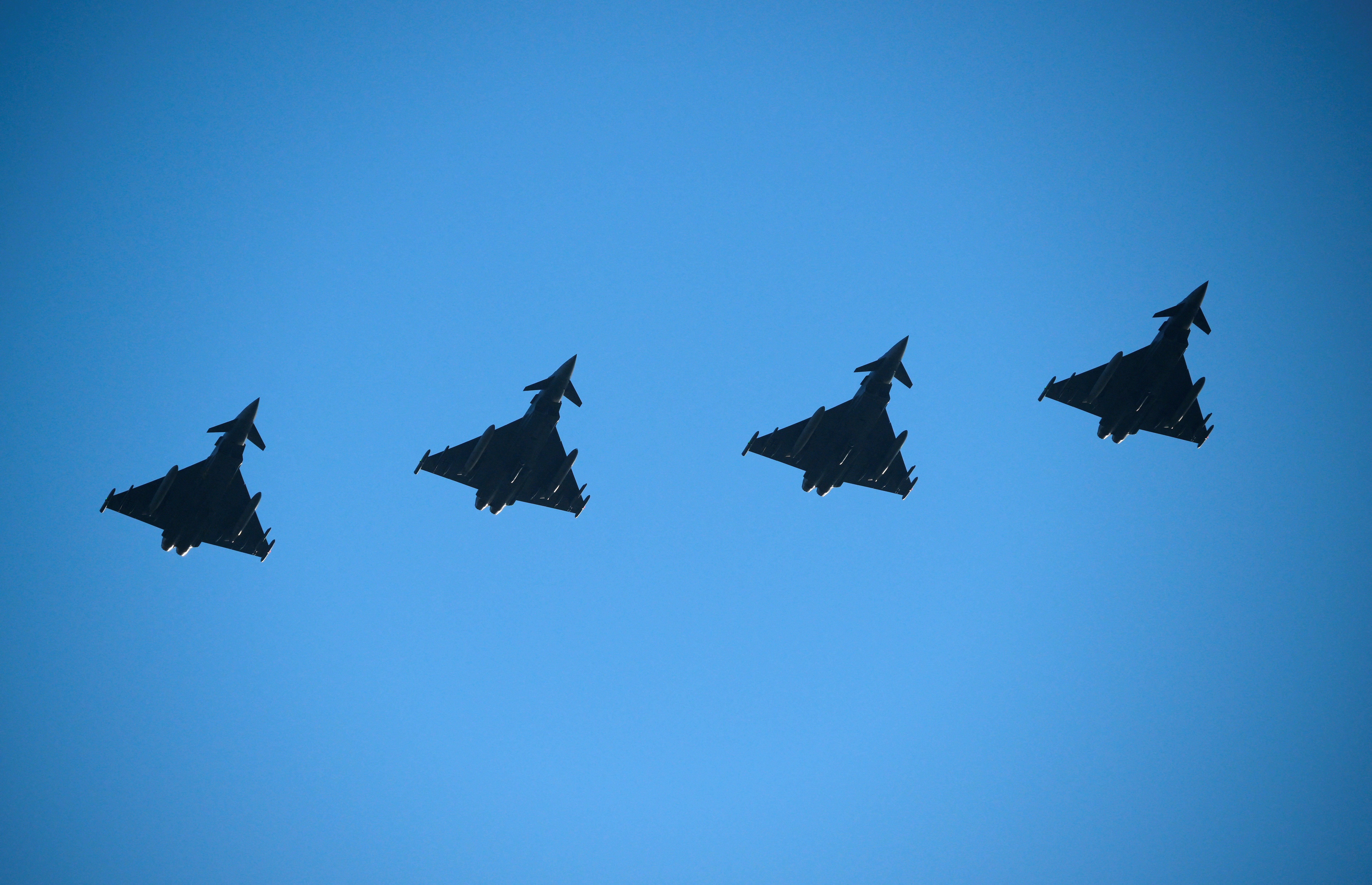
Skyshield would create a coordinated, European-led air-protection corridor over western Ukraine, pairing allied fighter jets, airborne early-warning platforms, and integrated command-and-control to detect and neutralize cruise missiles and loitering munitions before they threaten NATO territory or critical infrastructure in Ukraine.
The authors estimate the mission could be carried out with roughly 120 allied combat aircraft operating in rotation.
-1d9fa7480e5881fc68e774e53f4fa441.jpg)
Why advocates say Skyshield is needed
The article’s signatories argue that recent events exposed a strategic gap: Russia’s drone and missile campaign increasingly projects risk well beyond Ukrainian borders and is being used not only to strike targets but also to probe European air-defenses.
They point to patterns—such as recovered SIM cards from drones that tied some vehicles to Polish and Lithuanian networks—as evidence that Moscow is methodically mapping vulnerabilities and communications patterns in Western airspace.
“Totalitarian systems interpret restraint as weakness,” Le Monde warns. “By testing our defenses, Putin is measuring our resolve before potential strikes on the Baltics or Moldova. Every European hesitation reinforces his belief in impunity.”
-a20b25b952536203e9d883fe9434fa95.png)
What Skyshield would achieve
Supporters argue the practical benefits would be wide-ranging:
military: Intercepting threats over Ukraine would free Ukrainian air defenses to concentrate on the eastern front;
civil protection: It would better safeguard critical infrastructure, nuclear sites and civilians across Ukraine and neighboring EU states;
political: A visible, multinational defense posture could raise diplomatic pressure on Moscow and strengthen incentives for negotiation;
economic & industrial: protecting Ukraine’s industrial base would help maintain its ability to produce defense materiel.
“Defending western Ukraine will let the Ukrainian military focus on the east, preserve the country’s economy and nuclear safety, lift morale, and help grow local defense production. Russia will be more likely to come to the table,” Le Monde stated.

What would Skyshield require?
The authors point to the coordinated Dutch F-35, Polish F-16, and Italian AWACS response during the drone incursions of Sept. 9–10 as proof that European air forces can operate together effectively.
What’s missing, they say, is sustained political will and a formal, mission-level commitment to protect Ukrainian airspace on a continual basis.
Le Monde lays out modest forces and capabilities—the cited 120 aircraft would operate as a coalition task force over uncontested Ukrainian territory—but also stresses the need for multi-layered defenses that combine kinetic interceptors with electronic warfare and sensors. The authors call for fast political decisions to put the structure in place and for investment in lower-cost, scalable counters to swarms and loitering munitions.
New onboard footage of French Air Force Rafale fighters deployed to eastern Poland as part of NATO’s operation EASTERN SENTRY.
— OSINTtechnical (@Osinttechnical) September 15, 2025
The fighters conducted their first armed deterrence patrol over Polish airspace yesterday: pic.twitter.com/CKAZ1RwP1m
The political argument
Beyond force posture, Skyshield advocates framing the plan as a deterrent signal: restraint or fragmented responses only encourage escalation.
“Every European wavering reinforces his belief in impunity,” Le Monde notes. It urges EU capitals to stop treating the issue as a bilateral Ukrainian problem and to accept shared responsibility for pre-empting cross-border threats.
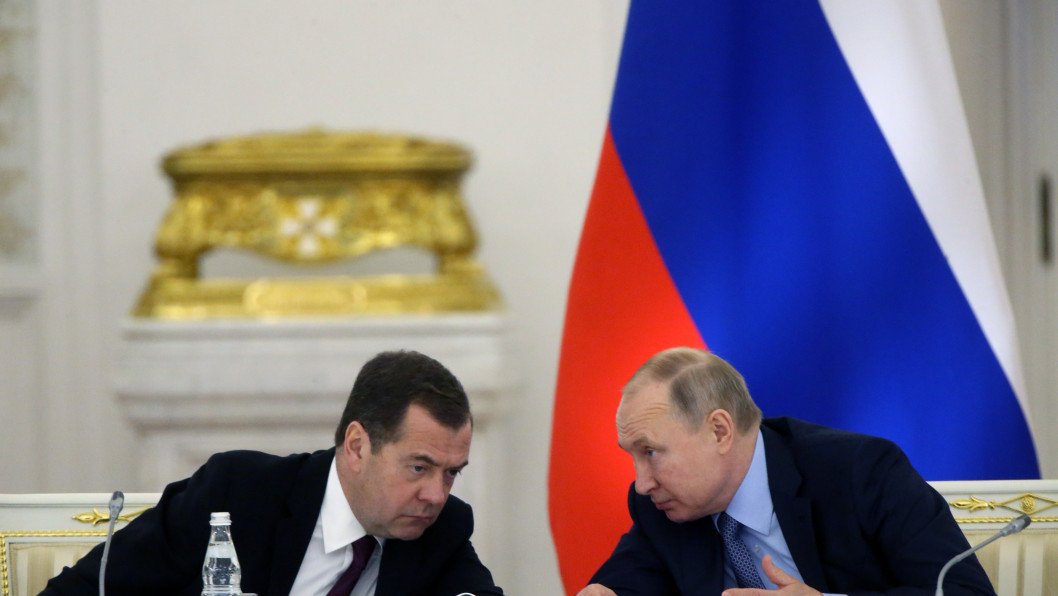
A public petition supporting Skyshield—organized by the Skyshield collective and circulated in France and beyond—had gathered more than 47,000 signatures at the time of reporting.
Earlier, Polish Foreign Minister Radosław Sikorski called on NATO and the European Union to consider intercepting Russian drones and missiles over Ukraine, following recent violations of Poland’s airspace.
Discuss this article:

-c439b7bd9030ecf9d5a4287dc361ba31.jpg "Photo of Katherina Popilnichenko")