- Category
- Latest news
German Bases Targeted: Investigation Links Russia’s Shadow Fleet to Covert Drone Operations
 Prefer U24 Media on Google
- Authors



A Russian-crewed cargo vessel has come under investigation after its movements coincided with drone incursions over German military installations, according to UK Defense Journal, citing a cross-border probe by Follow the Money, Süddeutsche Zeitung, NDR, VRT, De Tijd, and Pointer.
The investigation found that the ship, HAV DOLPHIN, spent nearly a month in Kaliningrad from 10 April 2025, officially for maintenance. Kaliningrad is a hub for Russian naval and intelligence activity and hosts spy ships linked to Moscow’s so-called "shadow fleet" of covert maritime operations. After leaving for the Latvian port of Liepāja, the vessel’s AIS tracking signal disappeared, only to reappear 26 nautical miles away from its last position. Maritime analysts flagged the gap as suspicious, particularly as GPS disruptions were recorded in the area that same day—an occurrence often tied to Russian jamming operations.
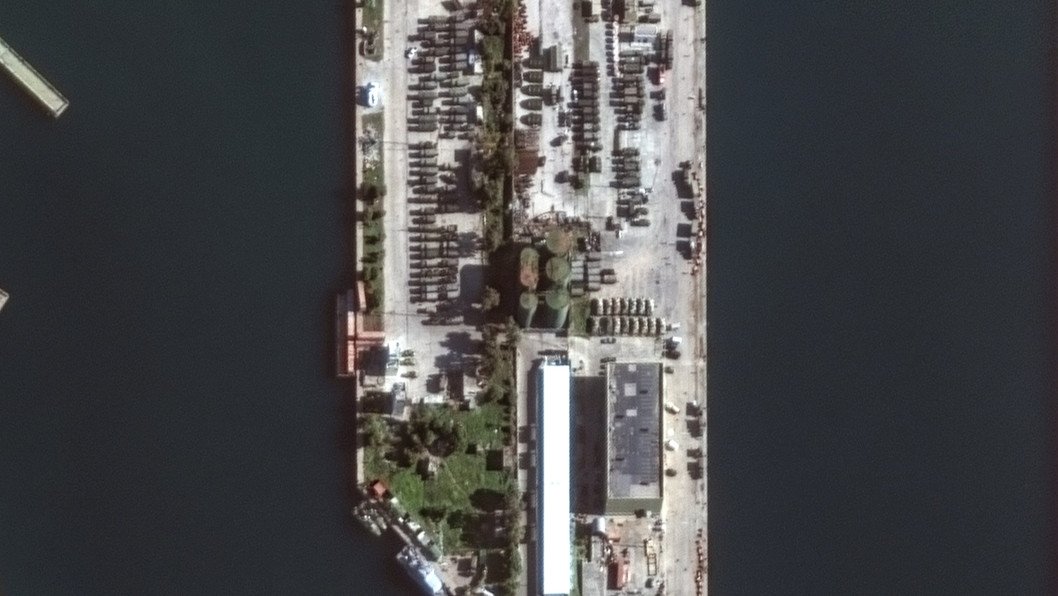
Five days later, the HAV DOLPHIN lingered unusually long in the Kiel Bight. Analysts note that unexplained loitering is a hallmark of Russian-crewed ships suspected of intelligence activity.
In May, Dutch, German, and Belgian authorities boarded the HAV DOLPHIN and another vessel, LAUGA, searching for drones. While no evidence was uncovered, European officials told Follow the Money that both ships remain under surveillance amid concerns about Russia’s hybrid warfare strategy.
While investigators stress that no drones have been directly tied to the ships, the overlap in timing and location raises alarm. As Follow the Money reported: “European authorities suspect Russia of using drones to spy on and intimidate, but catching them in the act proves difficult. Suspicious ship behaviour can also have other causes, making definitive proof hard to establish.”
The concern is that vessels like HAV DOLPHIN operate in a grey zone—legally commercial, but potentially conducting intelligence or sabotage missions, UK Defense Journal reported.
Earlier this year, UK Defense Journal joined NATO’s Operation Baltic Sentry aboard the Swedish Navy ship Carlskrona. Officers described the mission as a constant process of filtering traffic: “We are constantly scanning for deviations. If something looks out of place, we investigate and report it if necessary.”
Commodore Arjen Warnaar, Commander of NATO’s Standing Naval Group 1, acknowledged the ambiguity: “All the ships that have been involved and have been dragging their anchors for miles and miles around the Baltic started from a Russian port or were going to a Russian port. Now that seems strange, but if you ask me who done it, I don’t know. I can tell you that, because I’m not sure.”
For NATO, the answer has been to maintain visibility. Warnaar compared it to policing: “What usually happens? The number of break-ins reduces. That’s more or less what we’re doing, too. If anything happens, we react. And what we hope for is that that will reduce the number of incidents.”
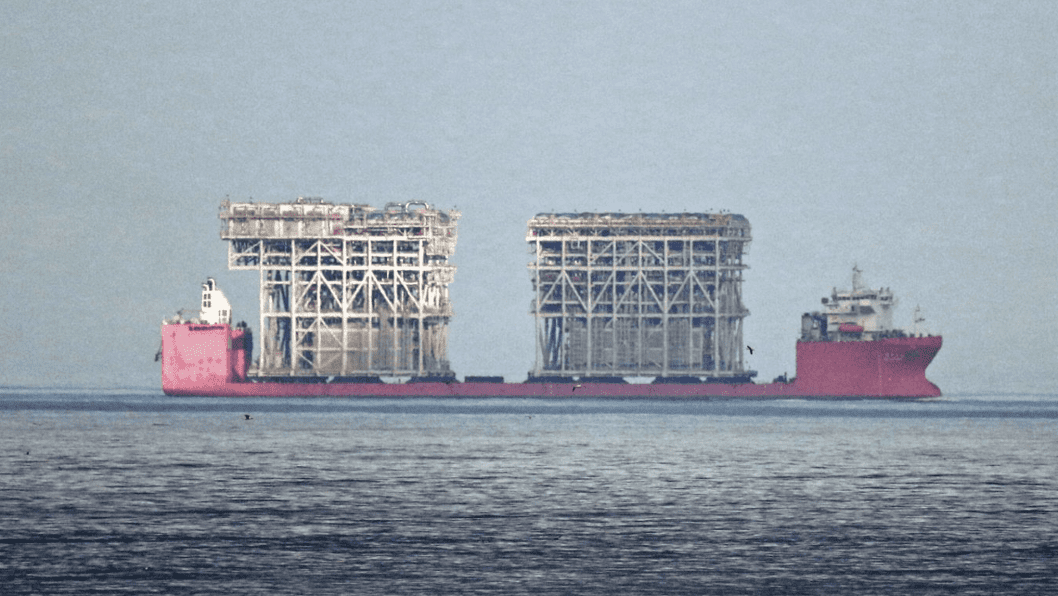
With Sweden and Finland now in NATO, surveillance in the Baltic has expanded across surface, subsurface, air, cyber, and space domains. Warnaar confirmed that unmanned systems are already in use: “What I can tell you is that they’re already using unmanned systems today.”
According to the UK Defense Journal, the HAV DOLPHIN case underscores the difficulty of proving intent at sea. Loitering, AIS manipulation, and extended port calls in Kaliningrad are circumstantial but, taken together, amount to a growing dossier that European security services say they cannot ignore.
Earlier, the Russian cargo ship Ursa Major sank in international waters on December 23 after an explosion in its engine room.
The incident took place between Águilas, Spain (Murcia), and Oran, Algeria. Fourteen crew members were rescued and taken to the port of Cartagena, while two remained missing.
Discuss this article:



-c439b7bd9030ecf9d5a4287dc361ba31.jpg "Photo of Katherina Popilnichenko")