- Category
- Latest news
How Russia Launches Its Deadliest Drones—And Where They’re Hiding
 Prefer U24 Media on Google
- Authors


Russia continues to launch Iranian-designed Shahed drones against Ukraine from multiple locations across its territory, relying on a growing network of purpose-built and repurposed facilities.
According to OSINT analyst Dnipro Osint ⟨Harbuz⟩, as of July 28, there are three primary drone launching areas on Russian soil, along with an additional location in occupied Crimea.
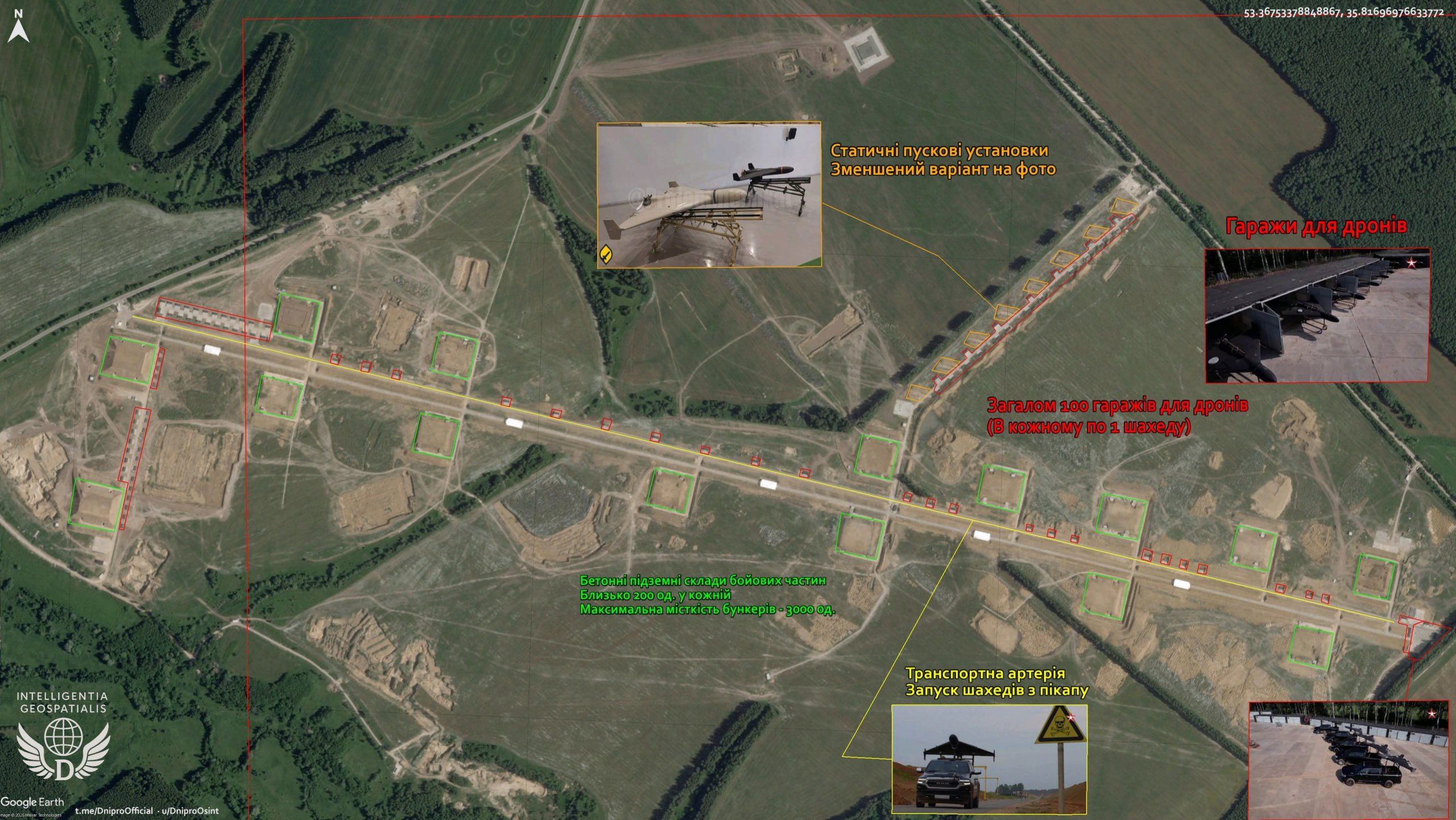
The main hub is located in the village of Tsymbulove in Russia’s Oryol region, approximately 175 kilometers from the Ukrainian border. Often referred to as the “Alabuga droneport,” this site is reportedly the largest and most active in Russia’s drone network.
The facility includes eight stationary launchers and a 2.8-kilometer stretch of road used for mobile vehicle-based launches. Based on satellite and open-source imagery, analysts estimate that up to 14 drones can be launched simultaneously, with more than 100 launched in a single operation.
The site hosts 15 underground bunkers, one of which was previously struck using three SS missiles, reportedly destroying over 200 drone warheads. The total storage capacity may exceed 3,000 warheads.
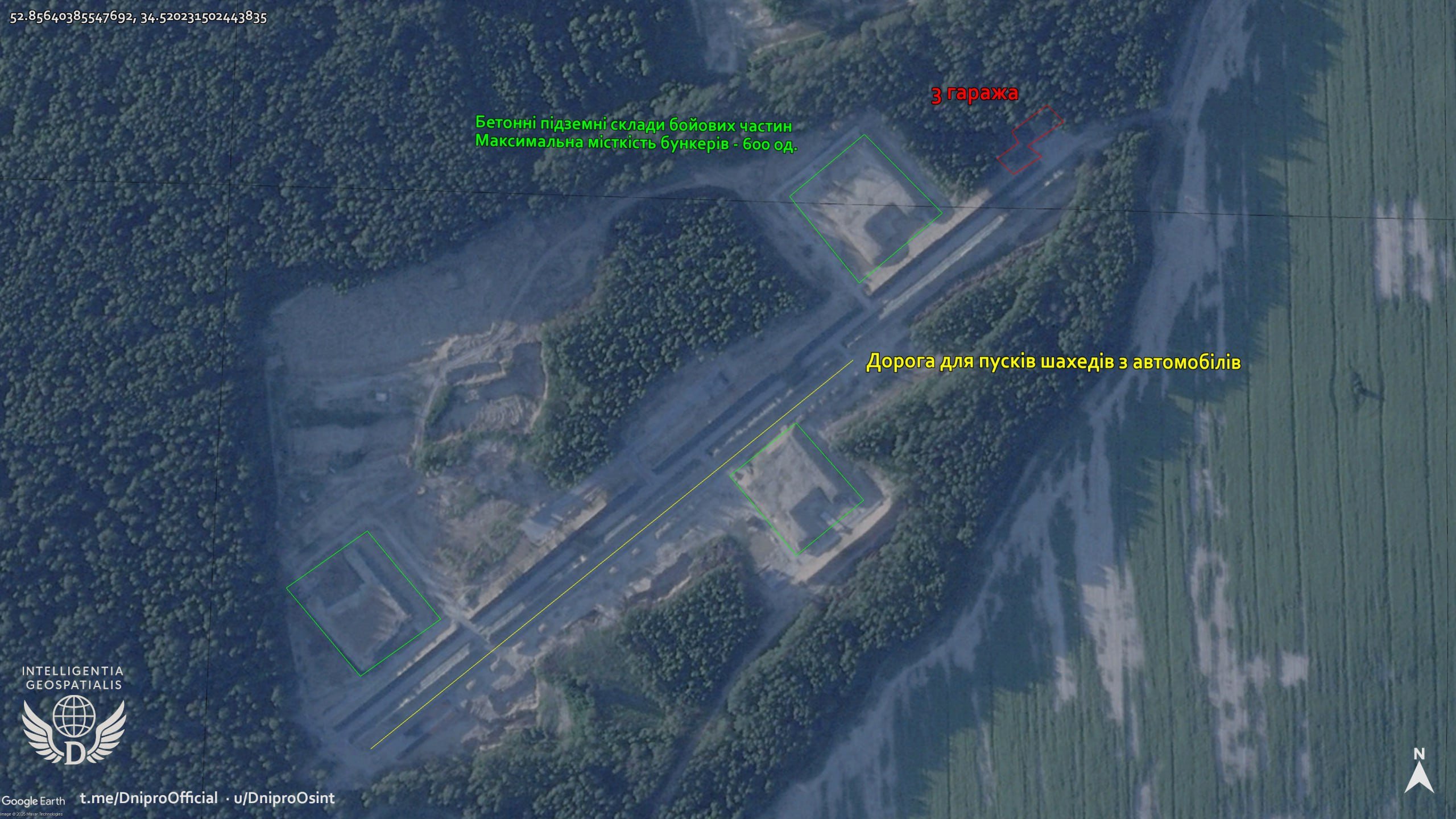
Another launch site is located in the village of Navlya in Russia’s Bryansk region, approximately 70 kilometers from the border. This facility is smaller but follows a similar design. It reportedly contains three bunkers capable of storing over 600 drone warheads and three garages.
Unlike the Oryol site, Navlya does not feature stationary launchers—drones are launched exclusively from vehicles, limiting its simultaneous launch capacity to only a few drones at a time. The site may be subject to future expansion.
The third location is Primorsko-Akhtarsk Airbase in Russia’s Krasnodar Krai, situated roughly 230 kilometers from the front lines. In addition to existing airfield infrastructure, three small sections have been built specifically for Shahed drone operations.
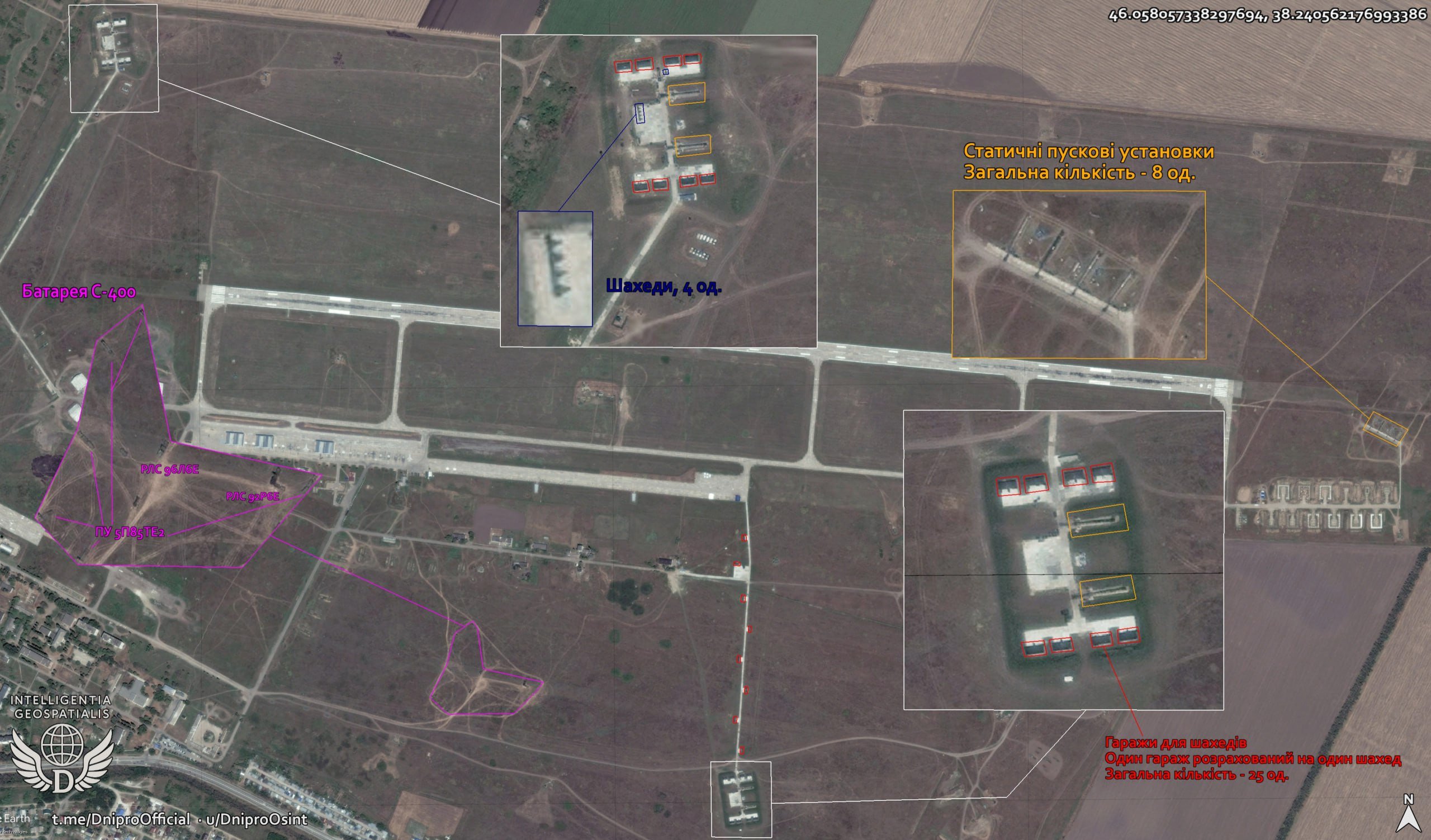
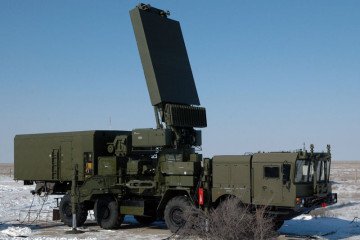
The base includes eight fixed launchers and supports mobile launches from aircraft runways. Up to 10 drones can be launched simultaneously, with approximately 25 deployed per wave. The facility is protected by an S-400 air defense battery consisting of six launch units and two radar systems.
In addition to these sites, analysts believe drones may also be launched from occupied Crimea and potentially from eastern Russia, though precise locations remain unconfirmed.
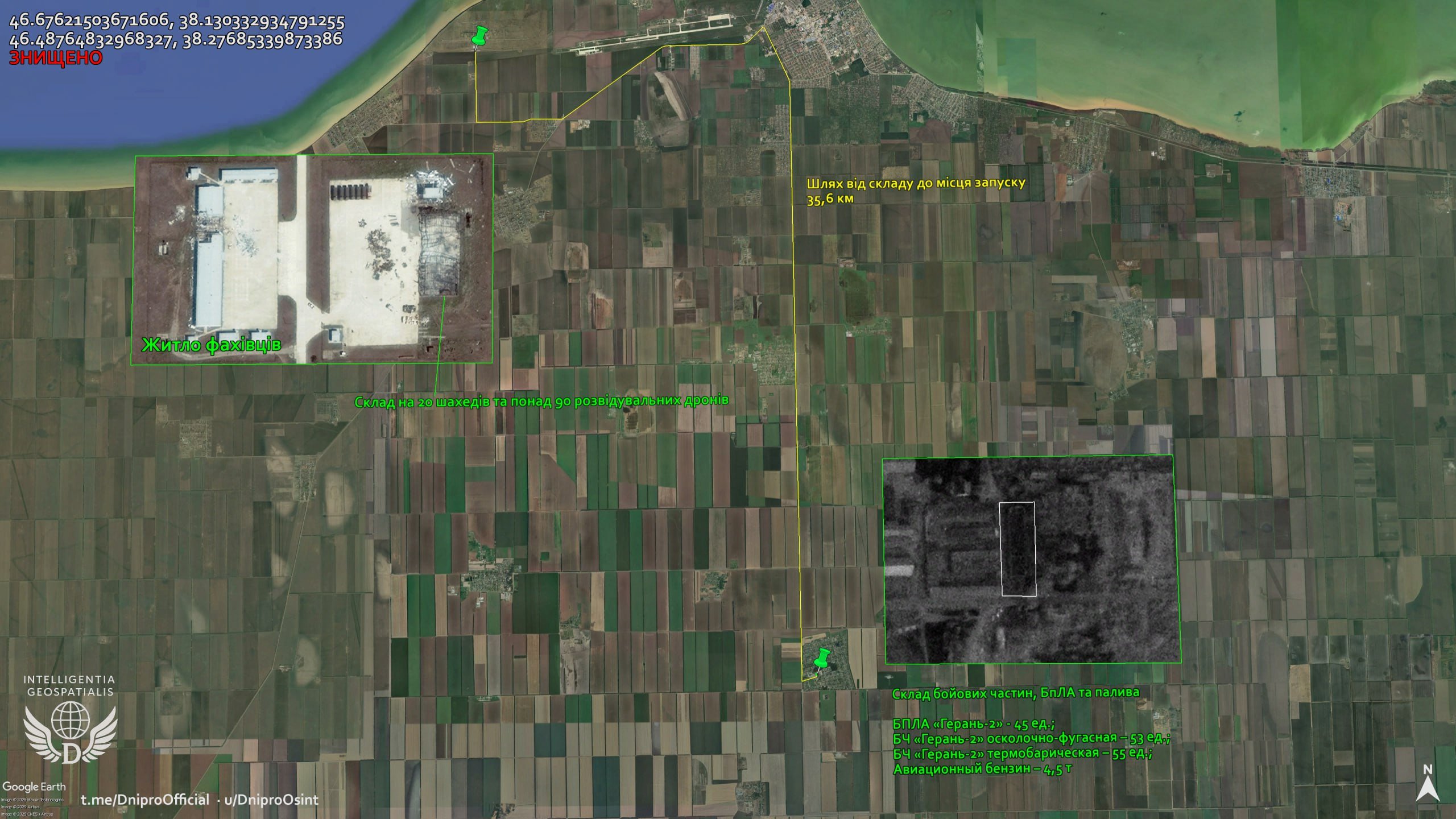
A notable precedent for disrupting drone operations occurred at Yeysk, in the 726th Air Defense Training Center. The facility included a small residential structure housing personnel and a nearby tented warehouse containing around 20 Shaheds and more than 90 reconnaissance drones.
A strike using two Neptune missiles reportedly destroyed the warehouse and adjacent buildings, resulting in one fatality and nine injuries. Supplies for the site were sourced from a depot in Oktyabrsky, 35 kilometers away, which was also destroyed by Neptune missiles. Following the attack, drone launches from Yeysk ceased.
According to Dnipro Osint, disabling the central hub in Oryol would require dozens of Storm Shadow missiles and drones to target both storage and launch infrastructure. If timed correctly, such an operation could delay or prevent multiple drone attacks. However, current limitations in missile availability make large-scale strikes unfeasible.
Earlier, on July 20, Russian state media released footage from a drone production plant in Yelabuga, Tatarstan, which it claims is the world’s largest Shahed drone factory. According to OSINT reports, the facility—part of the Alabuga Special Economic Zone—produces “Geran-2” drones (Russian-designated Shahed-136) on dozens of assembly lines.
The broadcast revealed not only the scale of production but also the use of teenage students from Alabuga Polytechnic College, reportedly working under strict contracts and surveillance.
Discuss this article: