- Category
- Latest news
Inside the Largest Ukraine-Russia POW Swap Since World War II, WSJ Reports
 Prefer U24 Media on Google
- Authors


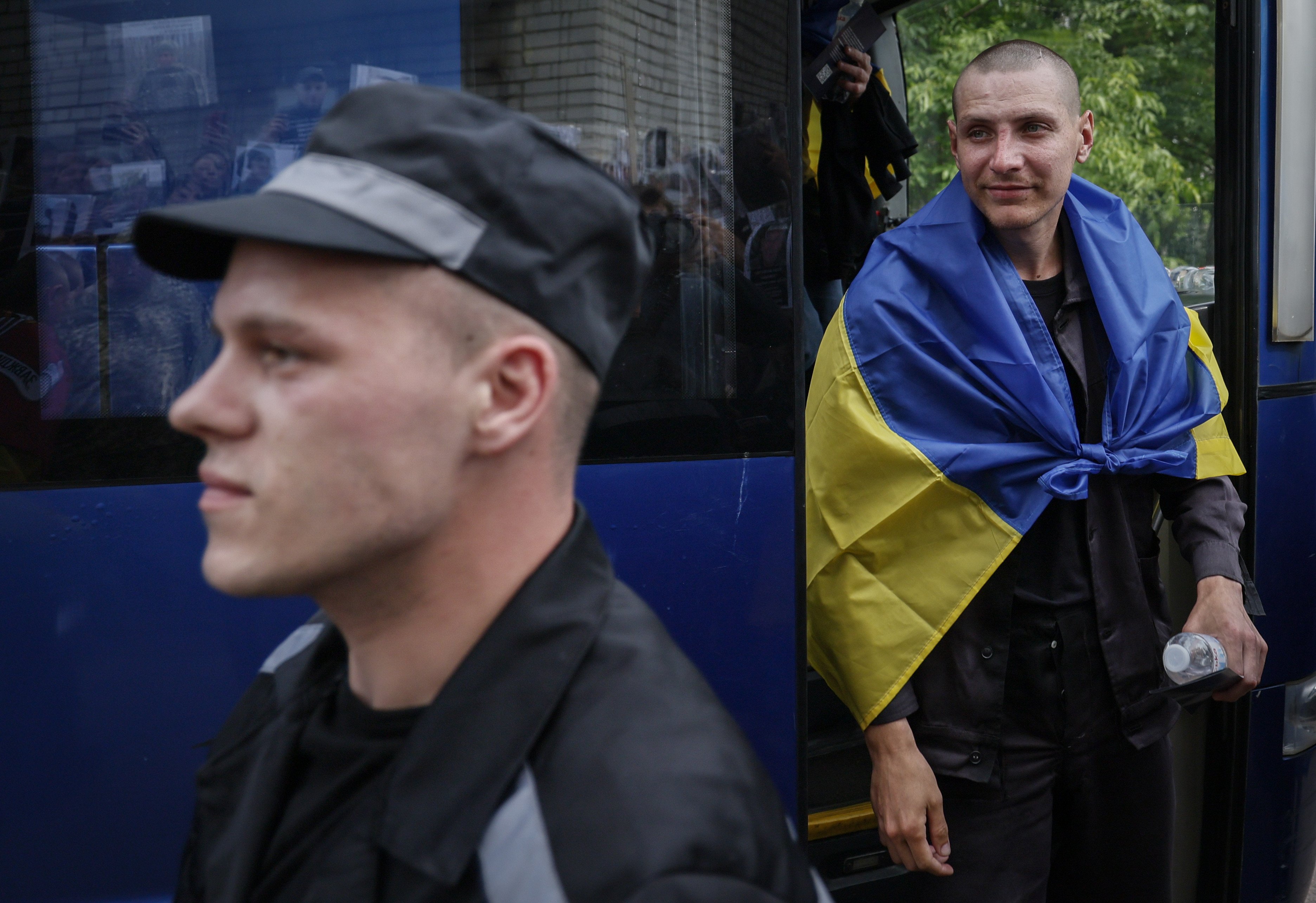
Since the start of the full-scale invasion, Ukraine and Russia have exchanged more than 10,000 service members through a secret channel—a level of systematic exchange that military historians call a rare phenomenon in modern warfare.
According to The Wall Street Journal (WSJ) on August 14, this channel was established in early spring 2022. During a battle near Kyiv, Brigadier General and Deputy Head of Ukraine’s Defense Intelligence Directorate (HUR) Dmytro Usov found a mobile phone in the pocket of a dead Russian officer.
He dialed one of the numbers in the contact list and immediately proposed a deal: “Your officer is dead… the bodies of your men for ours.” This call marked the beginning of an extraordinary prisoner exchange channel.
Usov, who used the callsign “Stayer” and rarely revealed his real name, established contact two months later with GRU Lieutenant General Aleksandr Zorin—a veteran of key Russian operations in Libya and Syria. Usov described Zorin as “a head above” other Russian representatives he had encountered before.
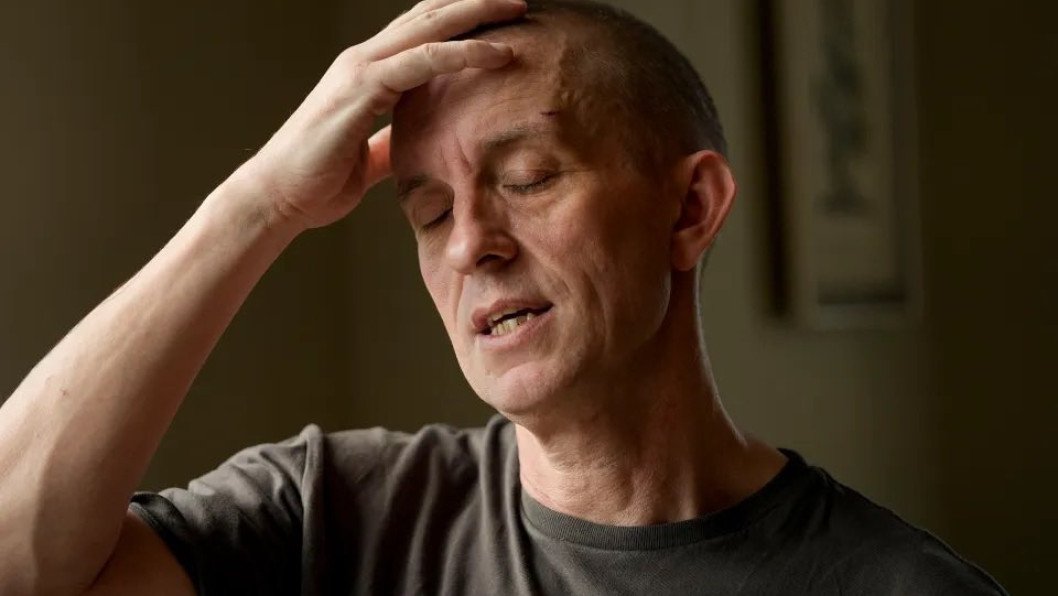
Their cooperation laid the groundwork for a regular exchange mechanism. The first talks between the two led to the evacuation of more than 2,500 Ukrainian soldiers from the Azovstal steel plant in Mariupol.
Over time, mediators from Turkey, Qatar, and Saudi Arabia became involved in the process. In Kyiv, HUR’s headquarters coordinates the exchange effort—gathering families of POWs, monitoring Russian websites and social media, and building a database on each prisoner, including their height, eye color, and Red Cross status.
Released Ukrainian soldiers often brought back lists of comrades in captivity, helping to accelerate future exchanges.
The process continued despite dangerous logistics. The WSJ cites, for example, the downing of a Russian Il-76 aircraft carrying Ukrainian POWs. At times, risky proposals surfaced—such as swapping convicted collaborators or even the remains of long-deceased Russian spies.
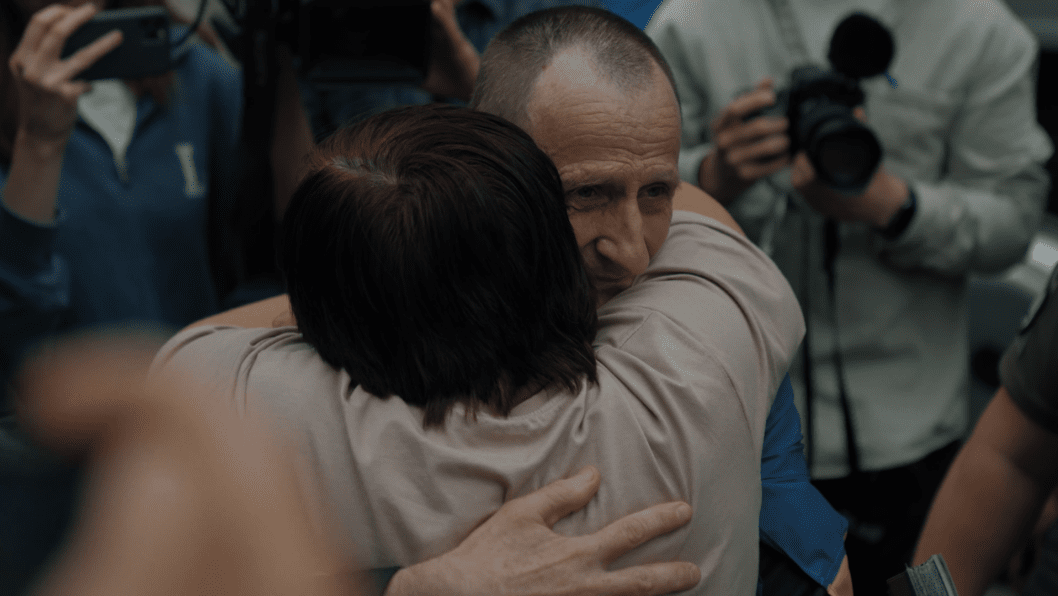
Still, the secret channel remains functional. “Despite being enemies, we have established a certain level of communication” and act in good faith on prisoner exchange matters, Usov said.
According to the WSJ, military historians emphasize that such continuous exchanges in the midst of an active war are exceptionally rare. The USSR held German POWs until the mid-1950s; the United States and North Vietnam only began exchanges in 1973; and Iran and Iraq completed prisoner releases decades later—just days before the start of the Iraq War in 2003.
Earlier, Ukraine conducted its 67th prisoner exchange, freeing 84 citizens from Russian captivity, including 33 service members and 51 civilians.
Discuss this article:


-c439b7bd9030ecf9d5a4287dc361ba31.jpg "Photo of Katherina Popilnichenko")