- Category
- Latest news
Meet Leonidas, the Drone-Killing Microwave Weapon Ukraine Has Its Eye On

Dubbed after the Spartan king who held the pass at Thermopylae, Leonidas is a high-power microwave (HPM) system designed to “burn out” drone electronics. Kyiv—which has invited manufacturers to prove gear in combat conditions—sees systems like Leonidas as a potential game-changer against the waves of FPV and loitering munitions that have reshaped modern battlefields.
 Prefer U24 Media on Google
- Authors


Epirus, a US defense company, announced results from an August 26 live-fire demonstration in which its Leonidas HPM system engaged 61 unmanned aerial vehicles across five operational scenarios. Company statements say the system achieved a 100% success rate, according to Forces News on October 2.
The event showcased Leonidas’ ability—under controlled conditions—to disable large, mixed swarms using a single, low-collateral electromagnetic burst.
Epirus says the demonstration validates the system’s core concept: disable hostile UAVs by frying their electronics rather than expending expensive kinetic interceptors.
What Leonidas is—and how it works
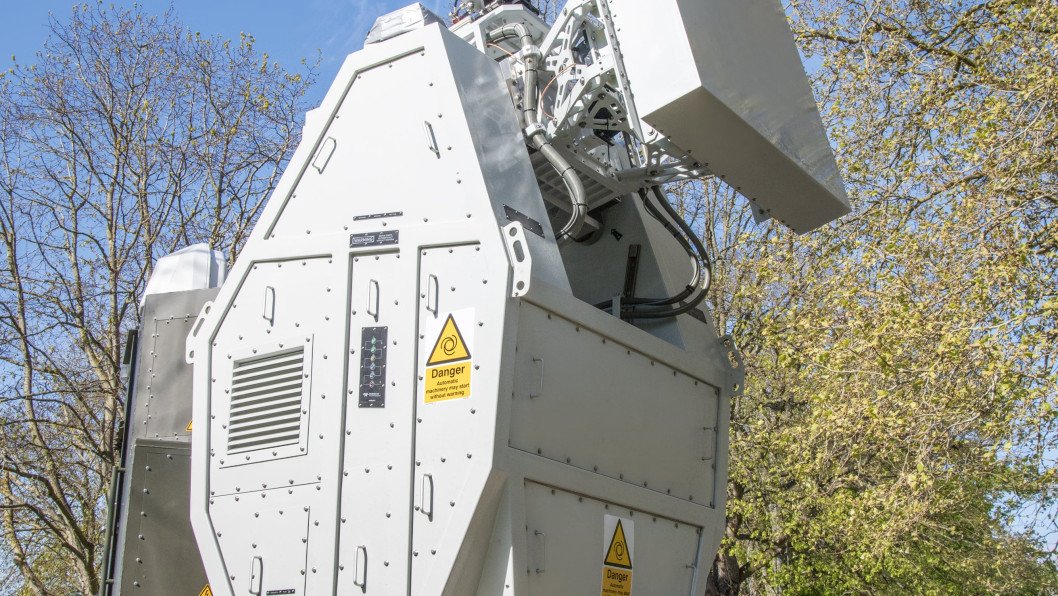
Leonidas is a software-defined, long-pulse high-power microwave weapon built around Gallium Nitride (GaN) semiconductors. The basic operational idea is simple: project directed microwave energy that disrupts or permanently damages the electronic systems of unmanned platforms.
Leonidas can deliver area effects (broad pulses that blank electronics within a radius) or narrow pulses targeted at specific threats. In addition, the system is modular: towed trailers, vehicle-integrated variants (Leonidas Mobile), podded versions (Leonidas Pod), and expeditionary packages (ExDECS) exist to meet different deployment needs.
Epirus brands Leonidas as cost-effective: the company claims the “cost per shot” is just 0.05 cents—a striking contrast with expensive kinetic interceptors.
Introducing our next-generation high-power microwave system, with increased power and a gimbal for 360-degree coverage. Follow Epirus to learn more about our software-defined approach to HPM that allows us to achieve positive effects against a variety of targets at long ranges. pic.twitter.com/AgTjCwDN7O
— Epirus (@epirus) April 11, 2022
US Army buys the GEN II upgrade
The Army awarded Epirus a $43.5 million contract to modernize first-generation IFPC-HPM systems into IFPC-HPM GEN II variants. Under the deal, four initial systems will be upgraded and two GEN II units delivered. According to Epirus, upgrades will:
more than double the system’s maximum effective range compared with Gen-1;
increase peak power output by roughly 30%;
extend pulse durations and add a high-duty burst mode to better handle simultaneous targets;
improve waveform/polarization techniques and battery endurance.

In practical terms, the Epirus GEN II project could reliably disable small drones at ranges approaching 2 kilometers in optimal conditions, while also shortening time-to-neutralize and increasing multi-target lethality.
The Ukrainian angle: battlefield testing and rapid iteration
Ukraine has publicly invited Western developers to test counter-drone systems in combat conditions — a blunt but valuable real-world test bed. Epirus says it is “ready to answer the Army’s call and quickly begin mass production.”
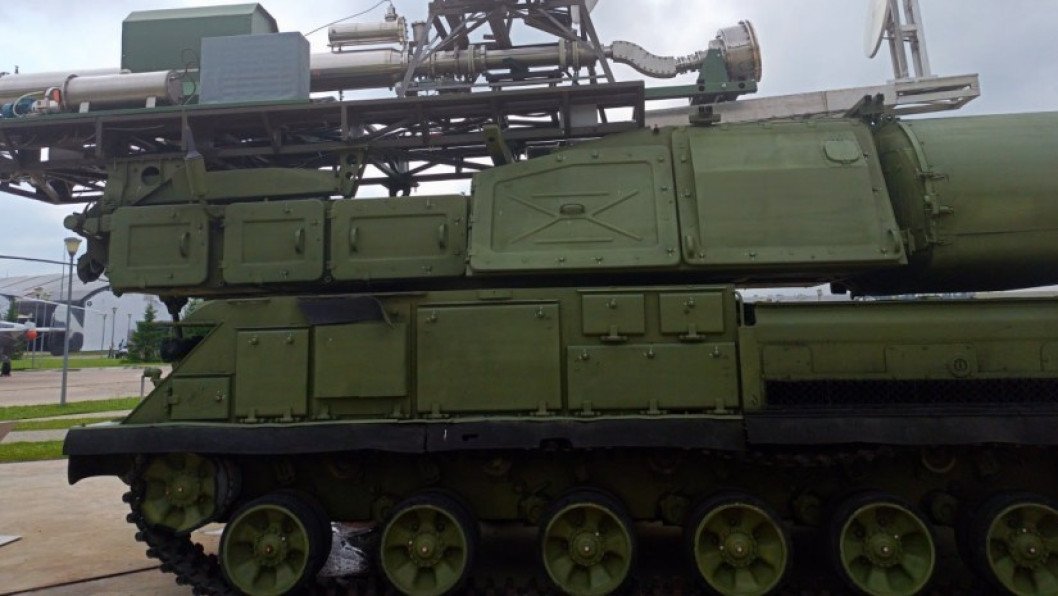
That battlefield feedback loop matters: developers tweak waveforms, duty cycles, and mounting options based on what works under actual combat stress and against adversary countermeasures.
As Cristian Coman, NATO Communications and Information Agency, put it, “Drone technology and counter-drone technology are evolving extremely rapidly. Every two weeks, new changes are identified in the battlefield. The drones will start flying at different frequencies or there are different ways of flying those drones. Drones, different models of drones and you can also see here every time we do an exercise, we see a new set of drones is contact. So the evolution is there and we see it and we need to be able to track it.”
Why are militaries excited
Leonidas’s ability to disable many platforms in one pulse addresses a core problem of modern drone warfare—saturation attacks that overwhelm kinetic defenses. In addition, low “cost per shot” and lack of expendable interceptors make HPM attractive for static site defense and logistics hubs.
Pod and mobile variants let forces layer Leonidas into existing air-defense architectures. And lastly, as long as the system has power and cooling, it doesn’t run out of “rounds” the way missile interceptors do.
Leonidas Expeditionary - high-power microwave for austere conditions and forward deployment. Developed in partnership with ONR, JCO & USMC, Epirus' latest HPM system will support the Marines' Expeditionary Advanced Base Operations (EABO) and CUAS missions ~ Epirus #GaN pic.twitter.com/1PQnZjdTaM
— AirPower 2.0 (MIL_STD) (@AirPowerNEW1) December 21, 2024
Why Leonidas is not a silver bullet
Talking about the cons, directed energy needs a clear path to the target; terrain, buildings, or low clouds can reduce effectiveness. Also, rain, fog, or snow degrade microwave propagation and effective range.
Another disadvantage is that heavier drones with metal frames, carbon composites blended with shielding, or hardened electronics can blunt HPM effects (albeit at higher cost/weight). Some broad pulses can influence friendly systems if deconfliction isn’t flawless; the software must discriminate friend from foe.

Fielding, doctrine, and a contested future
Epirus’ GEN II roadmap and Army evaluations are the immediate milestones. If the upgraded systems deliver the promised range and reliability in Army tests, procurement could follow—although timelines remain vague.
For Ukraine, systems like Leonidas represent hope: an economically sustainable way to protect infrastructure, logistics hubs, and forward maneuver units from massed drones.
But Kyiv’s adoption will hinge on availability, integration into air-defense networks, and the system’s resilience to real-world countermeasures.
Earlier, American startup Allen Control Systems signed a contract with the US Special Operations Command (SOCOM) to supply its Bullfrog autonomous anti-drone turrets.
The Bullfrog system is described as a modular turret that can transform conventional machine guns into autonomous counter-UAV platforms. According to Defense One, the system is intended to defeat drones across NATO’s Group I to Group III classifications, ranging from micro-UAVs to large systems weighing over 600 kilograms.
Official presentation footage shows Bullfrog engaging aerial targets resembling Iranian Shahed-type long-range drones and their Russian variants, Geran.
Discuss this article:
-9bd5e1532102621f8fb1c4ba871a3171.png)



-111f0e5095e02c02446ffed57bfb0ab1.jpeg "Photo of Roman Kohanets")

-72b63a4e0c8c475ad81fe3eed3f63729.jpeg "Photo of Cyril Barabaltchouk")