- Category
- Latest news
Myanmar’s Military Junta Becomes First Foreign Buyer of Russia’s Mi-38 Helicopters
 Prefer U24 Media on Google
- Authors


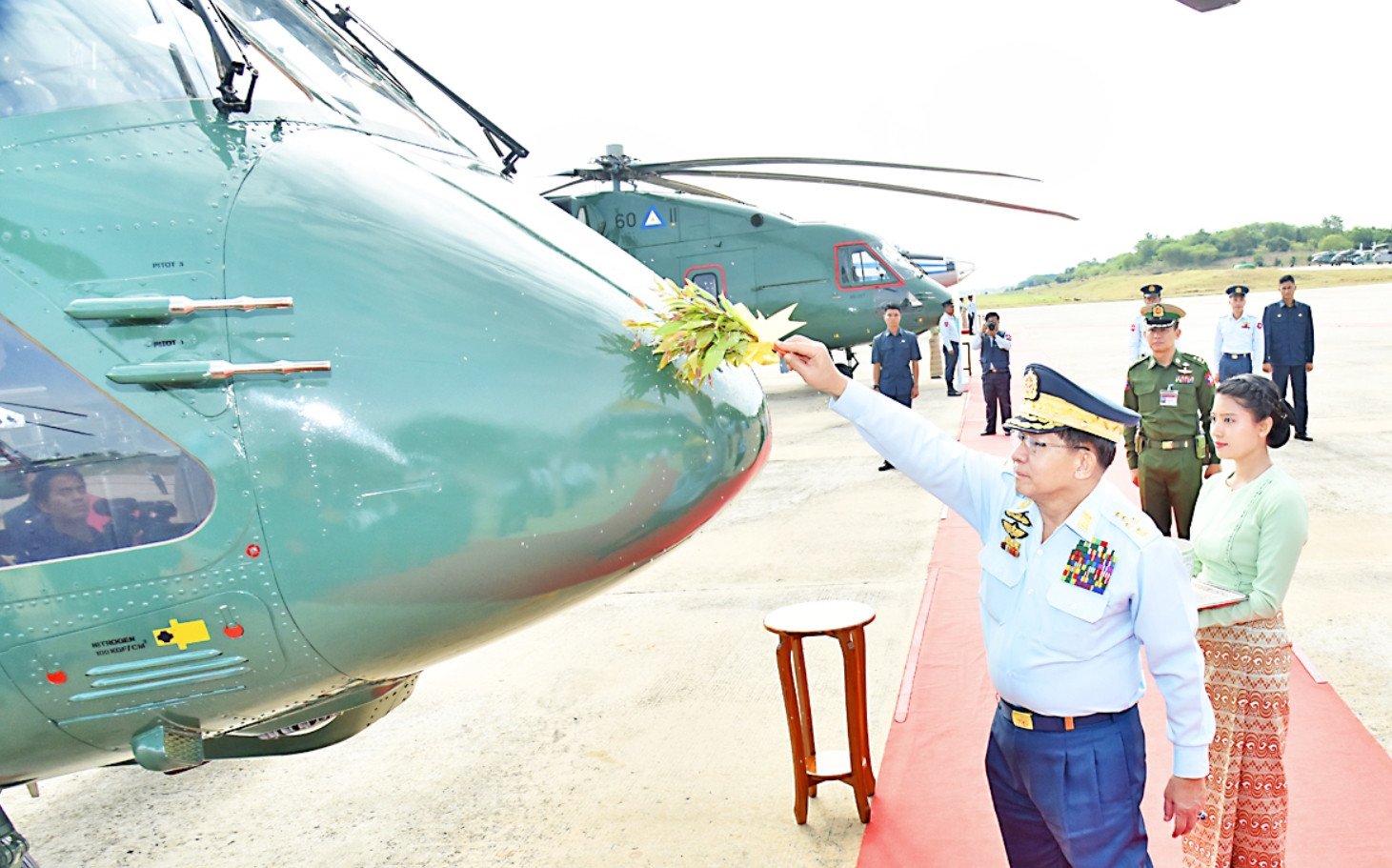
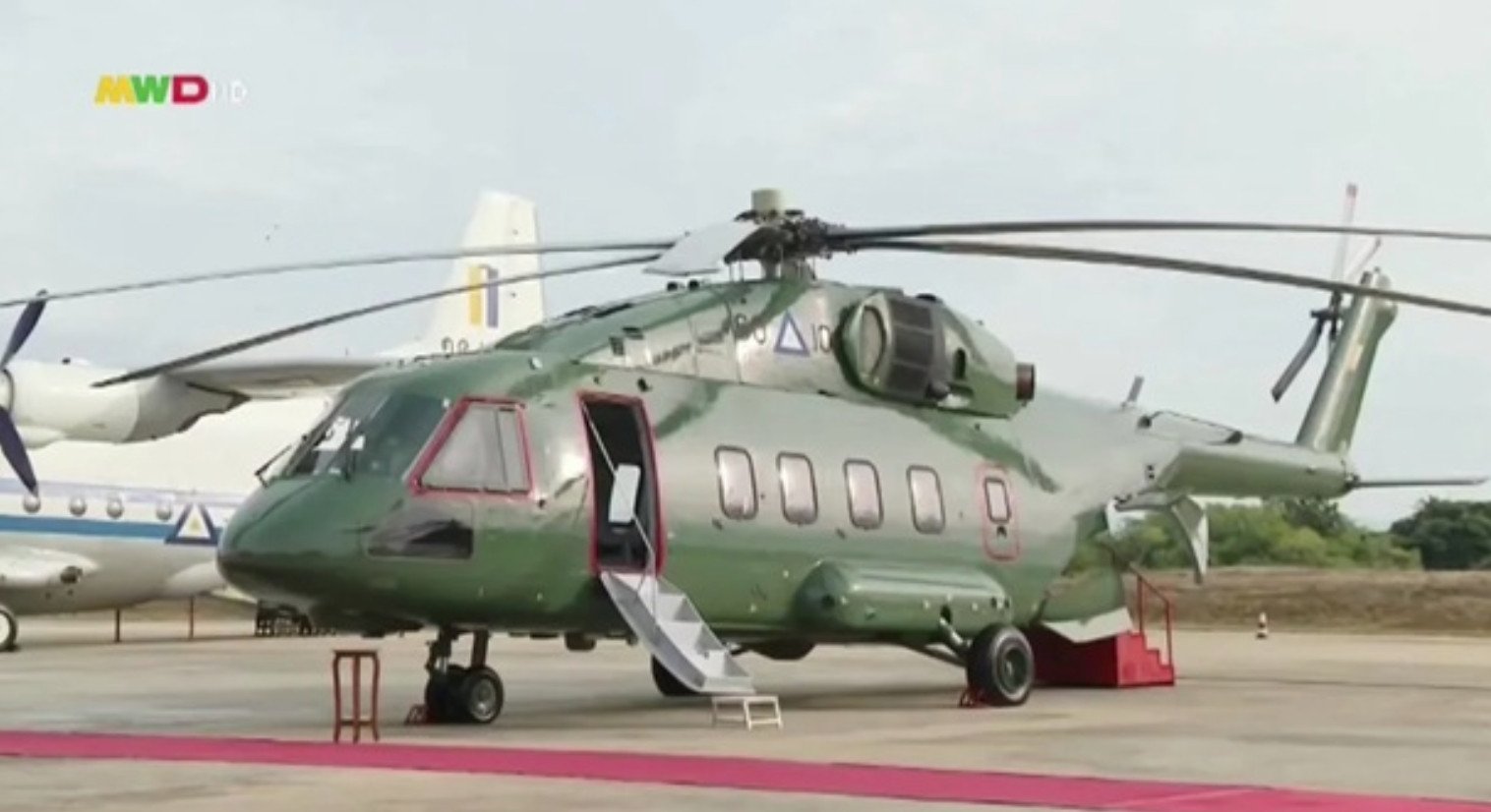
Myanmar’s ruling military has officially taken delivery of three Russian Mi-38 helicopters, becoming the first foreign operator of the new transport model produced by the Kazan Helicopter Plant, Militarnyi reported on November 10, citing Myanmar state-controlled Myawady Daily.
The ceremony in Naypyidaw, attended by the head of Myanmar’s junta, marked the formal handover of two Mi-38T transport helicopters and one VIP-configured aircraft designed for senior officials, Myawady Daily reported.
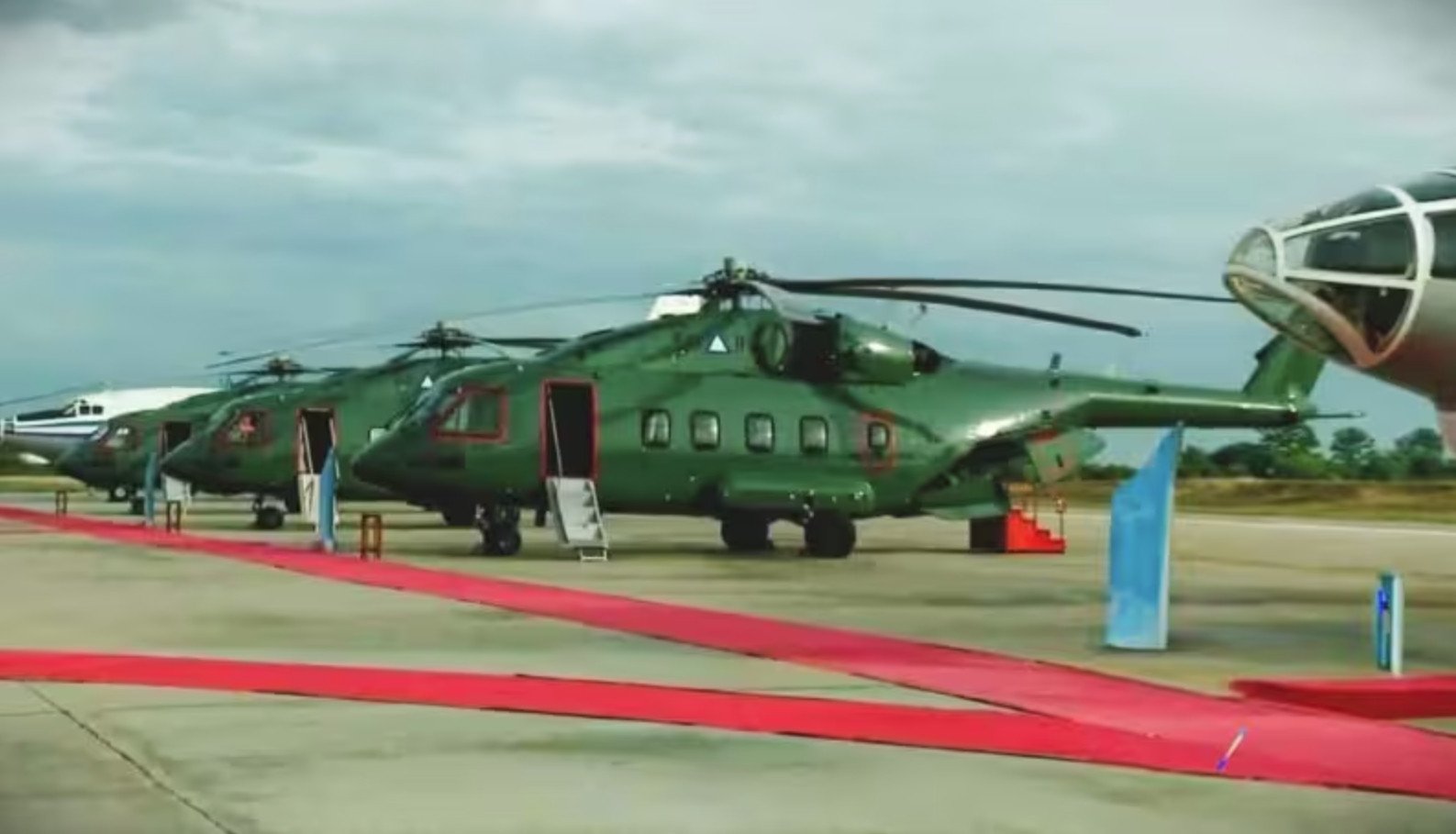
The delivery fulfills a contract likely signed in early 2020, when Russia’s state arms exporter Rosoboronexport announced it had reached its first foreign deal for the Mi-38T variant.
Later that year, then–head of Russian Helicopters Andrey Boginsky confirmed that the company had “a signed contract and an advance payment from a foreign customer for three helicopters.”
According to documents later leaked by Myanmar opposition outlets, Rosoboronexport’s commercial offer dated November 22, 2019, set prices at €18.9 million per transport Mi-38T and €21.9 million for the VIP model, with additional costs for optional equipment, crew training, and maintenance kits—bringing the estimated total value of the contract to around €80 million.
Implementation of the deal was delayed by both technical and political factors. Russia faced prolonged development issues with the Mi-38’s TV7-117V engines, while Myanmar underwent a military coup in February 2021 followed by internal conflict, further slowing cooperation.
With the completion of this delivery, a total of 12 serial Mi-38 helicopters have now been built in Russia since 2019, in addition to four prototypes. Previous domestic orders included high-cost versions for Russia’s Ministry of Emergency Situations.
The Mi‑38 is positioned by Russia as a next-generation medium transport helicopter designed to replace the aging Mi‑8 and Mi‑17 across both military and civilian sectors.
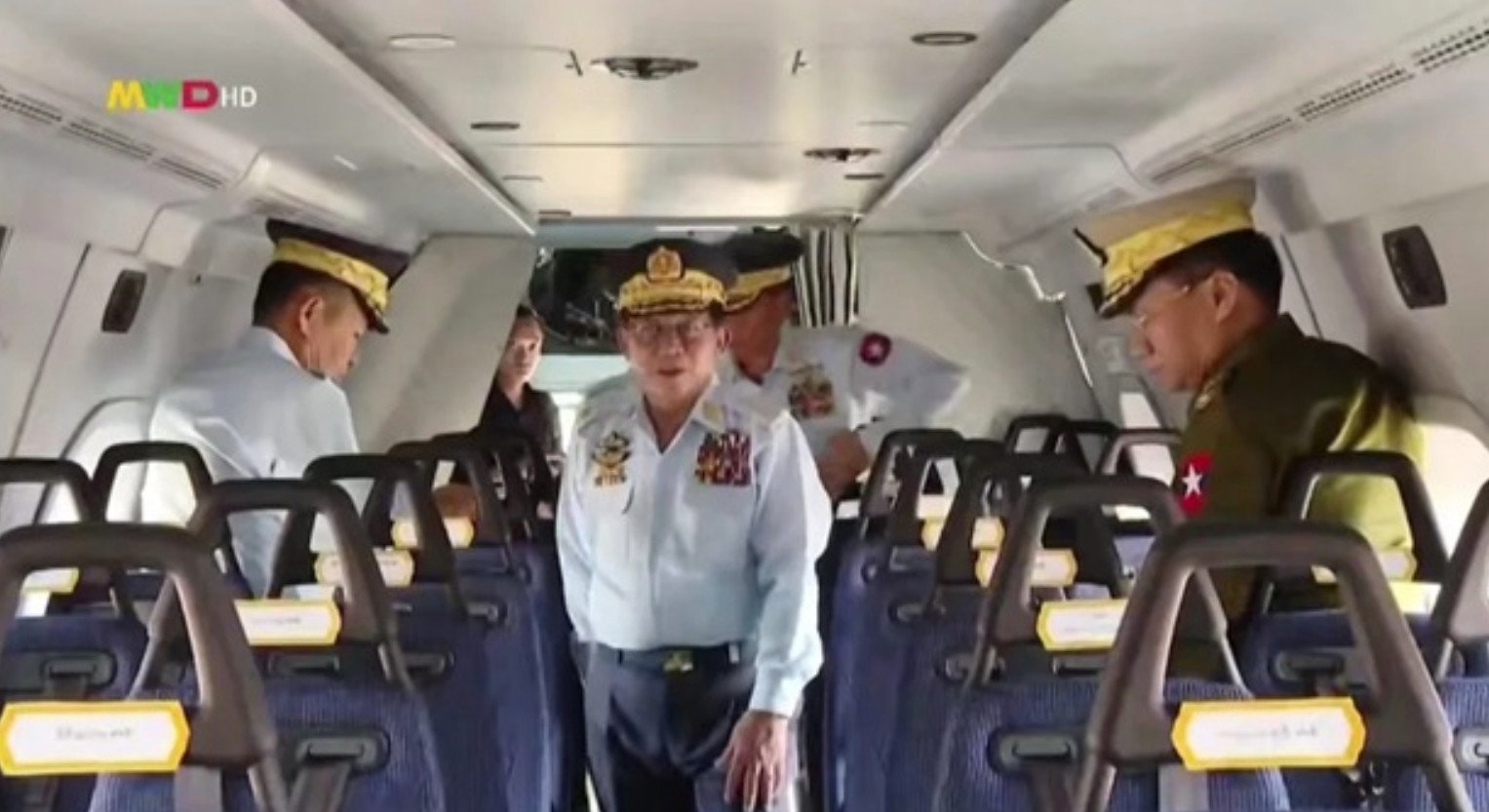
Equipped with twin Klimov TV7‑117V engines, the Mi‑38 offers a top speed of around 300 km/h and can carry up to 6 tons of cargo internally or externally. Its spacious cabin seats up to 30 passengers, and its range extends to about 880 km—or up to 1,300 km with additional fuel tanks.
The helicopter features modern avionics, composite rotor blades, and is built to operate in extreme temperatures—from –50 °C to +50 °C—making it suitable for missions in Arctic, desert, or tropical environments.
Earlier, Russia’s Federal Air Transport Agency warned that sanctions could lead to the loss of over 500 civil aircraft and helicopters by 2030. According to Rosaviatsia’s head Dmitry Yadrov, this includes 339 aircraft and 200 helicopters, with domestic and regional routes expected to be hit hardest.
Discuss this article:



-c439b7bd9030ecf9d5a4287dc361ba31.jpg "Photo of Katherina Popilnichenko")