- Category
- Latest news
“Our Eyes Are Tired, But Our Backs Are Unbroken”: Zelenskyy Marks Four Years of Russia’s Invasion
 Prefer U24 Media on Google
- Authors




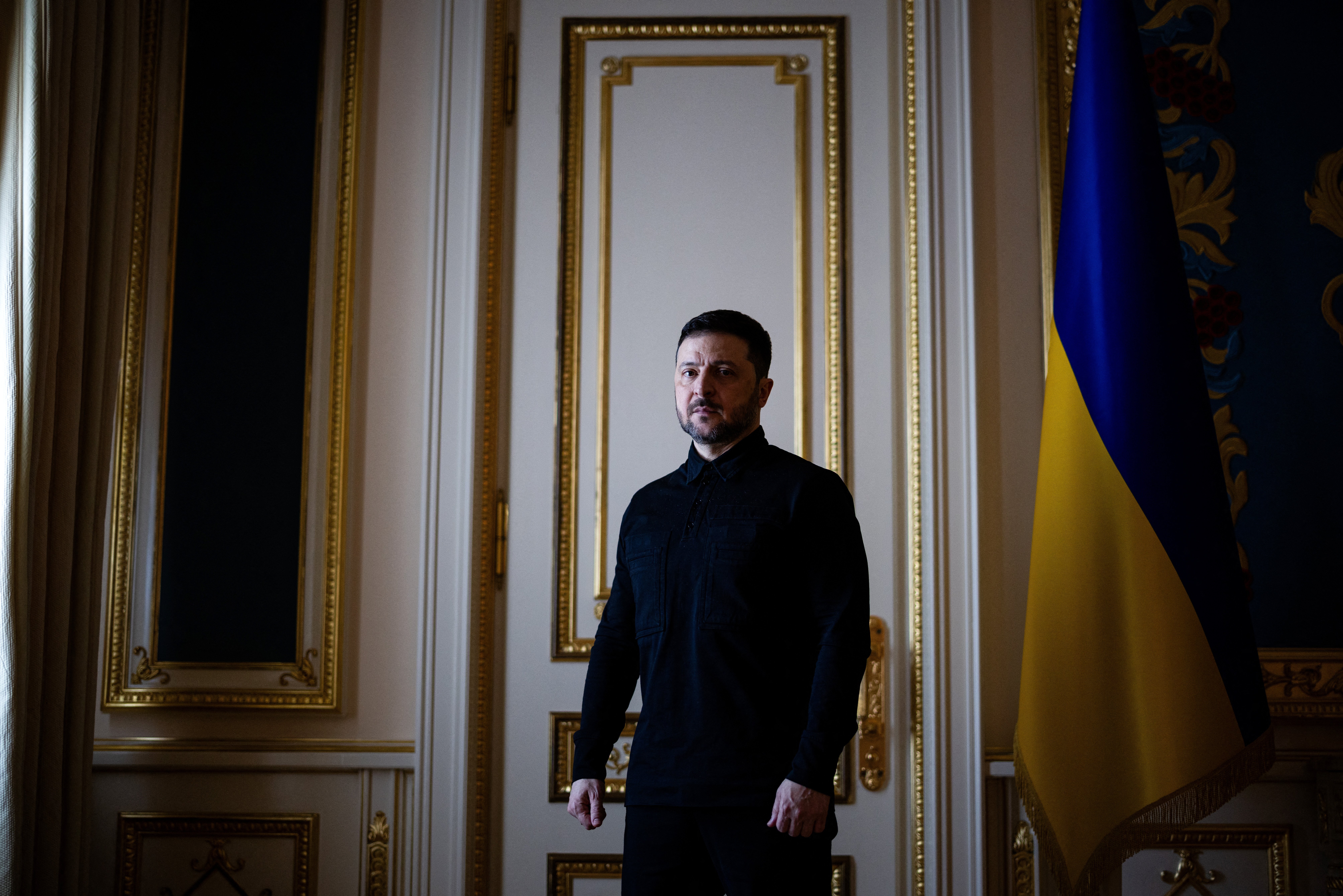
Four years after Russia launched its full-scale invasion, expecting Kyiv to fall within days, Ukraine is still standing—and President Volodymyr Zelenskyy used the anniversary to deliver a message of endurance, warning that peace cannot come at the cost of the country’s hard-won survival.
Ukraine marked the fourth anniversary of Russia’s full-scale invasion with a deeply reflective address from President Volodymyr Zelenskyy, who used the occasion to recount the country’s struggle for survival, honor fallen defenders, and warn that peace negotiations must not come at the cost of Ukraine’s sovereignty.
Speaking to the nation on February 24, Zelenskyy recalled how Russia’s leadership expected Kyiv to fall within days—a prediction that, four years later, has instead become a symbol of Ukrainian resilience.
We bring you stories from the ground. Your support keeps our team in the field.
“Today marks exactly four years since Putin started his three-day push to take Kyiv,” Zelenskyy said, recalling Moscow’s early expectations of a rapid victory. “And that, in fact, says a great deal about our resistance.”
According to Zelenskyy, the early hours of the invasion were marked by uncertainty and fear, but also by a shared understanding among Ukrainians that there was no alternative but to defend their country. He revisited one of the defining moments of the war’s opening days, describing conversations held from a bunker on Bankova Street, where international partners urged him to evacuate.
Today marks exactly four years since Putin started his three-day push to take Kyiv. And that says a great deal about our resistance, about how Ukraine has fought all this time. Behind those words stand millions of our people, immense courage, incredibly hard work, endurance, and… pic.twitter.com/9qiqACurhx
— Volodymyr Zelenskyy / Володимир Зеленський (@ZelenskyyUa) February 24, 2026
“I need ammunition, not a ride,” he recalled telling US President Joe Biden—a phrase that would later become emblematic of Ukraine’s decision to fight rather than flee.
A nation that chose resistance
Zelenskyy said Ukrainians responded to the invasion not with surrender but mobilization. Instead of welcoming occupying forces, recruitment centers filled with volunteers, while civilians organized defenses and supported the military.
He described the early weeks as a period when every new day felt uncertain and had to be “won,” emphasizing that maintaining state institutions during the chaos became as critical as fighting on the battlefield.
“Every aid package, every sanction against Russia, every shipment of weapons—all of these had to be truly fought for,” Zelenskyy said.
-74e27e09e312d1639f24e75f6233ccd5.png)
Government officials coordinated military operations, humanitarian deliveries, and international diplomacy simultaneously, seeking weapons, sanctions against Russia, and global political backing.
The President credited international solidarity—driven in part by images of Ukrainian resistance—with helping Ukraine survive the war’s initial phase. Demonstrations of support across Europe and beyond, he said, showed that the country was not fighting alone.
Turning points and painful memories
The address also reflected on the war’s human cost. Zelenskyy listed cities and tragedies that became symbols of Russian aggression, including Bucha, Mariupol, and attacks on civilian infrastructure and hospitals.
“When it seemed that February would never end, we gained our first spring amid a great war,” he said. “For the first time, a thought flashed through everyone’s mind: we can do this.”
He said Ukrainians transformed anger into determination rather than allowing it to consume them, arguing that the country’s resilience stems from fighting for survival and independence rather than revenge.
Today marks four years since Russia's full-scale invasion of #Ukraine.
— United Nations Geneva (@UNGeneva) February 24, 2026
At least 15,000 civilians have been killed since 24 February 2022.
This winter has seen intensified attacks on the energy infrastructure, plunging millions to cold and darkness. pic.twitter.com/FoWRXEctyk
Ukraine, he added, moved from simply enduring the invasion to pushing back militarily. Liberated cities such as Balakliya, Izyum, Kupyansk, and Kherson became milestones that proved Russian forces could be driven out.
Moments once considered extraordinary—such as strikes against Russian military facilities or the sinking of the cruiser Moskva—gradually became part of everyday wartime reality.
From dependence to domestic weapons production
Zelenskyy highlighted how Ukraine’s defense capabilities evolved dramatically over four years. The country moved, he said, from relying primarily on foreign-supplied equipment to producing millions of drones annually and developing long-range strike capabilities of its own.
Air defense systems once urgently requested from partners are now integrated into a broader defensive network capable of intercepting large-scale drone attacks.
Despite these advances, Zelenskyy warned that Russia continues to wage war through constant missile and drone strikes targeting civilian infrastructure, describing the current winter as one of the most difficult periods Ukrainians have endured.
Diplomacy, unity, and the search for peace
The president stressed that Ukraine seeks peace but not at the expense of its independence or the sacrifices made during the war. Negotiations, he said, involve “a battle for every word” to secure genuine security guarantees.
He emphasized that any future agreement must be accepted by Ukrainian society and must not invalidate years of resistance.
⚡ President Zelenskyy addressed the nation as Russia’s full-scale invasion entered its fourth year. pic.twitter.com/FNgn31FwPc
— UNITED24 Media (@United24media) February 24, 2026
Zelenskyy also thanked international partners—including European countries, the United States, Canada, Japan, and Australia—for supporting Ukraine, noting that early visits by foreign leaders to Kyiv carried symbolic importance far beyond traditional diplomacy.
He argued that understanding the war requires witnessing Ukraine firsthand, describing the conflict as an attack by “a sick state on a sovereign one,” and reiterating that Russia must ultimately be pressured into ending the aggression.
Remembering the fallen and looking ahead
A significant portion of the address honored Ukrainian soldiers and civilians killed during the war. Zelenskyy named several fallen defenders while acknowledging thousands more who gave their lives for Ukraine’s survival.
I honored our warriors with state awards. For us, this is never just a ceremony – it is not a formality. Ukraine honors its heroes and lives thanks to its heroes – thanks to your loved ones, our warriors. Thanks to its people who did not surrender, who were not afraid, who fight… pic.twitter.com/Hj13hpmJG8
— Volodymyr Zelenskyy / Володимир Зеленський (@ZelenskyyUa) February 23, 2026
He said Ukraine has preserved its independence and statehood despite enormous pressure, adding that Russia failed to achieve its core objectives and did not break Ukrainian society.
As the country approaches another spring at war, Zelenskyy concluded with a message of endurance and unity, telling Ukrainians that although exhaustion is real, their determination remains intact.
“Our eyes may be tired, but our backs are unbroken,” he said, thanking citizens whose daily efforts — from fighting to volunteering and rebuilding — continue to sustain the country.
Four years of fire—and Ukraine is still standing.
— UNITED24 Media (@United24media) February 24, 2026
From Zmiinyi Island to today, the message hasn’t changed. Thank you to everyone helping shield Ukraine's sky and save lives.
Donate to air defence via @U24_gov_ua pic.twitter.com/Qth7pkdscU
He ended the address with a familiar declaration: “Glory to Ukraine!”
Earlier, Zelenskyy said Russian forces are suffering heavy losses for minimal territorial gains.
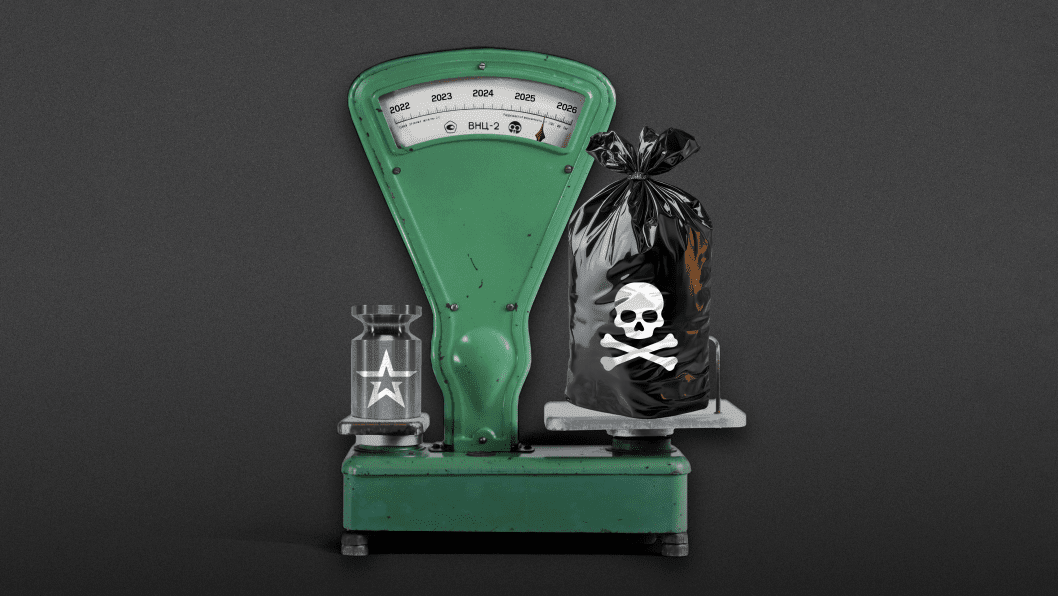
Current reports indicate that Russia is losing between 30,000 and 35,000 soldiers every month through deaths or serious injuries. Regarding the cost of the fighting, the President added, “They truly pay with the lives of 156 people to occupy one kilometer of our land. And we also have our offensive steps, and then they lose it.”
Discuss this article:
-4a56a6b482ec132402c16ef6fcabf9a2.png)