- Category
- Latest news
Putin’s Sudden Public Marathon Raises Questions After Months of Limited Appearances
 Prefer U24 Media on Google
- Authors

-111f0e5095e02c02446ffed57bfb0ab1.jpeg "Photo of Roman Kohanets")
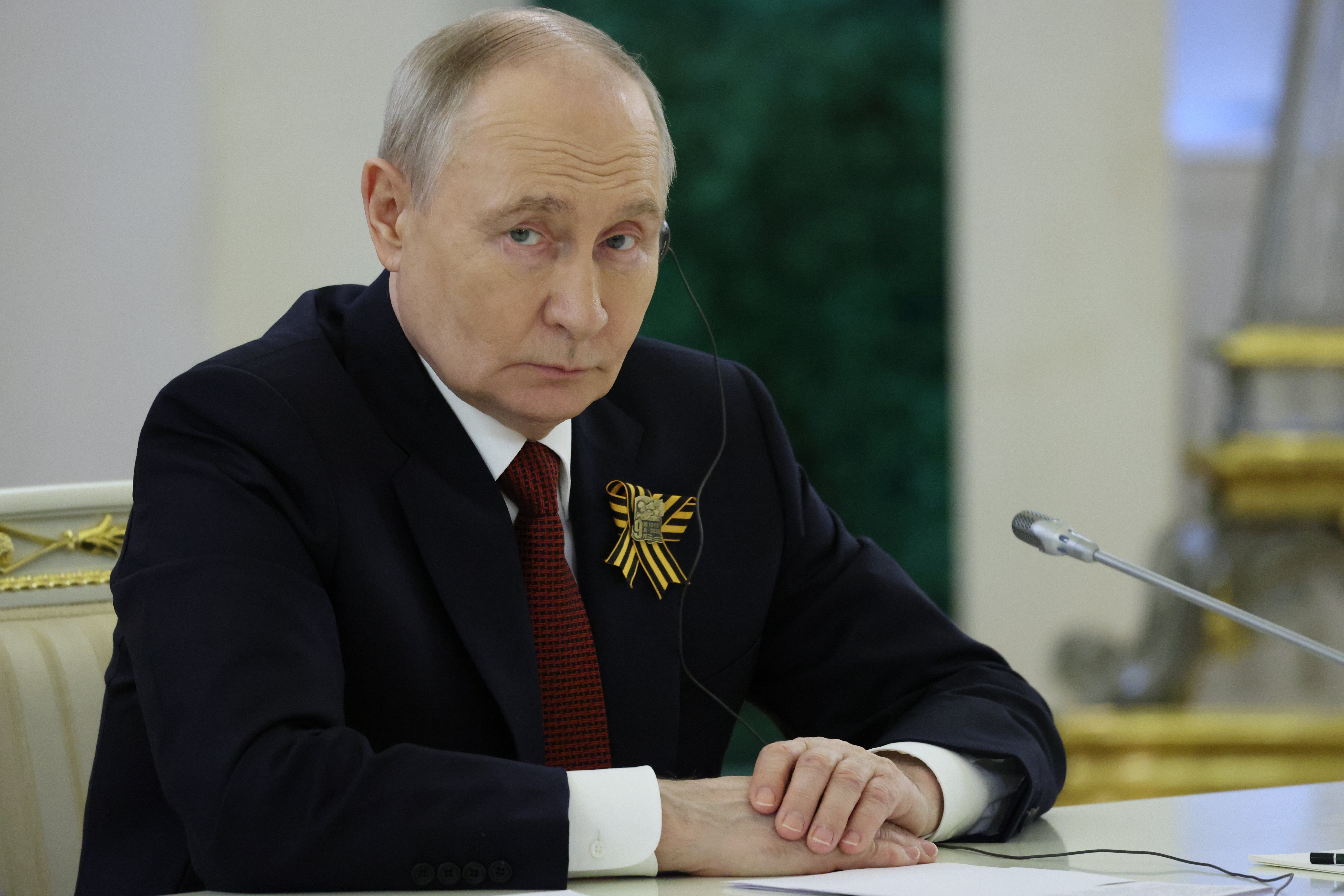
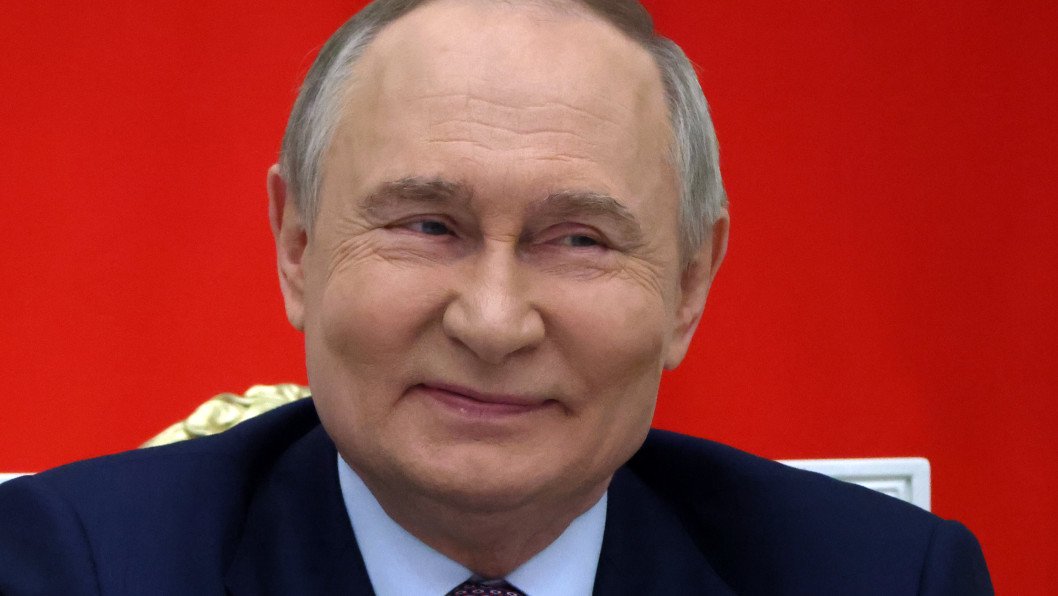
The Russian leader, Vladimir Putin, appeared publicly on five consecutive days this week. It is his most sustained run of in-person activity since February, according to Russian independent outlet Agentstvo on May 15.
The streak ran from a public holiday Monday through Friday and broke a month-long pattern of more limited engagements. It followed an already active prior week that included the Victory Day parade, a series of meetings with foreign leaders in Moscow, and a press conference for journalists.
We bring you stories from the ground. Your support keeps our team in the field.
The week's public schedule
Agentstvo documented the daily breakdown as follows:
Monday: visited his former schoolteacher, Vera Gurevich;
Tuesday: He received a report on the test of the nuclear-capable Sarmat intercontinental ballistic missile;
Wednesday: He visited the Moscow Institute of Thermal Engineering and met with the president of the New Development Bank;
Thursday: attended a congress of the Union of Mechanical Engineers;
Friday: chaired a government meeting on the economy.
The numbers behind the streak
The outlet's longer-term tracking showed a clear contrast with the recent baseline:
5 —consecutive days of public activity this week, the first such streak since February;
4 — the maximum number of consecutive public appearances Putin had logged in March, April, or earlier in May;
6 — the previous comparable streak lasted six days. From February 23 to 28, Putin held international negotiations and met with scientists and officials.
25% — the approximate drop in Putin's public events between January and March compared with the same period a year earlier.
Framing and the Kremlin's messaging
At the Friday meeting, Putin cast himself as a leader successfully managing the country's challenges and pointed to what Agentstvo described as "nonexistent successes in the economy."
The outlet also questioned the Kremlin's portrayal of Monday's outing, when state coverage showed Putin driving himself through Moscow and greeting what was billed as a "random passerby." Agentstvo reported that the man is, in fact, tied to structures servicing residences used by Putin's family.
Agentstvo also pointed to a European intelligence assessment describing heightened security measures around the Russian leader, including claims that Putin and his family had stopped visiting residences in the Moscow region and at Valdai.
The outlet framed this week’s public schedule against a slide in Putin’s approval ratings, including in surveys conducted by state-run and Kremlin-aligned interviewers.
Methodology
The outlet specified the rules behind its count. Its tally excluded one-on-one meetings with officials in the Kremlin, which it noted are frequently pre-recorded.
It also excluded most phone calls, apart from high-level exchanges such as Putin's talks with US President Donald Trump and Iranian President Masoud Pezeshkian.
This week's high-tempo schedule also stands in sharp contrast to a stretch earlier in the spring that drew similar scrutiny from the same outlet.
On March 18, it was reported that Putin had likely avoided holding public events in the Kremlin for nine days, marking a record absence from the site.
According to the outlet, his last listed Kremlin event at the time was a March 9 meeting on the global oil and gas market. Subsequent appearances were held outside the Kremlin or shown without a clearly identifiable location.
The reported absence followed claims that senior Iranian figures had been tracked by surveillance cameras, drawing renewed attention to security practices around official residences.
The push for visibility is also unfolding against a backdrop of rising social tension in Russia. On May 14, Agentstvo reported that Russia's protest potential had reached its highest level in nearly two years, citing a recent Levada Center survey.
The April poll found that 20% of respondents considered demonstrations over declining living standards possible, while 14% expected political protests. Compared with November 2025, those indicators rose by four and three percentage points, respectively, marking their highest readings since July 2024.
Discuss this article:
-9bd5e1532102621f8fb1c4ba871a3171.png)