- Category
- Latest news
Russia Equips Baltic Submarines With Anti-Drone “Cage Armor” in First Known Case
 Prefer U24 Media on Google
- Authors


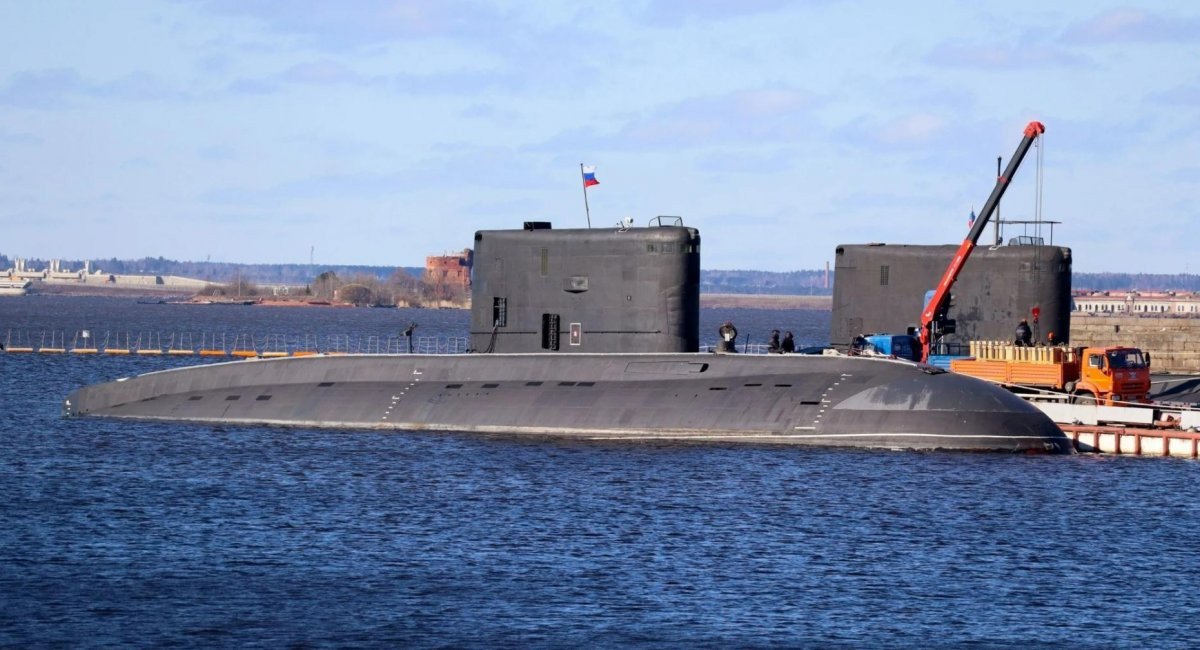
Russian diesel-electric submarines have been observed with newly installed anti-drone defenses at a naval base in Kronstadt near Saint Petersburg, highlighting efforts to adapt naval assets to the growing threat posed by Ukrainian unmanned systems.
We bring you stories from the ground. Your support keeps our team in the field.
According to Defense Express on April 15, citing analysis by OSINT researcher H I Sutton, recent imagery shows Project 06363 “Mozhaysk” (B-608) and Project 877EKM “Dmitrov” (B-806) equipped with improvised protective structures and weapon systems.
Defense Express reports that these changes appear aimed at countering potential drone attacks, including both aerial and maritime threats.
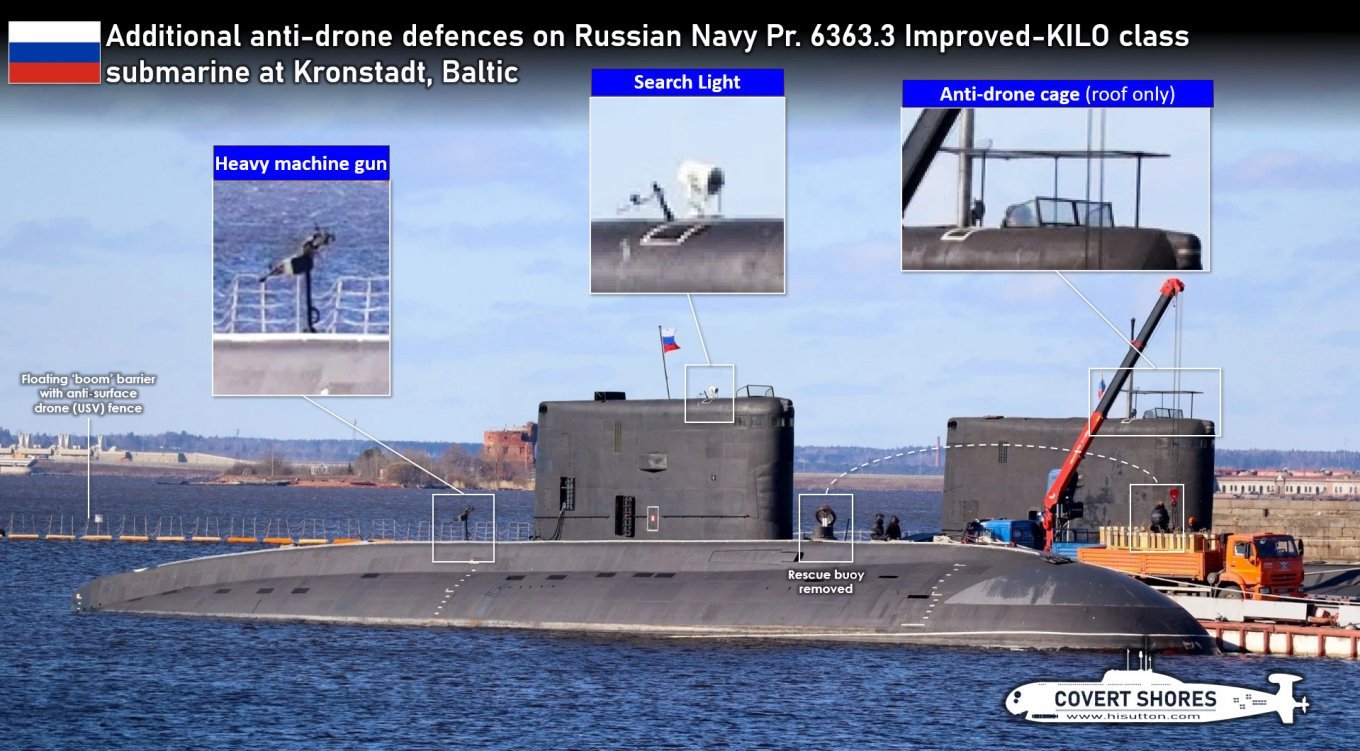
The published images indicate that metal lattice structures—commonly referred to as “cage armor”—have been mounted on top of the submarines’ sail structures.
These additions are likely intended to shield critical extendable components such as periscopes, antennas, and snorkels, which are essential for submarine operations when at periscope depth.
Damage to these exposed systems could significantly degrade a submarine’s functionality, even if the vessel itself remains structurally intact. As Defense Express notes, relatively small unmanned aerial vehicles could disable these components if left unprotected.
Additional modifications visible in the imagery include the installation of a heavy machine gun, likely a 12.7 mm NSV “Utyos,” as well as a mounted searchlight. These systems may be intended to provide limited self-defense against low-flying drones, particularly in harbor or surfaced conditions.
The same analysis also points out the apparent removal of emergency rescue buoys from the submarines, which were seen being transported separately.
Meanwhile, the harbor area itself appears to be protected by floating barriers, suggesting concern over attacks by uncrewed surface vessels. Defense Express highlights that these layered defenses indicate a broader adaptation to multiple categories of unmanned threats.
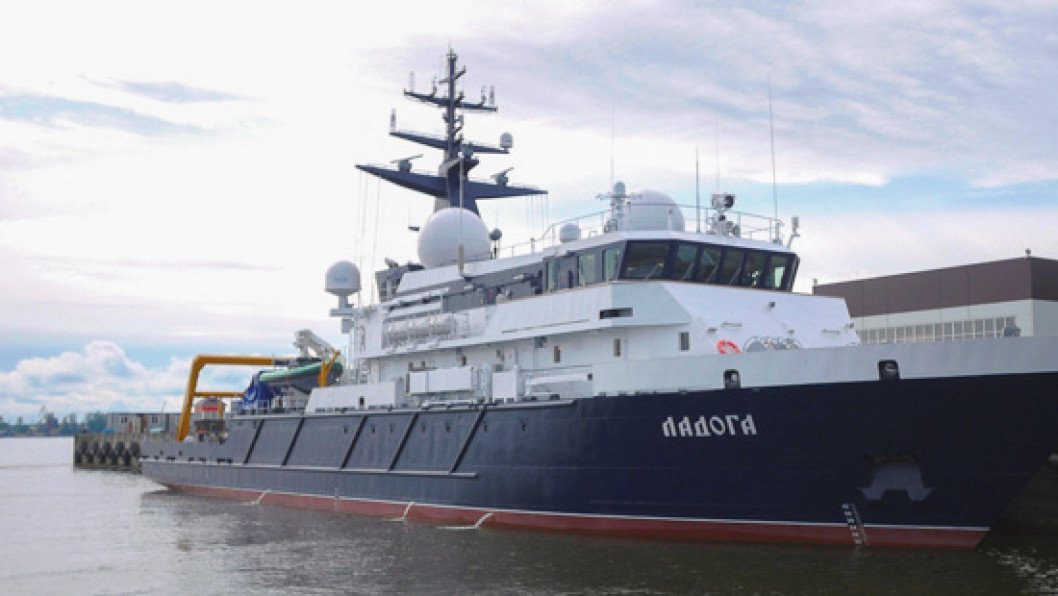
This development marks one of the first documented cases of Russian submarines receiving visible, improvised anti-drone modifications. Similar protective measures have previously been observed on other Russian naval assets, including support vessels in Novorossiysk.
The emergence of such modifications in the Baltic region suggests that concerns over Ukrainian drone capabilities are no longer limited to the Black Sea theater, but are influencing force protection measures across multiple Russian naval bases.
Earlier, Russian forces were observed installing improvised wooden armor on artillery systems and MT-LB vehicles, using logs to reduce the impact of Ukrainian drone strikes. The report noted that such measures offer only limited protection against shrapnel or small UAVs and are largely ineffective against modern anti-armor weapons, reflecting ongoing attempts to adapt aging Soviet-era equipment to evolving battlefield threats.
Discuss this article:
-9a7b3a98ed5c506e0b77a6663f5727c5.png)


-c439b7bd9030ecf9d5a4287dc361ba31.jpg "Photo of Katherina Popilnichenko")