- Category
- Latest news
Russia Sells 22 Tons of Gold to Curb Growing Federal Budget Deficit
 Prefer U24 Media on Google
- Authors

-c439b7bd9030ecf9d5a4287dc361ba31.jpg "Photo of Katherina Popilnichenko")
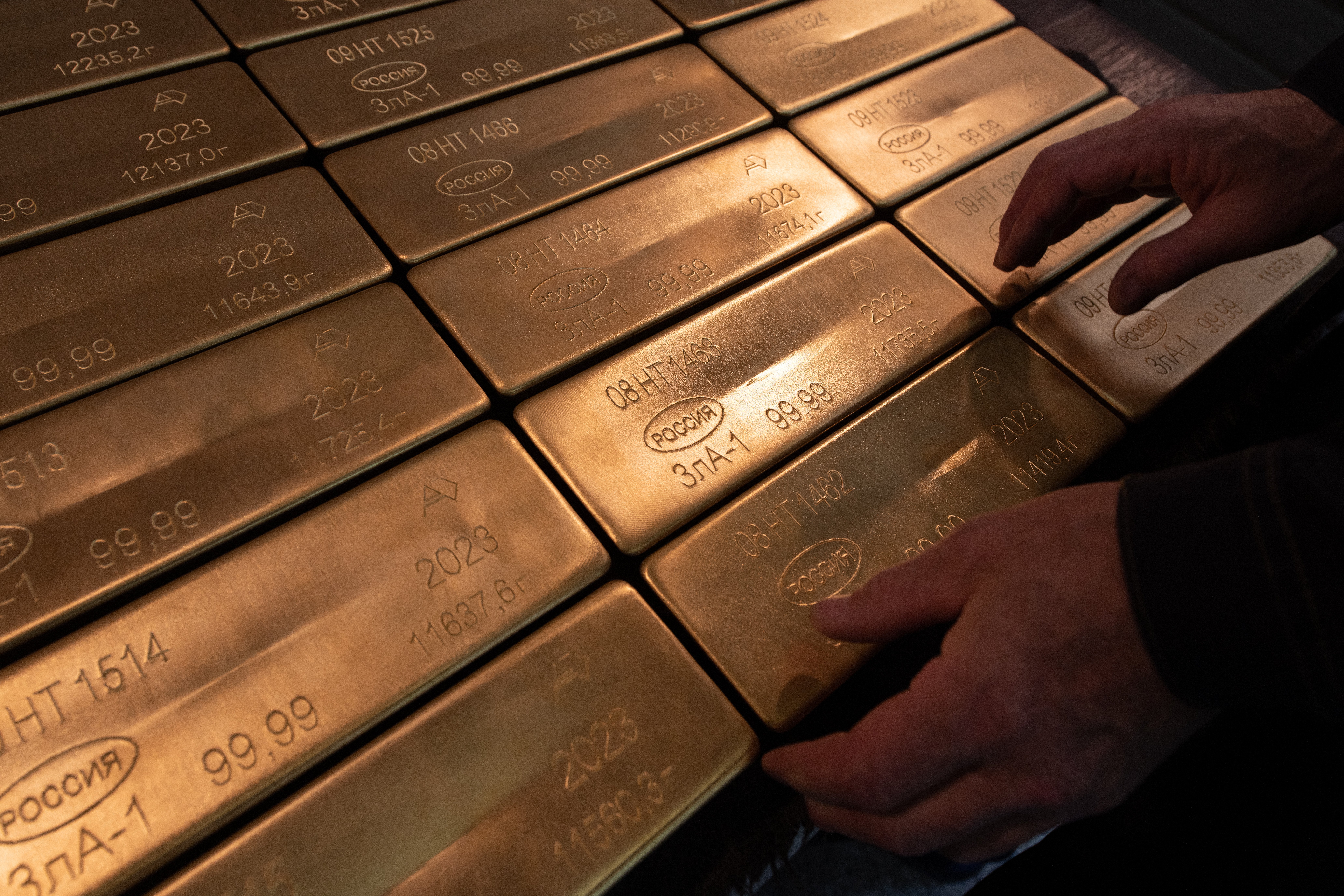
The Bank of Russia has sold approximately 22 tons of gold since the start of 2026 to help fund its budget deficit. By the end of March, this deficit reached 4.6 trillion rubles ($61.3 billion) due to low oil and gas revenues at the beginning of the year.
Official data shows that gold reserves fell by 0.7 million troy ounces to 74.1 million troy ounces as of April 1, according to The Moscow Times.
We bring you stories from the ground. Your support keeps our team in the field.
The Moscow Exchange reported that gold trading volume in March 2026 was more than 3.5 times higher than last year, reaching 42.6 tons. In monetary terms, the volume increased fivefold to 534.4 billion rubles ($7.1 billion).
“Sales to finance the budget deficit may continue amid a sharp increase in government spending compared to planned budget figures. Such sales of gold from reserves by the Central Bank of the Russian Federation are quite consistent with what is being done in other central banks, especially of developing countries,” said Natalia Milchakova, lead analyst at Freedom Finance Global, cited by the Moscow Times.
The Bank of Russia has been buying and selling gold on the domestic market since autumn 2025. These operations mirror the Ministry of Finance's management of the National Wealth Fund.
Selling gold helps the Central Bank maintain its currency diversification within reserves totaling nearly $775 billion, where the share of gold has grown due to rising prices.

Russia built its gold stock primarily between 2002 and 2025, purchasing more than 1,900 tons. Finam analyst Nikolay Dudchenko noted that most of these purchases happened between 2008–2012 and 2014–2019. Since 2020, net gold purchases have totaled 55.4 tons.
“Currently, a number of central banks continue to sell gold for reasons of the need to cover expenses, including for defense, and also for the reason that funds are needed due to rising energy prices and to maintain national currency exchange rates,” Dudchenko said.
Milchakova added that many central banks previously bought gold to sell it at a high price when extreme need arises. She noted that given the global economic uncertainty, this situation seems to have arrived. She pointed to Turkey’s central bank as another example of selling reserves to stabilize its currency.
Milchakova stated that central banks will likely buy gold when prices are low and sell when prices are high to gain liquidity for tasks like stabilizing the banking system. She predicted the price of gold could return to $5,000 per troy ounce within the next two months.
The Kremlin’s fiscal stability has faced unprecedented pressure as the 2026 budget cycle projects a deficit nearly double that of the previous year. In early March, Russian war spending has officially surpassed all social welfare allocations, forcing the government to tap into the National Welfare Fund at a record pace.
Currently, as Russian leader Vladimir Putin seeks to maintain the offensive in Ukraine, the depletion of liquid assets in the “war chest” has left the Russian Central Bank with few options beyond the liquidation of its gold holdings and the remaining yuan reserves.
Discuss this article:






-efa69d4733b5af9f7cd0a642f85424a6.jpeg "Thick black smoke rises from the heavily damaged Proton-Electrotex plant in Orel, Russia, following a reported strike. (Source: Exilenova+)")