- Category
- Latest news
Russians Pull Billions in Cash as Internet Disruptions and Controls Shake Banking Trust
 Prefer U24 Media on Google
- Authors


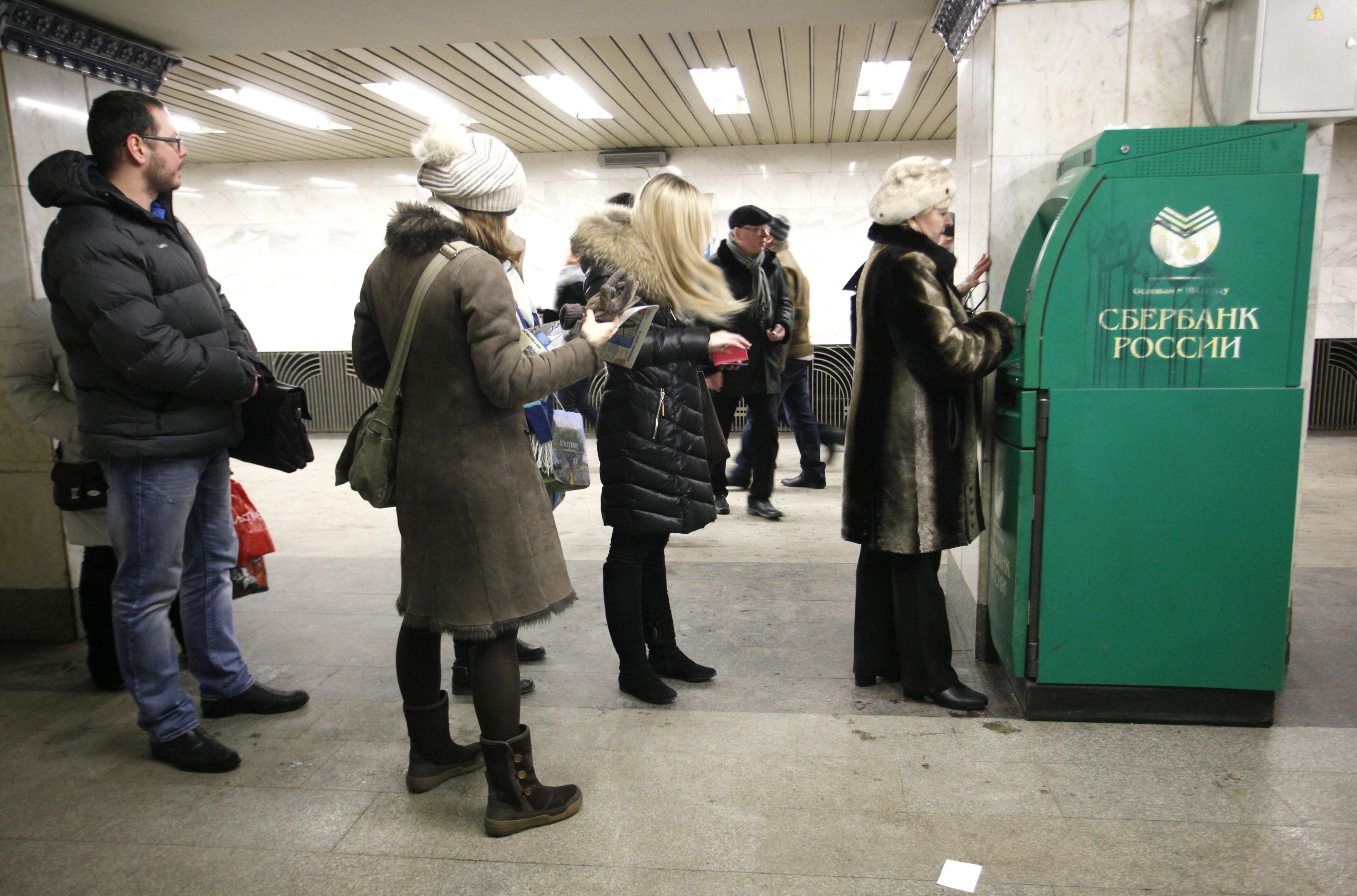
Russians are increasingly turning to cash as concerns grow about the reliability of digital payments and tighter government oversight of financial transactions, according to data from the country’s central bank, as reported by Russian media outlet Izvestia on April 20.
Between April 3 and April 10, individuals withdrew approximately $3.21 billion (240 billion rubles) from bank accounts—the largest weekly outflow recorded this year. As a result, the total volume of cash in circulation rose to roughly $265.7 billion (19.85 trillion rubles).
We bring you stories from the ground. Your support keeps our team in the field.
Overall, from April 1 to April 17, around $6.29 billion (470 billion rubles) in cash entered circulation, according to estimates based on central bank data cited by financial analysts.
By comparison, the total increase in cash circulation for all of March amounted to about $4.01 billion (300 billion rubles), highlighting a sharp acceleration in April.
Russia’s central bank has previously linked the growing demand for cash to recurring mobile internet disruptions, which have affected the reliability of digital payment systems. Surveys cited by the regulator indicate that many consumers are withdrawing money as a precaution in case electronic payments become unavailable.

At the same time, financial behavior is being shaped by stricter banking oversight. Over the past year, Russian banks have increasingly blocked customer accounts as part of intensified anti-fraud measures mandated by regulators. Higher taxes have also played a role, with some small businesses offering discounts for cash payments to reduce their tax burden.
The government is now moving to further tighten control over personal finances. A draft law submitted to parliament would grant tax authorities access to central bank data on money transfers between individuals, allowing officials to identify undeclared income and impose taxes where necessary.
Under the proposal, individuals earning more than approximately $32,130 annually (2.4 million rubles)—or about $2,677 per month—could be required to verify the origin of their income. Authorities estimate the measure would affect a small share of the population, though independent analysts suggest it could extend to as many as 10 million people.

Against this backdrop, some Russians are beginning to view cash transactions as more predictable and less exposed to sudden restrictions. Analysts note that funds circulating outside the banking system are significantly harder for authorities to monitor, making cash an increasingly attractive option.
At the same time, officials have signaled plans to curb cash usage as part of broader efforts to formalize the economy. Among the measures under discussion are a cap of approximately $13,390 (1 million rubles) on cash deposits via ATMs, stricter financial monitoring requirements, and tougher penalties for violations of cash circulation rules.
Experts warn, however, that excessive pressure on non-cash transactions could backfire. “Overregulation in this area risks creating inconvenience for law-abiding citizens and could ultimately drive more activity into the shadow economy,” analysts say.
Earlier, Thomas Nilsson, head of Sweden’s Military Intelligence and Security Service, said that Russia would need its flagship Urals crude to remain above $100 per barrel for at least a year just to close its budget gap—and significantly longer to stabilize broader economic imbalances.
Discuss this article: