- Category
- Latest news
Serbia’s Spy Chief Denies Ukraine Role in Alleged Explosives Plot Near Gas Link
 Prefer U24 Media on Google
- Authors

-111f0e5095e02c02446ffed57bfb0ab1.jpeg "Photo of Roman Kohanets")
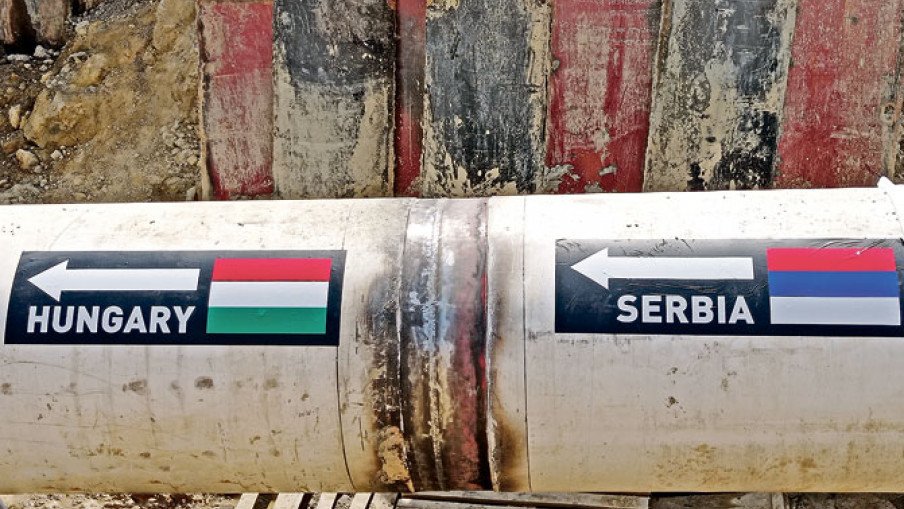
Serbia’s military counterintelligence chief rejected claims that Ukraine was behind an alleged explosives plot near a pipeline carrying Russian gas to Hungary, according to Politico on April 6.
The episode began after Serbian President Aleksandar Vučić reported that authorities had found “an explosive of devastating power” near the gas route in northern Serbia, close to the Hungarian border, about a week before Hungary’s April 12 general election.
The pipeline is part of the route carrying Russian gas toward Hungary, making the discovery immediately politically sensitive.
We bring you stories from the ground. Your support keeps our team in the field.
“It’s not true that the Ukrainians tried to organize the plot,” he stated, adding that markings showed the explosive was manufactured in the US, but that this did not identify those who ordered or carried out the act.
Hungarian Prime Minister Viktor Orbán then elevated the incident, convening an emergency meeting of Hungary’s National Defense Council and portraying it as a possible case of sabotage.
He argued that Ukraine had long worked to cut Europe off from Russian energy and strongly implied Kyiv could be linked to the alleged operation, though he stopped short of making a formal accusation.
Later on April 6, however, Đuro Jovanić, head of Serbia’s Military Security Agency, publicly pushed back on that narrative.
-66a2900a622e096cca7808c9e73e093f.jpg)
“The manufacturer of the explosives does not mean that he is also the one who ordered or executed it,” Jovanić added, describing the materials as hermetically sealed explosives and detonator caps.
Ukraine also denied any connection. Foreign Ministry spokesperson Heorhii Tykhyi categorically rejected responsibility and described the alleged plot as “most probably, a Russian false-flag operation.”
Orbán’s domestic opponents advanced similar doubts, with opposition leader Péter Magyar suggesting the affair could amount to a staged provocation involving Serbian and Russian actors.
The sequence of events added a sharp political edge to Hungary’s election campaign. First came Vučić’s announcement about the explosives, then Orbán’s public suggestion that Ukraine may have been involved, and only afterward did Serbia’s own military counterintelligence chief directly contradict that claim
The controversy has further intensified scrutiny of Orbán’s use of energy security and confrontation with Kyiv as campaign themes. It also raised fresh questions about whether the alleged threat near the Serbia-Hungary gas link was being used less as a security warning than as a tool to influence Hungary’s pre-election climate.
Discuss this article:
-4a56a6b482ec132402c16ef6fcabf9a2.png)