- Category
- Latest news
Ukraine Hits Russian Oil Platform in the Caspian—A First-Ever Strike on Moscow’s Offshore Energy Empire
 Prefer U24 Media on Google
- Authors




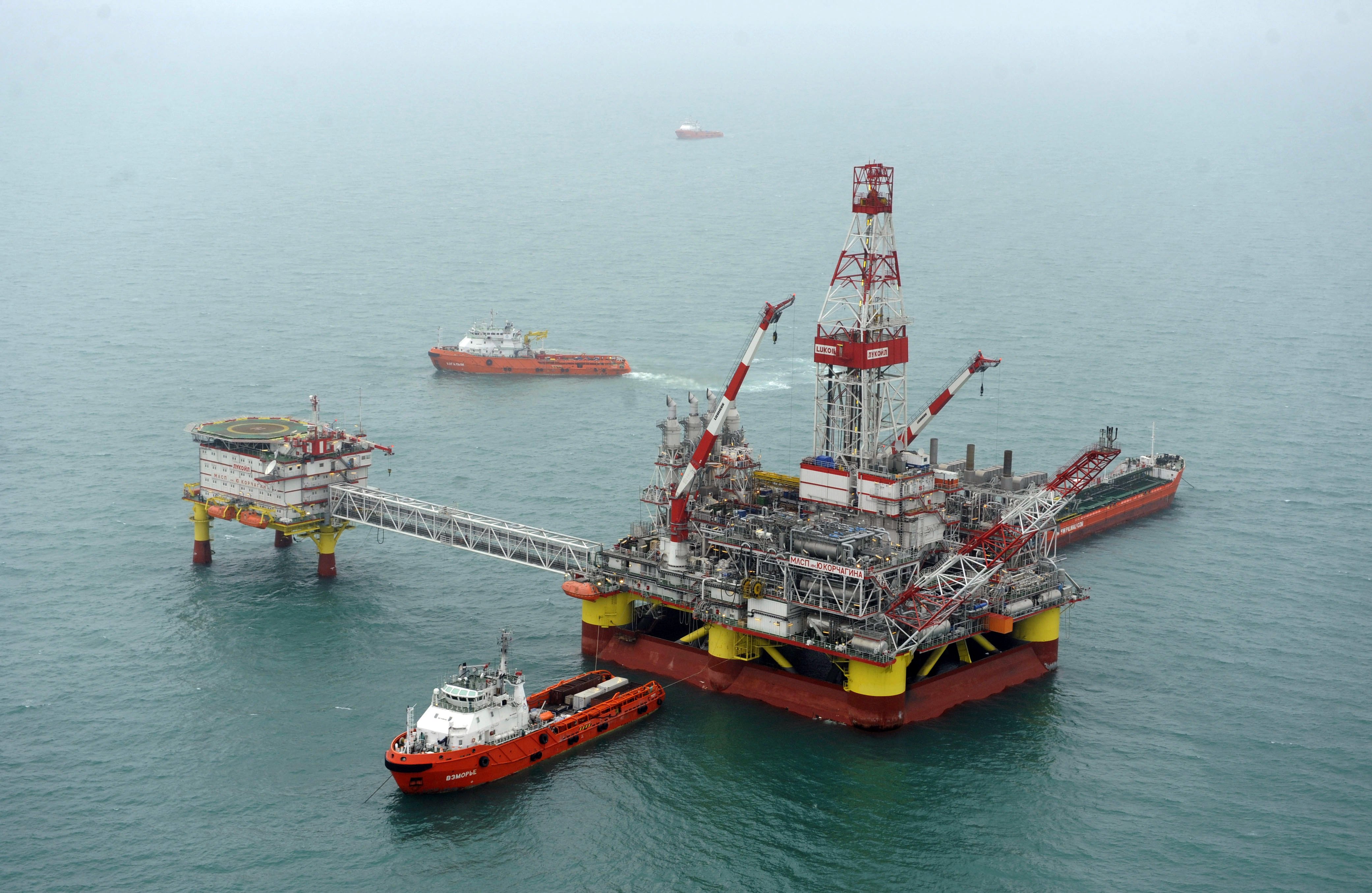
Ukraine has carried out its first-ever strike on Russia’s offshore oil infrastructure in the Caspian Sea, disabling a major production platform with long-range drones operated by the Security Service of Ukraine (SBU), according to sources who spoke with Suspilne on December 11.
The attack targeted the Filanovsky oil platform, one of Russia’s largest offshore assets in the Caspian and part of the Lukoil-Nizhnevolzhskneft portfolio.
We bring you stories from the ground. Your support keeps our team in the field.
The site features proven reserves of roughly 129 million tons of oil and 30 billion cubic meters of gas, with output typically exported through the Caspian Pipeline Consortium.
According to sources familiar with the operation, the strike was carried out by operators from the SBU’s elite “Alpha” special operations unit.
“At least four impacts were recorded on the platform. As a result, oil and gas production from more than 20 wells it services has stopped,” one source told Suspilne.
⚡️⚡️⚡️BREAKING: Ukrainian drones just scored a historic first—shutting down Russia's massive Filanovsky oil platform in the Caspian Sea. Lukoil's key site was hit with 4+ strikes, halting oil & gas from 20+ wells. This beast holds 129M tons of oil & 30B m³ gas—exports via Caspian… pic.twitter.com/axikxaAWa1
— Kyrylo Shevchenko (@KShevchenkoReal) December 11, 2025
Residents in the region reported hearing explosions overnight and shared videos of drones overhead before the attack.
The strike is unprecedented: Ukraine has never before hit any Russian oil-extraction facility in the Caspian Sea. The area lies far from the front lines, underscoring Kyiv’s expanding capability to reach deep into the infrastructure that fuels Russia’s war.
An informed SBU source framed the operation as part of a broader campaign to degrade Russia’s energy sector.
❗️🇺🇦Ukraine has for the first time (!) halted the operation of a 🇷🇺Russian oil platform in the Caspian Sea, according to sources from RBC-Ukraine.
— 🪖MilitaryNewsUA🇺🇦 (@front_ukrainian) December 11, 2025
▪️ Long-range SBU drones struck the Filanovsky platform, owned by "Lukoil-Nizhnevolzhskneft". At least 4 hits. Oil and gas… pic.twitter.com/5ED2xFhgnl
“The SBU continues successful operations against Russia’s oil and gas industry, continually expanding the geography. ‘Cotton ’ in the Caspian Sea is another reminder that every enterprise supporting Russia’s war effort is a legitimate target—no matter where it is located,” the source said.
The extent of the damage to the Filanovsky platform is still being assessed, but the shutdown of production across more than 20 wells marks one of the most disruptive Ukrainian strikes on Russia’s energy infrastructure to date.
Earlier, a strike drone hit Russia’s Caspian Sea fleet missile boat in Dagestan, according to video evidence shared by residents, which shows the moment of impact at the Caspian Sea naval base in Kaspiysk.
Discuss this article:
-4a56a6b482ec132402c16ef6fcabf9a2.png)

-c439b7bd9030ecf9d5a4287dc361ba31.jpg "Photo of Katherina Popilnichenko")