- Category
- Latest news
Ukraine’s New UB60D Drone Can Lock Onto Targets Without Pilot Input
 Prefer U24 Media on Google
- Authors


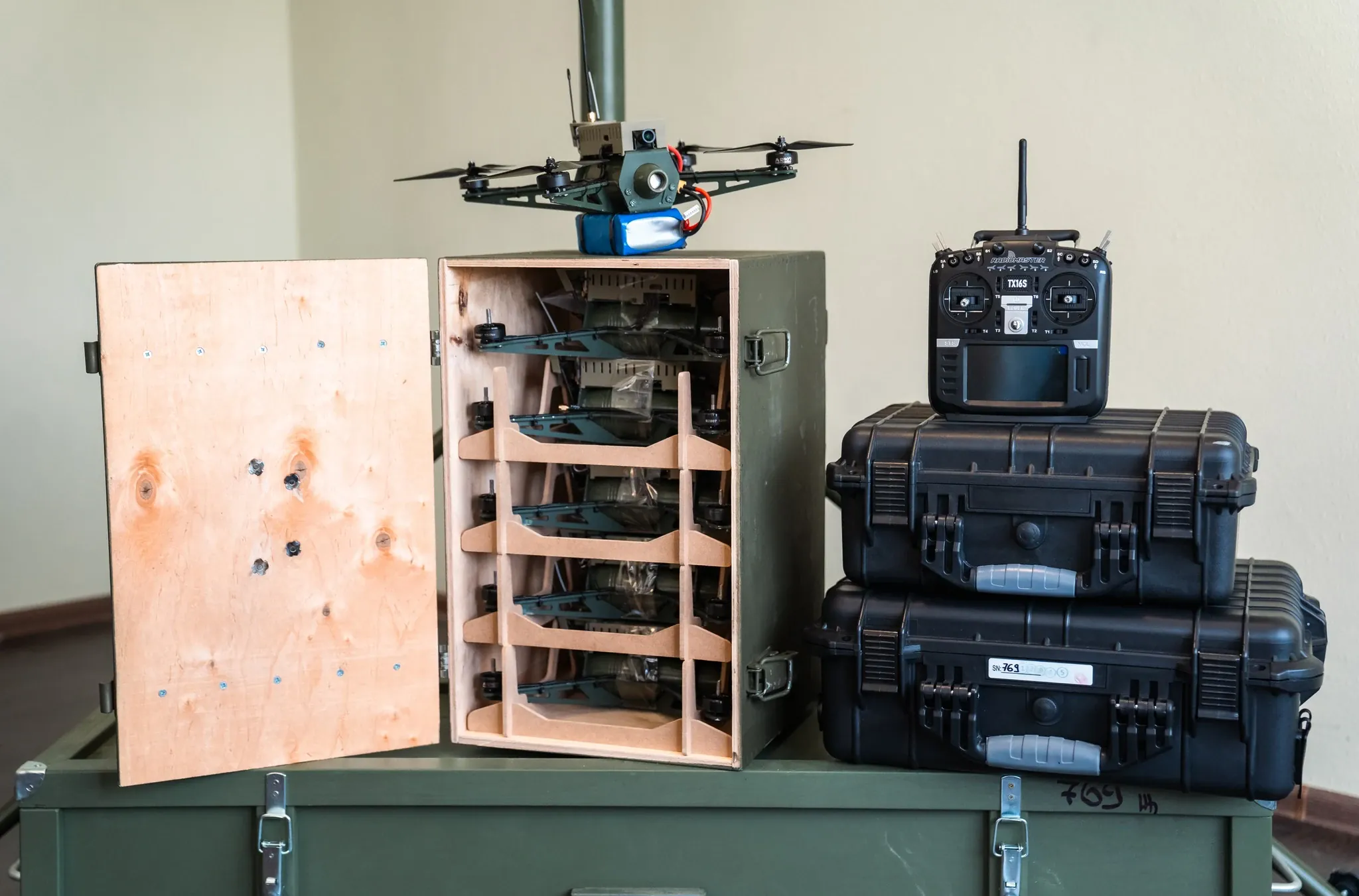
Ukraine’s defense industry has unveiled an upgraded version of the UB60D FPV strike drone equipped with an automatic terminal guidance system and new types of warheads.
We bring you stories from the ground. Your support keeps our team in the field.
According to the National Association of Defense Industries of Ukraine on April 14, the system was presented by the company Ukrainian Armor during a demonstration of new unmanned capabilities.
The updated UB60D features a module for automatic target acquisition and tracking, which is currently in the final stage of codification. The company also showcased additional configurations, including a drone based on an 82 mm mortar munition and a variant equipped with an explosively formed penetrator-type warhead.
During the presentation, the drones conducted both airburst and contact detonations against metal targets with full-scale silhouettes. A separate demonstration showed the UB60D engaging a moving ground robotic system using its automatic targeting capability.
According to the National Association of Defense Industries of Ukraine, all tested variants demonstrated effective fragmentation and high-explosive impact, as well as an overall high level of destructive effect. Military observers noted the practicality of integrated warhead solutions, highlighting reduced preparation time and simplified operation.
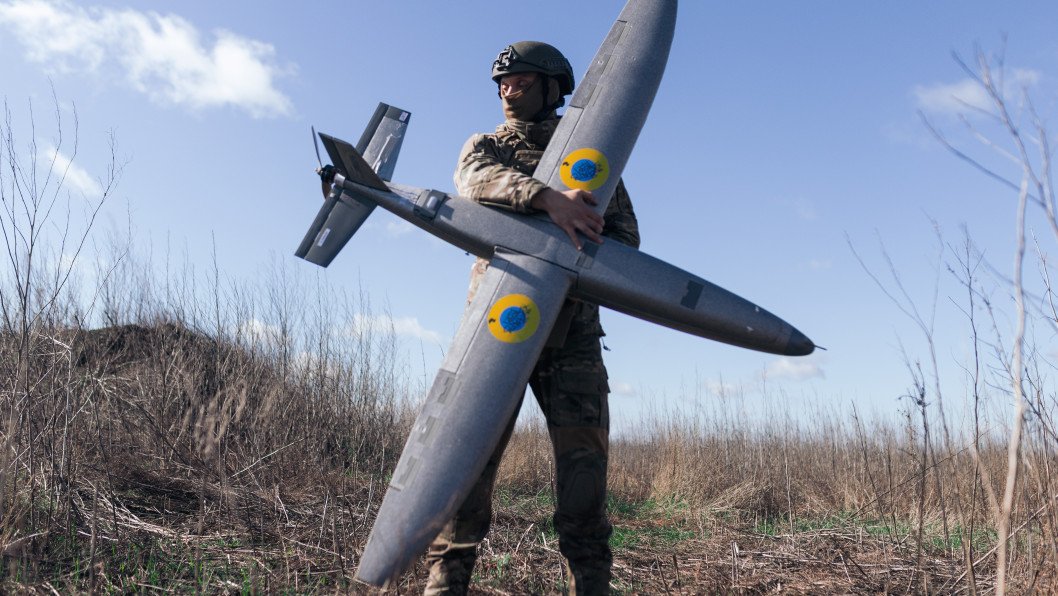
The base version of the UB60D without automatic guidance was codified on July 3, 2025. The system is designed as a ready-to-use precision FPV platform built around a 60 mm fragmentation munition. One of its key features is the absence of a need for additional warhead integration, allowing for faster deployment in combat conditions.
The platform is designed for mobility and rapid use, requiring minimal operator training and enabling quick transport and field deployment.
Earlier, Ukraine surpassed Russia in the number of long-range drone attacks for the first time since 2022. While the figures cannot be independently verified, the data suggests a shift in the aerial balance, driven by Ukraine’s expanding domestic drone production and increased use of low-cost strike UAVs targeting Russian energy infrastructure.
Discuss this article:
-9a7b3a98ed5c506e0b77a6663f5727c5.png)

-c439b7bd9030ecf9d5a4287dc361ba31.jpg "Photo of Katherina Popilnichenko")