- Category
- Latest news
US Fast-Tracks New Tank-Killer Weapon to Europe to Counter Russian Armor

The US Army is rushing a new top-attack weapon to Europe designed specifically to stop Russian tanks, fast-tracking the XM204 terrain-shaping munition as NATO prepares for high-intensity armored warfare on its eastern flank.
 Prefer U24 Media on Google
- Authors


The US Army has fast-tracked a new top-attack anti-vehicle munition for deployment in Europe, granting an Urgent Materiel Release (UMR) for the XM204 terrain-shaping munition as concerns grow over armored threats along NATO’s eastern flank, according to reporting by Army Recognition on January 17.
We bring you stories from the ground. Your support keeps our team in the field.
The decision—formally approved on January 12, 2026—allows the XM204 to bypass parts of the traditional acquisition process and move rapidly into operational service with US Army units stationed in Germany.
The accelerated rollout reflects a broader push to strengthen counter-mobility and area-denial capabilities against near-peer adversaries, Army Recognition noted in its January 17 analysis.
"Textron Systems Terrain Shaping"
— 𝐏𝐇𝐎𝐄𝐍𝐈𝐗🐦🔥𝐃𝐑𝐀𝐆𝐎𝐍 (@XPHOENIXDRAGON) October 4, 2024
Textron Systems is a trusted developer of terrain shaping solutions including the XM204 Top Attack Munition.
In addition to the XM204, we are developing the next generation top attack and bottom attack munition systems. pic.twitter.com/v5nW5jgTkc
Fast-tracking a new battlefield obstacle
The Urgent Materiel Release clears the XM204 for immediate operational use, enabling units in Europe to field the system while broader procurement continues.
Developed by Textron Systems under the Army’s Terrain Shaping Obstacles program, the munition is designed to deny, disrupt, and channel enemy armored movement rather than function as a traditional minefield.
Army Recognition reports that the XM204 is already entering initial service with forward-deployed formations, marking a notable shift in how the US Army approaches defensive obstacle warfare in high-intensity conflict scenarios.
Designed to defeat modern armor from above
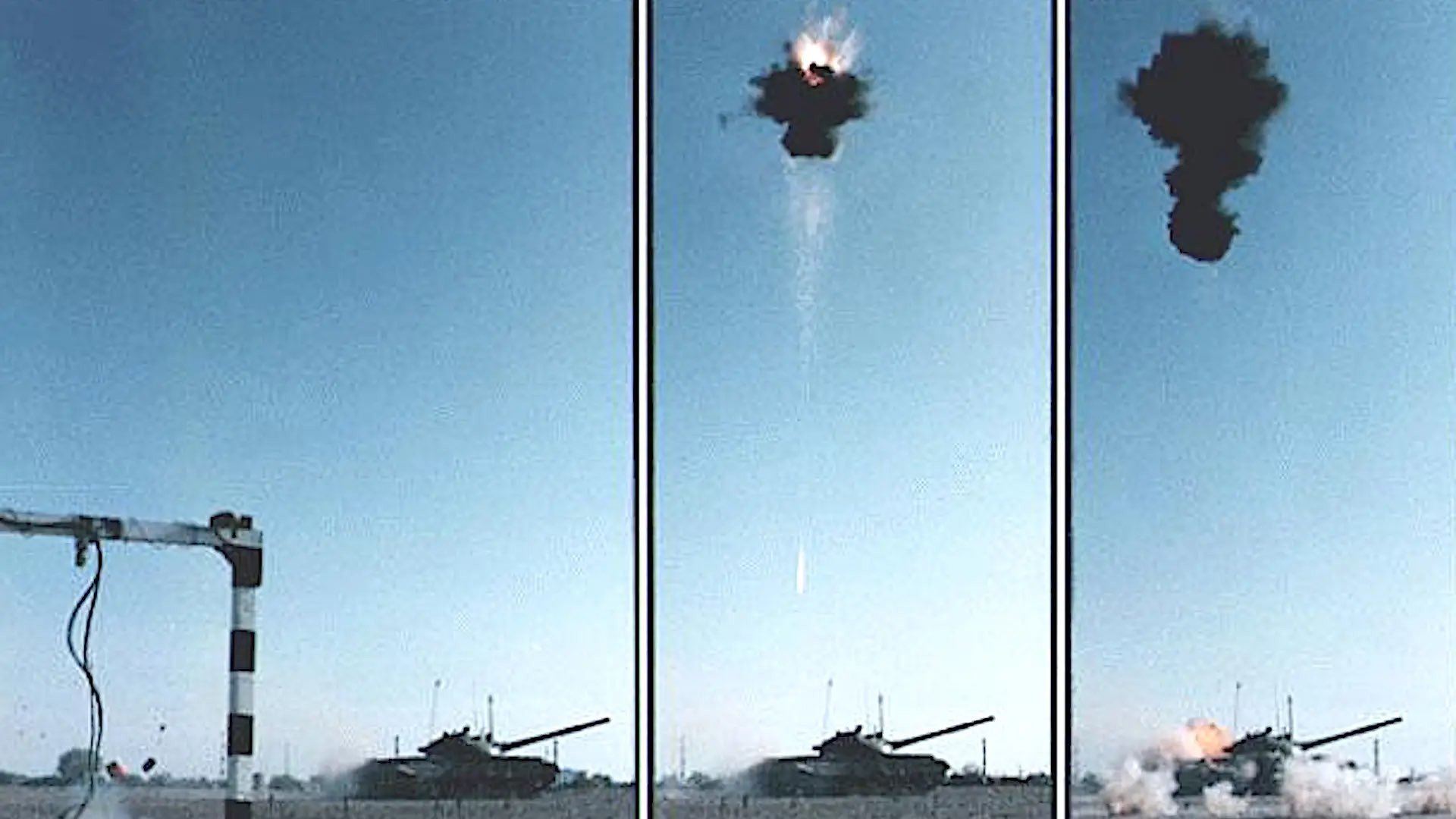
At the core of the XM204’s design is its top-attack profile, which exploits the thinner upper armor of modern tanks and armored vehicles.
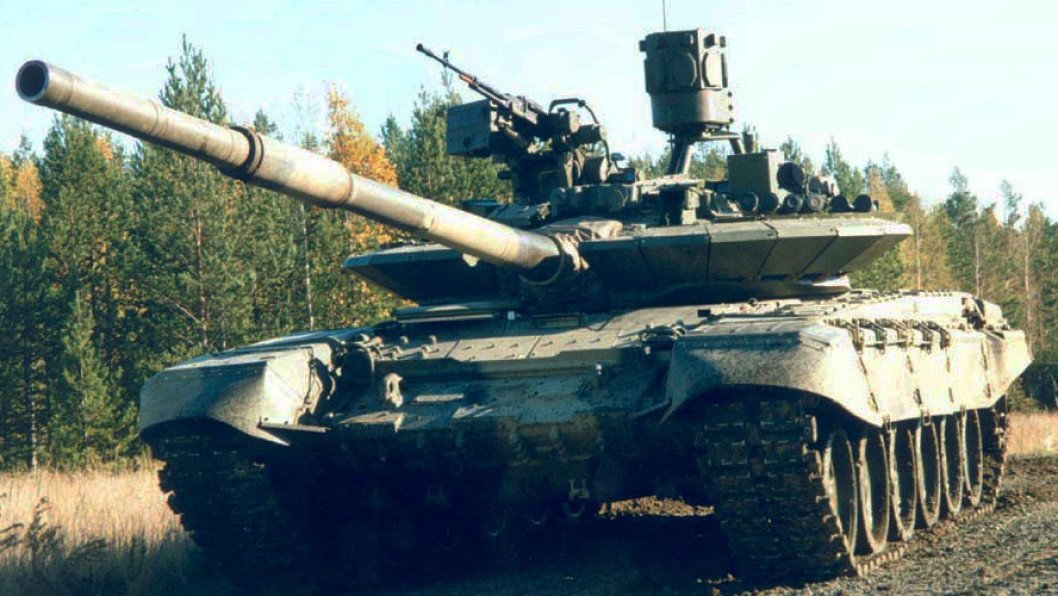
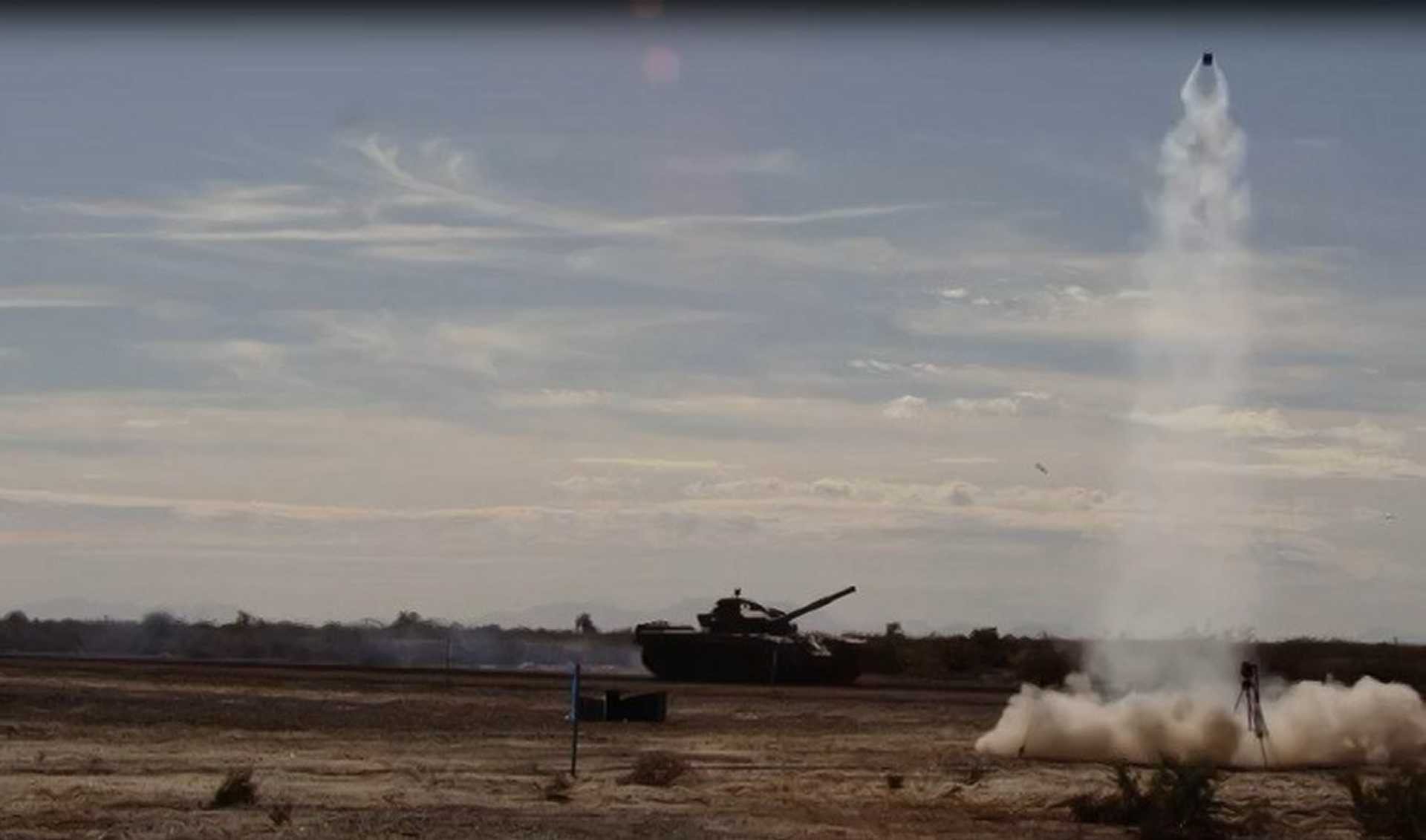
Each launcher deploys sensor-fuzed submunitions that rise above a detected target before striking downward, a method optimized for engaging vehicles such as Russia’s T-72 and T-90 series, according to Army Recognition.
Unlike older anti-vehicle mines, the XM204 is manually emplaced and can be integrated into layered defensive networks, allowing commanders to shape terrain dynamically rather than rely on static obstacles.
From testing to Europe in record time
The urgent release follows a series of accelerated development milestones. As Army Recognition has previously reported, the US Army approved low-rate initial production of the XM204 in September 2025 after successful First Article Testing.
Initial deliveries were earmarked for the 2nd Cavalry Regiment, based in Vilseck, Germany, which has since taken the lead in operator training and early integration. Army Recognition describes the unit as a key testbed for new counter-mobility systems intended for rapid employment in European contingency plans.
A safer alternative to traditional minefields
One of the XM204’s defining features is its focus on reducing long-term battlefield hazards. Army Recognition notes that the system incorporates multiple safeguards, including programmable self-destruct timers, tamper detection, and clear armed-and-safe indicators.
Commanders can select self-destruct settings ranging from four hours to 15 days, allowing terrain to be denied temporarily without leaving behind persistent threats to civilians or friendly forces—an issue that has long complicated the use of conventional landmines.
Built for speed, scale, and logistics efficiency
Each Dismounted Lethal Munition weighs about 38 kilograms (84 pounds) and can be carried by two soldiers or transported by standard vehicles and aircraft. According to Army Recognition, the XM204 requires minimal logistical support, no specialized containers, and no external maintenance contracts.
The system can be emplaced and armed in under five minutes, with certification training completed in roughly eight hours, making it well-suited for rapid deployment in contested environments.

Implications for NATO deterrence
Army Recognition emphasizes that the XM204’s deployment is as much strategic as technical. With Russia continuing to modernize its ground forces and refine armored maneuver tactics, the ability to quickly deny terrain adds a new layer of complexity for any potential offensive operation.
Observer-Coach Trainers from the Joint Multinational Readiness Center in Hohenfels have already been certified to train additional units, paving the way for wider adoption across US forces in Europe.
A signal of doctrinal change
The XM204’s urgent fielding underscores a broader recalibration in US Army thinking. Rather than relying solely on firepower and maneuver, Army Recognition assesses that the service is placing renewed emphasis on shaping the physical battlespace—slowing, channeling, and breaking enemy formations before decisive engagements begin.
With production underway at McAlester Army Ammunition Plant in Oklahoma, the XM204 is entering the Army’s inventory as a high-priority capability, reflecting growing recognition that future conflicts will hinge not just on mobility, but on the ability to deny it with speed and precision.
Earlier, US Army soldiers from the 3rd Armored Brigade Combat Team, 1st Cavalry Division, carried out Bradley Fighting Vehicle live-fire gunnery drills on January 11–12 at the General Silvestras Žukauskas Training Area near Pabradė, Lithuania, as part of ongoing efforts to maintain combat readiness along NATO’s eastern flank.
Discuss this article:
-9bd5e1532102621f8fb1c4ba871a3171.png)

-6b3c58bbcf8c8f2f38775f349181b1ab.jpg "Recruits, supervised by instructors, cover a distance on Day Zero of Basic Military Training at the 118th Separate Mechanised Brigade of the Ukrainian Armed Forces on April 5, 2026. (Source: Getty Images)")