- Category
- Latest news
US Megacarrier USS Gerald R. Ford Steams Into Norway as Russian Drones Haunt Europe’s Skies
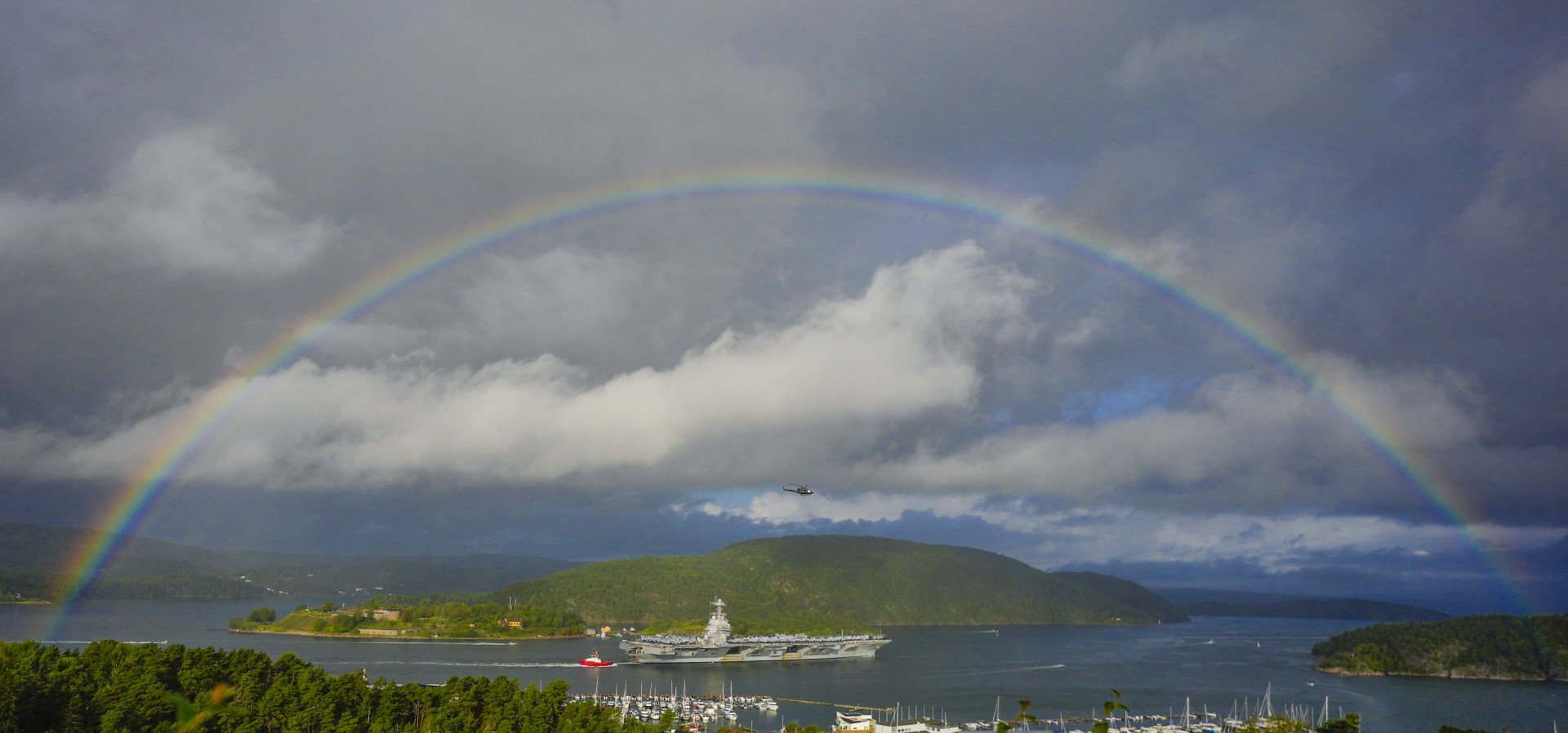
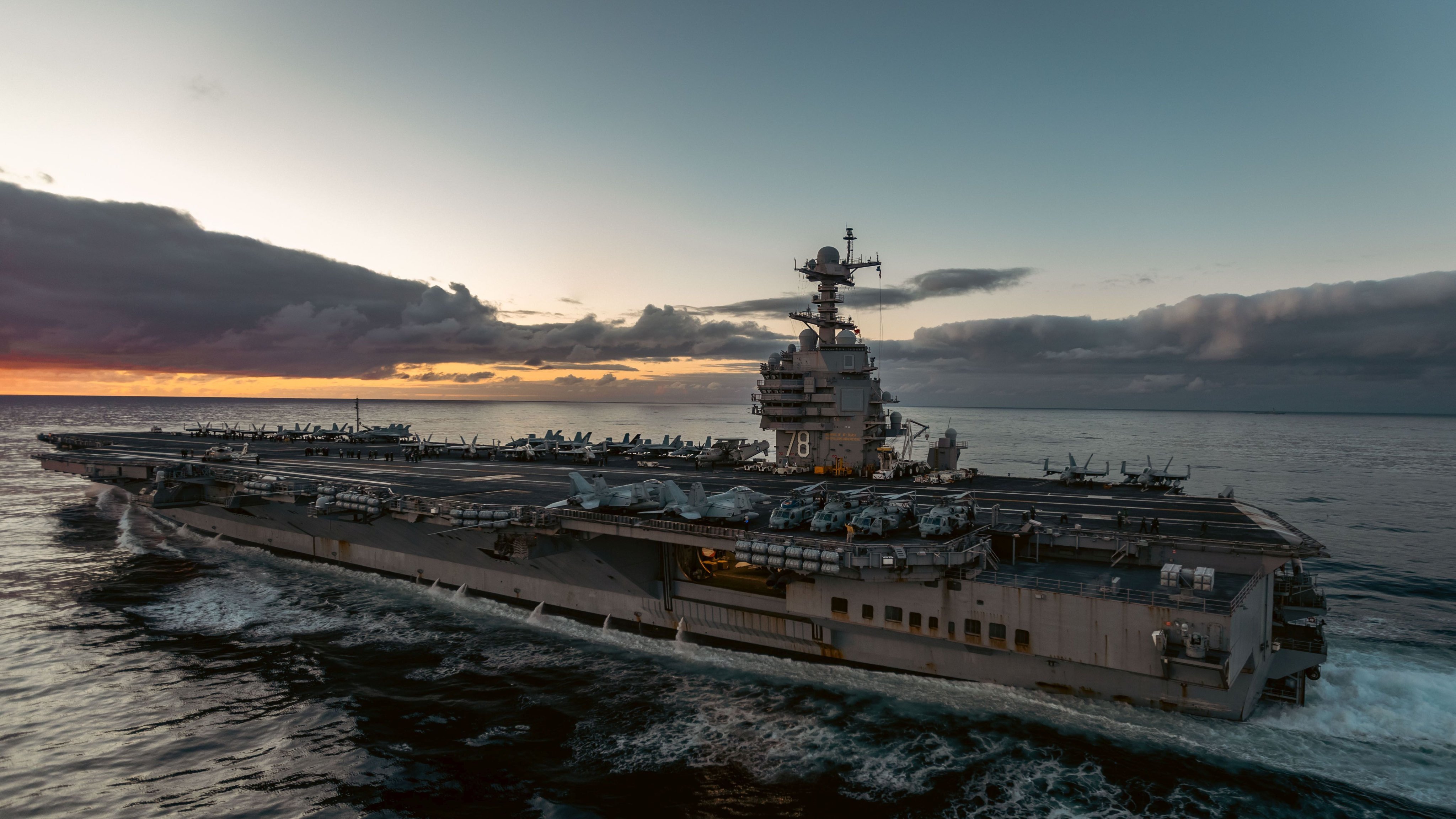
The world’s largest and most advanced aircraft carrier, the USS Gerald R. Ford, sailed into Norway’s Oslofjord. The deployment comes after a surge of mysterious drones over military bases and airports across Europe, incidents Western officials believe point back to Moscow.
 Prefer U24 Media on Google
- Authors


The USS Gerald R. Ford, the world’s largest and most advanced aircraft carrier, sailed into Norway’s Oslofjord on September 28 in a rare and deliberate show of force by the United States and NATO.
The deployment comes after weeks of unexplained drone sightings over military sites and civilian airports across Europe—incidents Western officials increasingly view as part of Moscow’s expanding hybrid playbook, defense media outlet Army Recognition wrote on September 29.
That's something you don't see every day!
— NATO (@NATO) September 28, 2025
The world’s largest aircraft carrier, 🇺🇸 USS Gerald R. Ford, sailing in the Oslofjord 🇳🇴 pic.twitter.com/nJ6xmpo6Xv
“This is no ceremonial port call,” a NATO official said.
“The Ford’s arrival is a direct message to Russia that the alliance is ready to respond at scale, across domains, if provoked.”
America’s superweapon in a Nordic fjord
Weighing in at 100,000 tons and stretching more than 1,090 feet, the Gerald R. Ford is not just another warship.
It represents a generational leap in US naval power: electromagnetic catapults that can launch 25% more sorties per day than previous carriers, advanced dual-band radar capable of tracking stealth drones and cruise missiles simultaneously, and layered defenses designed to counter both hypersonic threats and swarming UAVs.
🇧🇻🇺🇸 The USS Gerald R. Ford, the U.S. Navy’s largest and most costly nuclear-powered aircraft carrier, has arrived in Norway to join joint military exercises.
— The War Action (@TheWarAction) September 29, 2025
See the latest updates with us:@TheWarAction✅️ pic.twitter.com/ljA8f145cN
The carrier’s arrival in the narrow, icy waters of a Nordic fjord is a logistical feat in itself. Normally the realm of fishing boats and ferries, the Oslofjord now hosts a floating airbase carrying more than 75 combat-ready aircraft.
NATO’s Neptune Strike goes live
Army Recognition notes that the deployment is part of Neptune Strike 25-3, a multinational exercise spanning the North, Baltic, Adriatic, and Mediterranean seas. More than 10,000 personnel from 13 NATO member states are participating in live-fire drills, amphibious assaults, anti-submarine warfare, and command-and-control operations.
For the first time in years, NATO has placed such a critical US asset directly under allied operational command. Officials say the move is not just symbolic—it’s a rehearsal for high-intensity warfare against a near-peer adversary.
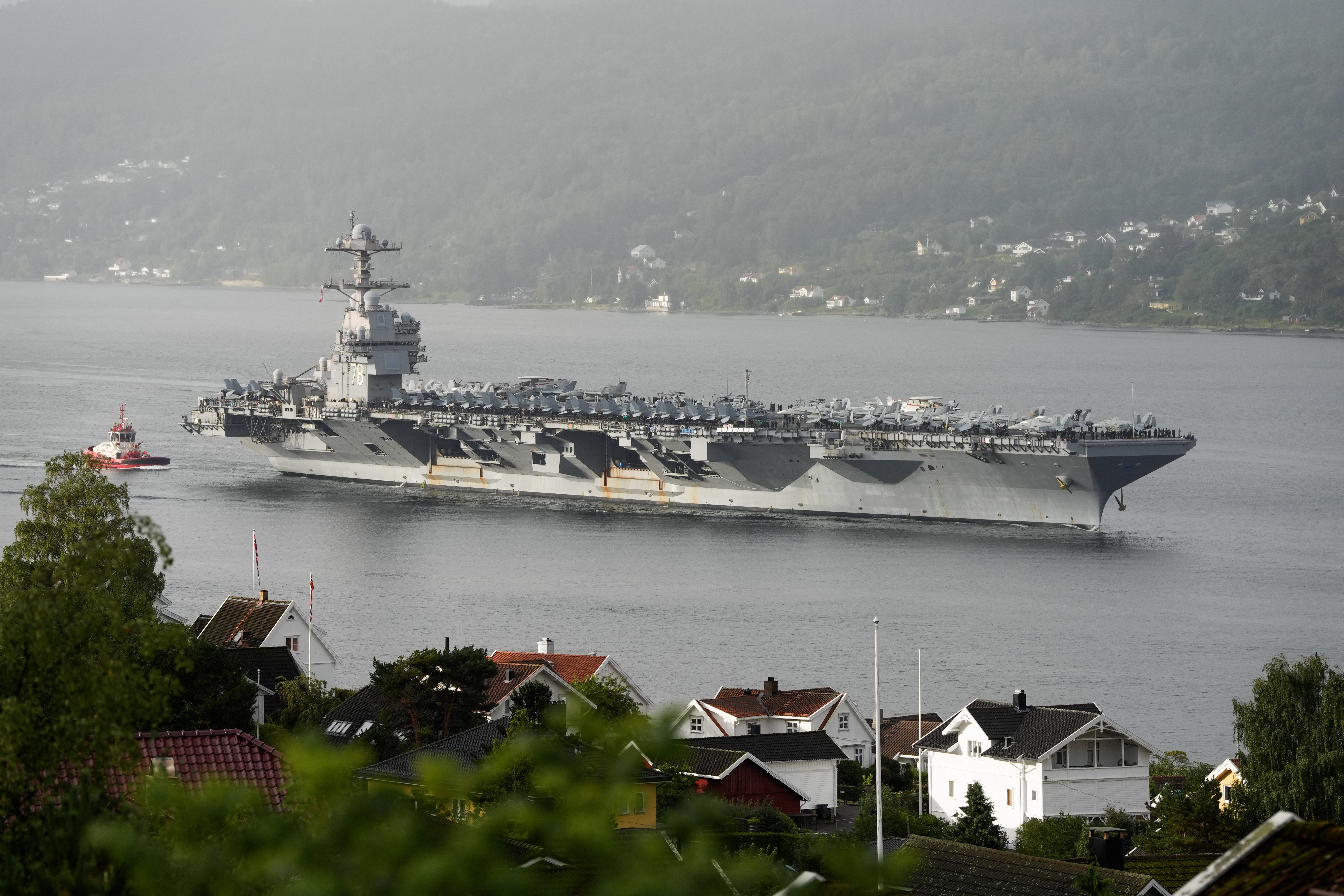
“The Ford under NATO control signals a shift from reassurance to readiness,” said retired Admiral James Stavridis, former Supreme Allied Commander Europe. “This isn’t just muscle-flexing; it’s about practicing real warfighting integration.”
Drone provocations put NATO on edge
The timing is not accidental. In recent weeks, Danish authorities have reported multiple drone incursions over sensitive military zones and airports.
Similar sightings have been logged in Germany, Poland, and the Baltic states. While attribution remains murky, NATO intelligence officials privately call the activity the work of a “professional actor,” pointing squarely at Moscow.
-73049c7b03079f4b8fe491836b17d9ac.jpg)
In addition, the Ukrainian President Volodymyr Zelenskyy stated that Russia’s so-called “shadow fleet” of oil tankers are being used to “launch and control” Russian drones over European cities.
Coupled with repeated Russian airspace violations over the Nordics, the drone episodes highlight the gray-zone tactics the Kremlin favors—deniable, disruptive, and designed to probe allied defenses. The Ford’s presence, NATO planners argue, recalibrates the balance by putting a highly visible, high-capacity strike platform at Russia’s northern doorstep.
The technology gap: Ford vs. Kuznetsov
Russia’s only carrier, the aging Admiral Kuznetsov, remains docked for repairs and is plagued by mechanical failures.
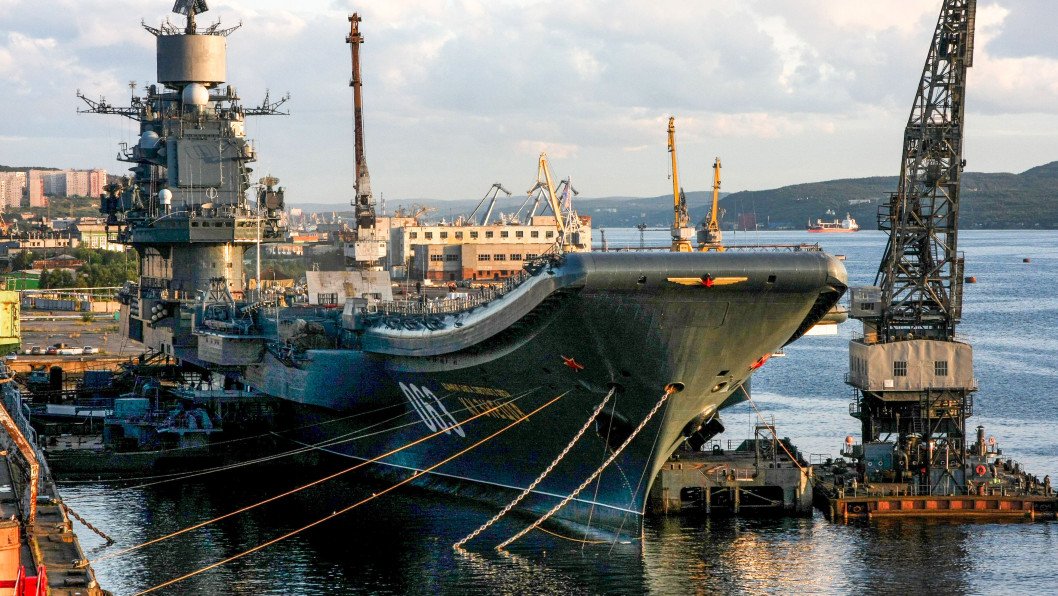
In stark contrast, the Gerald R. Ford represents a quantum leap in naval capability:
Electromagnetic Aircraft Launch Systems (EMALS): safer, faster launches that extend aircraft lifespan and boost sortie rates;
dual-band radar: tracks aerial and missile threats simultaneously, including low-flying drones;
integrated power: enough surplus energy to accommodate future directed-energy weapons like shipboard lasers;
automation: a smaller crew with more efficient systems, reducing strain while increasing effectiveness;
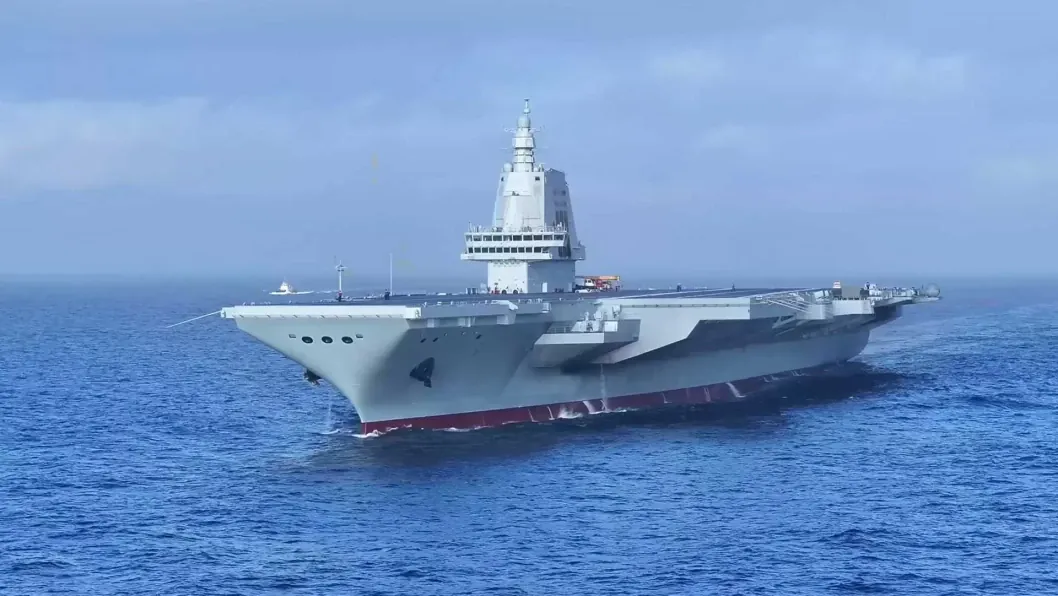
Even compared with China’s new Fujian carrier, analysts say the Ford maintains the edge in systems integration and combat readiness.
A message aimed straight at Moscow
Strategically, Ford’s location is no less important than its technology. From the Oslofjord, the carrier sits within reach of the North Atlantic and the Arctic, chokepoints critical to Russia’s Northern Fleet and submarine patrol routes.
By maneuvering the Navy’s crown jewel into these waters, Washington and Brussels are underscoring NATO’s commitment to defend its northern allies, including Norway and recently joined Finland and Sweden.
Proceedings Photo of the Week: The world's largest aircraft carrier, USS Gerald R. Ford (CVN-78), operates in the Norwegian Sea above the Arctic Circle, 30 August 2025. U.S. Navy (Daniel Ruiz) pic.twitter.com/DwEJfwYlJ0
— U.S. Naval Institute (@NavalInstitute) September 6, 2025
It’s deterrence by geography—an unmistakable reminder to Moscow that escalation carries risks it cannot easily offset.
Not just symbolism—live combat drills
This deployment is more than flag-waving. The Ford’s strike group is already engaged in live exercises: launching fighter sorties, running anti-submarine hunts, and testing joint command integration with allied navies.
“The line between peace and conflict is increasingly blurred,” said Norwegian Defense Minister Bjørn Arild Gram.
“The Ford’s presence shows that NATO is moving from reactive defense to proactive deterrence. That’s exactly what the moment requires.”
As unexplained drones buzz Europe’s skies and Russian jets skirt NATO borders, the calculus in the High North has shifted.
With the Gerald R. Ford under NATO command, deterrence is no longer theoretical—it’s embodied in a 100,000-ton mobile fortress bristling with warplanes.
🇺🇸⚓ USS Gerald R. Ford, America’s largest and most powerful nuclear aircraft carrier, arrives in Norway!
— WAR (@warsurveillance) September 30, 2025
The flagship of the U.S. Navy docks to join high-stakes joint military drills, showcasing unmatched naval power and precision.
This is a major show of strength in the… pic.twitter.com/AcmFSmh1dd
For Moscow, the message is clear: the alliance is watching, the alliance is ready, and this time the response is backed by overwhelming force.
Earlier, reports emerged that Germany planned to acquire three Large Remote Missile Vessels (LRMV) by 2035 as part of its updated naval strategy, Kurs Marine.
Discuss this article:



-c439b7bd9030ecf9d5a4287dc361ba31.jpg "Photo of Katherina Popilnichenko")