- Category
- Latest news
Why the US Might Build More of Its Most Advanced Nuclear Submarines as Rival Fleets Grow
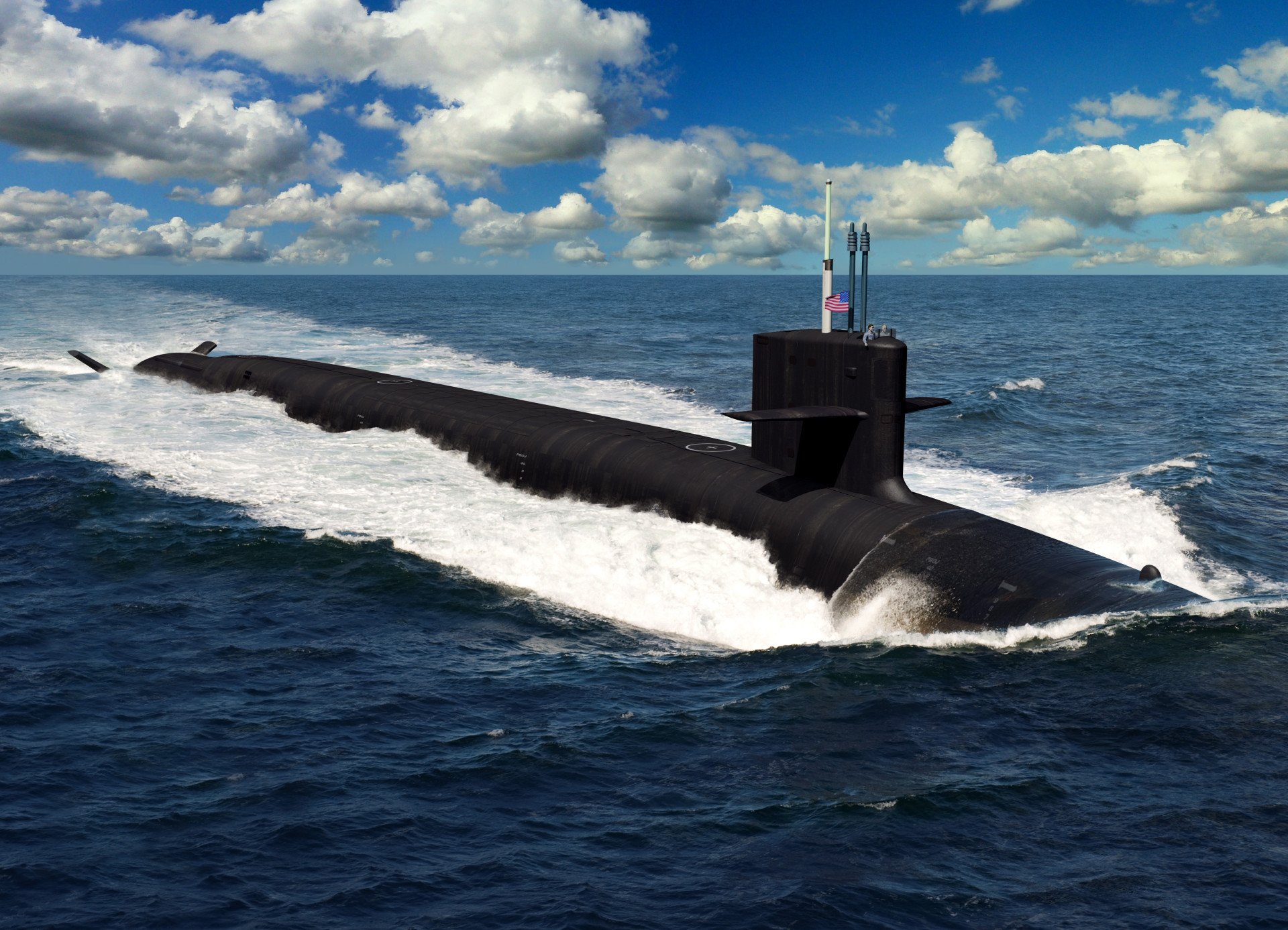
The United States is moving toward a new era of undersea nuclear dominance, as next-generation Columbia-class submarines promise quieter operations, longer endurance, and more flexible deterrence—while lawmakers explore expanding the fleet to further strengthen America’s strategic edge over Russia and China.
 Prefer U24 Media on Google
- Authors


The United States may need to expand its next-generation nuclear submarine fleet beyond current plans, as military leaders warn that the transition from Ohio-class to Columbia-class boats could reduce overall launch capacity at sea, according to Defense One, citing Admiral Richard Correll, head of US Strategic Command, on March 27.
We bring you stories from the ground. Your support keeps our team in the field.
Correll, speaking before the Senate Armed Services Committee, highlighted a stark imbalance in the numbers.
“The existing capability we have includes 14 Ohio-class boats with 20 tubes. So that’s 280 launch tubes. The program of record is a minimum of 12 Columbia with 16 tubes each, and that’s 192. So that’s 280 versus 192,” Correll said.
That gap has sparked renewed discussion in Congress, with Sen. Tommy Tuberville proposing an expansion of the Columbia-class fleet to 16 submarines instead of the currently planned 12.
The General Dynamics Electric Boat shipyard in Connecticut is responsible for building the Columbia-class ballistic missile submarine. As shown in Figure 1, the submarine incorporates the Common Missile Compartment (CMC).
— 笑脸男人 (@lfx160219) February 10, 2026
Unlike the previous Ohio-class, which used individually… https://t.co/isFEZ93Axy pic.twitter.com/kRaA0oNWtu
Why more submarines could mean stronger deterrence
Correll made clear that increasing the number of Columbia-class submarines would significantly enhance US nuclear flexibility.
“Additional capacity and capability is very beneficial from my perspective,” he said, adding that he would “continue to advocate for additional capability at sea.”
🇺🇸☢️U.S. Navy test-fires unarmed Trident nuclear-capable missiles:
— WORLD AT WAR (@World_At_War_6) February 9, 2026
The U.S. Navy's Strategic Systems Programs conducted four scheduled test flights of unarmed Trident II D5LE missiles from an Ohio-class nuclear-powered submarine off the Florida coast between September 17 and… pic.twitter.com/bBc48OapmW
When pressed on the potential benefits of expanding the fleet, Correll emphasized that more submarines would maximize “flexibility and options to present to the president should the need arise.”
At the core of the debate is the role of ballistic missile submarines (SSBNs) in the US nuclear triad—the three-part system that includes land-based missiles, strategic bombers, and sea-based deterrence.
“The importance to our deterring capability, I can’t overstate that—all three legs are vitally important,” Correll said. “For the SSBN, that assured second strike capability that’s always at sea, always ready to respond, deters effectively.”
JUST IN: 🇺🇸 General Dynamics CEO says the first Columbia-class submarine is now 60% complete, calling next year a “pivotal” phase in the program.
— Defence Index (@Defence_Index) October 25, 2025
The new class will replace the U.S. Navy’s Ohio-class submarines, marking a major step in modernizing America’s nuclear fleet. pic.twitter.com/8k50O6ShZe
Backbone of US nuclear power
The US Navy currently operates 14 Ohio-class ballistic missile submarines, which form the most survivable leg of the nuclear triad.
Each Ohio-class boat carries up to 20 Trident II D5 nuclear missiles under arms control limits, meaning the fleet provides roughly 70 percent of all deployed US nuclear warheads.
🚨USS OHIO – US Navy’s Nuclear Beast 🇺🇸
— Defense Intelligence (@DI313_) July 5, 2025
The USS OHIO is a nuclear-powered ballistic missile submarine (SSBN) of the US Navy.
It carries up to 24 Trident II D5 nuclear missiles with intercontinental range.
Powered by a nuclear reactor, it can stay submerged for months without… pic.twitter.com/GG3EhVpeV9
These submarines operate in continuous patrol cycles from bases in Georgia and Washington state, remaining hidden at sea and capable of launching a retaliatory strike at any time.
This “second-strike” capability is the cornerstone of nuclear deterrence: even if the US were hit in a first strike, its submarines would remain undetected and able to respond.
Columbia-class: quieter, smarter—but fewer
The Columbia-class submarines are designed to replace the aging Ohio fleet, with the first boat expected to enter service around 2031, though delivery of the lead vessel has already slipped to 2028.
While more advanced, the new submarines will carry fewer missile tubes—16 instead of 24 (or 20 under treaty limits on Ohio boats).
.@USNavy silent service in action🤫
— Department of War 🇺🇸 (@DeptofWar) September 1, 2019
Get a rare look at the Ohio-class fleet guided-missile submarine #USSFlorida as it operates in the @USNavyEurope region - capable of conducting clandestine, carrier, and expeditionary strike operations. pic.twitter.com/dvpJ6OHBam
Still, Columbia-class submarines bring major technological advantages.
They will feature a life-of-ship nuclear reactor that eliminates the need for refueling, allowing each submarine to remain operational for over 40 years without major overhaul.
They will also use an electric-drive propulsion system, making them significantly quieter than Ohio-class boats—a critical advantage in avoiding detection by increasingly capable Russian and Chinese anti-submarine warfare systems.
Other improvements include advanced sonar systems, reduced acoustic signatures, and a shared missile compartment design developed with the United Kingdom.
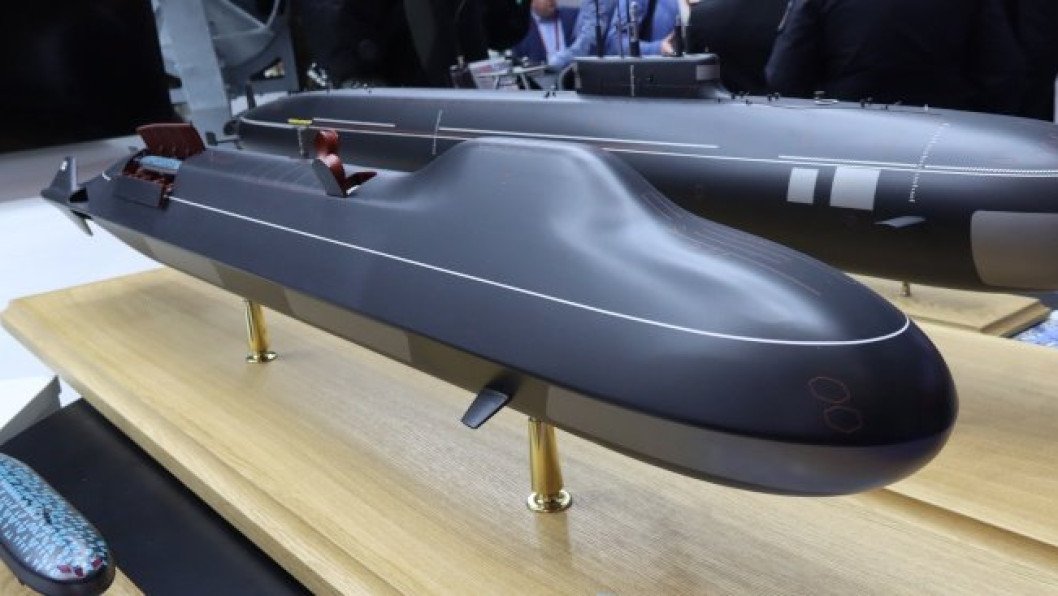
Why the US needs these submarines more than ever
Unlike land-based missiles or bombers, nuclear submarines are nearly impossible to detect when operating at sea.
That makes them the most reliable element of the nuclear triad.
Fixed missile silos can be targeted. Aircraft can be tracked. But a submarine hidden in the ocean provides a guaranteed retaliatory capability—ensuring that no adversary can launch a first strike without facing devastating consequences.
This is why the Columbia-class program, with a projected cost exceeding $130 billion, has been designated the Pentagon’s top acquisition priority.
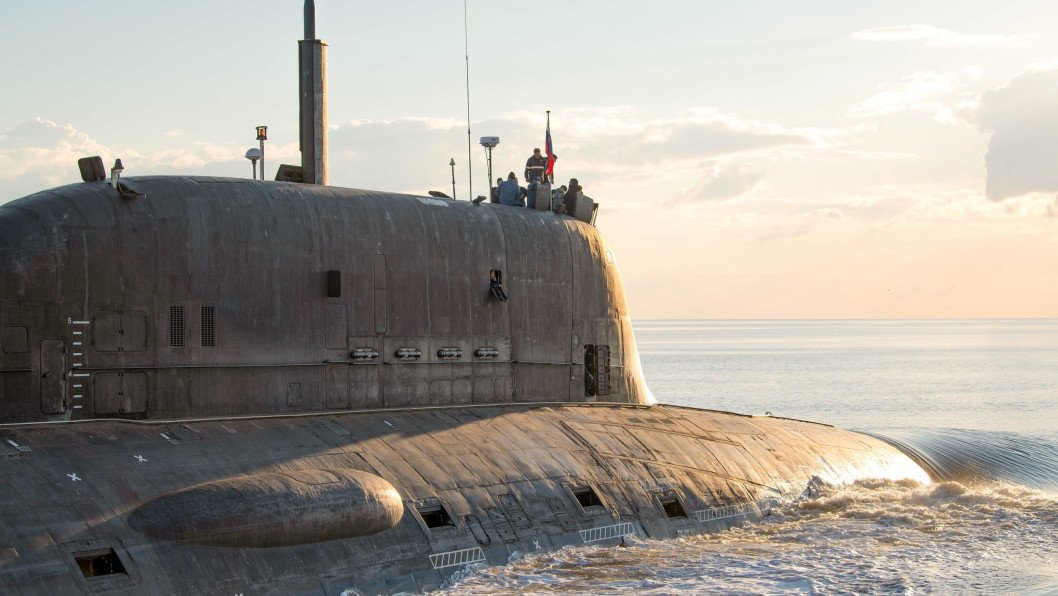
Race against time
The urgency is driven by the age of the current fleet.
The first Ohio-class submarines entered service in the early 1980s and were originally designed for a 30-year lifespan—later extended to 42 years.
Unlike other US nuclear submarines, Ohio-class reactors cannot be refueled. Once their fuel is depleted, the submarines must be retired.
That means the existing fleet will begin to phase out in the early 2030s—whether replacements are ready or not.
To bridge the gap, the Navy is extending the service life of Ohio-class boats, but officials warn there are hard limits.
🚨 BREAKING:
— Defence Index (@Defence_Index) July 19, 2025
🇨🇳 China is developing a strategic nuclear submarine larger than the U.S. Columbia-class.
A recent CSSC tender details a 14-meter pressure hull, surpassing:
🇺🇸 Columbia-class: 12.8m
🇷🇺 Borei-class: 11.5m
A 14m bearing ring has also been observed — suggesting… pic.twitter.com/ZCLm7Ljswg
Fewer boats, bigger stakes
The current plan calls for 12 Columbia-class submarines, each carrying 16 missile tubes—a total of 192 launch tubes.
That compares to 280 tubes in the current Ohio fleet.
While improved stealth and availability may offset some of that reduction, military planners are increasingly questioning whether the smaller fleet can sustain the same level of deterrence—especially as China expands its nuclear arsenal and Russia continues to modernize its submarine forces.
For some lawmakers, the answer is clear: more submarines.
‼️‼️🇨🇳🇺🇲 A recent Pentagon assessment warns that People’s Liberation Army Navy is on track to surpass the United States Navy in submarine strength by 2035 and could match U.S. aircraft carrier numbers within the same timeframe. While Washington retains a qualitative edge through… pic.twitter.com/bEKEKa4abw
— Visioner (@visionergeo) December 27, 2025
Earlier, China had become the world’s second-largest operator of nuclear-powered submarines, overtaking Russia and narrowing the gap with the US.
The shift places China behind only the United States Navy, while pushing Russia into third place in terms of the number of nuclear submarines currently in service.
According to the report, the People’s Liberation Army Navy now operates around 32 active nuclear-powered submarines. By comparison, Russia’s fleet is estimated to include roughly 25 to 28 such vessels.
The United States remains the undisputed leader, with approximately 71 nuclear-powered submarines in service as of the end of 2025.
Discuss this article:
-4a56a6b482ec132402c16ef6fcabf9a2.png)





-72b63a4e0c8c475ad81fe3eed3f63729.jpeg "Photo of Cyril Barabaltchouk")