- Category
- Latest news
Russia’s Most Notorious Underwater Weapon Gets Its Own Submarine
 Prefer U24 Media on Google
- Authors


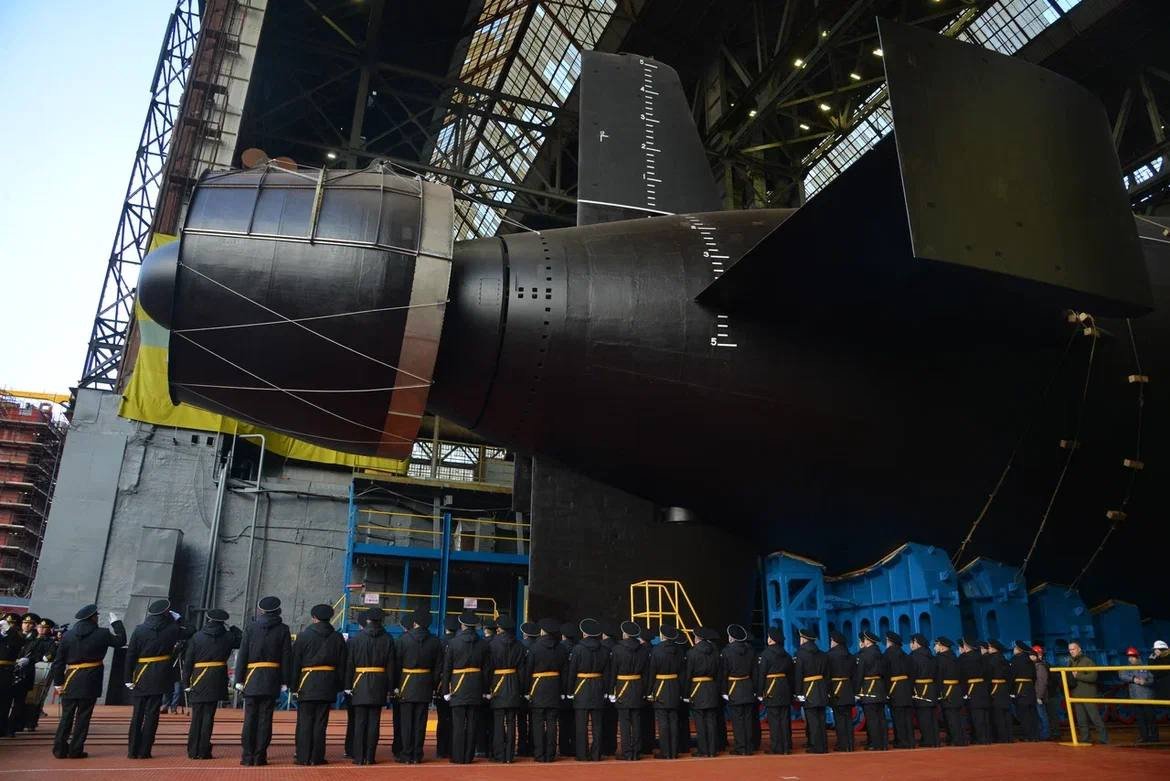
Russia is moving closer to sea trials of a submarine built for a single, unprecedented task: deploying the Poseidon nuclear-powered underwater weapon—an autonomous system designed to bypass traditional missile defenses and strike from the depths.
Russia’s purpose-built carrier for its most controversial nuclear weapon may soon head to sea, as Moscow prepares to test a submarine designed not for patrols—but for deploying the Poseidon nuclear torpedo, according to Russian state-aligned outlet Izvestia.
Russia’s Project 09851 nuclear-powered submarine Khabarovsk could begin sea trials in 2026 as construction and outfitting near completion at the Sevmash shipyard in Severodvinsk. The update was highlighted by Army Recognition on January 17, as part of its ongoing monitoring of Russian strategic weapons programs.
We bring you stories from the ground. Your support keeps our team in the field.
Built around Poseidon, not missiles
Unlike Russia’s ballistic missile submarines, the Khabarovsk was designed from the outset as a dedicated carrier for the Poseidon nuclear-powered unmanned underwater vehicle.
According to Army Recognition, the submarine represents a shift away from adapting existing platforms and toward purpose-built hulls optimized for large autonomous underwater systems.
A ceremony marking the launch of the nuclear-powered submarine Khabarovsk was held at the Sevmash JSC shipyard under the supervision of Russian Defense Minister Andrey Belousov.
— OSINTWarfare (@OSINTWarfare) November 1, 2025
The Khabarovsk, known as a Poseidon carrier, is designed to deploy the 2M39 Poseidon, a… pic.twitter.com/lFKsWEOFcF
Launched ceremonially on November 1, 2025, and physically lowered into the water later that month, the Khabarovsk has since entered the fitting-out phase while afloat.
As Army Recognition notes, this stage precedes mooring trials and is typically followed by factory sea trials once onboard systems are fully integrated.
Russian sources classify the Khabarovsk as a fourth-generation nuclear submarine intended for “special missions,” rather than routine deterrence patrols. Its role blends characteristics of attack submarines and cruise-missile platforms, while prioritizing the deployment of strategic unmanned weapons.
Borei DNA, but a very different mission
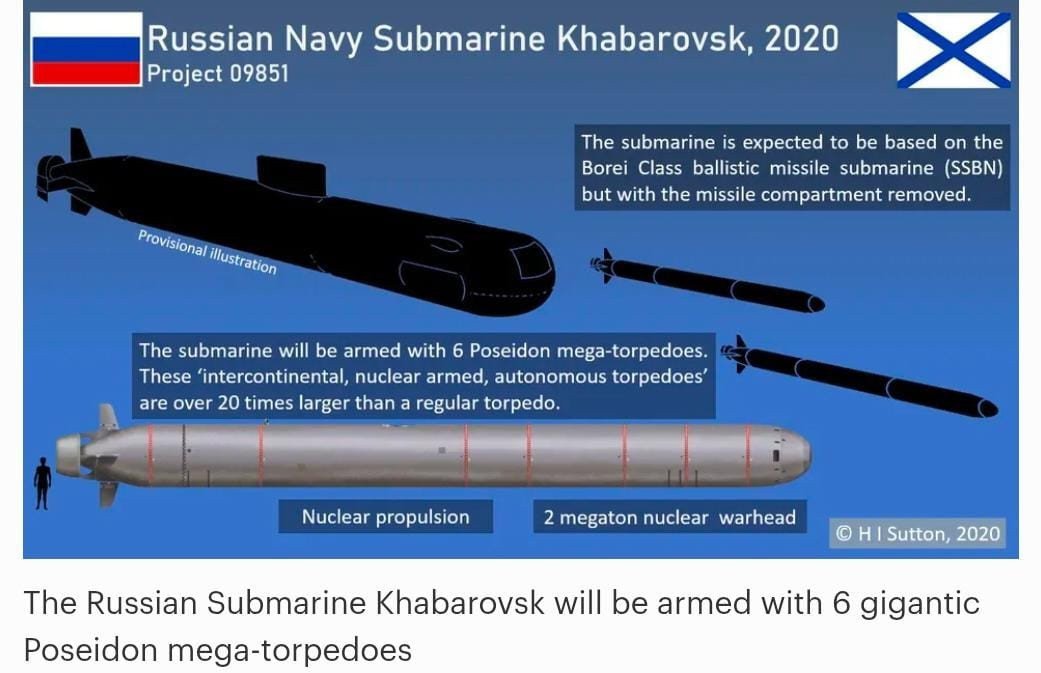
The submarine’s hull design is derived from the Borei and Borei-A classes, but without the ballistic missile compartment. According to Army Recognition, this omission fundamentally reshapes the internal layout, freeing space for mission payloads rather than SLBM launch tubes.
While smaller than a Borei-class SSBN, Khabarovsk retains the endurance and propulsion associated with Russia’s modern nuclear fleet.
Ukrainian military intelligence has obtained a full set of classified documents on Russia’s newest strategic nuclear submarine, the K-555 “Knyaz Pozharsky” (Borei-A class). The files include the crew list with positions and qualifications, combat instructions, engineering… pic.twitter.com/VGjb2n5MUk
— NOELREPORTS 🇪🇺 🇺🇦 (@NOELreports) August 3, 2025
Displacement estimates cluster around 10,000 tons, though reported dimensions vary widely—reflecting the secrecy surrounding the project. Length figures range from roughly 113 meters to as much as 140 meters, while beam estimates fluctuate between 10 and 13.5 meters, Army Recognition reports.
Nuclear propulsion and high underwater performance
Powering the submarine is a nuclear reactor believed to be a KTP-6-185SP pressurized-water unit producing around 200 megawatts. As outlined by Army Recognition, this feeds a turbine generating roughly 50,000 horsepower, driving a single waterjet propulsor supplemented by auxiliary thrusters for maneuvering.
Performance figures consistently cited by analysts place the submarine’s submerged speed between 30 and 32 knots, with a maximum diving depth of up to 500 meters.

These characteristics put the Khabarovsk among the more capable nuclear submarines in Russia’s inventory in terms of mobility and survivability.
The Borei-derived stern configuration—featuring large vertical stabilizers and an X-shaped or modified cruciform control surface—also reduces cavitation and alters the vessel’s acoustic signature, according to Army Recognition assessments.
Designed for long, isolated deployments
Crew endurance was clearly a design priority. The Khabarovsk is believed to support deployments lasting 90 to 120 days, with a reported crew of about 100 personnel. A draft of roughly 10 meters aligns with its displacement and internal volume, enabling extended operations far from home ports.
As Army Recognition notes, these endurance parameters are essential not only for nuclear propulsion and navigation, but also for the handling, deployment, and support of large unmanned underwater vehicles during patrols.
🚨🇷🇺🇬🇧 BREAKING: RUSSIA REPORTEDLY DEPLOYS NUCLEAR SUB TOWARDS UK WATERS
— British Intel (@TheBritishIntel) December 26, 2025
Russia is reportedly deploying a Borei-class nuclear-powered submarine armed with nuclear warheads towards the UK’s vicinity.
The Borei-class is designed for second-strike nuclear capability and represents… pic.twitter.com/0IgJaa0niU
The Poseidon factor
The submarine’s defining feature remains its role as a Poseidon carrier. Russian sources indicate the installation of six Poseidon launchers in the forward section of the hull.
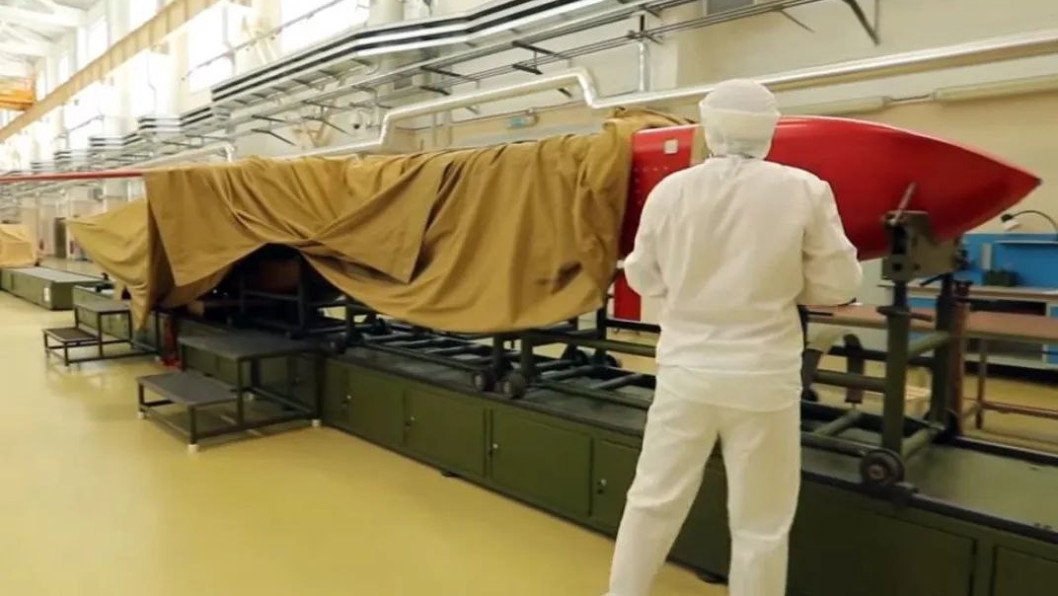
Poseidon—formerly known as Status-6—is a nuclear-powered autonomous underwater vehicle designed to operate independently after launch.
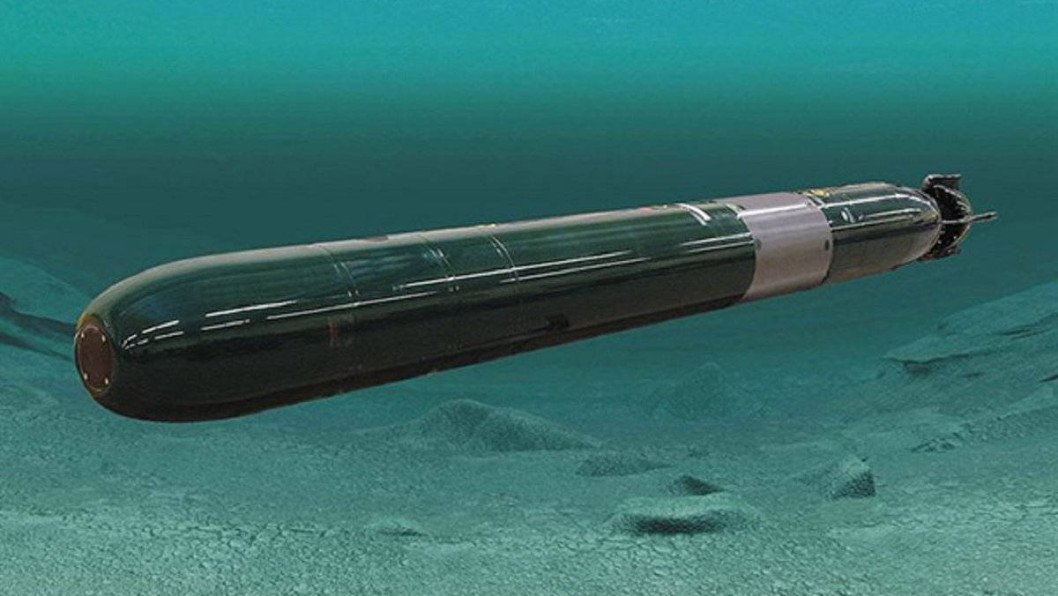
According to Army Recognition, Poseidon is far larger than conventional torpedoes, with reported lengths ranging from 16 to 24 meters, a diameter of up to two meters, and an estimated mass near 100 tons.
Its reported speed of 60–70 knots and operating depth of up to 1,000 meters place it well beyond the reach of most existing anti-submarine defenses.
The system is widely believed to be intended for nuclear strikes against coastal infrastructure, naval bases, or carrier groups, though it has not yet been declared fully operational.
Conventional weapons still matter
Until Poseidon enters full service, the Khabarovsk is expected to rely on more traditional armaments for self-defense. Army Recognition reports that these may include six to eight 533-mm torpedo tubes compatible with weapons such as the USET-80, Fizik-2, and Futlyar, as well as Kalibr cruise missiles and naval mines.
Some sources also reference portable air defense systems for limited point defense while surfaced, though such capabilities would play a secondary role in the submarine’s overall mission profile.
Bulava launch by Borei-A class SSBN “Imperator Alexandr III” pic.twitter.com/xkXOy1z3KL
— krakek (@krakek1) November 5, 2023
A slow but strategic program
The Khabarovsk was laid down on July 27, 2014, and has experienced repeated delays before its 2025 launch. Current timelines cited by Army Recognition and Russian media place commissioning sometime after trials conclude in 2026.
Long-term planning reportedly envisions three or four Project 09851 submarines, with follow-on hulls potentially assigned to Project 09853. One such submarine, tentatively named Orenburg, has been linked to preparatory construction activities expected to begin in late 2025.
Once accepted into service, Khabarovsk is expected to join the Pacific Fleet, possibly as part of a new submarine division based on Kamchatka—placing Russia’s Poseidon program squarely in the Pacific theater.
Earlier, Russian leader Vladimir Putin ordered his government and security agencies to begin preparing for potential full-scale nuclear weapons tests—a move that would end a 35-year moratorium and mark the country’s return to Cold War–style atomic posturing.
Discuss this article:



-c439b7bd9030ecf9d5a4287dc361ba31.jpg "Photo of Katherina Popilnichenko")