- Category
- Life in Ukraine
Ukraine Is Training a New Generation of Digital Government Leaders
 Prefer U24 Media on Google
- Authors

-29a1a43aba23f9bb779a1ac8b98d2121.jpeg "Photo of Illia Kabachynskyi")
In just a few years, Ukraine has gone from paper queues to a digital revolution—putting everything from driver’s licenses to military IDs in a smartphone. To advance the country’s digital transformation, Ukraine launched the CDTO Campus, a national training project that creates digital leaders who are reengineering government from the inside out.
In 2019, Ukraine set an ambitious goal: to digitize as many public services as possible and effectively bring the state into the hands of citizens through their smartphones. Some groundwork had already been laid—certain registries were online and digital services were available. Still, people often had to queue for paperwork. The Digital Transformation Ministry was launched to change that, led by Mykhailo Fedorov. In 2020, the government introduced Diia, a digital platform that now hosts dozens of public services and replaces many paper-based documents.
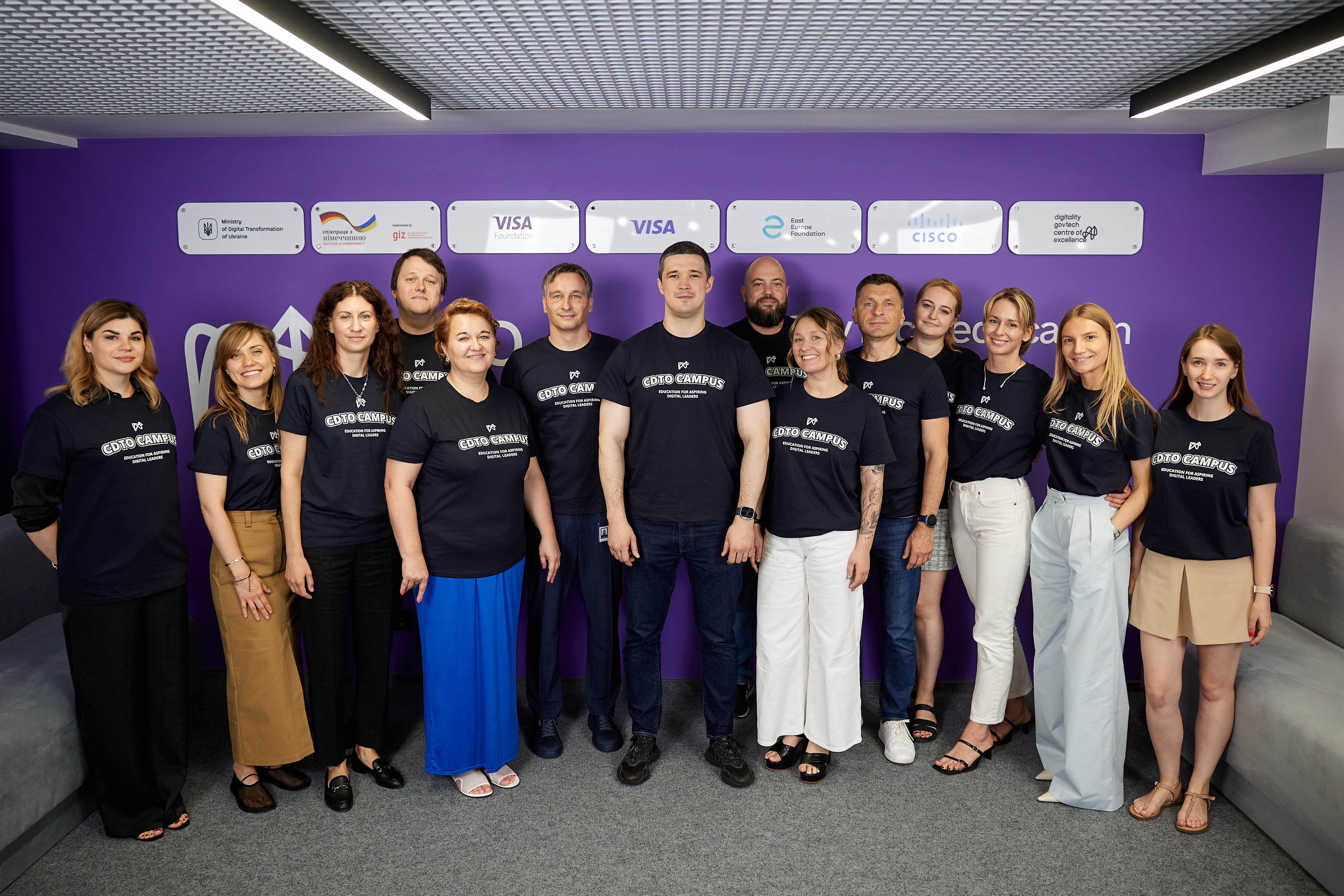
To further speed up the transition, a new government role, the Chief Digital Transformation Officer (CDTO), was introduced—a position previously unheard of in Ukraine’s public administration. CDTOs were to be appointed across all ministries and eventually local governments, tasked with digitizing analog processes and improving services. For instance, while the Internal Affairs Ministry oversees issuing driver’s licenses and license plates, the Digital Transformation Ministry manages the Diia app. Thanks to collaboration between CDTOs at both ministries, Ukrainians can now obtain driver’s licenses, buy or sell vehicles, and receive license plates—entirely through Diia.
We bring you stories from the ground. Your support keeps our team in the field.
But even meeting the government’s baseline needs required an enormous talent pool—nearly 1,500 digital leaders are needed to lead reforms at all levels of government.
To meet this demand, the CDTO Campus was launched as a joint project of the Digital Transformation Ministry and the East Europe Foundation. Its goal: to train leaders capable of digitizing the state. But how exactly does it work?
What Is CDTO Campus?
A Chief Digital Transformation Officer, or CDTO, can be a deputy minister, head of a government agency, regional governor, or local digital leader responsible for implementing tech solutions, automating processes, digitizing public services, and improving citizens’ access to government. Their core mission is to make the state more efficient and user-friendly through technology.
CDTO Campus is a national educational initiative that prepares these leaders and their teams. It equips people responsible for reforming public institutions with the skills and tools they need to succeed. The Campus is designed to ensure the public sector is staffed with qualified professionals and targets both civil servants and private-sector experts transitioning into government.
One example is Roman Zahorodnii, project lead for Army+ , who joined the Digital Transformation in Public Administration program to consolidate his GovTech knowledge, expand beyond defense and security, and bring new tech talent into military digital services. During his training at CDTO Campus, Zahorodnii developed his capstone project—an electronic military ID—which will serve as a central product in the upgraded Army+ strategy. The Campus provided a methodological framework, expert guidance, and a professional environment to test the concept, enabling him to turn the idea into a practical implementation plan.
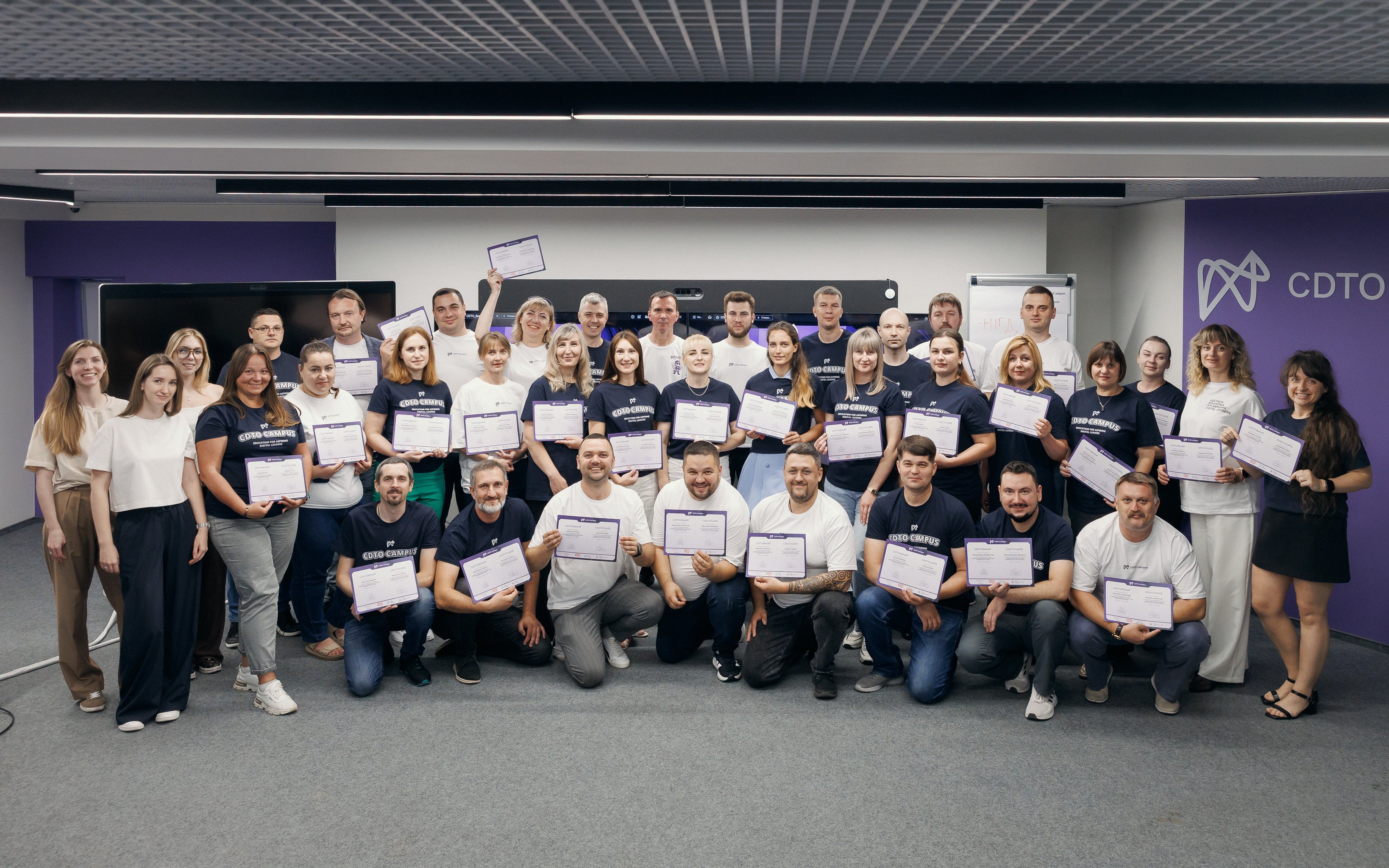
CDTO Campus currently offers training in four key areas:
GovTech (faculty)
Cybersecurity faculty
AI faculty
Diia faculty
These long-term programs combine technical knowledge, leadership development, and strategic thinking to prepare participants for digital challenges. Many programs are built in collaboration with global tech leaders like Google, Microsoft, AWS, Cisco, Apolitical, UNDP, and others, giving Ukrainian public servants access to world-class expertise.
CDTO training results
After five years, Ukraine’s strategy of integrating CDTOs into government is yielding results. Hundreds of services have been digitized, with more added each year. Today, Ukraine has:
45 CDTOs in central executive bodies, including:
14 in ministries
31 in agencies like the State Migration Service, Pension Fund, Border Guard Service, State Archives, and more
15 CDTOs in regional military administrations (RMAs)
Over 1,300 local digital leaders working in communities across the country
The local leaders are responsible for implementing digital services, maintaining digital infrastructure, expanding access to technology, and driving local innovation.
In April 2025, the Ukrainian government expanded the authority of CDTOs. They are now responsible not only for digitalization, but also for innovation development in central and local government bodies.
Why the CDTO model works
Picture a typical ministry: it juggles hundreds of tasks and faces constant demands. In that environment, there’s often little time—or political will—to identify what could be automated or improved. That’s where the CDTO comes in. This role was created specifically to recognize and drive those changes. Since every ministry now has a CDTO, they can identify synergies across services, streamline public access, reduce corruption risks, and drive digital innovation.
Specialized training ensures these individuals have the necessary skill sets and understand both public-sector procedures and private-sector best practices. This makes them more flexible and adaptive. The CDTO role brings fresh experience into sectors that may not have seen innovation in decades—one reason the government expanded its mandate.
This approach is one of the first of its kind in the world—and it’s delivering results.
By 2024, Ukraine ranked 5th globally in the United Nations E-Government Development Index (EGDI) for digital public service delivery—an extraordinary leap of 97 positions in just six years.
Discuss this article:
-ee9506acb4a74005a41b4b58a1fc4910.webp)

FAQ
What is Diia?
The Diia app is a mobile application that provides Ukrainians with access to digital documents, including an ID card, biometric passport, student card, driver’s license, vehicle registration, insurance policy, tax number, birth certificate, and IDP certificate, along with many other services.
How does Diia help in times of war?
The Diia app supports Ukrainians during Russia’s war of aggression by providing essential digital services like housing for displaced people, war-damage claims, and secure access to social benefits.

-c439b7bd9030ecf9d5a4287dc361ba31.jpg "Photo of Katherina Popilnichenko")


-24deccd511006ba79cfc4d798c6c2ef5.jpeg "Photo of Louis Beaudemont")