- Category
- Opinion
What the NYT Got Wrong About Ukraine’s Operation in Kursk
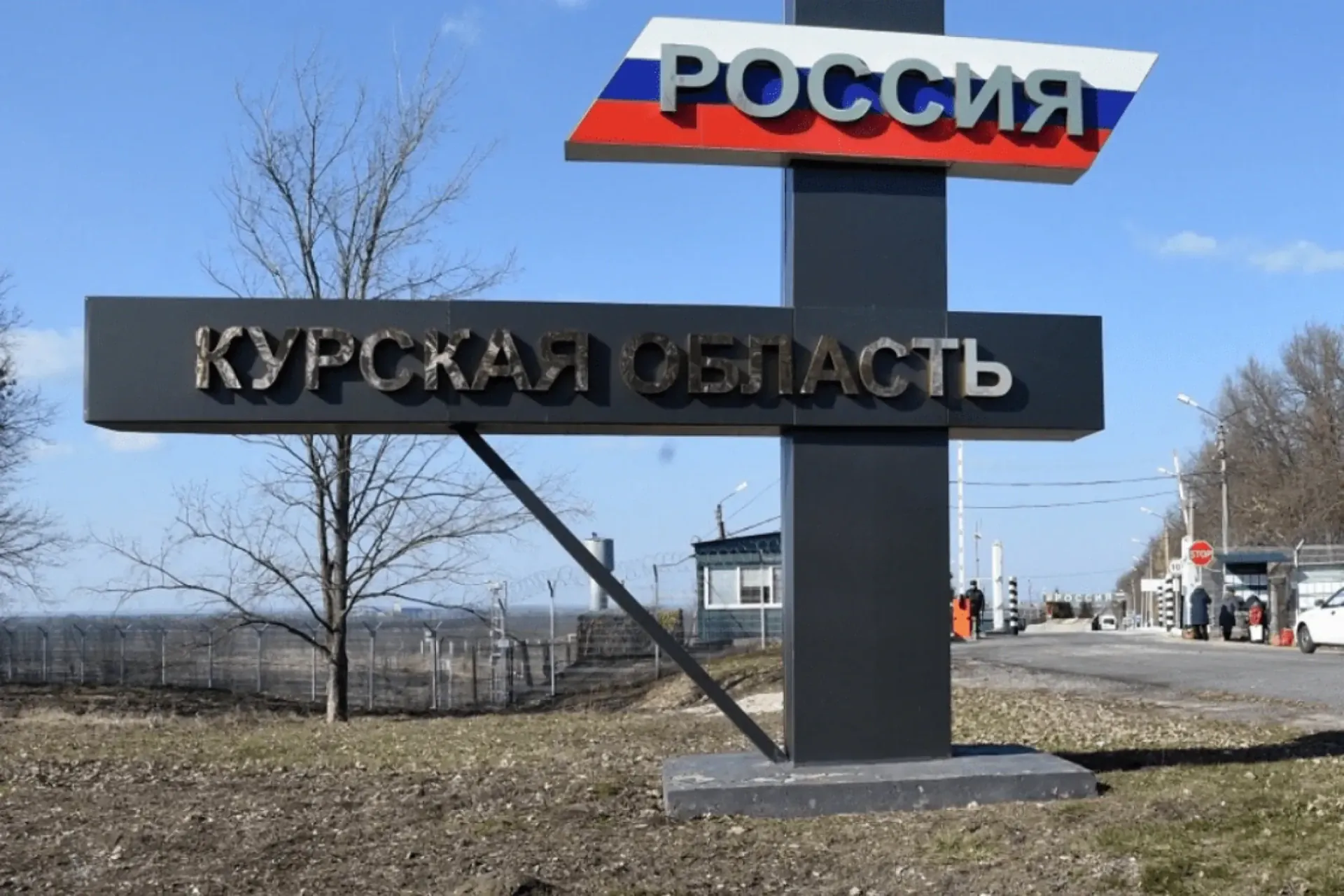
The New York Times’ report on Ukraine’s Kursk operation ignores many key facts, presenting them without proper context. Here’s what actually happened.
 Prefer U24 Media on Google
- Authors

-29a1a43aba23f9bb779a1ac8b98d2121.jpeg "Photo of Illia Kabachynskyi")
“Ukraine’s surprise incursion into western Russia last summer…” the article begins.
Such wording might be justifiable if Russia hadn’t already been waging a full-scale war on Ukrainian territory for over two years. Back in February 2022, Russian forces crossed into Ukraine from several directions in the north, east, and south, attacking the Kyiv, Chernihiv, Sumy, Kharkiv, Luhansk, Donetsk, Zaporizhzhia, and Kherson regions. Around 200,000 Russian troops and thousands of units of military equipment invaded Ukraine—without any justification.
Nearly 30 months into the war, Ukraine finally managed to partially shift hostilities onto Russian soil—the same Russia that had initiated the conflict. To call it a “surprise” is misleading. The author of the NYT piece mentions this only at the very end of the article.
Nor does the piece explain the main reason Ukrainian forces crossed the border. That detail is essential.
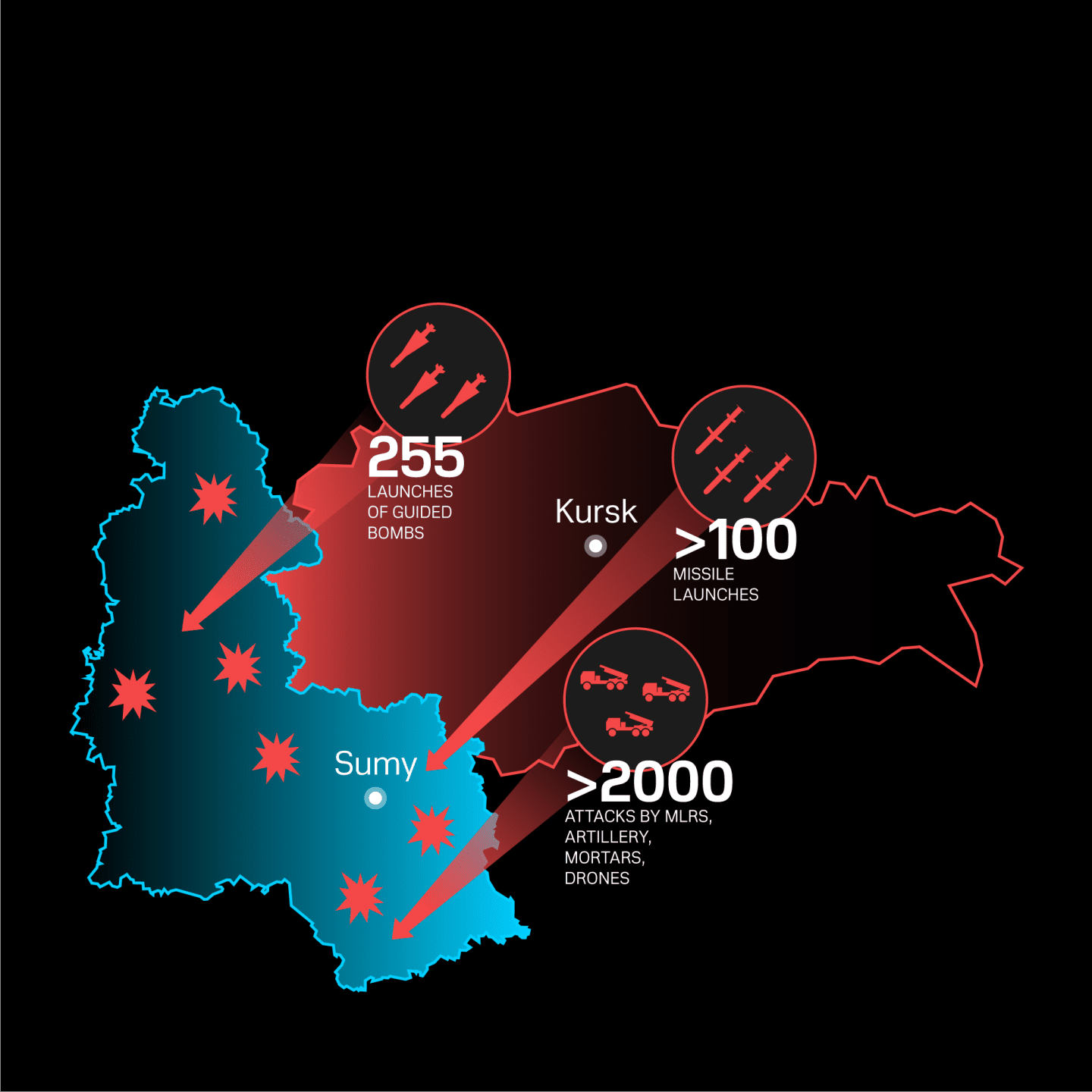
Russia’s Kursk region borders Ukraine’s Sumy region. Over just two summer months in 2024, Russian forces launched 255 glide bombs (KABs), over 200 missiles, and more than 2,000 artillery shells and drones at Sumy and neighboring areas. The campaign was a deliberate act of terror against civilians—many of these attacks targeted residential neighborhoods in Sumy.
Sumy lies just about 30 kilometers from the Russian border, making it vulnerable to even basic artillery systems, which Russian forces routinely use. The situation is similar in the Kharkiv region, where the city is shelled with S-300 and S-400 missile systems positioned near the border and shielded by the Russian city of Belgorod.
Thus, Ukraine’s entry into the Kursk region was a defensive move aimed at creating a buffer zone to protect its cities from ongoing shelling—an essential context the NYT article omits.
Also left unmentioned is the fact that Russian forces began bombing their own towns in an effort to eliminate Ukrainian troops. Russian aircraft dropped KAB-250 and KAB-500 bombs, obliterating entire buildings and erasing towns. Ukraine doesn’t possess weapons of this kind.
At the same time, Ukraine, upon entering Russian territory, established a military command post and provided civilians with water, food, essential goods, and medicine. People were allowed to evacuate, including through Ukrainian territory. Cities and towns were not turned into prisons, unlike during the Russian occupation of the Kyiv region in 2022, which involved units like “Akhmat” committing atrocities, including the murder of civilians and the rape of women.
One passage in the article notes that Ukrainian forces mined parts of the occupied territory, and that it “may take the Russians years to clear, even with North Korean help.” But what goes unmentioned is that Russian troops left about one-fifth of Ukraine’s land contaminated with mines—over 130,000 square kilometers deemed hazardous. Clearing these areas will take not years, but decades—and tens of billions of dollars. The scale is exponentially larger.
Also omitted is the very fact of North Korean military involvement. Pyongyang has delivered 28,000 containers of weapons and ammunition to Russia, along with over 13,000 soldiers, some of whom have been killed in action. North Korea’s authoritarian regime is now one of Moscow’s strongest allies, receiving payment in the form of military technology, fighter jet and submarine designs, and assistance with nuclear weapons development.
The article also includes quotes from Russian civilians who hope Vladimir Putin will rebuild the Kursk region—some even citing Chechnya as an inspiring example: “We saw Chechnya. They rebuilt the most modern cities—there were ruins there,” one resident says.
What goes unmentioned is who turned Chechnya’s cities into ruins to begin with. It was Russian forces that razed Grozny during two devastating wars, earning the city a place in the UN’s list of most destroyed urban areas in the world. And while parts of Grozny’s city center were rebuilt—largely for show—the broader Chechen Republic was transformed into a political colony ruled by a single family loyal to the Kremlin: the Kadyrov family.
The irony of citing Russia’s own legacy of devastation as a model of hope seems to have gone unnoticed by the article’s author.
The NYT article ends by noting that some areas may no longer be habitable. Yet in 2024, The New York Times itself published an analysis stating that more than 200,000 buildings had been destroyed across Ukraine, including up to 20% of all housing in certain cities. Entire towns have been leveled. Many of those strikes were carried out by Russian “Akhmat” forces.
Is any of that mentioned in the latest report? That’s a rhetorical question.
Discuss this article:



-206008aed5f329e86c52788e3e423f23.jpg "Photo of Oleksandr Moiseienko")

-f3430f0449615e9897dff835086ac204.jpg "Ukraine Broke With a Soviet-Era Military System and Rebuilt It Around the Soldier")
-e126c16a85d580738cf2d57e760b80a3.jpeg "Photo of Vladyslav Greziev")