- Category
- War in Ukraine
A Ukrainian Patriot Alternative? Fire Point’s Freya Interceptor Eyes to Hunt Russian Iskander-Class Threats
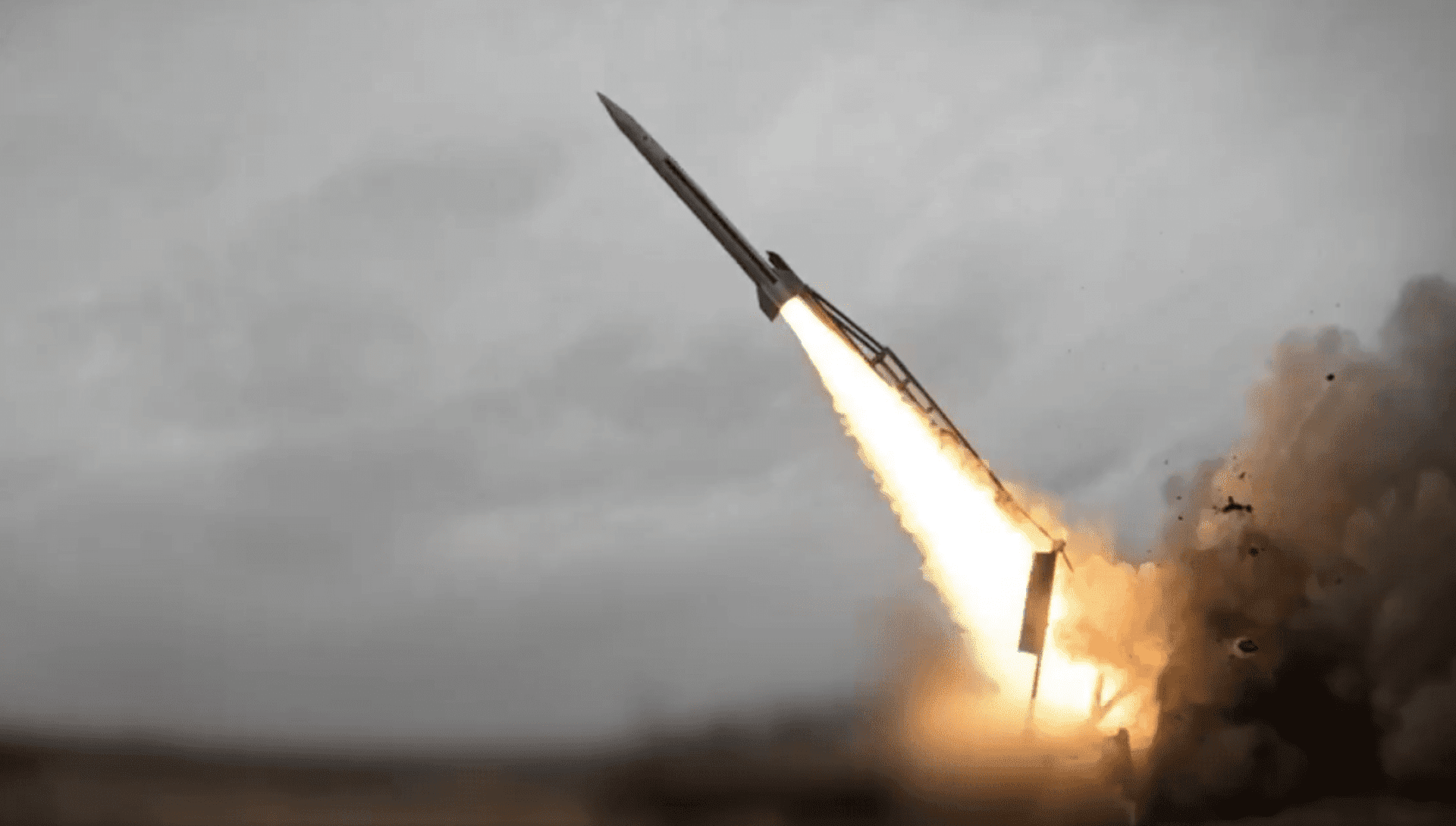
With Patriot interceptors scarce and Russian ballistic missile attacks still among Ukraine’s deadliest threats, Fire Point’s Freya project is aiming for a shortcut: a Ukrainian anti-ballistic missile built around ready-made European technology.
 Prefer U24 Media on Google
- Authors


Ukraine’s Fire Point is working on an ambitious new anti-ballistic missile project called Freya, aiming to create a domestic interceptor using already available European components at a time when Patriot PAC-3 MSE missiles remain scarce and in extremely high demand, according to Defense Express on May 15.
The project centers on the FP-7.x Freya missile, which Fire Point says is being developed as a fast-track solution against ballistic threats such as Russia’s Iskander-M.
We bring you stories from the ground. Your support keeps our team in the field.
Defense Express notes that the idea is not to build every element from scratch, but to combine existing radars, command systems, guidance technologies, and missile design experience into a workable Ukrainian air defense solution.
The comparison point is obvious: the PAC-3 MSE missile used by the Patriot system. The American interceptor has become the benchmark for proven effectiveness against ballistic missiles, including in Ukraine, where Patriot systems have repeatedly demonstrated high performance against some of Russia’s most dangerous aerial threats.
But PAC-3 MSE missiles are expensive, limited in supply, and heavily demanded by multiple countries.
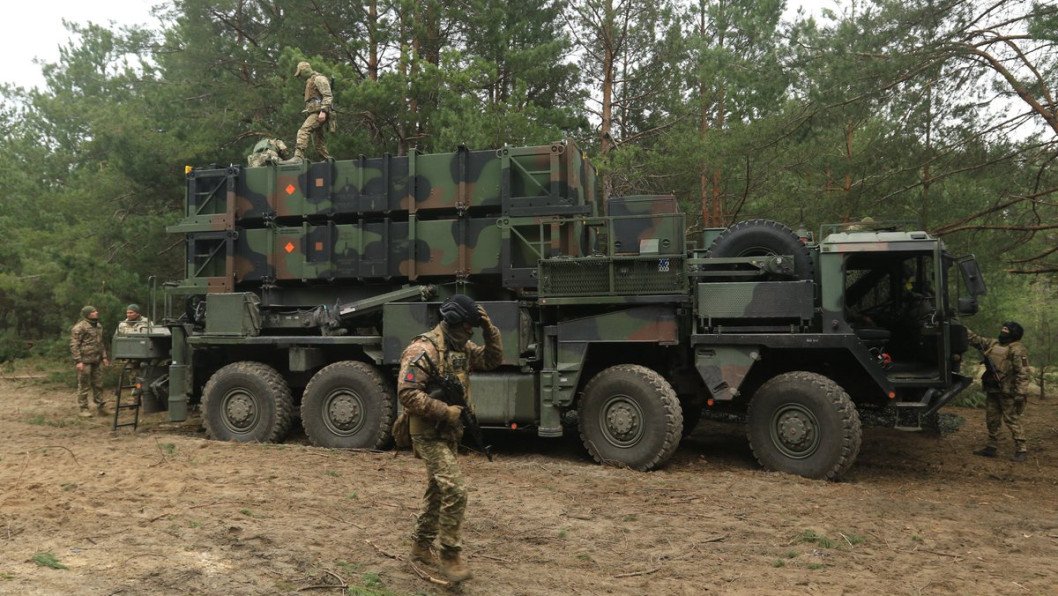
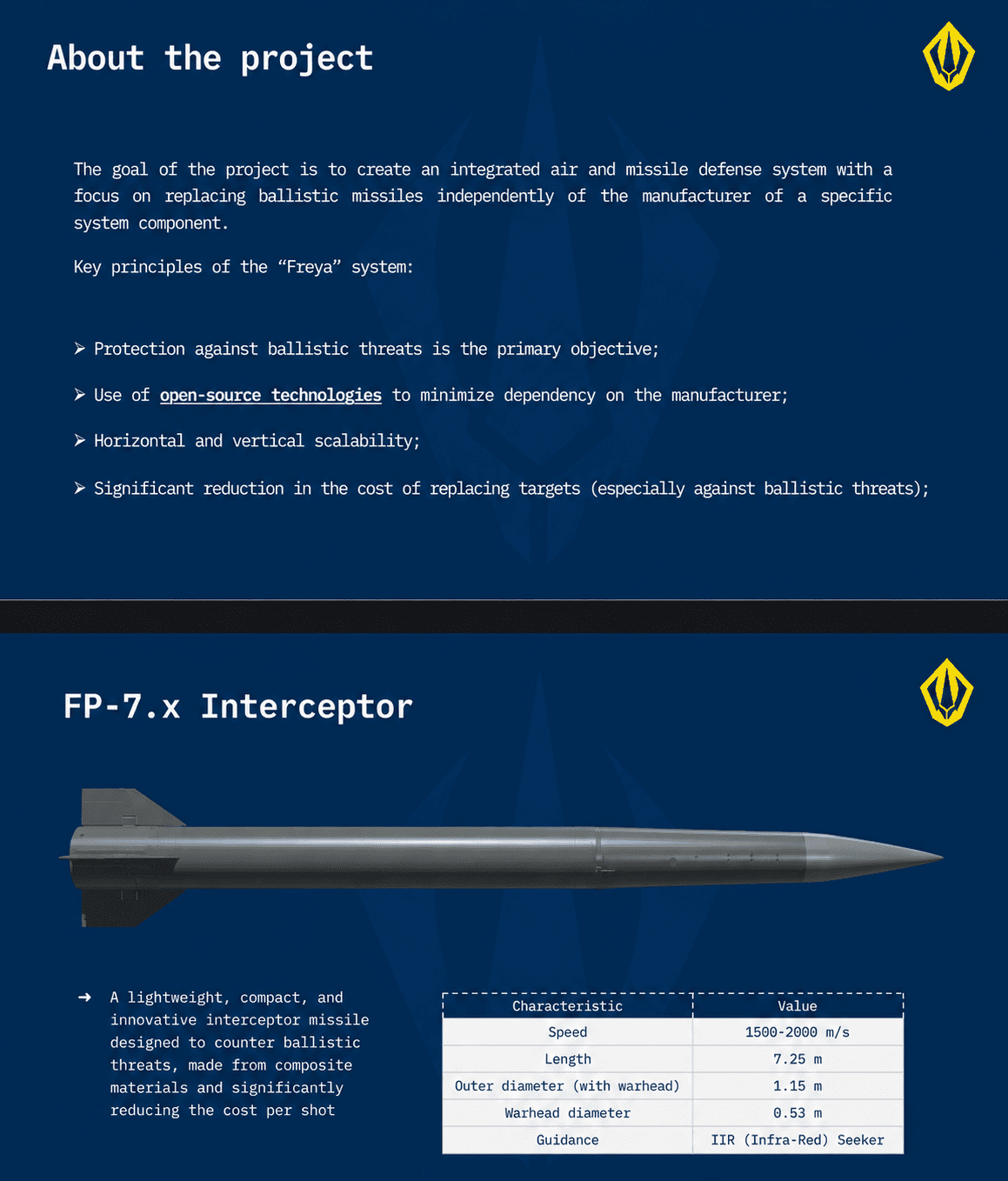
According to details released by Fire Point chief designer Denys Shtilerman and analyzed by Defense Express, the FP-7.x interceptor draws on the Soviet-designed 48N6 missile used in the S-300 and S-400 family, but reworks the concept with a new architecture, composite materials, and modern Western components.
The missile is expected to reach speeds of roughly 1,500 to 2,000 meters per second, measure about 7.25 meters in length, and have a body diameter of 0.53 meters.
One of the key questions is guidance. The PAC-3 MSE uses an active radar seeker operating in the Ka-band, allowing precise all-weather targeting.
Fire Point’s FP-7.x, by contrast, is expected to use an infrared imaging seeker from Germany’s Diehl Defence, the company behind the IRIS-T missile family.
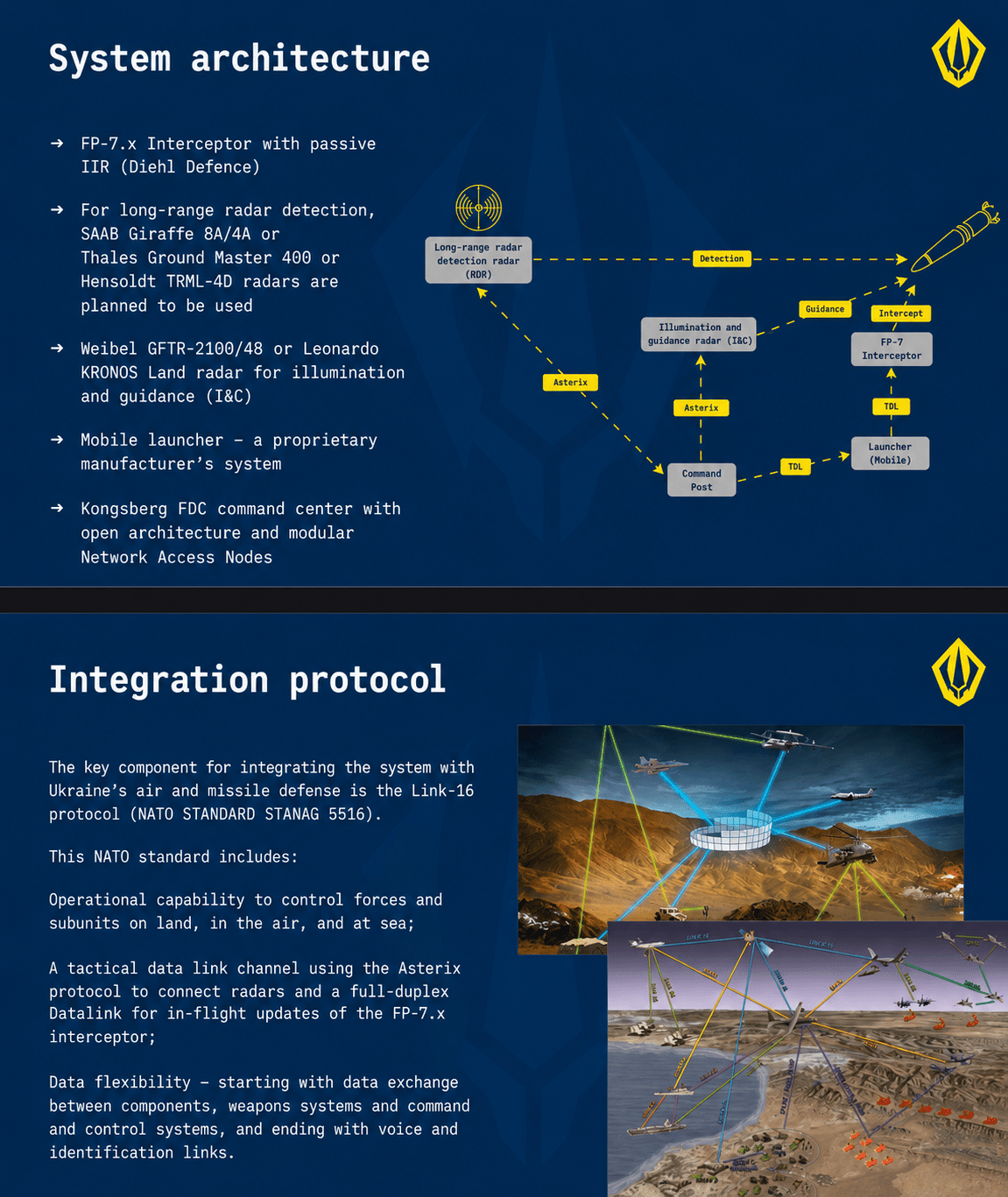
Defense Express notes that infrared guidance is not unusual in missile defense systems, with THAAD also using an infrared seeker, although THAAD operates at much higher altitudes where atmospheric visibility is less of a problem.
The Freya concept may rely on a guidance approach similar to IRIS-T SLM, where the missile receives course corrections from ground systems before switching to its onboard seeker in the final phase.
References to the DataLink course correction in the project materials support this. Fire Point has also recently signed a technology cooperation agreement with Diehl Defence, adding weight to the possibility of deeper integration.
The proposed radar network is also built around existing Western systems. Long-range detection could use radars such as Saab Giraffe 8A or 4A, Thales Ground Master 400, or Hensoldt TRML-4D.
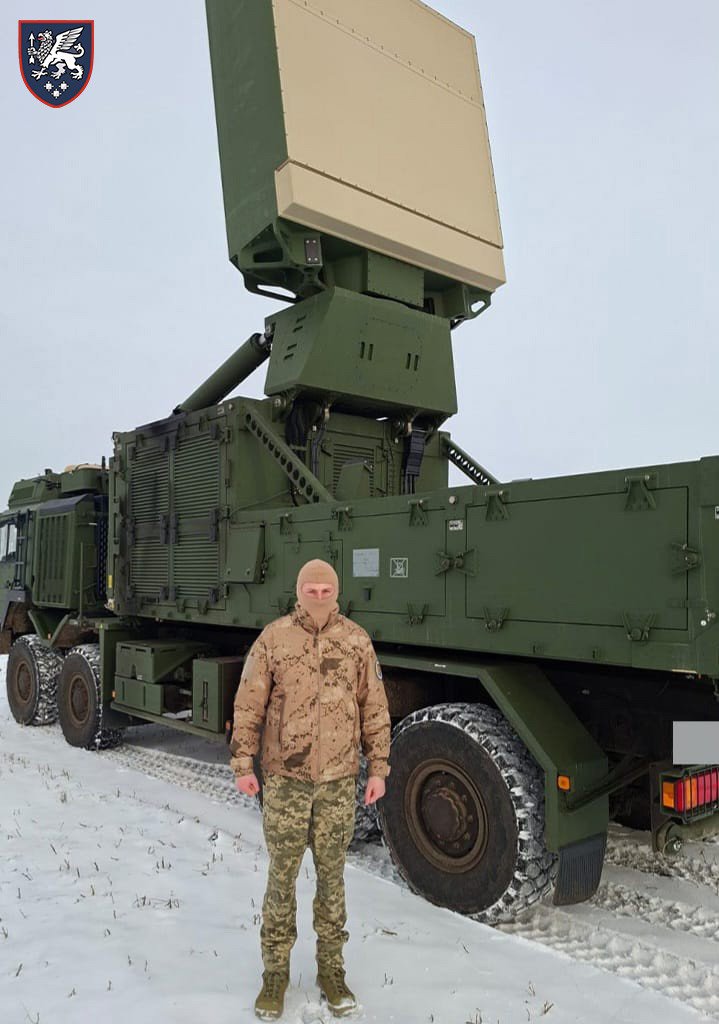
Some of these systems, including TRML-4D, are already used by Ukraine’s Armed Forces. Target tracking and illumination could be handled by Leonardo KRONOS Land or Weibel GFTR-2100/48 radars.
For command and control, Fire Point’s concept reportedly relies on the Norwegian Kongsberg FDC system with network access modules, while data exchange would use NATO’s Link 16 standard. Defense Express notes that this would make the system more compatible with Western air defense architecture and existing radar networks.
The biggest technical gap between Freya and PAC-3 MSE may be maneuverability and interception method. The PAC-3 MSE uses hit-to-kill technology, meaning the missile destroys its target by direct impact. It can do this because of its extremely precise guidance, powerful onboard systems, dual-pulse solid-fuel motor, and lateral thrusters that allow aggressive high-g maneuvers during the final intercept phase.

The FP-7.x Freya, at least based on currently available information, does not appear to include similar lateral thrusters. Defense Express compares its aerodynamic control layout more closely to Patriot’s PAC-2 GEM missile family, relying on tail control surfaces and gas vanes rather than the high-agility system used by PAC-3 MSE.
That matters because ballistic missile interception is brutally unforgiving. A direct hit can destroy the missile and its warhead in the air. A near miss with fragmentation may damage or divert the target, but it does not always guarantee complete destruction of the warhead, which can still fall and explode.
For now, it remains unclear whether FP-7.x Freya can achieve true PAC-3 MSE-level hit-to-kill performance or whether it will require additional development to reliably defeat maneuvering ballistic targets.
But Defense Express argues that the key point is Ukraine’s attempt to create an anti-ballistic missile solution quickly by using already available technologies rather than waiting years for a fully custom system.
If successful, Freya could give Ukraine something it urgently needs: another layer of defense against ballistic missiles at a time when Patriot interceptors are limited, Russian attacks are intensifying, and every additional anti-ballistic option could matter.
Earlier, reports emerged that Ukraine is developing an air-launched ballistic missile (ALBM) derived from its FP-9 system, expanding its long-range strike capabilities.
Shtilerman confirmed that the project builds on the existing FP-9 ballistic missile, which in its ground-launched configuration has a stated range of up to 800 kilometers.
Discuss this article:



-c439b7bd9030ecf9d5a4287dc361ba31.jpg "Photo of Katherina Popilnichenko")