- Category
- War in Ukraine
Above Frontline Kherson, Ukrainian Marines Hunt Russian Drones—In Photos
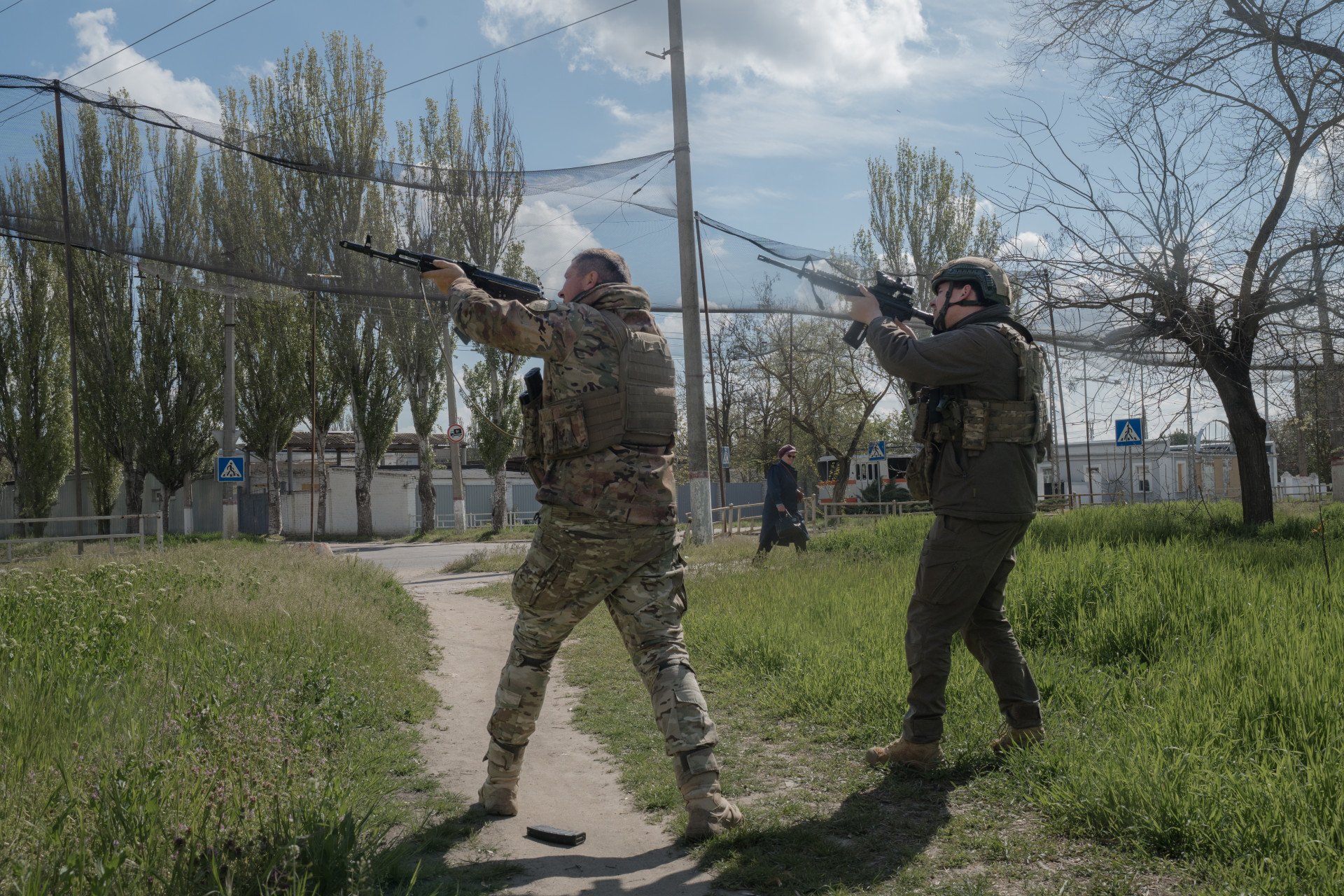
In Ukraine’s southern city of Kherson, civilians live beneath constant Russian drone attacks while trying to maintain ordinary life—whether it is going to the store or tending to their flowers.
 Prefer U24 Media on Google
- Authors

-0666d38c3abb51dc66be9ab82b971e20.jpg "Photo of Josh Olley")
We arrived in Kherson. I hadn’t been there in maybe a year. Before, I had only seen the city in winter. It always felt quite foreign compared to a lot of other Ukrainian cities I’ve worked in. Empty. Suspended. Like a place people had passed through rather than lived in.
But this time it was completely different.
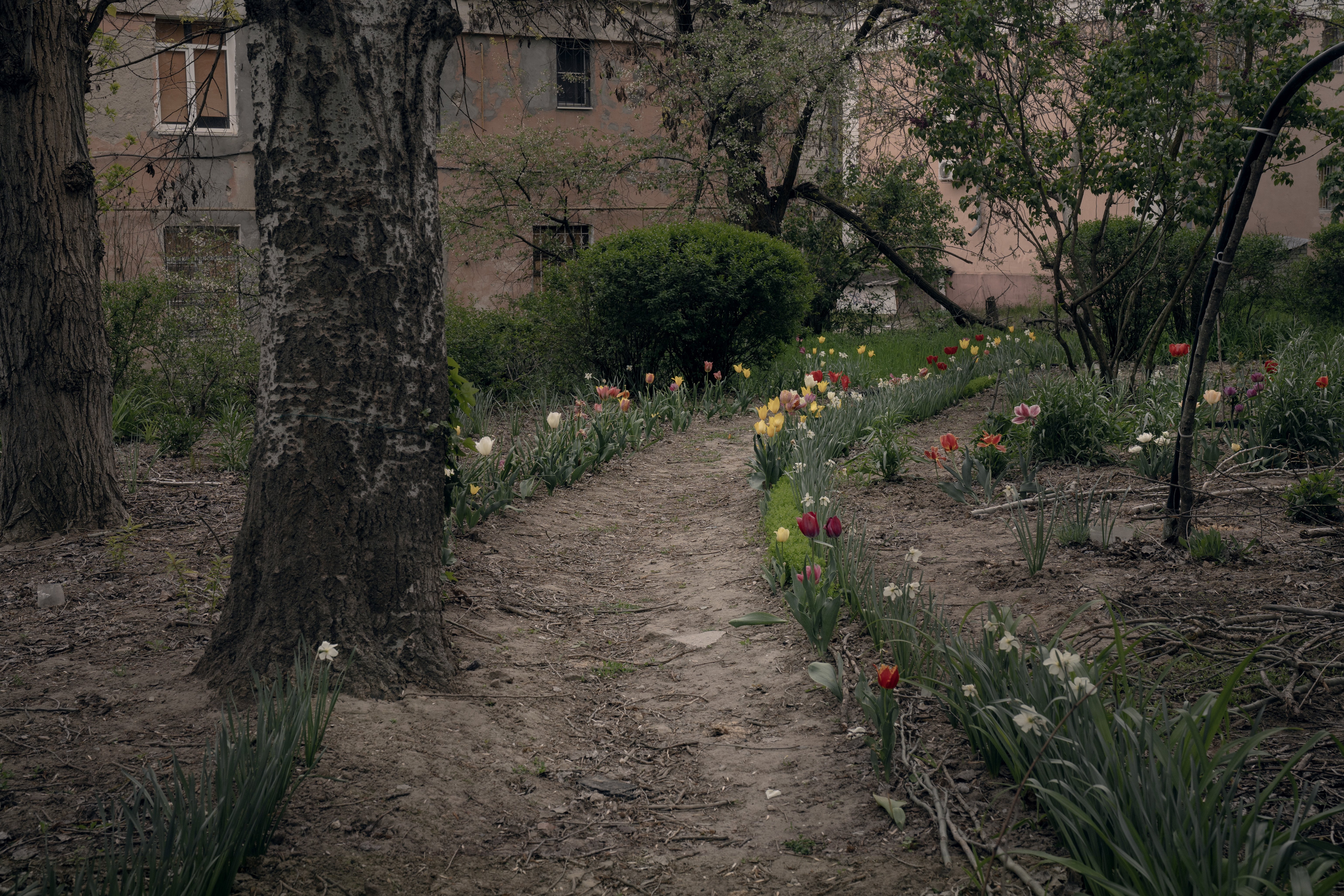
It is warm. There are people everywhere. People garden outside apartment buildings, flowers bloom across the city, teenagers ride bicycles, and mothers walk with young children. And layered over all of it is the sound of war: incoming artillery, aerial bombs, and Shahed drones buzzing overhead throughout the day and night.
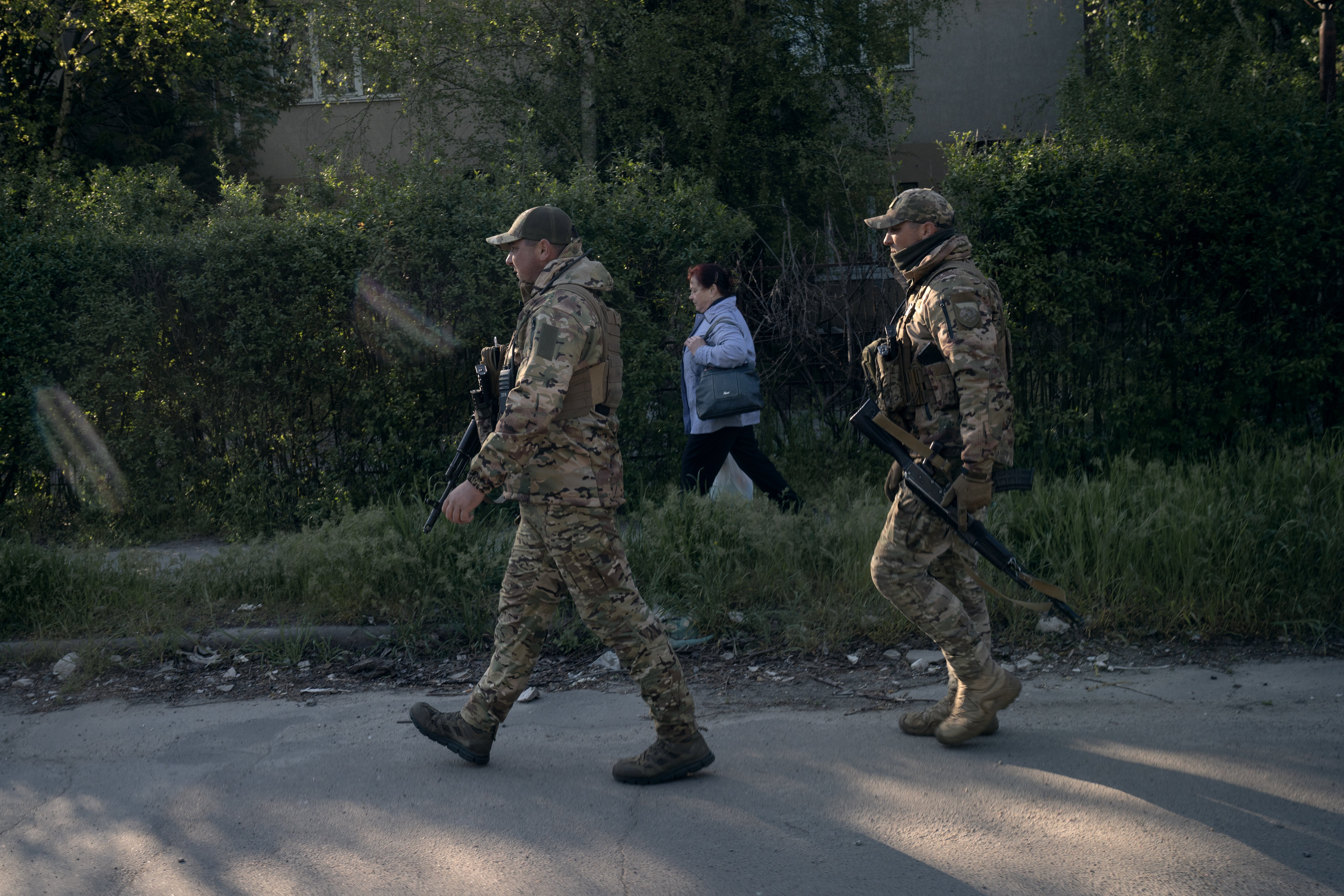
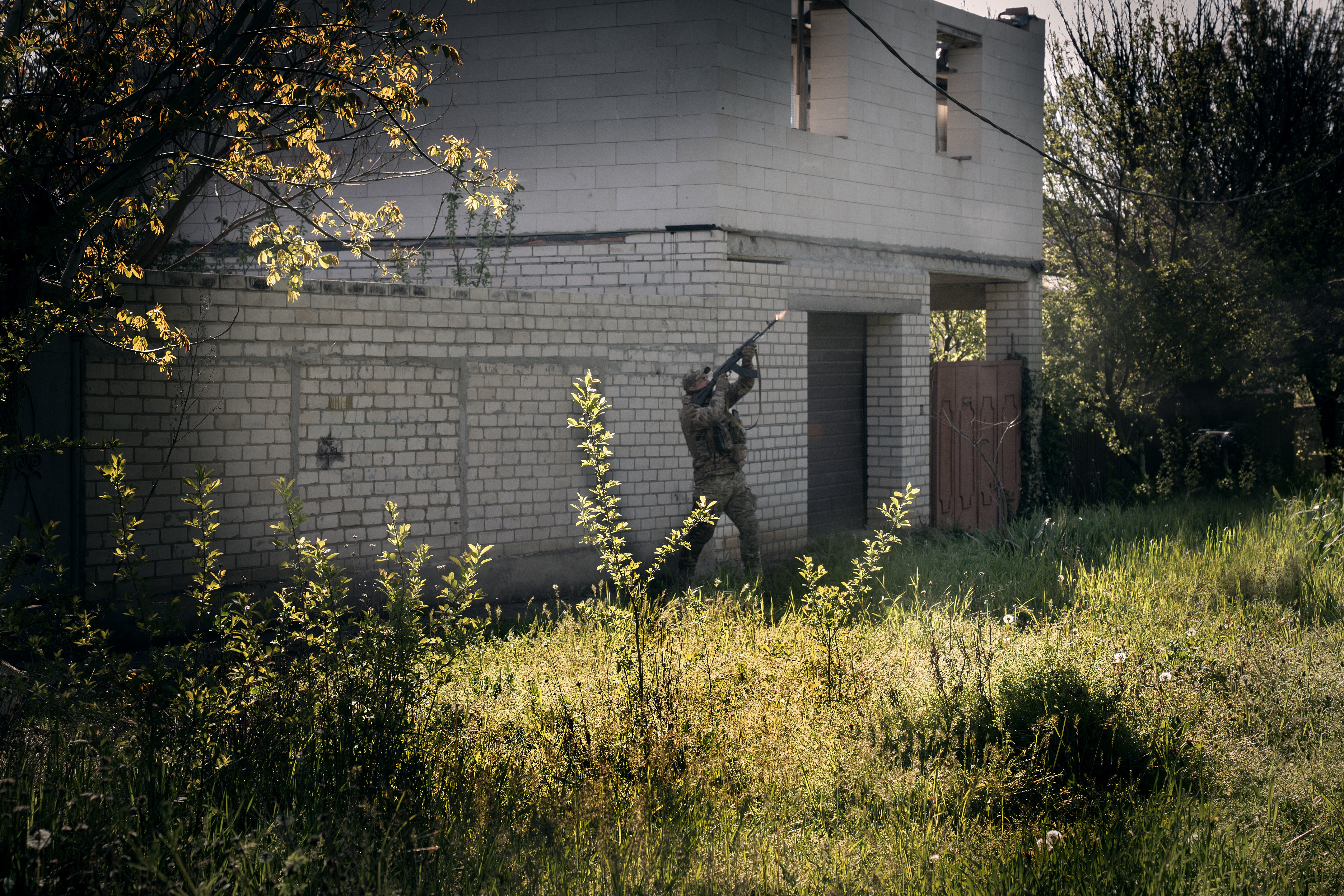
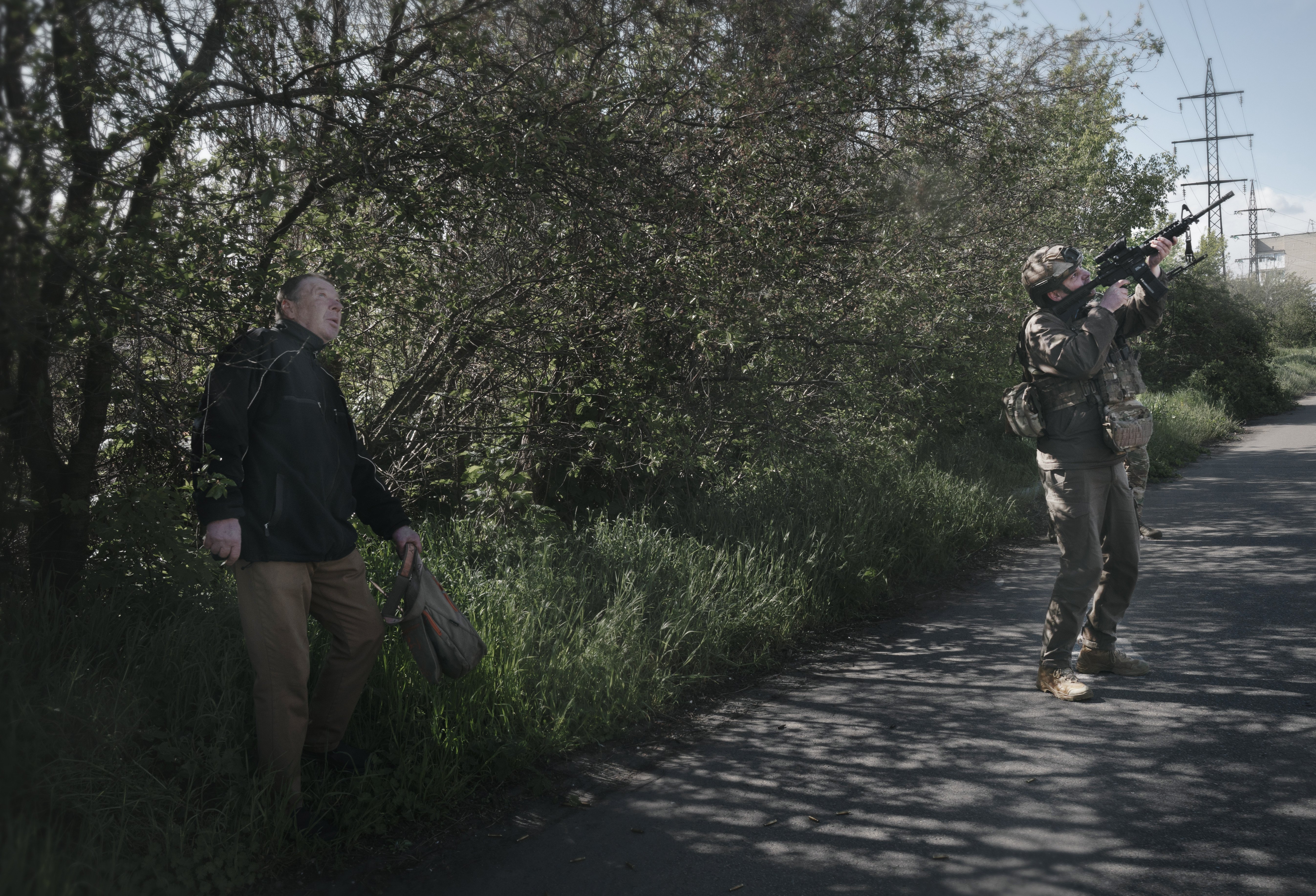
You can stand in a beautiful garden and hear civilians listening to the morning radio through an open window. A few blocks away, a mobile air defense group shoots down Russian drones over residential streets. On one street, people buy groceries and play chess outside. On the next, someone can be killed by an FPV drone.
That contrast defines Kherson.
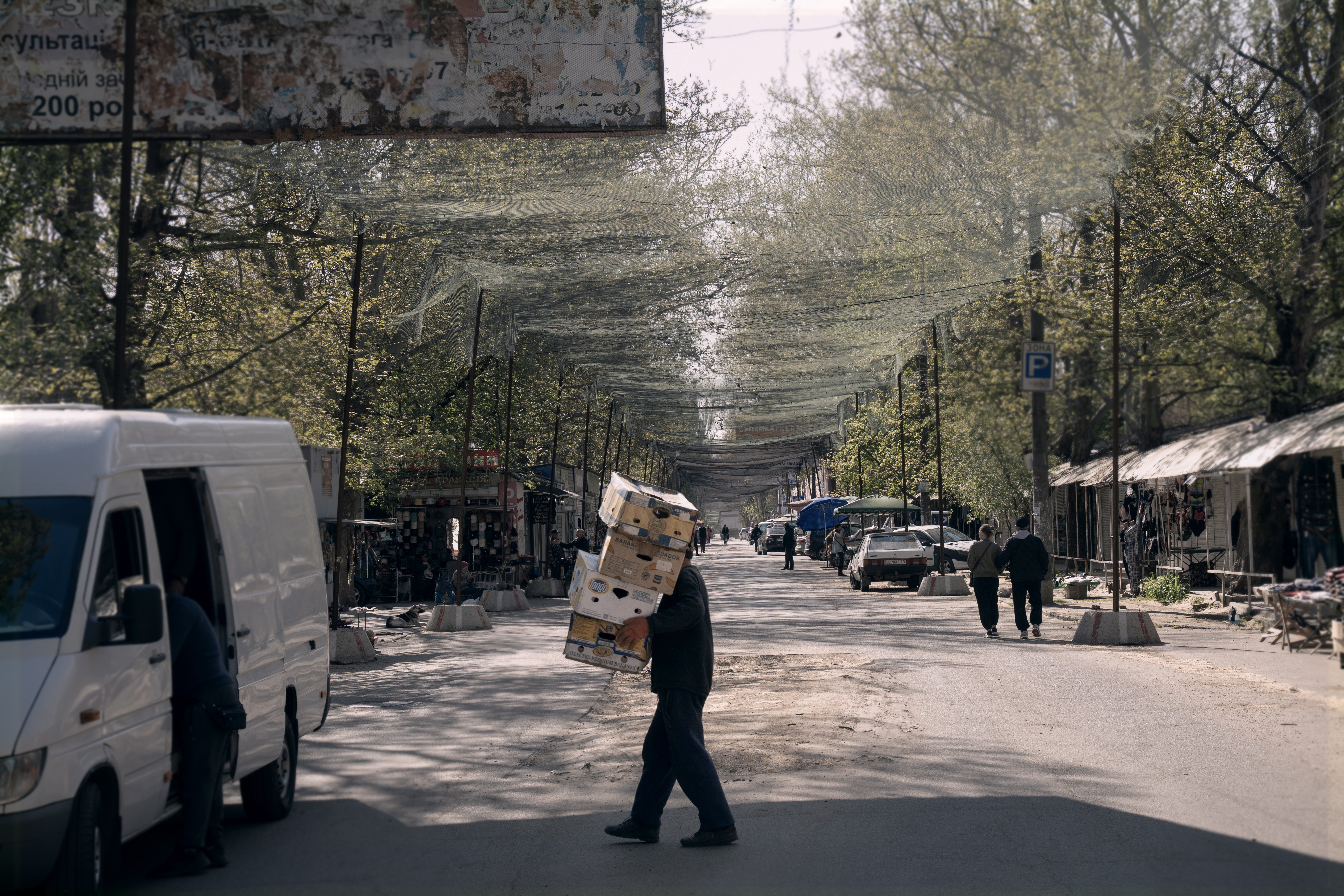
As an outsider, it is difficult to fully process. I have worked in many frontline cities in Ukraine, but Kherson feels fundamentally different. It is not simply a military space shaped by war.
Upon arriving, we stay at the apartment of a friend’s grandmother, who fled the city in 2022 as Russian forces approached. The apartment feels like a time capsule. No one has lived there since she left. It feels as though somebody walked out in the middle of their life expecting to return days later.
The following morning, we meet soldiers from Ukraine’s 34th Marine Brigade, one of the last brigades to leave Kherson before the city falls. They later return during the liberation and remain there still.
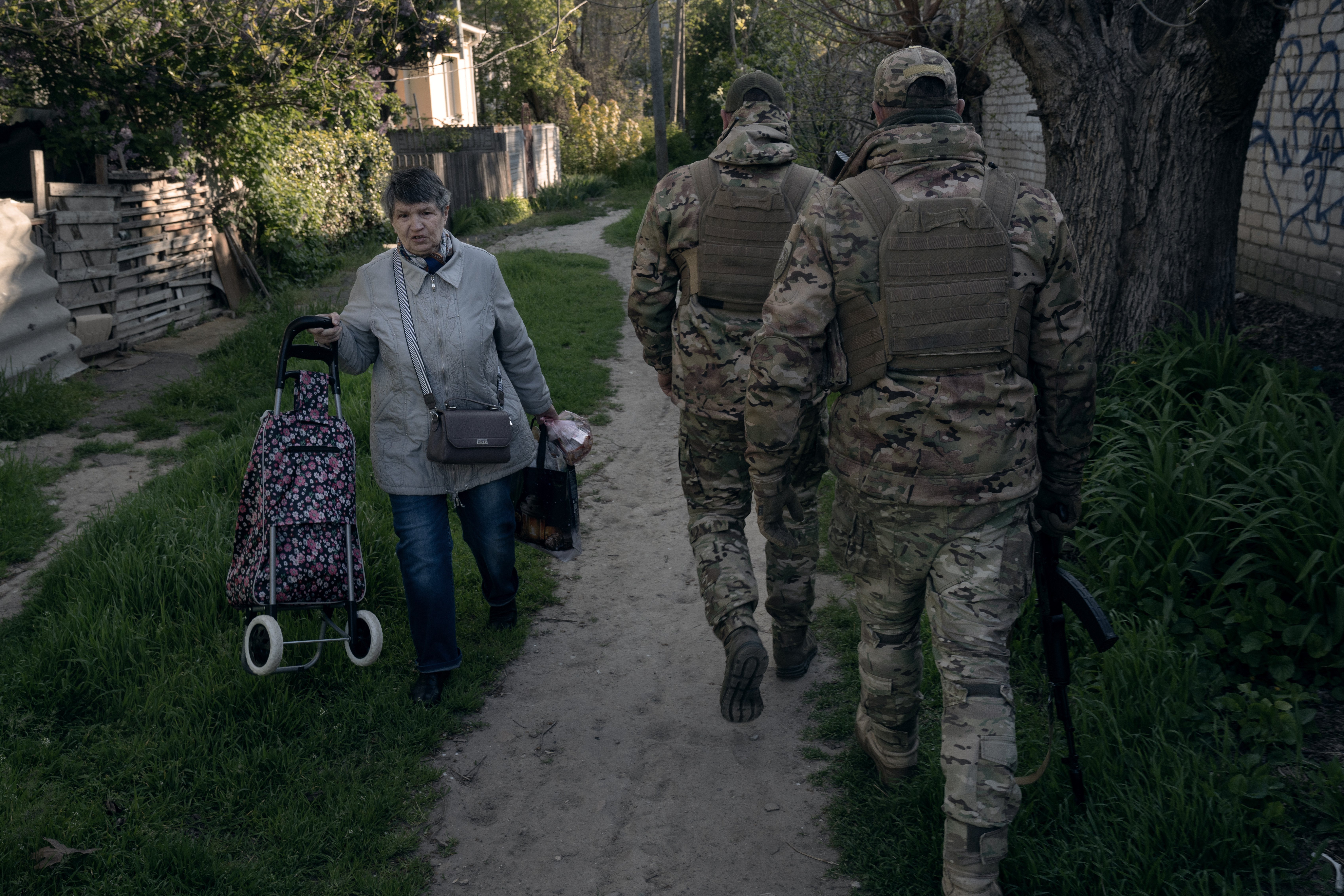
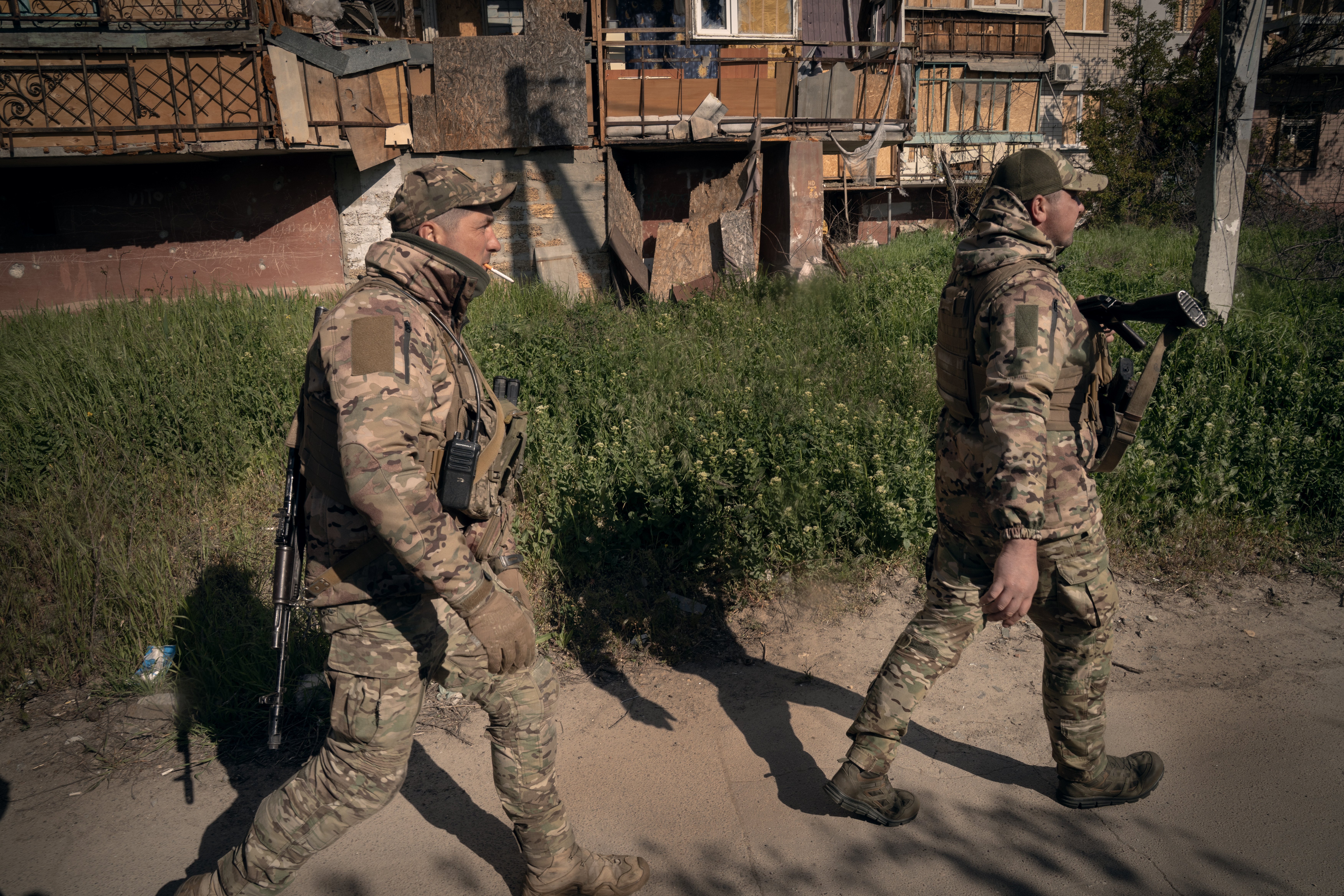
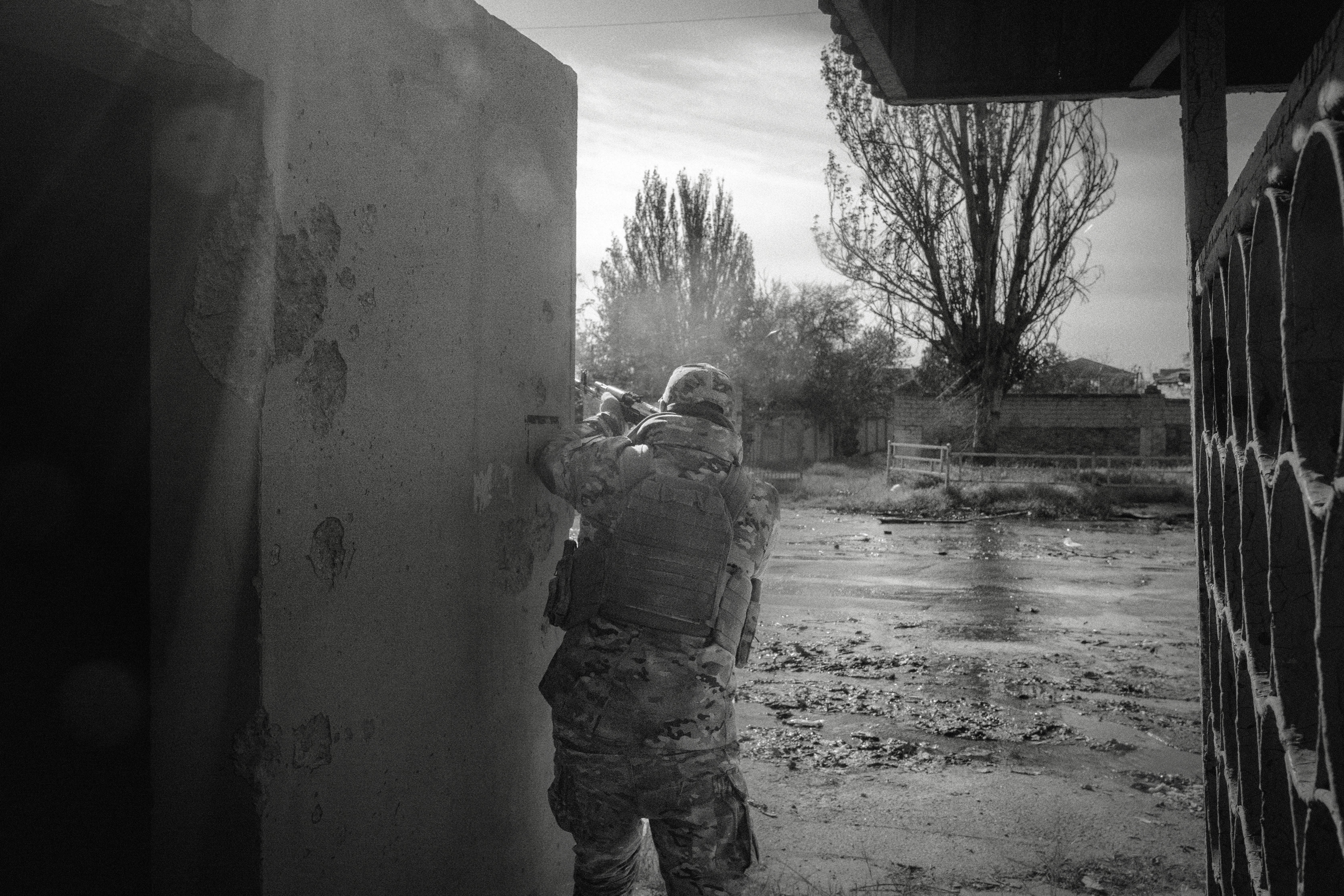
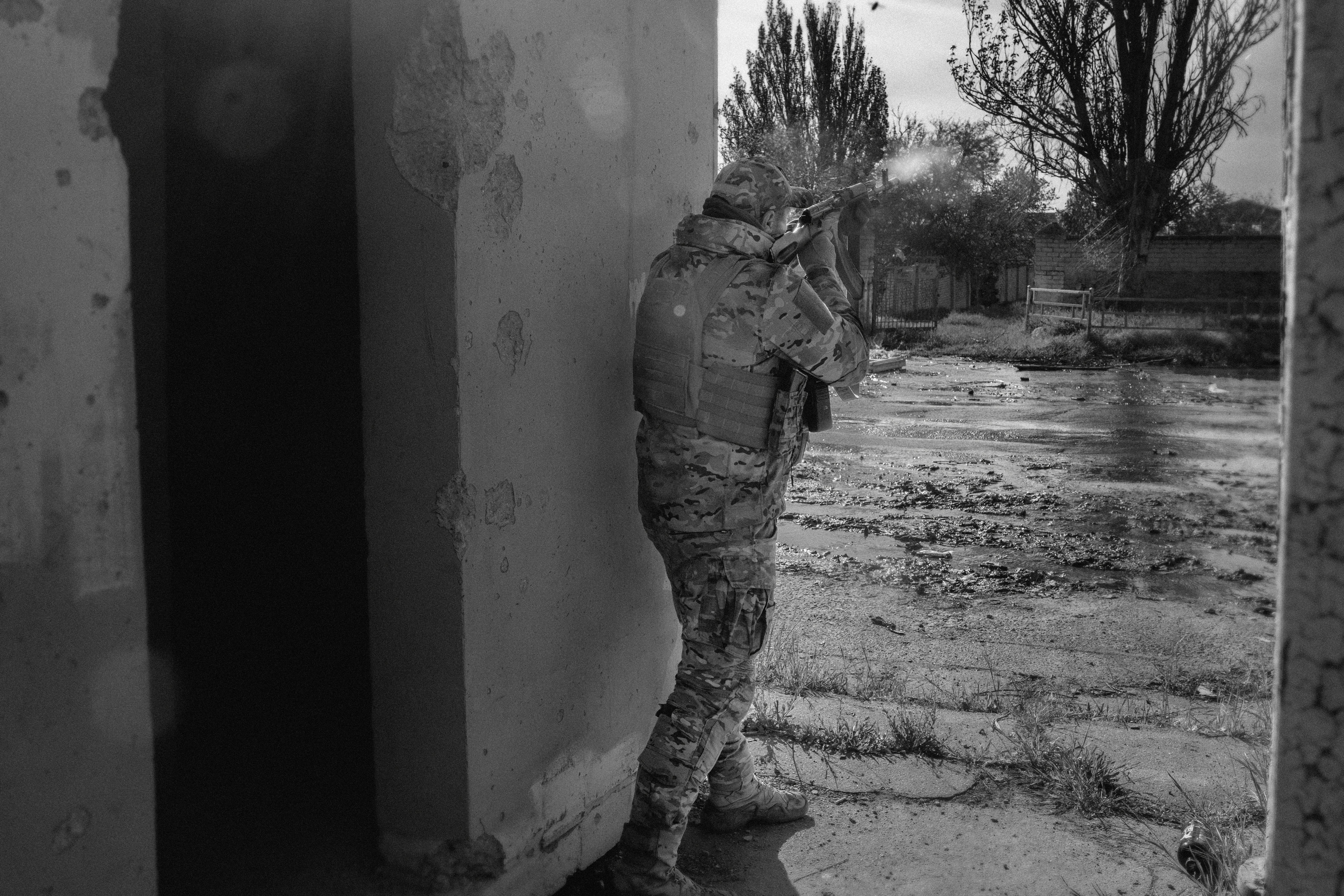
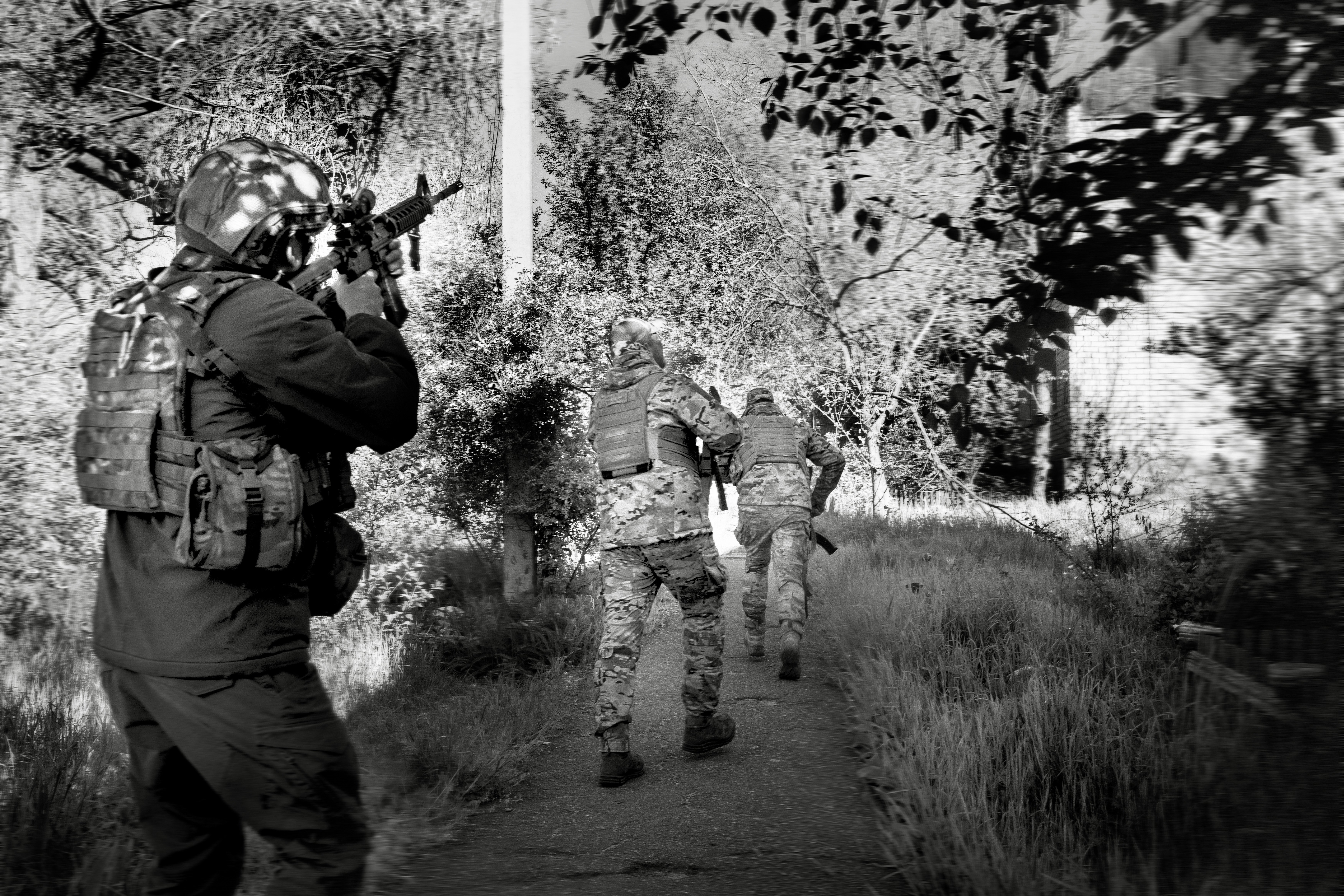
We spent the day working alongside Eugene and Serhii, twin brothers from Kropyvnytskyi in central Ukraine serving with the brigade. They once operated heavy machine guns mounted on pickup trucks. Now, they patrol ruined streets on foot with Kalashnikovs and little more than iron sights, listening for drones overhead as they move through what soldiers call the “kill zone” — a stretch of riverfront neighborhoods lying just 500 to 600 meters from Russian positions across the Dnipro.
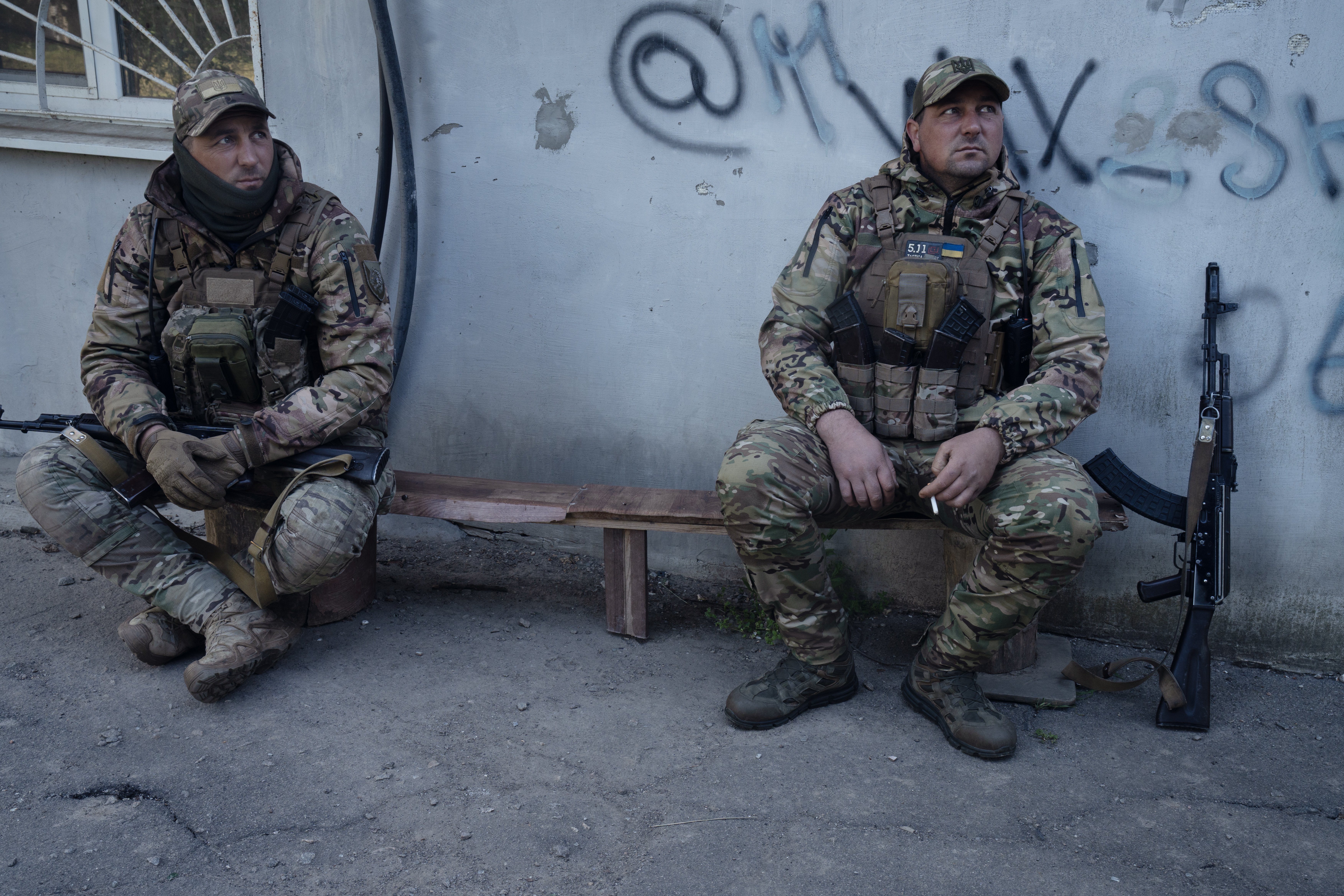
Eugene says their group destroys roughly five out of every eight drones they encounter. On a slow day, they shoot down around five drones. On heavier days, that number can climb to as many as 17.
While moving through the kill zone, where the streets are littered with freshly destroyed cars and the carcasses of civilian infrastructure, artillery begins landing around us, some strikes no more than 60 meters away. Taking cover low behind a building, Serhii calmly tells us, “Okay, let’s move,” timing our movements between incoming rounds.
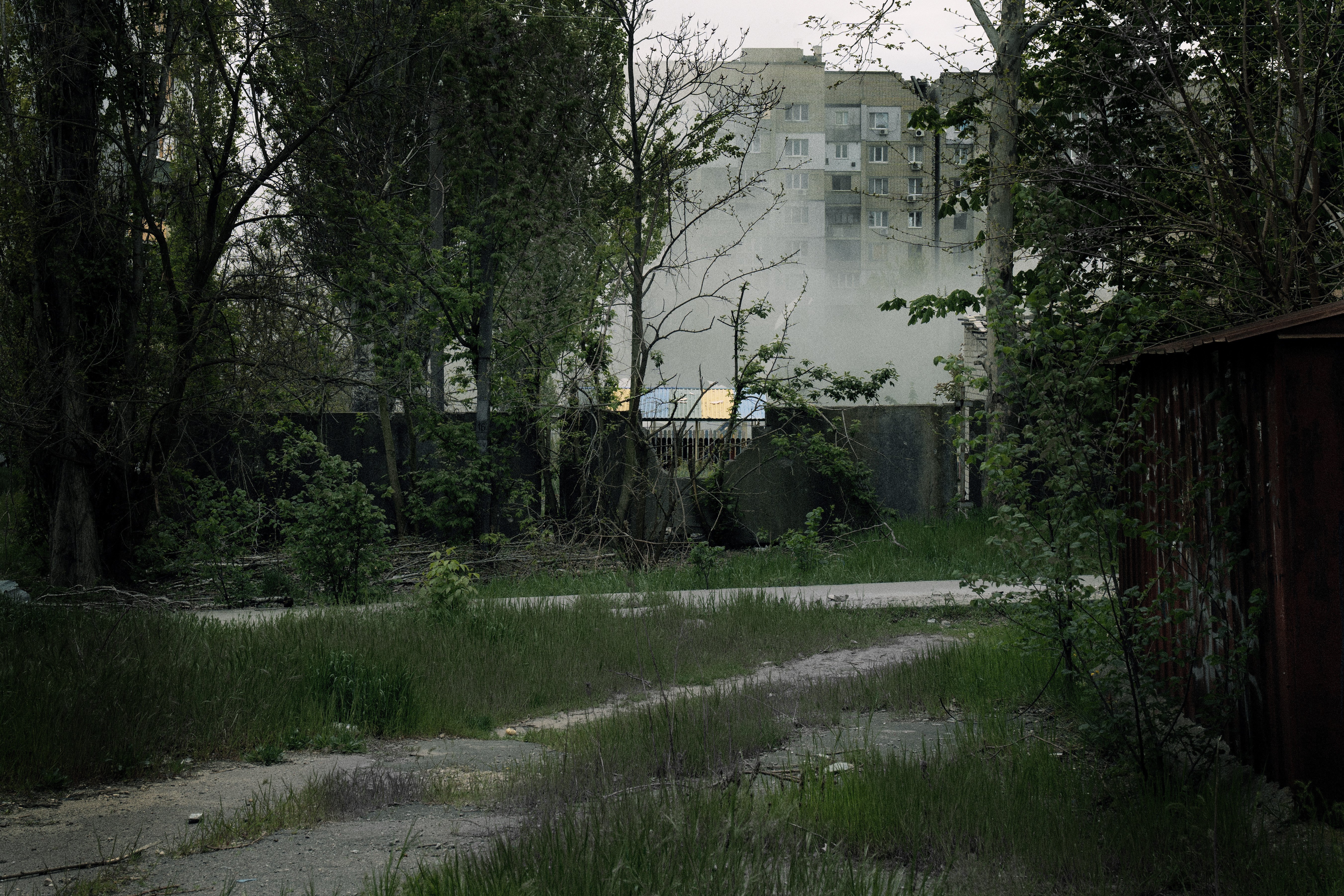
“I’ve developed a sense for it,” he says. “You start to understand how long it takes them to reload. Usually, there’s a small window before the next shot comes.”
FPVs. Molniyas. Fiber-optic drones. The occasional Shahed flying low enough to reach.
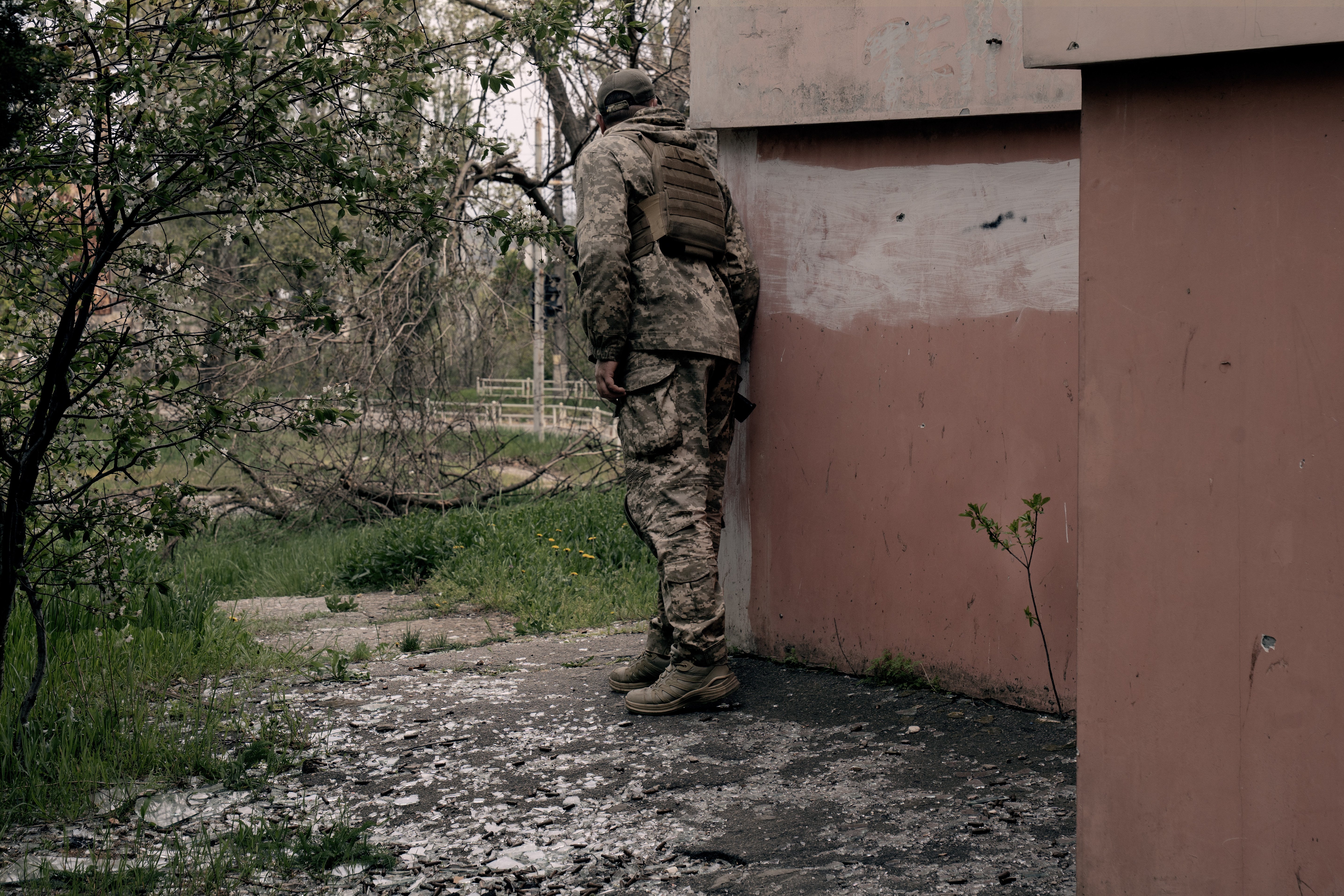
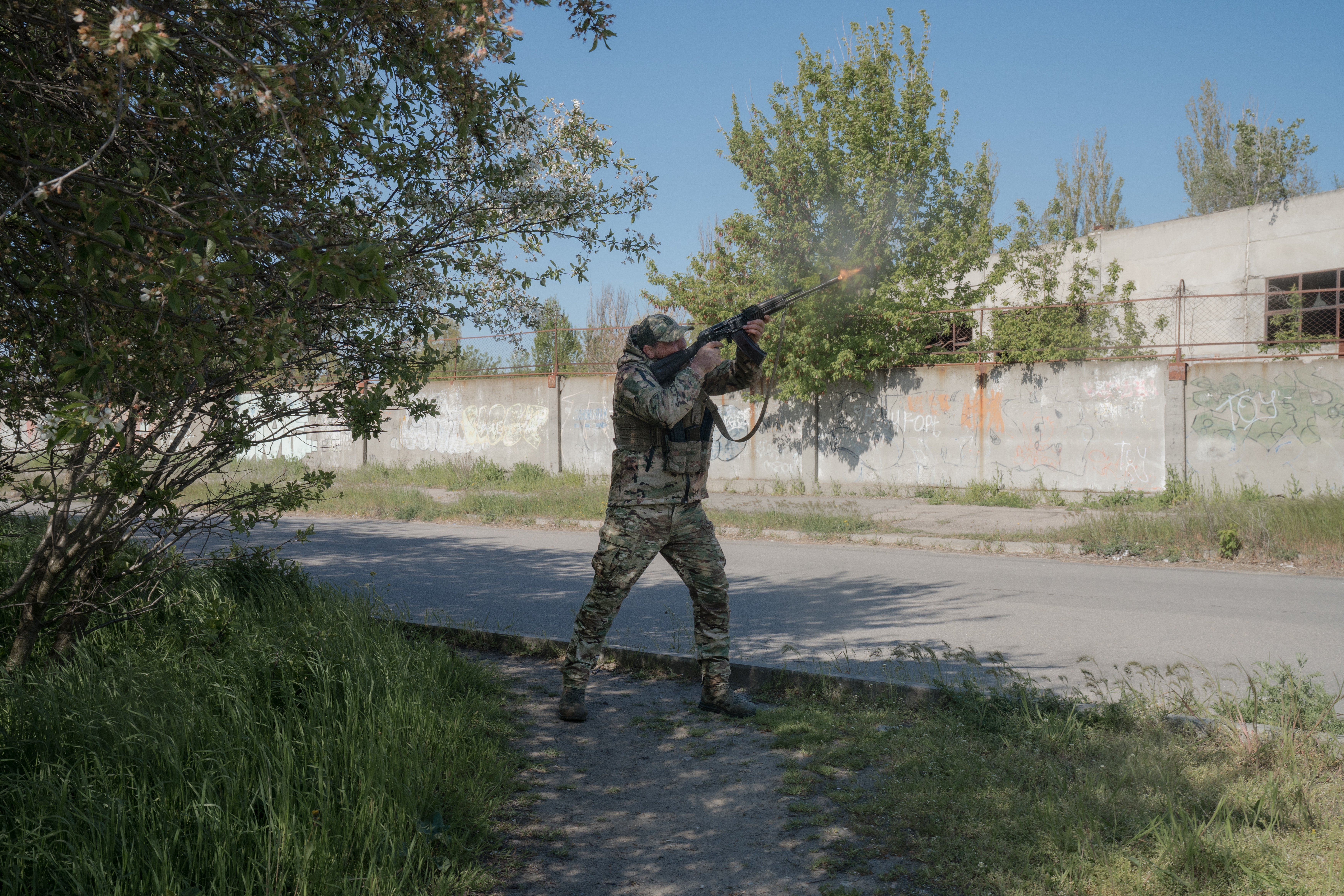
At street level, you hear the drones constantly. At one point, while walking back from a hospital, people suddenly began running. A municipal worker cleaning the street shouts: “Fiber-optic.”
Everyone immediately understood what it meant.
For months, Russian forces have turned Kherson into a laboratory for its drone warfare. The Truth Hounds Research Group reports the city endured roughly 600 to 700 Russian drone attacks per week in March 2025 alone—Russia’s “human safari“. Between March and May, Russia struck hundreds of civilians, vehicles, and residential buildings.
The drones are cheap, fast, and precise. What began as battlefield technology has increasingly blurred into something else: the systematic targeting of civilian life itself.
And yet people remain.
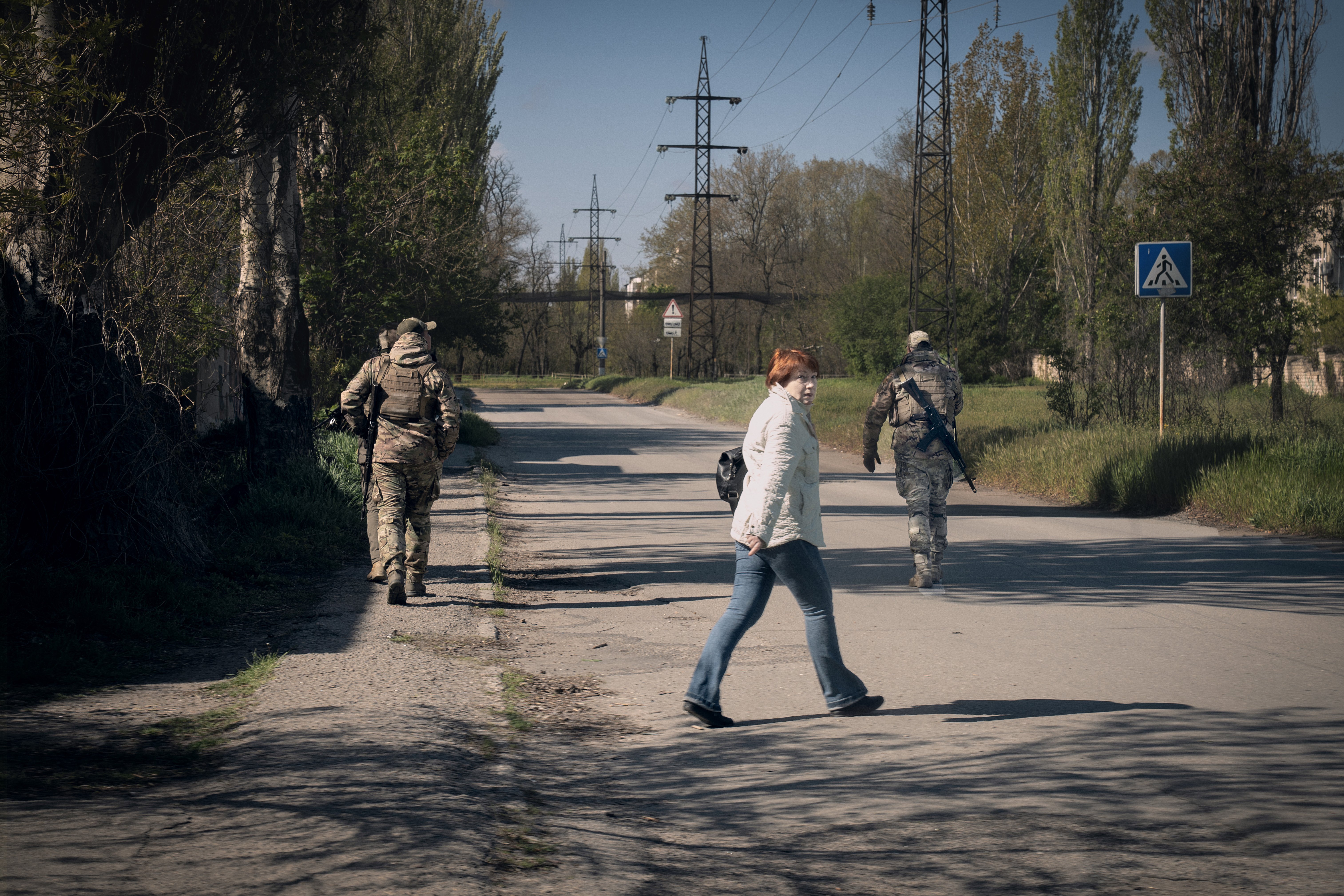
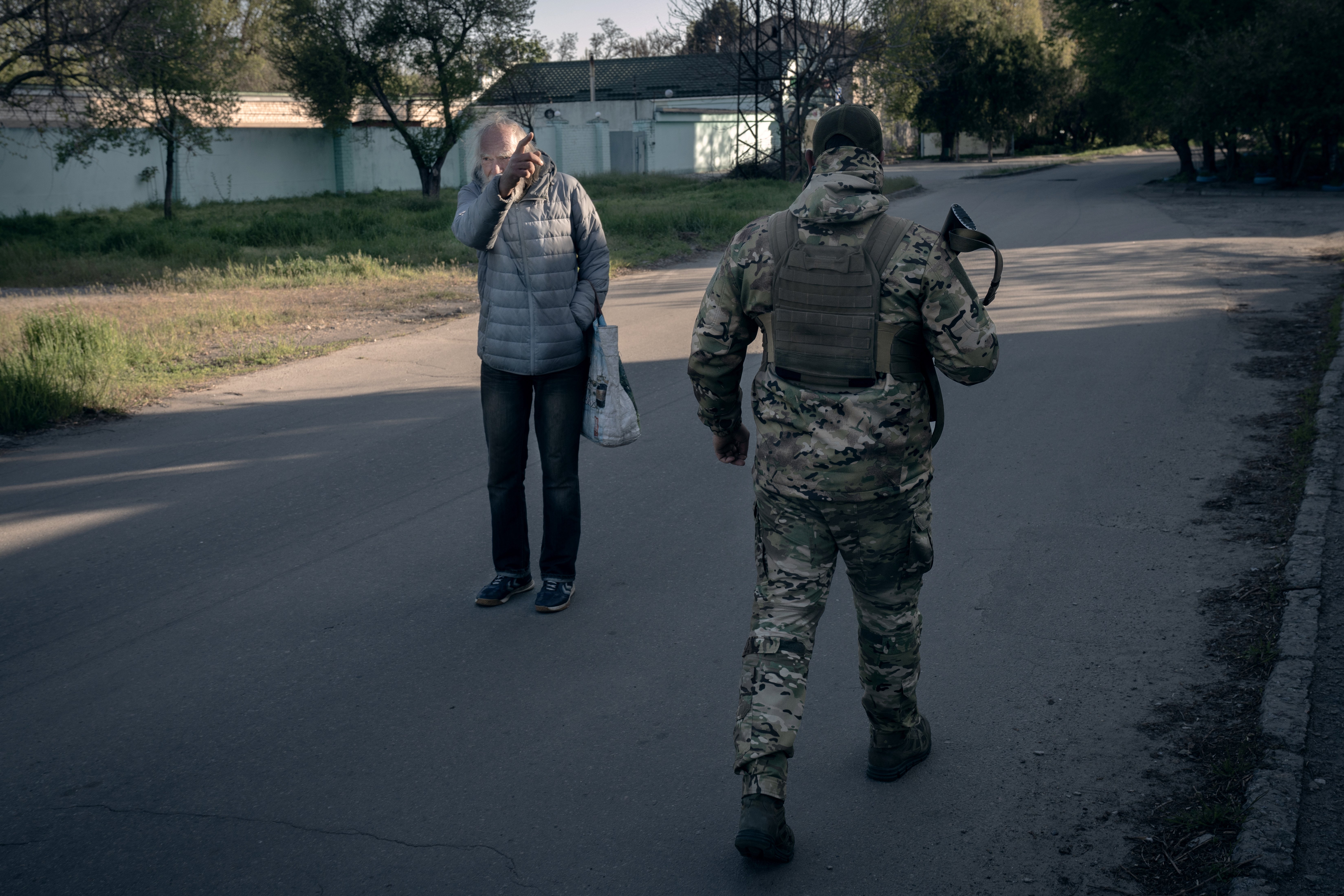
Not out of stubbornness or some romantic idea of endurance, but because this is still their city. One resident explained it bluntly: “Life is difficult and things are harsh, but if everyone leaves, then what will remain?”
Before Russia’s full-scale invasion, Kherson had a population of around 300,000. Today, there are between 50 to 60,000, or so they say. No one knows for sure. The people who stayed seem deeply attached to the city in a way that is difficult to describe. They continue planting flowers. They continue opening shops beneath anti-drone netting. They continue living ordinary lives inside extraordinary conditions.
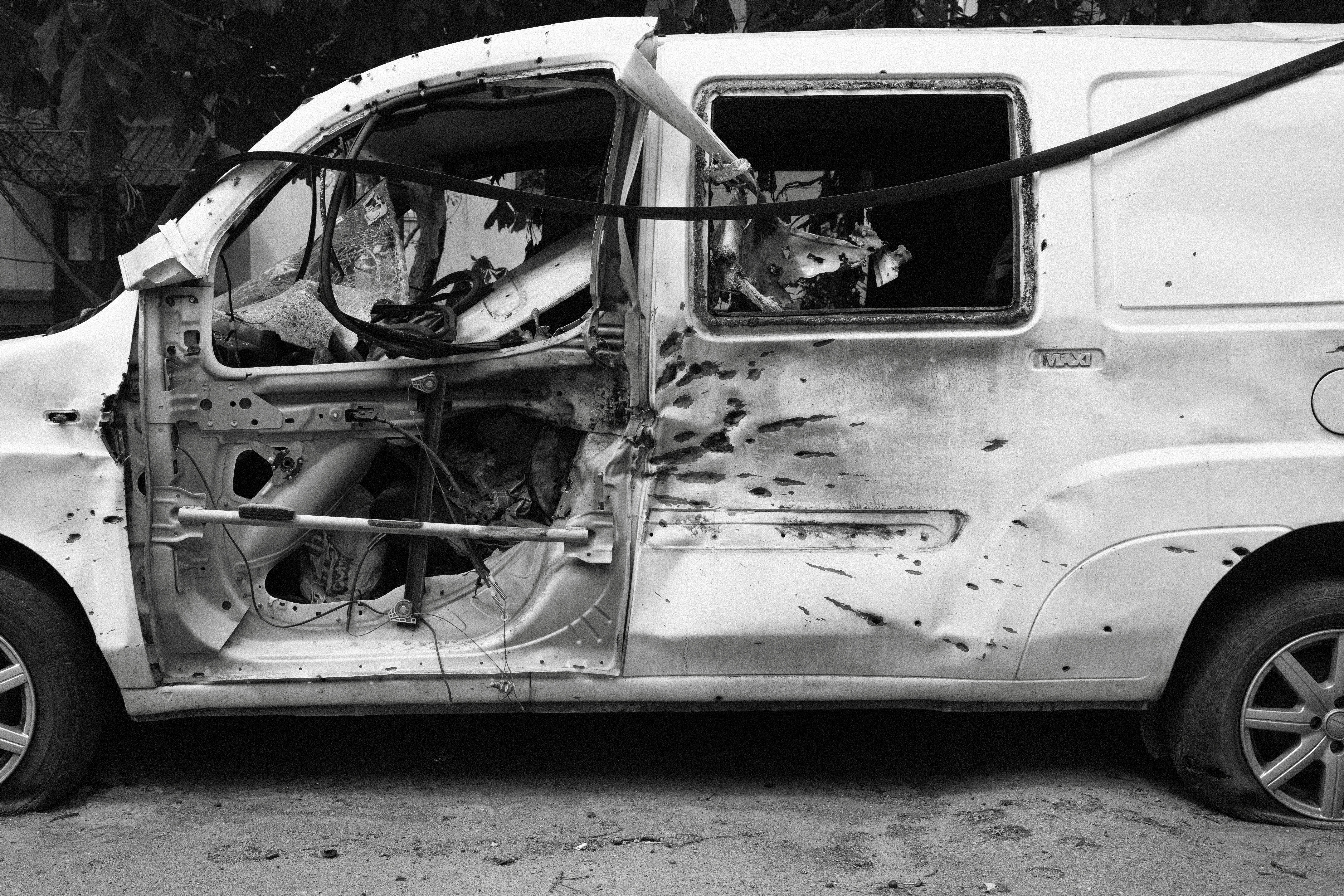
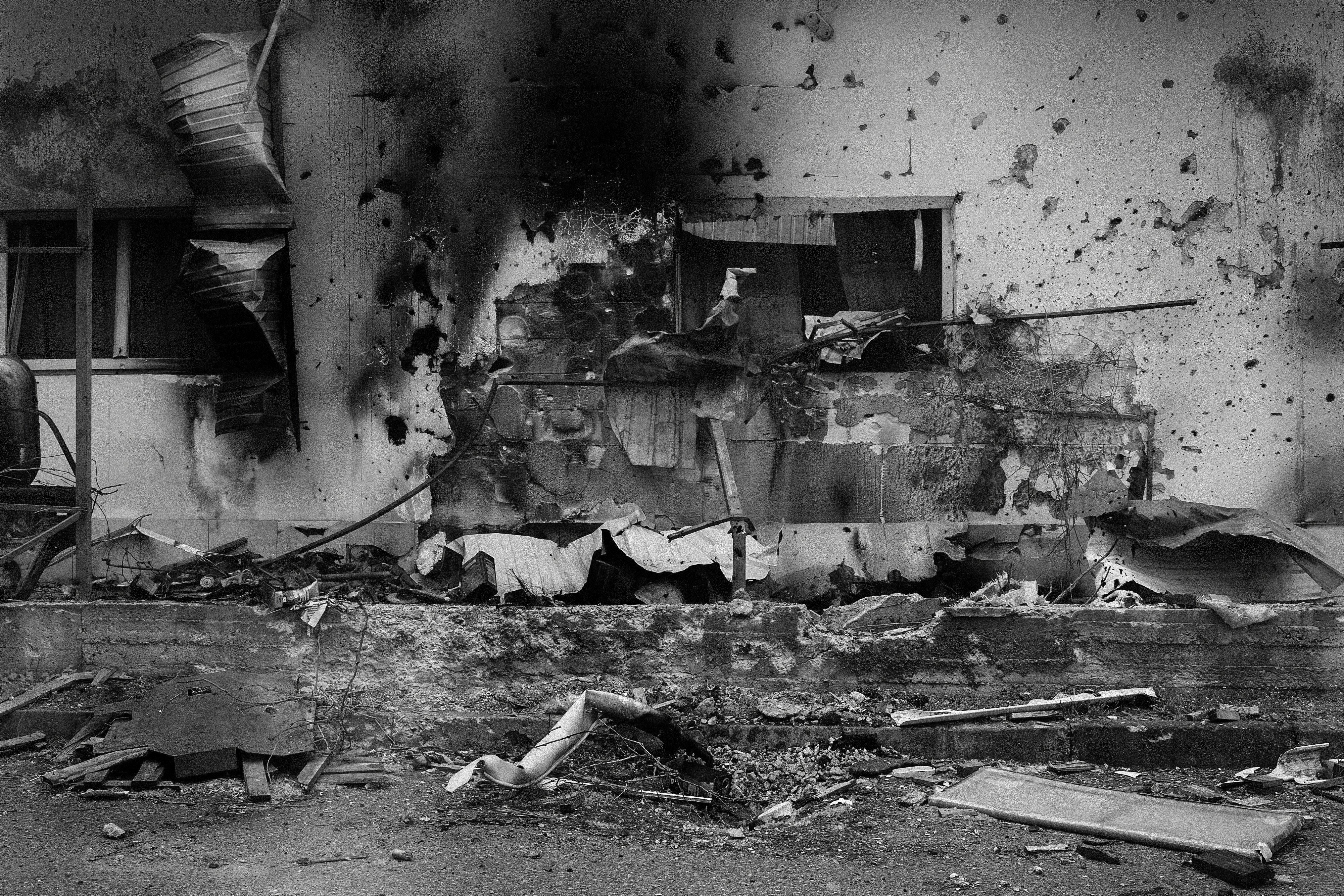
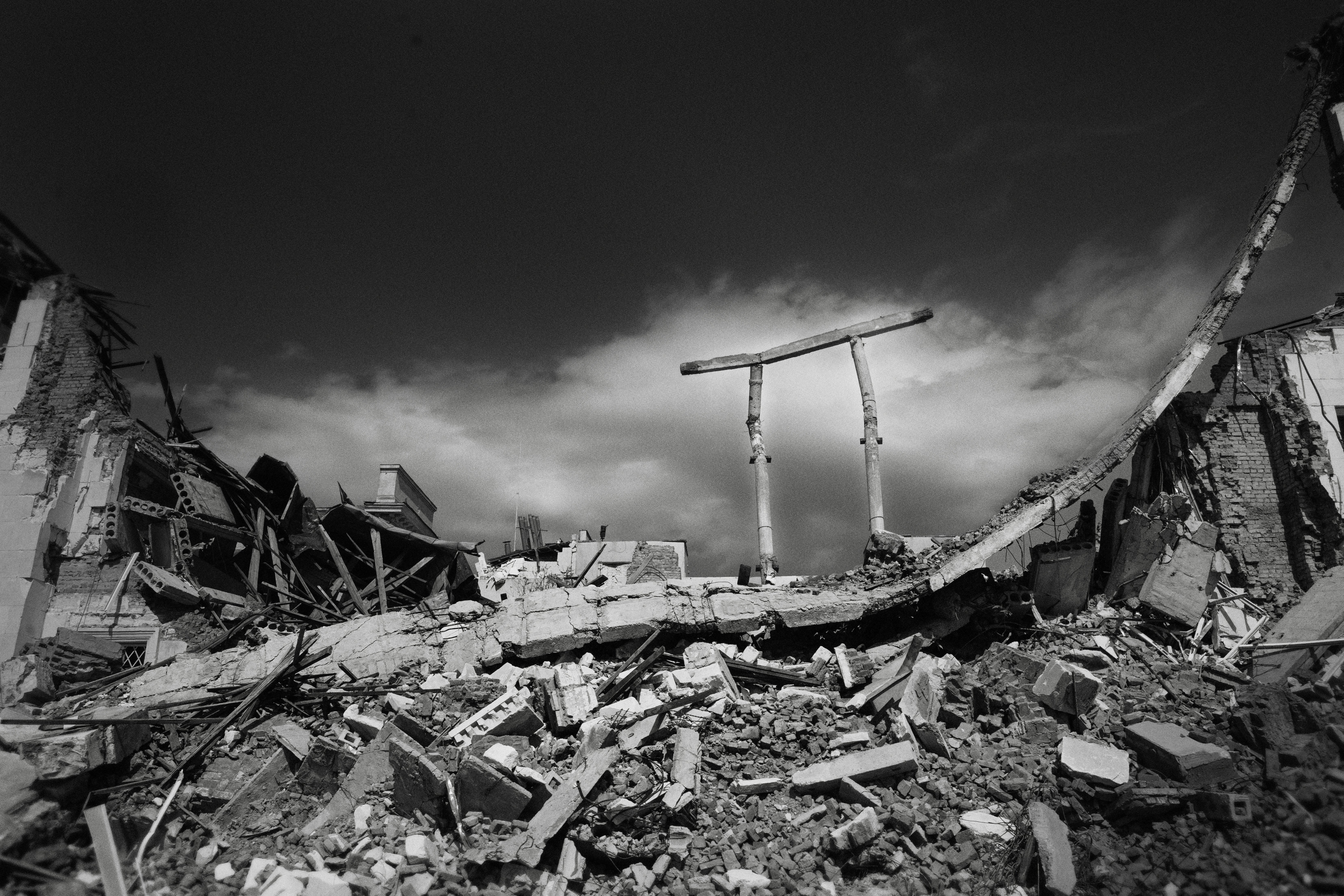
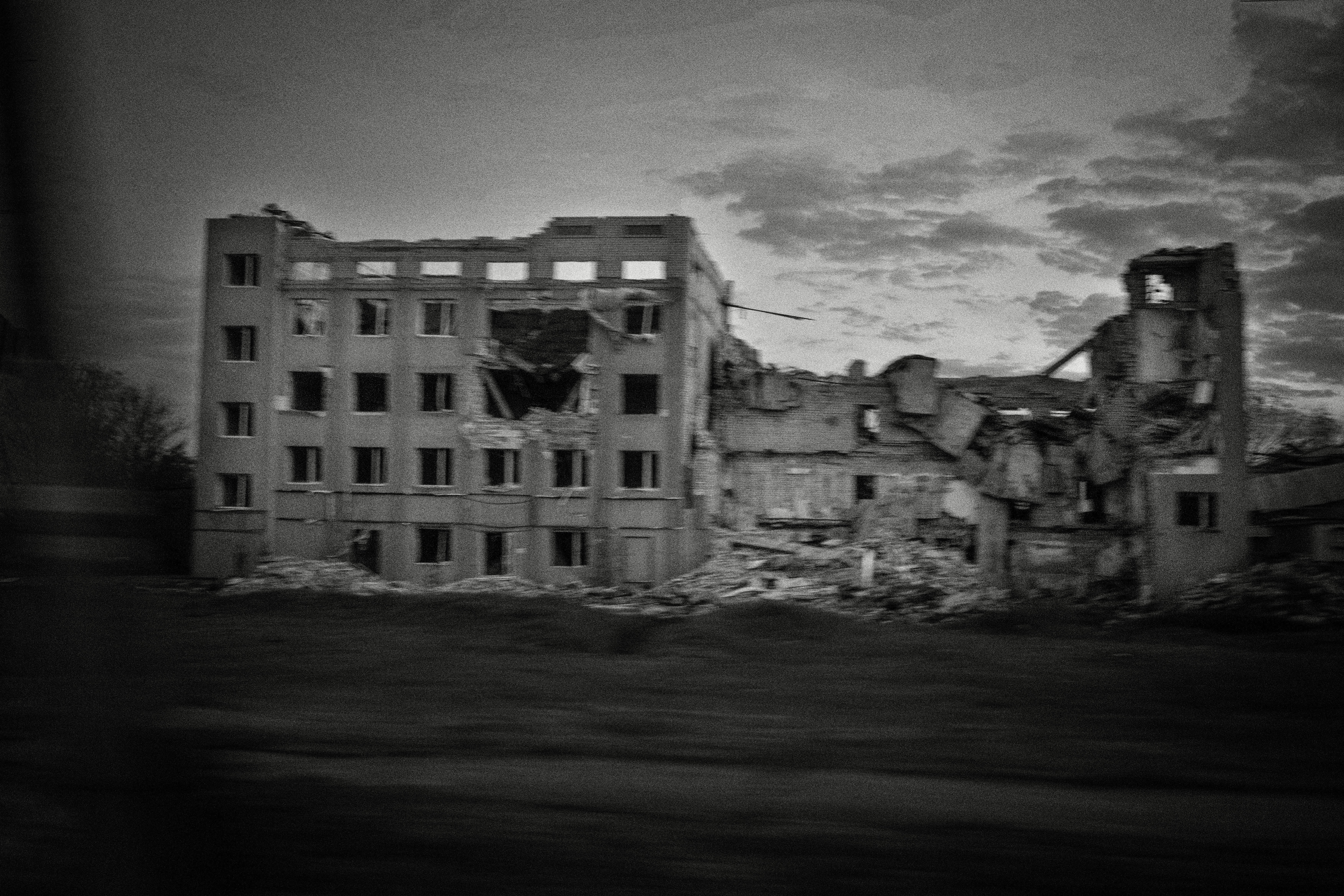
Even in the so-called “kill zone” near the riverbank, barely a kilometer and a half from Russian positions, you see civilians carrying groceries, riding bicycles, or walking home with flowers in their hands while artillery lands nearby and soldiers attempt to shoot drones from the sky above them.
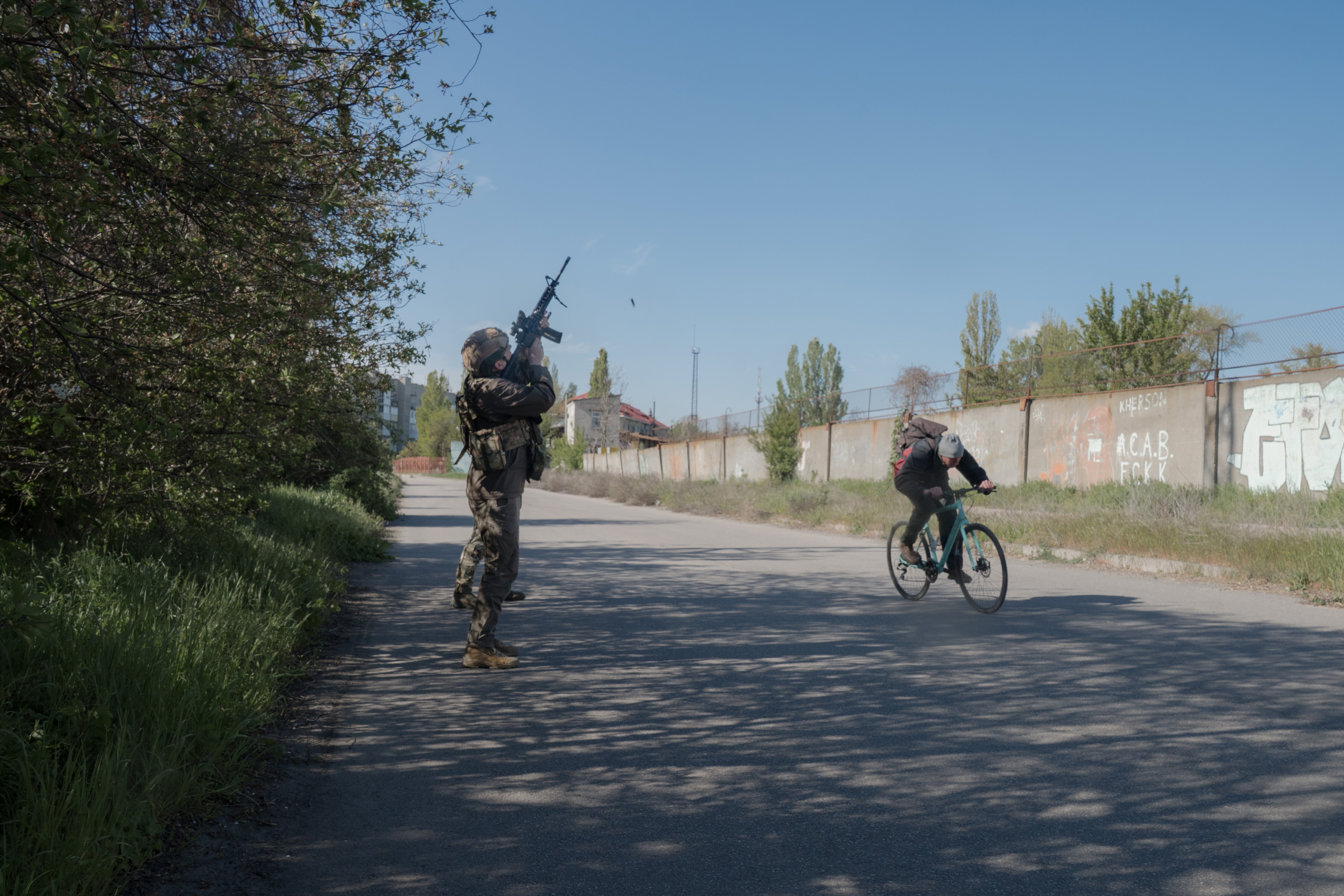
Kherson forces you to confront an uncomfortable reality about modern war: the frontline no longer begins where civilian life ends.
The city exists under constant aerial surveillance. Drones hover above markets, residential streets, and intersections. Some can be jammed electronically. Others cannot. Fiber-optic drones are immune to electronic warfare systems because they remain physically connected to their operators by cable. Often, by the time you hear them, it is already too late.
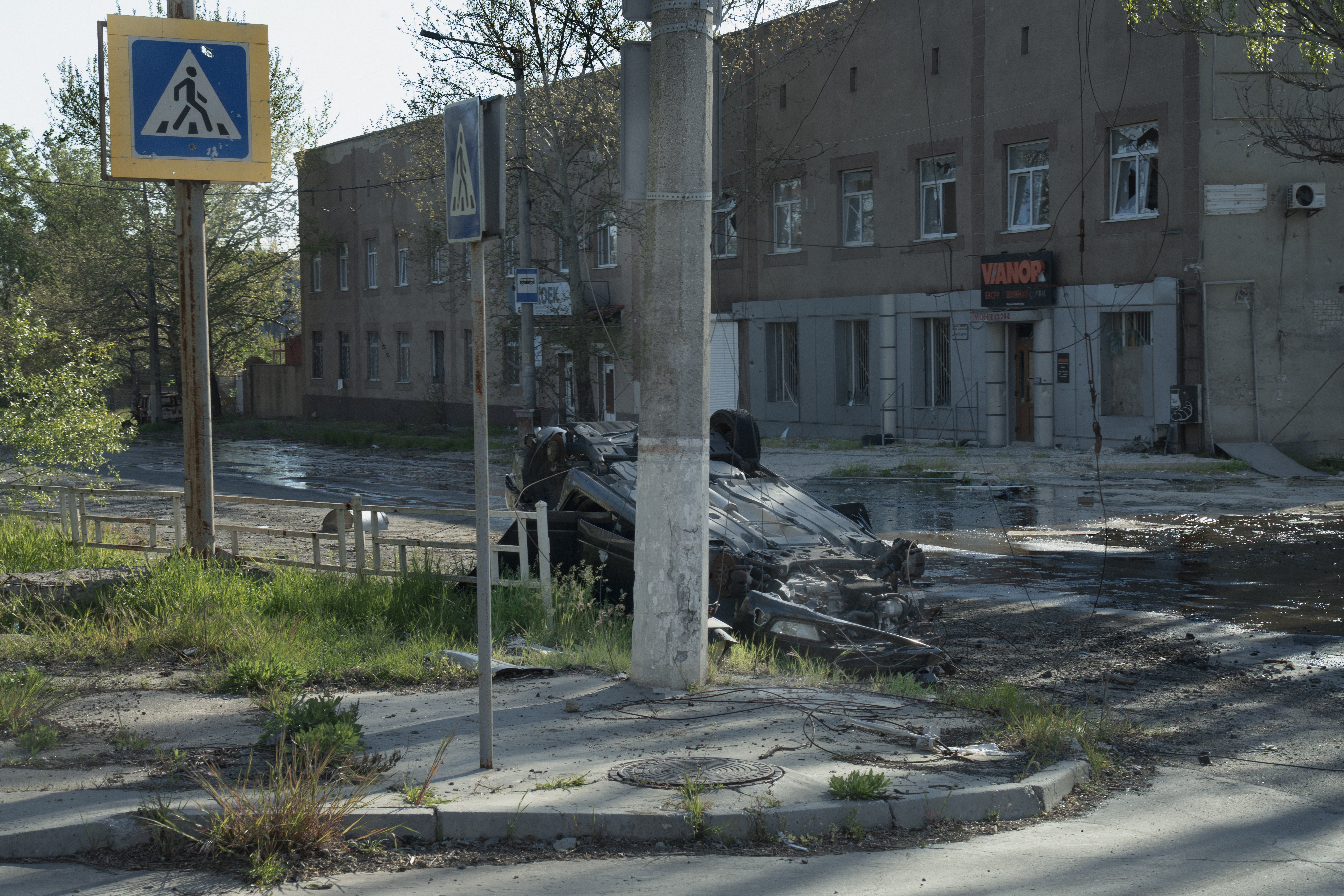
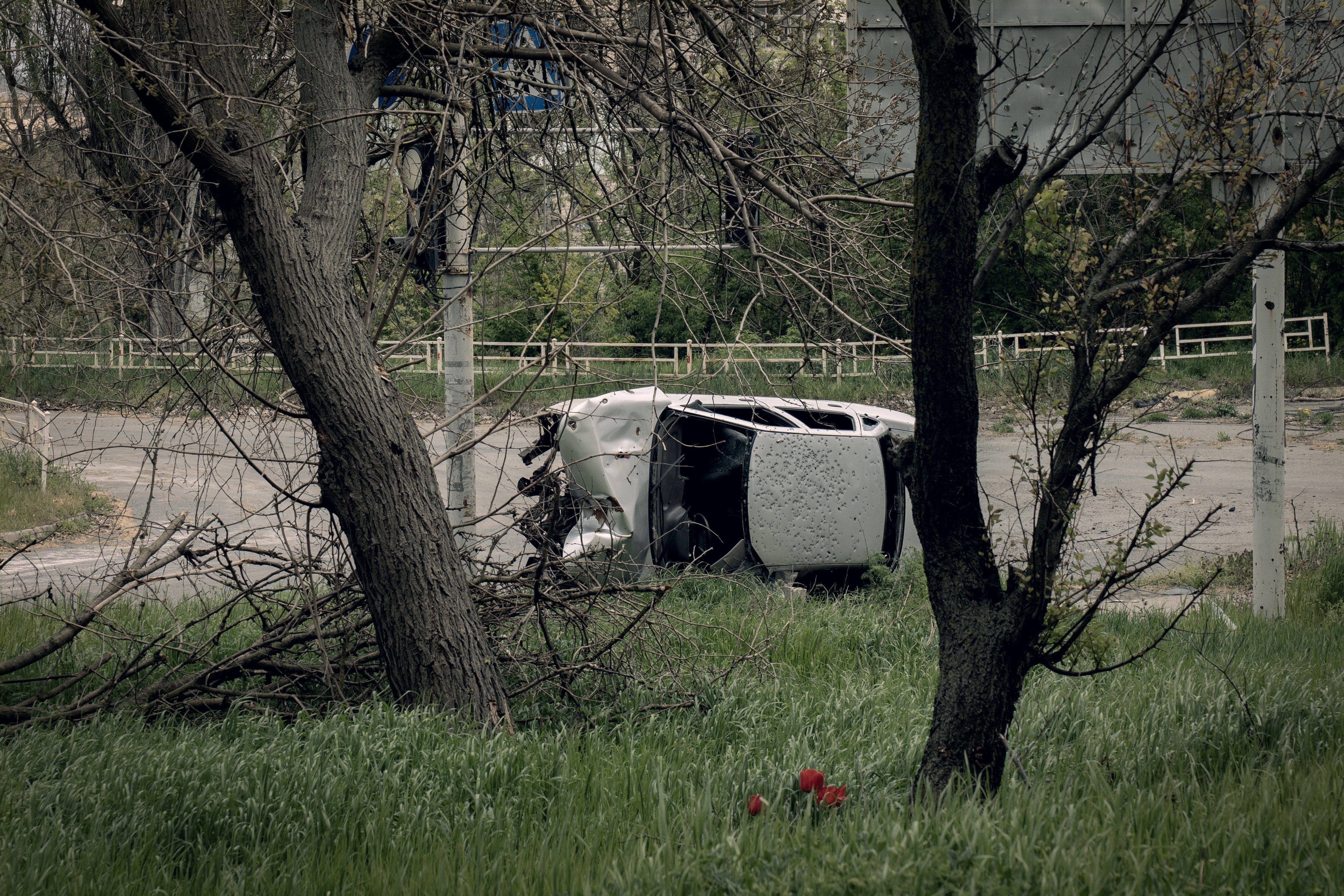
The soldiers defending the city describe how quickly the technology has evolved. Early in the war, drones were easier to detect and easier to destroy. Now they are faster, more resilient, and flown by increasingly experienced operators. Bullets ricochet off reinforced frames. Pilots deliberately avoid known Ukrainian positions.
The men hunting them have adapted too.
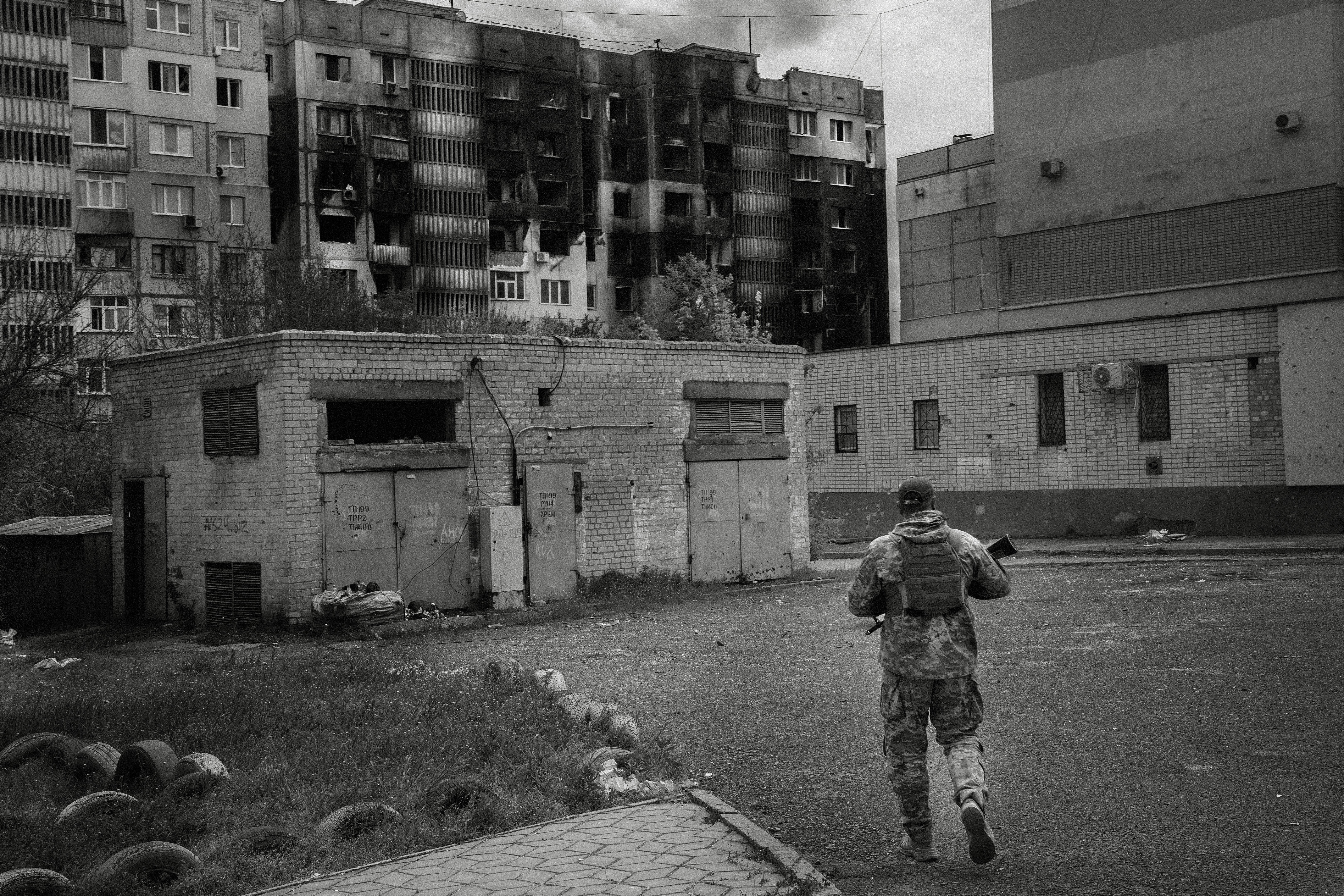
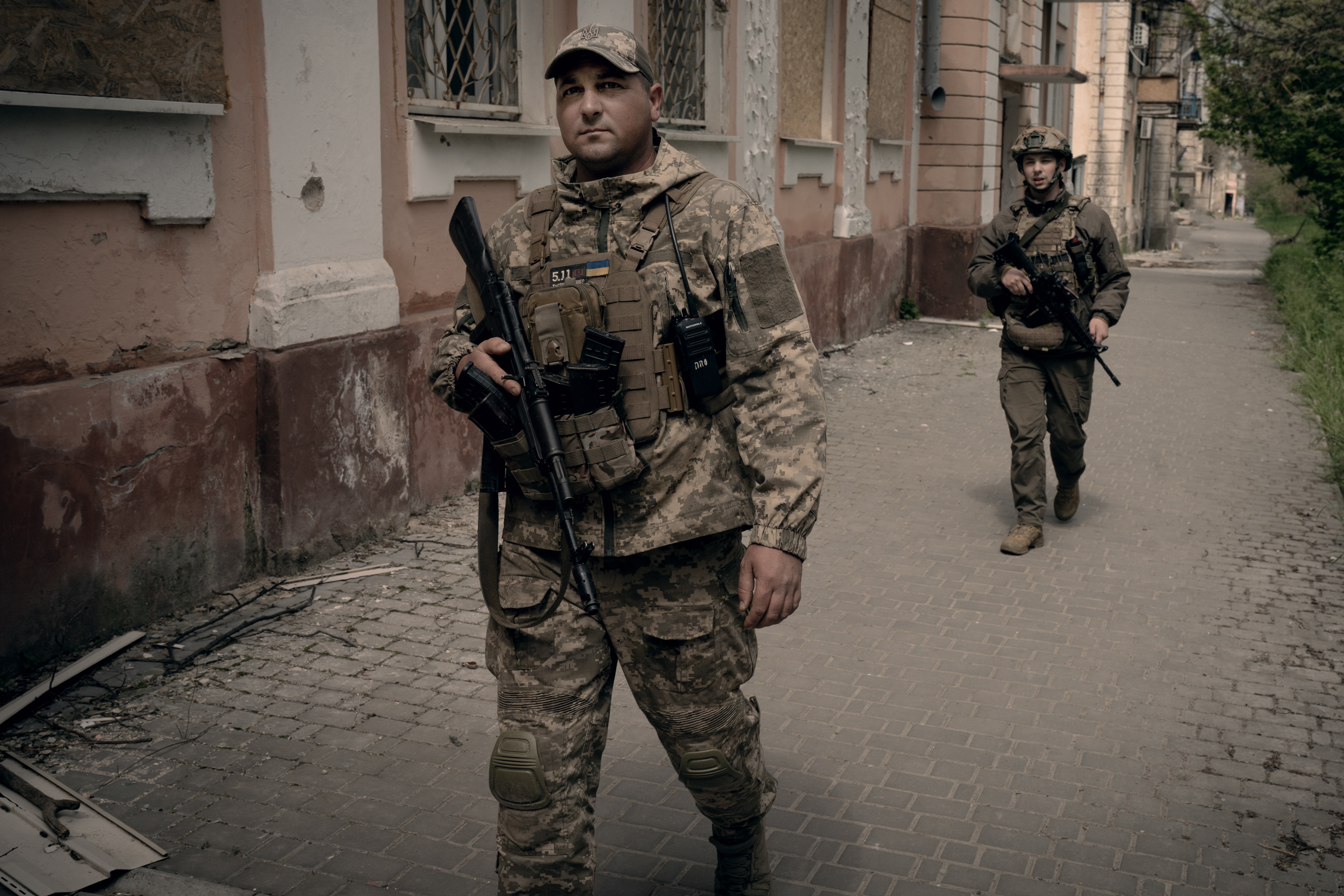
Their work feels almost primitive compared to the technology they are fighting against: small groups of riflemen walking through destroyed neighborhoods, trying to identify the sound of a drone before it becomes an explosion.
One of the brothers explained how prolonged exposure changes the mind. Eventually, every sound begins to resemble a drone. Your brain starts creating phantom noises. Wind sounds like an FPV. A distant motor sounds like a Molniya.
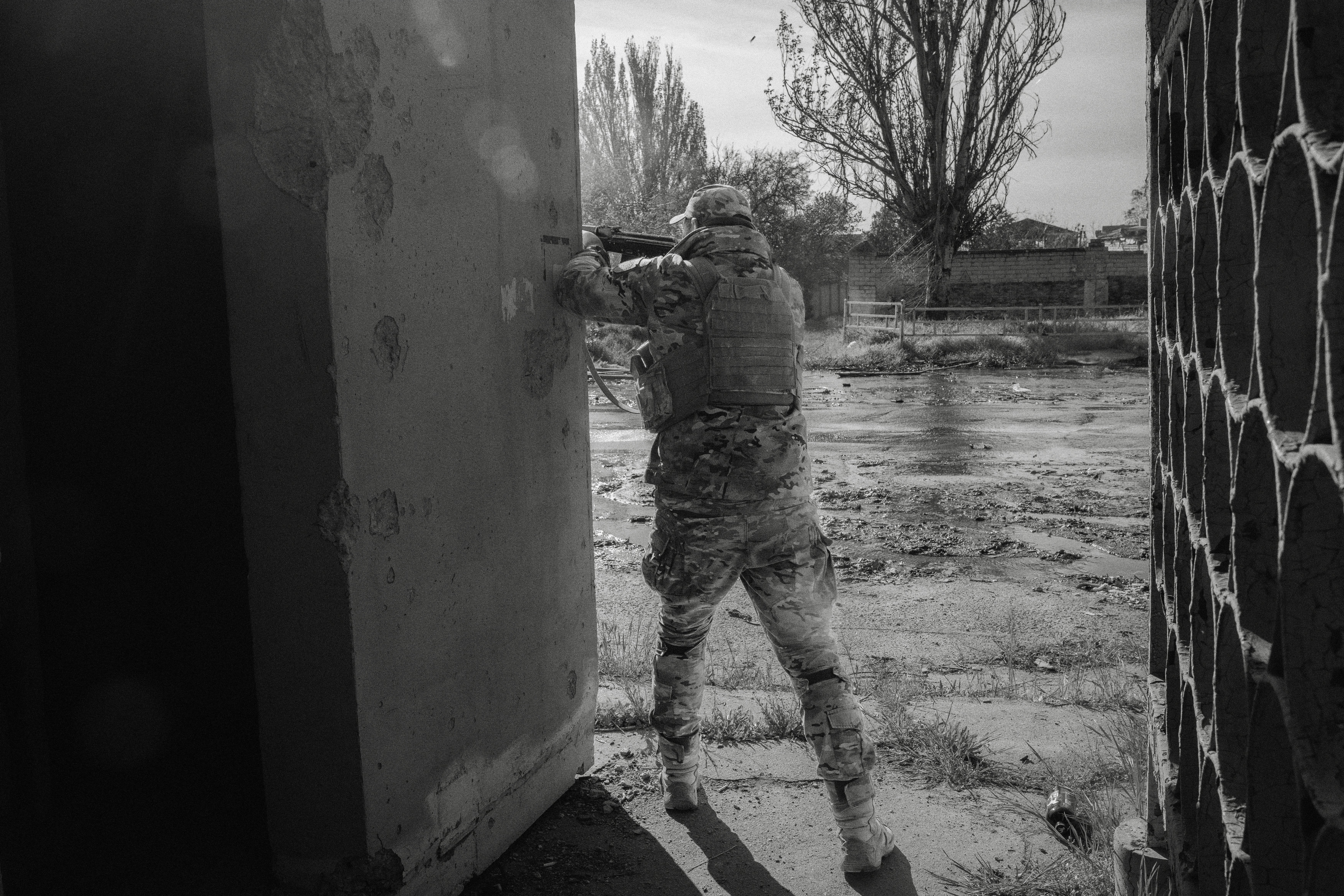
And still, life in Kherson continues.
That may be the city’s most striking feature. Not defiance in the abstract, but the coexistence of ordinary civilian life with permanent danger. The normalization of conditions that should feel impossible to normalize.
You can buy groceries in Kherson. You can sit in a garden on a warm morning listening to the radio.
And minutes later, someone nearby may be killed by a Russian drone.
Discuss this article:
-4a56a6b482ec132402c16ef6fcabf9a2.png)