- Category
- War in Ukraine
“Absolutely Impossible to Meet with Putin in Moscow” Zelenskyy on the Outcomes of Peace Talks
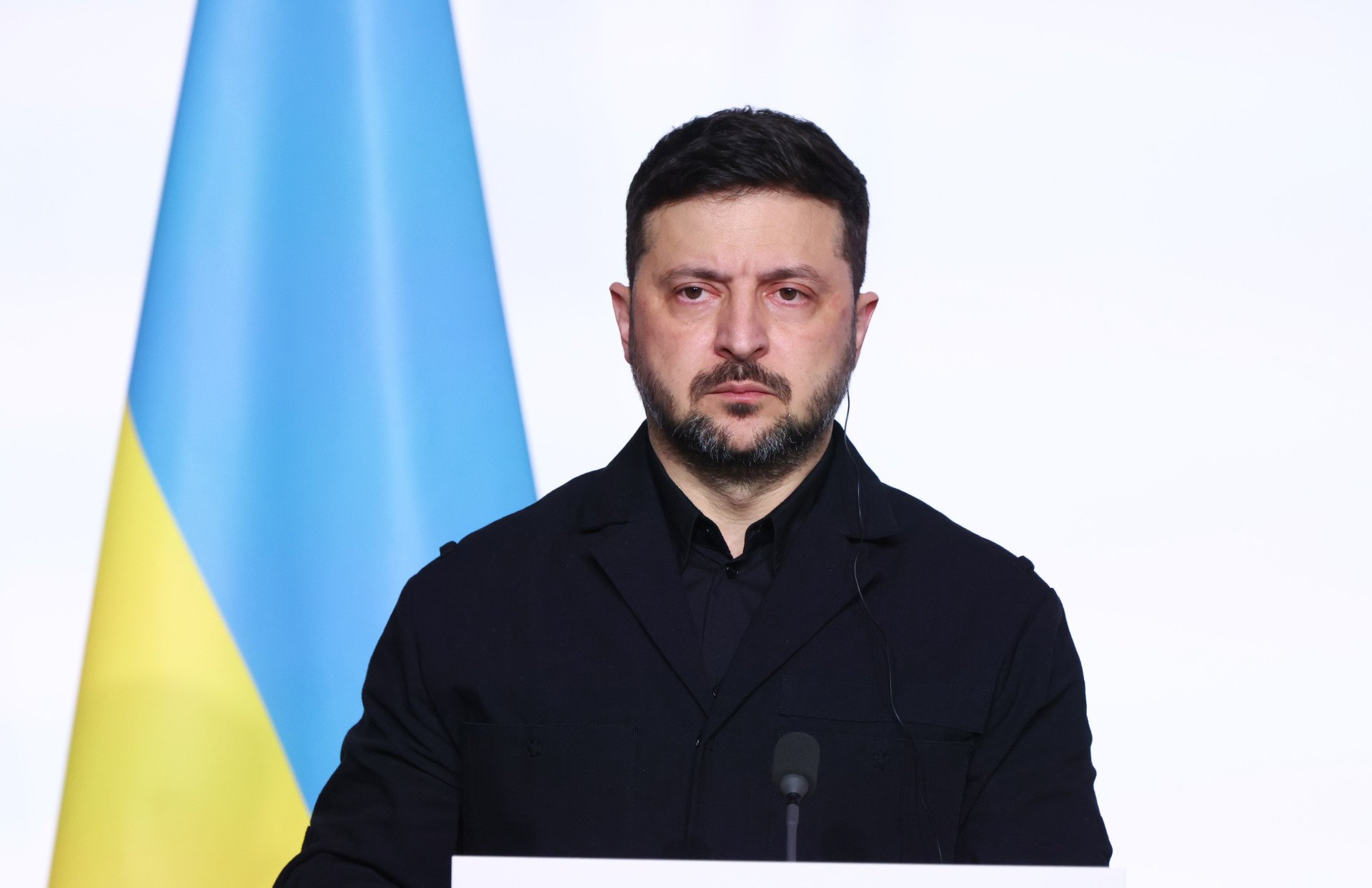
After several rounds of talks in Abu Dhabi, two key issues remain unresolved: territory in Ukraine’s Donetsk region and the Zaporizhzhia Nuclear Power Plant. President Volodymyr Zelenskyy says Ukraine is ready for further talks and has reached an understanding with the United States on other points. The only exception: not in Russia or Belarus.
 Prefer U24 Media on Google
- Authors

-29a1a43aba23f9bb779a1ac8b98d2121.jpeg "Photo of Illia Kabachynskyi")
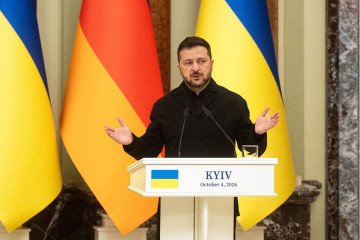
“I can just as well invite him to Kyiv—let him come,” Zelenskyy said in response to journalists’ questions about a possible invitation to Moscow.
In his view, when the discussion turns to a meeting “in Moscow,” it becomes obvious that no one actually wants to reach an agreement.
“I have always said that I am ready for any format aimed at ending the war that actually works,” said Zelenskyy. “But in Moscow or in Belarus, this is simply impossible—and it is absolutely clear why: because one of these countries is the aggressor that started and is waging the war against us, killing us, while the other country is its partner in these actions.”
There is still a great deal of work to be done in the negotiation process. Among the latest developments is the possibility of suspending Russian strikes on Ukraine’s energy infrastructure. The American initiative—publicly mentioned by US President Donald Trump—is intended, at least temporarily, to halt attacks on Ukrainian energy infrastructure. Kyiv’s position is reciprocal: Ukraine would not strike Russia’s energy infrastructure.
“We want to end the war, and we are ready for de-escalation steps,” Zelenskyy said. How long such an “energy truce” might last remains unclear, but Ukraine is prepared to support it, as well as other similar ceasefire initiatives. The primary goal, he emphasized, is to end the war.
Twenty points of the agreement and territorial issues
The greatest challenge in the talks is finding a compromise on territorial issues.
Zelenskyy said Ukraine is ready for compromise, but not one that comes at Ukraine’s expense or benefits the aggressor. The least problematic option—“we stay where we are”—is something Kyiv is prepared to discuss, including the possibility of a free economic zone. Regarding the Donetsk region, parts of which are controlled by Ukraine, there is no readiness to alter the country’s territorial integrity.
“Our side demonstrated readiness to discuss,” Zelenskyy said. The issue of the Zaporizhzhia Nuclear Power Plant is also part of the “territorial” block and remains the key and most difficult issue.
At the same time, agreement with the American side on other points is progressing positively. “We are disputing two points,” said Zelenskyy. “As for the rest of the points in this plan, we agree with them. That is my position. And we are counting on the strength of the United States of America for the Russian side to also agree with all the points that America has developed, except for what we have already heard. I generally believe that this document should be signed by the presidents. I believe we will receive the final answer only at the leaders’ meeting. Because I think there will be surprises in any case. We understand who we are dealing with.”
Another important point is security guarantees. The document on security guarantees is ready, says Kyiv. Its signing would strengthen Ukraine’s negotiating position and would be important for the United States as well, as it would demonstrate progress and give people more confidence. Separate agreements also exist with European partners.
“My signal was clear: signing security guarantees is an act of goodwill,” said Zelenskyy. “There should be no fear that something will be given to Ukraine and Ukraine will simply refuse to end the war. The logic is simple: the agreement is signed, and then Congress ratifies it. If we sign it and do not end the war, Congress will not ratify anything. And what is the problem if it is written that the security guarantees will take effect once the war ends? I do not see a problem. That is why Ukraine says that this element of our agreements is ready.”
To strengthen Ukraine’s negotiating track, Zelenskyy appointed Kyrylo Budanov, former head of military intelligence, as chief of the Presidential Office.
“By doing so, I demonstrated that there will be only one line of communication from Ukraine—one ‘boat, one negotiation track, not three or four or more,” said Zelenskyy. Budanov was ready for this appointment from the very first meeting, he said.
Mykhailo Fedorov, who was also mentioned as a possible candidate for the position, instead took over leadership of the Ministry of Defense. He faces three key tasks:
Closing the sky—the top priority among all projects, as air defense is directly linked to energy security today.
Resolving mobilization issues.
Building a contract-based army.
Fedorov will also oversee work on drones and artillery.
Is Russia ready to end the war?
“I do not believe that Russia wants to end the war,” Zelenskyy said. “There is a great deal of evidence to the contrary.”
Due to Russia’s difficult economic situation, it might want to “pause the war,” he said, but that would still need to be sold to its population. As long as the Kremlin has reserves—money—it is prepared to continue.
Further sanctions pressure could be the solution. Zelenskyy called this an important tool, citing France as an example.
“I spoke with Emmanuel Macron,” said Zelenskyy. “We talked about the tanker fleet. President Trump is actively stopping them as well. Emmanuel said: but our legislation—and essentially legislation across Europe—works in such a way that you can stop them, but you cannot stop them permanently; you stop them, and then the vessels are released. And now, for example, he is preparing to work on legislative changes. God willing, he will succeed. This is an issue for all states – at least for the northern, maritime countries that have leverage here.” If all these tools begin to work, the Russians will want to end the war sooner, he said.
“Putin started the war, and he has not achieved the results he set out to achieve,” said Zelenskyy. “You can say whatever you want, but he does not have that achievement. That is why there is pressure now for us to withdraw from Donbas. Because if you withdraw from Donbas, that would be the one thing he could say: this was our main goal, Donbas is ours, this is our victory. This is a problematic issue, because it is the only thing they are clinging to in this propagandistic ‘sale’ to their domestic audience.”
Prisoner exchanges have also stalled: the Russians simply do not see what they gain from them.
The European track
In talks with journalists, Zelenskyy also addressed the possibility of Ukraine joining the EU. Ukraine plans to complete all negotiating clusters by the end of 2026 and be technically ready in 2027—if speaking strictly about readiness.
“What interests us is a fast-track,” he said. “It is a security guarantee for our future. Economic security, the choice of markets, shared technological solutions—we are defining a priority. We will trade with the Middle East and with everyone else in the world, but this is the main market. There are shared values, direction, and geopolitics.”
Russia will also be an obstacle here. Even in calmer times, Moscow will try to block Ukraine’s EU accession, says Zelenskyy.
“We have a chance,” he said. “After this war, Russia will seek—especially after some period of sanctions being lifted and so on, which they talk about in their bilateral dialogues—to ensure that Ukraine does not join the European Union. They will find a way. ”
Another crucial element of EU accession is reconstruction. As an EU member state, Ukraine would offer investors the same security guarantees. This is especially important given that reconstruction will take years.
Discuss this article:
-6c7b568bf1f65853b7afd9dc1c3ca1fe.jpeg)

-c439b7bd9030ecf9d5a4287dc361ba31.jpg "Photo of Katherina Popilnichenko")

-72b63a4e0c8c475ad81fe3eed3f63729.jpeg "Photo of Cyril Barabaltchouk")