- Category
- War in Ukraine
An 80-Year-Old Russian Tank Traveled 9,000 Km to the Front—Then a Ukrainian Drone Found It
 Prefer U24 Media on Google
- Authors


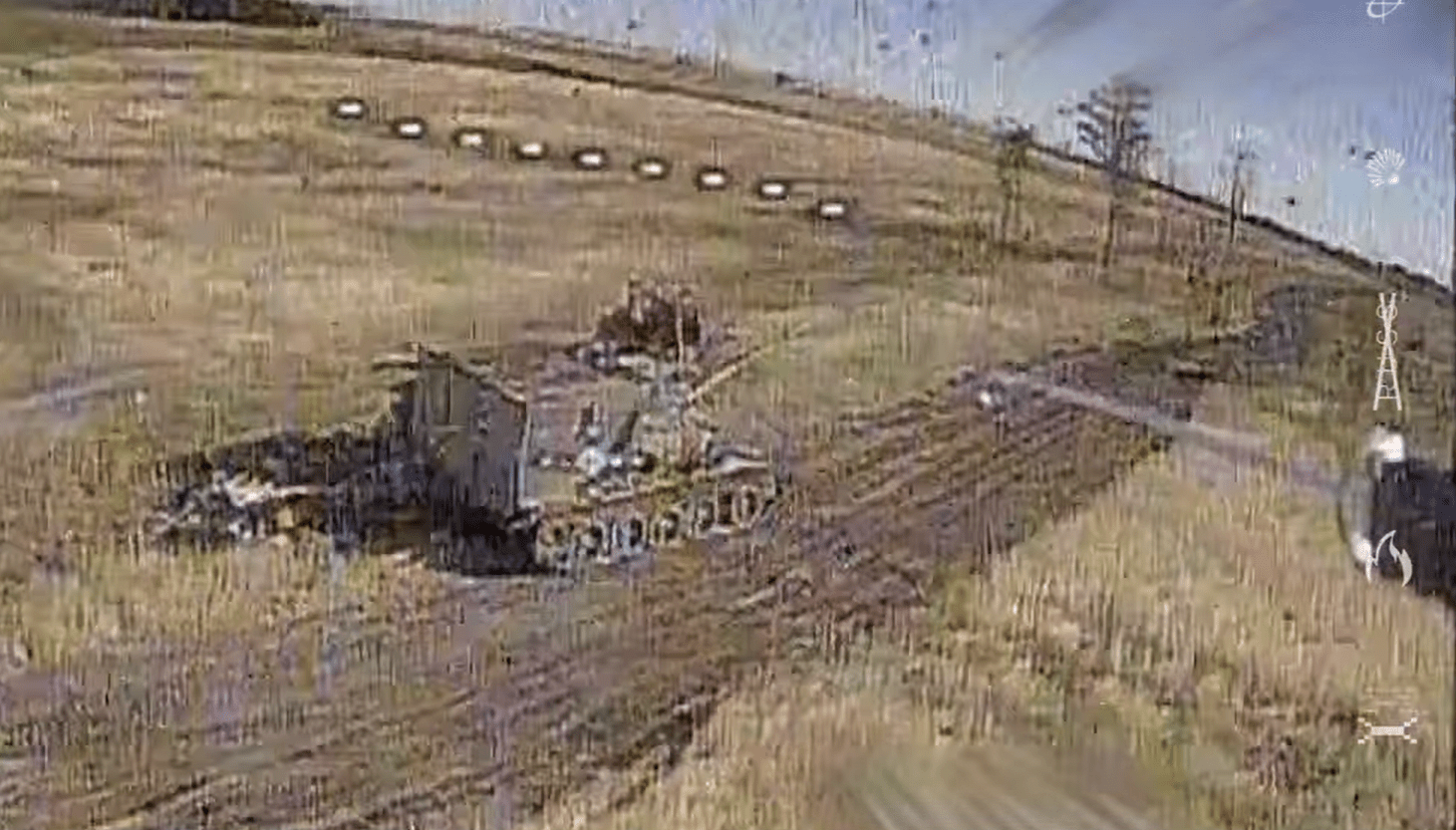
Nearly eight decades after the T-54 was designed—and after a journey of almost 9,000 kilometers from Russian storage bases in the Far East—one of the Soviet-era tanks finally reached the modern drone battlefield, where it was destroyed by Ukraine’s 423rd Separate Unmanned Systems Regiment “Skif Griffins” on September 29.
Ukrainian FPV operators struck a Russian T-54 deep behind the lines, releasing footage of the engagement.
We bring you stories from the ground. Your support keeps our team in the field.
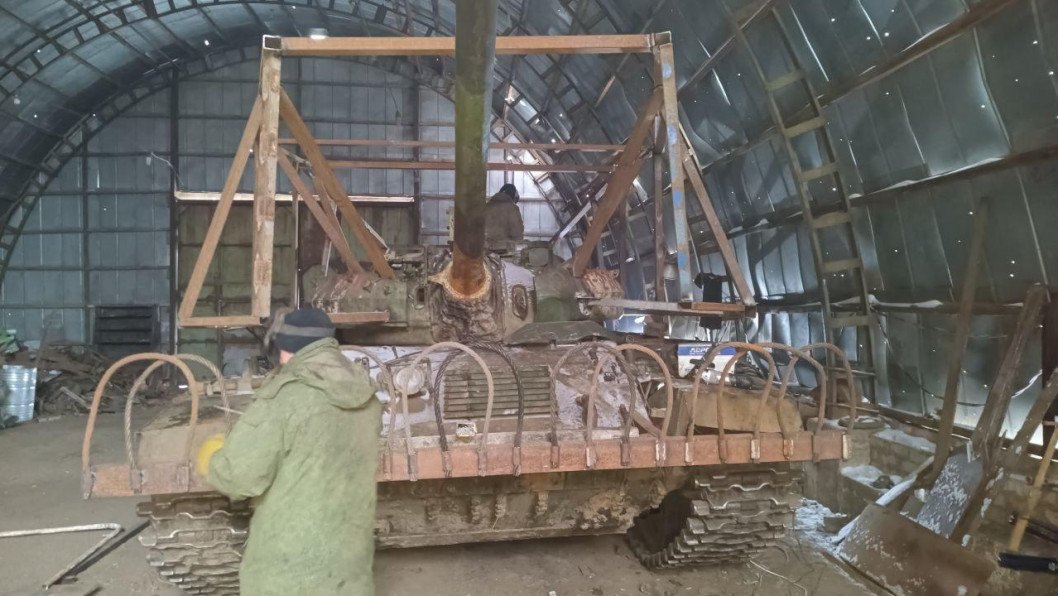
Russian forces had covered the aging tank with additional protective structures in an attempt to shield it from aerial strikes. The improvised protection did not stop the FPV.
The T-54 traces its origins to the immediate post-World War II period and carries a 100mm main gun, making it one of the oldest mass-produced tank designs Russia has pulled from long-term storage and returned to wartime use.
According to the Skif Griffins, this particular vehicle had traveled an extraordinary distance before reaching the battlefield.
The tank was reportedly brought from storage facilities in Russia’s Far East—almost 9,000 kilometers away.
After surviving decades in reserve and a journey spanning much of Russia, it was ultimately detected in the Russian rear by Ukrainian drone operators and struck by an FPV.
The T-54’s reappearance on the battlefield also shows how deeply Russia has drawn on its armored reserves during the war.
In the decades after the T-54 entered service, the Soviet Union and later Russia fielded successive generations of tanks including the T-72, T-80 and T-90.
Yet vehicles whose basic design dates back to the first years after World War II are again being pulled from storage and sent toward the front. The Skif Griffins argue that the return of such old armor points to continuing pressure on Russia’s stocks of newer tanks and ammunition.
Earlier, Ukraine destroyed a tank Russian troops used as an improvised transport vehicle to reach their positions before abandoning the armored vehicle and fleeing on foot.
Discuss this article:



-c439b7bd9030ecf9d5a4287dc361ba31.jpg "Photo of Katherina Popilnichenko")


-29a1a43aba23f9bb779a1ac8b98d2121.jpeg "Photo of Illia Kabachynskyi")

-72b63a4e0c8c475ad81fe3eed3f63729.jpeg "Photo of Cyril Barabaltchouk")