- Category
- War in Ukraine
As Ukraine Endures Extreme Cold, Soldiers Adapt Winter Camouflage for a Drone-Watched Front
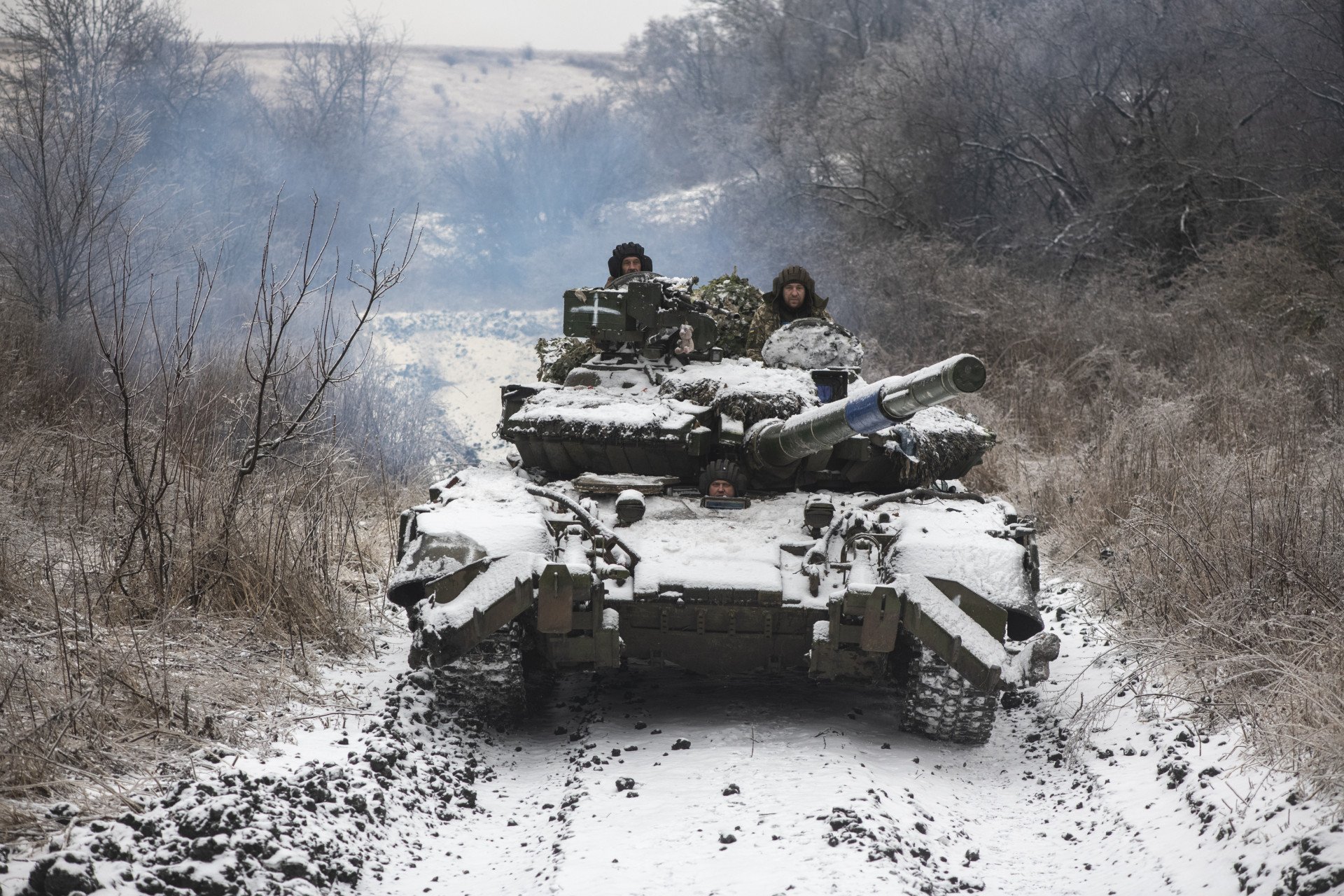
In Europe’s coldest winter in over a decade, Ukrainian troops are using heated shoe insoles to preserve drone batteries, white ponchos to blur silhouettes, and snowy terrain as both ally and threat in a war increasingly fought under the gaze of thermal cameras and circling drones.
 Prefer U24 Media on Google
- Authors

-554f0711f15a880af68b2550a739eee4.jpg "Photo of Lucile Brizard")
At an artillery position carved into frozen ground, a Ukrainian soldier serving in the 47th Mechanized Brigade, callsign “Bull,” told us he had spent an entire week under open sky without once stepping inside a proper shelter. While snow can help units blend into the terrain, inconsistent conditions create new problems.
“In winter, camouflage is harder,” he says. “When there’s snow, you can match the landscape. But when there’s no snow, everything looks grey—and still, it stands out.”
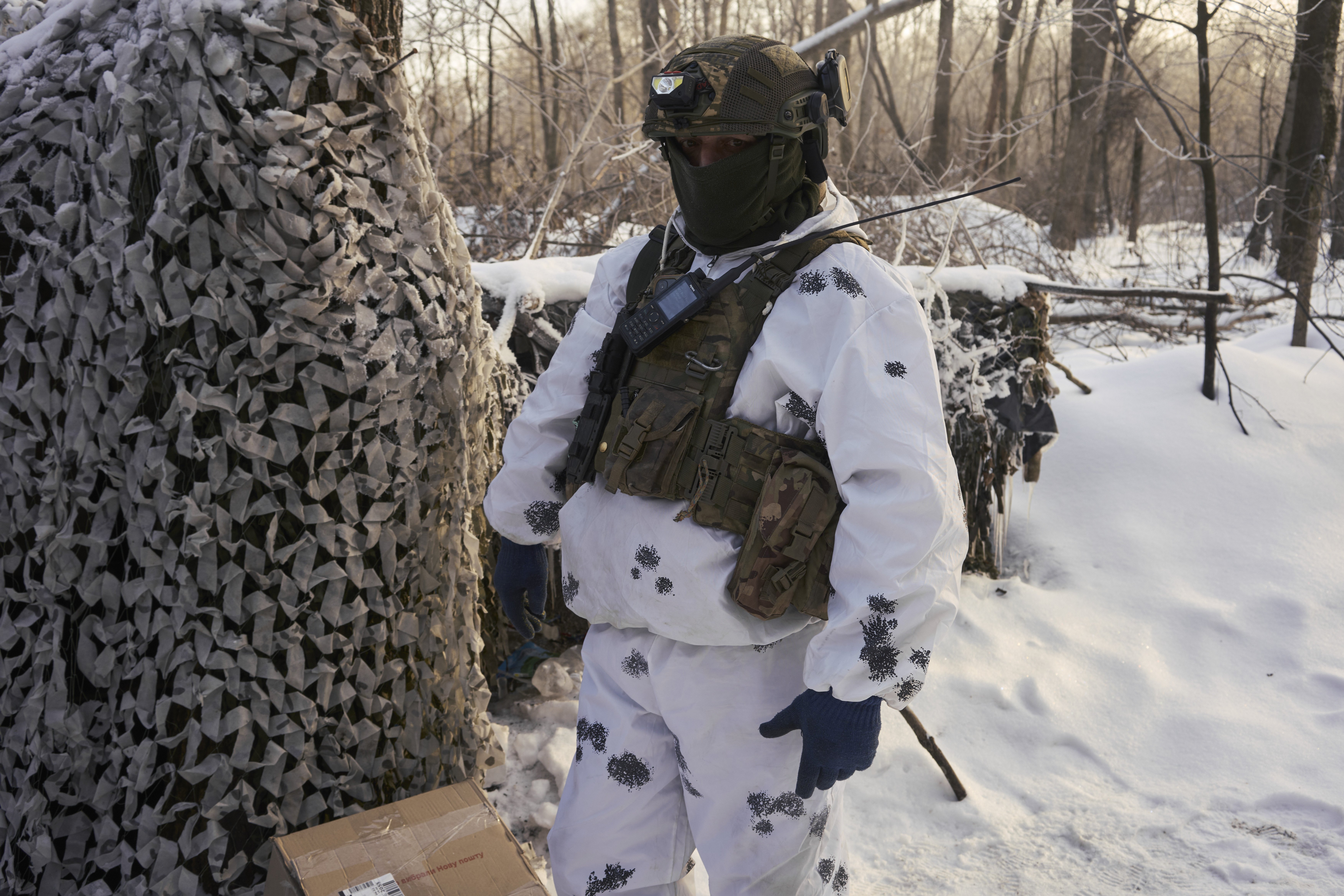
Ukraine’s forces have increasingly adapted their winter equipment and concealment practices during the coldest Ukrainian winter in more than a decade, with temperatures reaching -20°C (-4°F). Freezing temperatures, persistent snow cover, and drone surveillance have reshaped how soldiers move, hide, and fight across the front line in early 2026.
The winter has placed renewed emphasis on a military problem that predates modern technology: how to remain less visible in snow-covered terrain.
Previously, we explored how camouflage in Russia’s war against Ukraine is no longer defined only by what the human eye can see. It is now shaped by thermal sensors, aerial surveillance, motion detection, and first-person-view drones that track movement across open fields and tree lines.
Ukraine’s winter camouflage for a war where drones see everything
In recent weeks, Ukrainian units have relied on small-scale technical adaptations to keep critical systems operating in extreme cold. Ukrainian soldiers have wrapped drone batteries in heated disposable shoe insoles to prevent voltage drops and preserve range.
A Ukrainian drone unit commander said that although batteries typically warm up during flight, the cold requires an additional heat source before takeoff. Adding less than 100 grams does not affect performance.
“We adapt,” Bull told us. “That’s just how we are. But these winters are harder than what the younger guys are used to; many haven’t faced -20°C (-4°F) before.”
The tactic underscores a broader winter challenge for Ukrainian forces: keeping electronic and unmanned systems operational in freezing temperatures while conducting missions under persistent aerial surveillance.
Describing how cold weather shapes even the most basic rhythms of combat, the soldier explained that, “As long as you’re moving, you don’t freeze. But the second you stop, you start to lock up.”
In artillery units, “if someone’s freezing, it usually means they’re not working,” he said.
Drones erase winter’s pause on the battlefield
The New York Times' recent report described how drones have reduced the seasonal slowdown that once defined winter campaigns.
Earlier in the war, heavy armor and deep mud often shaped the tempo of winter operations.
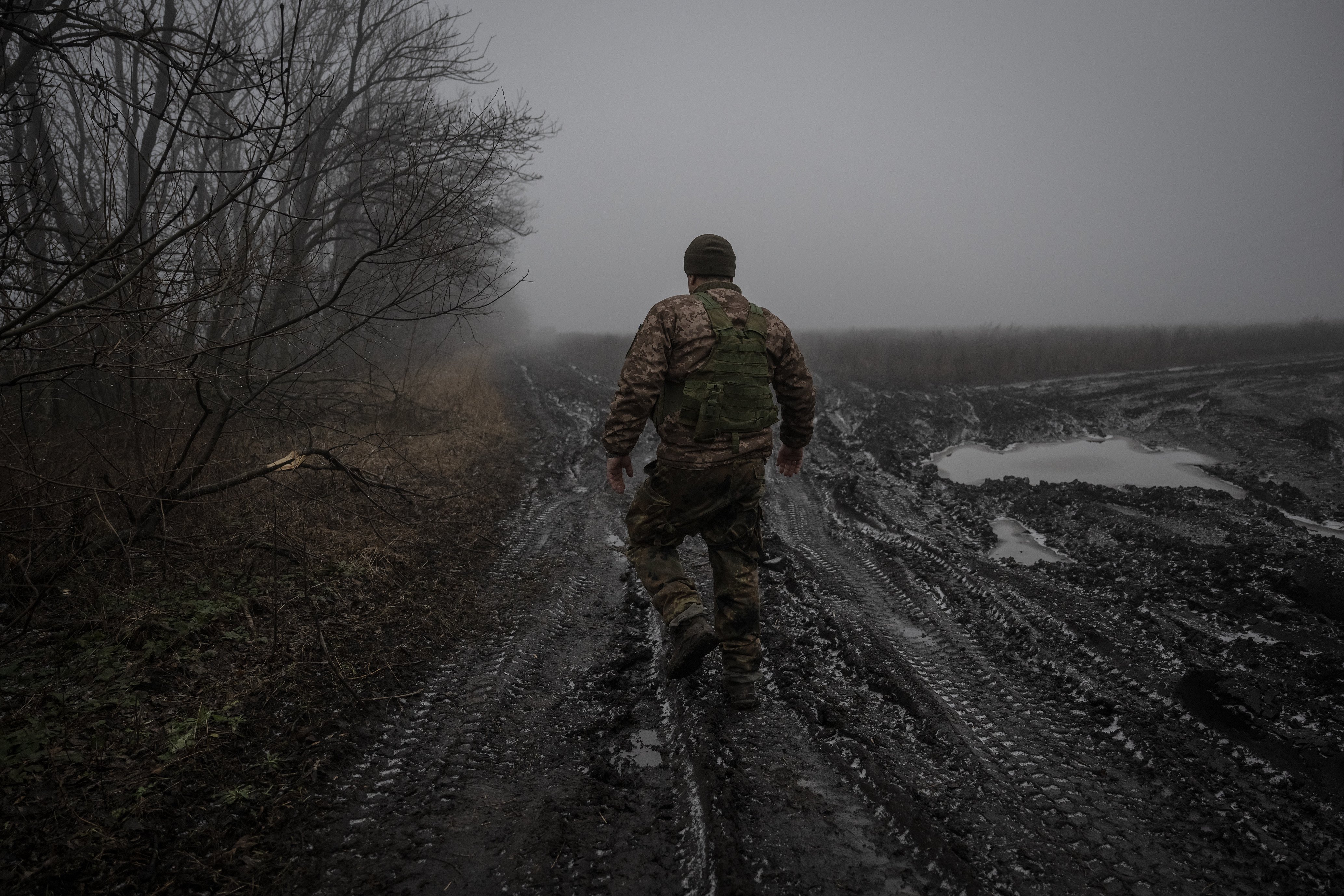
Now, as drones watch and strike year-round, small groups of soldiers on foot or motorcycles attempt infiltration regardless of season. “Nothing really changes, summer or winter,” commented a Ukrainian infantry platoon commander, callsign “Salo.” “The only difference is the cold.”
Winter introduces specific vulnerabilities in the drone age: trees are bare, their leaves no longer providing cover. Lower temperatures can make thermal cameras more effective, The New York Times writes. Ukrainian soldiers interviewed by The Times described how tracks can reveal hidden positions.
We can clearly see tracks in the snow, where they lead, and identify positions where the enemy is hiding
“Shirley”
Officer in the Armed Forces of Ukraine
Weather can also narrow operational windows, Shirley said, “Once the snowfall intensifies, we lose visibility. For us, that is the most dangerous time.” Military analysts told The Times that Russian forces use overcast weather, fog, and heavy snow as cover for infiltration attempts, while Ukrainian forces depend on drones for situational awareness and precision strikes.
From Finland’s Winter War to Ukraine’s drones
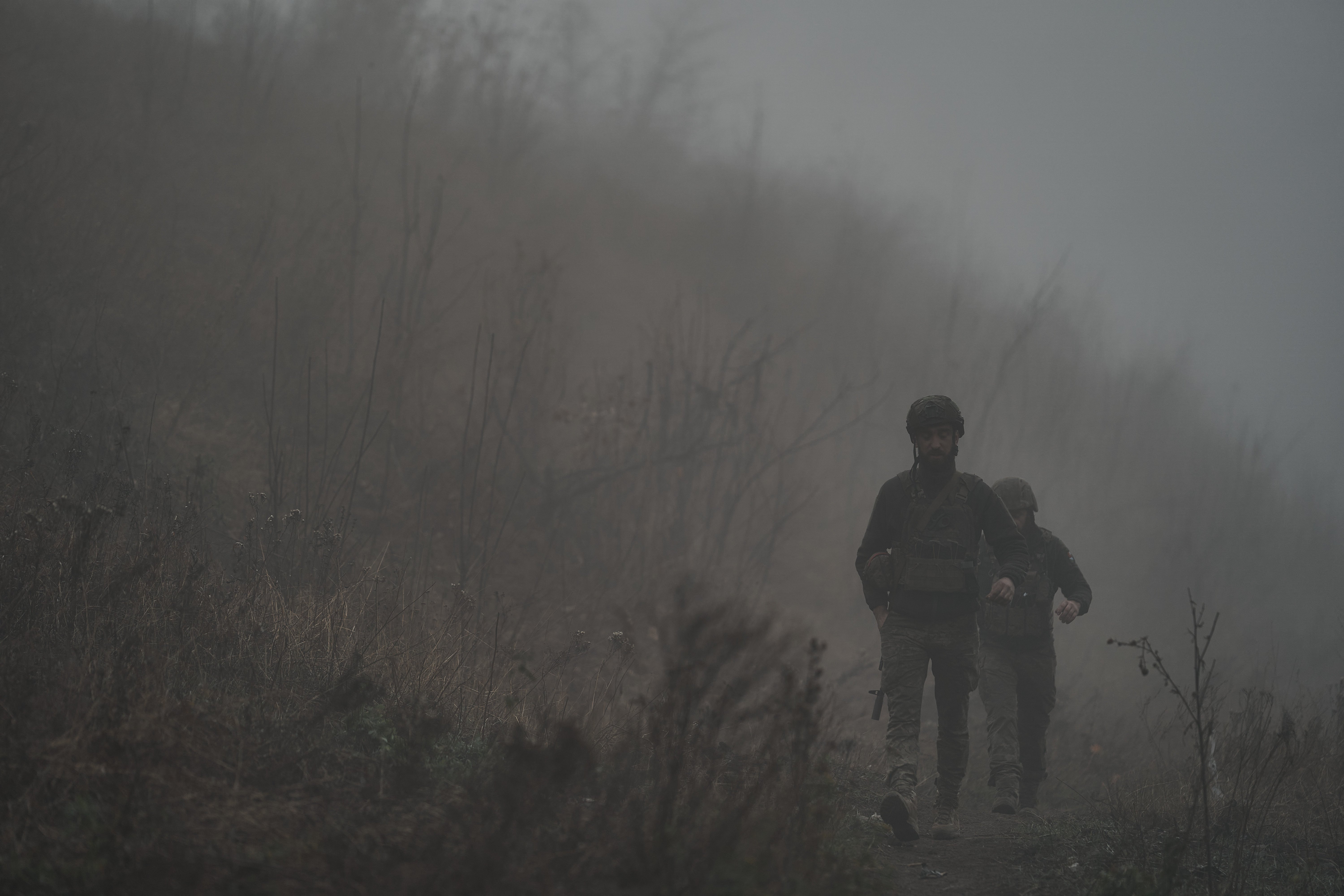
The principles of snow camouflage, now seen in field manuals and drone warfare, evolved from hard-won lessons on earlier winter battlefields. During the 1939 Winter War, Soviet troops suffered severe losses against Finland, in part because their green and brown uniforms stood out against the snow. Finnish forces, blending into the white terrain with improvised sheets and cloth, used concealment to devastating effect—famously exemplified by snipers like the “White Death.” The experience prompted Soviet commanders to recognize that winter camouflage was not optional.
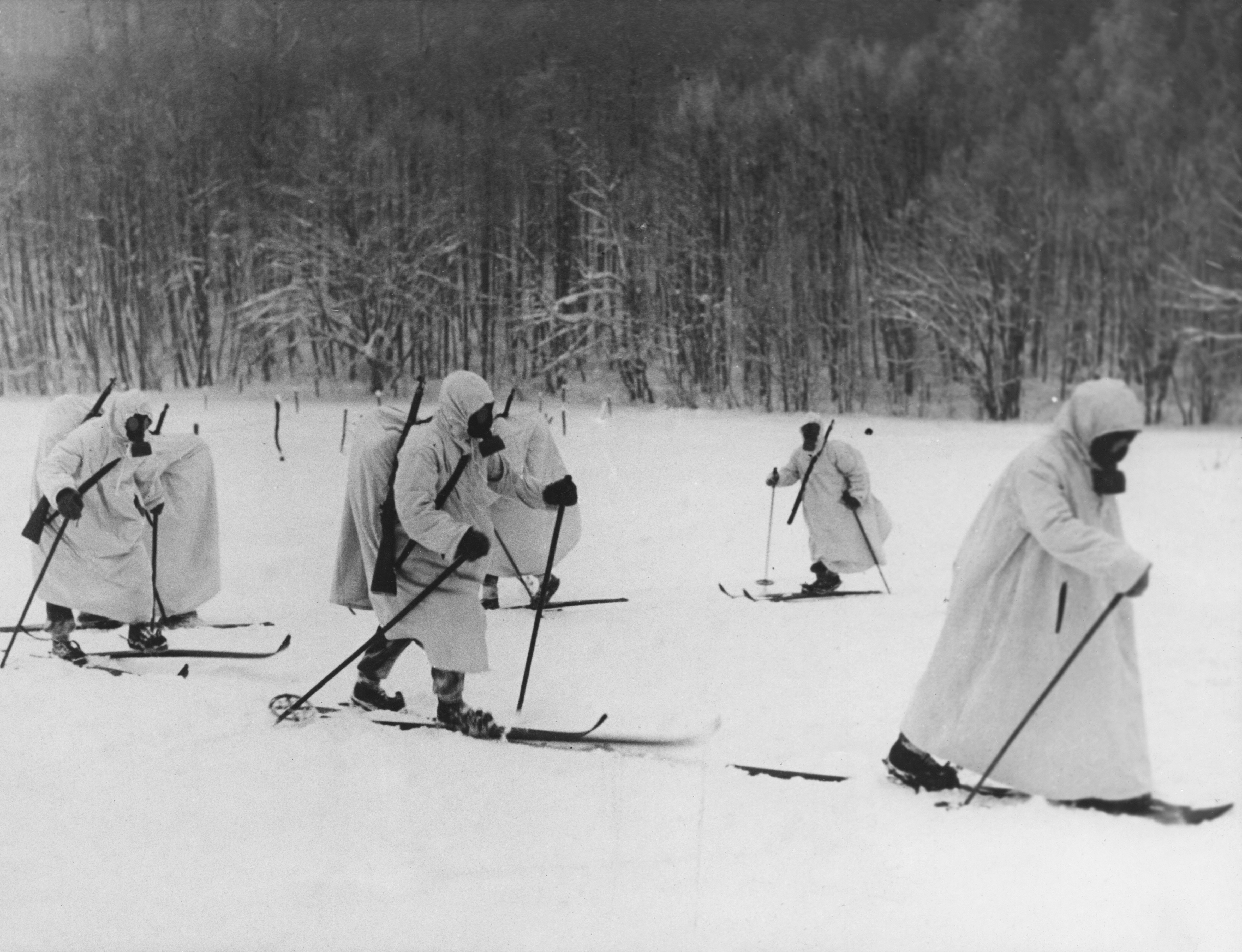
That lesson carried into World War II. The first winter on the Eastern Front in 1941–42 caught both Soviet and German armies unprepared for snow and sub-zero temperatures. Before standardized gear was available, soldiers improvised: white sheets, curtains, and pillowcases were draped over helmets and coats; tire tubes secured fabric and foliage to break up body shapes. The aim was consistent—disrupt the silhouette, reduce contrast, and survive.
By 1942, both sides began issuing standardized winter uniforms, including reversible and over-white garments. Still, improvisation remained necessary. Soldiers used whitewash—a mixture of chalk, lime, and water—to coat helmets, rifles, crates, and even tanks. While the Soviet Union standardized dry white paints using chalk, lime, and casein, German forces didn’t begin formal production until November 1941, relying instead on field-applied coverings. Allied units faced similar shortages later in the war.
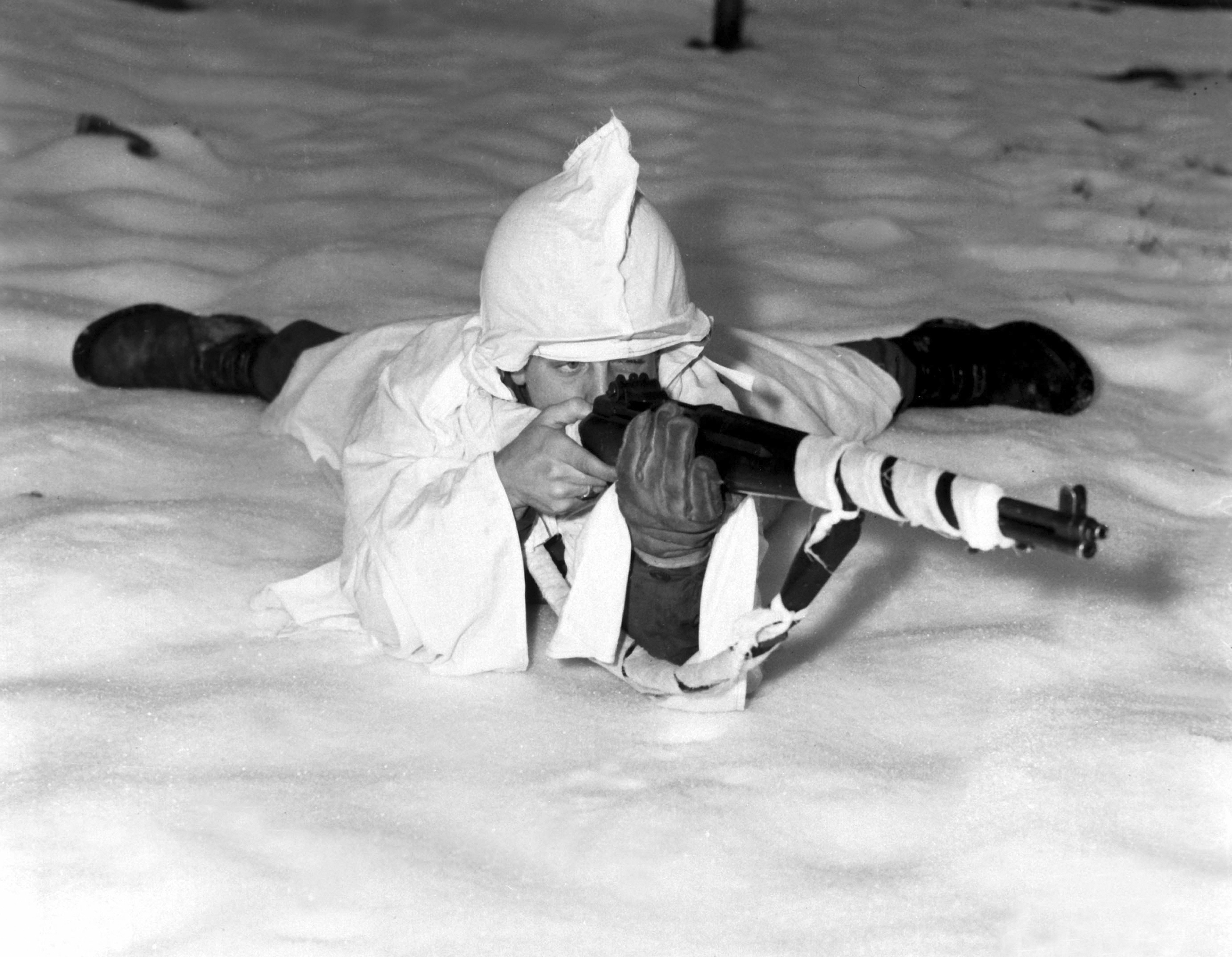
Nature had arrived at similar conclusions long before: Arctic hares, ptarmigans, stoats, and foxes grow white coats in winter, a case of convergent evolution. Some species, like the snowy owl and polar bear, remain white year-round. For militaries, solid white proved insufficient in complex terrain. Snow is rarely a blank canvas—tree shadows, branches, and uneven ground create contrast. Broken patterns mimicking natural irregularities were more effective. Soviet forces developed “wheel track” patterns, while Germans often used diagonal stripes.
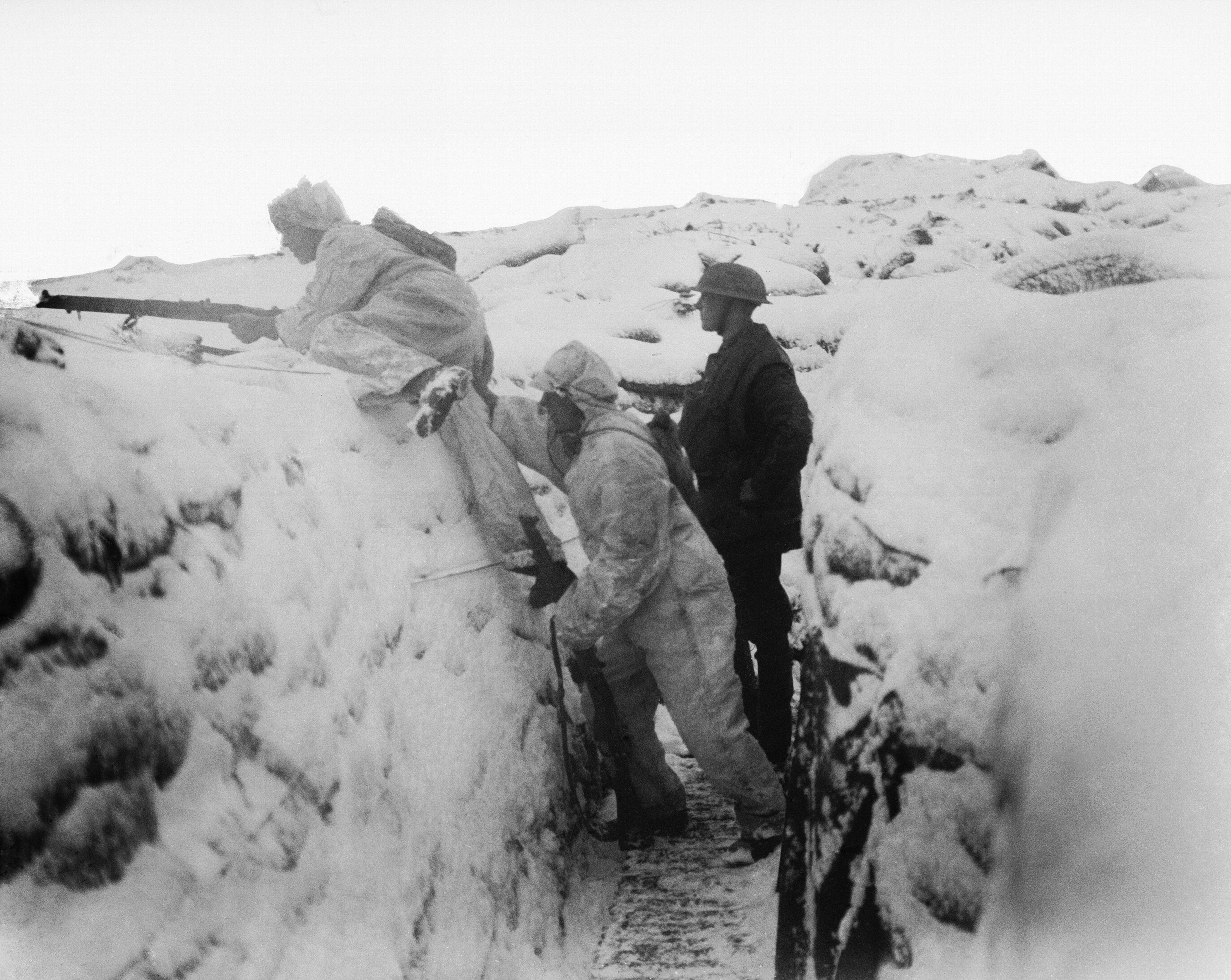
From World War I’s white smocks on the Italian front to modern digital camouflage, snow concealment has continued to evolve. What began as field improvisation is now a calculated science—one that still draws from the natural world and the memory of past winters in war.
How modern armies use snow camouflage to reduce detection
In snow-covered environments, concealment has historically required a separate approach from woodland or desert terrain, because the dominant background shifts from greens and browns to white, gray, and shadowed vegetation.
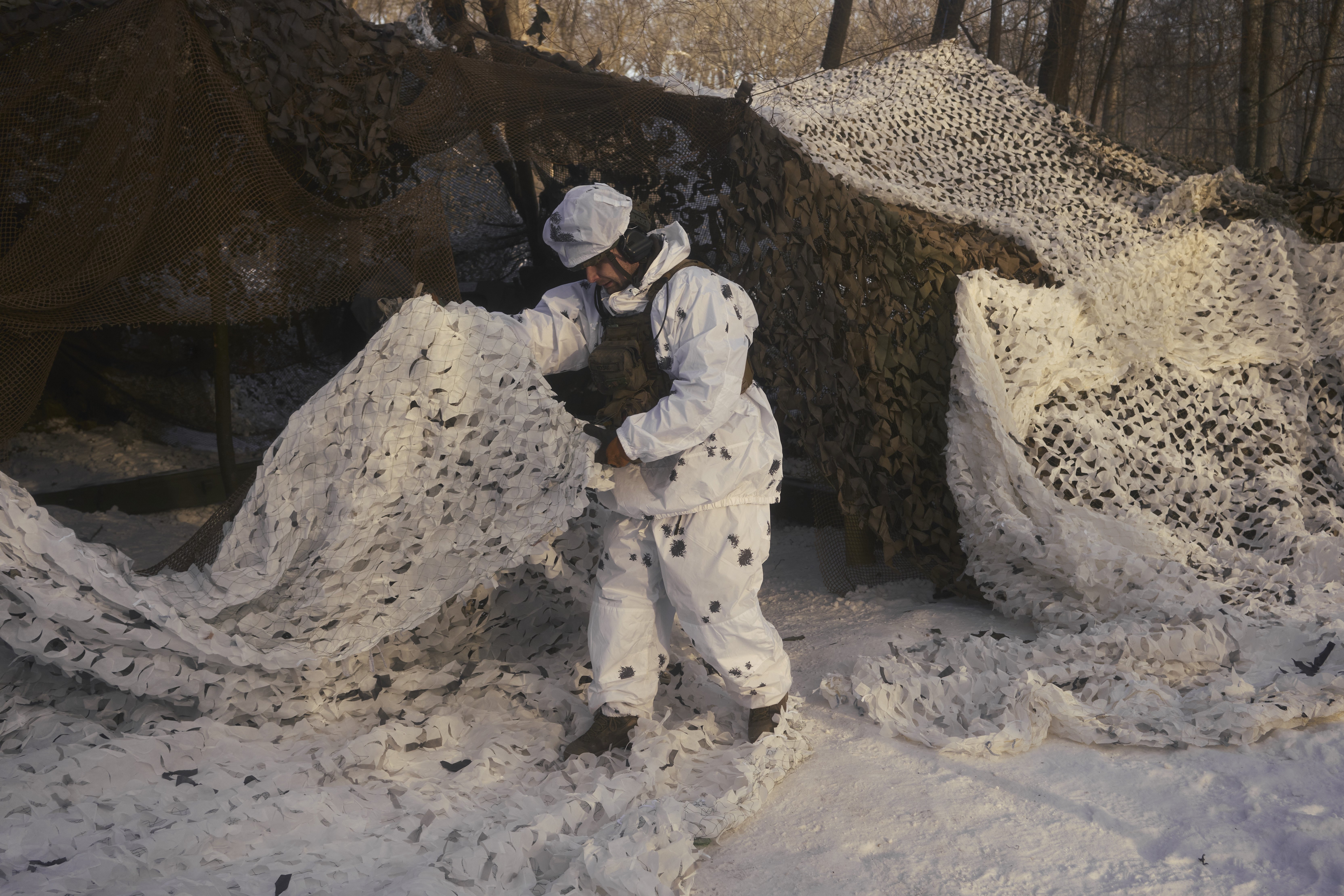
Modern infantry forces generally rely on two main types of snow camouflage garments. The first is a two-piece over-suit consisting of an oversized parka and trousers, typically worn over an existing uniform. These garments are usually made from lightweight, quick-drying materials and are designed to be compact and easily portable.
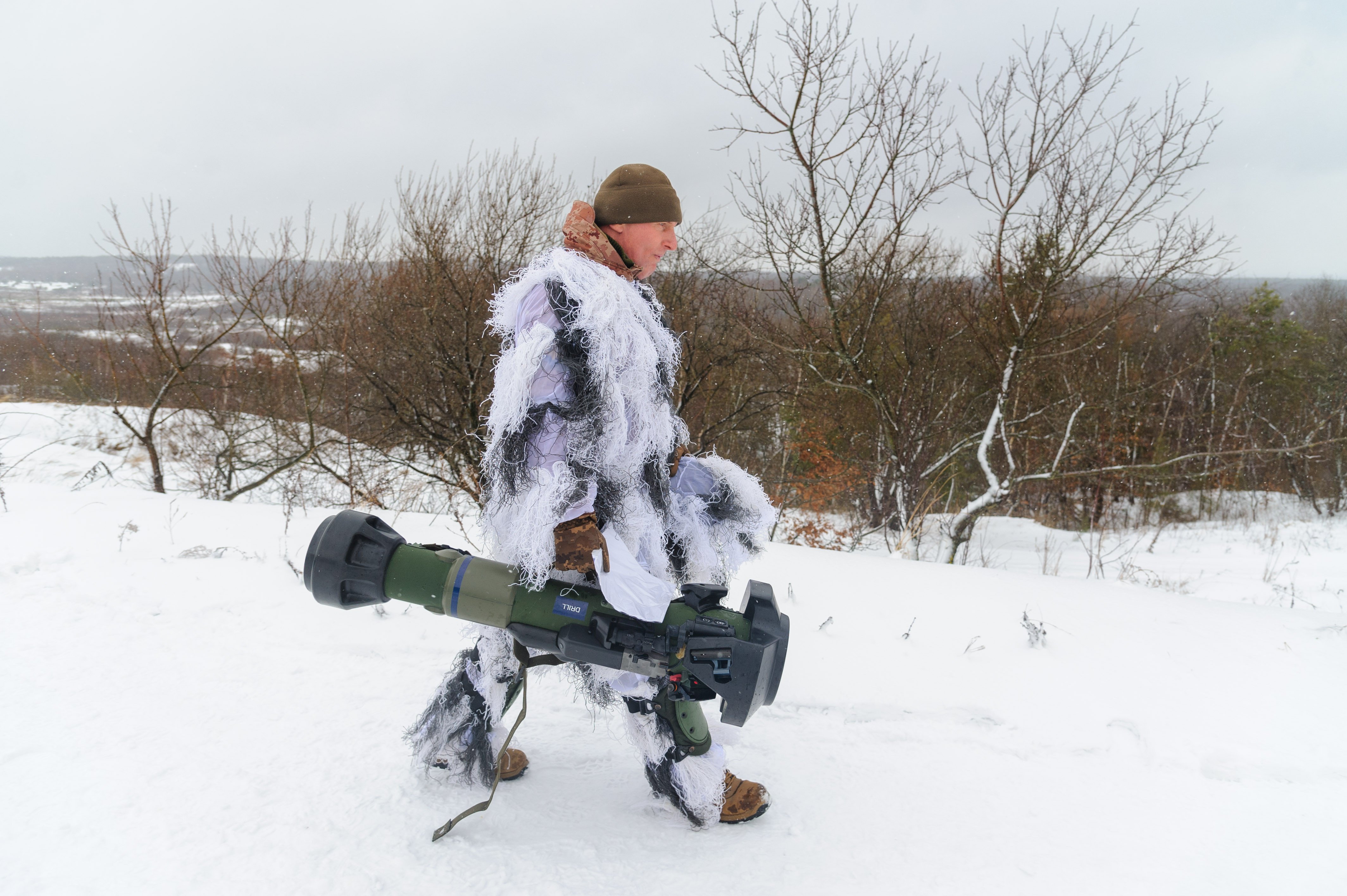
The second is a white-based poncho thrown over the body when needed, also lightweight and designed with an oversized hood that fits over a standard infantry helmet.
Both systems reflect a basic principle of winter concealment: snow camouflage must be applied selectively, not automatically.
Full white camouflage is most effective when snow is the dominant visual feature. In mixed terrain, where snow covers the ground, but trees and above-ground vegetation remain dark, soldiers may wear white trousers while retaining a standard camouflage top. This configuration is often more effective when standing or kneeling against a darker backdrop, though it becomes less effective when prone on snow-covered ground. Over-white parkas can be added when a unit becomes static or must remain low for concealment.
Winter camouflage extends beyond clothing. Exposed skin stands out because of natural oils and its tendency to reflect light under moonlight or flares. Ski masks or balaclavas provide both warmth and concealment, though non-white masks may be more versatile in mixed environments. Sweat management is also essential. Soldiers often reduce the use of warming layers while moving to control sweating, and face coverings are frequently removed during movement, leaving skin exposed.
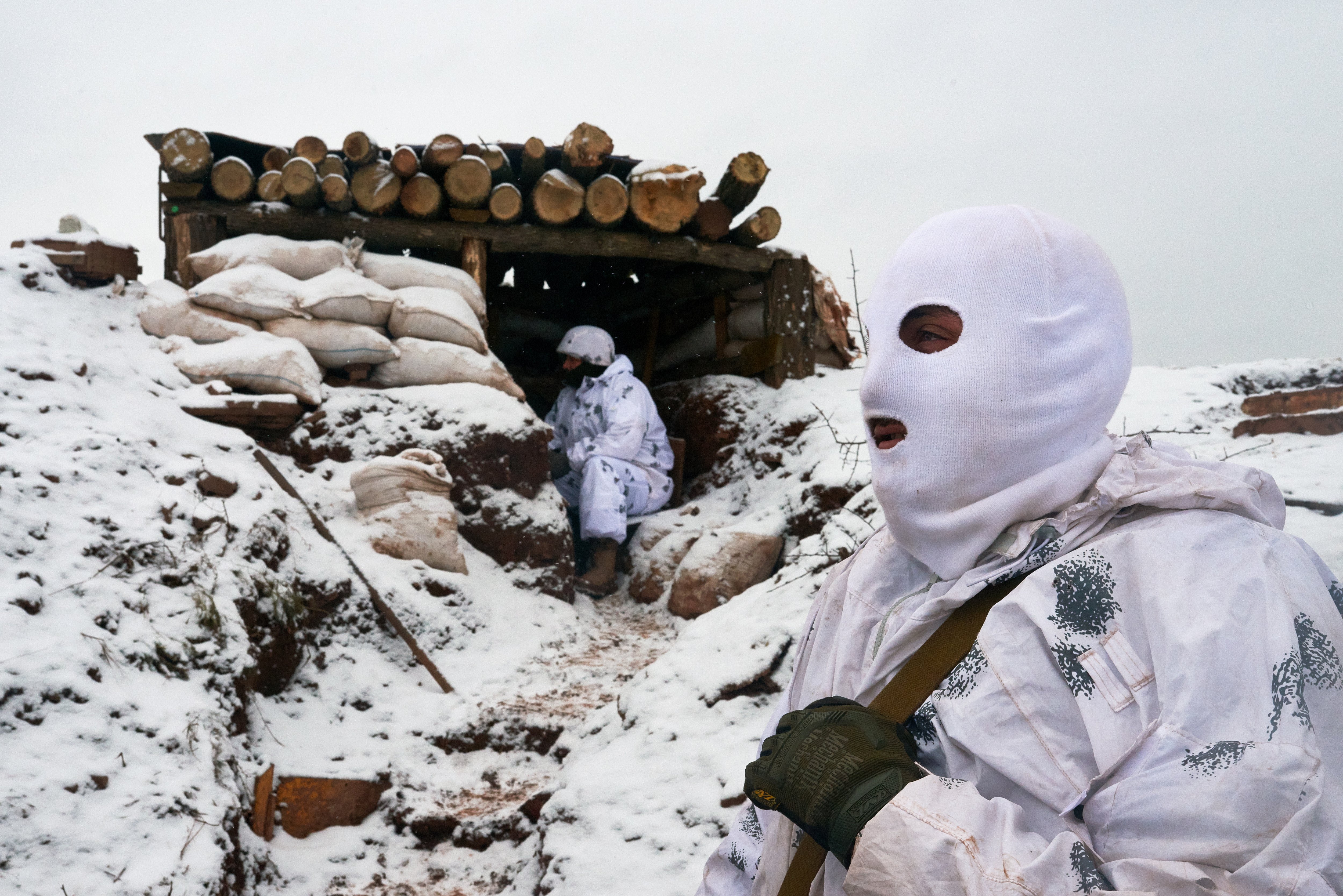
Camouflage face paint can be used to break up facial features. In snow environments, white paint may be used overall, with dark paint applied in shadow areas such as around the eyes, under the nose, and under the chin. The risk, however, is that face paint can make frostbite harder to detect, requiring careful use and re-covering the face with dry, warming layers after stopping.
Hands and gear require similar adaptation. Gloves or mittens are standard, with optional white over-mitten covers. Equipment is generally used year-round and is not snow-adapted, so soldiers may wrap strips of white cloth, medical tape, or camouflage tape around webbing to reduce contrast. Pack covers in white or snow patterns can conceal rucksacks. Weapons present a particular challenge: rifle outlines are highly recognizable, and many rifles are black and cannot be painted under command rules. White cloth or tape can be used to break up the silhouette, but materials must not interfere with weapon function.
Footprints, glare, and the winter battlefield’s hidden risks
As one soldier told The Times, footprints in snow can become fatal clues, a reality that still applies in Ukraine today. Soldiers have long tried to reduce that risk by covering tracks with loose snow, moving in single file, brushing them over with branches, or retracing steps along natural paths to mislead trackers.
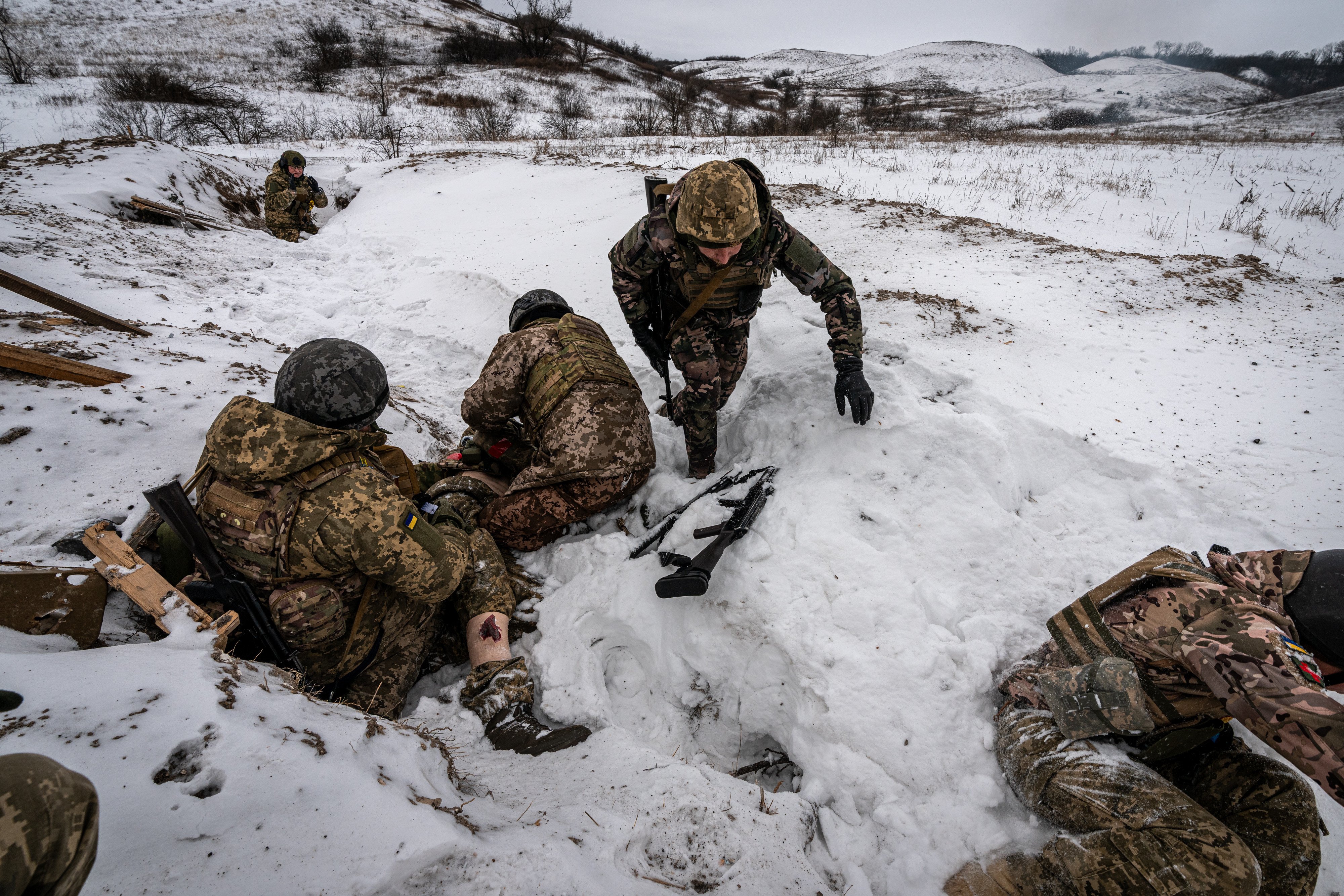
Shadows and glare posed further detection risks. Some soldiers dusted uniforms and gear with soot or ash to soften sharp shadow edges and reduce reflective glare. They also exploited sunlight and reflection tactically. By positioning themselves at certain angles, soldiers could use glare as concealment or distraction, turning brightness into a temporary advantage.
The core lesson of winter camouflage in the mid-20th century was that concealment depended on controlling contrast, hiding movement, disguising tracks, and using terrain conditions, not simply wearing white clothing.
In Ukraine in 2026, those historical principles remain relevant, but they intersect with new surveillance systems that did not exist in earlier wars. Visual camouflage aimed at the human eye is now only one layer of concealment. Thermal imaging and motion tracking can reveal what white fabric cannot hide.
This has shaped both Ukrainian and Russian attempts to adapt. Reports in late January said Russian soldiers have tested a bulky experimental winter suit nicknamed “Penguin” by Ukrainian troops. Ukrainian forces reported neutralizing at least two Russian soldiers wearing the suits using drones. The camouflage was described as mostly white with black dots and featuring a hood shaped like a beak.
The intended purpose appeared similar to historical winter suits: breaking up the human silhouette in snowy open terrain, comparable to winter-adapted sniper ghillie suits. But the report suggested the suit’s bulk made movement awkward and predictable, potentially increasing vulnerability to FPV drones.
Ukraine’s winter camouflage shift
Ukraine’s Defense Ministry has pursued formal testing alongside frontline improvisation. On November 13, 2024, the ministry announced military trials of new winter hats and special winter and camouflage suits. “Our goal is to equip the servicemen of the Armed Forces of Ukraine with reliable, modern uniforms and gear that meet the real needs of our army,” Deputy Defense Minister Dmytro Klimenkov said. The ministry said it was also testing new demi-season and winter uniforms designed for female servicemembers.
The history of winter camouflage, from improvised bed sheets on the Eastern Front to today’s over-white suits and drone-era adaptations, illustrates continuity in one respect: armies continue to confront the same basic challenge of visibility in snow. What has changed is the scale of observation and the technologies used to detect movement.
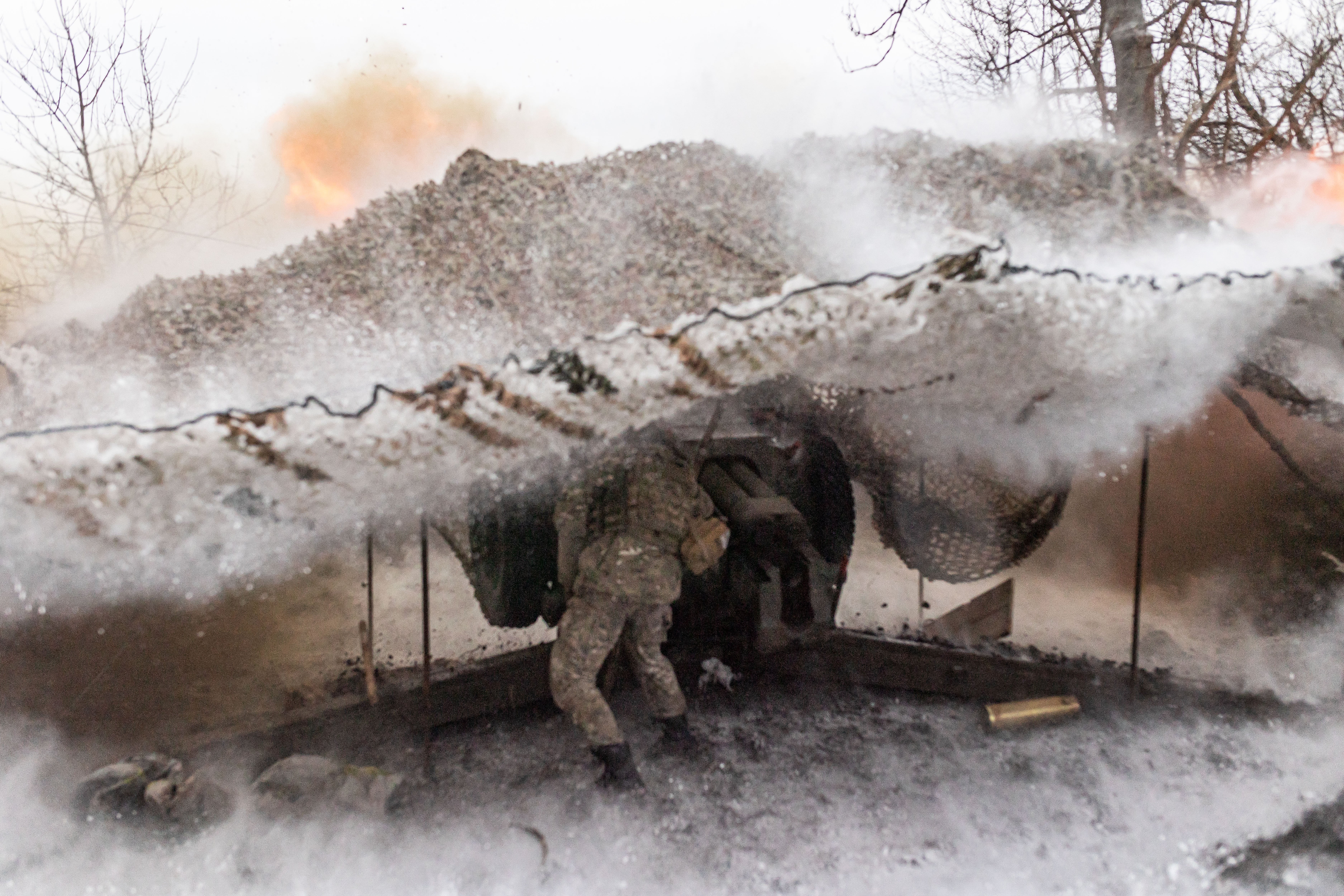
Ukrainian soldiers continue to adapt to the unforgiving cold and constant surveillance along the front, said Bull, reflecting on how winter brings a level of unpredictability that training alone can’t fully prepare for.
“You think it’ll just be cold, you’ll wear a warm jacket, drink tea, push through,” he said. “Then you get here—bam—it’s something you couldn’t have predicted.”
Discuss this article:

-c439b7bd9030ecf9d5a4287dc361ba31.jpg "Photo of Katherina Popilnichenko")


-2386d89295678553e91e27f1a0d592e3.png "Ukraine Just Wrapped Up a Four-Season Military Operation: 277 km² Cleared, 8,000 Russian Troops Eliminated")
-29a1a43aba23f9bb779a1ac8b98d2121.jpeg "Photo of Illia Kabachynskyi")