- Category
- War in Ukraine
COP31: How Does Ukraine Navigate Amid Energy Crisis and Ongoing Ecocide

The 31st UN Climate Change Conference took place during one of the worst global energy crises in 40 years, driven by the massive power demands of artificial intelligence and severe geopolitical tensions—particularly in the Middle East—that continue to destabilize oil and gas supplies.
 Prefer U24 Media on Google
- Authors


While US President Donald Trump attempts to blame Ukraine for the global energy crisis and Russia, for its part, is trying to align itself with the countries of the Global South—which are on the front lines of the consequences of global warming—by positioning itself as a solution to their energy problems, Kyiv’s participation at COP31 is redefining its diplomatic stance to link the ecological war crimes it is suffering, the global and transnational ecological crisis, and a new role as a provider of solutions to manage the climate challenges that need to be urgently tackled.
While Russian strikes pound its energy infrastructure, forests, and cities, Kyiv sent a delegation to Türkiye to negotiate, share expertise, and host a national pavilion emblazoned with this year's motto: “Ukraine is the solution.”

Russia must pay for everything.
Oleksandr Krasnolutskyi
Deputy Minister of Economy and Environment of Ukraine
Ukraine and its partners want Russia to pay for ecocide
Ukraine and its partners are already seeking future compensation from Russia for the ongoing ecocide. But how do you evaluate Russian war crimes against the environment, and how do you calculate and prosecute the devastation of entire ecosystems?
Russia’s war against Ukraine causes three categories of ecosystem destruction:
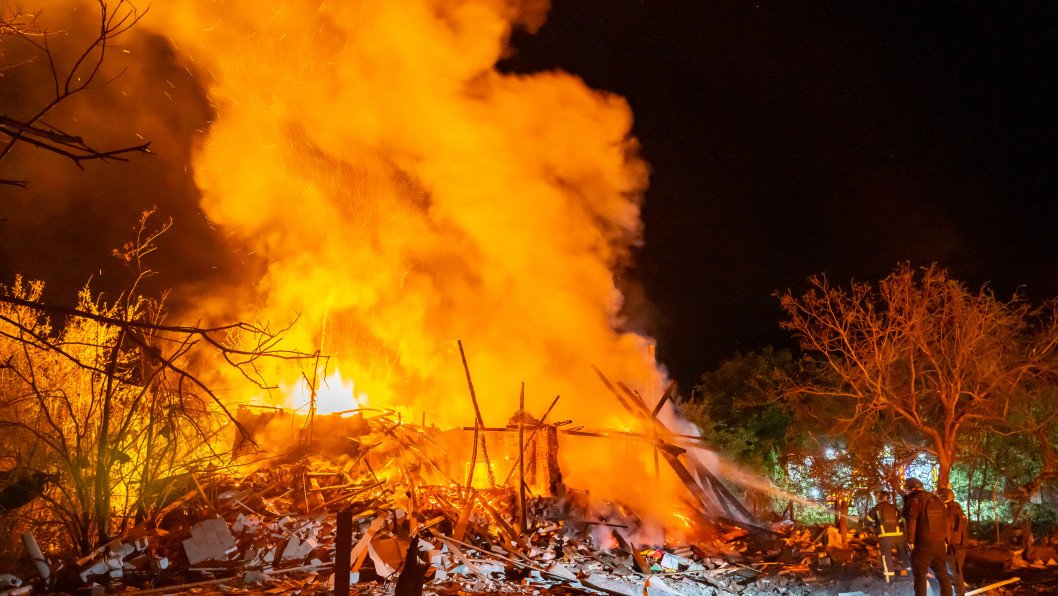
Direct Ecocide: The operational destruction of the Ukrainian environment, as seen with the destruction of the Kakhovka Dam.
Indirect Ecocide: Collateral damage inflicted on Ukraine’s environment, such as soil and water poisoning from heavy metals and chemicals, forest fires, and the destruction of wildlife habitats and disruption of animal reproduction.
Climate Domino Effect: The surge in greenhouse gas emissions resulting from the consequences of the war, such as the widespread use of diesel generators in Ukraine to offset power outages caused by Russia’s destruction of Ukrainian energy infrastructure.
Krasnolutskyi explained that evaluated environmental damages already exceed 170 billion euros ($186 billion). “That is a financial cost, but we must emphasize that it cannot be measured in money alone,” Krasnolutskyi said. “We are losing unique ecosystems that will take decades to restore—and some may never recover.”
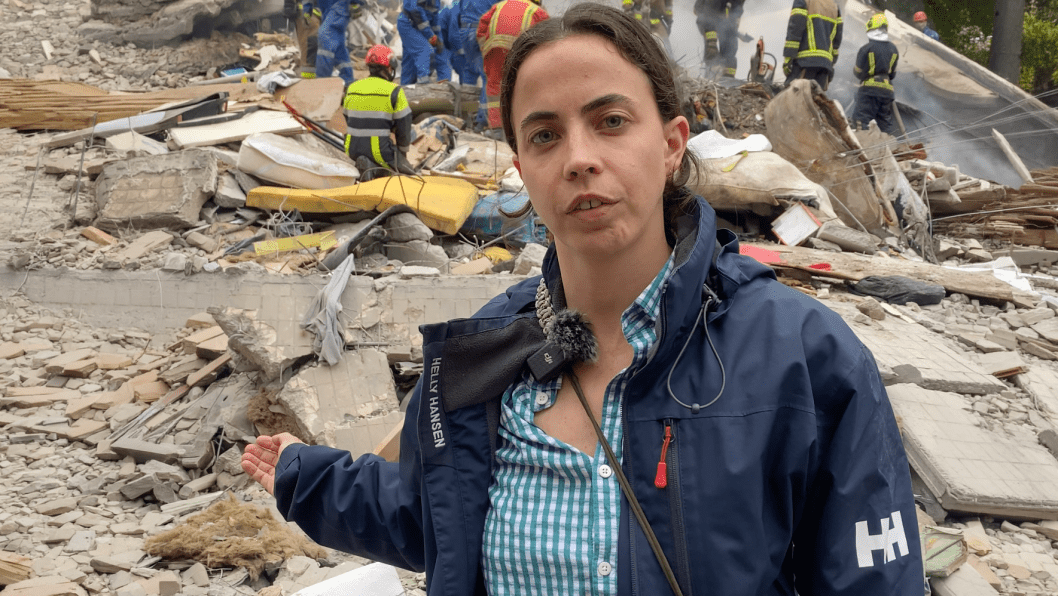
With Sweden's help, Kyiv established a national register of environmental damages linked to the International Register of Damage to hold Moscow accountable. “One of the main themes of this COP is compensating for losses and holding the aggressor accountable,” Ukraine’s Deputy Minister stressed.

Sharing a maritime border with Turkey, Ukraine put forward a strong and tangible cause for its partners in Antalya: the Black Sea. Indeed, the war affects its entire ecosystem, particularly its wildlife. Armed conflict acts as a focal lens that multiplies and intensifies every pre-existing stressor on cetaceans—specifically acoustic trauma (underwater military sonar and explosions), toxic contamination, and marine debris.
We define the war, the military threat, as one of the major emergent threats for whales and dolphins nowadays in our world.
Dr. Pavel Goldin
Ukrainian marine biologist specializing in cetaceans (whales and dolphins)
Ukraine, a green-transition laboratory under pressure
To assert its diplomatic presence at COP31, Ukraine appears to be adopting a strategy similar to the military one that proved successful in highlighting the benefits its partners can gain from supporting it: framing wartime Ukraine as a testing ground for the challenges the world will face in the future.
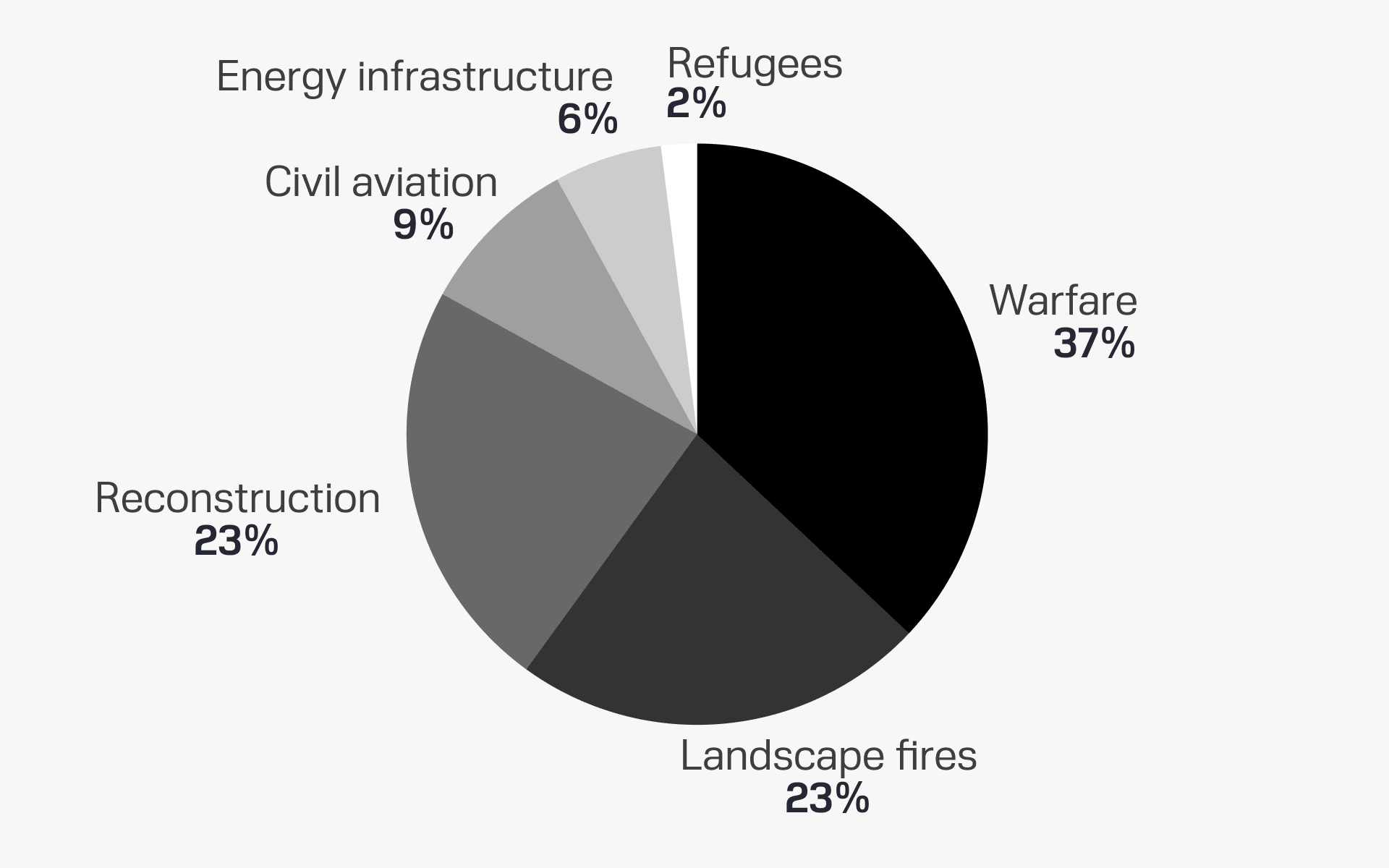
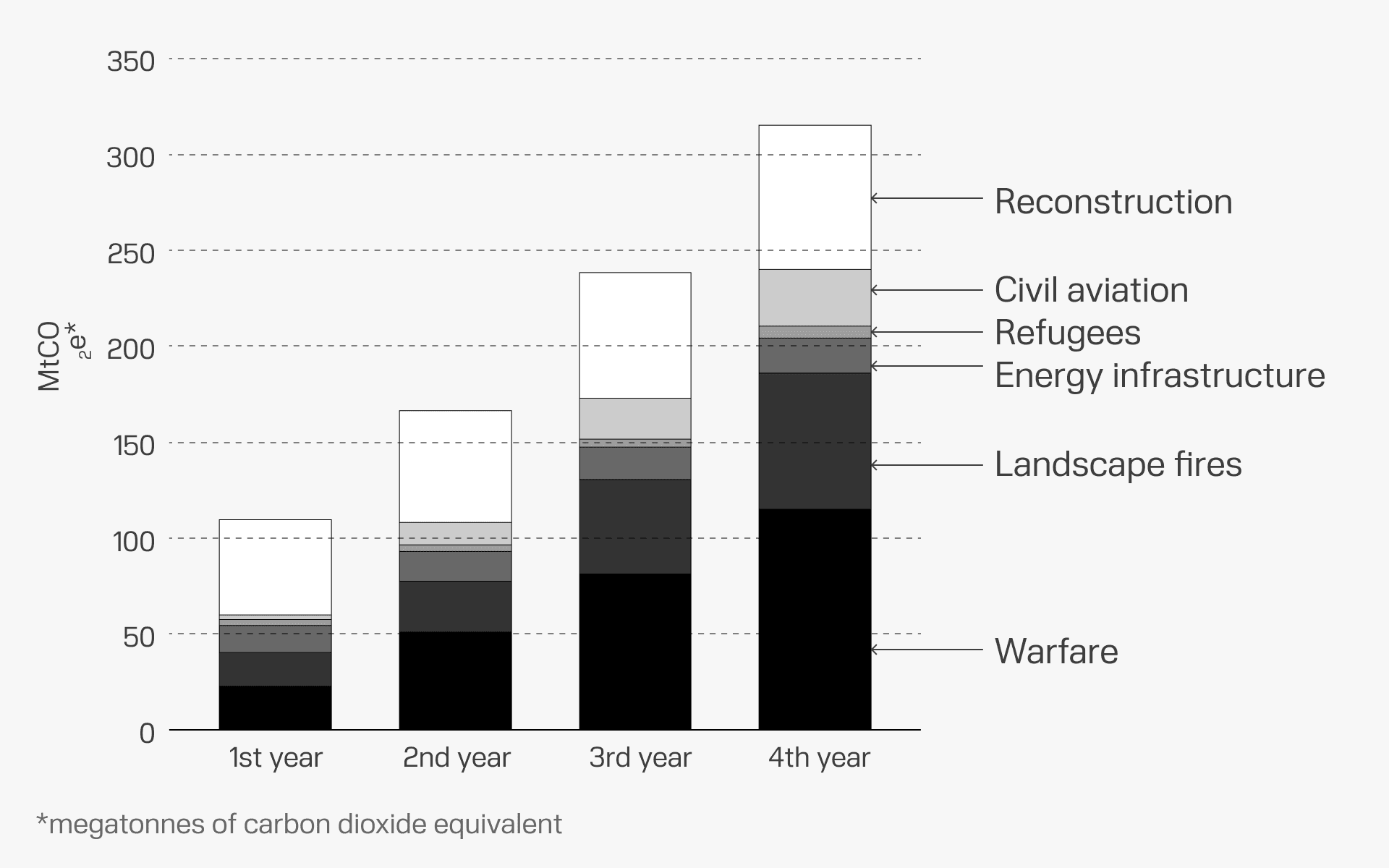
Thus, operating as a green-transition laboratory under extreme pressure, Ukraine and its partners have introduced tools to reshape climate justice and damage assessment. For instance, the delegation presented findings from the Initiative on Greenhouse Gas Accounting of War, led by Dutch researcher Lennart de Klerk. Using satellite remote sensing, his team calculated emissions from four years of invasion, separating those caused by the invasion from broader, global ones, at 311 million tons of CO2 equivalent—roughly the annual carbon footprint of France:
37% comes from direct military operations, including fuel for armored vehicles and aviation, ammunition, and logistics.
22% results from landscape and forest fires sparked by shelling and strikes along the frontline.
41% stems from reconstruction (which requires massive amounts of steel and cement), the destruction of energy infrastructure (as prolonged blackouts force businesses and civilians to rely on diesel generators and gas-powered alternatives), population displacement (including refugees traveling to visit family still in Ukraine), and civil aviation (due to increased kerosene use from ongoing airspace closures over Ukraine and Russia).
Capture d’écran 2026-11-27 à 11.08.30.png
“The Russian Federation should be held liable for these emissions and resulting climate-related damage,” the 2025 preliminary assessment by the Initiative on Greenhouse Gas Accounting of War stated. “Applying a social cost of carbon of $185 per tCO2e, this amounts to over $42 billion.”
Even when the front lines stagnate, emissions continue to climb, compounding an already difficult climate reality for Ukraine.
Svitlana Krakovska, a researcher at the Ukrainian Hydrometeorological Institute, gained international recognition in 2022 for establishing a direct link between climate change and the conflict, a stance that highlights the links between the human causes of climate change and the Russian war in Ukraine. “The roots of climate disruption and Russian aggression both lead back to fossil fuels,” Krakovska said. “This is a fossil fuel war.”

Her assessment aligns Ukraine with vulnerable Global South nations that are also working to break free from fossil fuel dependencies that hit them hardest during every crisis: national sovereignty and the planet's climate future are part of the same fight.
EU accession hinges on Ukrainian emissions targets
“Ukraine is not just a war; Ukraine is the solution,” said Oleksandr Krasnolutskyi, Deputy Minister of Economy and Environment of Ukraine. “These are rapid solutions we can teach: energy protection, decentralization—things we can show our partners based on the bitter experience Ukraine is going through.”
Rather than a single solution, Ukraine is better described as a model of how a country can pursue sustainable development amid an ongoing catastrophe. Fully aware of the link between fossil-fuel economies and war, Ukraine is pushing forward with its green ambitions even under wartime pressure, working to keep delays in its energy transition to a minimum.
The core idea is that everything that can be done now must start immediately. We must not wait for the end of the war.
Pavel Goldin
Ukrainian marine biologist
According to Krasnolutskyi, the country has committed to cutting its net greenhouse gas emissions by more than 65% by 2035 compared to 1990 levels, alongside several key targets:
A 30% reduction in methane emissions by 2030;
A minimum 27% share of renewable energy in gross final consumption by 2030;
Stronger scientific oversight through the Scientific Council of Experts on Climate Change—a body of 29 researchers established in January 2026.
Ukraine is also developing crisis-driven tools that can be scaled globally to combat escalating climate threats. For example, Ukrainian algorithms designed to detect missiles and Shahed attack drones (including the public “Air Alert” app) are being shared with the World Meteorological Organization (WMO) to modernize early warning systems for extreme weather in vulnerable countries.
“We developed this remarkable tool—Air Alert—that warns us of drones and missiles,” Krakovska noted. “We can promote it as a technology to warn populations in other countries about other threats.”
Ukraine faces a complex balancing act. It must defend itself against Russia’s systematic environmental destruction while meeting the strict greenhouse gas reduction targets required by international agreements it has signed or plans to join. Separating its domestic emissions from those caused by Russia’s war of aggression is no easy task.
European Union accession also requires aligning with the bloc's climate goals. “There will be no accession of Ukraine to the European Union without full participation in the Emissions Trading System (EU ETS),” said Kurt Vandenberghe, Director-General of the European Commission's Directorate-General for Climate Action (DG CLIMA). “From day one, in its full scope and with complete sectoral coverage.”
However, those benchmarks keep moving. “Accession negotiations are traditionally compared to trying to jump onto a train moving at full speed,” explained Swedish Climate and Environment Minister Romina Pourmokhtari, “especially since the EU is raising its own ambitions with a new target of reducing emissions by 90% by 2040 compared to 1990.”
Even a person in Argentina or Australia feels the impact of this war, because it worsens the global climate crisis.
Lennart de Klerk
Lead Author, Initiative on GHG Accounting of War
A joint declaration was supposed to be signed at the end of COP31. However, pressure from oil-producing countries to exclude any mention of phasing out fossil fuels prevailed. Without support from the EU and climate-vulnerable nations—which also face severe crises due to their reliance on non-renewable energy—the summit failed to reach a consensus. This marks the second time in its history that COP has ended without an agreement.
Discuss this article: