- Category
- War in Ukraine
Geran-5: How Russia’s Shaheds Became Cruise Missiles
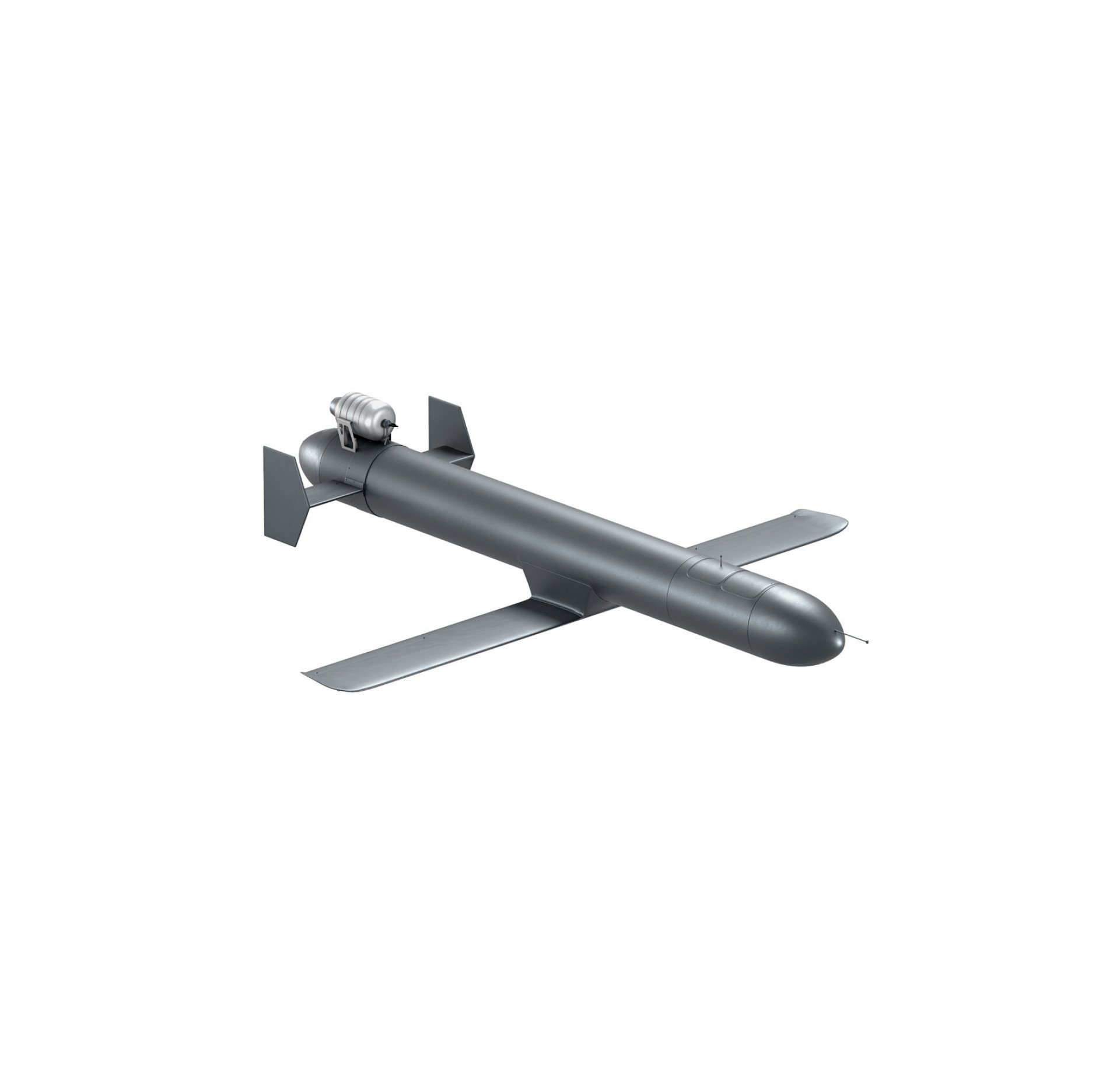
Russia is increasingly favoring jet-powered attack drones that resemble cruise missiles, at just a fraction of their cost. Among them is the Geran-5, a new drone capable of reaching 600 km/h, underscoring Moscow’s strategy to overwhelm Ukrainian air defenses with faster and comparatively inexpensive weapons.
 Prefer U24 Media on Google
- Authors


What is the Geran-5
Visually, the Geran-5 looks less like a drone and more like a rocket, and you’d be somewhat correct if you assumed so. It functions much like a miniaturized cruise missile and looks distinctly different than its four delta-winged predecessors.
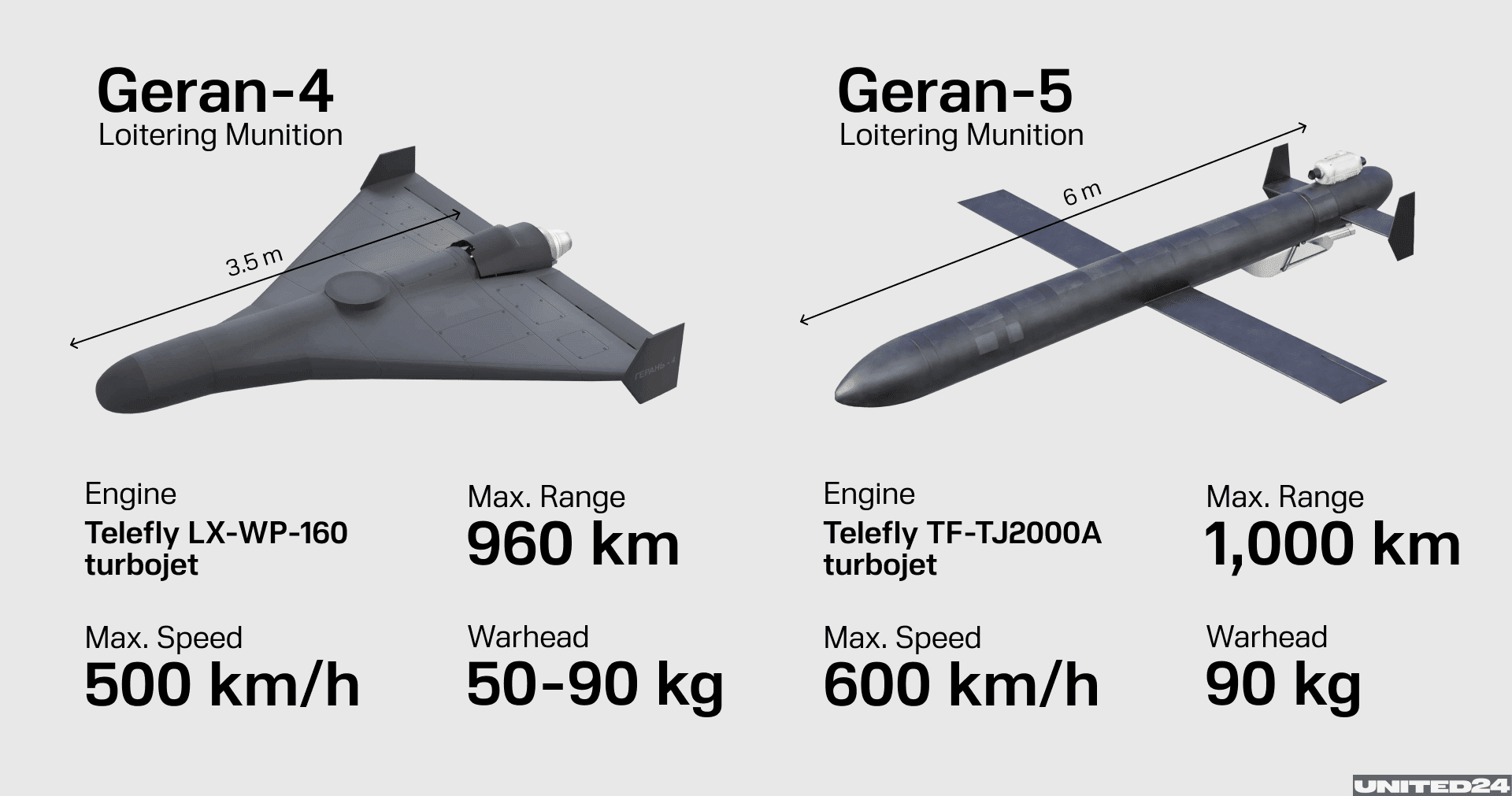
Built at the notorious Yelabuga Drone Factory in Russia’s Tatarstan region, the Geran-5 reimagines the ubiquitous Iranian Shahed (or Russian Geran) drone design, which Moscow began producing domestically in 2023 following a $1.75 billion technology transfer deal with Tehran.
The Geran-5 is the next generation of UAVs that begs the burning question: At what point does a long-range attack drone effectively become a cruise missile? Officially classified as a one-way attack drone, its design, jet propulsion, guidance systems, and ability to strike targets hundreds of kilometers away make it functionally similar to a cruise missile.
In fact, the International Institute for Strategic Studies (IISS) describes its introduction as part of Russia’s “broader shift” toward developing an arsenal of low-cost cruise missiles.
Quick history of drones
The first usage of the word “drone,” at least as we all know it today, comes from the 1930s. The British Air Force developed a radio-controlled airplane, the DH.82B Queen Bee, which was initially used as target practice for air defense units.
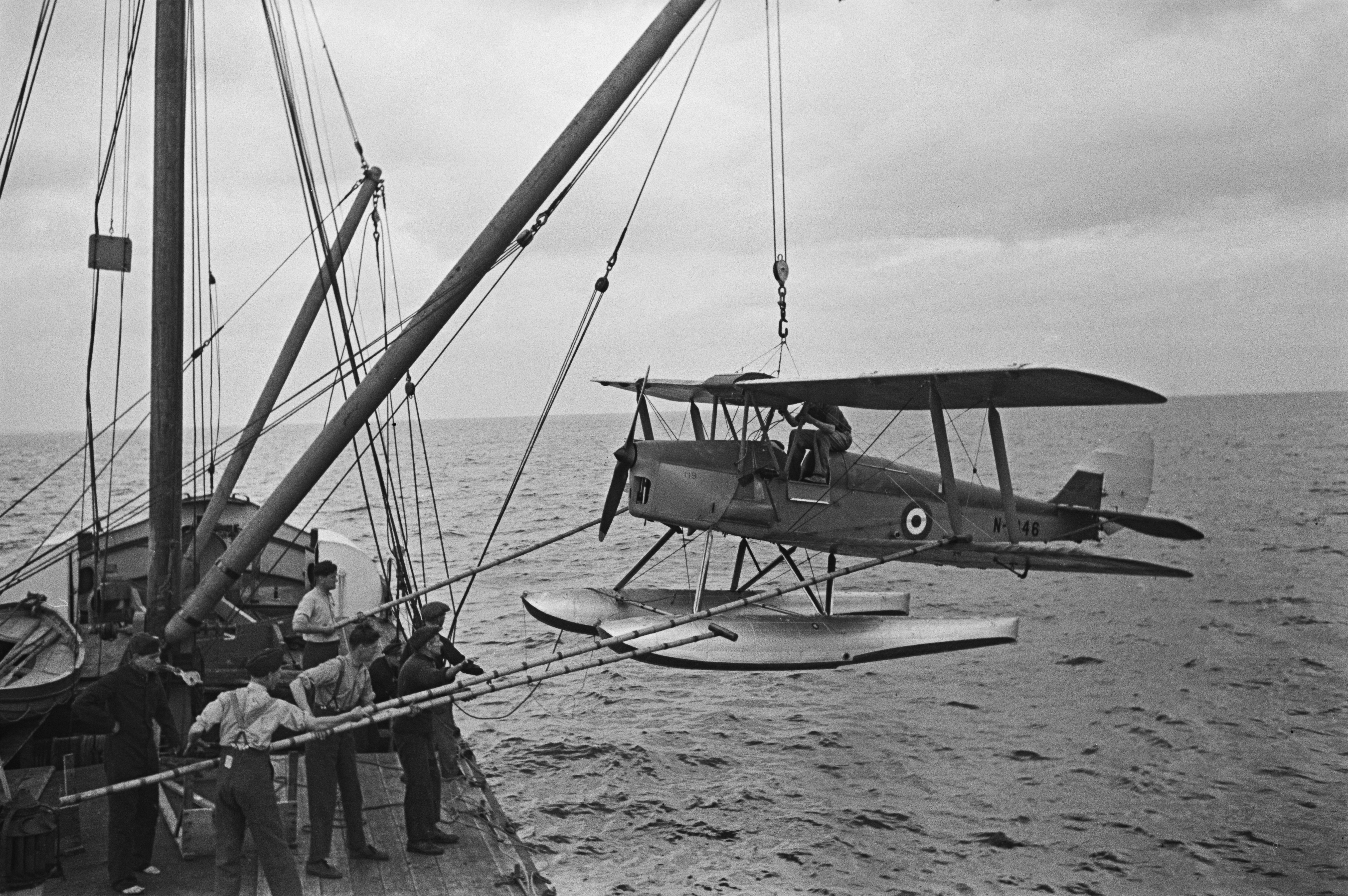
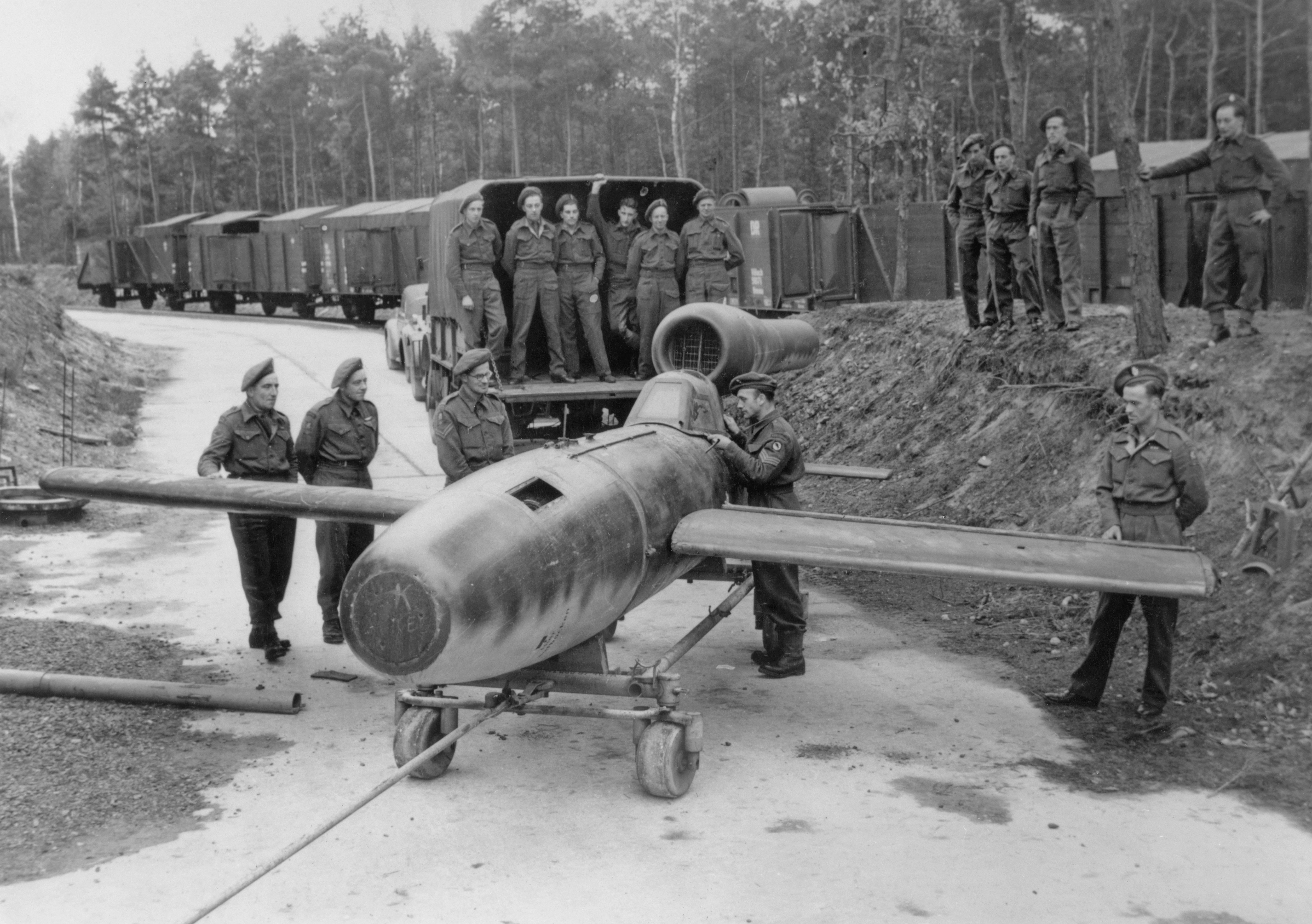
The name and concept stuck. For decades, the US used mass-produced drones for target practice, even deploying the TDR-1, an early attack drone guided by a live television feed, much like today’s FPV drones. Meanwhile, Nazi Germany developed the V-1 flying bomb, a jet-powered, pilotless weapon widely considered the world’s first operational cruise missile.
Fast-forward to the 2000s, and drones had become sophisticated military aircraft like the American MQ-9 Reaper, capable of surveillance and precision strikes from thousands of kilometers away.
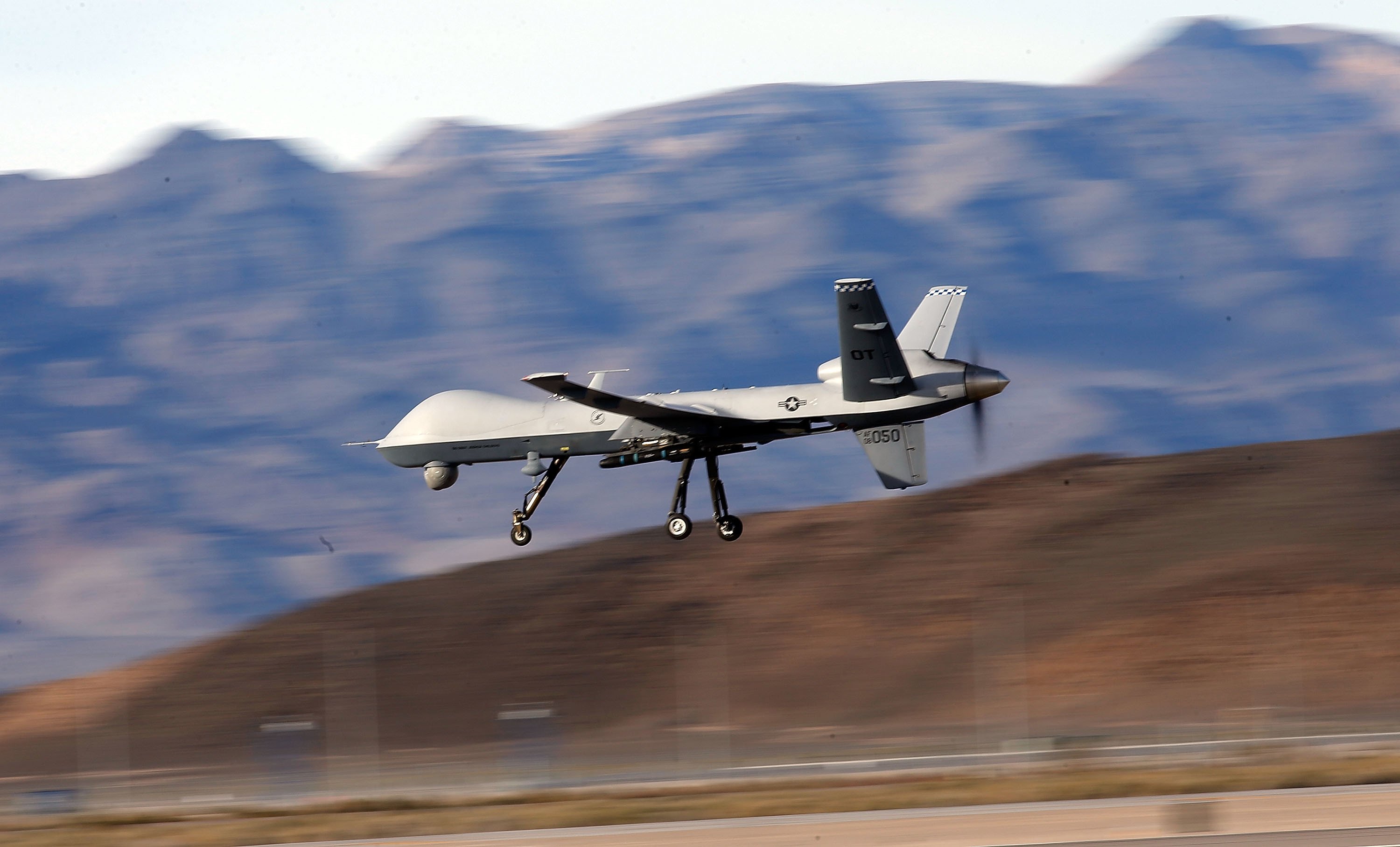
Then came the consumer drone revolution, which Ukraine turned into a battlefield innovation, repurposing inexpensive quadcopters into reconnaissance platforms, flying bombers, and eventually suicide-style FPV drones.
Meanwhile, Russia's invasion of Ukraine in 2022 introduced the Iranian Shahed-136 to a global audience. Unlike the reusable Reaper, these relatively cheap, propeller-driven drones were built for a one-way trip, carrying explosives directly into their targets.
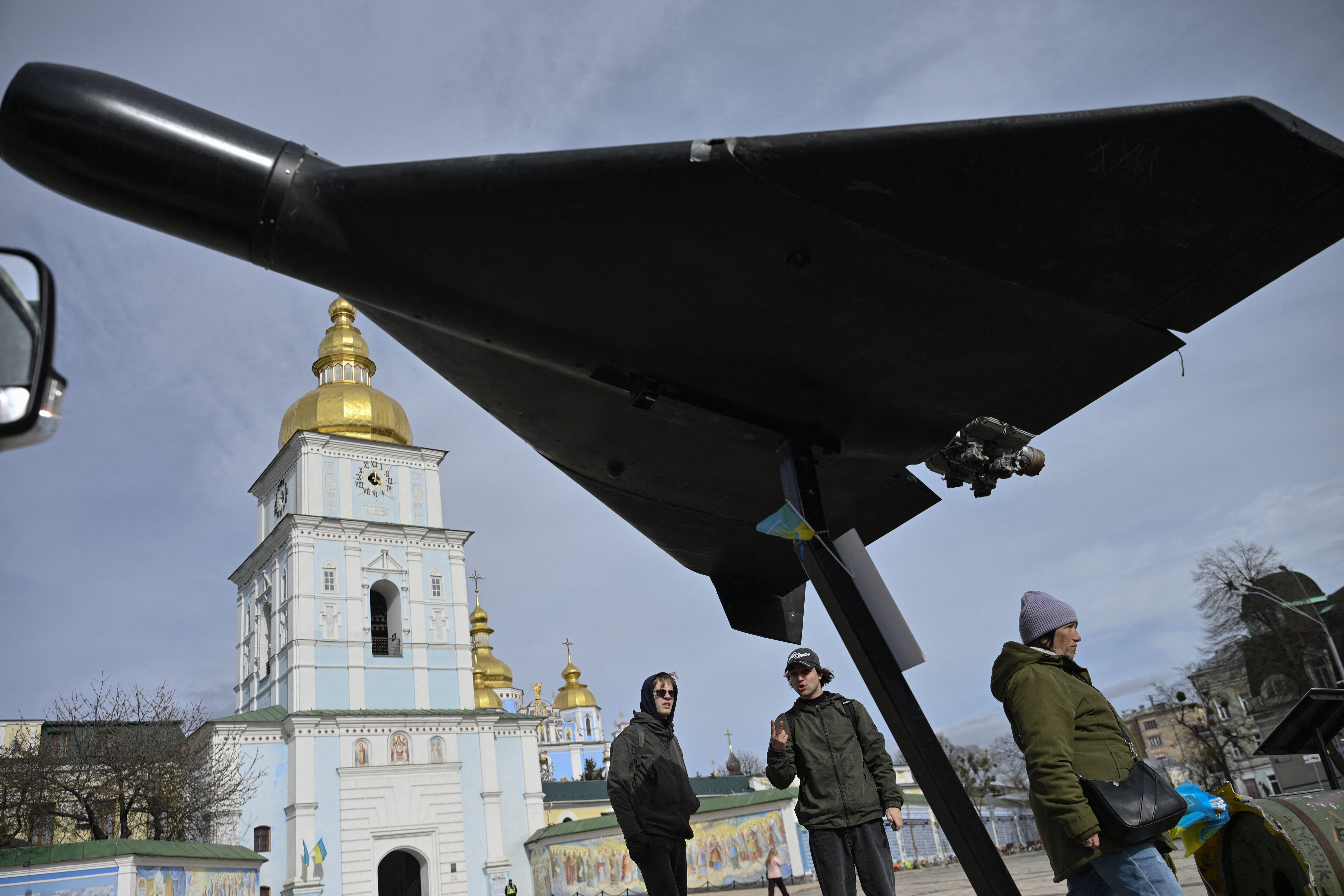
Russia eventually began manufacturing its own versions under the Geran designation, setting the stage for increasingly sophisticated weapons like the Geran-5.
The Geran family
Strategically, Russia has dedicated a significant portion of its industrial capacity to the development and serial production of one-way attack drones. The Geran-5, which blurs the line between drones and traditional cruise missiles, marks an interesting new chapter in this evolution.
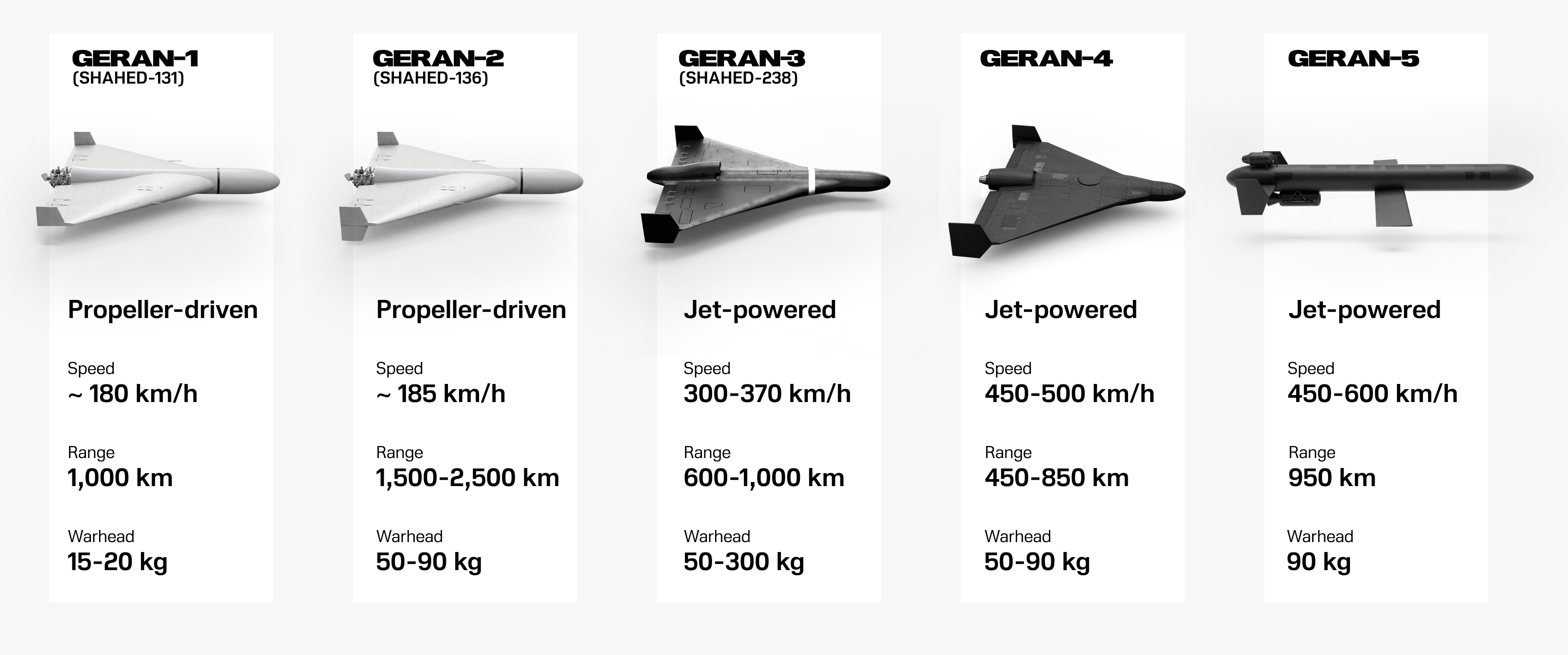
Traditional Shahed drones use relatively cheap piston engines that produce a distinct hum, much like a lawnmower. They're fuel-efficient and can fly large distances, but they're also slow. Jet-powered drones, like the Geran 3, 4, and 5, replace the propeller with a miniature jet engine, allowing for greater speed, maneuverability, and higher-altitude flight. They also lose the signature lawnmower-like hum and instead produce a sound closer to a commercial plane.
Russia's shift to jet-powered drones
Russia’s shift toward jet-powered drones has been driven in large part by Ukraine’s success in intercepting conventional Shaheds, prompting Moscow to develop faster, harder-to-intercept alternatives. With interception rates reaching 92–96% by mid-2026, Russia invested heavily in opening a gap with faster jet-powered modifications to its drones.
The changes were felt immensely. Ukrainian officials reported declining interception rates of around 60% for jet-powered drones in September.
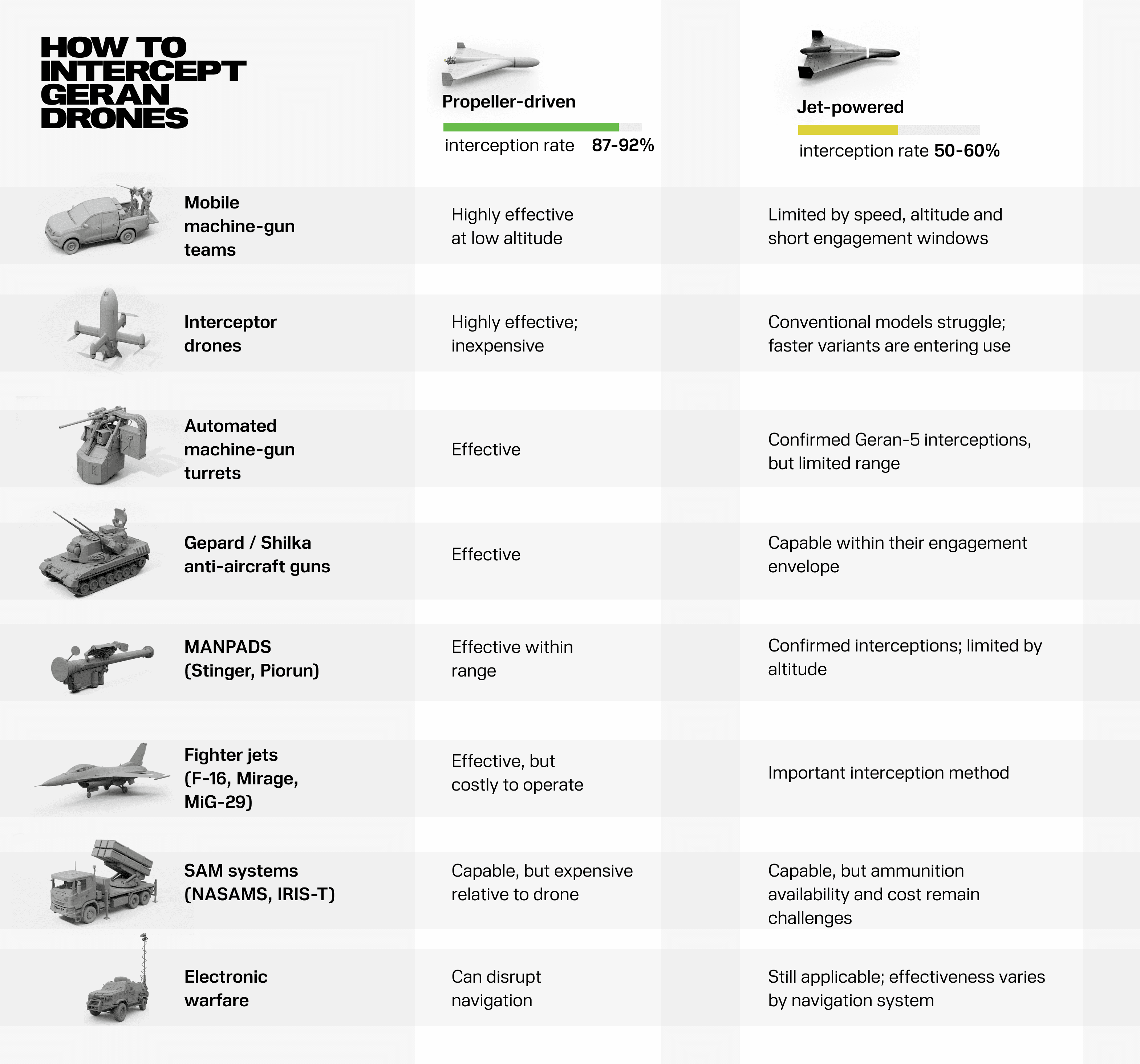
Ukraine has a wide arsenal of weapons capable of intercepting traditional propeller-driven drones, but the introduction of faster jet-powered variants has created new challenges for Ukrainian air defense units racing to find effective solutions.
That has mobilized Ukraine’s defense industry, which is racing to develop faster, affordable interceptor drones capable of countering the new threat before Russia can scale up production even further or, worse yet, introduce even faster variants.
How much can they produce?
In October 2026 alone, Russia launched 6,473 Shahed-type drones against Ukraine, according to the General Staff. Air Force spokesperson Yurii Ihnat reported more than 4,000 jet-powered UAV launches that month. However, Ukrainian officials have not disclosed how many of those were Geran-5s.
Russia began testing jet-powered Shaheds in early 2024, introduced the Geran-3 in 2025, and unveiled the Geran-5 by January 2026. By August, Russian factories were reportedly producing around 3,000 Geran-4 and Geran-5 drones combined every month. However, reports have estimated that only around 700 were Geran-5s.
Much of this rapid expansion has been made possible by Chinese-made turbojet engines, which allowed Russia to bypass the lengthy process of developing its own. Moscow has since begun localizing engine production, although Chinese technology and components remain central to the program.
And Russia isn't stopping at mass production. It has also deployed the newer Geran-5 K5-K, now considered a small cruise missile. Geran-5 variants are being redesigned to fly even faster, with Ukrainian specialists reporting isolated cases of speeds reaching 1,000 km/h. For Ukraine, this means developing defenses against a threat that is not only growing in scale but is also constantly evolving.
Discuss this article: