- Category
- War in Ukraine
More European Countries Turn to Ukraine for Defense Answers in 2026
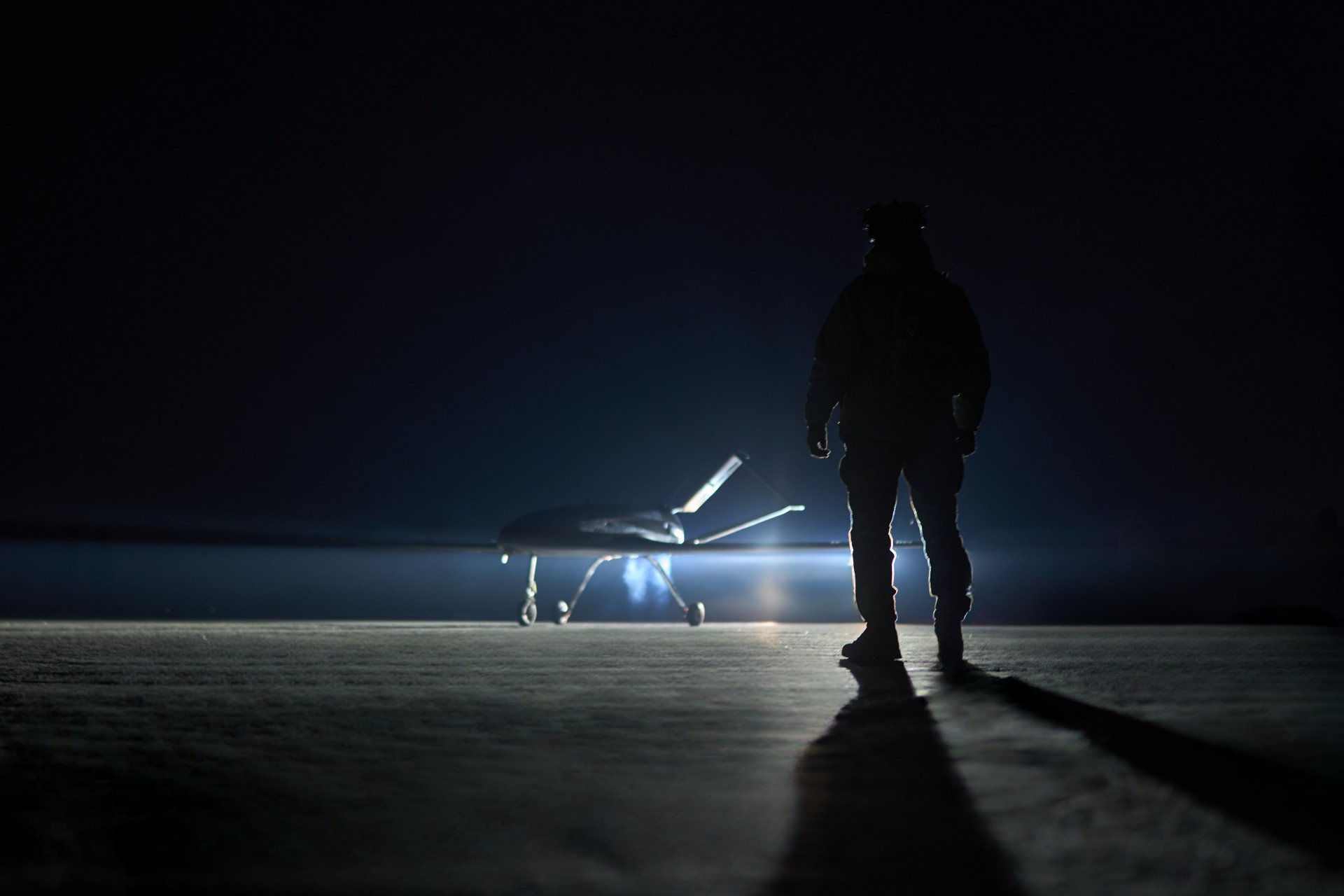
In 2026, a shift is becoming visible across Europe. Countries that once focused on supporting Ukraine are increasingly turning to it for experience in fighting and defending in modern war. Kyiv, which has lived for years under the threat of Russian attacks, is ready to share with all of its partners.
 Prefer U24 Media on Google
- Authors

-29a1a43aba23f9bb779a1ac8b98d2121.jpeg "Photo of Illia Kabachynskyi")
In early May 2026, large-scale military exercises, “Spring Storm,” began in Estonia. At their peak, 12,000 troops will take part, including participants from partner countries, among them Ukraine.
Military personnel with real combat experience in the Russian-Ukrainian war are now frequent guests at European military exercises. No one anywhere has gained comparable experience in the past several decades, especially not in wars this technologically advanced and intense. Europe wants to learn from Ukraine’s experience — and it is not alone.
We bring you stories from the ground. Your support keeps our team in the field.
In spring 2026, Ukrainian President Volodymyr Zelenskyy announced the launch of the Drone Deal: a partnership with Europe, the Middle East, and the Caucasus to build integrated air defense based on Ukrainian experience. This includes drones, interceptors, electronic warfare, detection and response systems, training, and the transfer of military expertise. The new agreement clearly demonstrates one fact: Ukraine’s role as merely a recipient of aid has changed. It is now also a country that develops and produces weapons capable of responding to the military challenges of modern warfare.
One of the greatest security threats today, as the war in Ukraine and the Middle East has shown, is cheap drones that are easy to mass-produce and can inflict significant losses through sheer numbers and scale. They can be shot down, but the question is how to do so in an economically viable way—using similarly scalable and affordable means. Shahed drones drew attention as early as March 2026, when they were used to strike countries in the Middle East. In reality, however, they had begun attacking Europe earlier: they were found in Romania and Moldova, and around two dozen entered Polish territory, forcing aircraft to be scrambled to destroy them.
Ukraine knows how to deal with this: more than half of Russia’s Shaheds launched at Ukraine are already being shot down by interceptor drones. Ukraine’s territory is the most heavily drone-struck part of the world; no one anywhere is facing attacks of this kind. Ukraine’s experience is unique. And that is why it is so important to scale.
Not just a recipient
On the morning of May 5, it became known that Ukraine had struck VNIIR-Progress in Cheboksary, a large and important enterprise that supplied components for Russia’s missile industry, aviation, navy, and armored vehicles. The components produced there are needed for missiles and drones. Ukraine’s logic makes sense: if there are not enough means to shoot down missiles, then it is necessary to prevent them from being launched in the first place.
But there is another important element in this story. The plant in Cheboksary is located about 1,000 kilometers from the Ukrainian border.
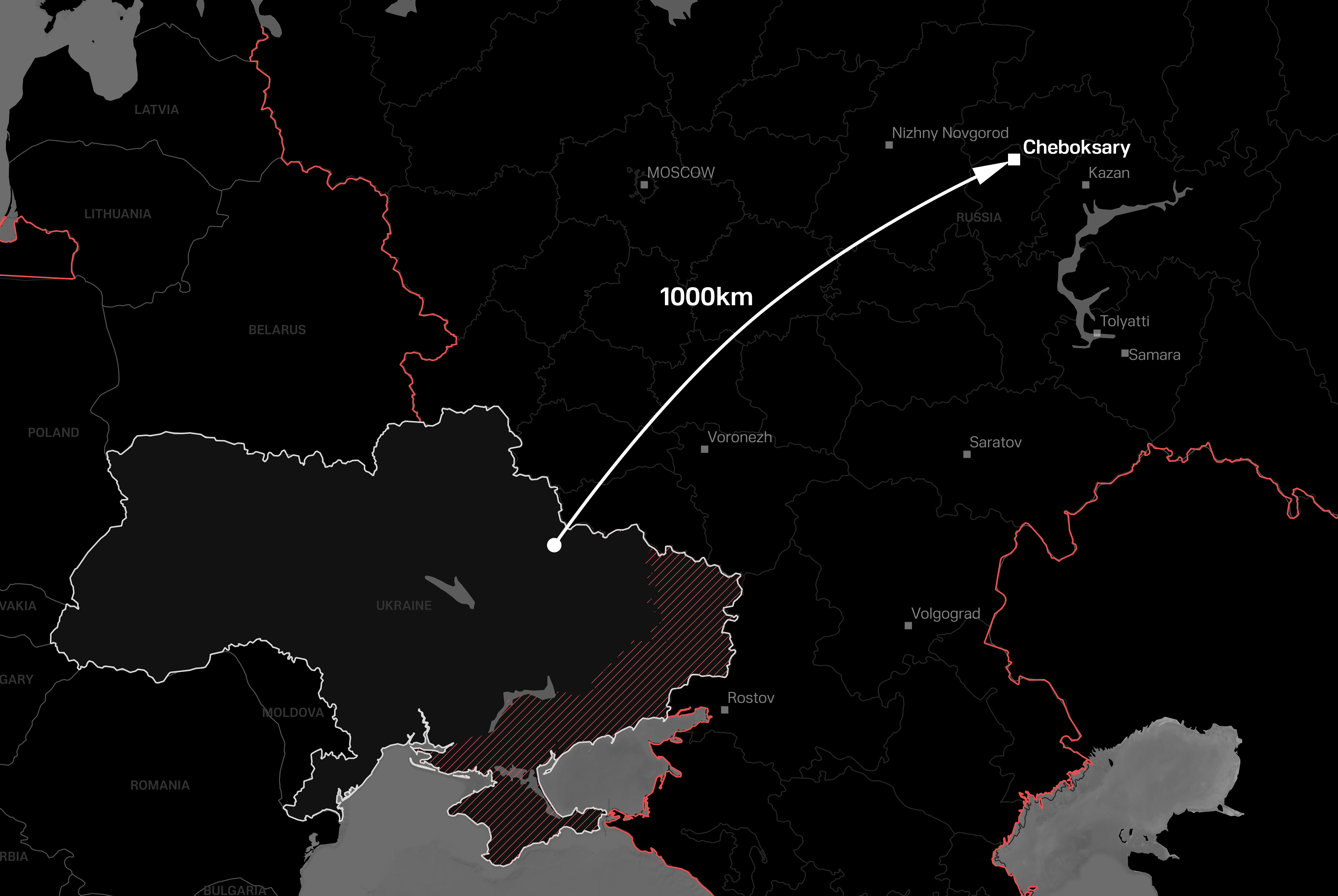
And the strikes were carried out by missiles of Ukraine’s own production. These were Flamingo missiles, which began to be discussed back in 2025, though at the time, they still required refinement. Today, Kyiv carried out an operation deep in Russia’s rear, 1,000 kilometers away, using its own forces. The missiles hit their target.
After that, Ukrainian long-range Liutyi drones arrived to finish off what remained of the plant. They, too, flew 1,000 kilometers to their target.
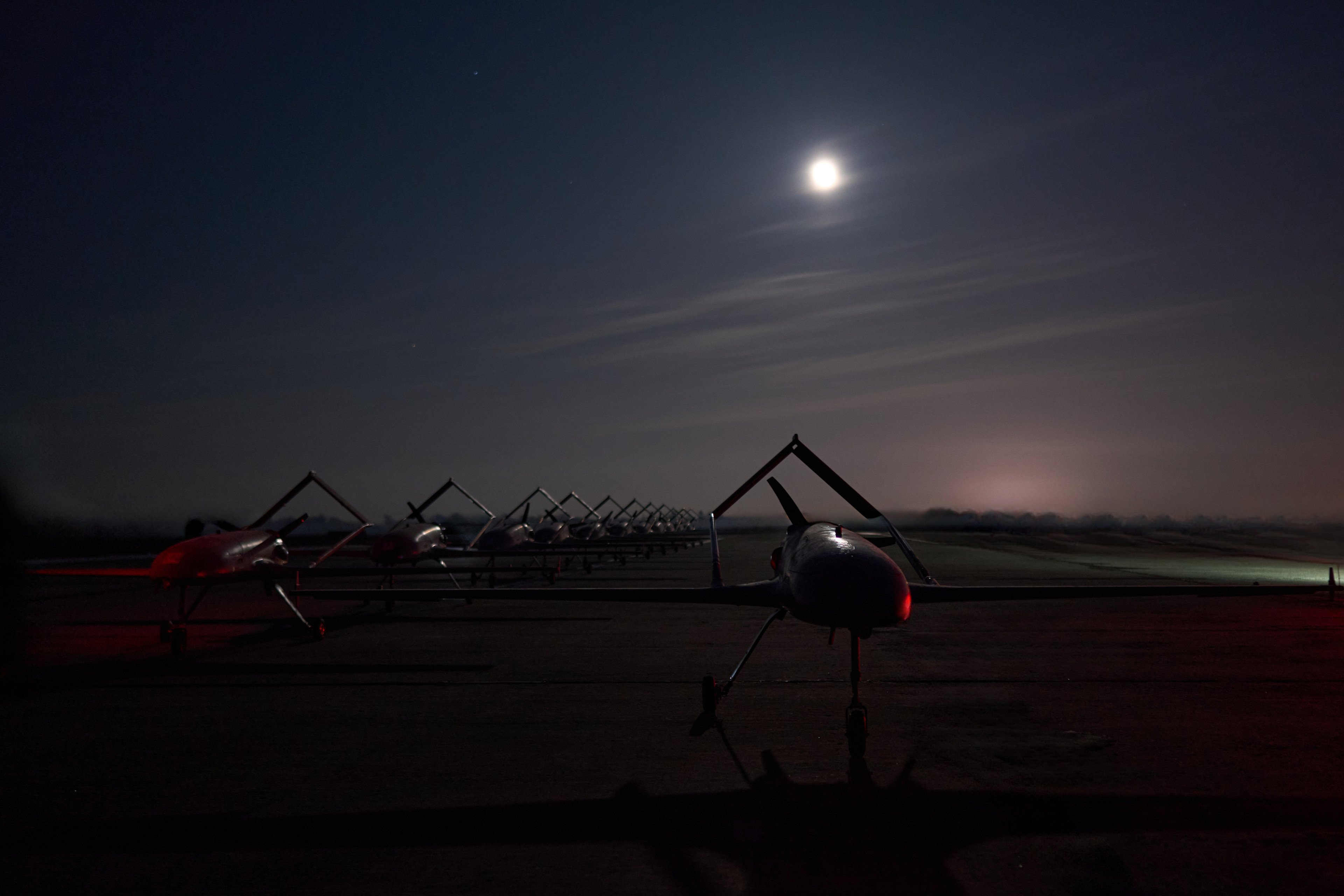
Ukrainian forces attacked the Kirinsky oil refinery in the Leningrad region. It is one of Russia’s three most powerful refineries, producing nearly 20 million tons of oil per year, or more than 6% of all refining in Russia. Part of the enterprise was damaged.
In a single night, Ukrainian missiles and drones were able to cover hundreds of kilometers over Russian territory, bypass Russian air defenses, and hit their targets precisely. Once again.
The operation of just one day clearly showed how dramatically Ukraine’s defense industry has changed: from a country that could only receive, Ukraine has become a player that can provide—both weapons and knowledge.
Battle-proven weapons
Go to any defense exhibition in Europe and approach manufacturers’ stands, and you will often see the phrase "combat-tested in Ukraine." Indeed, because of Russia’s ongoing invasion, Ukrainian soil has become a testing ground for European and American military technologies. This allows manufacturers to have weapons that are not only good on paper, but have also proven themselves in real combat.
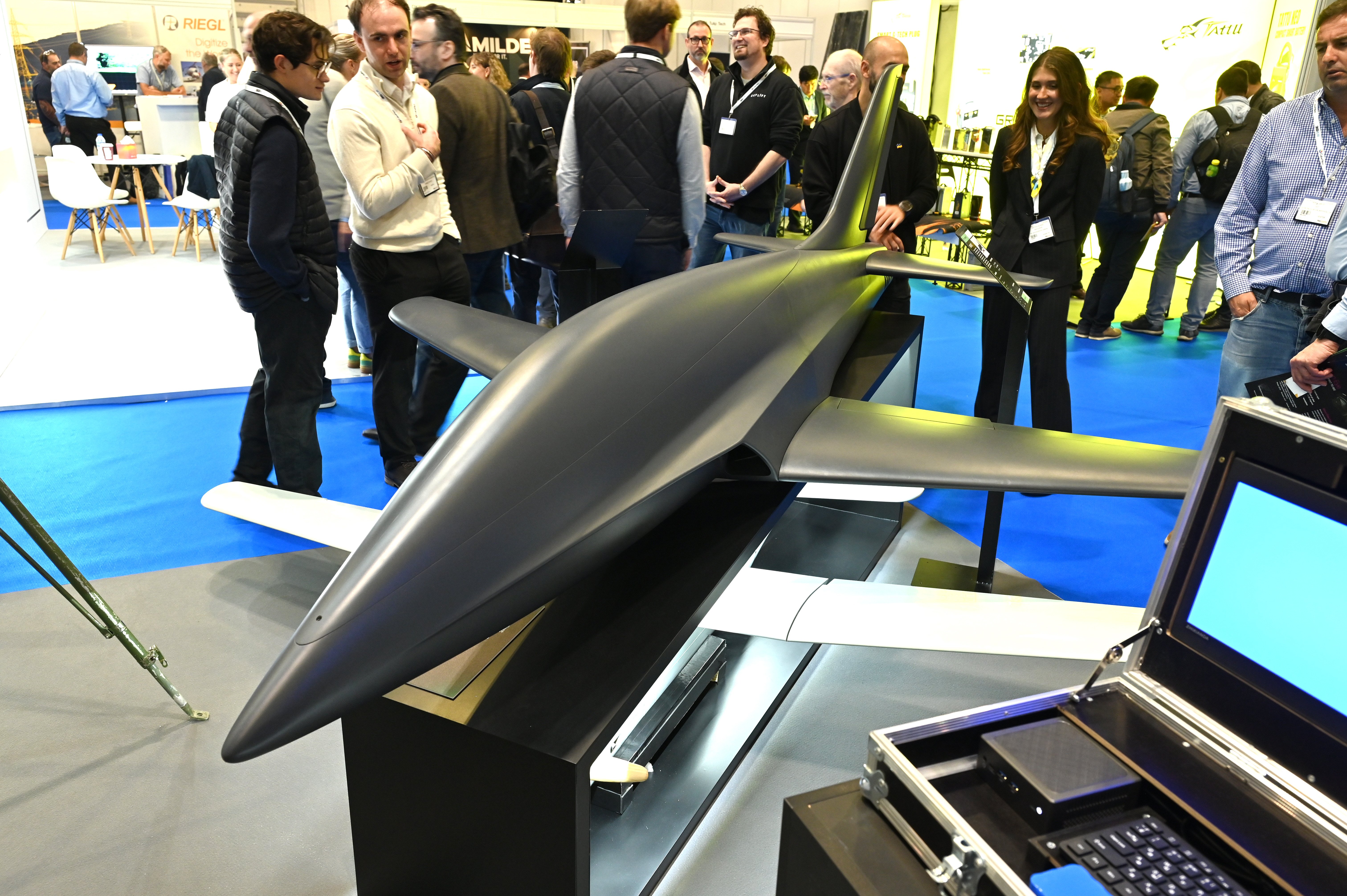
However, the pace of deliveries—or rather, the frequent delays in deliveries—became an incentive for Ukraine to start producing weapons itself. In four years, this has grown to a scale no one could have imagined: local manufacturers now have the capacity to produce $55 billion worth of weapons. In 2021, the figure was about $1 billion.
But the issue is not only volume. It is also what Ukraine is producing.
First and foremost, these are long-range drones. Today, it is Ukraine that has carried out the longest drone deep strike: the drone not only flew nearly 2,000 kilometers, but also hit its target after bypassing Russian air defenses. Ukraine has many such drones from different manufacturers. Mid-range drones, known as Middle Strike systems, destroyed billions of dollars’ worth of equipment in the first four months of 2026, as well as depots, arsenals, and deployment sites. In essence, this is an entirely new type of weapon, first widely used by the Armed Forces of Ukraine.
Unmanned naval drones have become a real threat to Russia’s Black Sea Fleet, with some ships sunk specifically by them.
In just a few years, Ukraine has developed and improved several missiles capable of flying 1,000 kilometers. Europe essentially does not have such systems today. Ballistic capabilities are also being developed.
Dozens of Ukrainian companies are implementing AI, creating drone swarms, and building autonomous systems in which robots and drones, rather than people, will fight thanks to artificial intelligence. Modern technologies help make the military more effective by removing the human factor of slowness.
Partnership as a way to become stronger
Whether this has been formally recorded on paper or not, Ukraine is already an important European defense partner and is ready to help those who are prepared to defend themselves, not attack.
By tying down all of Russia’s forces, official Kyiv has given Europe time to better prepare for possible action by the Kremlin. Russia simply does not have the forces for a large-scale attack on Europe, limiting itself instead to hybrid attacks. Events in eastern and southern Ukraine have given European defense clusters time to resume work and expand. Europe has not modernized this much in many decades.
Today, partnerships between countries are already producing results: joint modern enterprises that manufacture products genuinely in demand globally—not something that will gather dust in warehouses. Ukraine is willing to share its experience and provide opportunities for European manufacturers to test systems and collect data. This is what official Kyiv declares: all European aid is valued here, and Ukraine wants to repay it in every possible way—including through this kind of military cooperation.
In the fifth year of the full-scale war, Ukraine is more involved than ever in Europe’s defense—because it is itself that defensive line, shielding part of Europe’s democracies.
Discuss this article:
-4a56a6b482ec132402c16ef6fcabf9a2.png)


-c439b7bd9030ecf9d5a4287dc361ba31.jpg "Photo of Katherina Popilnichenko")


-72b63a4e0c8c475ad81fe3eed3f63729.jpeg "Photo of Cyril Barabaltchouk")