- Category
- War in Ukraine
NATO Plans Thousands of AI Drones Along Russia and Belarus Borders
 Prefer U24 Media on Google
- Authors

-c439b7bd9030ecf9d5a4287dc361ba31.jpg "Photo of Katherina Popilnichenko")
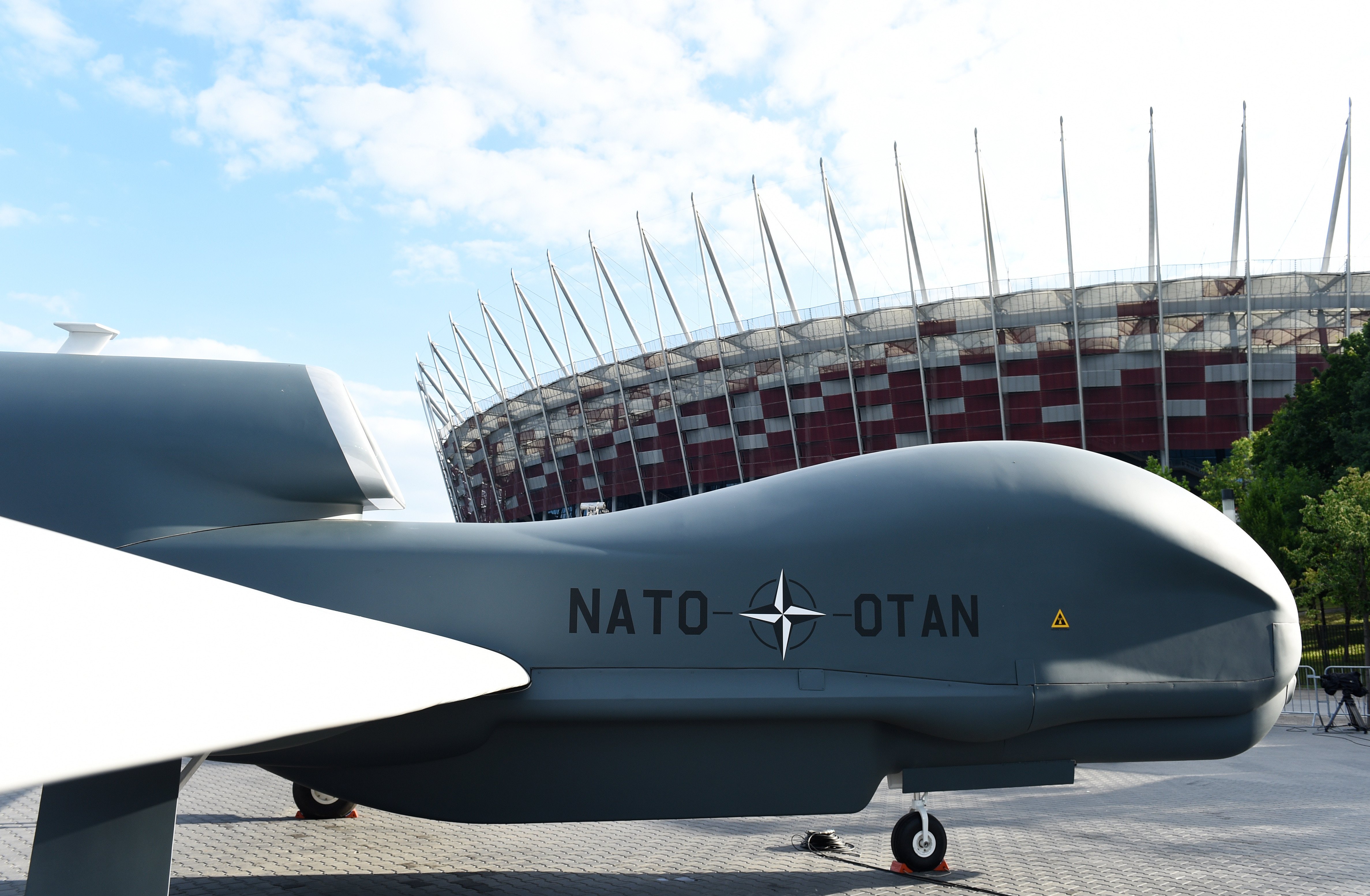
NATO is planning to strengthen its eastern flank with a network of thousands of drones, sensors, and satellites linked through artificial intelligence, according to Politico on August 14.
The system is being developed under the Eastern Flank Deterrence Initiative (EFDI) and is intended to monitor threats along NATO’s borders with Russia and Belarus, stretching from northern Finland to the Black Sea.
We bring you stories from the ground. Your support keeps our team in the field.
NATO plans for the network to detect violations of allied airspace and borders and serve as the first line of defense.
The system would combine data from multiple sources in real time. For example, if a drone detects a hostile UAV, AI could compare that information with satellite images, sensor readings, and radar data before sending the information to NATO allies.
Commanders would then be able to choose which forces should respond. NATO refers to the concept as a “kill web,” designed to send information directly to operators instead of moving it through multiple levels of command.

“Previously, information went through many intermediaries. Today, it can come directly from a sensor to a tool of influence,” US Army Captain Ronan Sefton said.
The platform is being developed in Wiesbaden with military personnel from the US, Canada, Lithuania, Poland, Germany, and other countries, according to Bild.
It is designed to connect allied command systems and allow them to exchange data. “The network works in real time. We are moving at high speed,” Canadian Lieutenant Colonel Mike Mendika said.
According to US Army Major Brian Hobek, if Russia attacked a NATO member, information about the attack would reach Wiesbaden and a response could be launched within five minutes.

The system is also intended to automate some of the most routine parts of drone operations. US Army Major Ben Schiff said this could include keeping a drone over a battlefield for long periods while it searches for targets.
The Wiesbaden team is also using 3D printing to develop drones. Schiff said new parts can be produced and tested on the same day, whereas development and testing previously could take months.
NATO believes the system should allow the alliance to adapt to changes on the battlefield faster than an adversary. The project is planned for implementation on a short timeline, as reported by Politico.

On July 7, 2026, NATO launched a new $40 billion initiative called Drone Edge to strengthen the Alliance’s ability to counter unmanned aerial threats.
Announced by Secretary General Mark Rutte during the NATO Defense Industry Forum in Ankara, the five-year program was developed using lessons learned from recent wars, including Russia's full-scale invasion of Ukraine.
Under the initiative, NATO member states committed to investing in counter-drone technologies, expanding drone pilot training, and increasing the number of drone operators in their armed forces fivefold by the end of 2027.
Discuss this article:





-605be766de04ba3d21b67fb76a76786a.jpg "Joseph Place")

-72b63a4e0c8c475ad81fe3eed3f63729.jpeg "Photo of Cyril Barabaltchouk")