- Category
- War in Ukraine
Putin Speaks of Peace Negotiations, Then Sends 600+ Drones to Devastate Kyiv
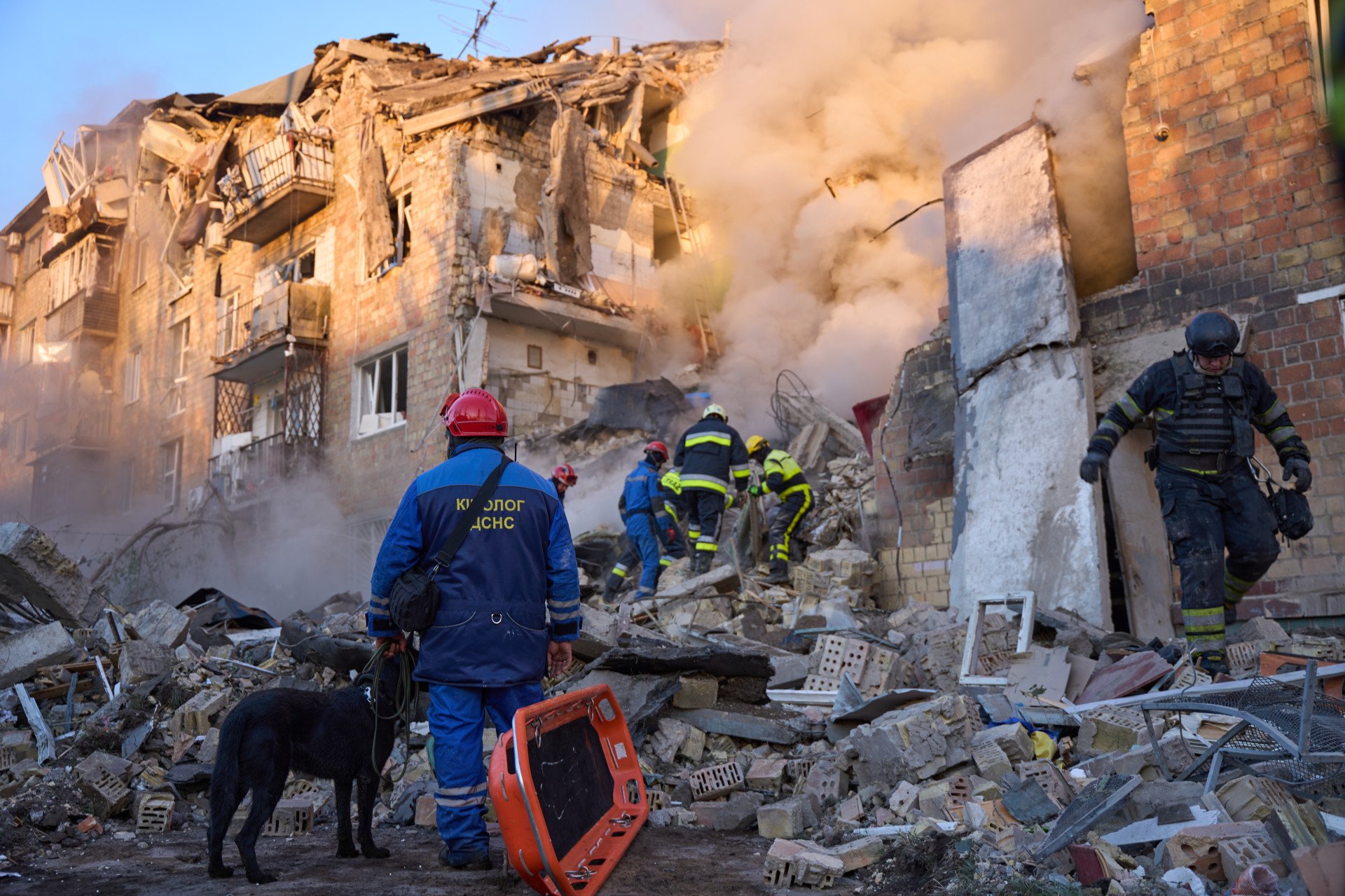
Russian missiles and drones killed 18 people overnight in Ukraine, including children and teenagers. This came just two weeks after the meeting between Trump and Putin in Alaska, where the Russian leader spoke about his readiness for peace talks.
 Prefer U24 Media on Google
- Authors

-29a1a43aba23f9bb779a1ac8b98d2121.jpeg "Photo of Illia Kabachynskyi")
Russia’s August 28 strike was the second-largest since the start of the full-scale invasion. The largest occurred on July 9, when 741 aerial weapons were launched. This time, Russia launched 629 aerial weapons, including more than 500 Shahed drones. Two cruise missiles struck an office building in Kyiv, causing widespread destruction of surrounding civilian structures, damaging apartments and offices.
In another part of Kyiv, an entire entrance section of a residential building was destroyed. Several fatalities were confirmed, and rescuers spent hours pulling people from under the rubble. Russian Shaheds and missiles hit civilian infrastructure across the city.
Railway infrastructure was also targeted: Russia destroyed a high-speed passenger train and damaged facilities in another region.
In total, at least 18 people were killed in Kyiv alone, with more than 50 injured.
It is telling that the Ukrainian capital had been spared large-scale bombardments for ten days following a week of negotiations held first in Alaska and then in Washington. Earlier, in May, June, and July, Russia had consistently escalated, using record numbers of aerial strike assets against Ukrainian cities. Within just two months, the scale of mass strikes grew from 300 to more than 700 aerial targets at a time.
After the week of talks in early August—when US President Donald Trump met with Putin, followed by a meeting between Ukrainian President Volodymyr Zelenskyy, Trump, and European leaders—the number of strikes temporarily decreased. But, as this latest attack shows, that pause was short-lived: more than 600 drones and missiles were launched in a single wave.
This is a stark illustration of Russia’s supposed “readiness” for negotiations. During those meetings, issues such as halting airstrikes, a ceasefire, and other possible scenarios for starting peace talks were raised. Yet Russia not only refused to initiate the negotiation process but also made its intentions clear through action: 18 dead and widespread destruction in the very heart of Kyiv. Such attacks are nothing less than terror against civilians and a demonstration of the Kremlin’s attitude toward peace talks.

Ukraine, for its part, has clearly outlined the framework for negotiations, stating its readiness to meet with Putin and the Russian delegation. That framework has the support of both European allies and Trump.
This latest assault is a powerful reminder that sanctions pressure on Russia must continue—to show, through concrete examples, the consequences of delaying negotiations.
Discuss this article:


-c439b7bd9030ecf9d5a4287dc361ba31.jpg "Photo of Katherina Popilnichenko")