- Category
- War in Ukraine
Riding With Evacuation Crews Under Russian Drones in Ukraine's Kill Zone
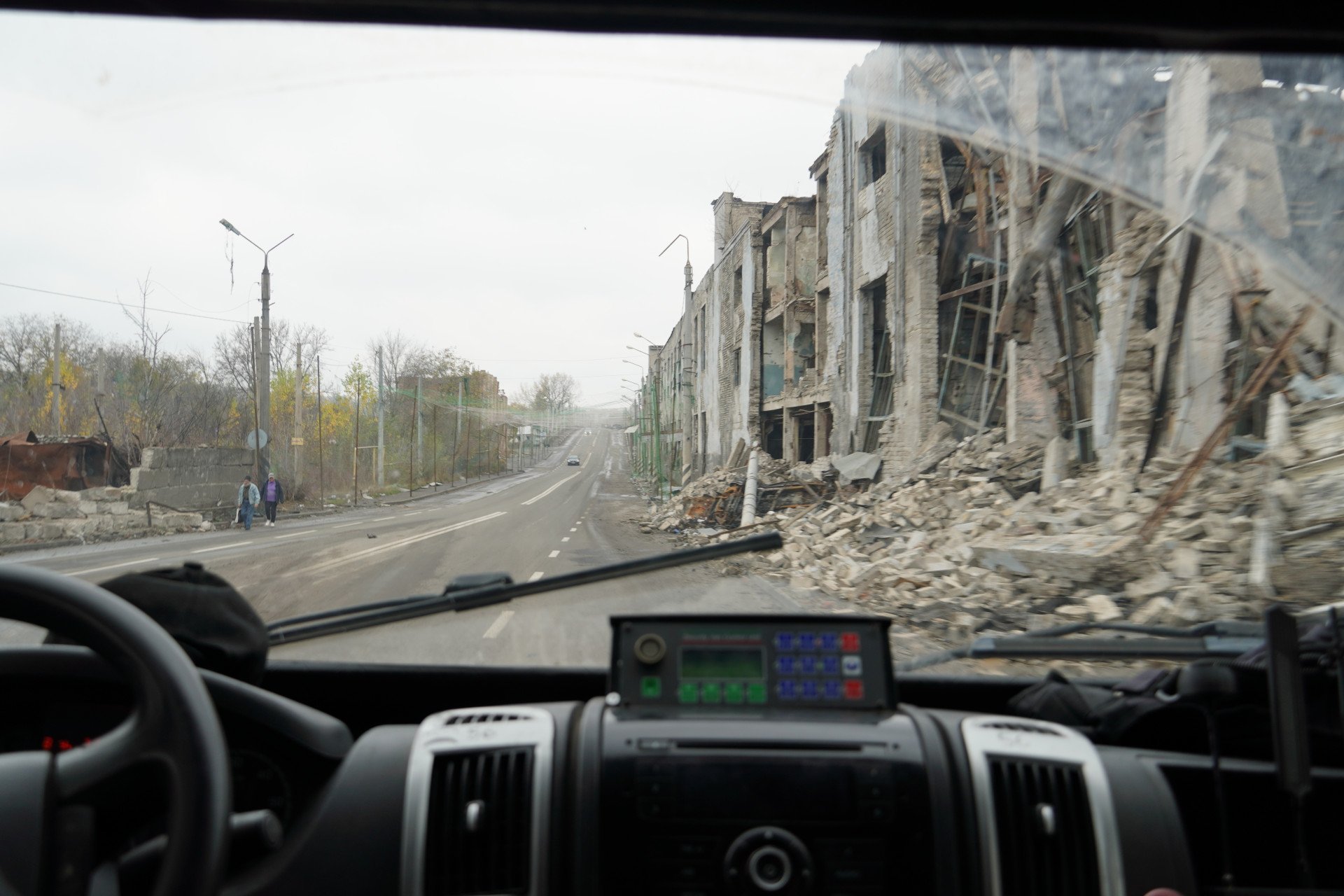
Three days a week, unpaid volunteers drive from Kharkiv into Kramatorsk and Sloviansk to evacuate civilians who remain there. Drones control the skies over the Donetsk region, and volunteers face constant risk from glide bombs, artillery, and FPVs in a kill zone stretching several dozen kilometers from the frontline.
 Prefer U24 Media on Google
- Authors


It's mid-morning in Izyum on Friday, October 30. I'm in a parking lot with a group of volunteers, heading from Kharkiv to Kramatorsk and Sloviansk to evacuate civilians. Today, I’m embedding with “Svit ta Ukrayina” (World and Ukraine), an unpaid volunteer group based in Kharkiv that makes the run three days a week. Minutes before our arrival in Izyum, we received notice that a vehicle ahead of us, “Volonteri vid Boha” (Volunteers From God), was targeted by a Russian drone.
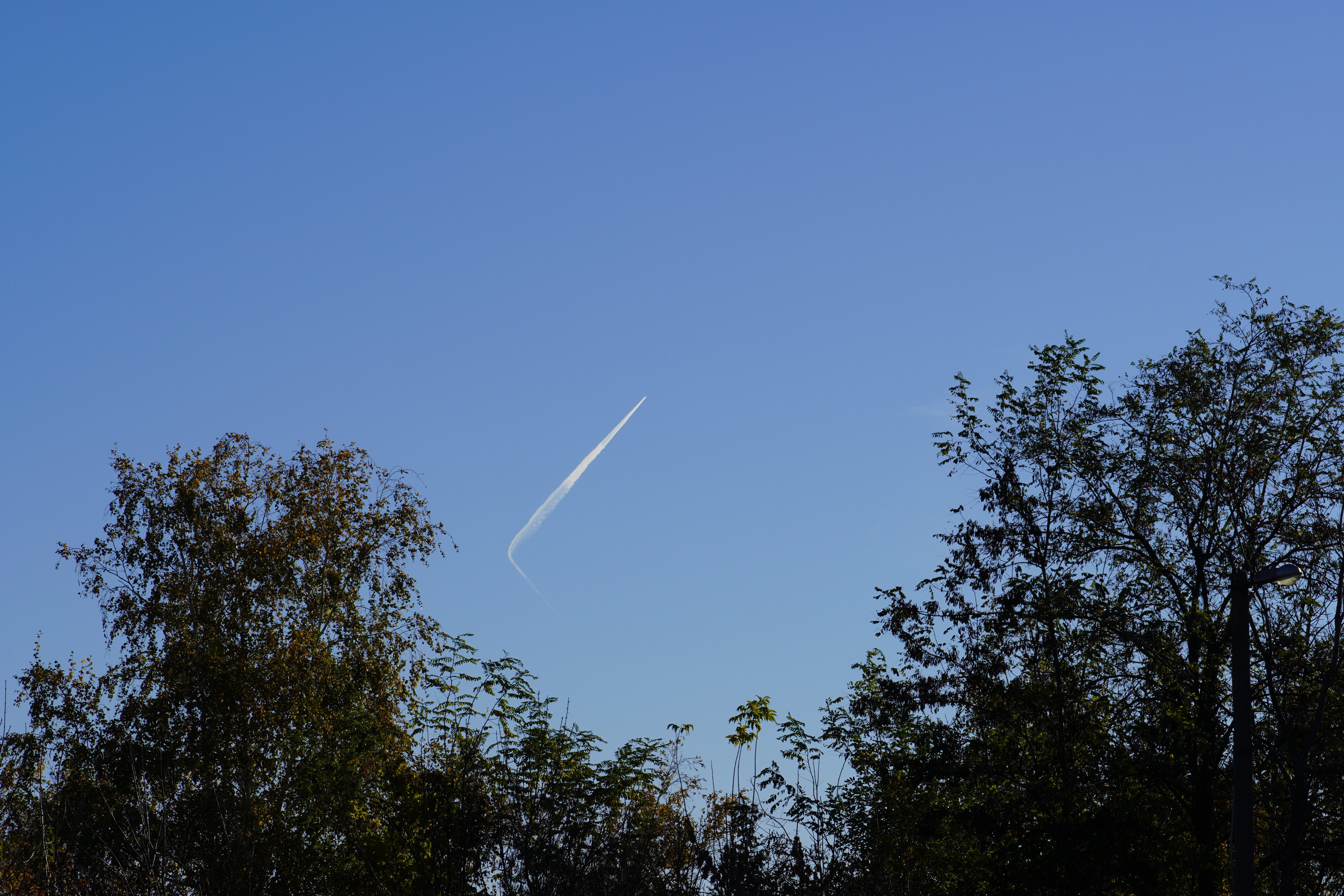
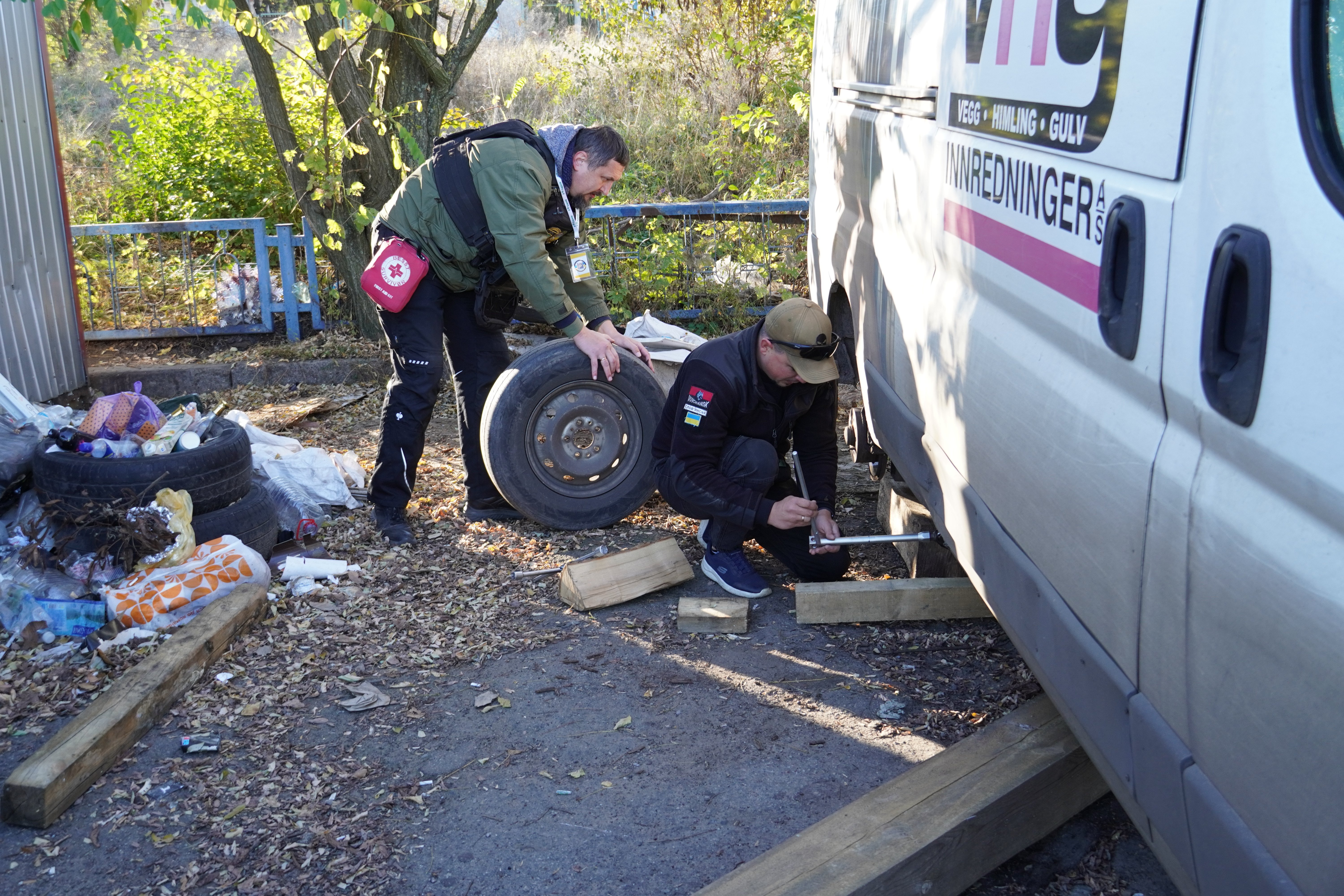
As soon as we arrive, we hear multiple explosions and see the contrails of a Russian jet in the distance, tasked with dropping glide bombs. The volunteers are now removing the tires from an intact evacuation van to replace the damaged ones on the targeted vehicle.
Since August, Kramatorsk and Sloviansk, cities in the Donetsk region’s “Fortress Belt” around 10-15 kilometers from the active frontline, have been designated as zones of active hostilities by the Ukrainian government. In October, the Donetsk Regional Military Administration announced mandatory evacuations for all families with children in both cities. Current estimates place the number of civilians remaining in both communities at 49,000.
“The security situation is constantly deteriorating,” wrote Vadym Filashkin, head of the administration. “The Russians are attacking Kramatorsk and Sloviansk every day, striking residential neighborhoods, civilian vehicles, and places where people are gathered. Staying there with children is an unjustifiable risk. I appeal to parents: do not put your children in danger, and do not wait until a Russian strike hits near your home. Evacuate now.”
To this end, volunteers carry bulletproof vests and helmets for children during evacuations.
On the road
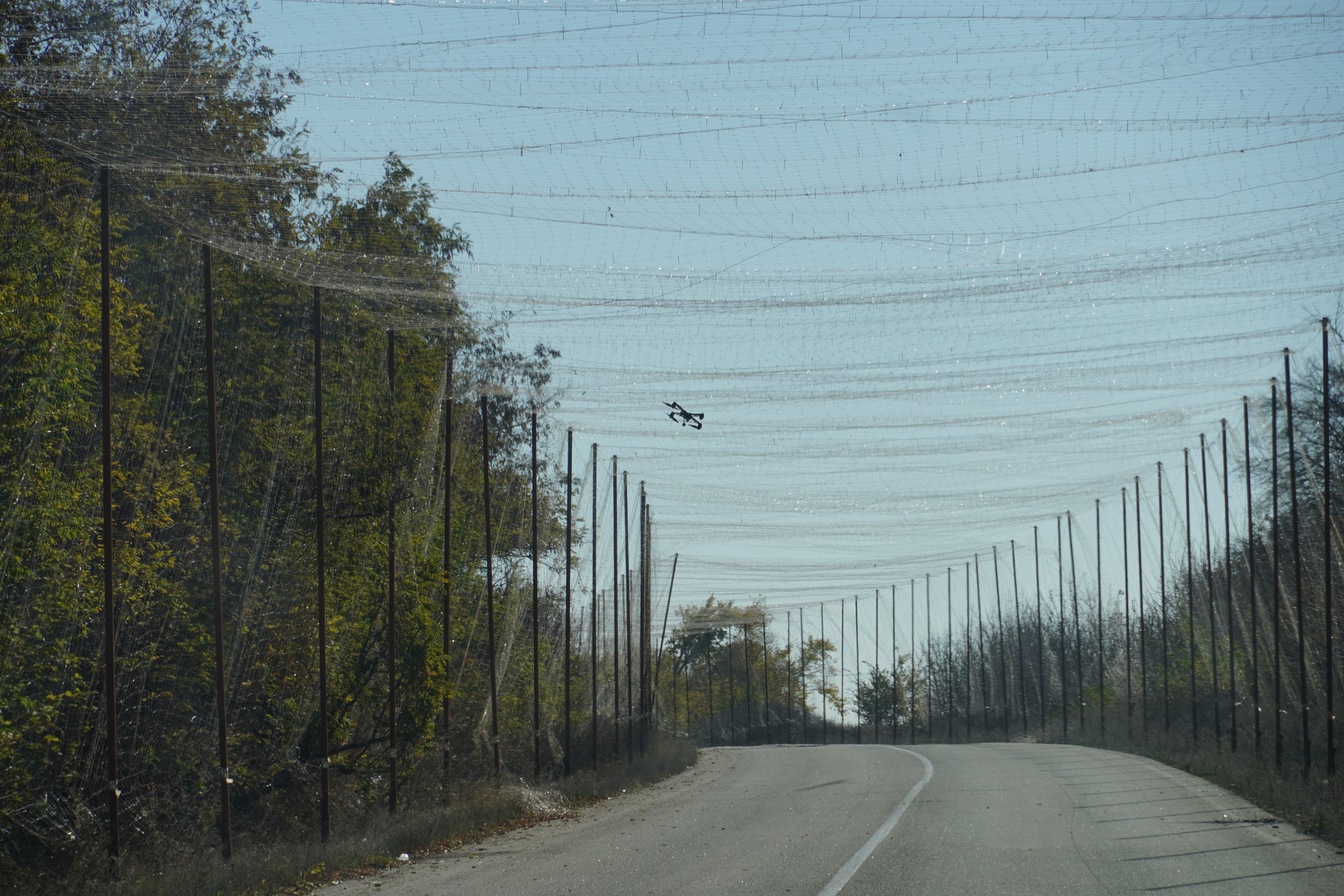
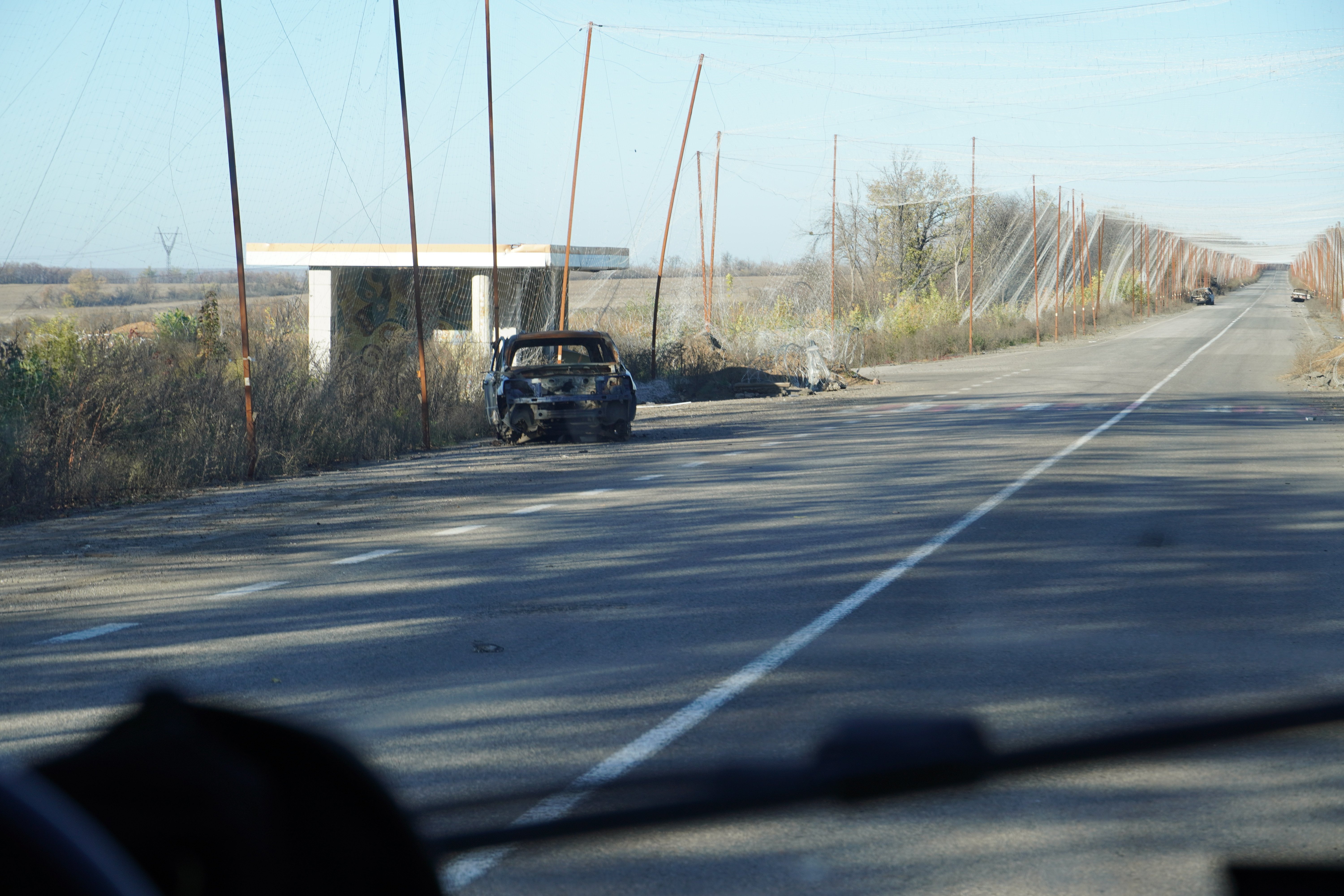
As we drive along the highway from Izium to Sloviansk, we’re continually reminded of the risk evacuations face. The road is under the anti-drone nets, which can stop some attacks, but burnt-out vehicle hulls litter the road. On the way to the location where the strike occurred, we pass drones tangled in nets and pieces of Molniyas, cheap strike platforms made of foam board and plywood.
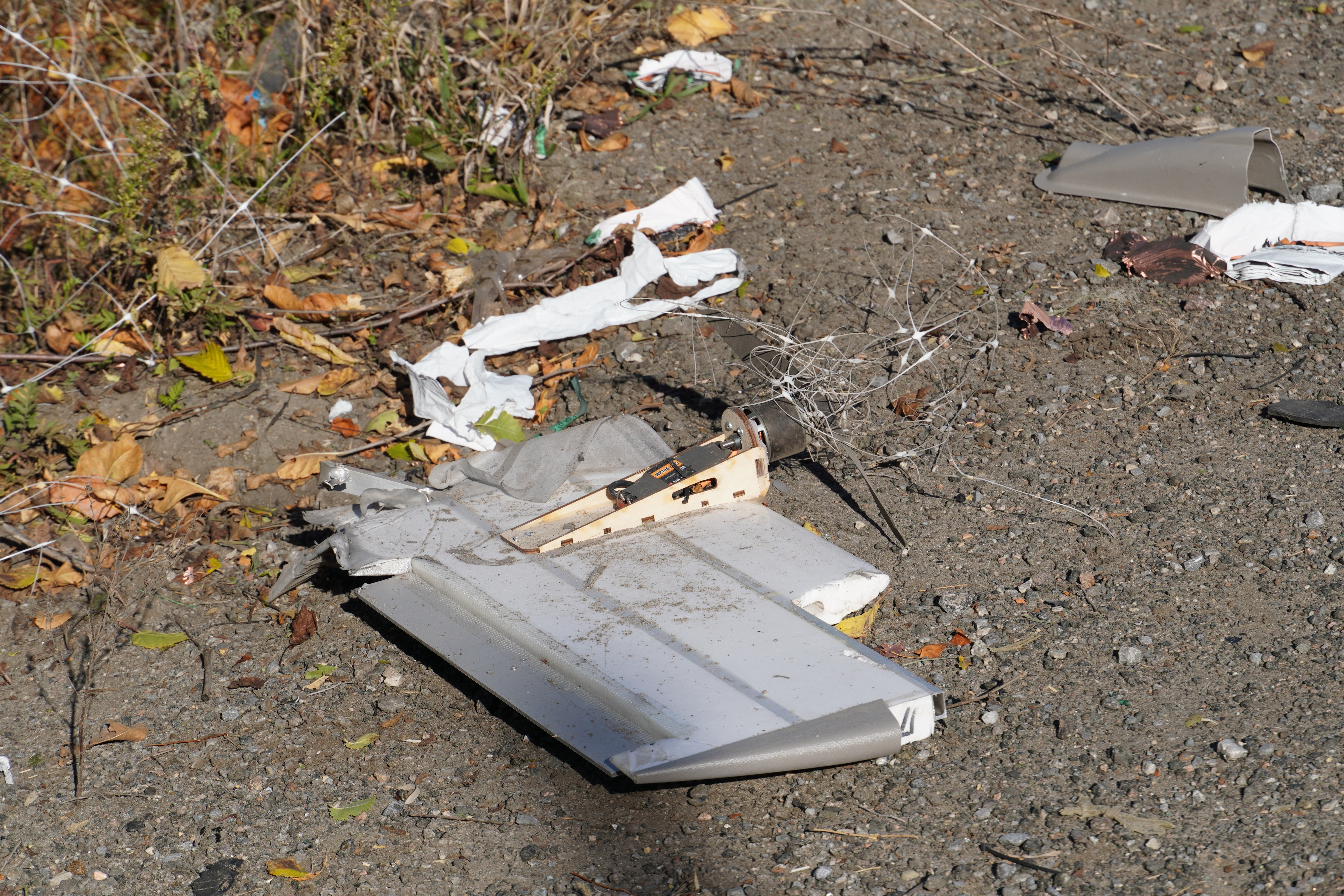
We see the damage once we arrive, after passing the border from the Kharkiv to Donetsk region.
Shrapnel from the drone which impacted near the left side of the van has left it immobilized. Volunteers attach a towing rope and replace the tires. Today, this van was supposed to deliver bread and evacuate civilians from Sloviansk. Despite the damage, no volunteers were injured.
Due to the constant evolution of FPV drones, the kill zone, where drones control movement is dozens of kilometers deep. Gas stations along the Kharkiv-Izyum-Kramatorsk route are covered with nets and chains to protect themselves from Russian drones, if they remain intact.
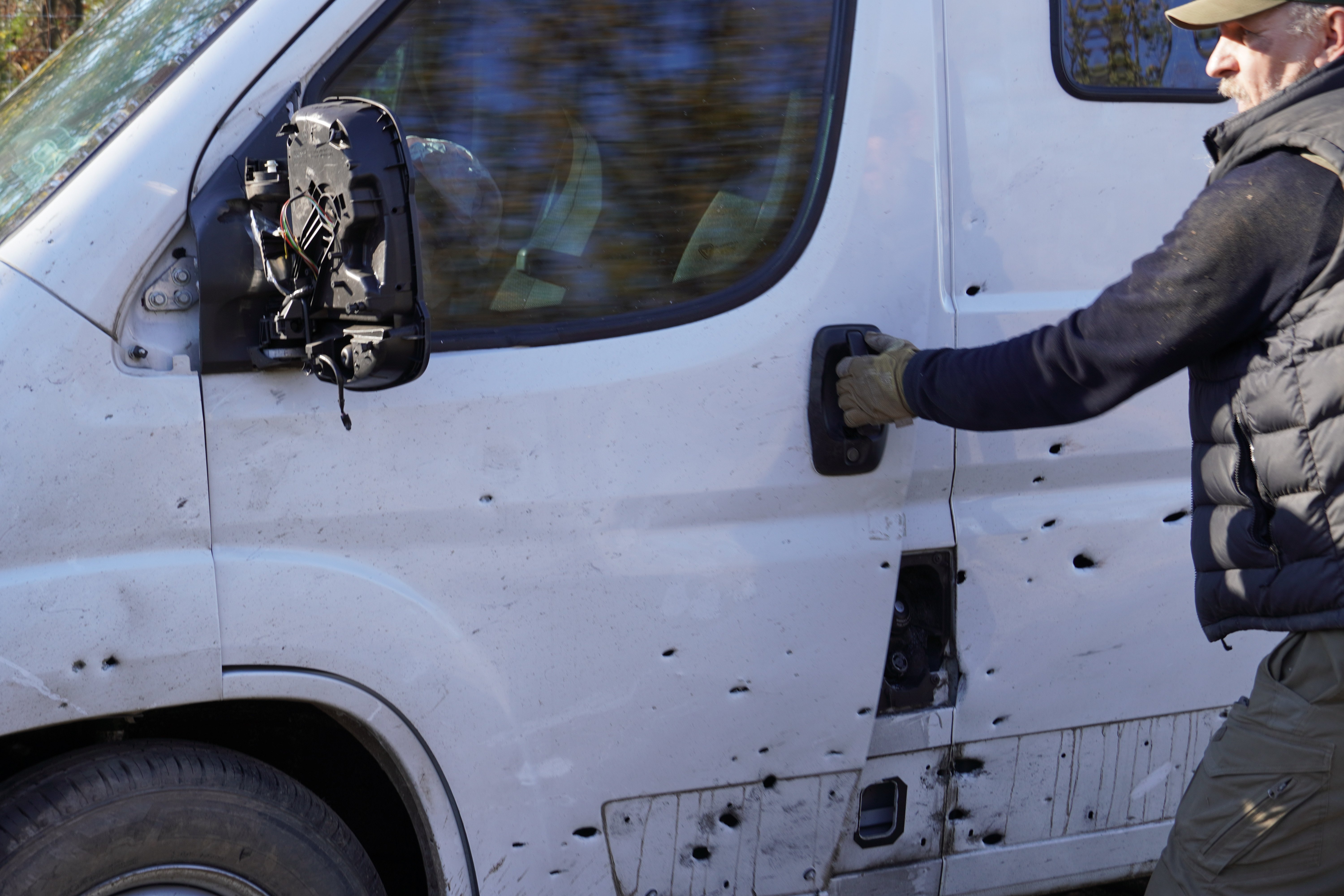
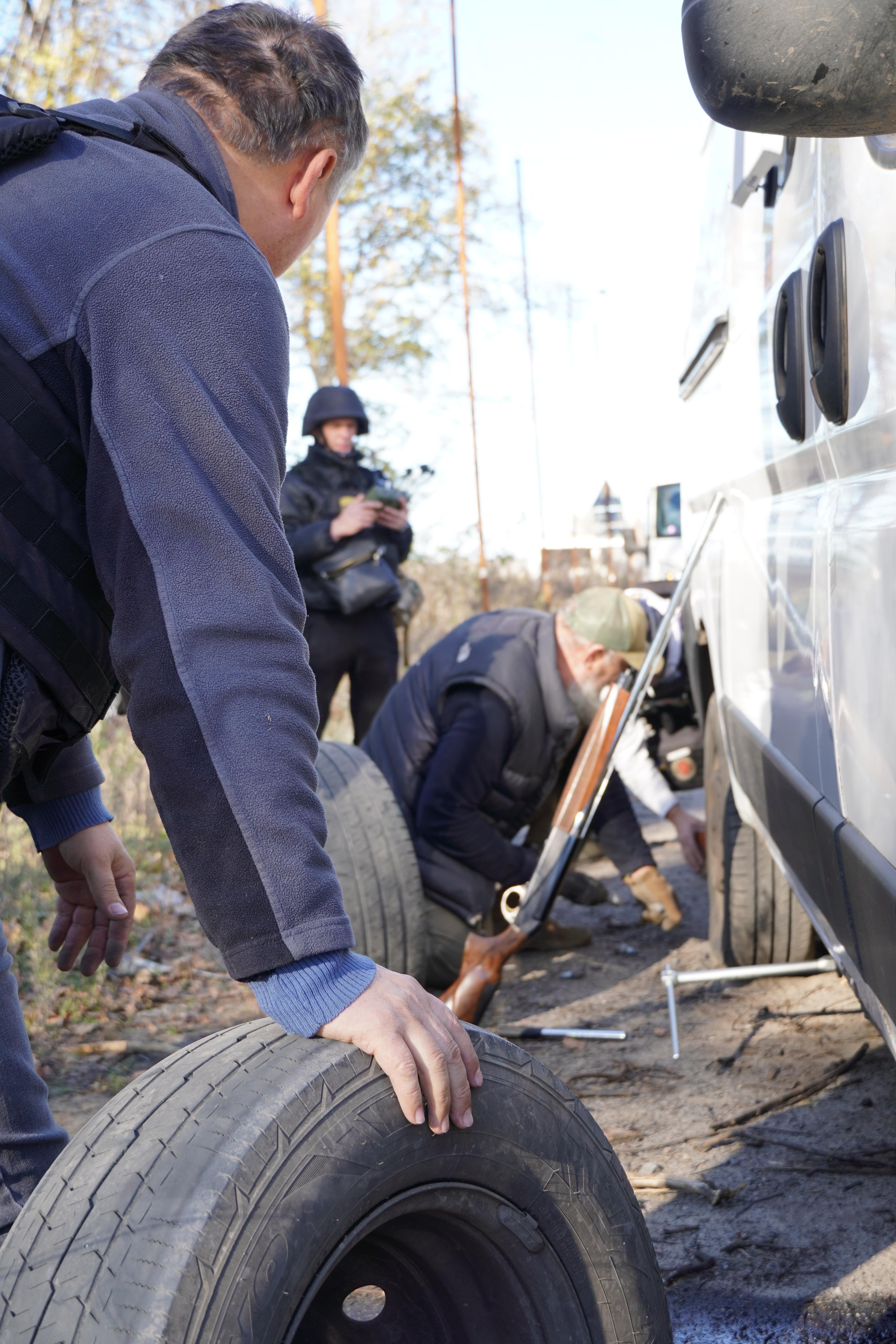
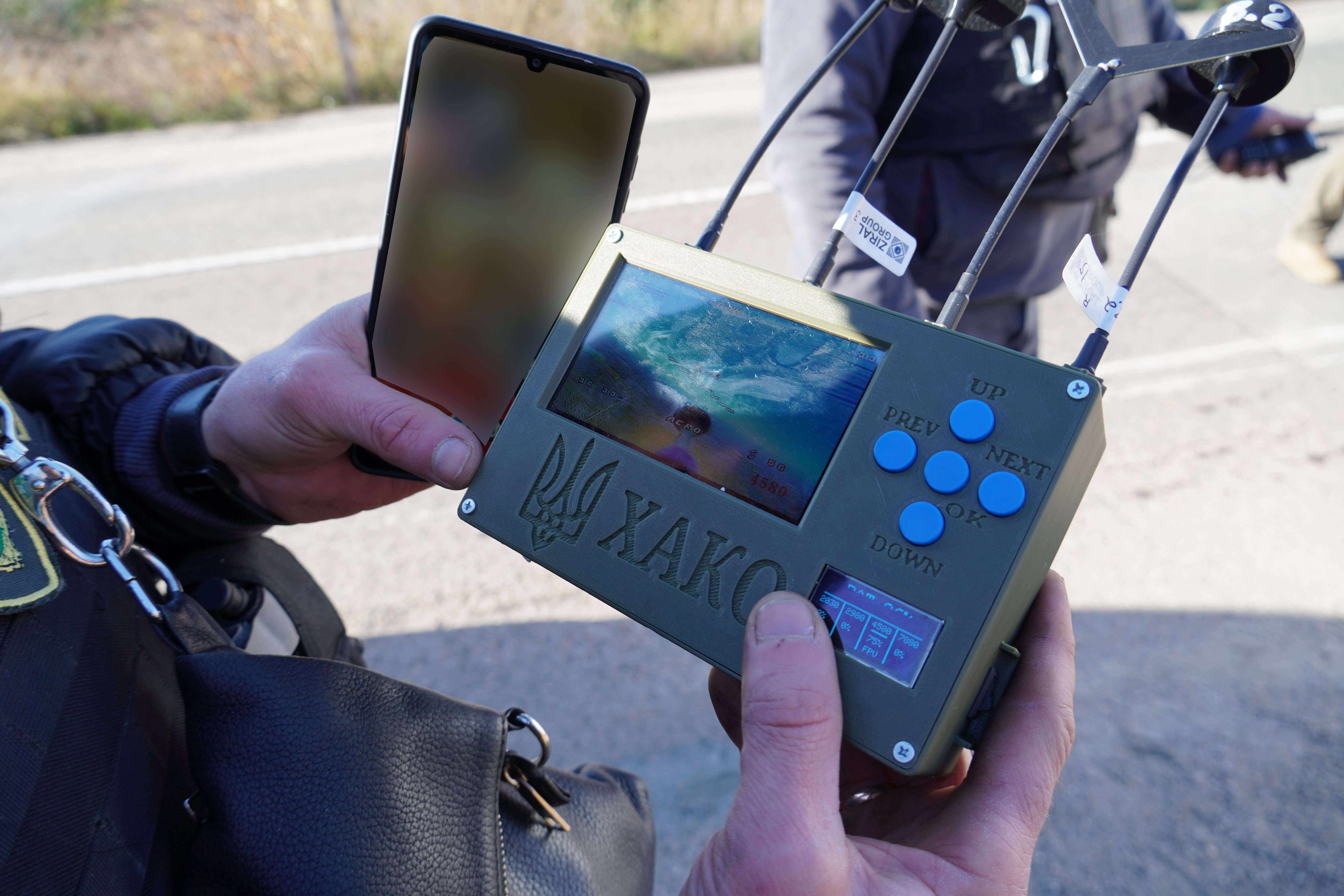
Here, the threat of drones is constant. Volunteers are equipped with handheld drone detectors which can intercept the video feed of oncoming FPVs. The pieces of the drone that targeted the vehicle are still visible, and one volunteer tosses them onto the side of the road. Foliage smolders nearby.
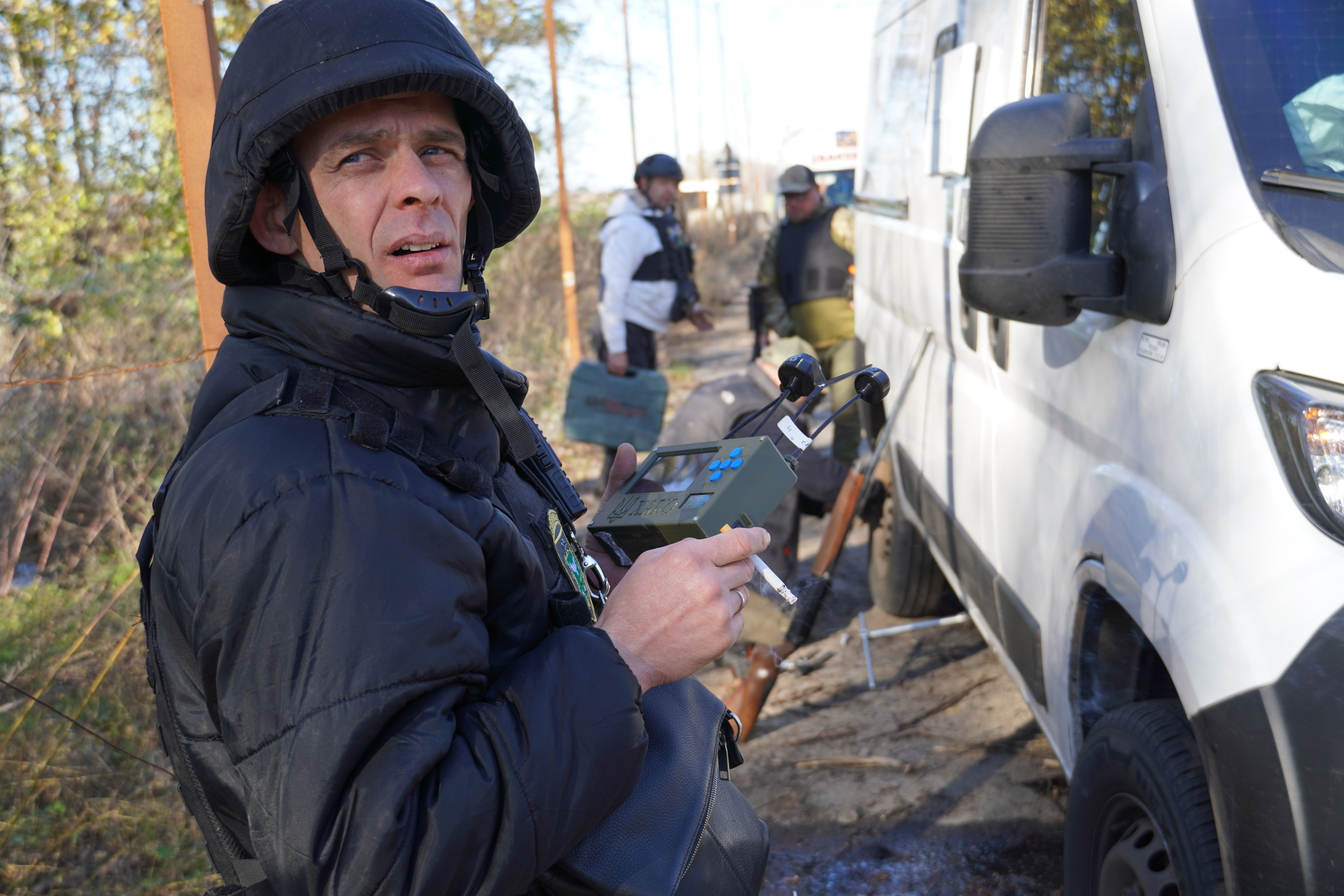
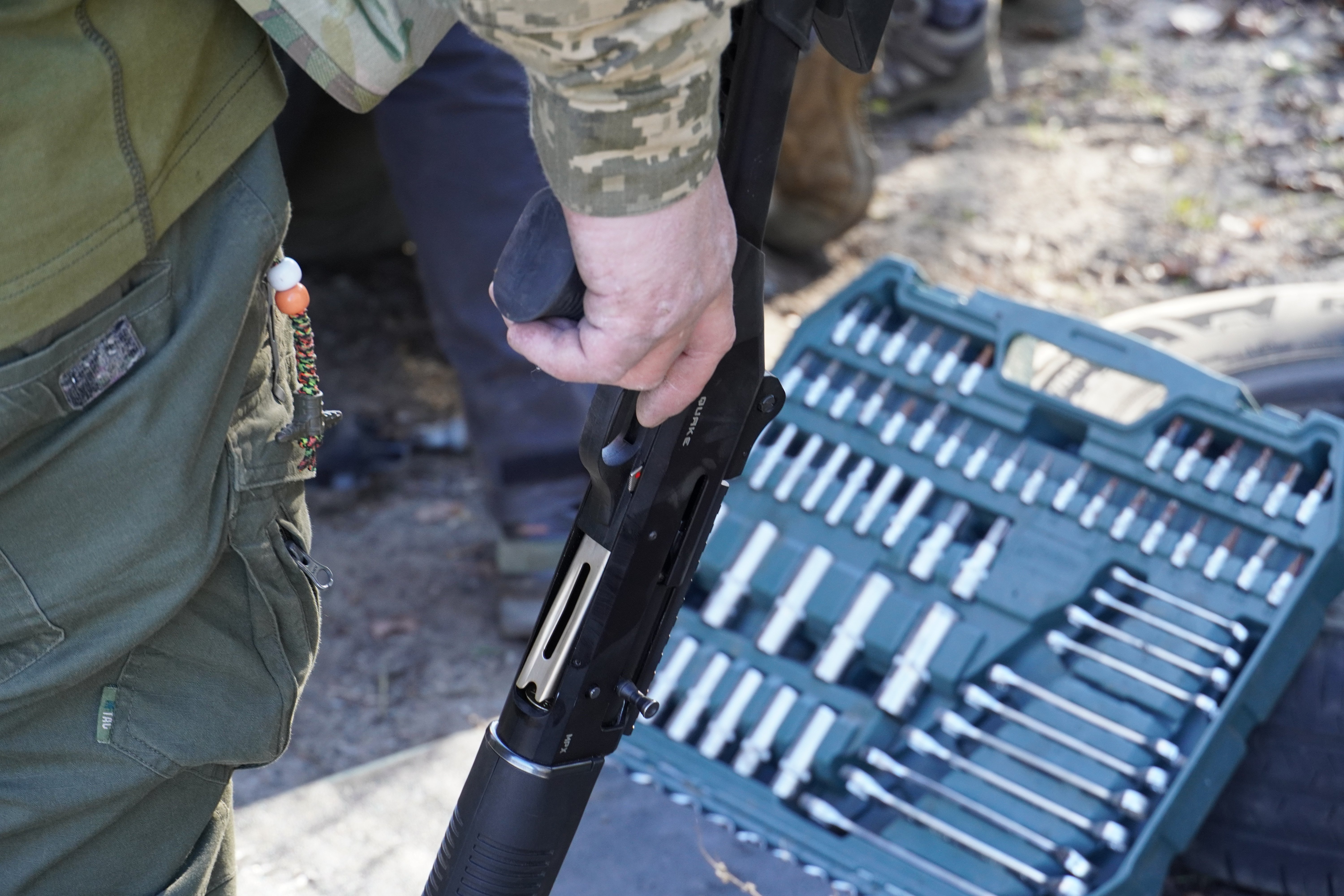
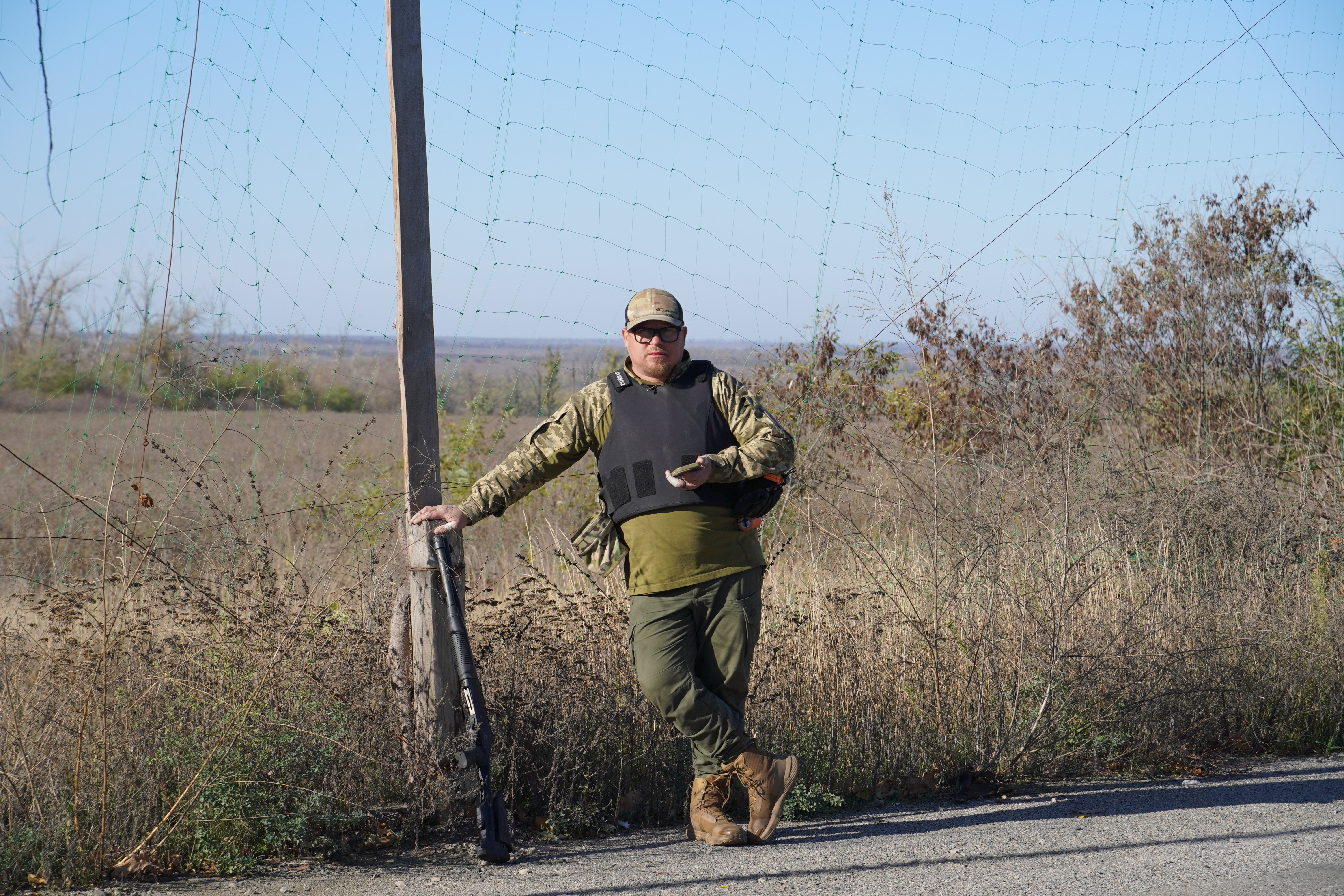
To combat the drone threat, volunteers are now often carrying shotguns and operating electronic warfare systems for their own protection, provided they are available. Yevhen, the volunteer I'm in the same van with, tells me that such defensive measures are badly needed, alongside up-armored vans.
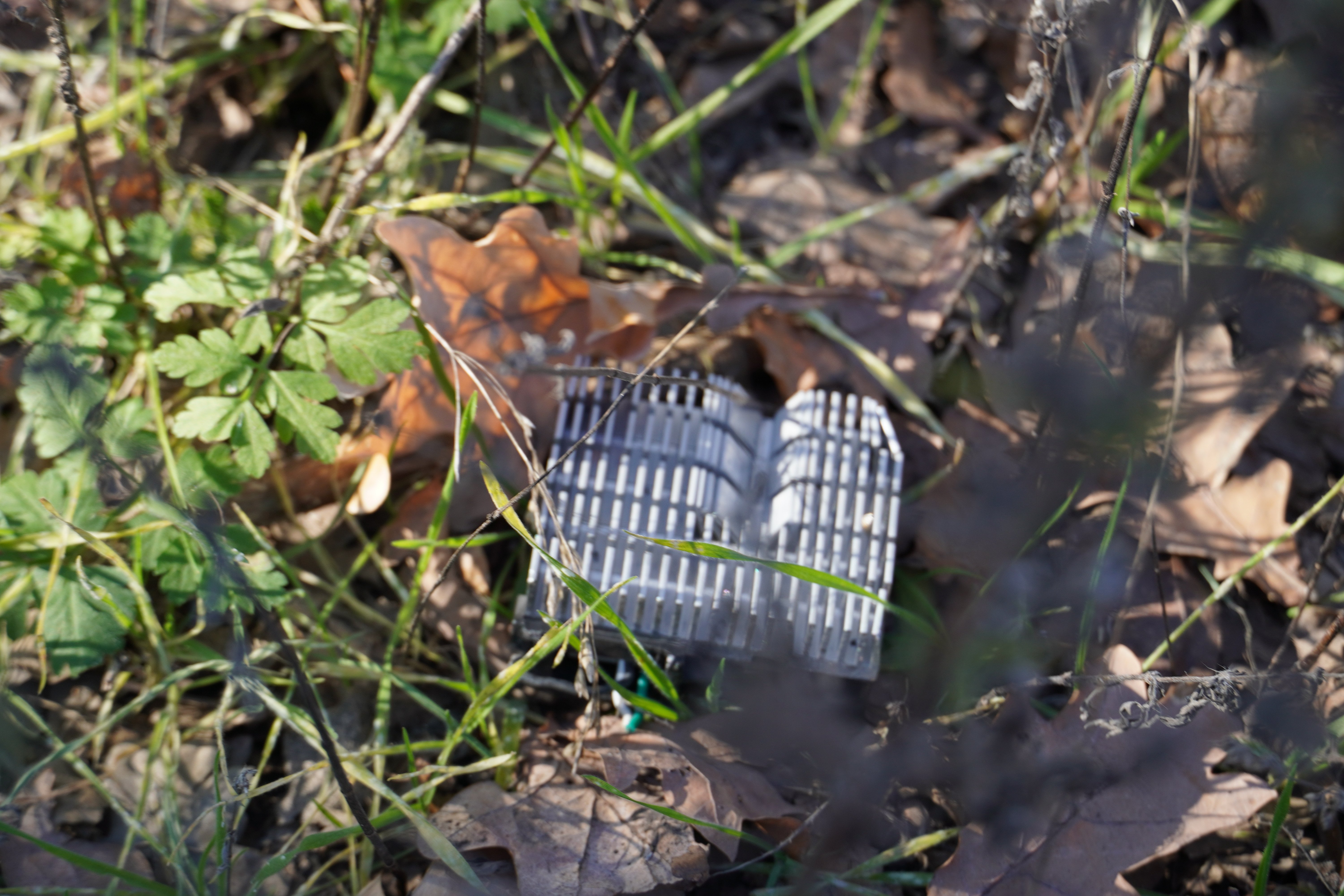
We tow the damaged van towards the border with the Kharkiv region. Nearby, the wrecks of cars previously hit by FPVs litter the road. During the towing process, a wheel pops off. We slowly drag the van on its rims.
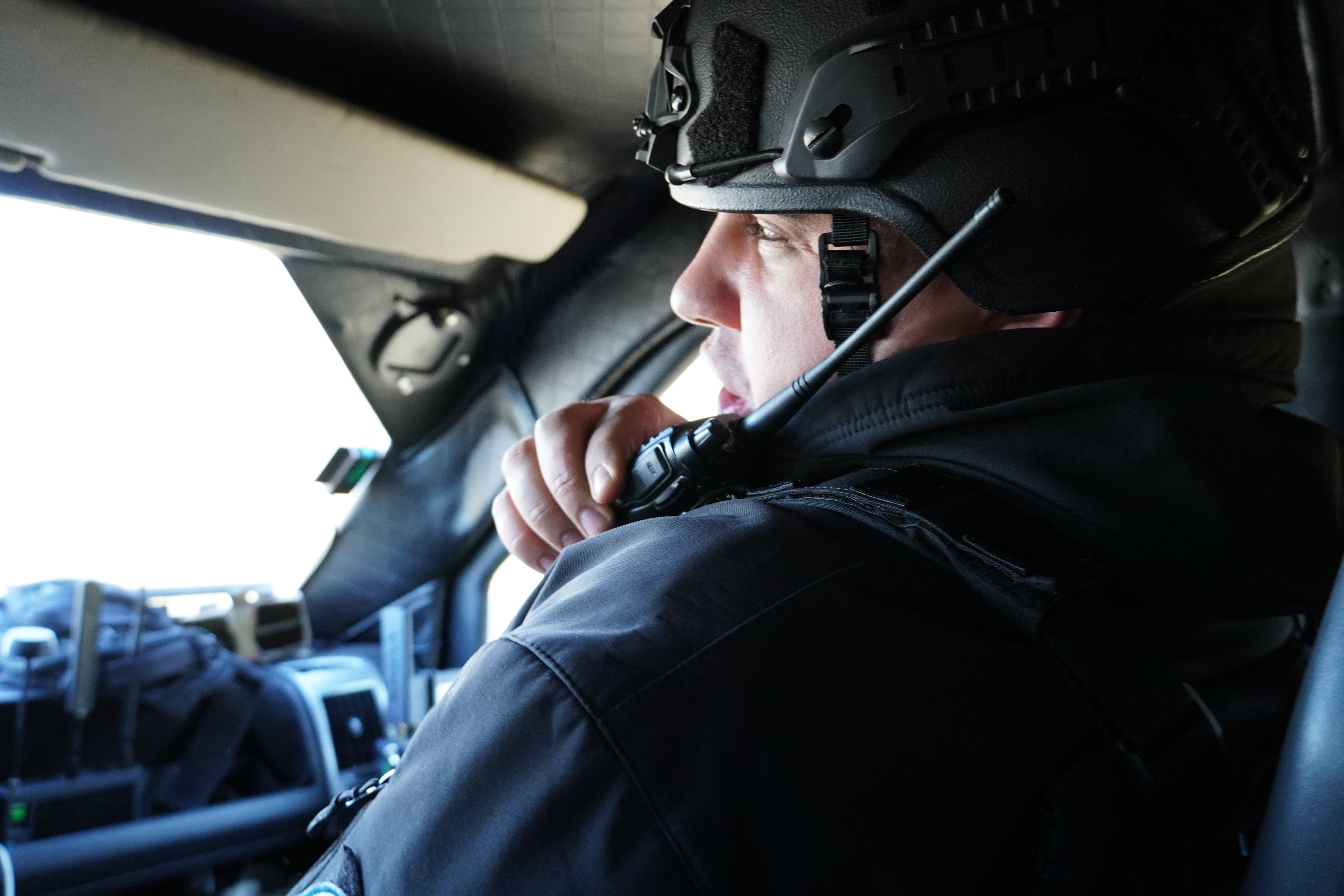
Once we pull the van back to a safer location, the volunteers discuss the next steps, while keeping an eye out for more attackers. Our drone detector begins to pick up the feed from a nearby Russian FPV.
The other volunteers with undamaged vehicles continue to the addresses in Kramatorsk and Sloviansk. Unfortunately, this van would not be the only evacuation vehicle targeted today.
On the same day in the city of Kramatorsk, according to Suspilne Donbas and Vilne Radio, a vehicle from the Kramatorsk Association of Volunteers was targeted by an FPV drone, injuring three volunteers, leaving one in serious condition, and also killing a nearby dog.
Serhiy Haranov, a member of Volunteers from God in the targeted vehicle would sustain serious injuries while evacuating civilians a little over two weeks later.
“Welcome to Kramatorsk”
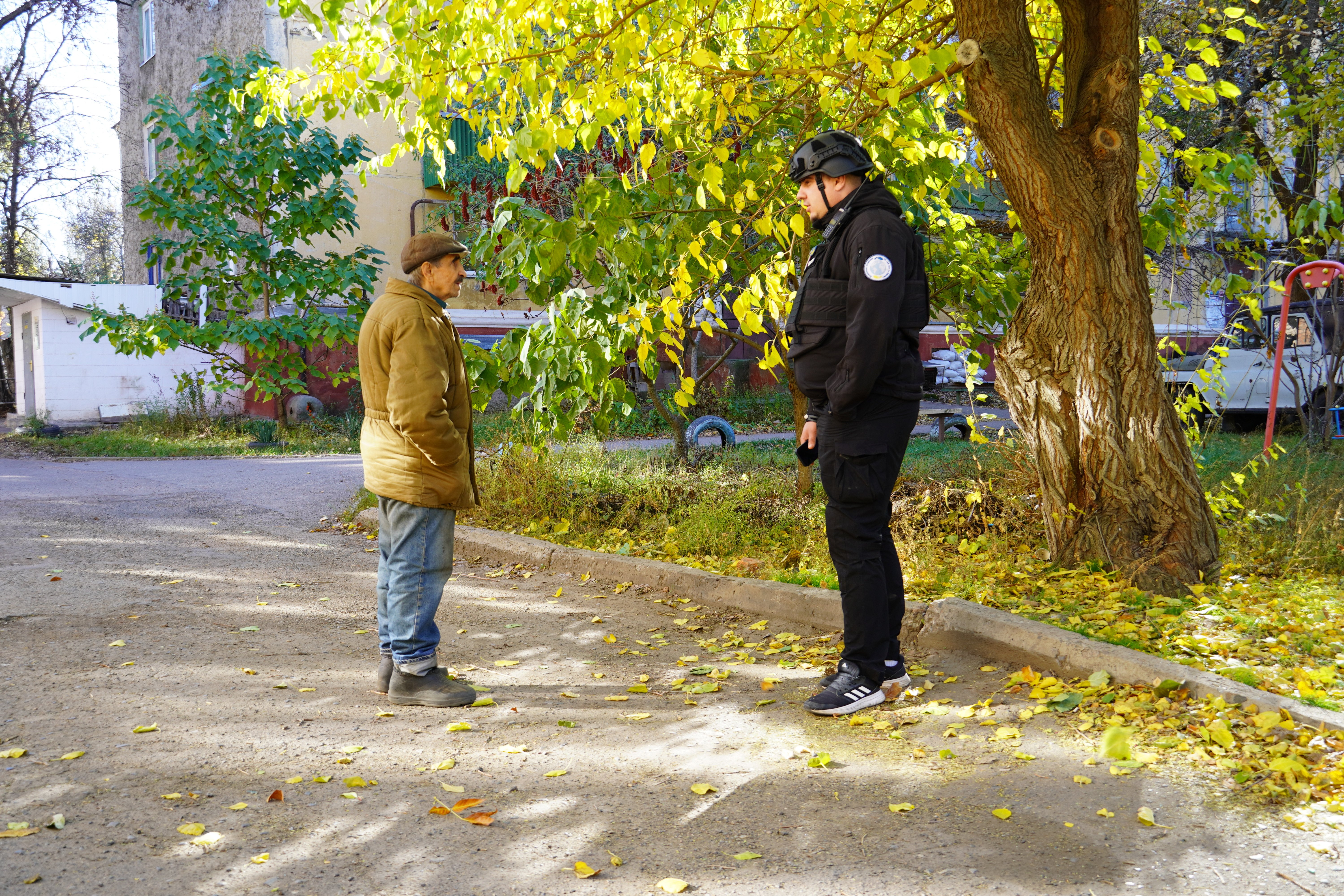
Continuing down the road, passing through Sloviansk and arriving in Kramatorsk, it's clear that the city is preparing for the worst. Razor wire and dragon’s teeth are everywhere. Explosions from artillery, drones, and glide bombs are constant. We first make a stop in an apartment courtyard. Yevhen speaks with a resident of Kramatorsk who hasn't yet left, and hands him an evacuation flyer.
The humanitarian situation in the Donetsk region in Ukrainian-controlled parts is worsening as winter looms. According to Filashkin, 60% of Donetsk will not have heating this winter. On the night of November 8-9, Russian forces damaged a natural gas pipeline serving the area, leaving 55,000 customers and boiler houses without gas. These numbers will change, as subzero temperatures bring further Russian attacks on the Ukrainian energy grid in frontline and rear areas alike.
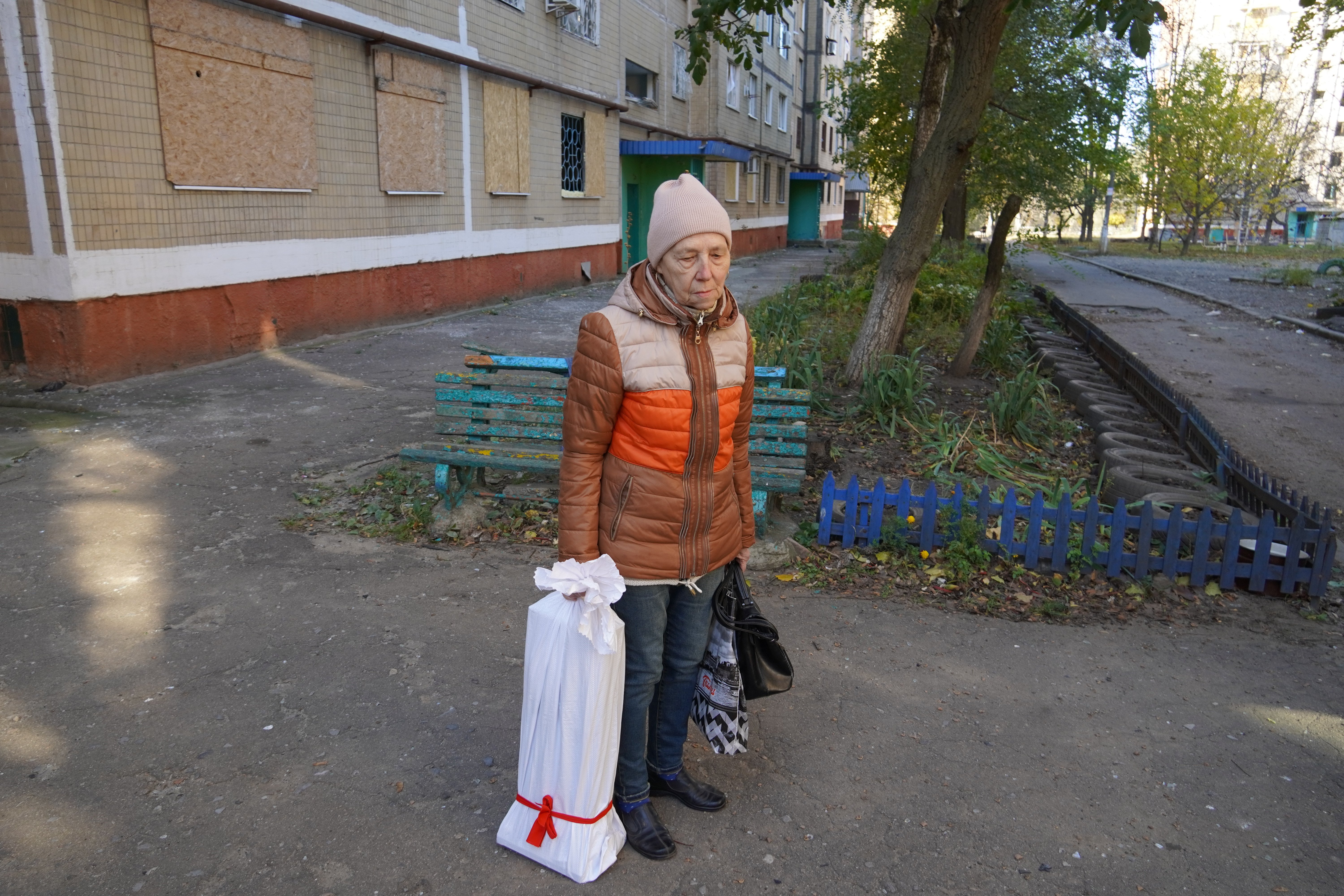
We head to our first location, where an elderly woman and middle-aged man are awaiting evacuation. The windows on the apartment building are shattered and boarded, and we ask a group of passersby for directions.
Yevhen explains to me the difference in sound between incoming Russian artillery and outgoing Ukrainian artillery, which explodes every few seconds near the city. The blast of Ukrainian rounds is louder and makes a distinct sound compared to exploding Russian rounds.
I ask the evacuee if I can take her photo, and she agrees.
We stop at transit and aid points in Kramatorsk and Sloviansk, where other evacuees, including an elderly woman with limited mobility, are waiting to be taken to the relative safety of Kharkiv. It’s around a two-hour drive back. In Kharkiv city, the evacuation point is crowded with displaced persons.
Yevhen later advises me to not take identifiable photos of these areas, as they’re targets for Russian strikes with glide bombs.
When the fog lifts
I meet the volunteers in Kharkiv early Monday for another evacuation run. It’s still foggy as we leave the city, passing kilometers of anti-drone netting and freshly dug defensive positions. By the time we reach Izyum, we can see where a glide bomb has left a fresh crater in the road. Yevhen says that fog and low visibility hinder Russian drone operations, hopefully allowing for safer evacuations.
The fog clears by the time we arrive in the city.
Driving past Sloviansk and into Kramatorsk, we arrive at a house in a suburban area. Here, there are no drone nets. Oleh, a volunteer, pounds on the front gate of the house. Nobody is home.
In the distance, we spot a drone hovering over the city. We’re not sure if it's Ukrainian or Russian. A few minutes later, while waiting for the residents, our detectors start picking up the video feed from an incoming Russian drone.
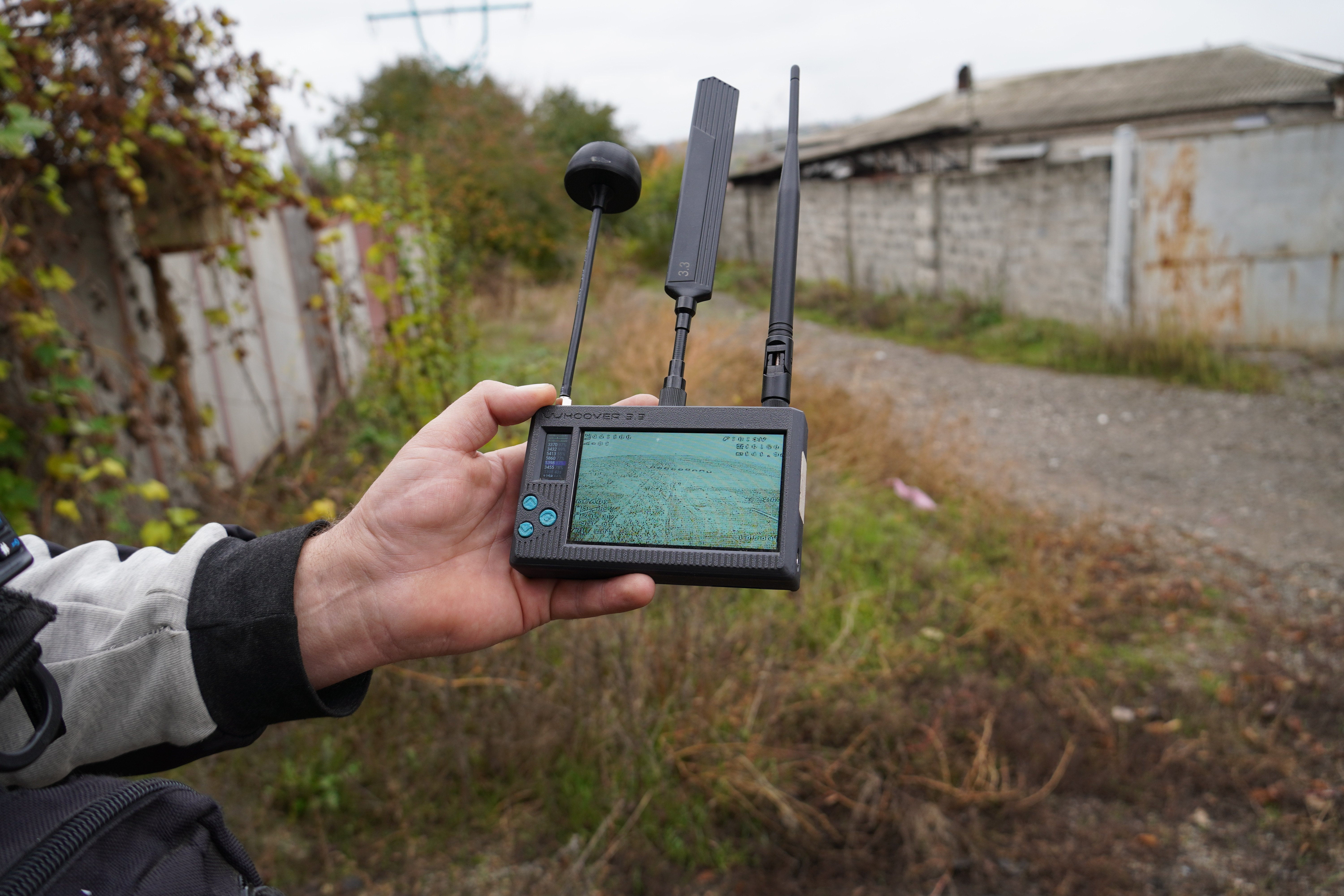
We go quiet. Then we hear it, the dreadful hum of an FPV, faint at first. The sound can’t be mistaken for anything else. As the motors grow louder, we duck under nearby trees to avoid detection.
I spot the drone incoming, a little quadcopter flying above our heads. The drone passes over us for what feels like an eternity. I stare at it as it passes over, then changes direction and flies back near our location.
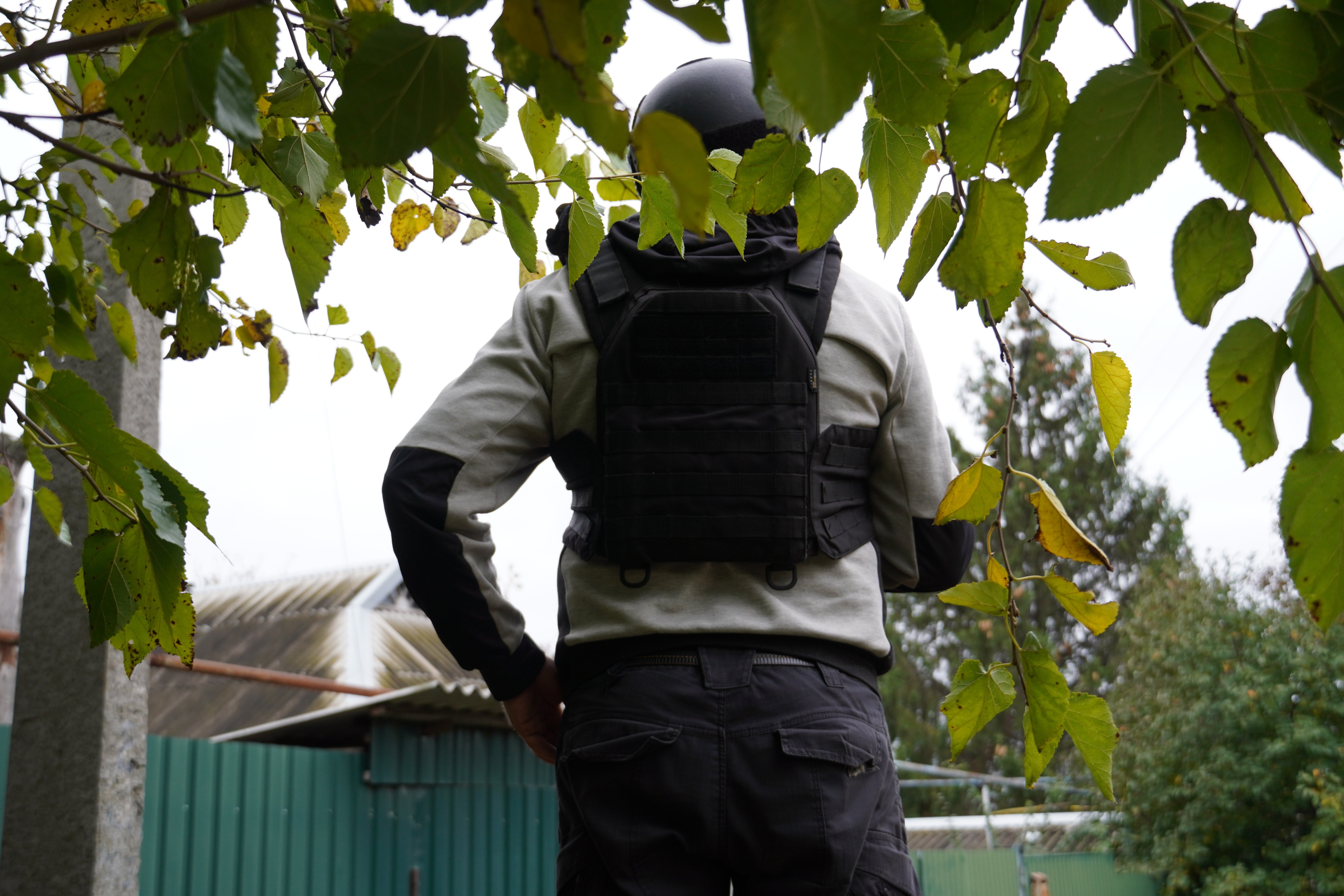
We leave for another neighborhood in Kramatorsk, where the family is waiting for us. On the way, we cross a bridge damaged by Russian strikes that destroyed nearby buildings. After picking up the family, we drive to Sloviansk and stop at the same evacuation point we visited on Friday.
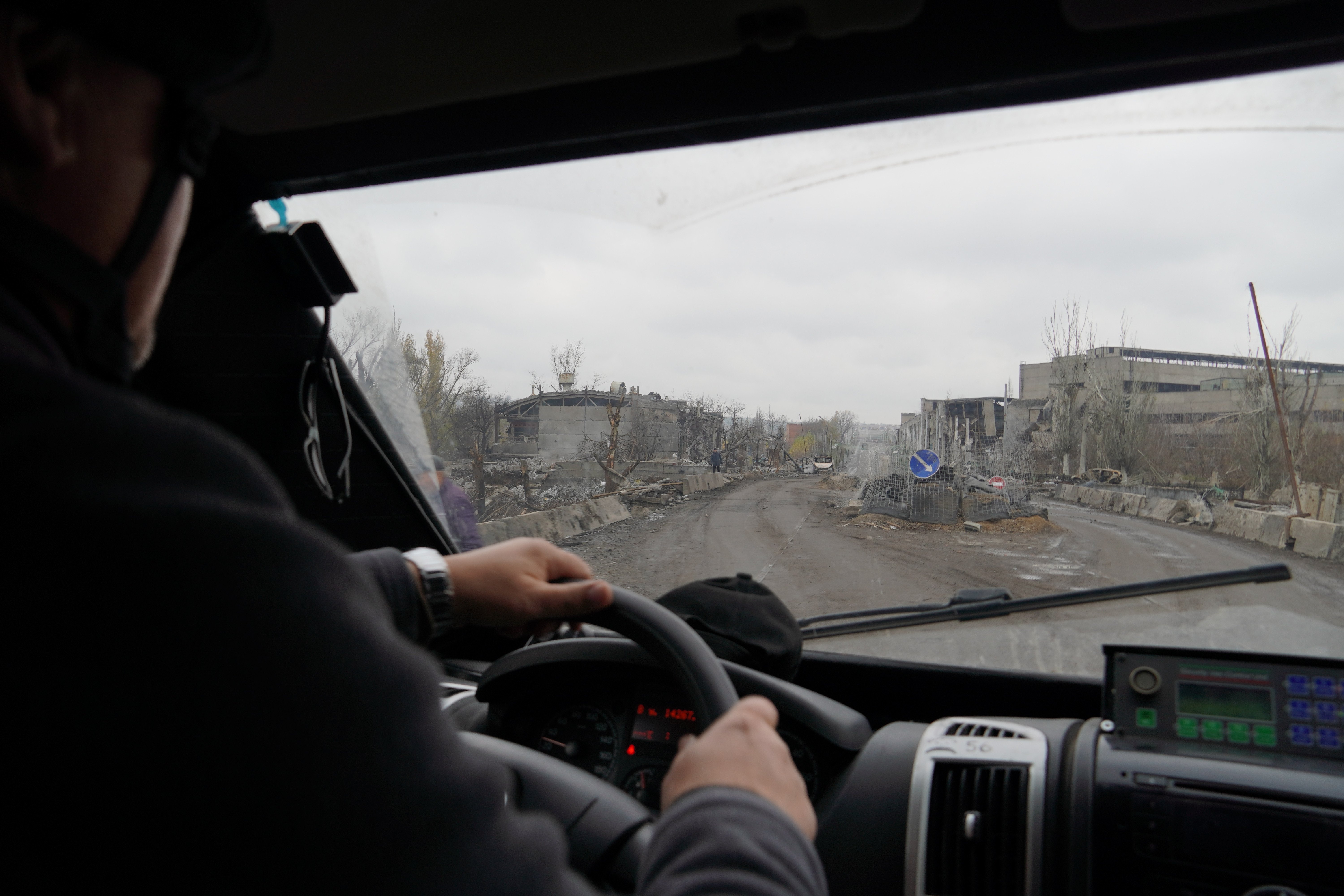
In the outskirts of Sloviansk, we attempt to locate our final address of the day.
Internet connection is unstable, and we ask residents for directions. After locating the address, we pick up Roman. His dog barks at our van as we arrive. He’s leaving his home, and his family member who’s staying behind cries as he leaves.
As we’re leaving, he shows me a photo of Russian rocket artillery, a Smerch rocket that embedded itself in the ground near his home.
Leaving Sloviansk, we get back on the road to Kharkiv. The road conditions are rough, and Roman is carsick. In Kharkiv city, the evacuation point is once again crowded with dozens of displaced civilians carrying their lives in a few bags.
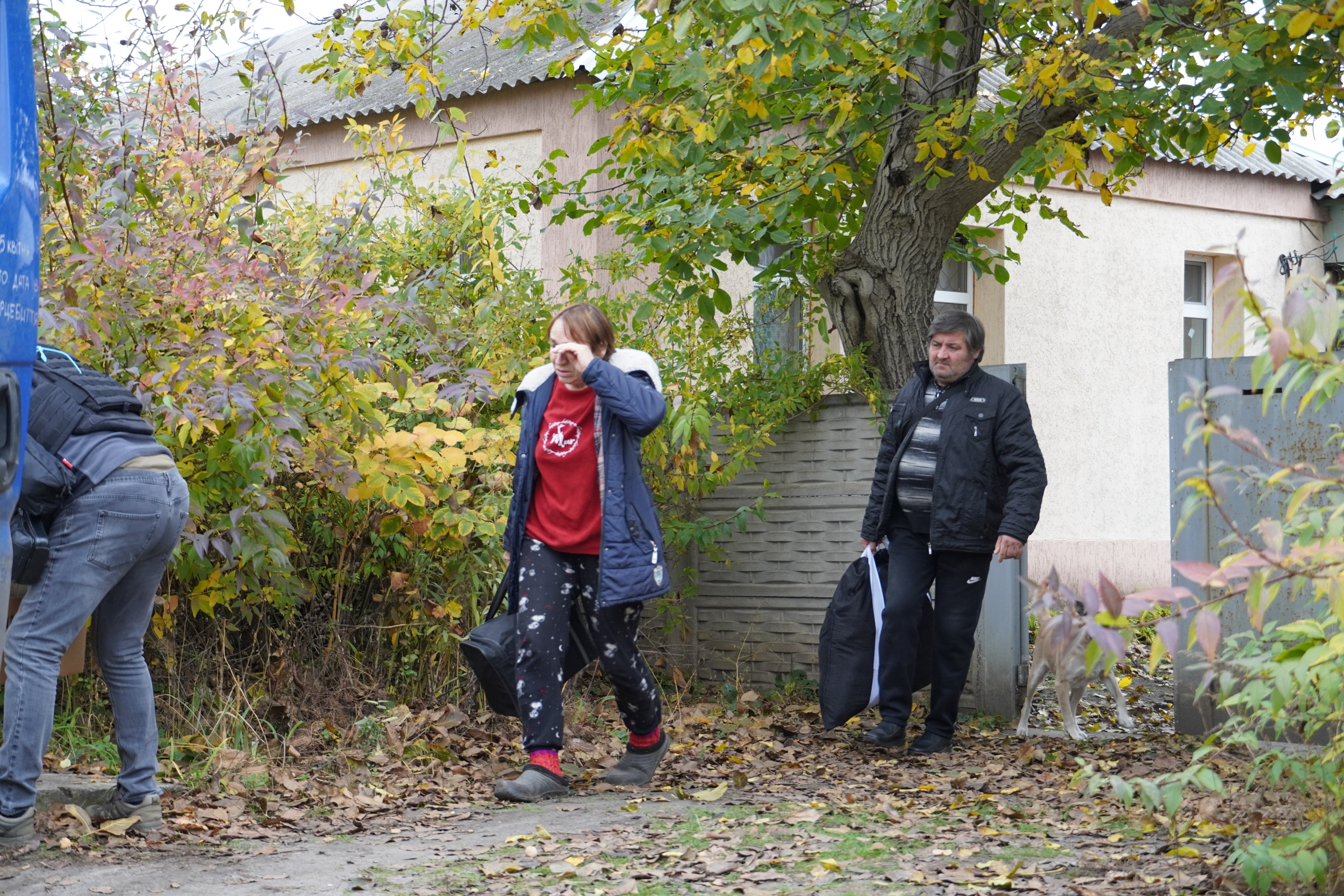
For the displaced, leaving home where they have lived for decades is a terrible, life-altering event. Forced to abandon their homes due to Russian aggression, the doors of an evacuation van shutting marks the end of a world they once knew and called home.
For the volunteers, these dangerous trips are another day on the job. The day after tomorrow, they’ll head back through the drone corridors to pull more civilians out of the danger of the ever-expanding red zone.
Discuss this article: