- Category
- War in Ukraine
Russia Breaks New Records in Losing Troops and Can’t Replace Them Fast Enough
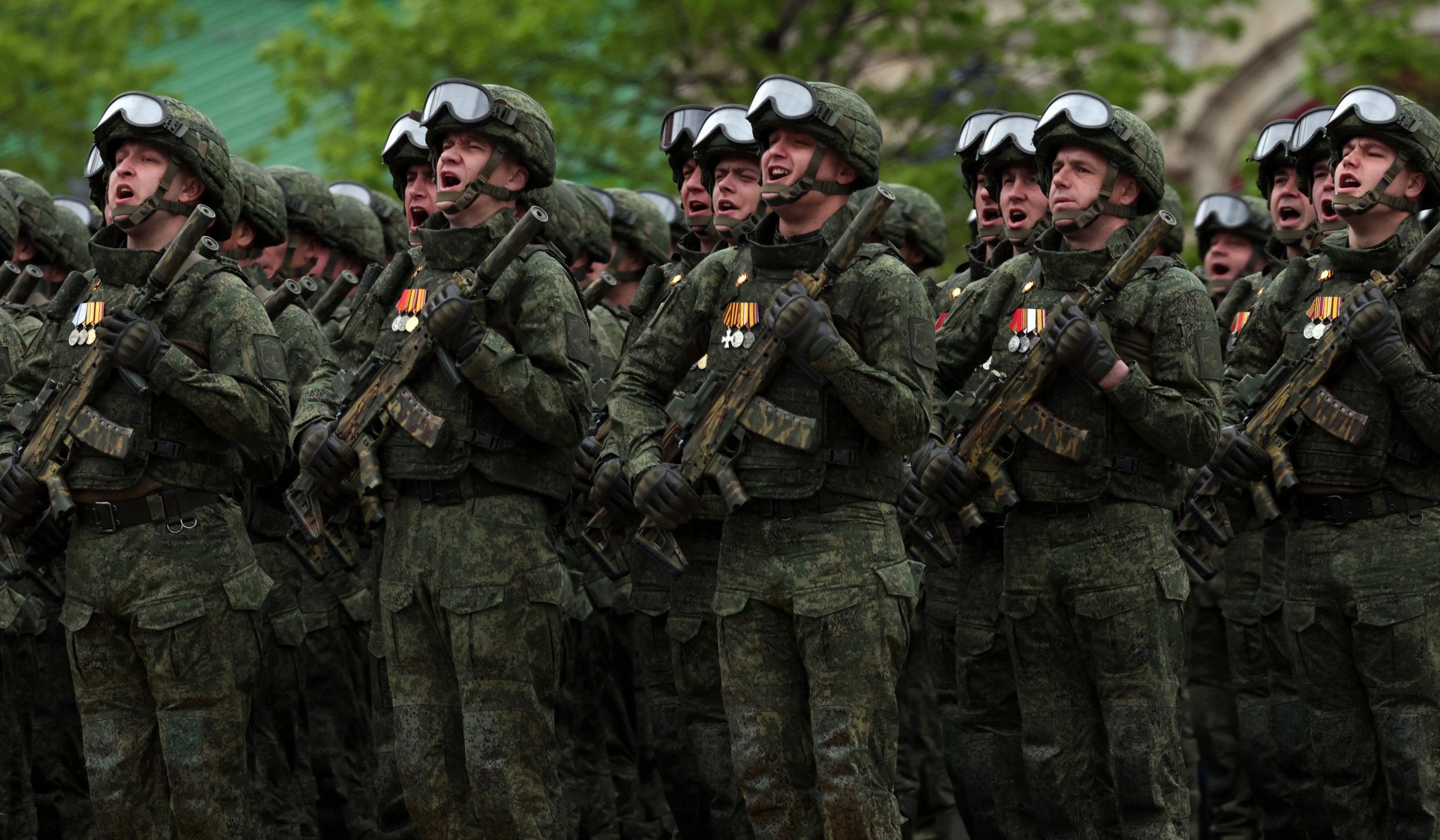
Russia’s spring offensive campaign is breaking against Ukrainian defenses. Russia’s armies are failing to show visible battlefield gains, and the problem runs even deeper: for the first time, the Kremlin has been systematically losing more troops than it can recruit.
 Prefer U24 Media on Google
- Authors

-29a1a43aba23f9bb779a1ac8b98d2121.jpeg "Photo of Illia Kabachynskyi")
Russian forces lost just under 130,000 troops killed and wounded during the first four months of 2026, according to statistics from Russia’s Defense Ministry. The two spring months—March and April—set grim records, with more than 70,000 Russian soldiers no longer able to return to the battlefield. If the pace continues through May, total Russian losses for the spring alone will exceed 100,000 killed and wounded.
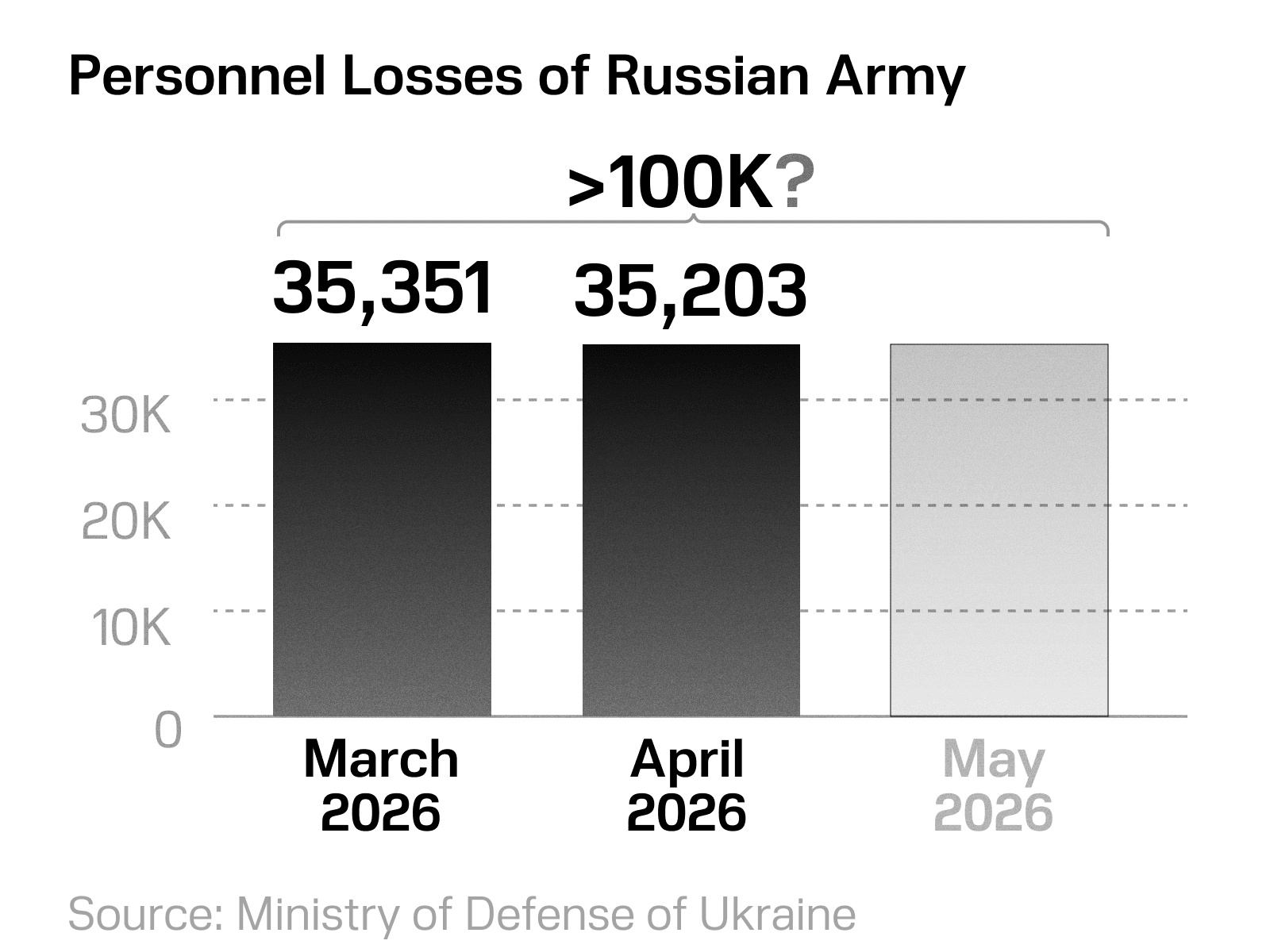
The goal for Ukraine is to increase this figure to 50,000 Russian troops killed and wounded every month. At that level, Russian forces would suffer devastating losses so quickly that the very idea of continuing the war would begin to look irrational.
Another statistic illustrates this best: in April 2026, the Russian army advanced just 53 square kilometers in the Donetsk region while losing 25,000 troops on the same axis. Moscow effectively needs 470 soldiers to capture a single square kilometer.
It has long been assumed that the Russian leader, Vladimir Putin, is prepared to accept such losses because Russia still possesses the necessary mobilization resources—a country of more than 140 million people and tens of millions of men. There is also historical precedent: since Stalin’s era, Moscow has often favored mass assaults over calculated operations, treating human lives as expendable. But the reality of recent months looks different: Russia is simply failing to recruit replacements quickly enough.
Negative recruitment
In March alone, three different sources independently reported that the Russian army was no longer able to recruit troops at previous levels.
Dmitry Medvedev, the Deputy Chairman of the Russian Security Council, said that around 27,000 people sign contracts with the Russian military each month.
In March, Ukrainian President Volodymyr Zelenskyy also stated that Ukrainian intelligence shows that Russia had managed to recruit around 80,000 troops during the first quarter of the year.
German researcher Janis Kluge reported that recruitment slowed by approximately 20% in the first quarter: Russia was only able to recruit around 800–1,000 people per day, compared to 1,000–1,200 a year earlier. As a result, total recruitment for the quarter may have amounted to only around 70,000 troops.
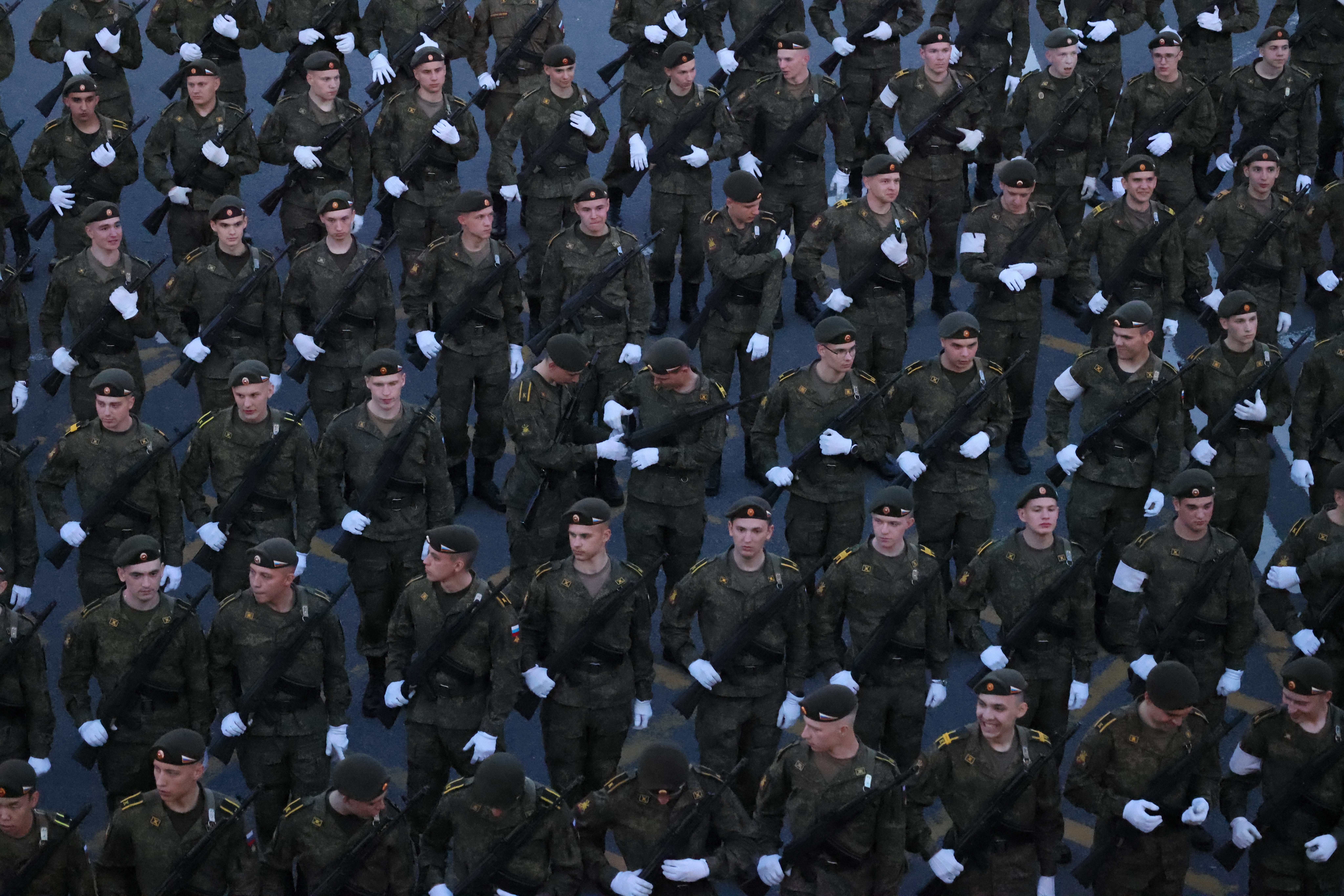
These figures are significant because they come from three different and unrelated sources, including official Russian statements. All of them point to the same conclusion: Russia is unable to recruit more troops than Ukraine is eliminating on the battlefield. Or even match that number.
The monthly deficit is estimated at roughly 10–15%. During the first quarter, Ukraine destroyed more than 90,000 Russian troops, while Russia managed to recruit only 70,000–80,000 according to these estimates.
Neither rising financial incentives nor propaganda appears capable of reversing the trend. In some Russian regions, signing bonuses for military contracts already amount to tens of thousands of dollars, yet fewer people are willing to go to war. Further increases in payments would place even greater strain on Russia’s already pressured federal and regional budgets, which may already be spending up to 10% of total military expenditures on recruitment alone.
Meanwhile, propaganda about the “special military operation” and the Russian army’s rapid advances collides with reality: the average survival time for Russian soldiers is now reportedly less than two months, Ukrainian drones strike military targets inside Russia at depths of up to 2,000 kilometers, and Moscow can no longer even hold a full-scale May 9 military parade.
If Ukraine succeeds in consistently destroying 50,000 Russian troops per month, the real losses may be even higher. Casualties from infantry combat or artillery strikes cannot always be fully confirmed, meaning the true number could be 10–20% greater. In that scenario, the Kremlin would simply lose the ability to continue offensive operations and would eventually be forced to come to the negotiating table.
The impact of Middle Strike drones
Drones remain the primary strike platform responsible for destroying Russian troops, accounting for roughly 90% of the reported results. However, another category of UAVs that was previously used less intensively is now making an increasing impact: Middle Strike drones.
These drones, capable of striking targets at ranges of 200–300 kilometers, are now being deployed on a large scale by the Ukrainian military and are inflicting tangible losses on Russian forces.
The strikes target both logistics and ammunition depots. Equipment is destroyed, and roads located hundreds of kilometers behind the front are no longer safe. Ukrainian drones are reaching as far as Mariupol, where they strike Russian military transport.
Ammunition depots, weapons warehouses, and drone storage facilities are being destroyed. Reports of officer headquarters being hit across the temporarily occupied Ukrainian territories continue to emerge.
This class of drones is turning virtually all occupied Ukrainian territory into unsafe ground for the Russian military. It complicates planning, disrupts logistics, and slows assault operations. And it is also contributing directly to record Russian losses.
Discuss this article:




-72b63a4e0c8c475ad81fe3eed3f63729.jpeg "Photo of Cyril Barabaltchouk")
-37d0c4e589b794d453938c254fb3d00d.png "Comoros-flagged tanker KHORYV, Dnipro city, Ukraine, 2021.")