- Category
- War in Ukraine
Russia’s War on Grain Ships Could Raise Bread Prices Thousands of Miles Away
Russian missiles that hit a grain ship near Odesa did not stop at Ukraine’s coastline. Their impact will be felt thousands of kilometers away, as seen in bread prices in Egypt and the availability of flour in Somalia.
 Prefer U24 Media on Google
- Authors

-29a1a43aba23f9bb779a1ac8b98d2121.jpeg "Photo of Illia Kabachynskyi")
Not a single vessel entered the ports of Greater Odesa—Odesa, Chornomorsk, and Pivdennyi—on July 22, 2026, for the first time in nearly three years.
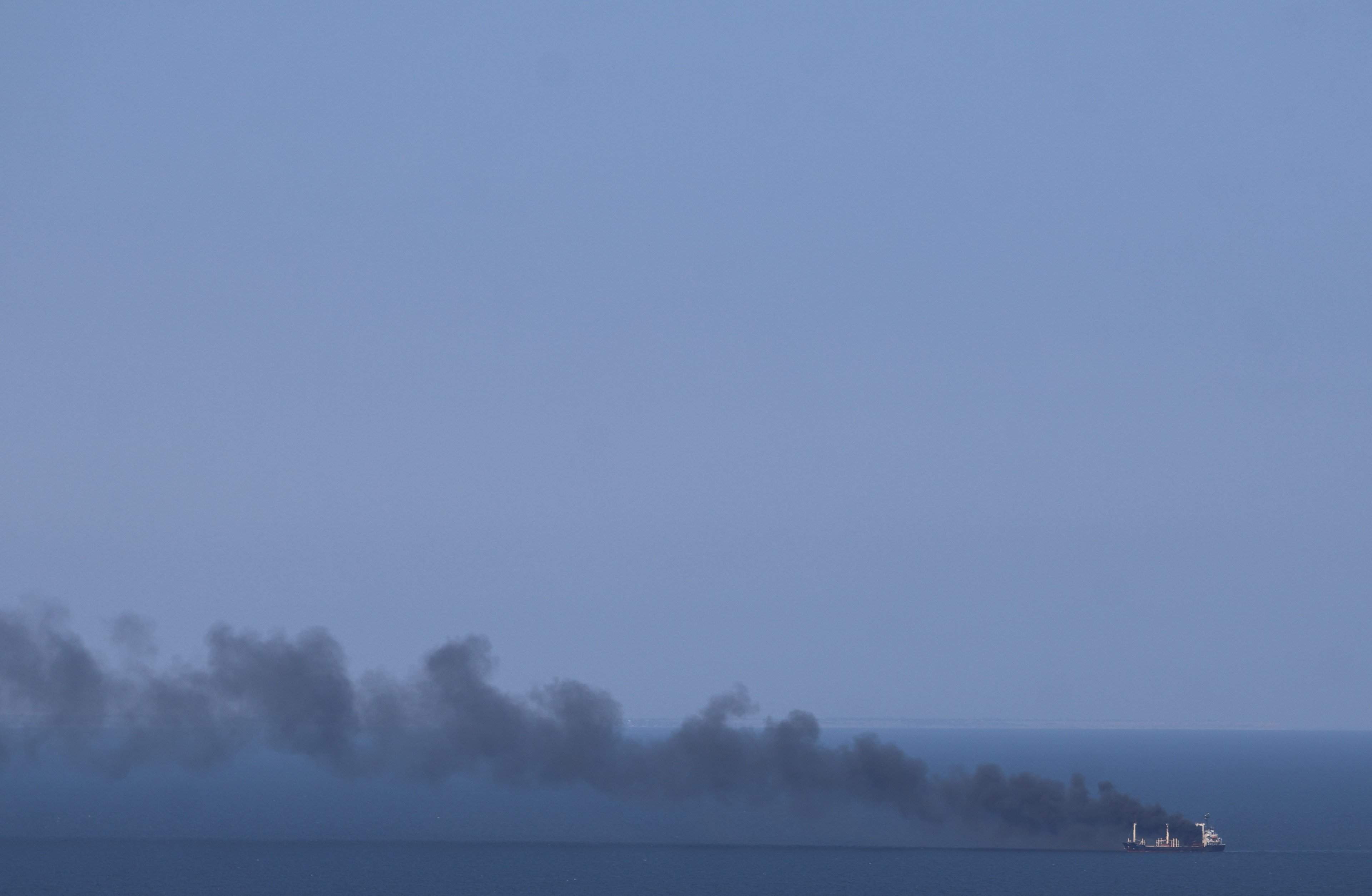
A week earlier, Russia struck the Turkish bulk carrier Golden Leo, carrying Ukrainian corn, with three Kh-59/Kh-69 cruise missiles. Ten people were killed, and a week later, the damaged ship capsized and sank in Odesa Bay along with its cargo.
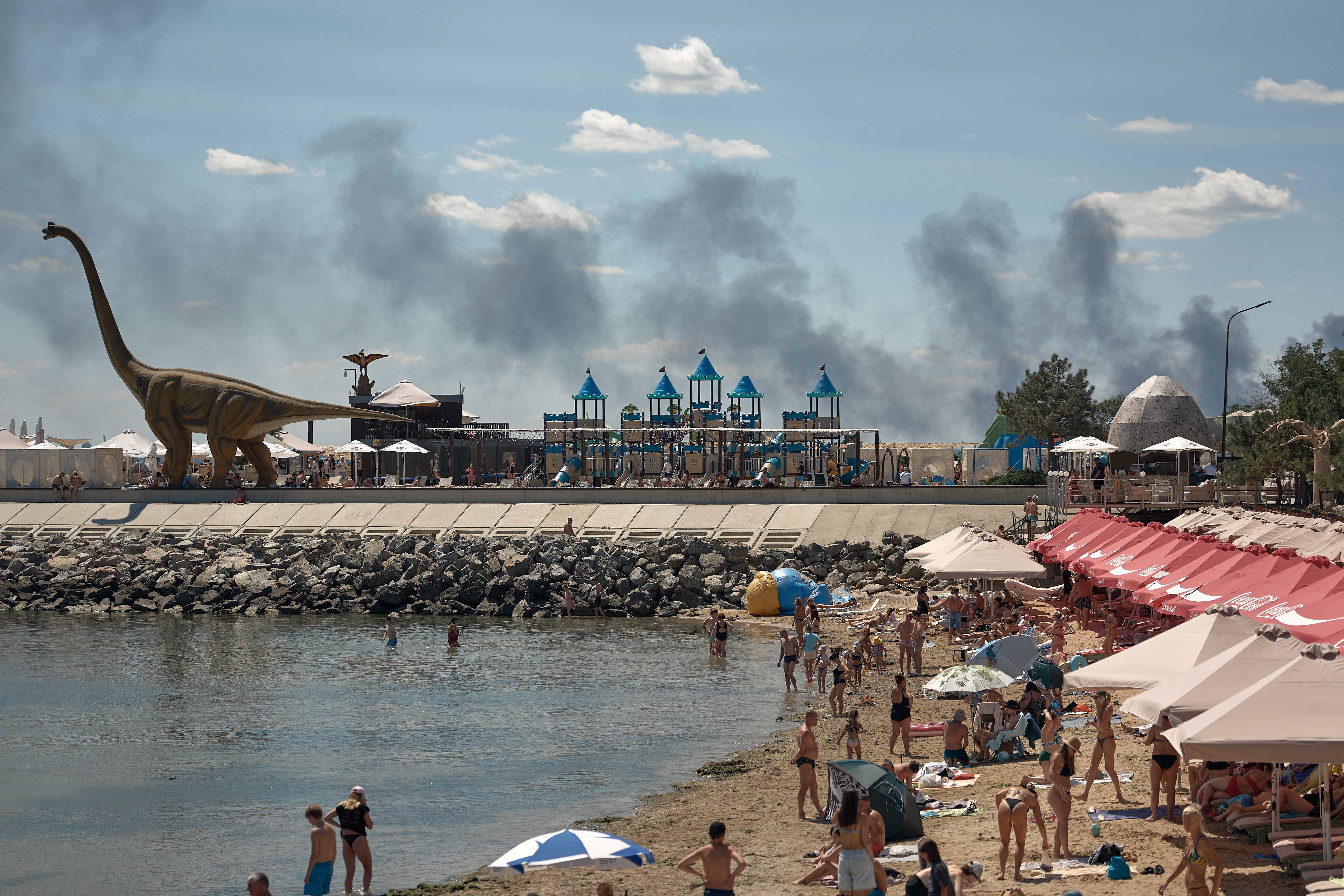
Residents watching from Odesa’s beaches witnessed the incident unfold almost in real time, as it happened close to shore. Such attacks have become part of a systematic Russian military campaign whose consequences will be felt not only in Odesa but also in Cairo, Mogadishu, and Accra, where millions of people depend on grain shipped through these very ports.
Russia escalates attacks against Odesa’s ports
During the first two weeks of July 2026, Russia launched at least 23 strikes against the port infrastructure of Greater Odesa and attacked 17 civilian vessels. By some estimates, a total of 28 civilian ships have been damaged since the attacks began, with at least 21 people killed. In June and July alone, 16 strikes targeted Odesa’s food infrastructure, about 80% of them carried out with Banderol guided aerial bombs.
On July 19, three cruise missiles struck the Golden Leo, a Turkish-operated bulk carrier sailing under the flag of Guinea-Bissau and carrying a cargo of Ukrainian corn.
Seventeen people were on board, including Syrian and Indian crew members, as well as a harbor pilot. Ten people could not be saved, and the bodies of all those killed were recovered only during the subsequent search-and-rescue operation. The damaged vessel remained afloat for another week before capsizing and sinking on the evening of July 26, taking with it a cargo of grain that never reached its destination.
Russian strikes on merchant ships in Odesa ports and the Black Sea region:
July 13: Russia struck a Togo-flagged cargo vessel unloading mineral fertilizers in the Odesa region, killing three crew members and injuring five others.
July 14: Russia attacked two civilian merchant ships in the Black Sea flying the flags of Tanzania and Liberia, killing the captain of one vessel and injuring several crew members.
July 15: Russia attacked a civilian cargo vessel flying the flag of the Marshall Islands with a drone, sparking a fire on board and killing two people.
July 18: Russia struck another commercial vessel sailing under the flag of Antigua and Barbuda, killing one person.
July 19: Russia struck the Turkish-owned cargo vessel Golden Leo, killing 10 crew members and a Ukrainian pilot.
July 25: Russia twice attacked a civilian cargo vessel sailing under the flag of Palau that was transporting nearly 2,800 metric tons of corn from the Odesa region, sparking a fire on board.
August 6: Russia struck the civilian cargo vessel MERA QUEEN in the Black Sea, killing a Ukrainian sailor and injuring three others.
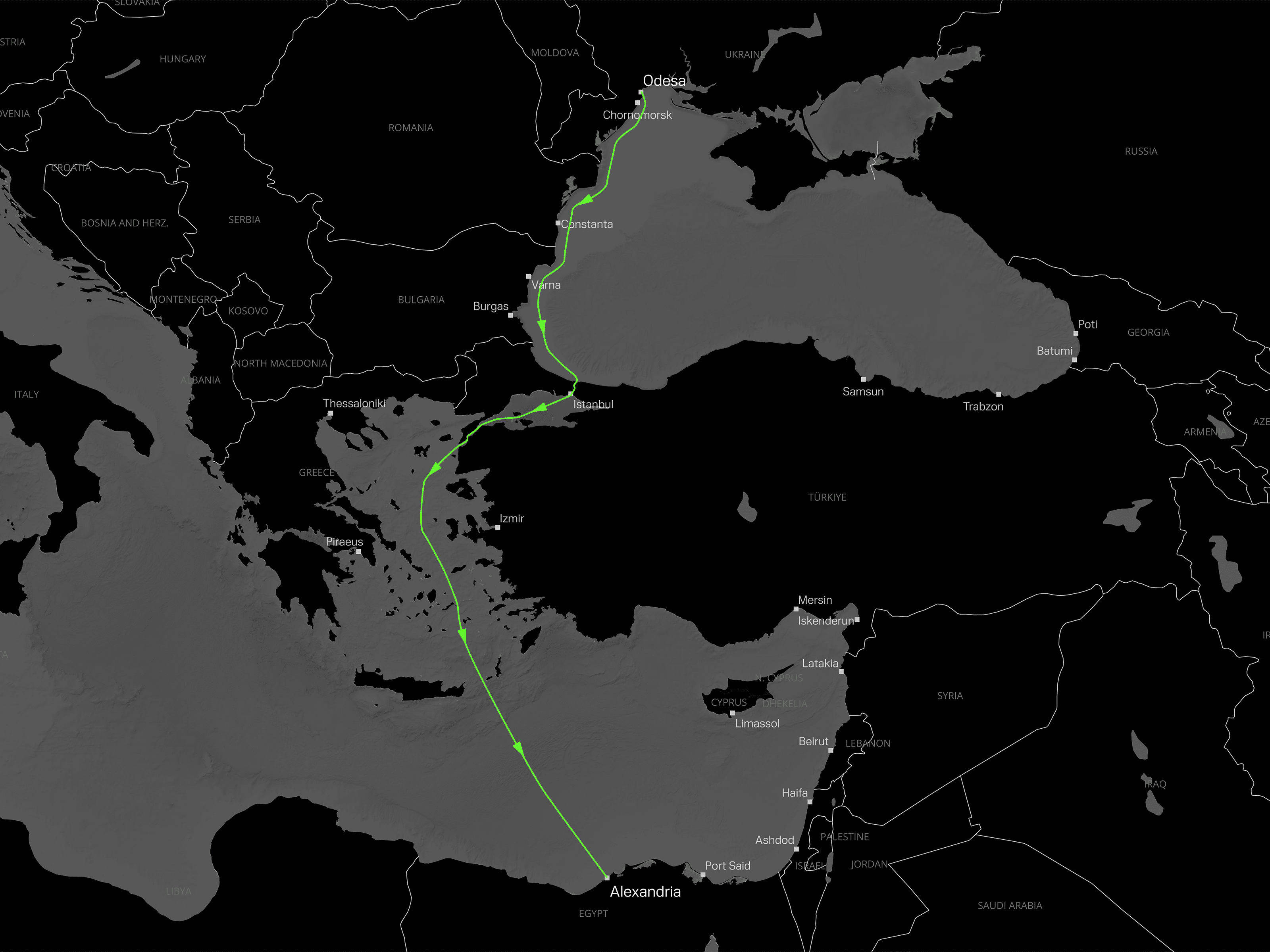
The attacks prompted shipowners to turn their vessels around before reaching Ukrainian ports. As one industry publication put it, “money is no longer enough to motivate them”—the insurance risks and the likelihood of losing both vessel and crew now outweigh the commercial benefits of making the voyage. The consequences extend far beyond Odesa itself, affecting insurance premiums and freight rates across the entire Black Sea shipping route.
Over the two and a half years since Ukraine’s maritime corridor began operating, more than 8,000 vessels have used it—an average of nearly nine port calls per day. Yet on July 22, not a single ship entered the ports of Greater Odesa, despite the sharp rise in freight rates for voyages to Ukrainian ports.
Why Ukraine’s grain exports matter for global food security
The ports of the Odesa region handle 89% of Ukraine’s grain, oilseed, and processed agricultural exports. During the 2026/27 marketing year, Ukraine is expected to export about 67 million metric tons of agricultural products. Without Black Sea ports, it is physically impossible to move such volumes out of the country, as rail and road transport simply lack the necessary capacity.
A significant share of Ukraine’s agricultural exports is destined for African countries and other regions facing grain shortages or unable to meet domestic demand through their own production. As one of the world’s largest agricultural producers, Ukraine plays a crucial role in filling that gap.
Particular mention should be made of the Grain from Ukraine initiative and Ukraine’s cooperation with the UN World Food Programme.
Since 2022, Ukraine has delivered at least 170,000 metric tons of wheat to some of the world’s poorest countries, including Ethiopia, Somalia, Yemen, and Kenya. Overall, since the start of Russia’s full-scale invasion, more than 324,000 metric tons of Ukrainian wheat, flour, and sunflower oil have reached 19 countries worldwide. These shipments constitute humanitarian assistance for the world’s poorest and most food-insecure nations, making them especially vulnerable to any delay or loss of cargo, as recipient countries often have no alternative reserves to compensate for disrupted deliveries.
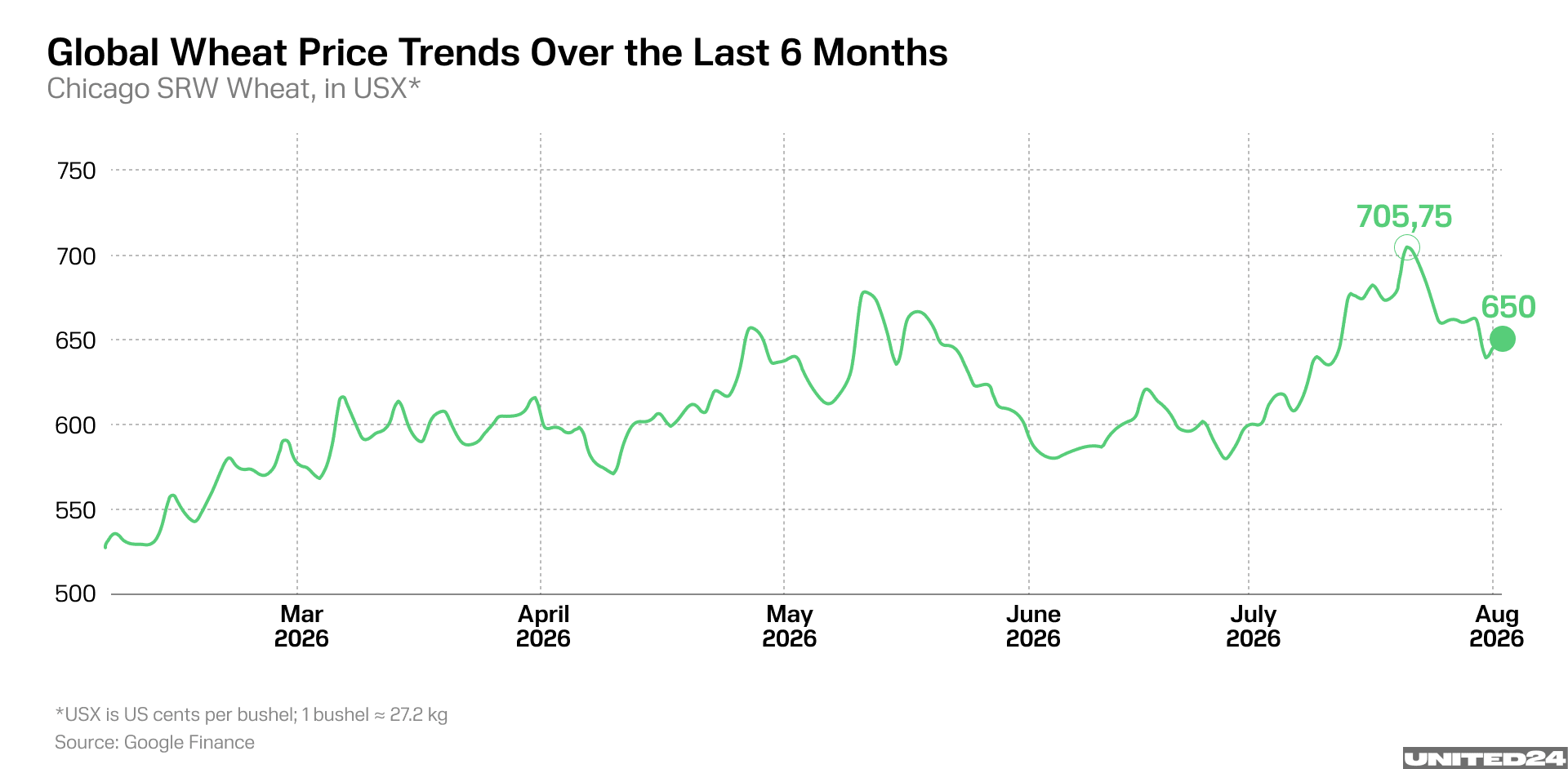
In other words, when Russia attacks vessels in Odesa Bay, it is not merely disrupting Ukraine’s exports—it is increasing the risk of a genuine global food crisis. Wheat prices on international commodity markets respond to instability across the entire region, not just to the origin of individual cargoes. This global price effect falls hardest on countries that already spend a disproportionately large share of their budgets on food imports.
How Russia’s port attacks increase global hunger
Estimates used by the UN World Food Programme suggest that a grain shipment of approximately 28,000 to 37,000 metric tons—the typical cargo of a medium-sized bulk carrier—can provide enough flour to feed roughly 4 to 4.5 million people for one month. Repeated attacks on grain shipping, therefore, threaten humanitarian food supplies to countries already facing acute food insecurity.
Both the Golden Leo and the Palau-flagged vessel mentioned above carried smaller cargoes than that benchmark, but the underlying principle remains the same: every ton of grain that sinks to the bottom of Odesa Bay or is delayed offshore because of missile threats represents bread or flour that was meant to reach a specific port, a specific country, and ultimately a specific family.
Beyond the direct loss of cargo, there is another consequence: delay. A vessel forced to wait offshore for weeks while its owners assess the risks of entering port is carrying food that physically exists, yet fails to reach those who need it when they need it. For countries with seasonal harvest cycles and limited strategic reserves, even a delay of several weeks can mean the difference between stable bread prices and another surge in flour prices in local markets.
Behind every statistic about tons of grain are real people—not only those waiting for bread in Mogadishu or Cairo, but also the seafarers transporting that cargo across the Black Sea. The ten people killed aboard the Golden Leo were citizens of Syria and India simply doing their jobs, transporting Ukrainian corn aboard a civilian vessel operated by a Turkish company and sailing under the flag of Guinea-Bissau. Their deaths are a reminder that attacks on “grain infrastructure” are not an abstract economic concept—they cost human lives.
Ukrainian farmers are also among those bearing the losses. The inability to export grain translates directly into financial hardship. Agriculture operates in production cycles, and farmers depend on the successful completion of each one. If they cannot sell their harvest on international markets, they lose the money they invested in producing it.
That, in turn, may force them to reduce next year’s planting, prolonging elevated global food prices in future seasons. This is already becoming a reality: farmers are unable to export their harvests, while domestic demand is far too limited to absorb the surplus. The long-term consequences are likely to be significant.
Russia’s attacks on grain exports affect countries worldwide
Two dozen Russian strikes on port infrastructure and 17 attacks on civilian vessels in just two weeks of July demonstrate that this is not a series of isolated incidents but a systematic campaign.
Russia’s war has consequences far beyond Ukraine—from the direct threat posed by drones to Romania, Poland, and Moldova, to hybrid operations across Europe, the emergence of a new bloc challenging global security, and the growing risk of a worldwide food crisis. If attacks on ports and civilian shipping continue at this pace, their consequences will extend far beyond Ukraine’s borders—in the form of more expensive bread in countries where families are already struggling to afford it.
Discuss this article:




-80134f2dc17b4a887d01513a1c7bc929.png "Illustration of Russian military infrastructure targeted by Ukrainian strikes in temporarily occupied eastern Ukraine. (Source: General Staff of the Armed Forces of Ukraine)")