- Category
- War in Ukraine
Seven Days Inside the Killzone
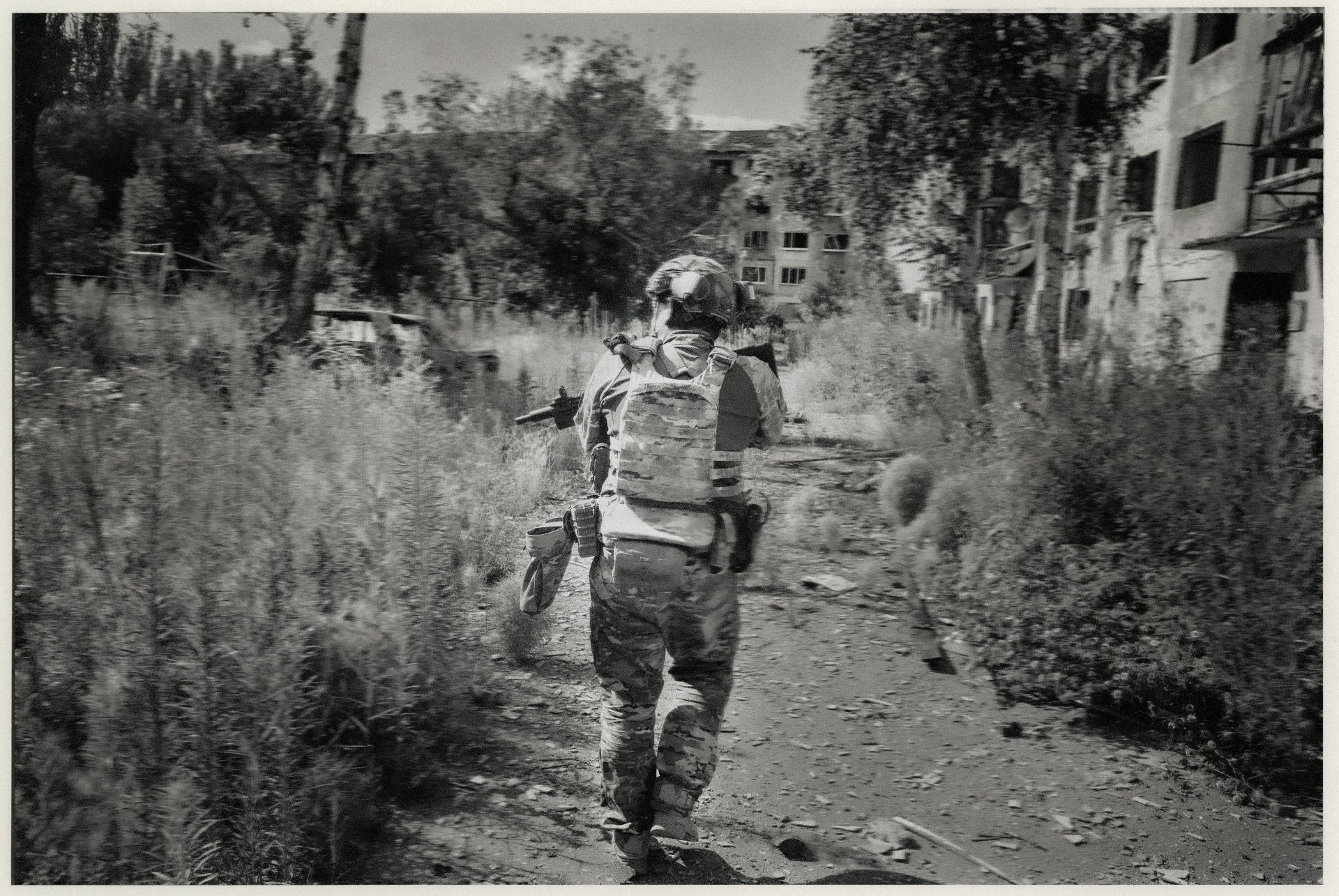
The skies above eastern Ukraine no longer belong to pilots or artillery, but to the constant hum of suicide drones. In the corridor guarding Donetsk’s last fortress cities—Slovyansk, Kramatorsk, Druzhkivka, and Kostiantynivka—Ukrainian defenders from the Rubizh Brigade and 1st Azov Corps rely on robotic resupply vehicles and underground shelters to survive what troops call the Kill Zone.
 Prefer U24 Media on Google
- Authors


Life on Borrowed Time
The soldiers using the command point have been here for weeks, and it is set up to permit that, with canned food and blankets lining the walls. The most active fighting is happening one town over, in Dobropillya; a settlement the unit rotates into regularly, at great peril.
We have now been in the infantry command post (CP) with Sparrow, the commander, and his team, for more than two hours. He has eyes on his men dotted all around the 15km radius and notifies us that a severely injured soldier is about to be brought here, his lower legs severed by a mine.
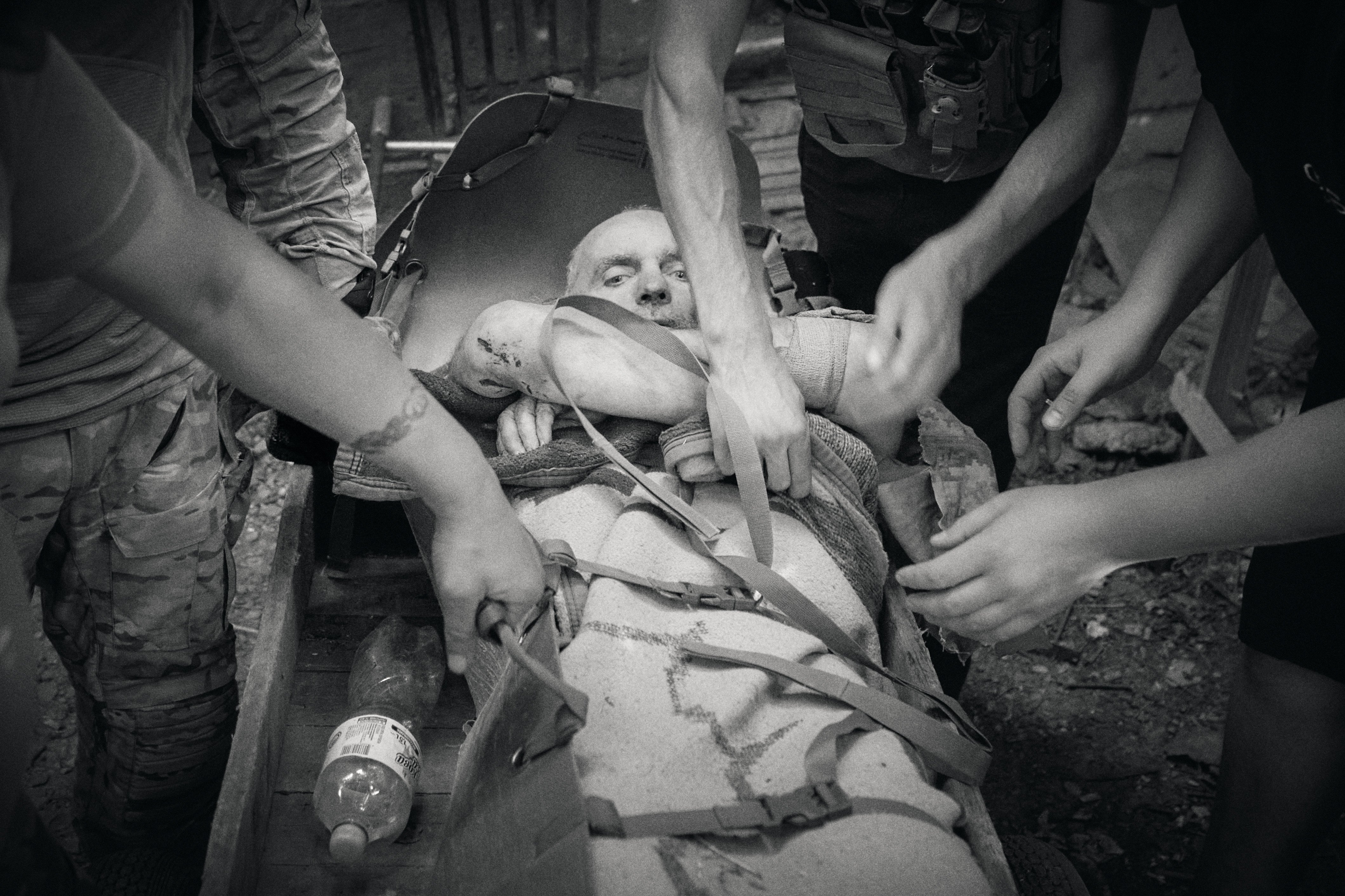
While we wait for his arrival, bracing for it, all I do is try to come to terms with this soldier's sudden, split-second, life-altering reality.
I begin to grasp that soldiers have, for the most part, given up on any line of reasoning. I am a civilian; the classifier defines me perfectly. As a soldier, the felt experience of living on borrowed time is fundamentally incomprehensible to me.
The towns and cities here could be thought of in the same terms; they, too, seem to be living on borrowed time.
Holding the Fortress Belt
The CP is beneath Bilozers'ke, a town in eastern Ukraine. To get here, we had to make our way through a barrage of whining drones and rubble already reclaimed by nature. Bilozers'ke is closest to Druzhkivka, part of the Donetsk "Fortress Belt.” A fortified urban defense line anchored by Slovyansk, Kramatorsk, Druzhkivka, and Kostiantynivka—it is Ukraine's primary barrier against the total fall of the region. To avoid costly frontal assaults on these cities, Russian forces attempted a two-pronged "horseshoe" encirclement: sweeping down from Lyman in the north and pushing up through Dobropillia in the south to cut off supply lines.
Ukraine’s Operation "Vivaldi" disrupted this plan in the north, liberating 277 square kilometers, pushing Russian troops back across the Chornyi Zherebets River, and neutralizing key Russian drone units like Rubikon. However, the southern pincer remains active. Russian small-unit infiltration groups continue to advance toward Dobropillia and enter the outskirts of Kostiantynivka, steadily dissolving the outer edges of the Fortress Belt into contested denial zones.
These zones are essentially places where nobody has won, places of juncture where the Ukrainian flag still flies over command posts, but is hammered by weaponry day and night: Russian forces aiming at total annihilation. When in one such zone, hearing a “dumb bomb” is a clear indicator. Commonly known as Glide munitions, and in Ukraine as KABs, these bombs are the definite and indisputable marker that you are in the East of Ukraine.
A high-explosive bomb with pop-out steel wings that can extend its reach from 40 to 90 kilometers, KABs are dropped by fighter jets, which is why you only see them near the frontline.
As Russian forces, after a nearly five-year campaign, inch closer and ramp up their attacks on the fortress belt cities, they clear their path by volleying KABs day and night.
The day before we arrived at the CP, we were in Slovyansk. Upon our team's arrival, we drive past the craters pockmarking the entire city. I am with Yarick, UNITED24 Media producer, alongside photojournalists Joshua Olley and Conall Kearney. One month after we leave, by August, Russian KAB strikes hit a record high of over 8,700 launches across the front, with precision glide bombs increasingly hammering central Sloviansk.
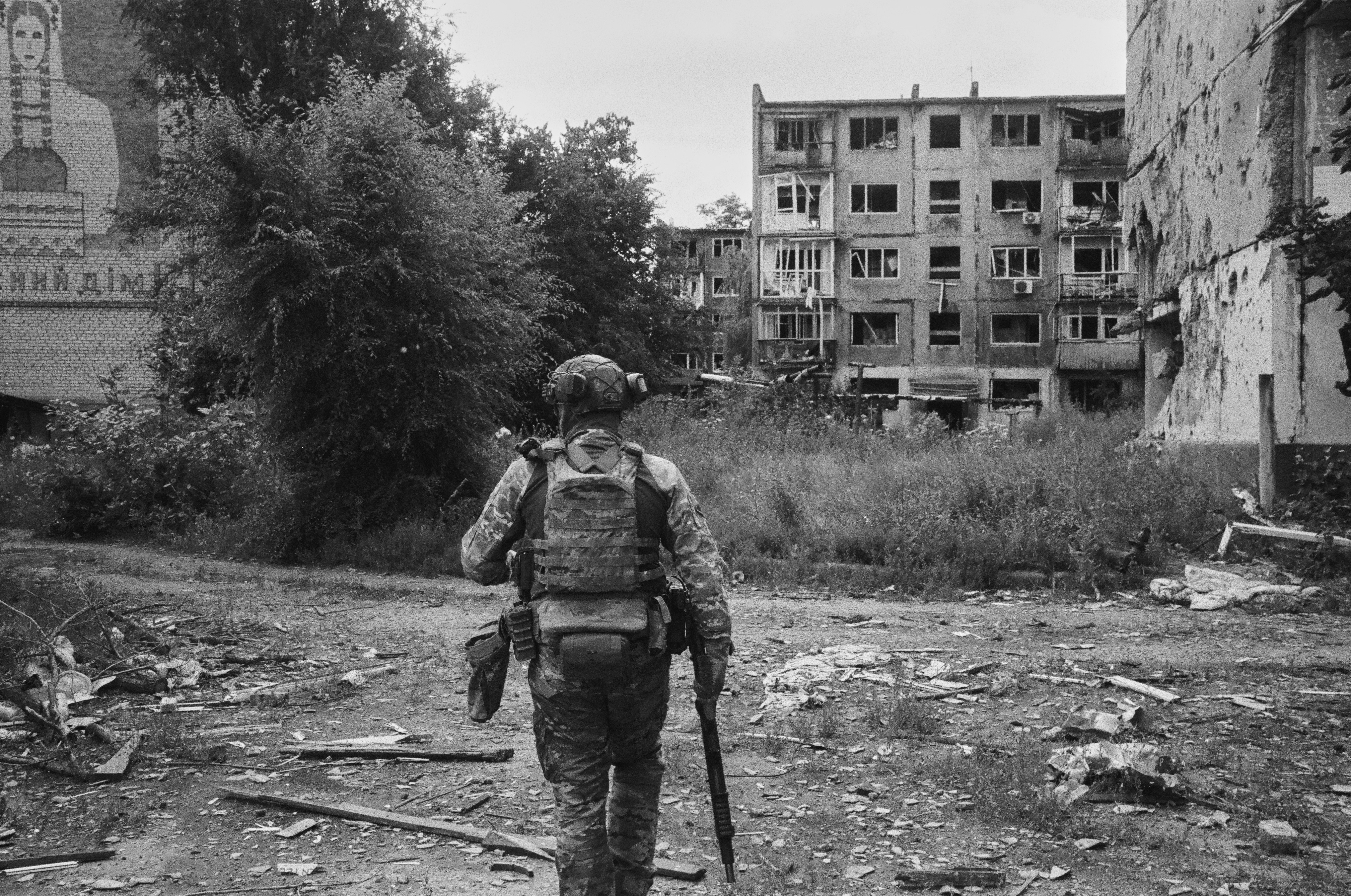
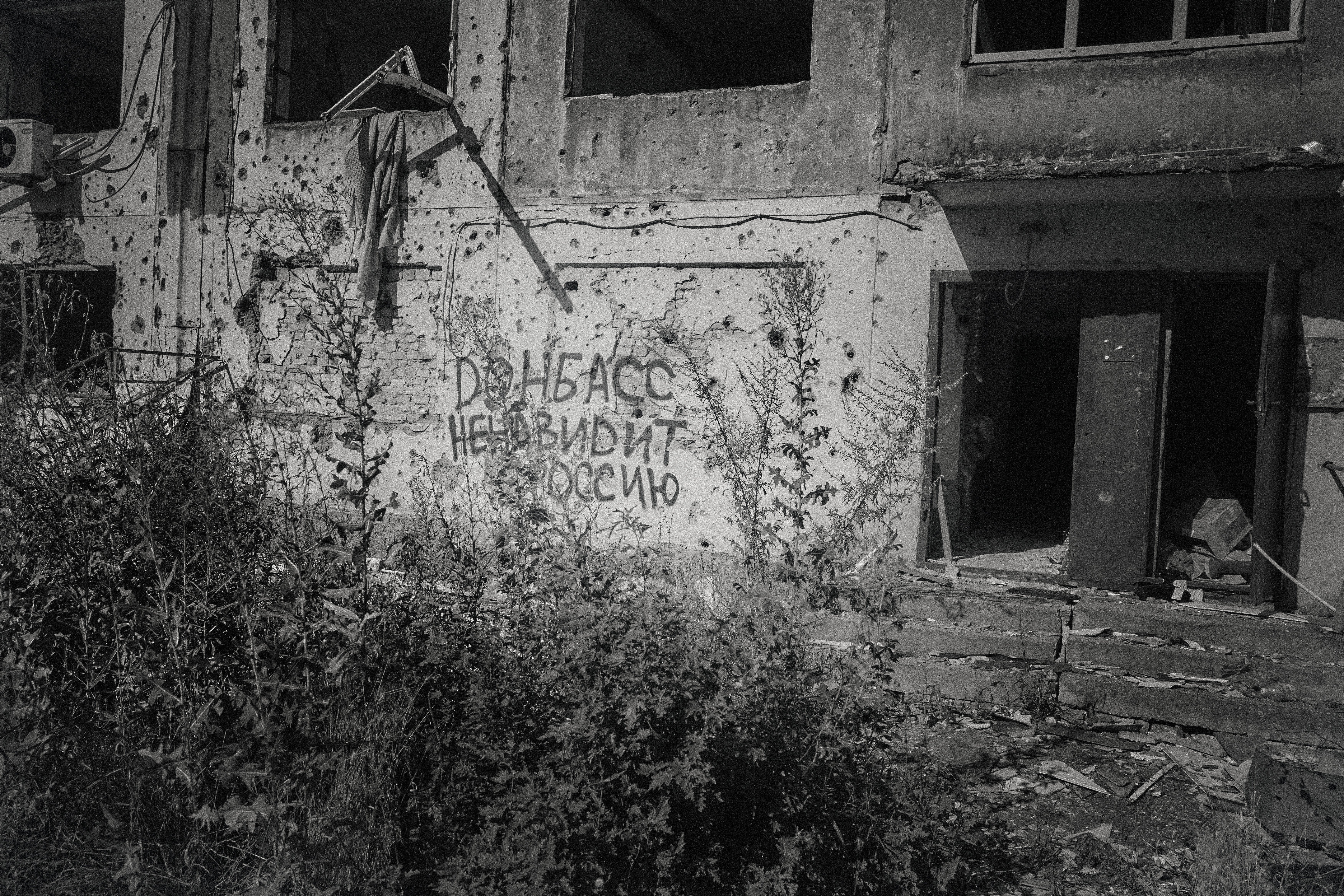
“Contrary to popular belief that technology makes war less deadly, drones, KABs, and FABs have made the war more brutal,” says Bogdan, Chief of the 24th Mechanized Brigade Stabilization Point.
With skies saturated by drones, medical evacuation is almost impossible. Ukrainian soldiers leave tourniquets on for days—saving their lives, but sacrificing their limbs. The loss of the “golden hour”—a sixty-minute evacuation window that helps save lives, popularized during the Vietnam War—disappears from Ukraine’s front, with soldiers on position for tens, or hundreds, of days.
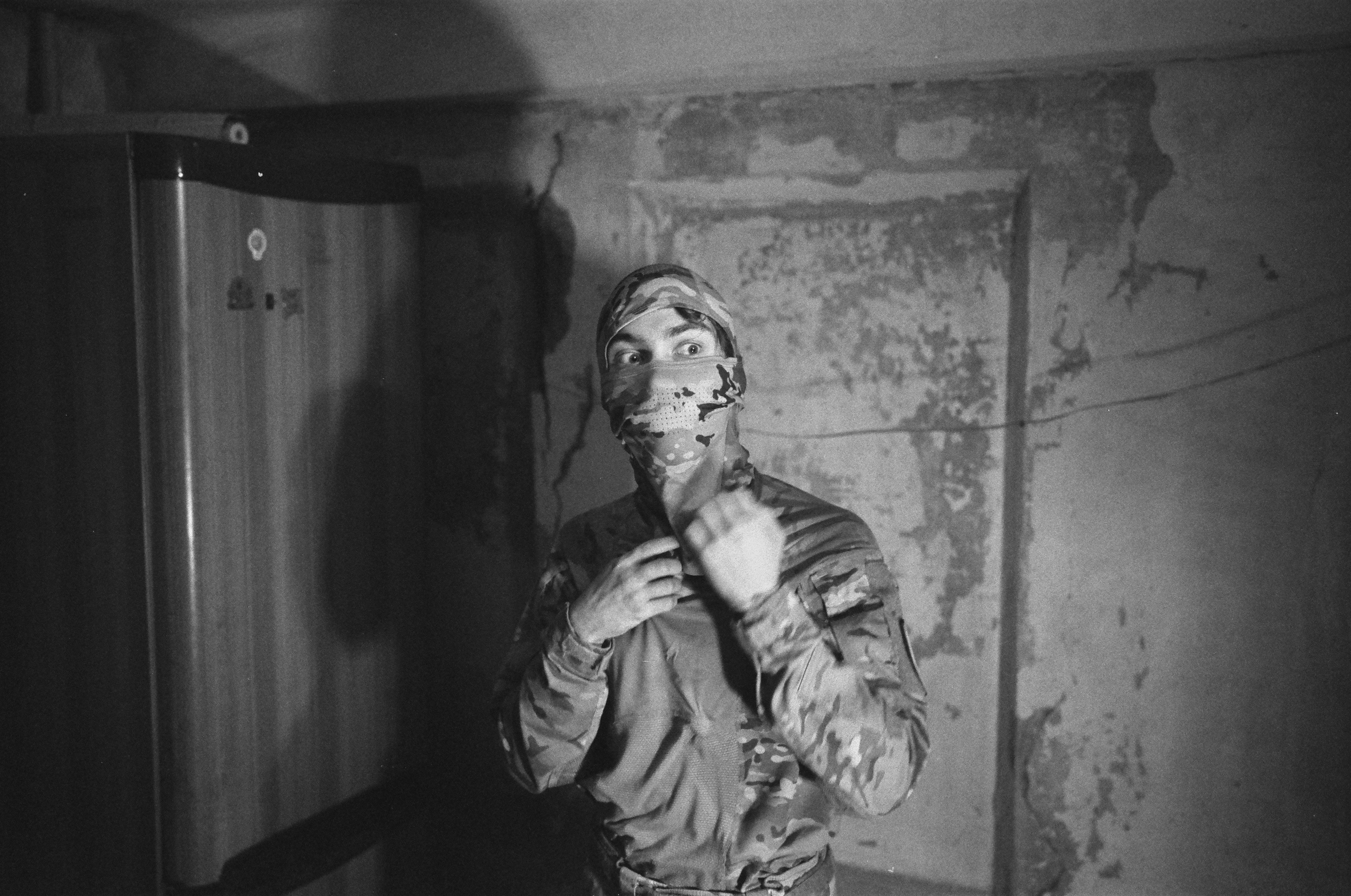
The war produces an estimated 50,000 to 80,000 amputees, eclipsing total British limb losses in World War II.
Bogdan smiles knowingly, albeit with disappointment: “You will go, other journalists will come, our guys will be injured, killed again, and nothing will change. I have the impression that we have become a training ground; they are experimenting on us, you see.”
Unlike the troops we saw the United States deploy after 9/11, “these are ordinary civilians. In their previous lives, they were construction workers, engineers, and IT specialists,” Bogdan reminds us. “Here, they’ve become serious soldiers.”
Visibly skeptical of any improvement in the current situation, and doubting the arrival of any meaningful international support, he shows us around the point’s sleeping quarters—one room with around eleven beds and borscht simmering in the corner.
As we leave, wrapped in a blue latex glove, he hands me a piece of shrapnel that he removed from within a soldier's thigh. “Show this to the outside world," he says.
Staring out of the car window at the dragon's teeth and razor wire, driving under nets recently put up in May, I replay the bleak conversation. The cities echo the doctor's words, personified; everything points to a coming battle.
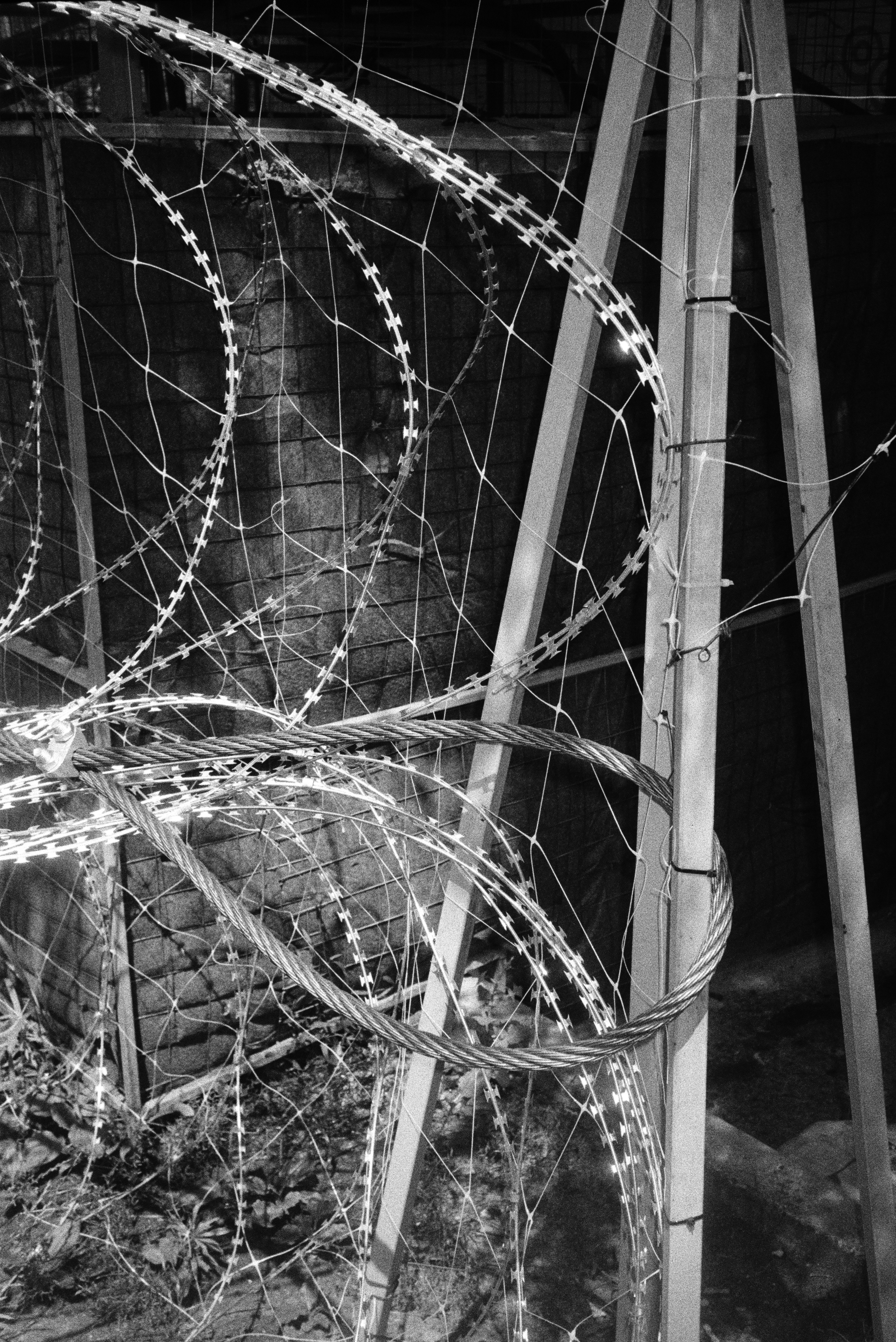
Back in our mosquito-infested ground-floor apartment, which Yarick, our producer, managed to find us—though most available spots are now occupied by soldiers engaged in defending the Donetsk sector—we snap open our non-alcoholic beers in the pitch black, as FPV and Vampire drones zipline through the night sky.
Ninety Seconds on the Zero Line
In the morning, waiting in a residential car park surrounded by typical Soviet high-rise flats, a green Toyota Land Cruiser slows and idles on the other side of the road.
We follow a car. Iryna—the 93rd Brigade’s legendary press officer—and her comrade are leading us to a secret location where we will meet Marusya Zvirobiy, a commander in the Ukrainian Armed Forces who has served since 2014. Now, she heads a ground robotics unit that completes up to five runs a day under Russian fire, aiming to resupply the Ukrainian drone teams on the zero line.
When we arrive, I am told to get my armor, totally unaware that I am about to experience the most intense minute and a half of my life.
Admittedly, maybe because UGVs look a lot like Pixar’s WALL-E, I underestimate the importance of these drones. As a member of Commander Zvirobiy’s team loads the drone onto a trailer, and we secure our helmets, body armor, and cameras.
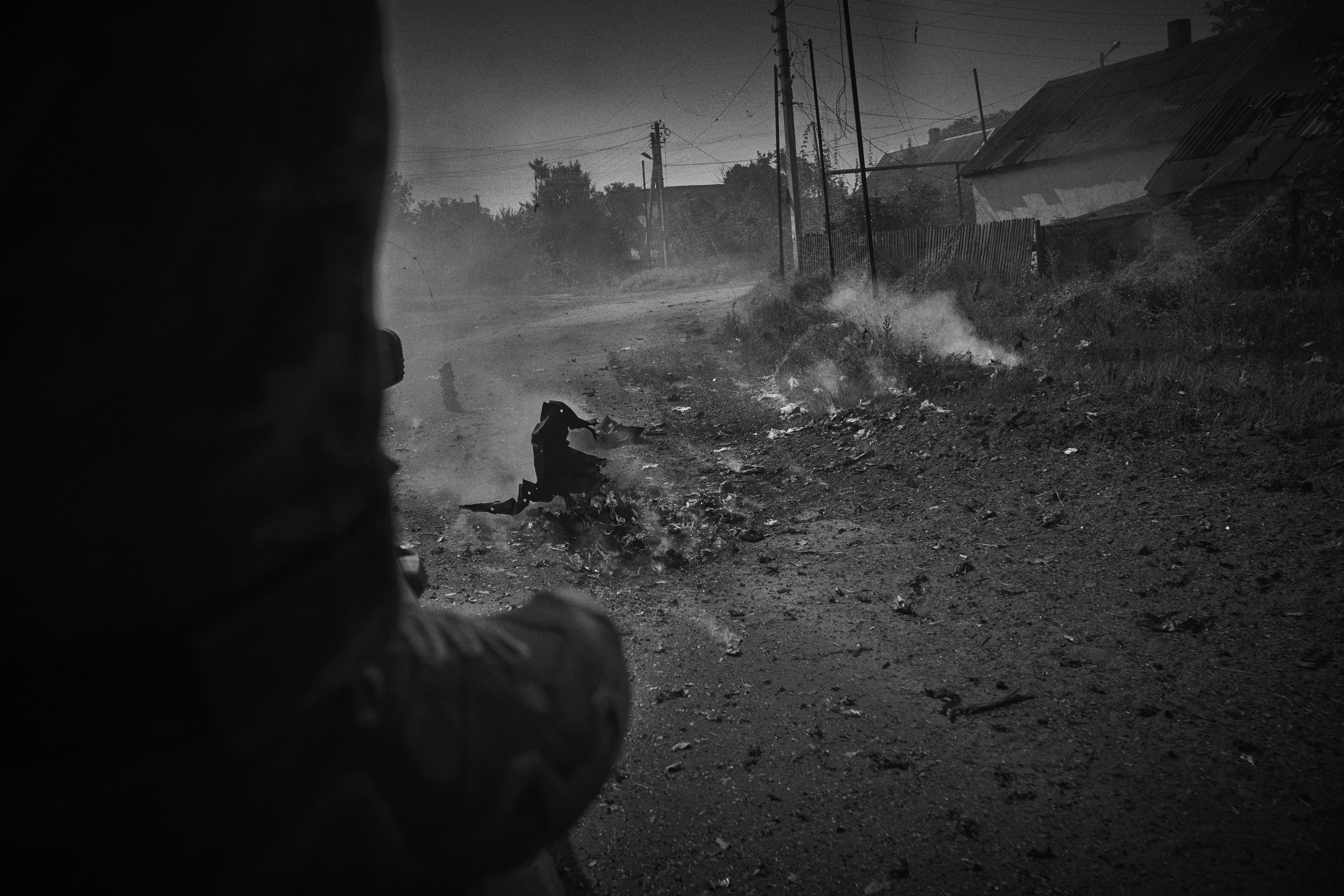
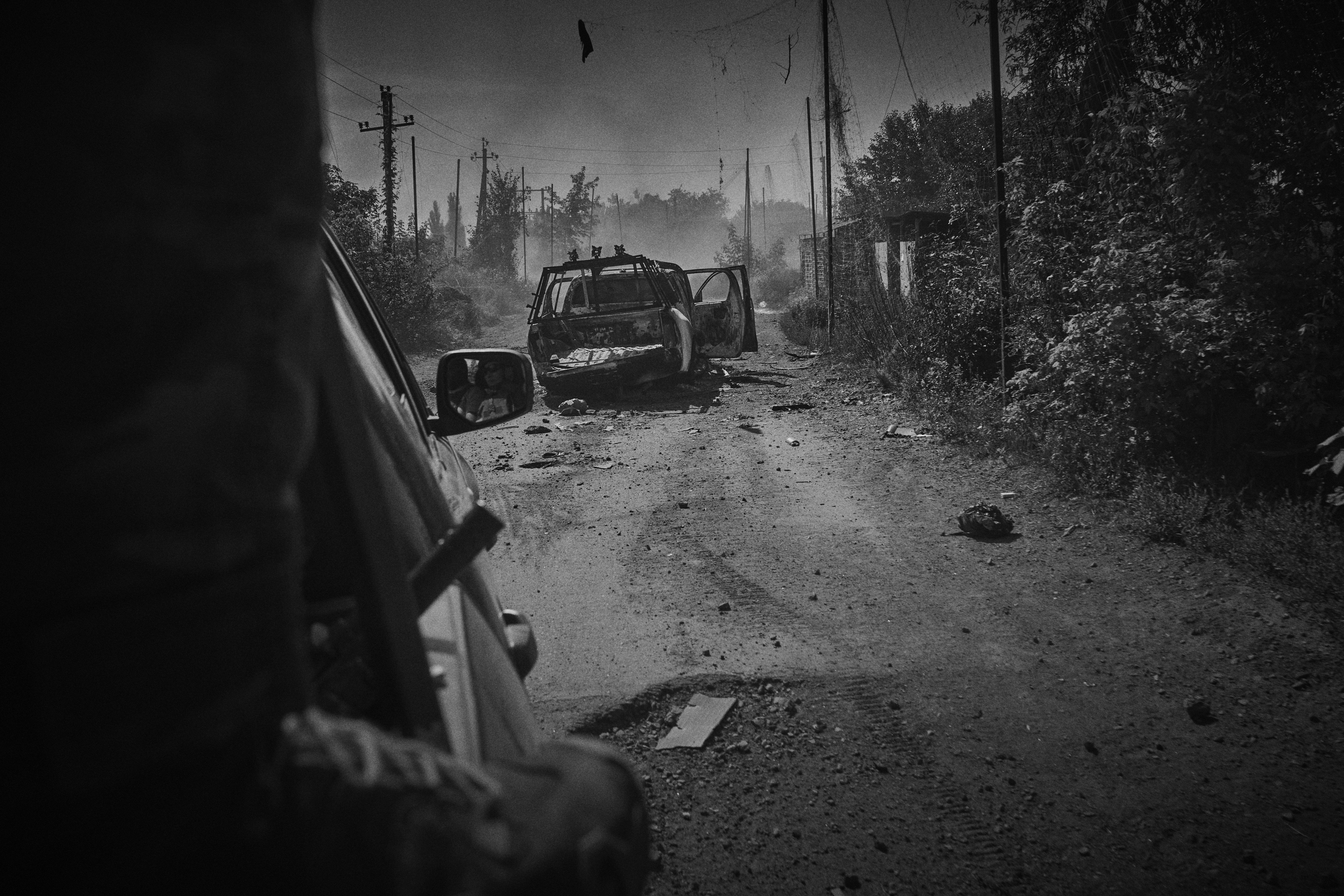
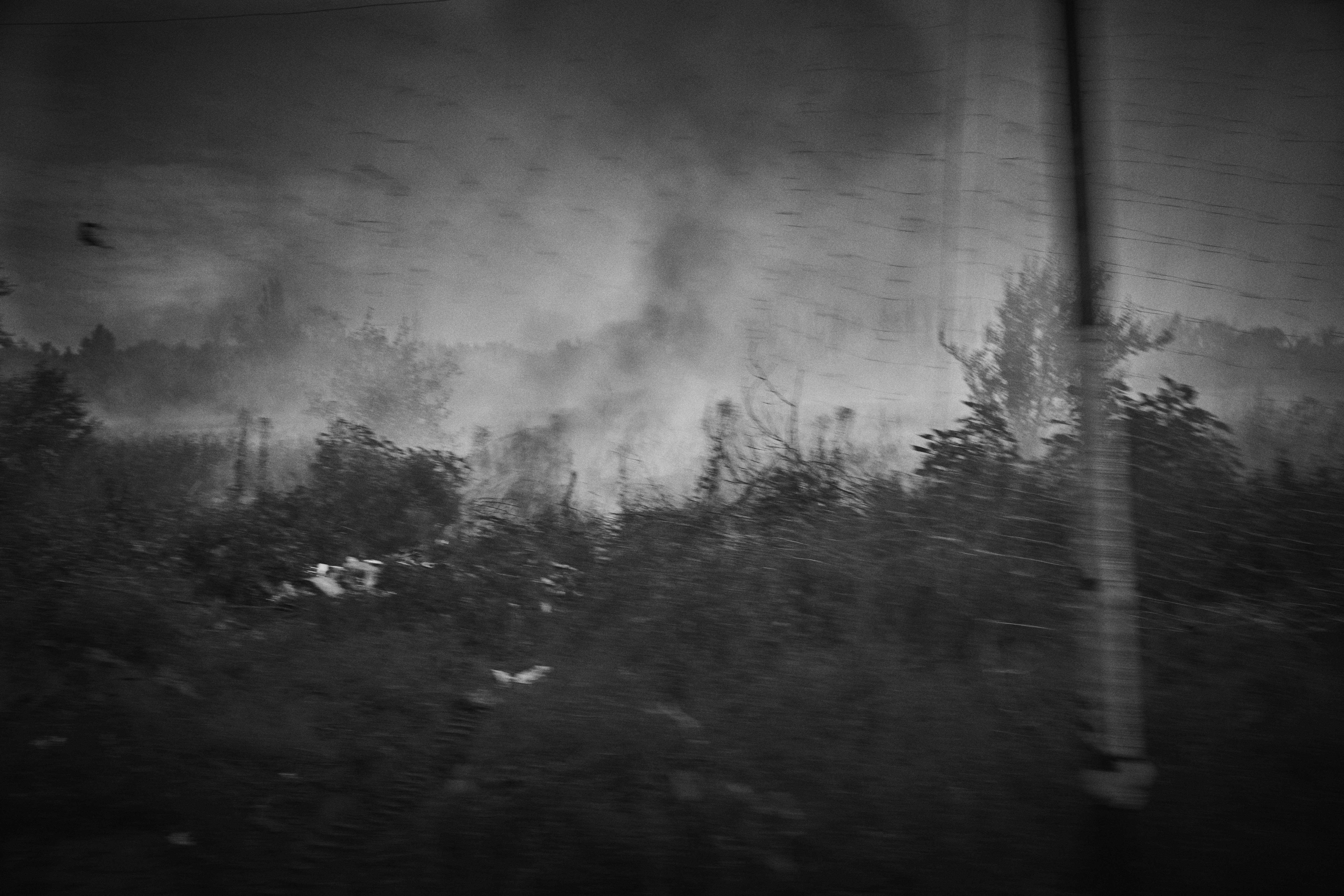
Within ten minutes, the road is on fire, and the smoking carcasses of vehicles are strewn on diagonals all over the road. We are crisscrossing through them as we drive past a burnt-out armored personnel carrier, and when the nets end, I am ordered out of the car. A second later, I hear Conall shout “FPV!” in his signature Irish drawl.
I run and duck for cover while the team rushes to secure all the essentials packed into the UGV, shooting up at the sky. The fields around us are on fire, roaring, and the buzz of multiple drones peaks.
The thought that permeates each moment is that in war, life changes in a split second. A whole life—the concept of before and after—is rendered in one swift blow. With the sound of the drones just above my head, this concept becomes my only thought.
Maybe a year ago, there was hope that the drones crowding the skies of eastern Ukraine wouldn’t spot you, but today, you just have to hope you’re not a priority. At this point, it is clear: this UGV, associated with supply, is a prime target.
We rush back into the car and beeline away, only to stop abruptly and rip ourselves out of the car again as a drone follows us. Waiting under the treeline, we are suddenly given the all-clear, but reminded to concentrate until we get back to our original coordinates, our minds pretty much blown.
Zvirobiy, sitting calmly as a dog nips at the muzzle of her rifle, tells me that only six out of ten ground-supply drones reach their final destinations. The threat has intensified in the Sloviansk–Kramatorsk sector following the arrival, a month ago, of Russia’s Rubikon drone unit, forcing Ukrainian commanders to adapt their logistics continually.
"If we had more UGVs, it would radically change the situation on the ground," she says, warning that when enemy reconnaissance drones begin appearing above the city's outskirts, it signals that Ukrainian pilots are running low on vital supplies and losing the capacity to repel Russian advances.
Hunting 100 Miles Behind the Front
“Yesterday was fucked up,” says Anton, a friend, in front of Angel café, a local spot in Sloviansk. An FPV had targeted their pick-up; the bed of the truck now sporting a blacked-out hole, just 50 cm forward, and it would have been him.
I return to my familiar loop: attempting to make sense of the chaos, to grasp the sheer lethality of it all. I come away with no answers—only a rising panic.
We meet Anton’s commander. Burly, with a kind flash in his eyes as he smiles, we eventually decide to conduct the interview on the back of a pickup truck, as a stray dog, white as snow, watches us. Just before, Anton characterizes the arms race between Russia and Ukraine as “paper-scissors-rock.”
Corroborating Anton’s assessment, the commander has started using an AI-enabled drone known as The Hornet. Autonomous, the strike drone hunts down Russian supply trucks up to 150 kilometers behind the front line.
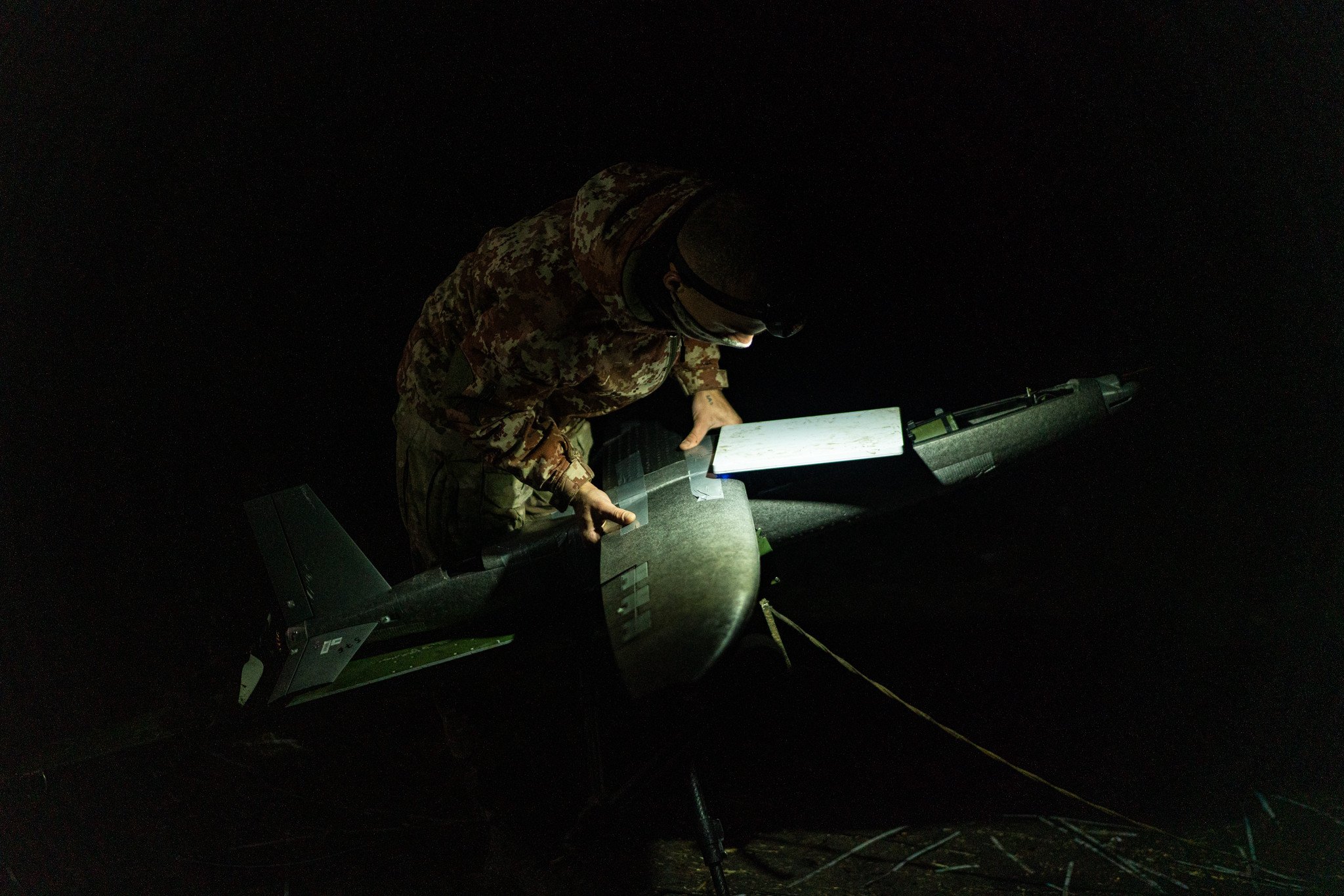
Its most high-profile impact has been Ukraine’s repeated strikes on supply vehicles linking occupied Crimea to the mainland, effectively choking off the peninsula. "We’re starting to heavily rely on what we call 'middle-strike' drones. They give us the range we need to pull our pilots back to safety, without losing our ability to hit the enemy right where it hurts," he says.
Another major success for Ukraine, he notes, was when Starlink cut off thousands of Russian terminals, causing chaos along key frontline sectors and resulting in major territorial gains for Ukraine.
He believes that in the future, we will see a "deeper integration of machine vision, artificial intelligence, and situational awareness systems into a single battlefield loop." For example, systems like DELTA, Ukraine’s cloud-based battlefield map system, combine live drone footage, satellite data, and AI analytics into a unified real-time picture of the front line.
Forty Armored Vehicles and a Routed Column
On July 22, 2026, a massive multi-brigade defensive battle occurred in the Dobropillia sector of the Donetsk region.
Russian forces, hoping to pierce the defensive belt, launch an armored column involving an estimated 40 to 50 armored vehicles. Ukrainian forces destroy or severely damage over half of the advancing column—more than 20 to 25 tanks—forcing the surviving Russian forces to retreat. Repulsing the offensive is led by the commander of the 6th Battalion of Azov, Ihor Vovk, better known as “Kraft.”
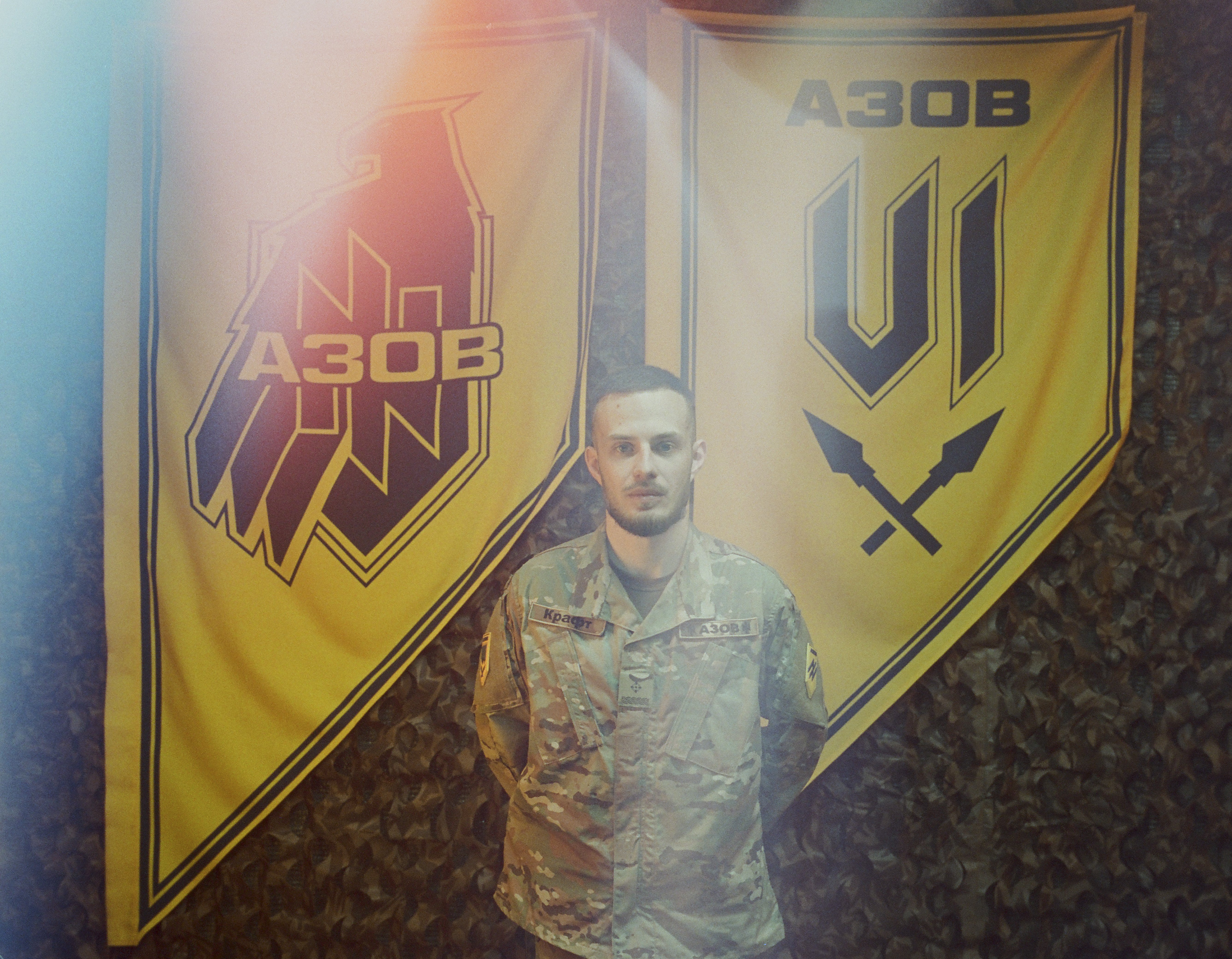
As I walk into the room set up for the interview, two Azov flags are still being steamed, all creases ironed out by a soldier, probably the same age as his commander.
"Kraft" survived the siege of Azovstal at age 22, only to end up at the Russian Olenivka penal colony. There, he is crowded into a workshop with 200 prisoners under suspicious conditions: guards are replaced by masked men, and Russian personnel wire the facility under the pretense of fixing lights.
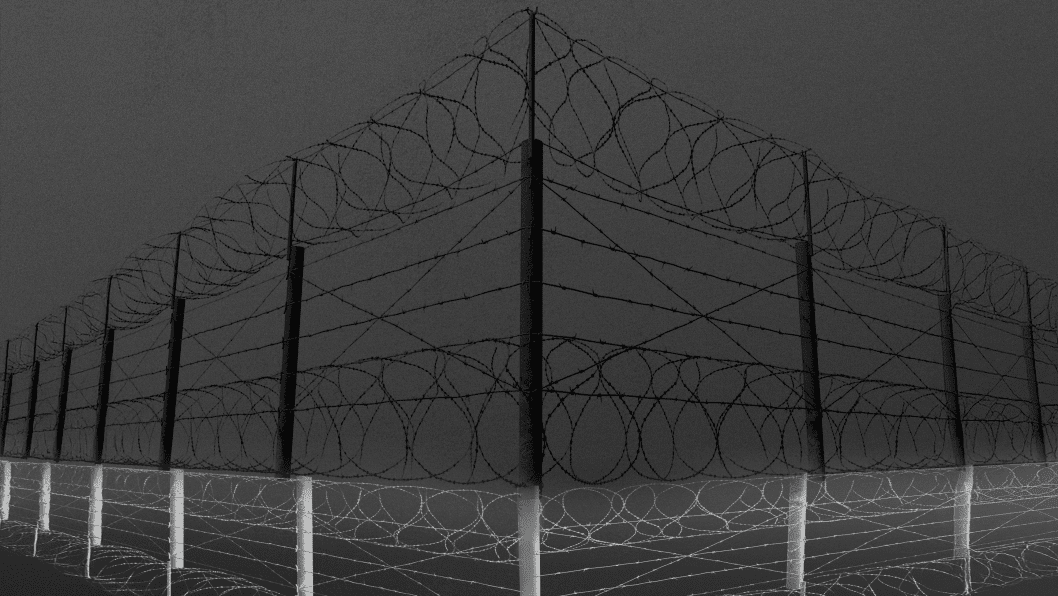
One night, he is woken by a bomb set off on the inside that kills over 50 POWs. Suffering severe internal bleeding alongside blown-out doors and dismembered bodies, he resigns himself to death without medical care; he tells me.
Once exchanged and rehabilitated, he returns to combat, then rises to Major and commands the 6th Special Forces Battalion of the Azov Brigade.
When asked how Russian forces are attempting to advance toward key settlements, he says they are trying to bypass and encircle villages by moving through the surrounding woodlands and fields. “The same thing happens with large cities,” he continues. “They capture small settlements around the city, thereby building on their success in the offensive—or at least that’s how they intend to do so.”
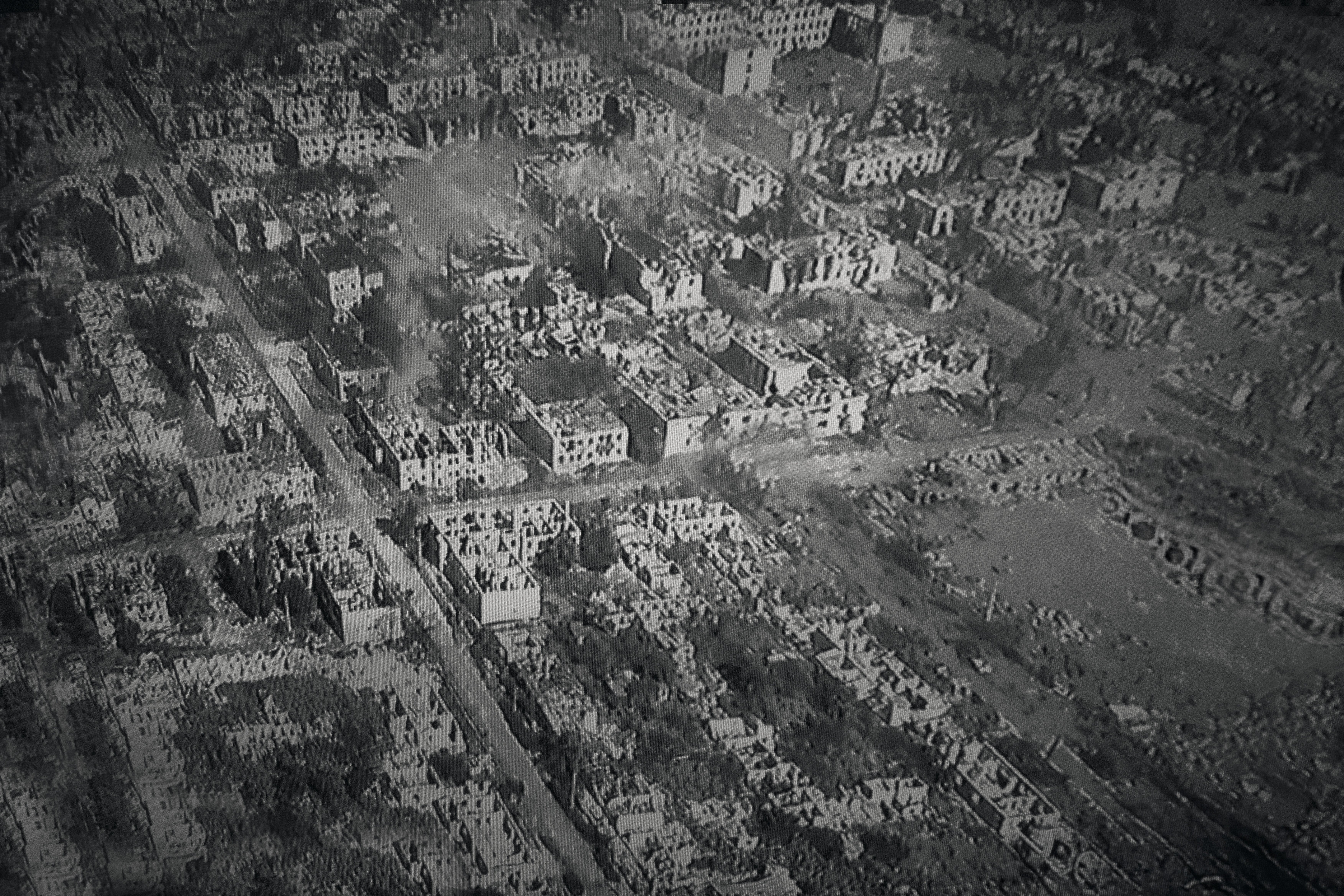
What he describes is unmistakable in the latest reports coming out of Dobropillia, which reveal that on the city’s southern flank, Russian forces are pushing hard to expand the grey zone around the high-rise residential district, with small Russian infantry groups infiltrating the area, hoping to take cover in apartment buildings to establish temporary footholds.
The city remains far from full Russian control. However, units on the ground warn that they may soon attempt "flag-raising" operations, a classic and often repeated tactic throughout Russia’s war against Ukraine.
Hunted by drones in the open
Leaving Sloviansk, we end up staying at the hotel inside the Lozova train station—it's obvious, Lozova was not built for a sudden influx of soldiers, and yet the advancing frontline just so happens to make it the only place to stay in relative safety.
In the morning, driving to meet Vova, the press officer of the Rubizh brigade, who will organize certain embeds for us. He tells us that really all our arrangements have now morphed. We are offered a tunnel or the option to follow a unit stationed in the town closest to Dobropillia. We are warned: it will be intense.
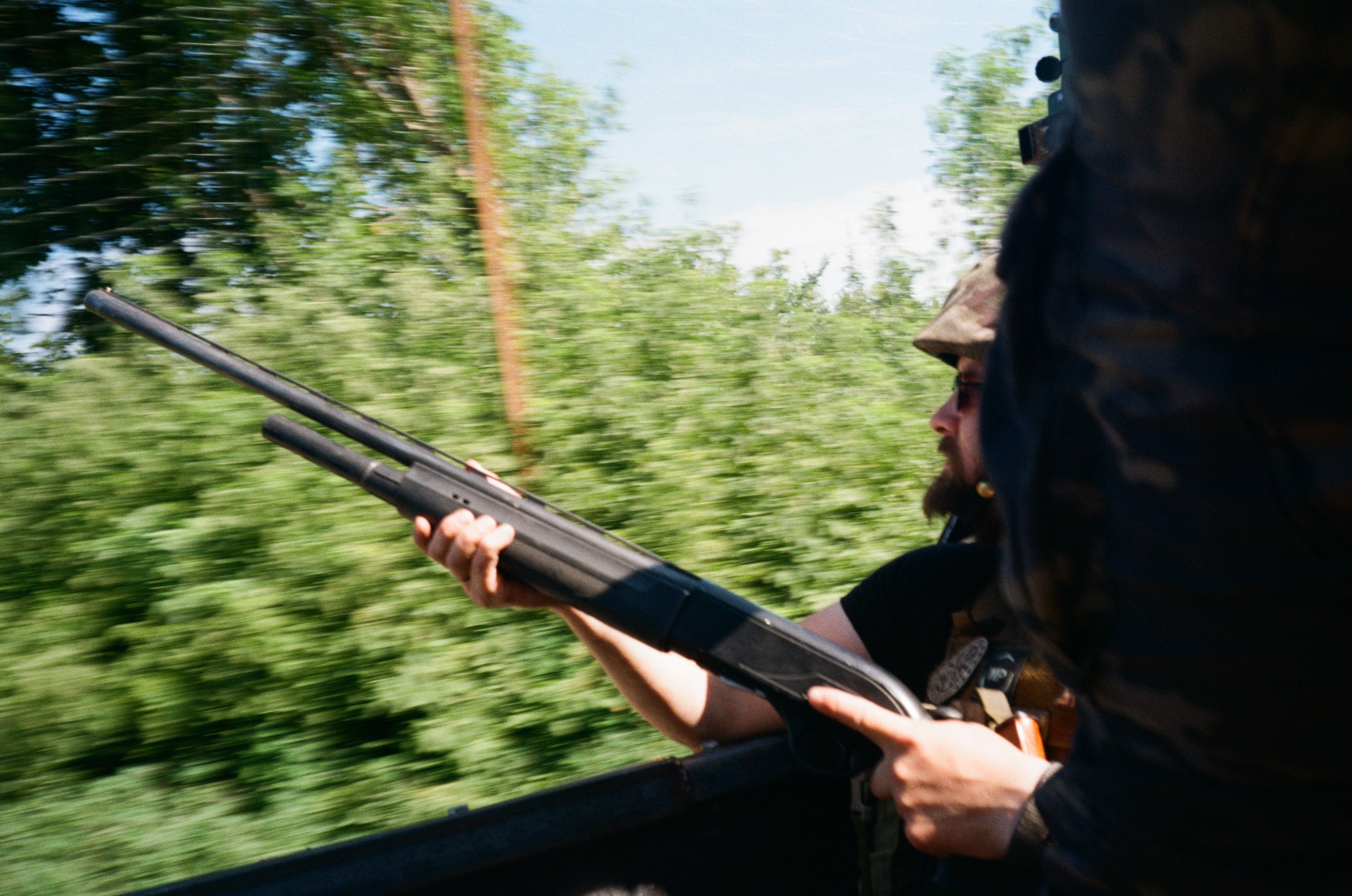
In the car, and as usual, sitting in the middle as a small woman, I grip onto the metal prongs below the headrests. The car sways while the front passenger, a soldier with the word "warrior" tattooed on his left calf, routinely sticks his head and rifle out the window, checking for FPVs.
When we arrive at the command point, generators are blasting. Once out of the car, we scatter down the stairs into a dark basement set up with beds, a vampire drone, rifles leaning against the wall, and three guys smoking cigarettes.
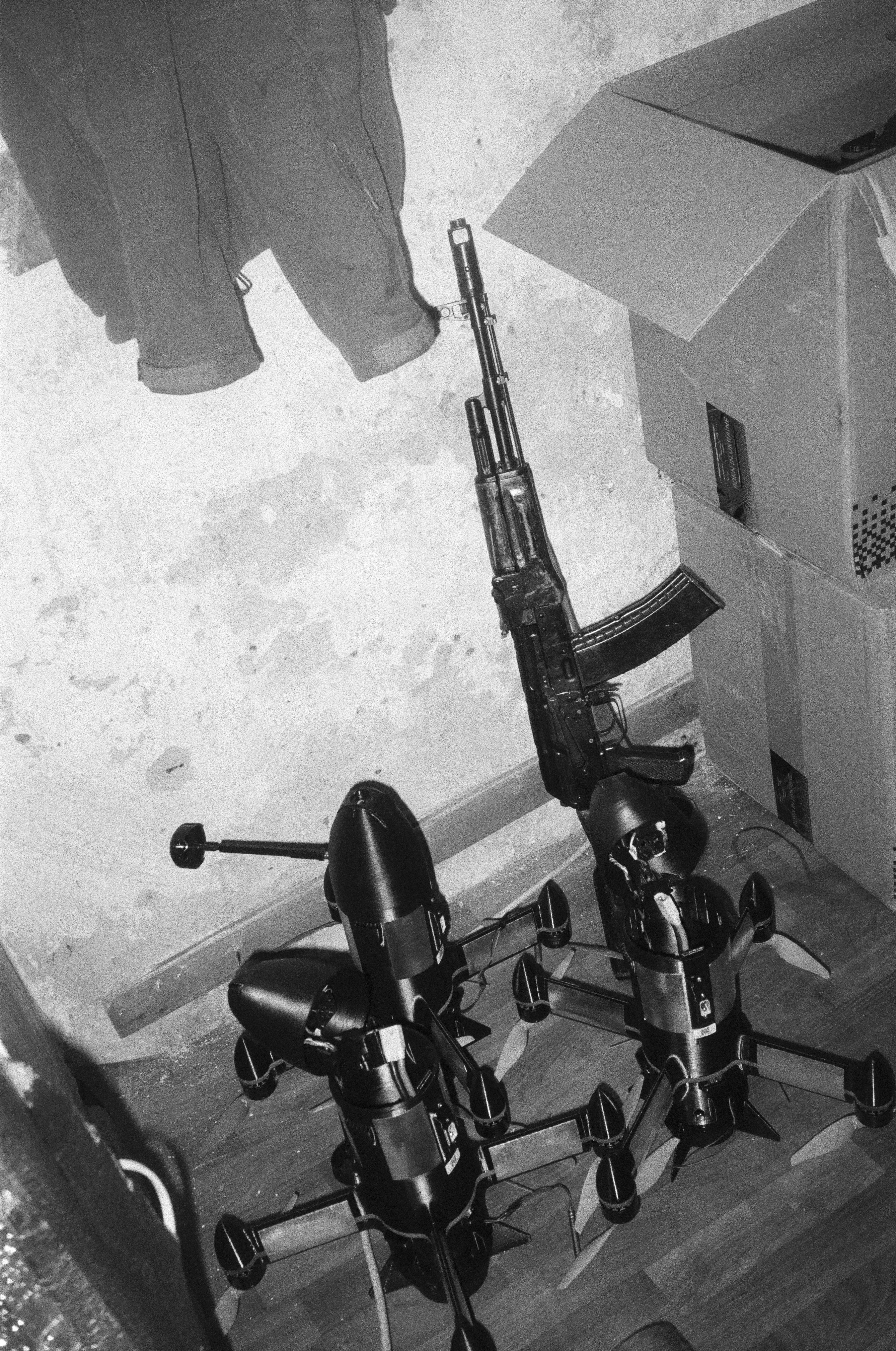
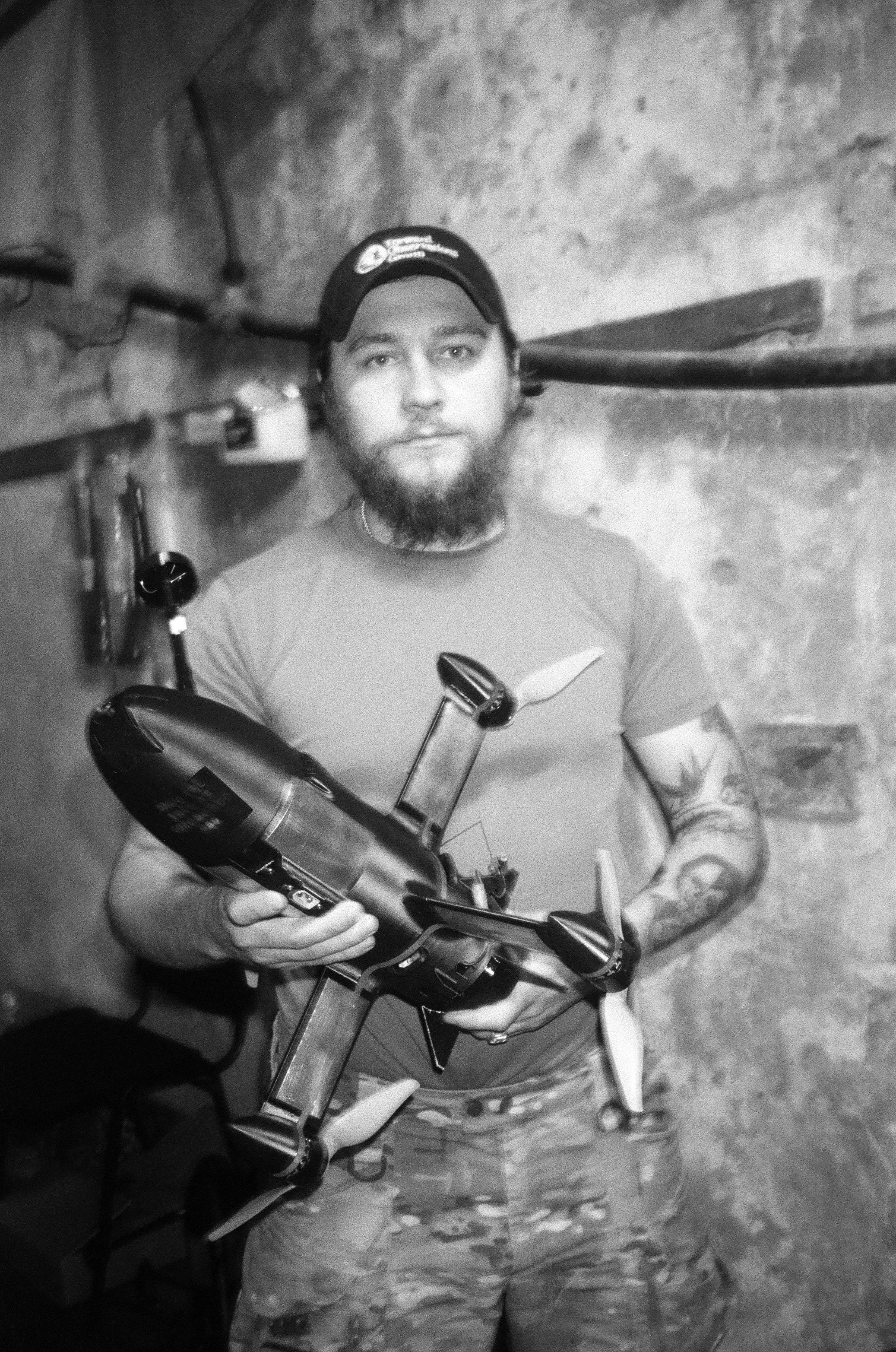
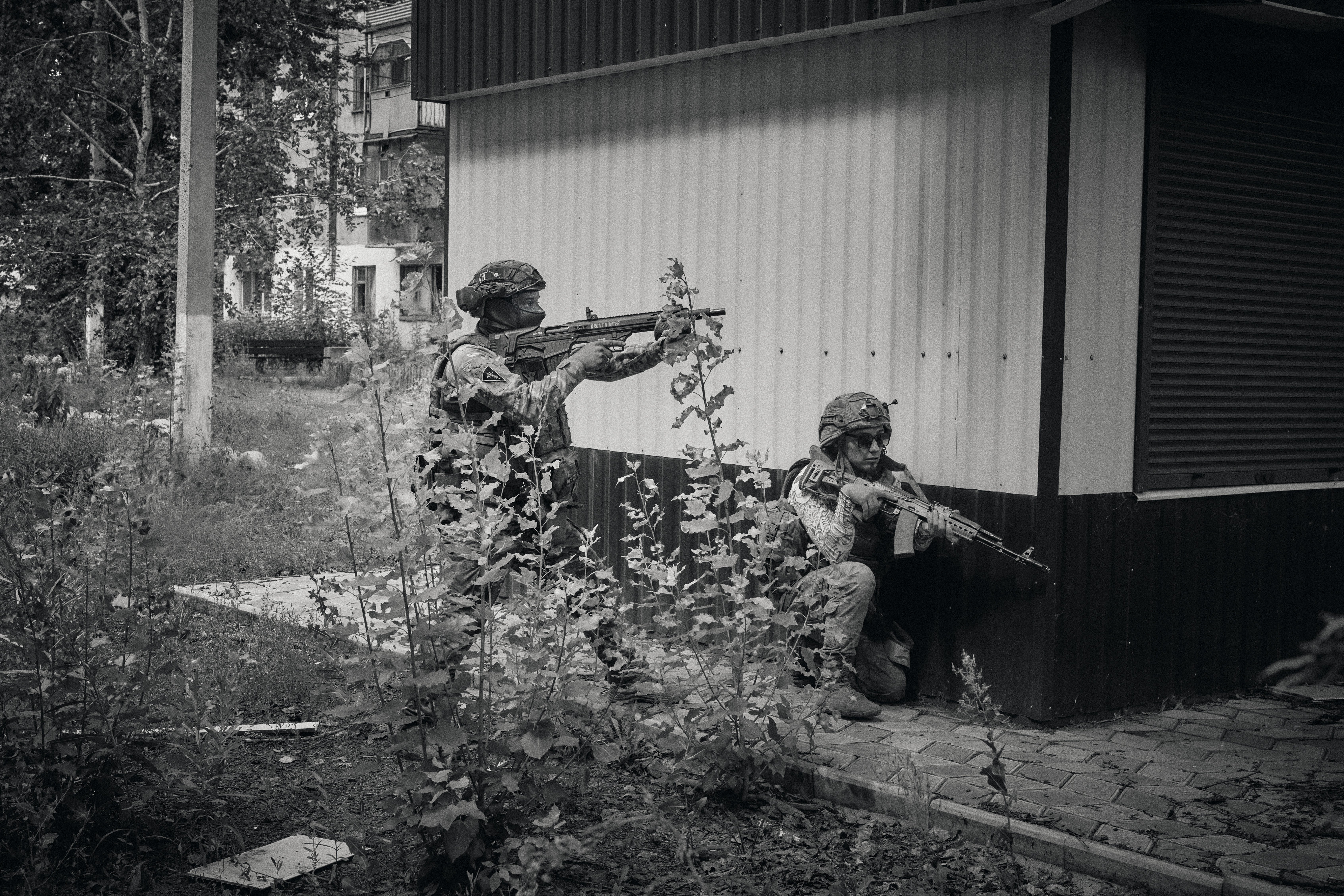
This is a UGV command point, and we are told to wait while the screen flashes red and Hutsul, a UGV operator, sits clicking in front of it. We are introduced to “Ibox”, a forty-five-year-old whose Czech rifle has “drone hunter” printed on it in big white letters. He is tender, tough, and graced with a playful sense of humor.
“You’re going out now,” Oleh, the press officer, tells us.
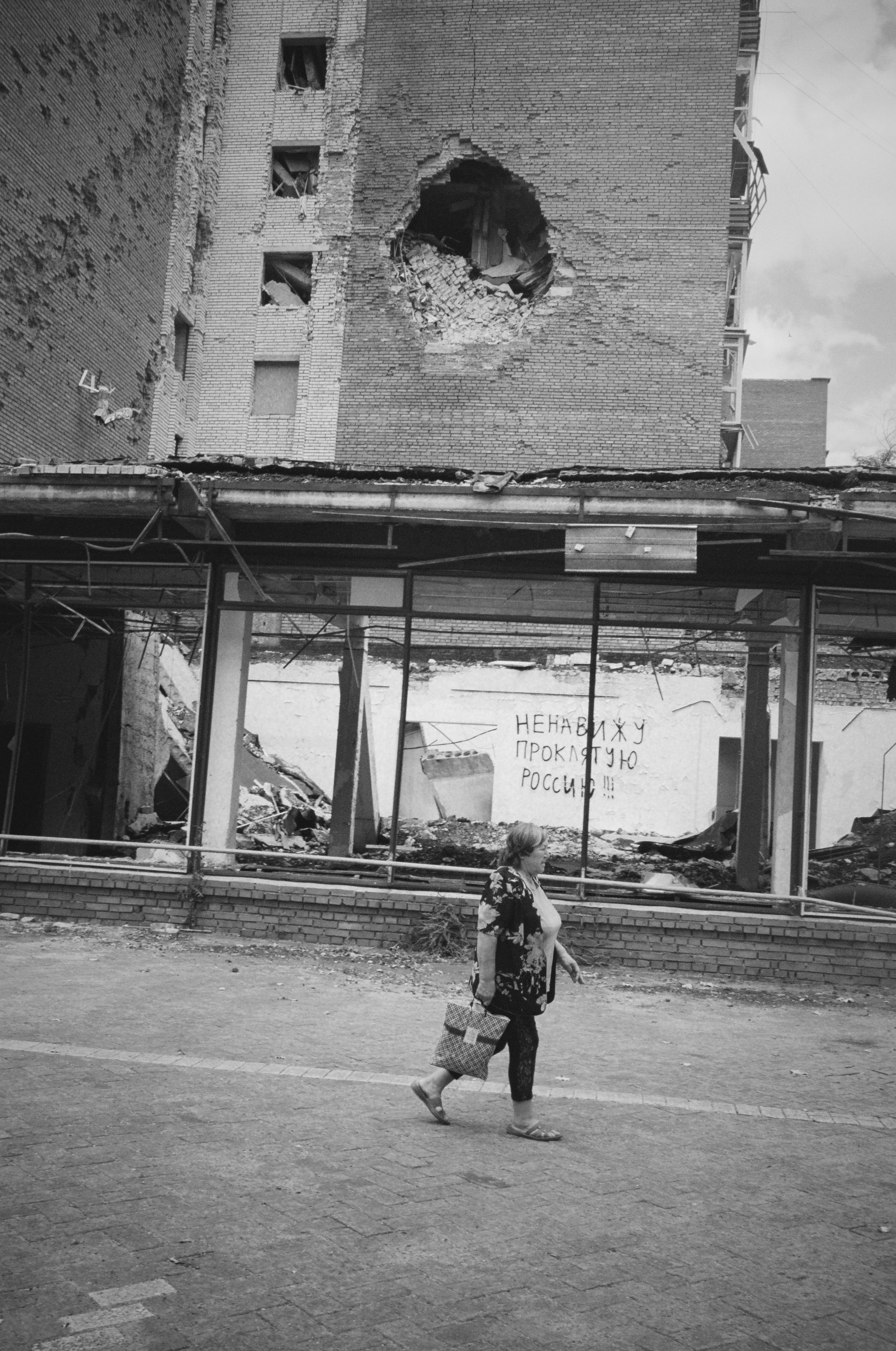
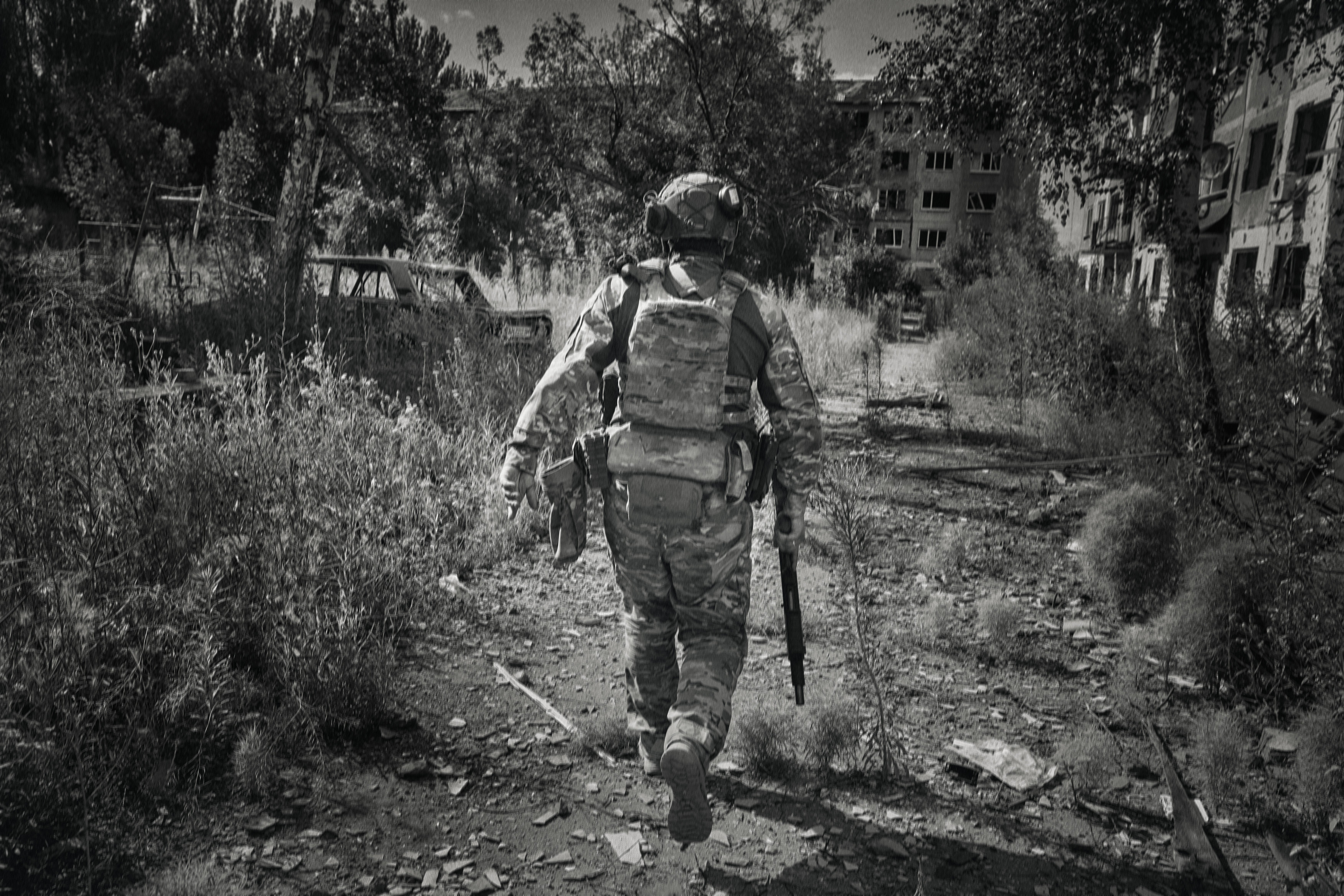
At first, it is calm. The city, once a Donetsk mining hub, is basically reduced to rubble. The only civilians we see (two) seem to be trying to go about their business, but it now seems like folly.
“Waiters” or “crazies” is how the military sometimes refers to these people.
KABs have hit nearly every building, and Ibox remembers each hit, pointing them out, his gun loosely swaying in his lowered arm. “Look,” he says.
Birds chirp, and I can hear Josh’s shutter going off. Otherwise, everything is silent. As we walk past a bombed-out Vodafone store, we hear the first FPV. Conall, as usual, is the first to react, the Irish intonation of “FPV!” reverberating. We run, then crouch under a tree. Ibox and Oleh kneel into firing positions and tell us sternly, “Go to the shop,” and “Run.”
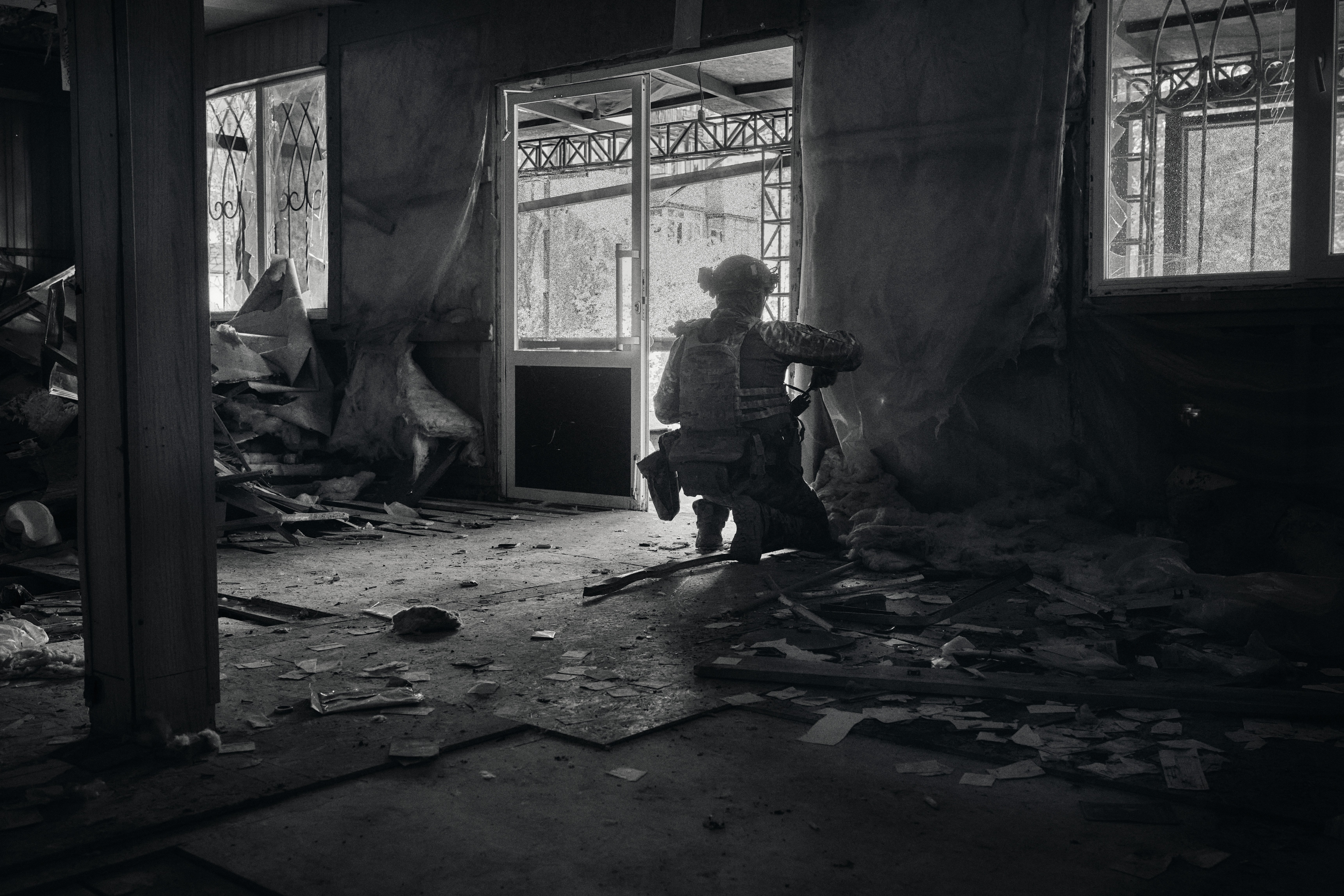
Inside a little bombed-out metal bungalow, we are told to separate—this time, Ibox speaking urgently—and everyone is to crouch two meters apart. Then, Ibox warns us to get our tourniquets ready, an unfortunate must-have across the whole of Ukraine. We try several times to leave the shop, and each attempt is unsuccessful and ends with Ibox holding his finger up, hearing a drone, and yelling at us to get “Back! Back! Back!”
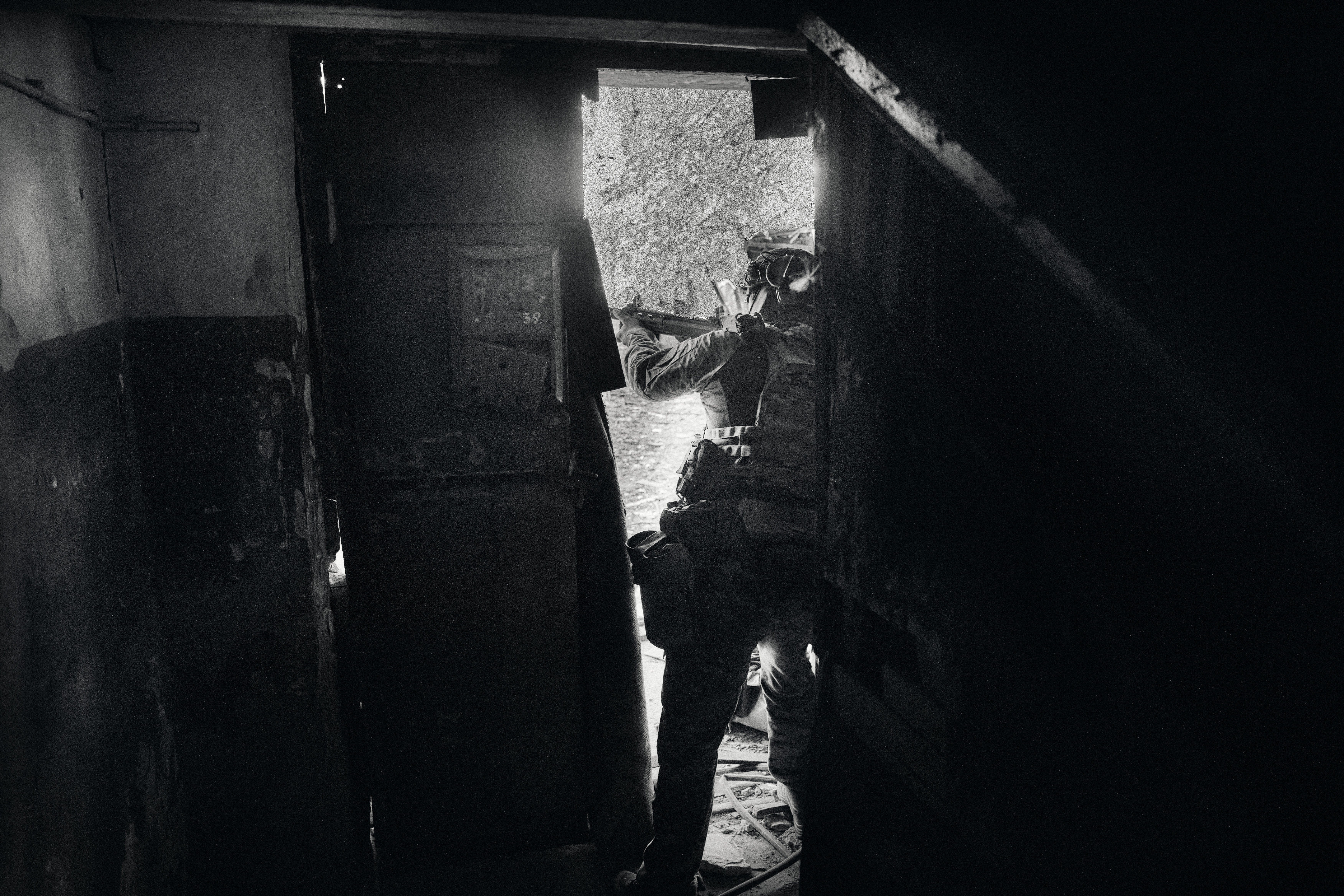
Eventually, the five of us run 20 meters to the next shelter, and then eventually, we make it to the infantry command point.
As soon as we get in, hands emerge from the darkness, and Ibox bear-hugs all the guys; we scamper down the stairs to a cluster of four rooms, where Sparrow is talking on the walkie-talkie.
“I help my guys advance onto positions. Everything is done via live video and drones, because the situation at the moment is very difficult.” Ukrainian soldiers currently begin their movement toward positions on foot, and sometimes over 20 kilometers out. This journey is surveyed from above and watched by Sparrow.
Also at the CP is a young infantry soldier: “Rock.” Unsparingly honest, he describes the current logistical situation as “awful,” and says the hardest aspect of the job now is reaching positions.
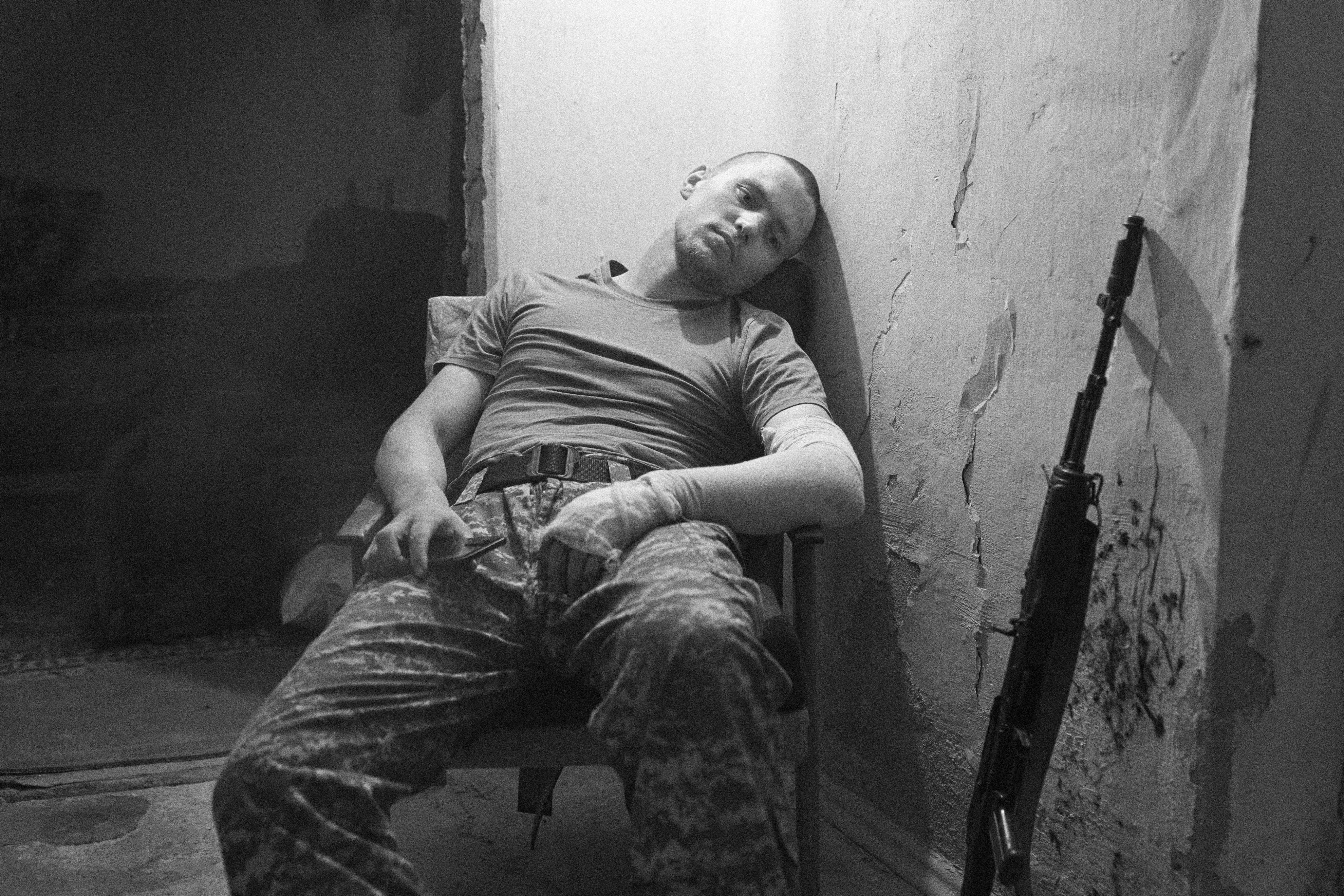
Somehow, while waiting for a safe time to leave, I fall asleep on the commander's bed. When I wake up, a soldier, around 25, appears, seated in a chair in the corner of the next room. His arms and legs are bandaged, and he looks exhausted. His head tilts to the side and rests against the wall.
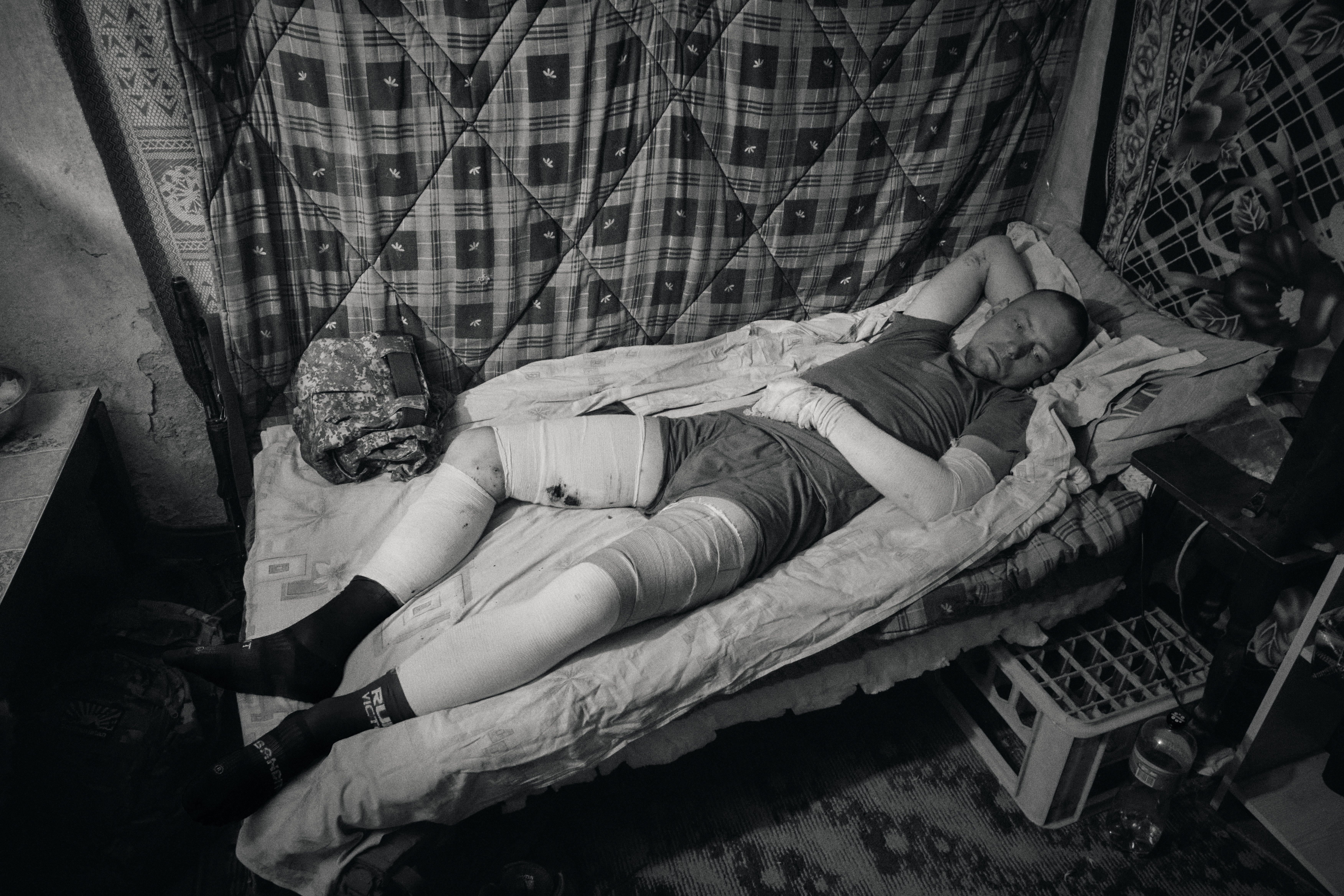
Attempting to evacuate a severely wounded comrade, he stepped on a butterfly mine—part of a cluster dropped onto their position by a drone.
Suffering only light injuries, yet unable to extract his comrade and having lost comms, Ibox, Rock, and Oleh are instead sent out. They will try to find the injured soldier, though every minute under the sky is so dangerous.
They come back two hours later, having run through Bilozers'ke, then the treelines on the outskirts. The whole time, they were tracked and hunted by Russian drones. Back, they burst through the command post doors, clearing the lulling atmosphere with their arrival. Breathing hard and swearing, Ibox leans his head on his arms: “Fuck, I’m so old.”
The gravely injured soldier has turned up. Again, it's useless to try to make sense of it; acceptance and the understanding that this is war remain the only navigable mindset.
“Don’t say bye,” instead, you say “see you soon,” Ibox cautions as we hug, before we get back into the car that brought us here.
Leaving the East
It is a bright morning, and the sky is blue. We are set to leave, our car packed with gear. It is hard to get in touch with the Lozova transit center, but in reality, it sits at the heart of what is currently happening in Donetsk.
We find it behind a one-story building, with benches lining the small park in front of it. In the yard, empty pet crates sit, and people sit in groups, speaking softly. Big minivans arrive, and the evacuees start unloading a few bags. Their journey has undoubtedly been treacherous—evacuations regularly come under drone fire, leaving the volunteers who run them back and forth in heightened danger.
Conall and I venture up to Yevheniya, who sits smiling on a bench. She has already evacuated her home once; originally from Kostiantynivka, she left with her mother for Druzhkivka. Now she is here in Lozova, and does not know where she will go, saying only, “I’ll go where I am sent.”
The wave of displacement keeps surging, and daily arrivals easily push past 150 people. Mostly, the displacement occurs in stages, as leaving Donetsk means swapping the distinctive landscape for other towns or villages in other regions—similar but, really, entirely unfamiliar.
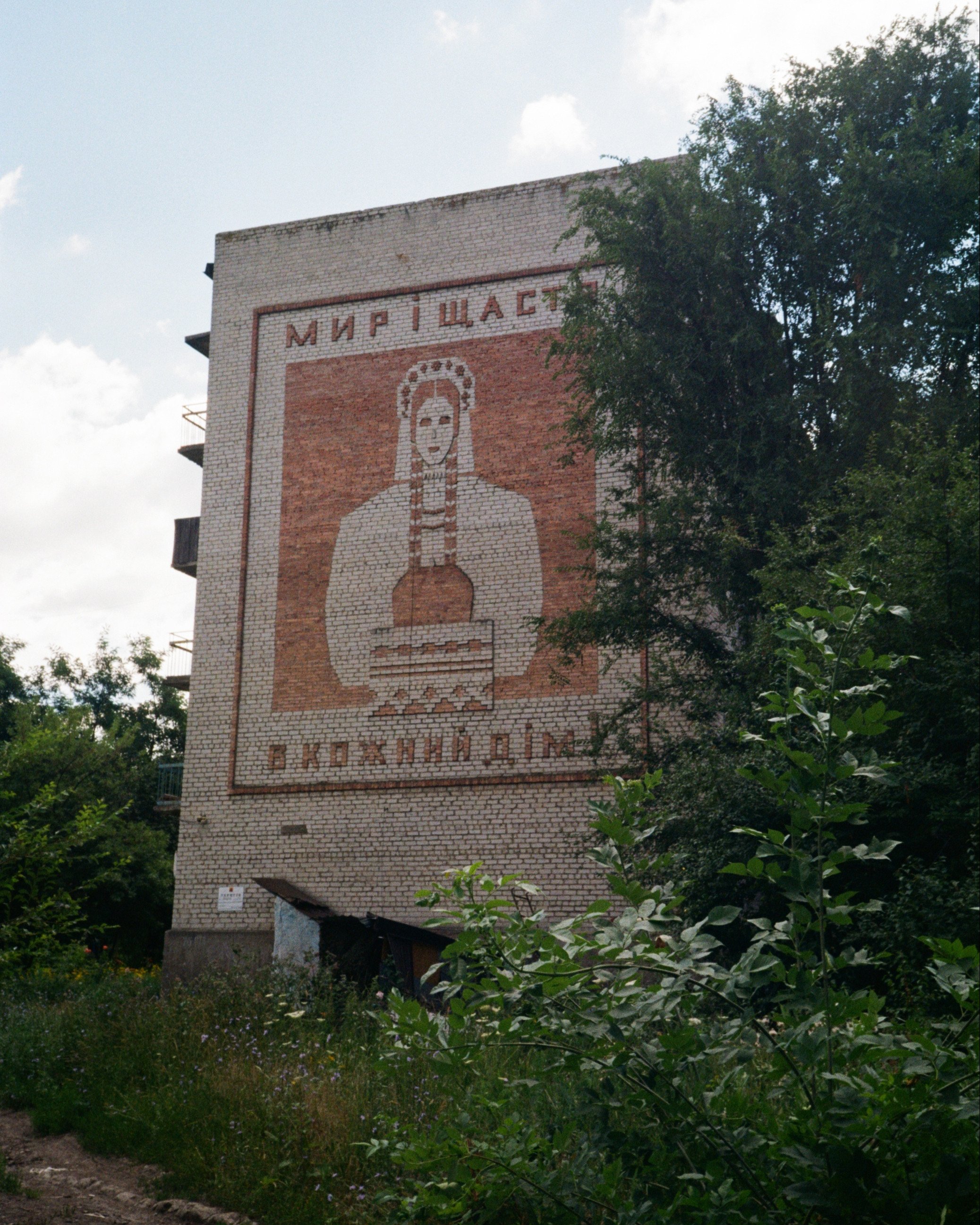

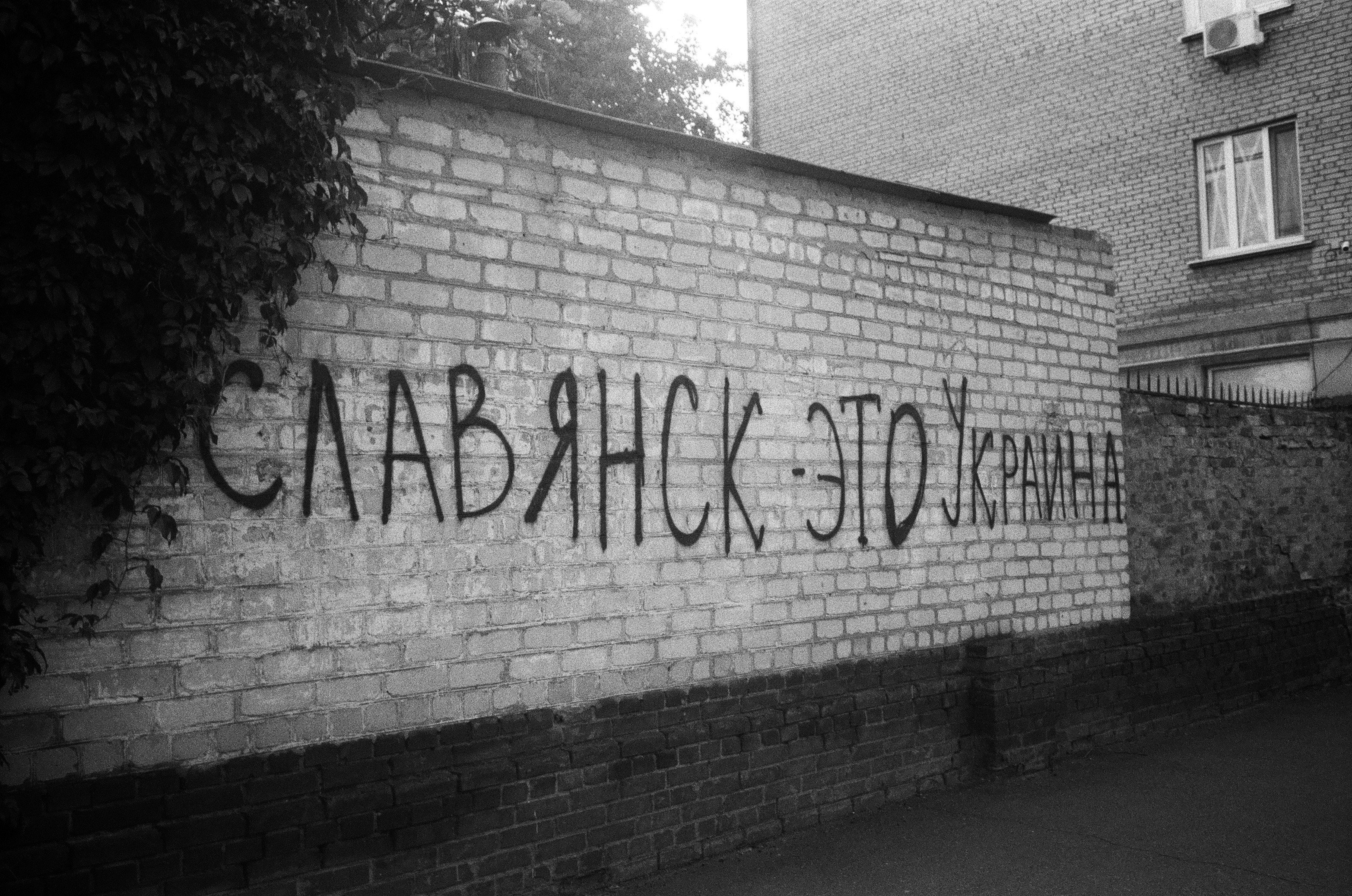
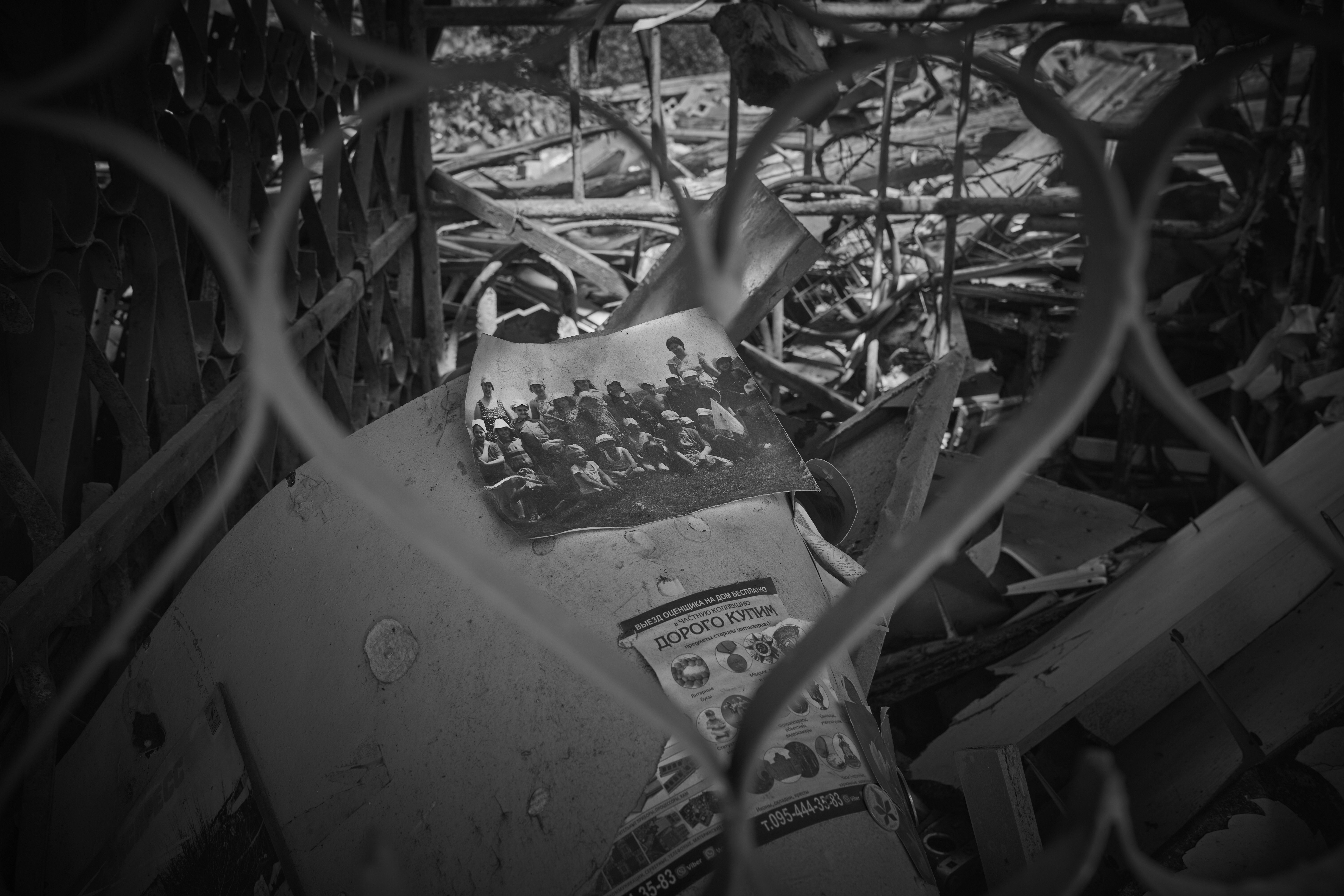
As we drive away, out of Lozova and past the nets, we stop in a sunflower field. Nobody speaks while we stand surrounded by the tall stalks, the car waiting in the background. We all know the unspoken reality: once we get back on the road, we will likely never come back.
Discuss this article: