- Category
- War in Ukraine
5 Robots That Help Save Your Life After a Russian Strike on Ukraine
If a Russian missile strikes your home and you survive, one of the first rescuers to reach you might not be human. It could be a robot.
 Prefer U24 Media on Google
- Authors


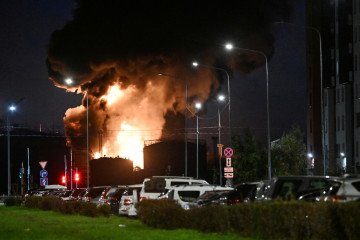
Cars damaged by explosions block access to a destroyed residential building where people may still be trapped. A massive fire rages at an industrial facility, with extreme heat, toxic smoke, and the threat of explosions. Unstable structures could collapse at any moment, while potentially explosive objects lie scattered among the debris.
These are just some of the challenges and dangers Ukrainian rescuers face as they respond to the aftermath of Russian missile and drone attacks.
Russia strikes Ukrainian cities daily, destroying homes, businesses, and infrastructure. Each attack is followed by hours of demanding work for Ukraine’s State Emergency Service (SES). Rescue operations often take place under the constant threat of Russian double-tap strikes.
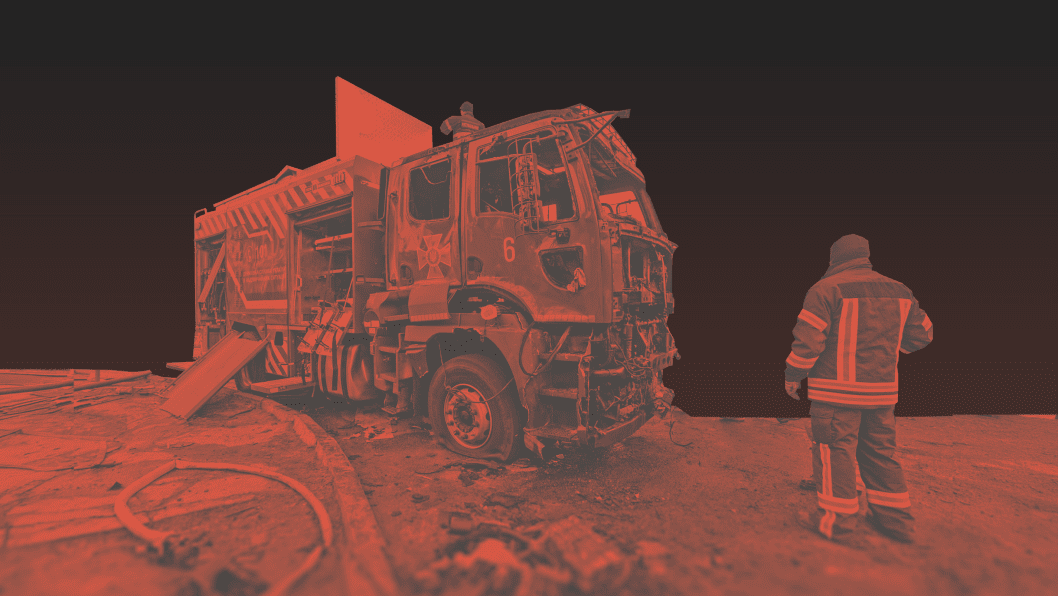
Robotic systems have become the SES’s technological response to Russian attacks, bringing together international innovation and Ukrainian expertise with one overriding goal: saving lives.
“Robots are a support tool in our work,” says Inna Kovtun, head of the robotics and unmanned aerial vehicle (UAV) team at the Kyiv State Emergency Service. “I’m convinced they will never be able to replace people. But they are an excellent tool in skilled hands.”
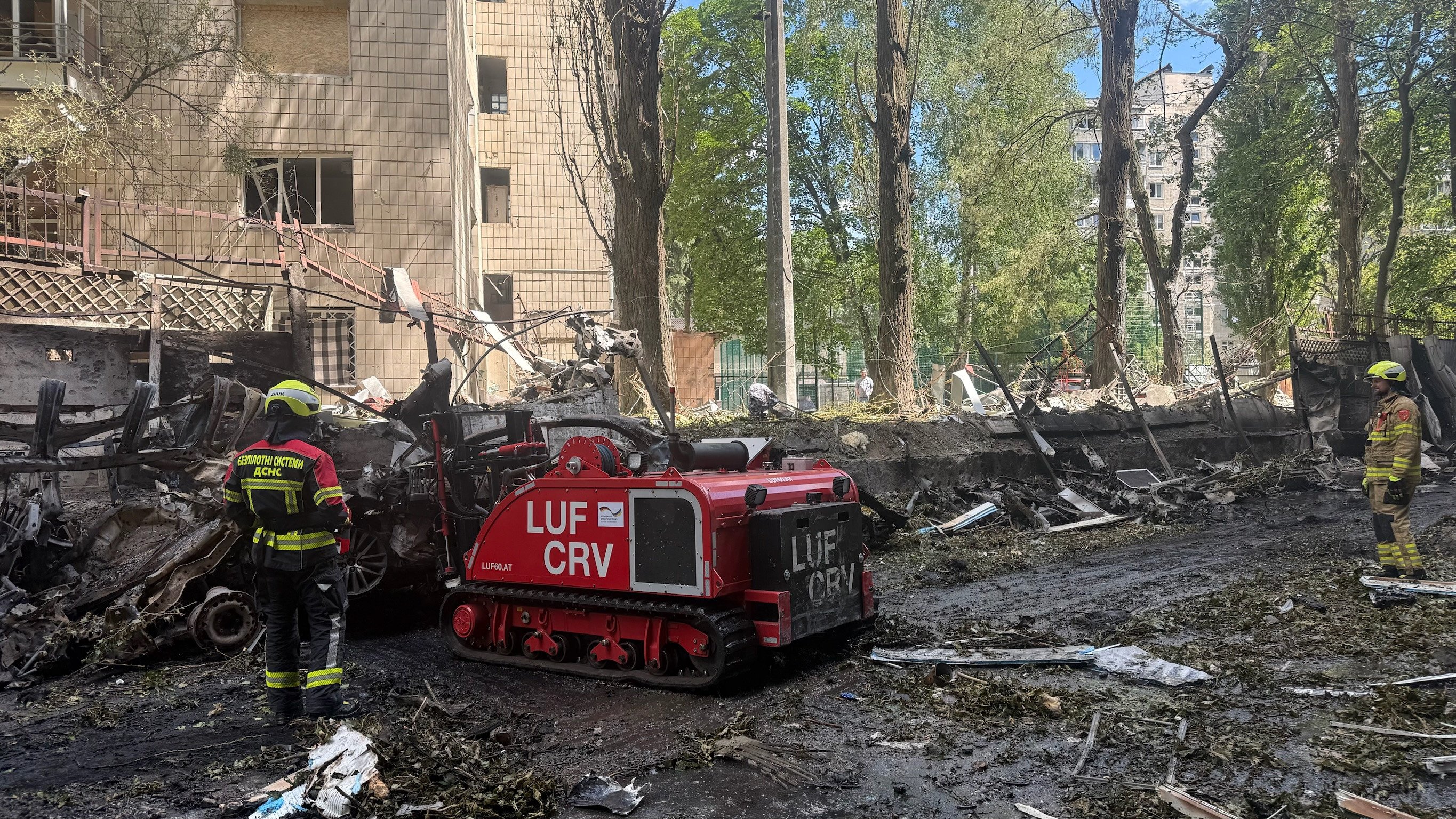
A Ukrainian rescue worker who operates this equipment explained how the robots work and how they have been deployed in real-life emergency operations.
From professional sports to operating robots
“The State Emergency Service was planning to develop its robotics capabilities, and that really interested me,” Kovtun says. “A colleague suggested I get involved.”
So, Kovtun learned to operate robotic systems—by undergoing specialized training abroad.
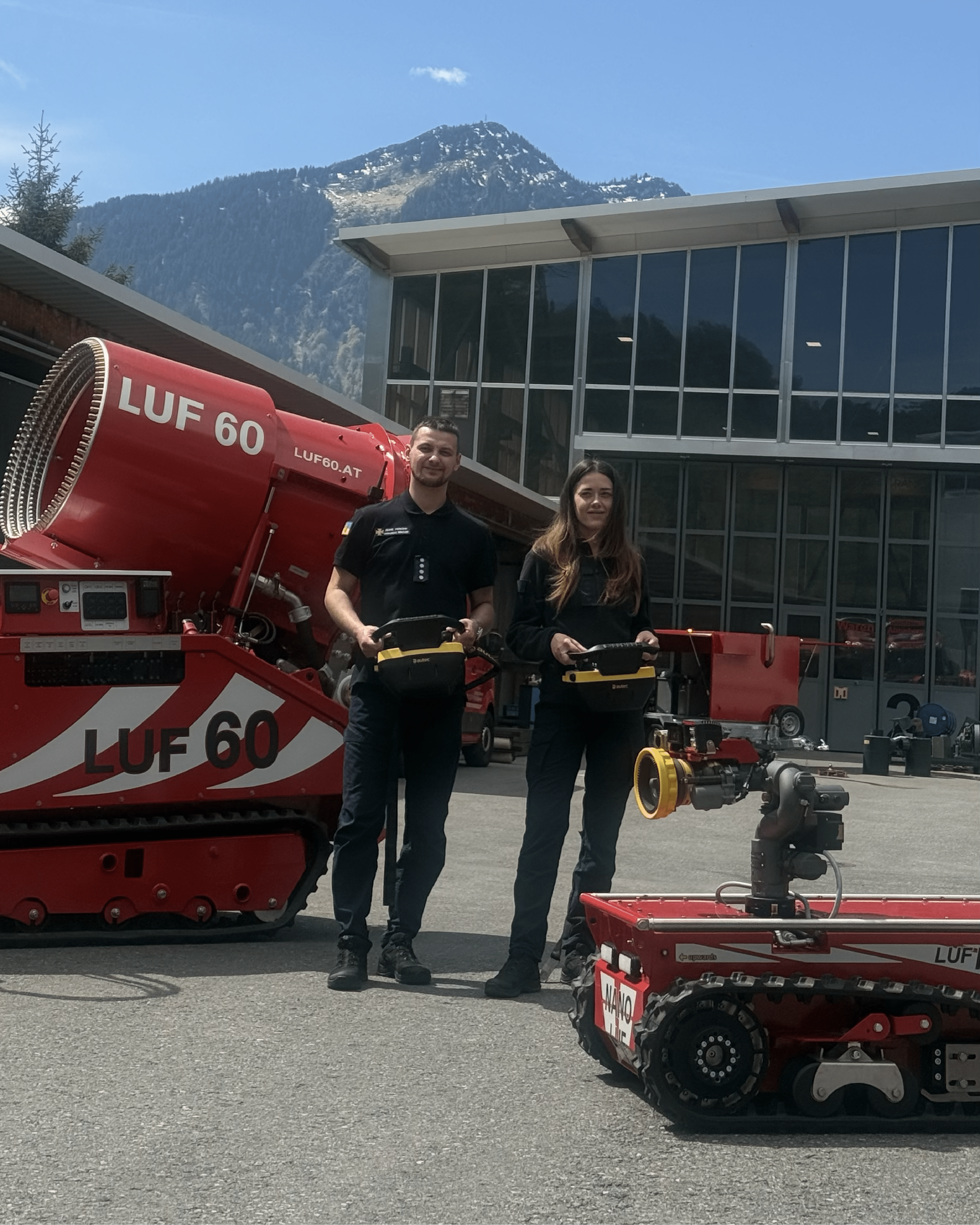
The first stage took place in Austria at the facilities of LUF, a manufacturer of firefighting and rescue equipment. Then the training continued in Germany.
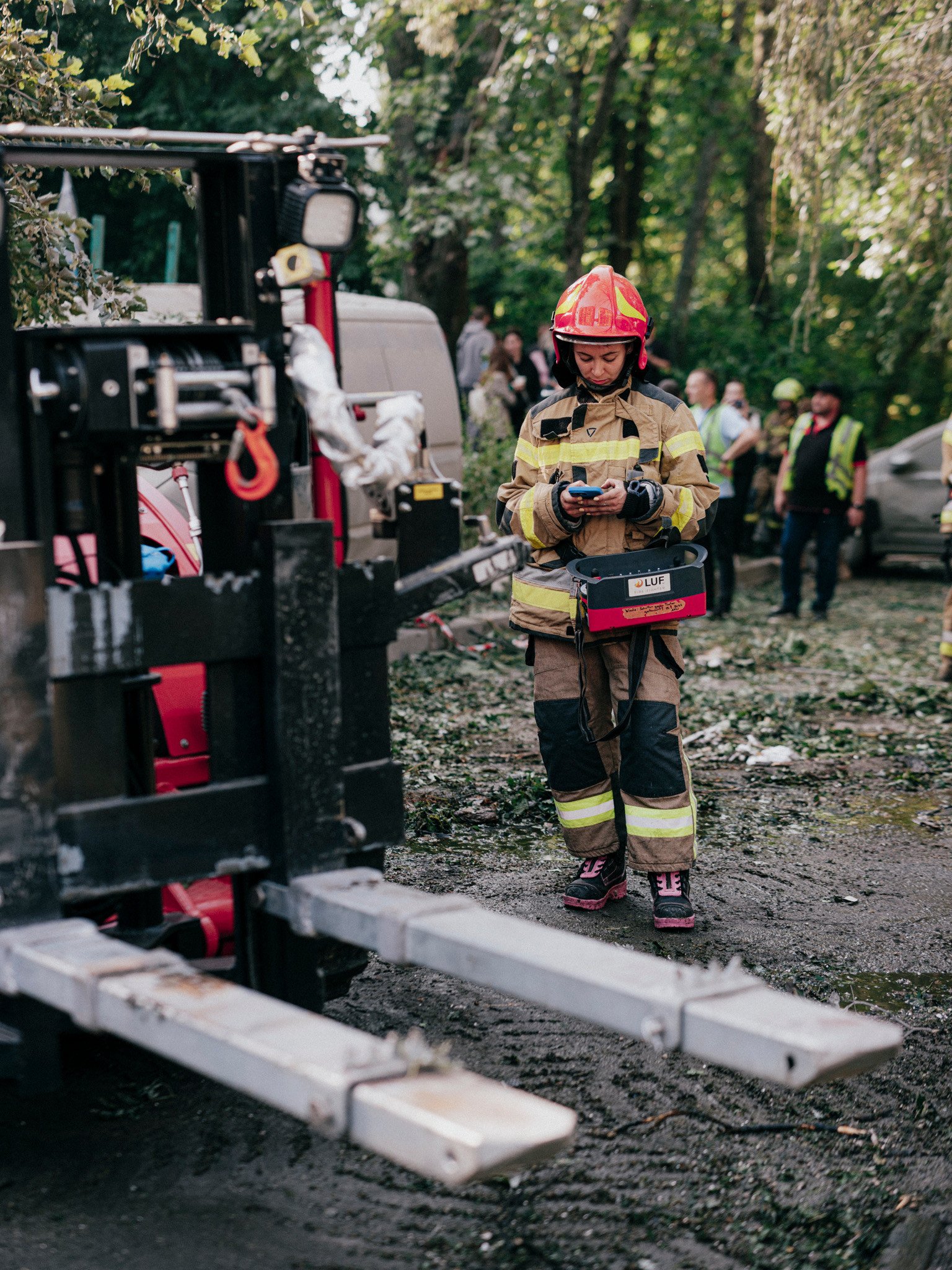
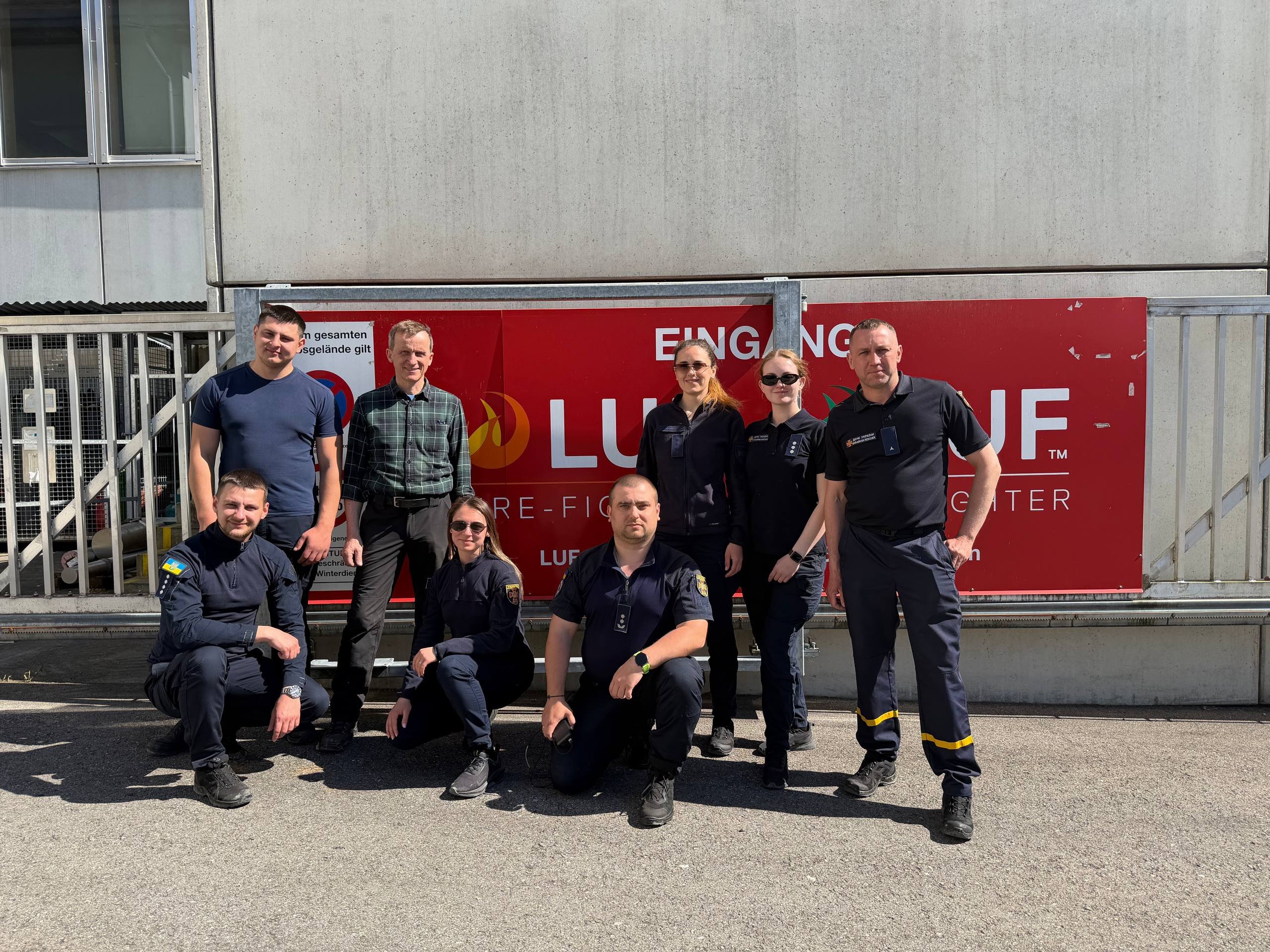
Kovtun admits that the beginning was challenging, as she had to learn the technical fundamentals from scratch. But years of professional sports had taught her discipline and endurance.
In April 2025, she became one of the first five female operators to join the newly established robotics and UAV team within Kyiv’s State Emergency Service. Today, she leads the team, which deploys specialized equipment to respond to emergencies, including Russian attacks on the Ukrainian capital.
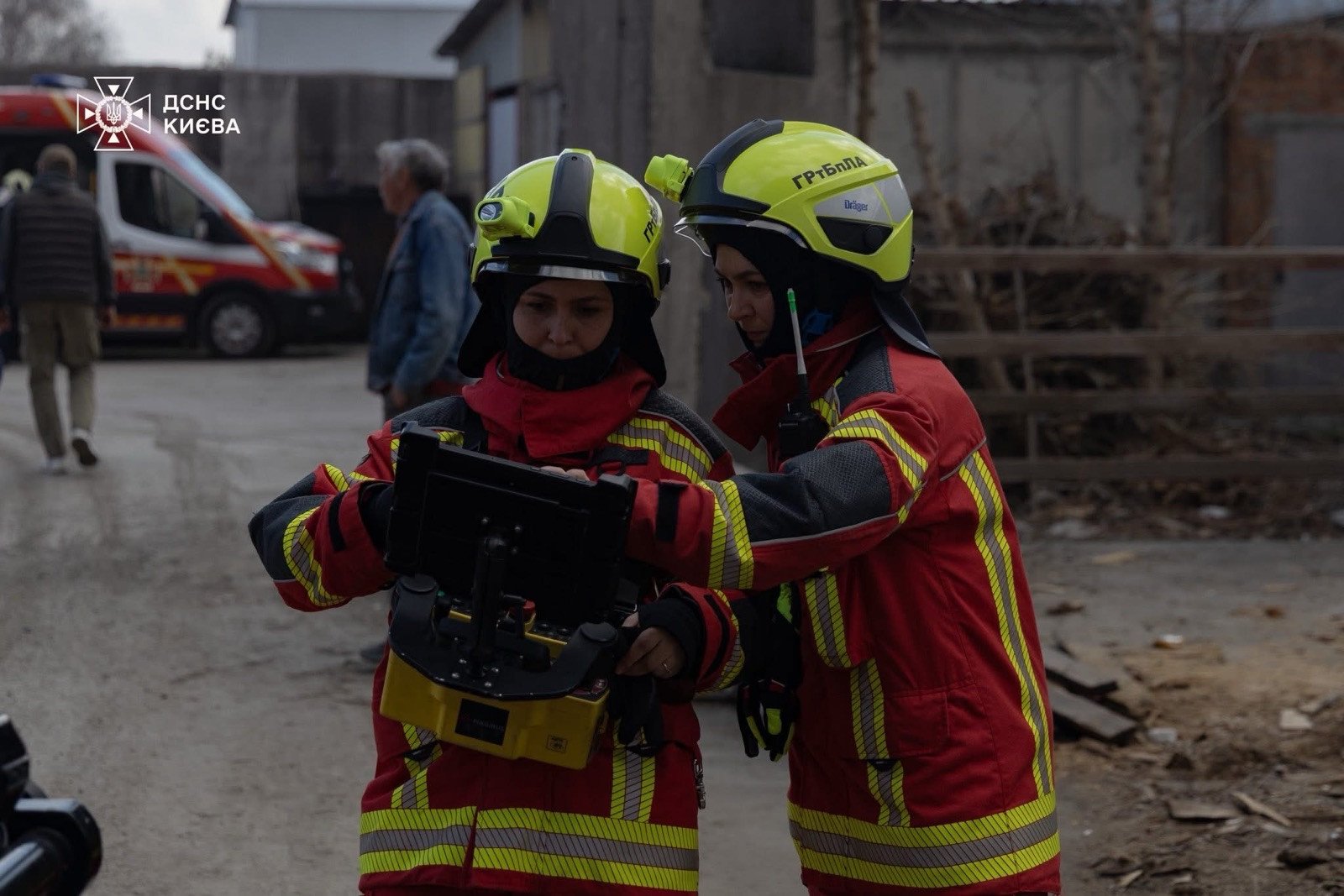
One of the recent major fires in Kyiv left a particularly strong impression on Inna. That day, she was operating a firefighting robot in conditions of poor visibility. The smoke was so thick that she had to put on a breathing apparatus with an oxygen cylinder to continue working.
While firefighters battled the blaze, Russia continued its attacks on Kyiv. Another air raid alert sounded during the firefighting operation, forcing the rescue teams to immediately suspend their work and rush to shelter. As they worked to deal with the aftermath of one Russian attack, the rescuers themselves risked being caught in a follow-up strike. The operation resumed and was completed once the threat had passed.
Robots responding to Russian attacks: What the latest technology can do
Robotic systems vary in size, design, and purpose. Among the most versatile and technologically advanced models actively used in rescue operations, Inna highlights five: LUF-CRV, Wolf R1, LUF Nano, LUF 60, and LUF LOG.
LUF-CRV
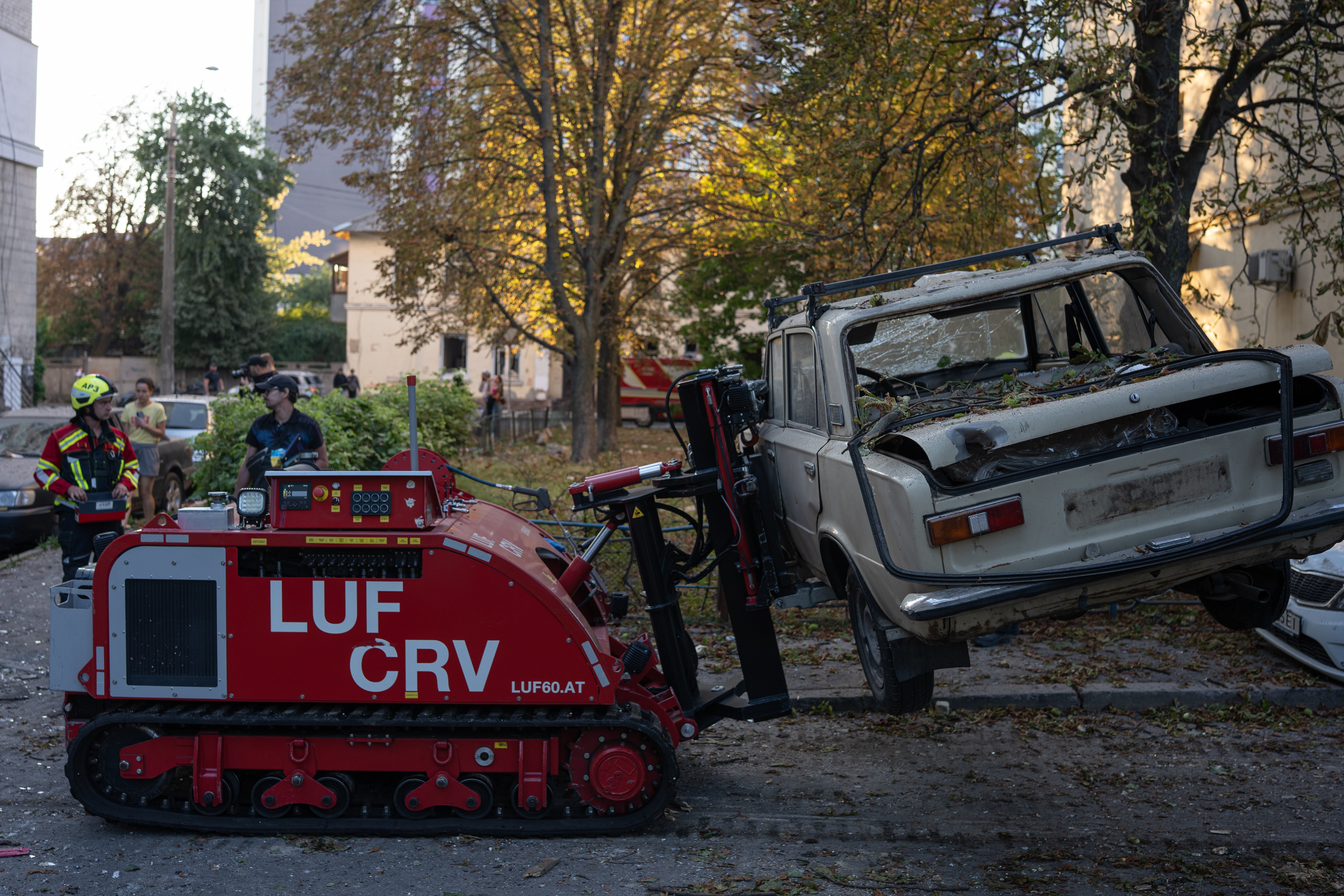
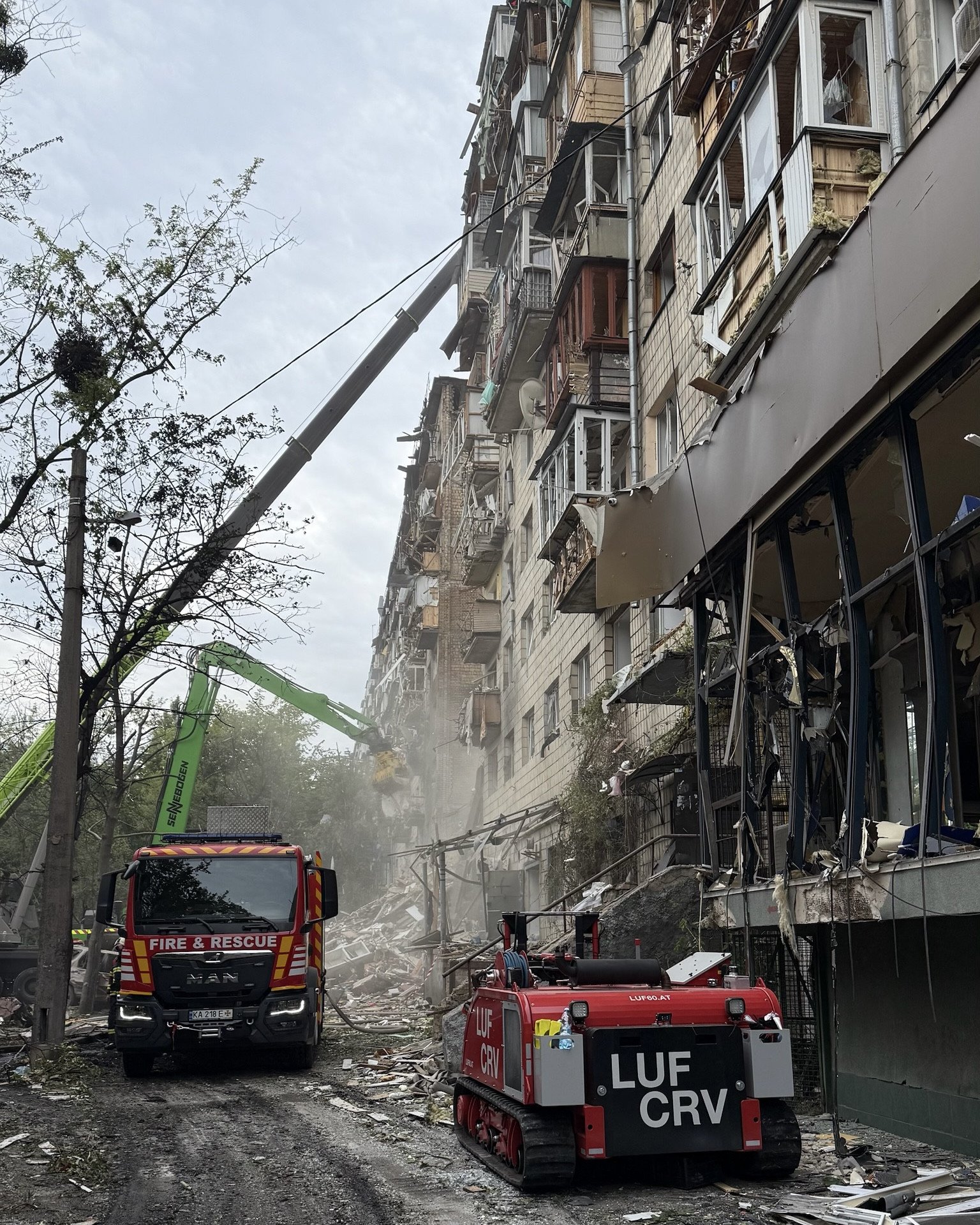
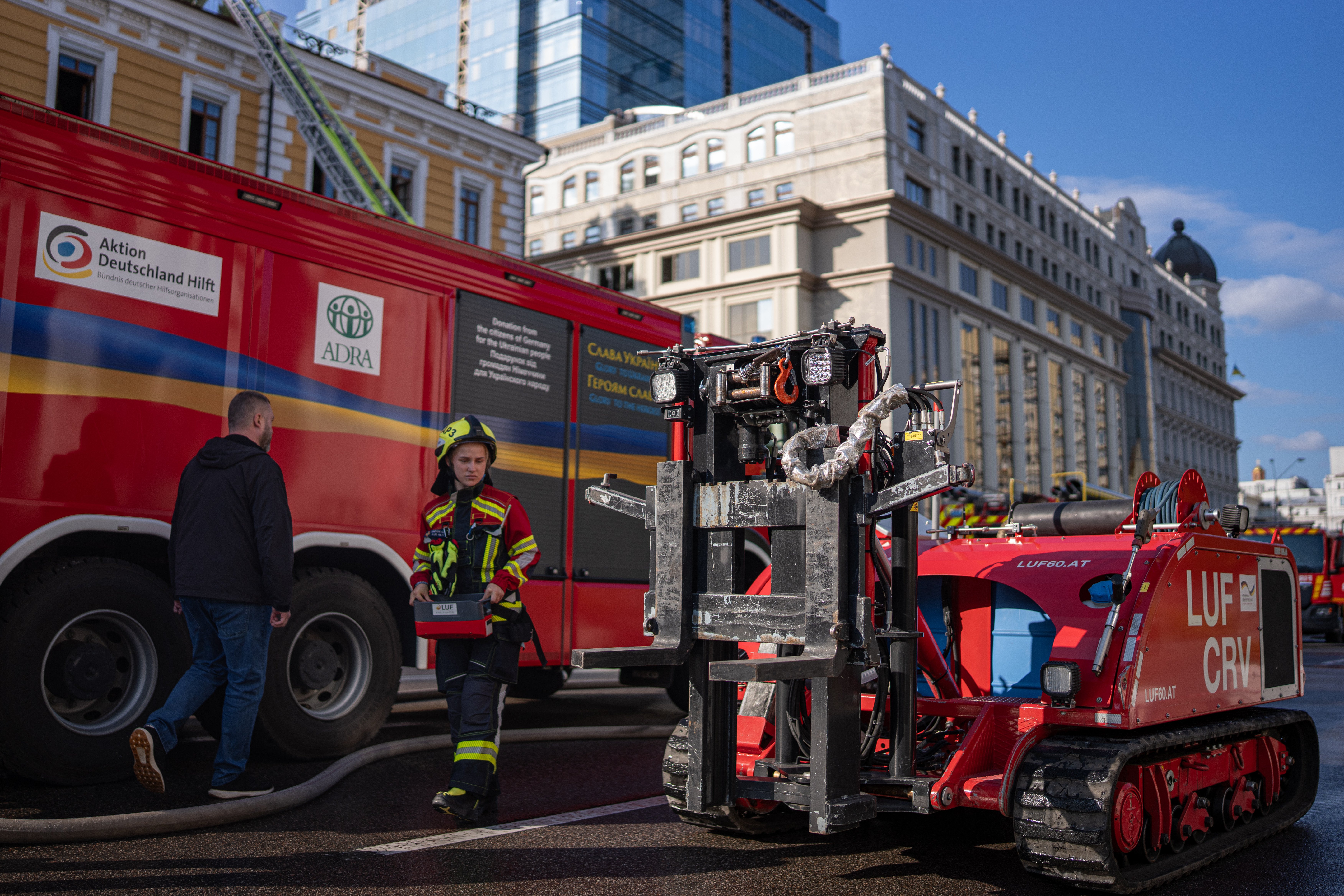
Austria’s LUF-CRV is the robot most frequently used by Kyiv’s emergency responders. It was the first robotic system delivered to their unit and has since assisted in numerous rescue operations.
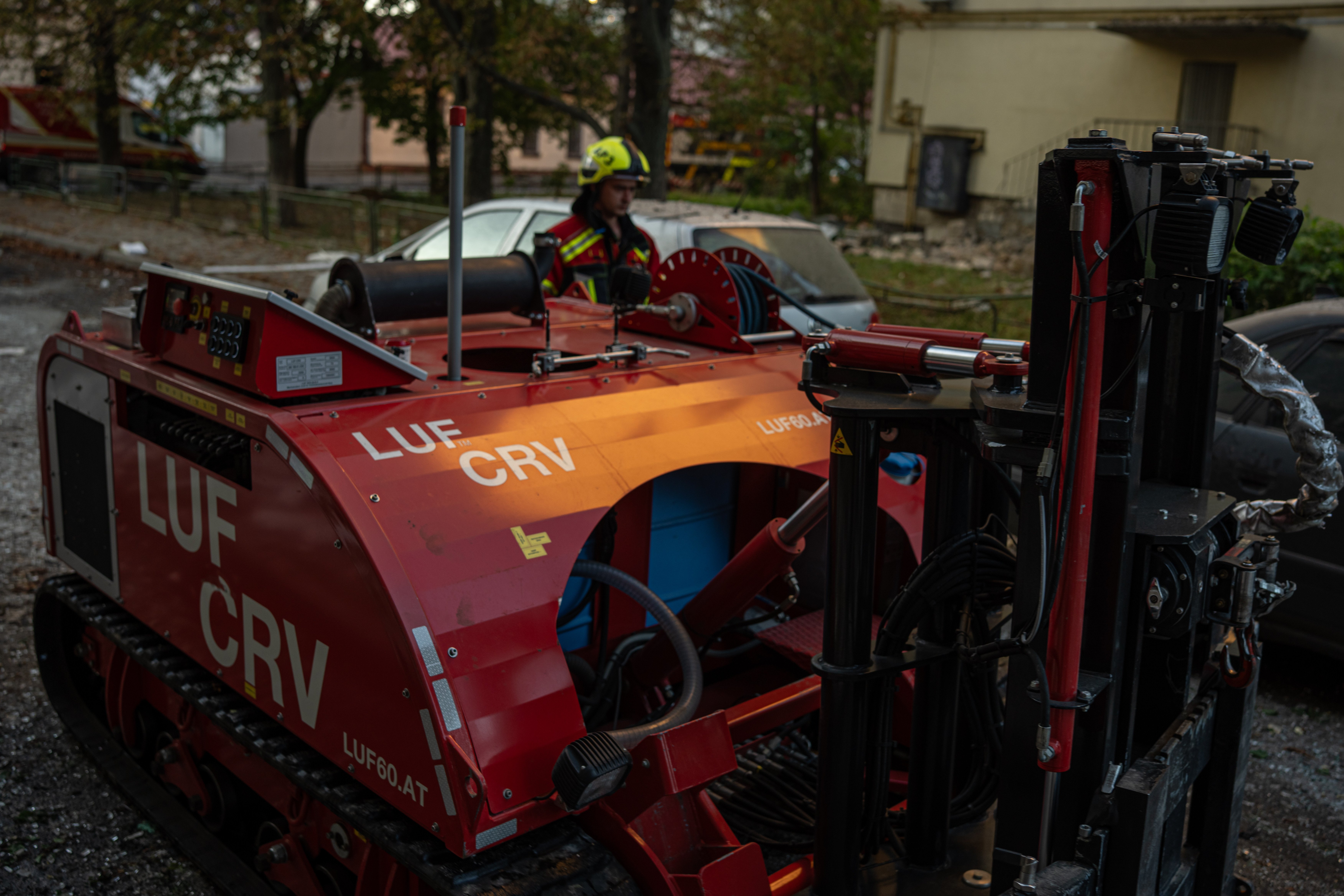
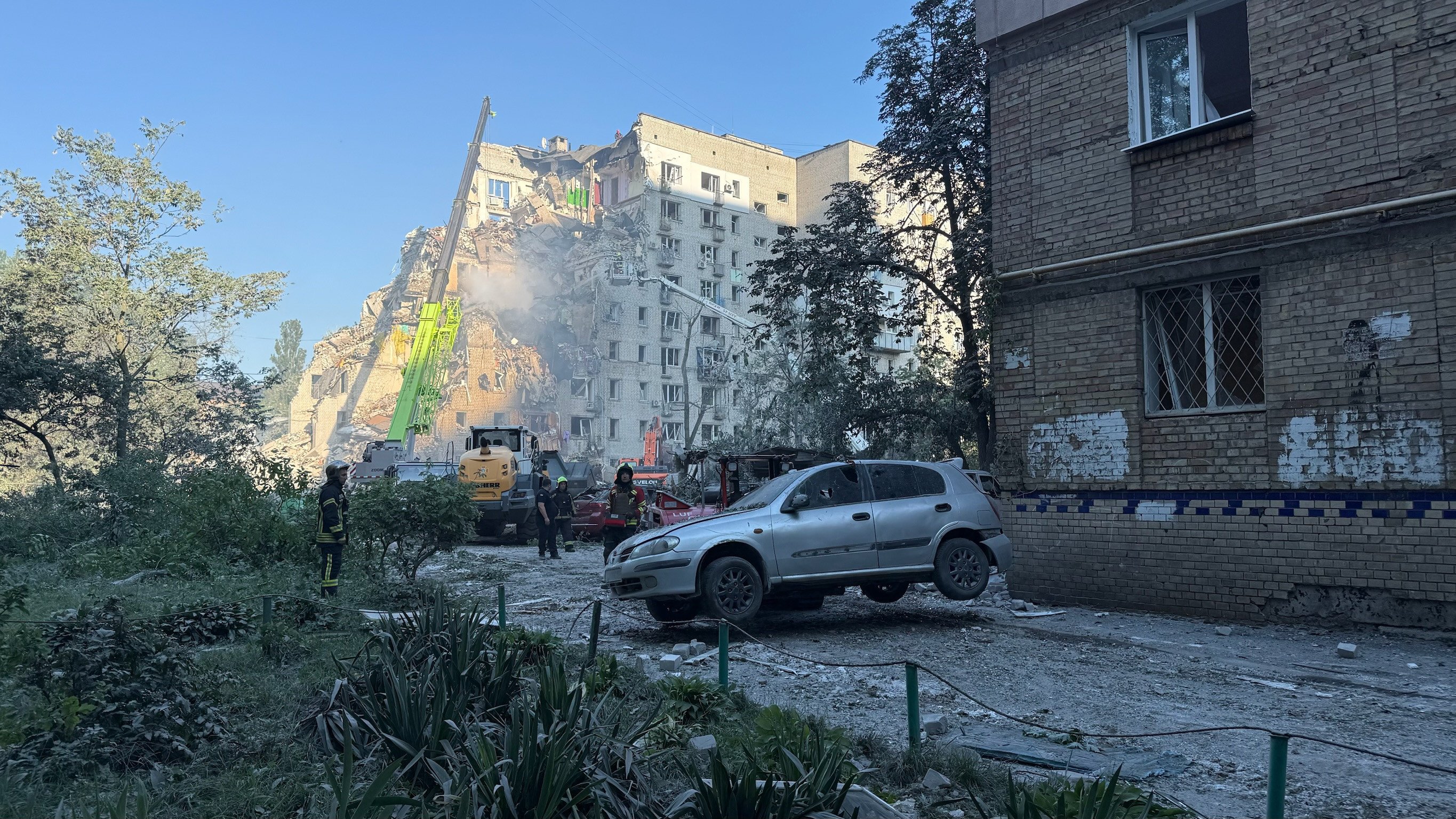
After Russian strikes on residential buildings, damaged vehicles often obstruct access to destroyed structures. They can block the passage of fire trucks, mobile cranes, excavators, and other heavy machinery needed for rescue operations.
In such situations, rescuers deploy the compact LUF-CRV robotic manipulator. According to Kovtun, it can lift vehicles weighing up to 2 metric tons and retrieve them from hard-to-reach areas that are inaccessible to larger equipment.
Kovtun says her personal record with the robot is moving 13 vehicles using the LUF-CRV.
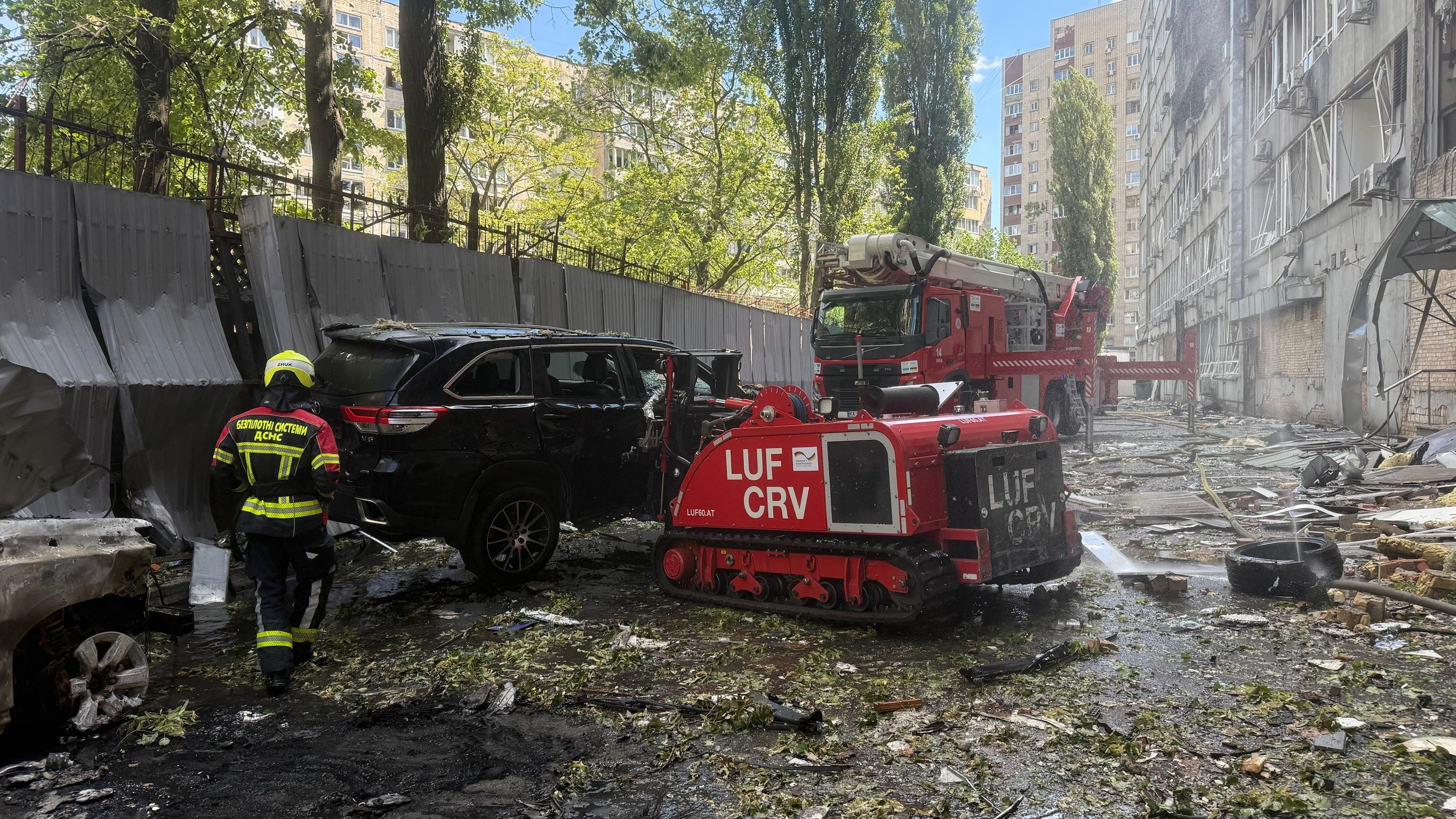
The rescue worker recalls one deployment following a Russian strike on a residential building. The courtyard and surrounding area were blocked by vehicles, preventing heavy engineering equipment from reaching the site.
Operators deployed the LUF-CRV, which helped move approximately 15 cars. This cleared access routes for heavy machinery and allowed crews to begin removing debris. The robot then continued working along the perimeter, clearing routes for vehicles transporting construction debris off-site.
“A lot of people were rescued at that location. More than ten people were pulled out alive,” Kovtun says.
She emphasizes that the robot did not directly extract survivors from beneath the rubble. Instead, it removed obstacles that were preventing rescue crews from working at the site.
Wolf R1
One of the most dangerous tasks facing Ukraine’s State Emergency Service after Russian attacks is extinguishing large fires at warehouses, industrial facilities and other high-risk sites.
Extreme temperatures, dense smoke, damaged structures, the risk of collapse and the possibility of further explosions can make approaching the source of a fire exceptionally dangerous for firefighters.
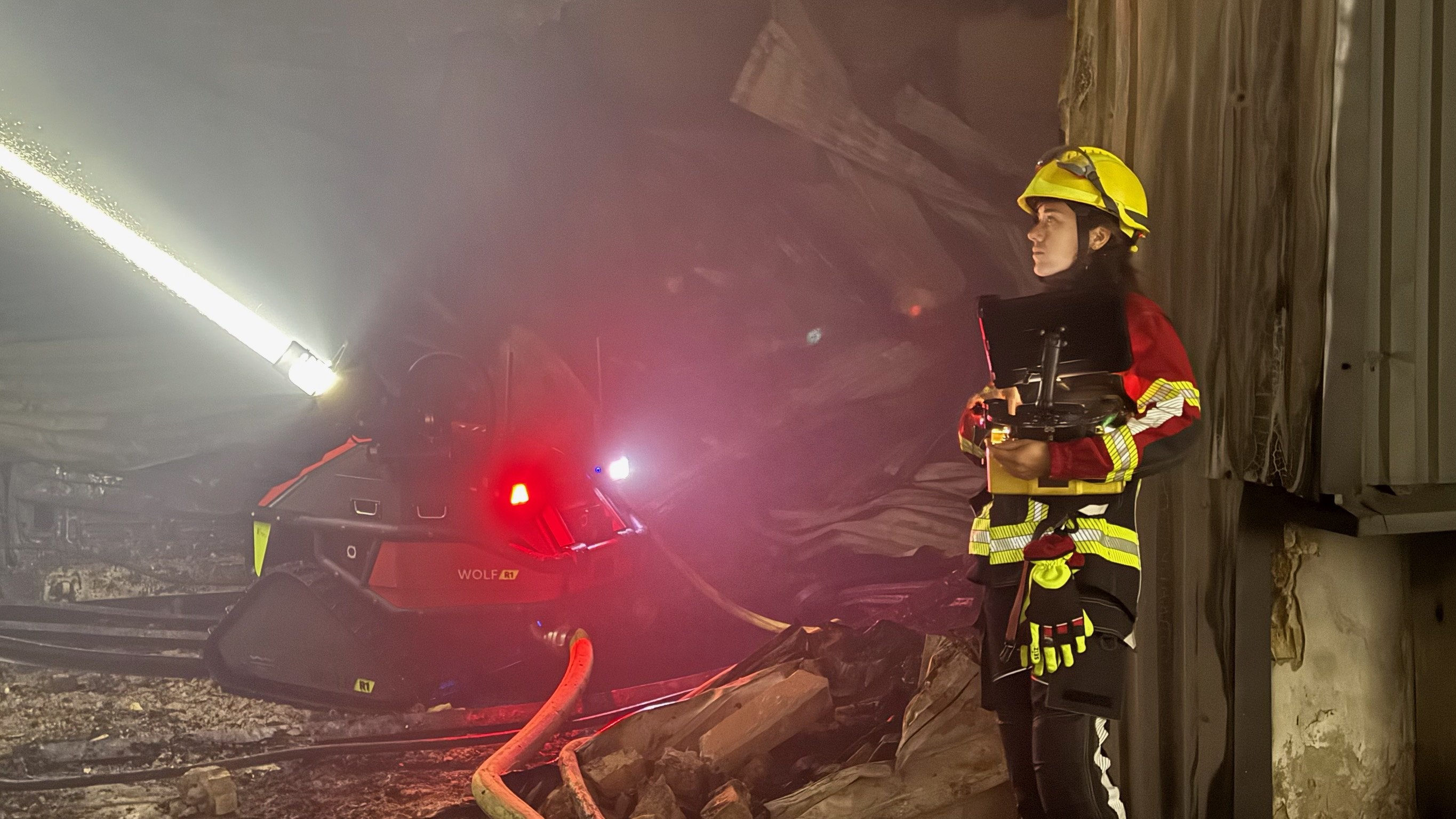
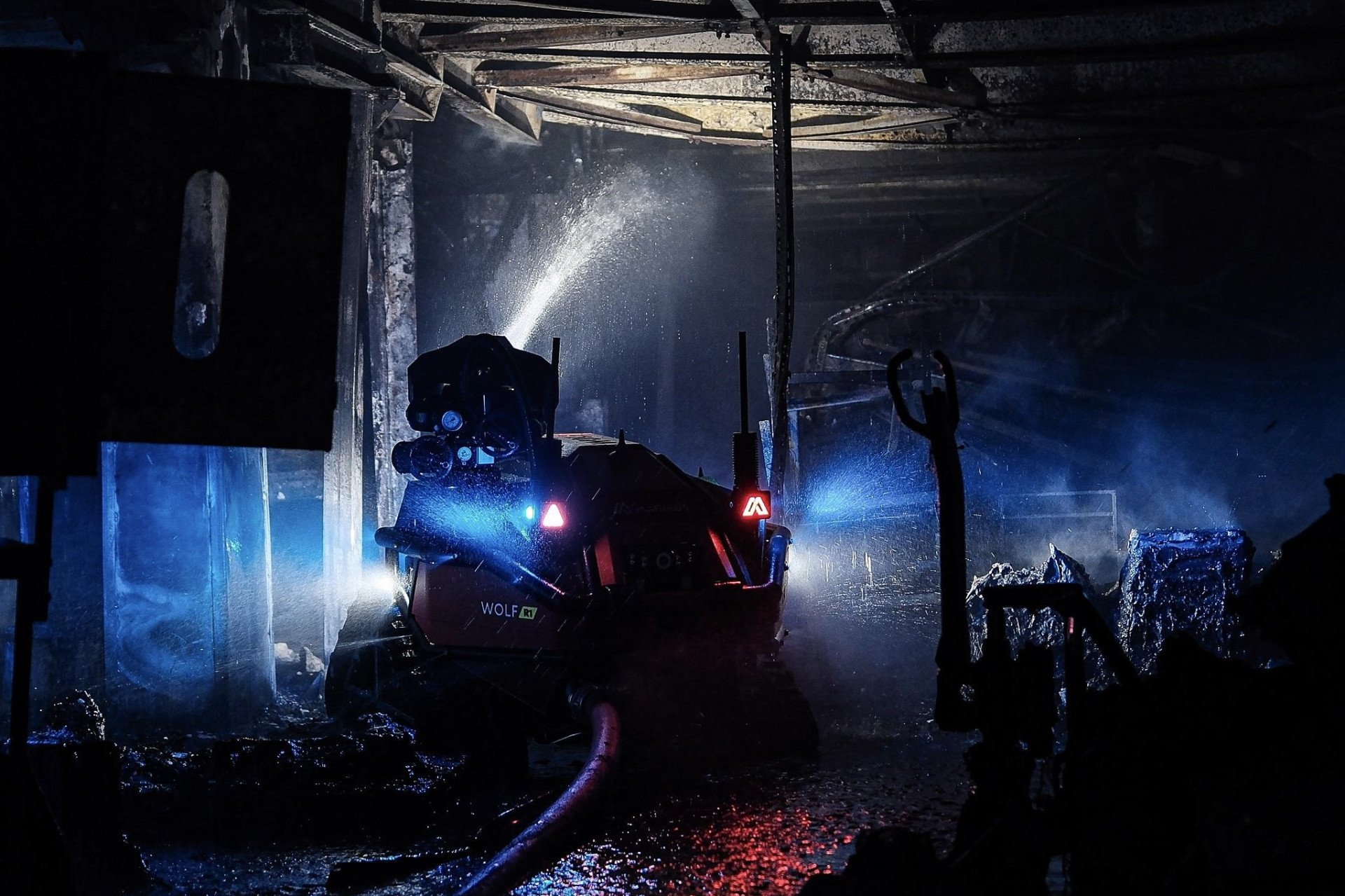
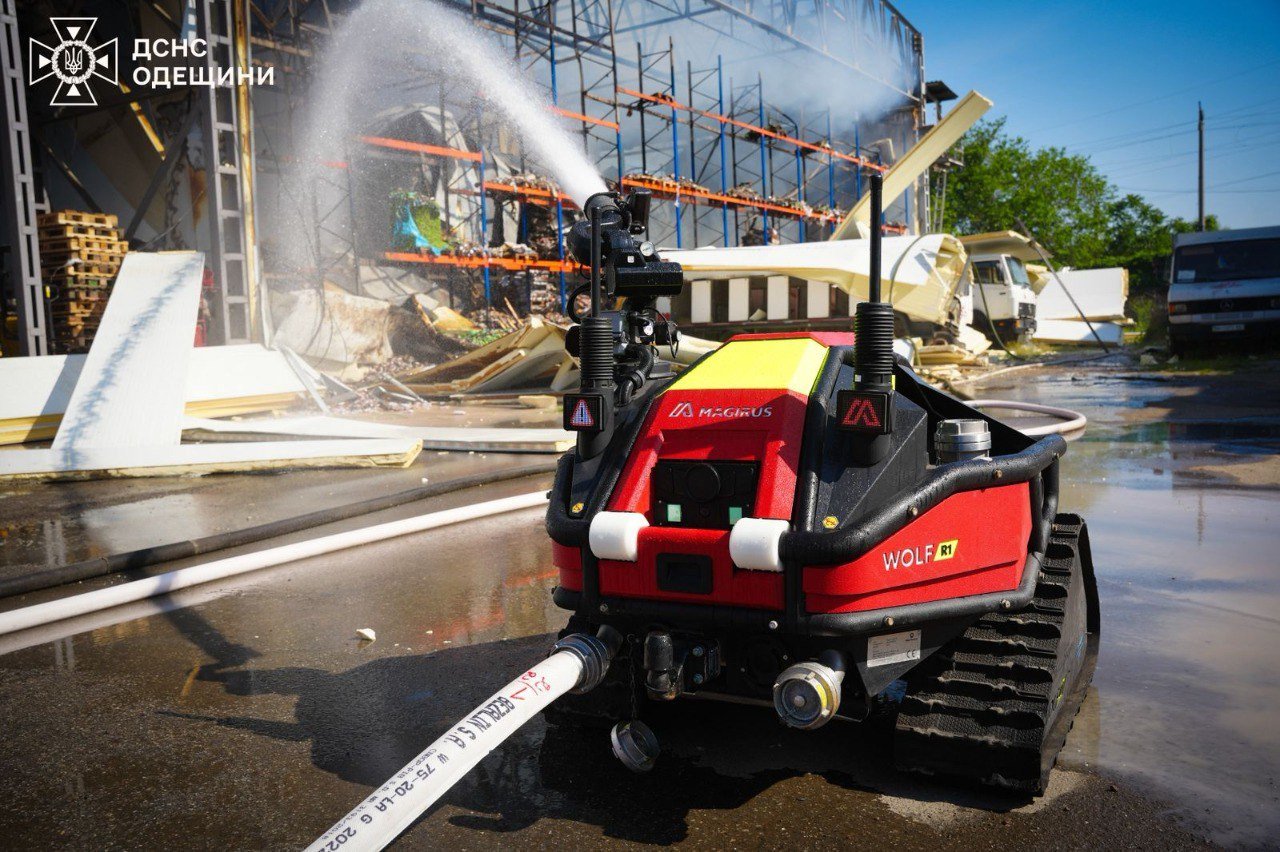
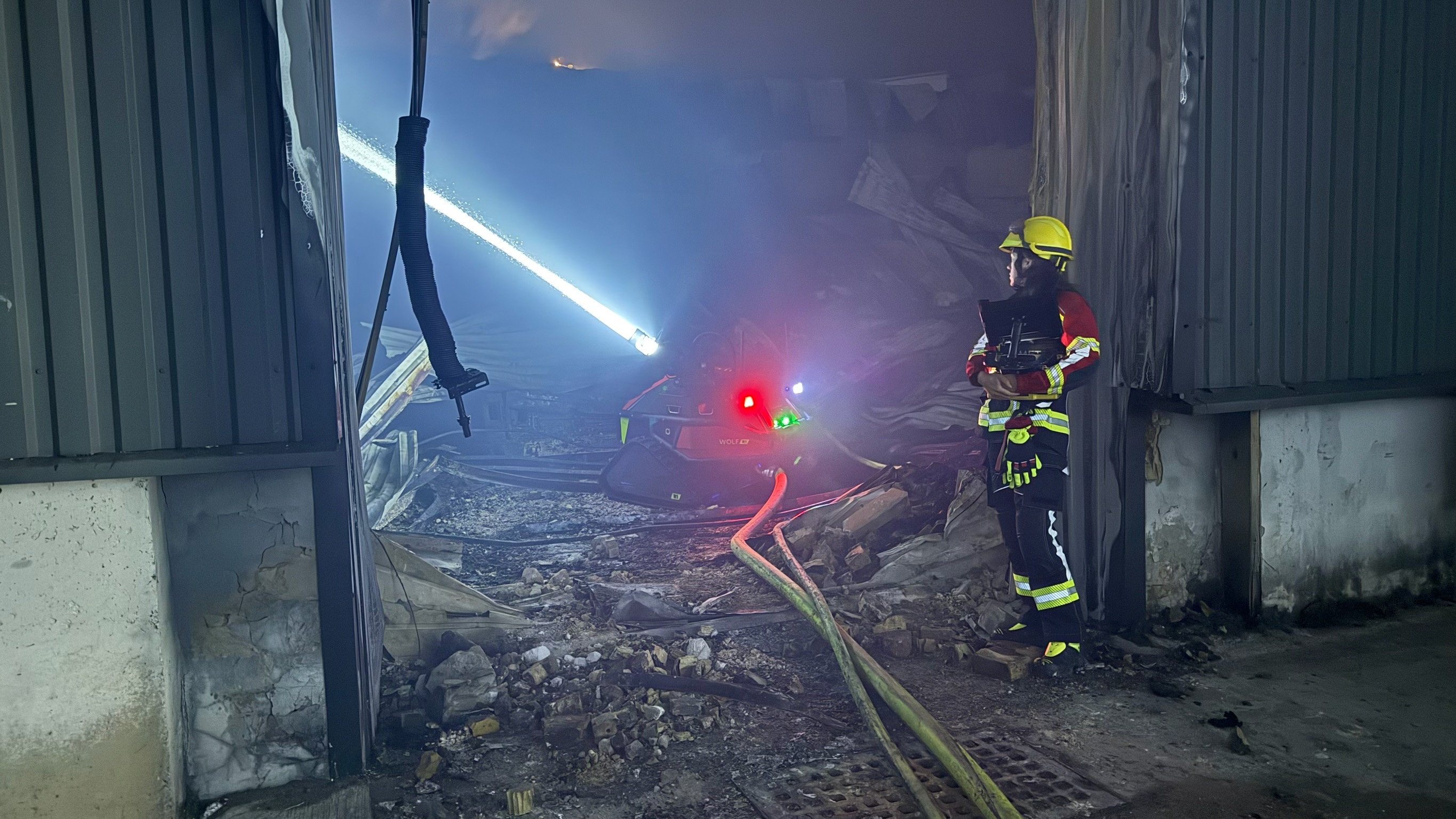
To operate in these conditions, Ukrainian rescuers use the German-made Wolf R1 robotic system. It is equipped with a firefighting monitor that can direct water or foam onto the flames.
Depending on conditions, operators can control the robot from distances of 10 to 300 meters (33 to 984 feet), or from up to one kilometer (0.6 miles) away when operating it from a specially equipped vehicle.
One example of its deployment was a massive fire that broke out overnight on September 11 following a Russian strike on warehouse facilities.
Two robotics teams from Kyiv’s State Emergency Service were dispatched to fight the blaze. Dense smoke complicated the operation, forcing rescuers to wear respiratory and eye protection while continuing to operate the equipment.
The Wolf robot was deployed to direct water onto the fire. Its operation helped contain the blaze and prevent it from spreading to neighboring buildings.
Even more dangerous conditions arose during the winter, when firefighters responded to burning explosion-prone tanks that were leaking gas. Because of the risks, operators controlled the robot directly from a fire truck positioned at a safe distance.
“The robot was positioned close to the tanks, while the vehicle itself remained at a safe distance. Whenever a danger arose, they could quickly drive the vehicle farther away to a safer location,” Kovtun says, describing the work of colleagues from her unit.
A similar approach is used when fighting fires at sites where explosions are occurring. The robot can approach the flames while its operator remains behind cover, such as a wall, provided the distance allows for a stable control signal.
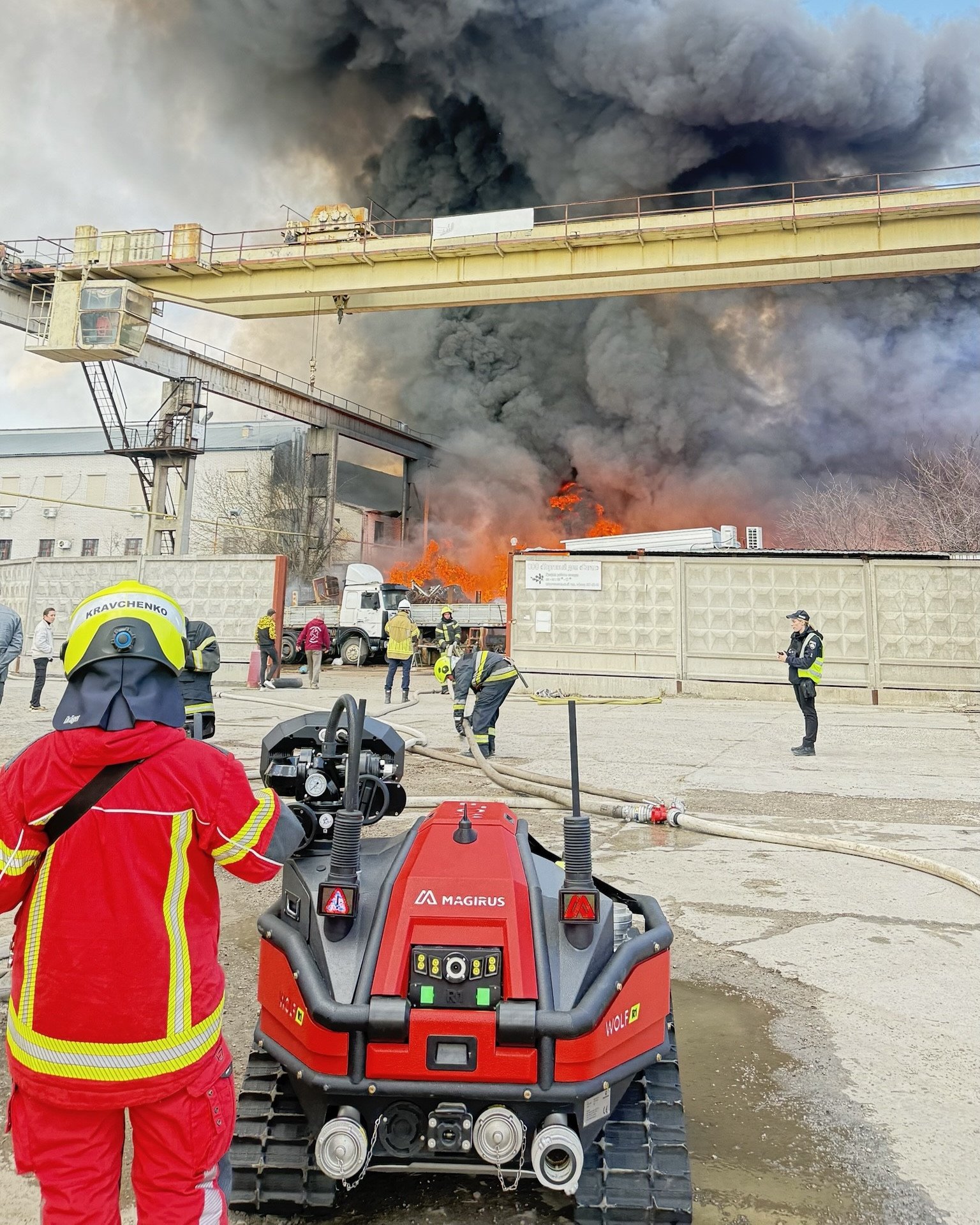
According to Kovtun, the Wolf R1 is not deployed to every fire. Its capabilities are particularly valuable during complex, large-scale incidents that require substantial volumes of water or foam, cooling hazardous areas and minimizing the time firefighters spend near dangerous locations.
LUF Nano
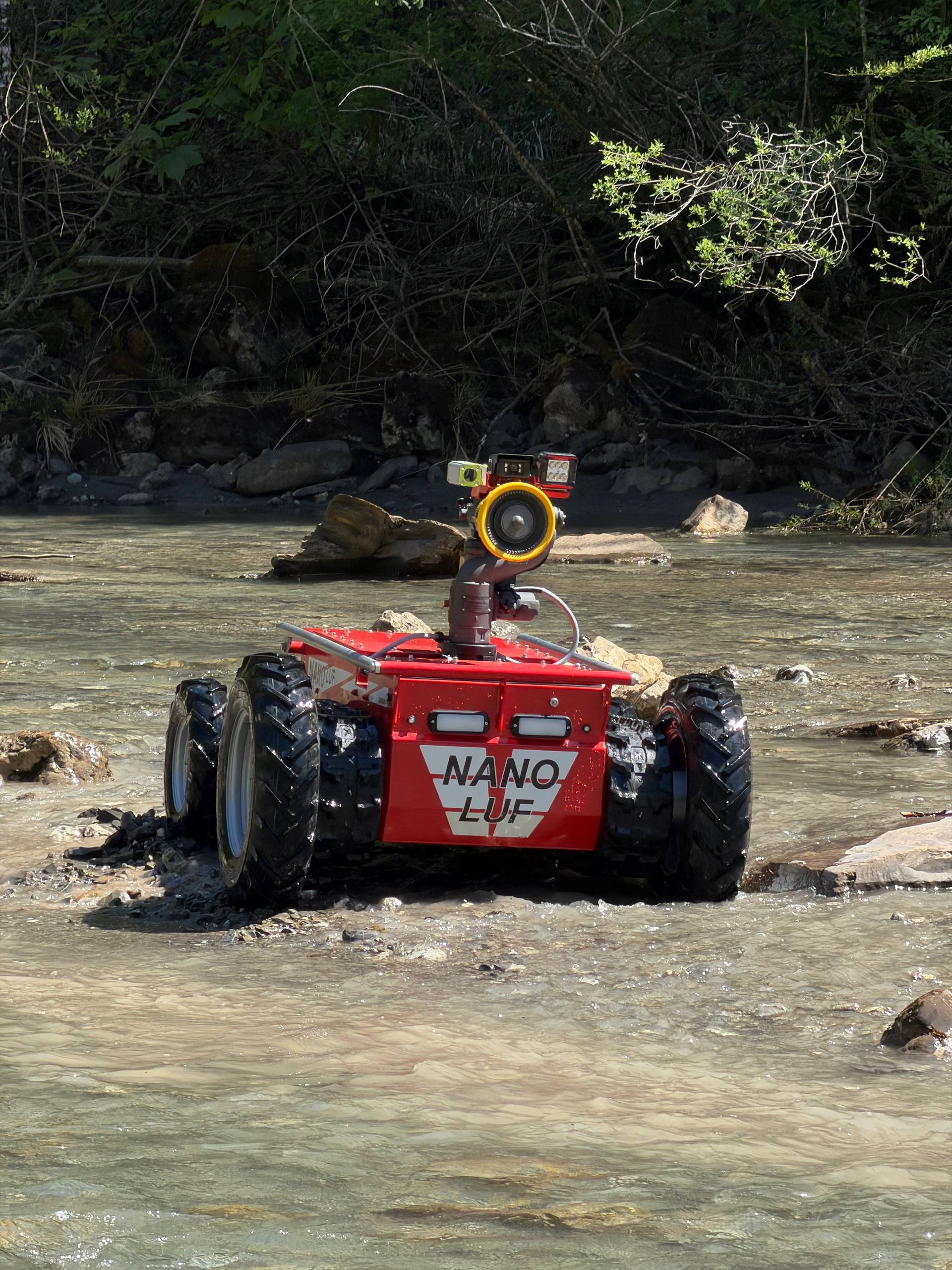
The compact LUF Nano is one of the most versatile robotic systems. It can be used for firefighting, while its powerful camera also enables reconnaissance operations.
Its compact design allows it to climb stairs and travel along railroad tracks. When necessary, a stretcher can be mounted on the robot to evacuate injured people.
“Our team doesn’t have this equipment yet, but our colleagues in Cherkasy have already used it. One of Kyiv’s fire stations also has one. And our team is currently in the process of receiving one,” says Kovtun.
LUF 60
Another robot helping Ukrainian rescuers tackle dangerous and complex fires is the LUF 60. One of its key features is its ability to increase water pressure using an additional pump.
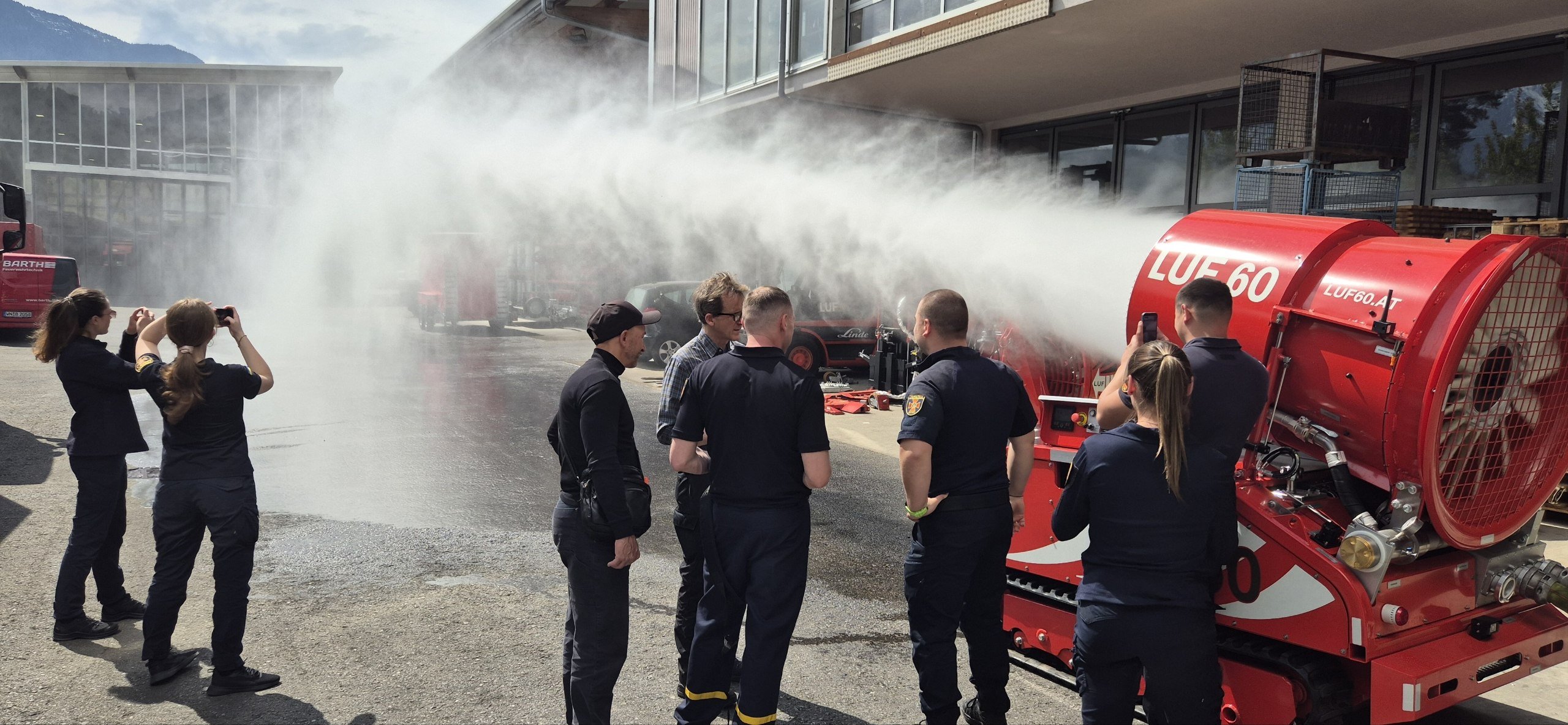
Kovtun says she and her colleagues only recently received the LUF 60 from international partners.
She notes that the arrival of such equipment significantly expands the range of tools available to the State Emergency Service when responding to Russian attacks.
LUF LOG
Following Russian strikes, the sites of destroyed buildings may contain ammunition fragments, potentially explosive objects, and other materials that are extremely dangerous to handle.
For certain tasks in these conditions, the State Emergency Service uses the LUF LOG, an Austrian robotic system equipped with a manipulator arm.
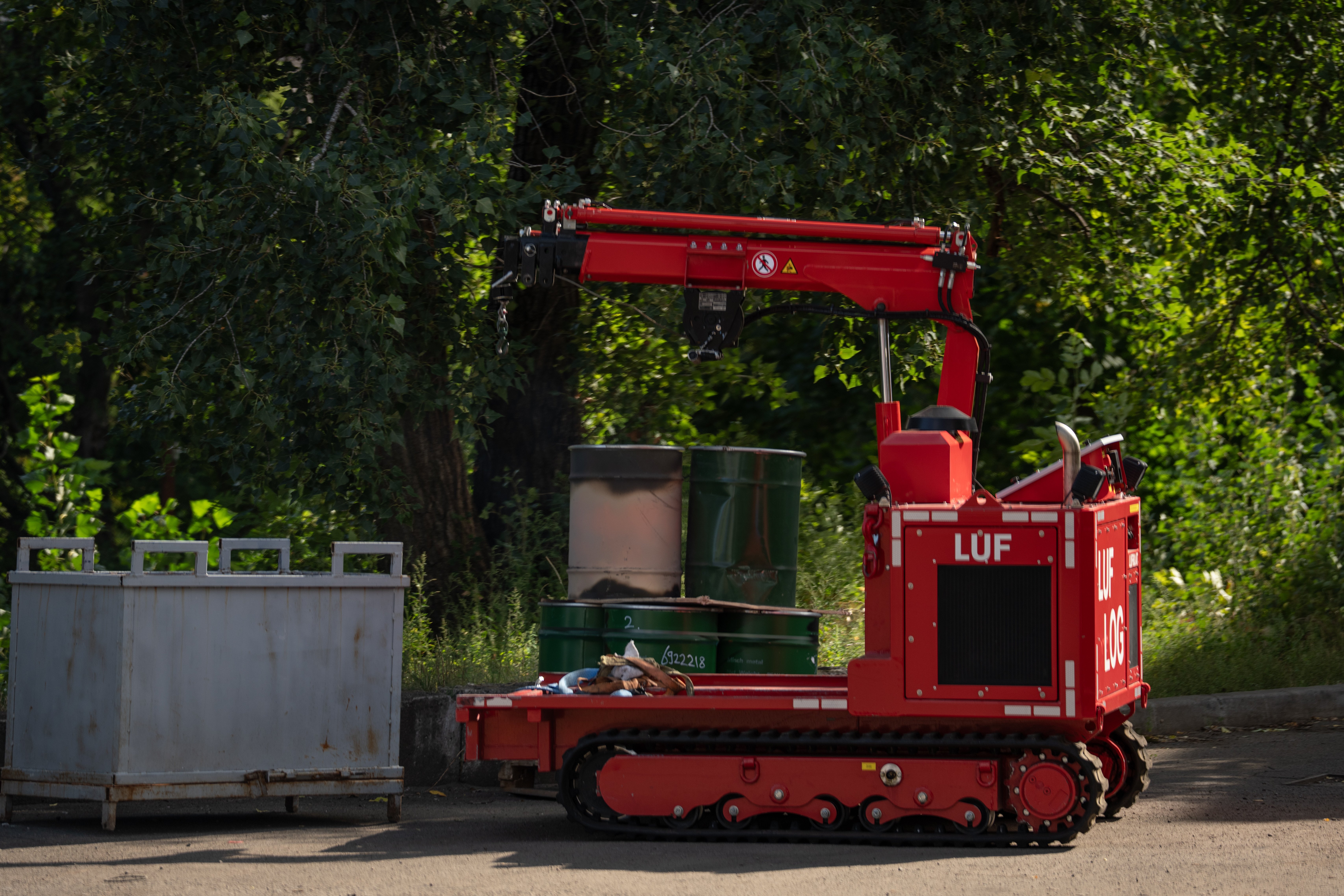
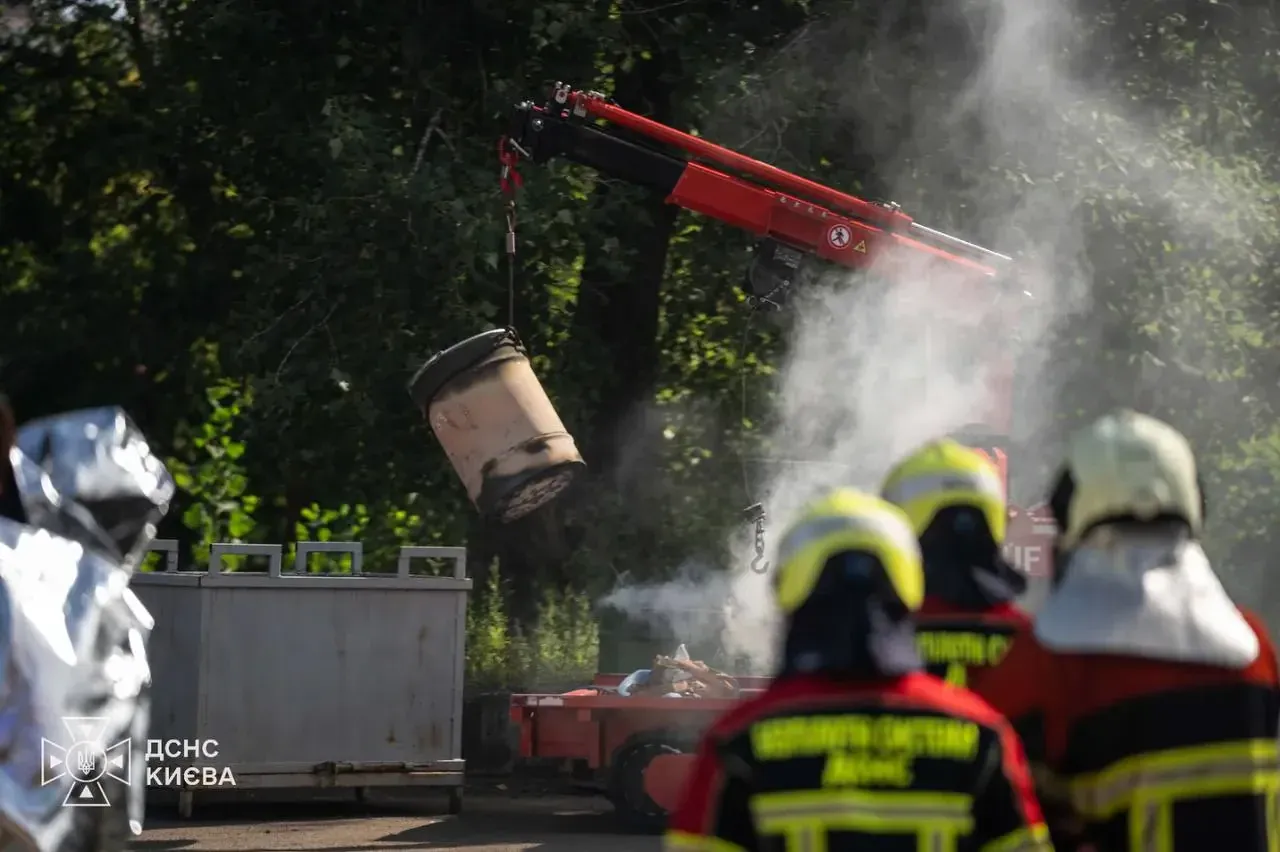
The system is currently being actively deployed in the Dnipropetrovsk region, which regularly comes under Russian missile and drone attacks.
Its use allows rescuers to work more safely amid the ruins and respond to the aftermath of strikes.
Behind every robot is a human operator
Despite their advanced automation, robotic systems do not operate independently.
Every operation relies on State Emergency Service personnel who prepare equipment for deployment, operate and maintain the machines, monitor conditions at emergency sites, and respond quickly as circumstances change during rescue operations.
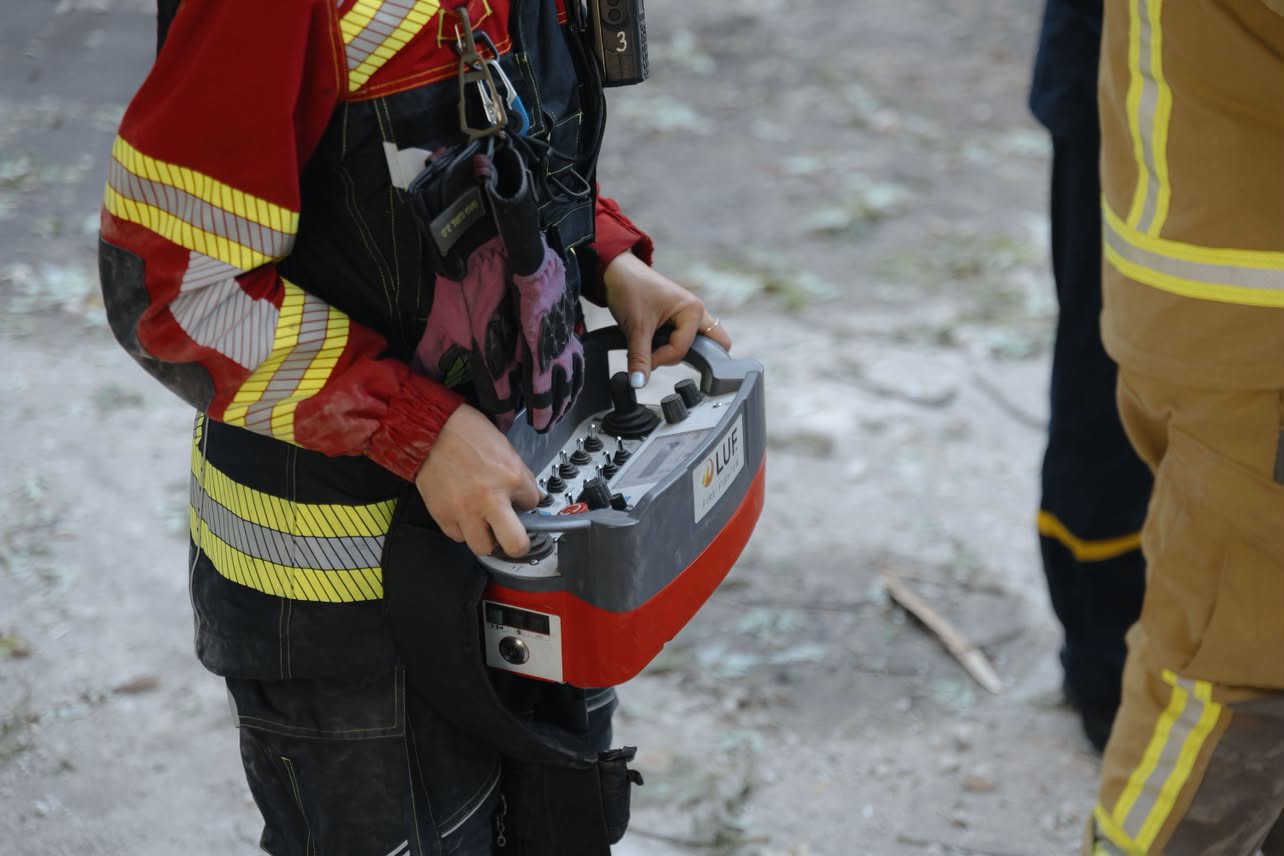
The profession requires not only technical expertise and quick decision-making but also physical endurance.
For example, the battery of one robotic system weighs approximately 55 kilograms (121 pounds). If it needs to be replaced during an operation, the robot must first be moved to a safe distance and powered down.
Two operators then remove the depleted battery, install a charged one, and prepare the robot to resume work.
Kovtun says she feels supported by her colleagues in the unit. Outside of work, however, her profession often surprises people, who ask how she chose this career.
For her, the answer is simple: serving in the State Emergency Service allows her, above all, to help others.
“I believe the most important thing is saving human lives,” says Kovtun. “When you realize that you can help and save people during such a difficult time, you want to make your contribution to our victory and our peace.”
International support that helps save lives
The development of robotics within Ukraine’s State Emergency Service has been made possible in part through support from international partners.
Through a project implemented by the German Agency for International Cooperation (GIZ) and funded by the German government, Ukrainian rescuers receive specialized equipment and training to operate it. This assistance has a direct practical impact: new equipment expands the capabilities of rescue units, while operator training ensures it can be used effectively in real emergencies.
Today, Ukraine is not only receiving advanced rescue equipment from international partners but also gaining unique experience in deploying it under the conditions of full-scale war. Ukrainian SES specialists are adapting these technologies to operate in the aftermath of large-scale attacks, amid extensive destruction and the constant threat of follow-up strikes.
As Russian attacks continue, developing these capabilities is not just about improving the effectiveness of rescue operations. It is also about protecting the lives of those who risk their own every day to save others.
Discuss this article: