- Category
- War in Ukraine
Russia Is Reshaping Air Warfare With AI Drones That Hunt Without GPS While Building Its Own Starlink
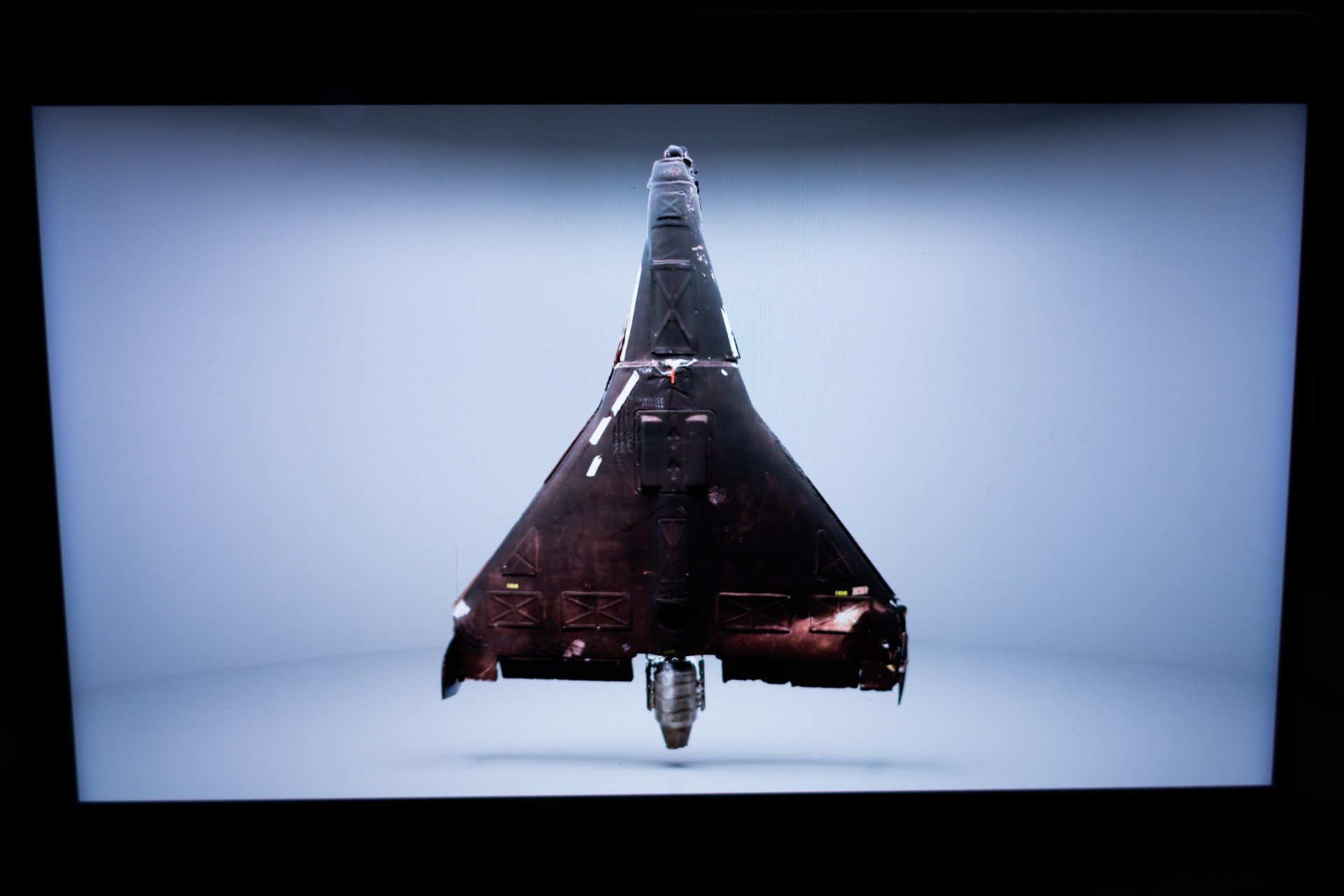
Racing to build a next-generation arsenal, Russia is mass-producing AI-driven attack drones and developing an independent satellite-based weapons control system, all while relying on a critical lifeline of foreign parts.
 Prefer U24 Media on Google
- Authors


What technologies is Moscow already deploying against Ukraine, how do they threaten European security, and how is Ukraine adapting its air defenses?
These questions were addressed by Vladyslav Vlasiuk, the Ukrainian president’s commissioner for sanctions policy, and Serhii Beskrestnov, an adviser to the Ukrainian president on defense technology development, known by his call sign Flash, during a press briefing where components of Russian missiles and drones used to attack Ukrainian cities and communities were displayed. The exhibits included electronics and parts from Geran-4 and Geran-5 drones, Iskander-M, Kalibr, Kh-101, Banderol, Filin, and Dan-T missiles.
How Russian drones are learning to identify targets independently
“The future is artificial intelligence,” Serhii Beskrestnov said. “And artificial intelligence in UAV systems and missiles.”
Russian developers have spent several years training artificial intelligence systems to recognize objects in images. To do this, Russia uses vast amounts of visual data, including images of Ukrainian warehouses, certain types of industrial facilities, and infrastructure. These developments are already being incorporated into Russian weapons. Among the examples cited by Beskrestnov are Molniya, V2U, Lancet, and Geran drones equipped with the Susanin module.
Such technologies allow drones to navigate using images of the terrain without relying on GPS and to recognize objects without further operator control. For example, a drone can be instructed to locate railroad tracks, follow them, identify a train, and select its locomotive as an attack target. Similarly, the system can search for warehouses by analyzing the distinctive features of buildings and their surroundings.
Russian systems are already being trained to distinguish between different types of logistics facilities, including warehouses and logistics hubs, Beskrestnov said.
Why AI is a new challenge for air defense
One of the greatest threats identified by Beskrestnov is optical navigation, which determines a drone’s location using visual landmarks. During the day, these include distinctive terrain features, while at night, they can include illuminated highways.
This creates new challenges for electronic warfare (EW) systems, which Ukraine actively uses to counter Russian aerial attacks. If a drone navigates using visual imagery, jamming its GPS signal alone will not prevent it from reaching its target. Beskrestnov says the widespread use of such technologies at night could force Ukraine to reconsider its approach to blackout measures.
“Electronic warfare against the mesh modems we use for control will not work,” he said. “GPS jamming will not work either because the optical system will take over. This will be the next iteration.”
Another danger is that these drones navigate by referencing the ground, allowing them to fly at extremely low altitudes of approximately 20–40 meters. This could make it more difficult to detect them in time.
Beskrestnov considers the mass deployment of fully autonomous systems the most challenging scenario: hundreds or thousands of drones that independently search for designated target types and attack them after launch.
“This is a fully autonomous system,” he said. “That means you can produce a thousand UAVs, launch them using a magnetic compass, and then those UAVs autonomously search for targets and attack them.”
This shift toward fully autonomous warfare paints a terrifying picture of the future, said Beskrestnov.
“Developing countermeasures against such UAVs will be extremely difficult,” he said. “We need to maintain all our air defense capabilities. The guys are on duty there for a reason. They serve as a deterrent against our enemy.”
Russia accelerates attack drone development: meet jet-powered models
Russian scientists are actively advancing their work, exchanging expertise, and attending international exhibitions and conferences, while large numbers of engineers are employed at production facilities, Beskrestnov said. This concentration of resources allows Russia to simultaneously increase production and improve the capabilities of the weapons it uses to strike Ukraine.
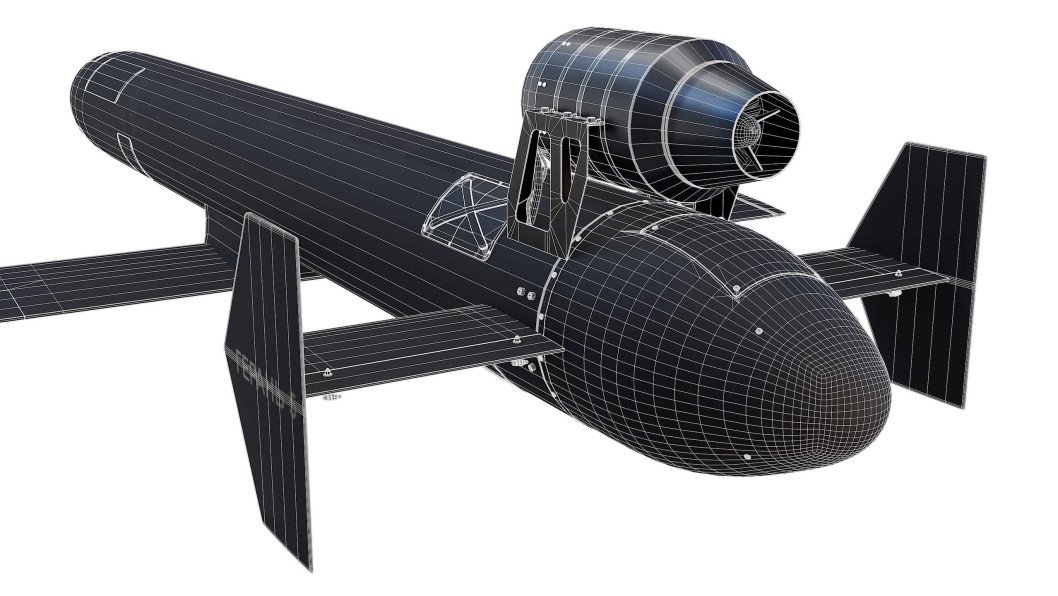
One example is the development of jet-powered drones in the Geran family. Russia previously used the Geran-3, capable of reaching speeds of approximately 280–300 km/h. Ukrainian forces have now recorded instances in which the newer Geran-5 reached speeds of up to 1,000 km/h while maneuvering. This increase in speed reduces the response time available to Ukrainian air defenses and creates a need for new interception systems.
Beskrestnov identifies mass production of high-speed interceptor drones as one possible solution. Ukrainian developers have already demonstrated their own jet-powered models, but scaling up production will require further improvements to control, guidance, and automatic aerial target acquisition systems.
Foreign сomponents in Russian drones: Why export сontrols are critical
Russian industry produces up to 3,000 Shahed drones and approximately 700 Geran-5 drones each month, said Beskrestnov. Analysis of drone wreckage recovered by Ukrainian specialists after Russian strikes indicates that Russia deploys these drones against Ukraine shortly after they are manufactured.
Russia’s growing production capacity remains closely tied to access to foreign technology. Foreign-made parts, including components of Chinese origin, continue to be found in Russian drones and missiles. Chinese antennas, engines, and cameras, in particular, are commonly found in Shahed drones. Components manufactured in European countries and the United States have also been identified.
“If the Russians did not receive these components, they would not be able to manufacture these weapons at all,” said Vladyslav Vlasiuk, the Ukrainian president’s commissioner for sanctions policy. “That is precisely why so many sanctions exist: to prevent the Russians from obtaining these parts. To some extent, these measures have been successful, but in other respects, they have not. That is why we continue to find newly manufactured components in Russian weapons.”
Vlasiuk noted that direct supplies of certain components from China continue, while products from other foreign manufacturers still reach Russia through intermediaries. He pointed to the Netherlands as an example of the potential effectiveness of tighter supply chain controls. The country has managed to almost completely prevent its electronics from ending up in Russian weapons, he said.
“Every government and every company can and should do more to ensure that their components are not available to Russian, Iranian, and North Korean terrorists,” Vlasiuk emphasized.
He also highlighted the introduction of additional export licensing requirements for several components needed to manufacture drones, including jet engines. According to Vlasiuk, the new rules are expected to take effect on November 18.
Russia produces more ballistic missiles than the world produces Patriot interceptors
In addition to drones, Russia continues to increase its production of missiles, including Iskander ballistic missiles and missiles for S-400 systems. Russia’s manufacturing capacity already allows it to produce more missiles than Moscow needs for its current attacks, Beskrestnov said.
However, Beskrestnov sees the greatest threat in the global imbalance between ballistic missile production and the weapons designed to intercept them. Russia already produces more ballistic missiles than the number of PAC-3 interceptors manufactured worldwide for Patriot systems, which are capable of countering such threats, he says. Missile programs in North Korea and Iran further complicate the situation.
“Russia produces more ballistic missiles than the number of Patriot interceptors manufactured worldwide to counter them,” Vlasiuk said. “If we add North Korean missiles and missiles produced by Iran, we understand that global production of PAC-3 anti-ballistic missiles needs to increase.”
Russia’s Starlink rival: a potential threat to Europe and the United States
Another area of Russian military technology development is the creation of its own satellite communications system, Rassvet. Russia is not currently using these satellites in attacks against Ukraine, but they can provide coverage over Ukrainian territory for approximately one hour per day. Beskrestnov warns that further development of this technology could eventually create additional threats to European countries.
Deploying such a network could potentially allow Russian forces to maintain real-time communications with missiles and drones, including while they are flying over Ukrainian territory.
“It is everyone’s problem. Europe’s and the United States’. Because these mysterious UAVs that occasionally fly somewhere over Europe will be flying with a new control system,” Beskrestnov said.
Russia would need to place up to 250 satellites in orbit to provide full coverage of Ukraine, he said. Moscow could implement this plan within a relatively short period.
Could China help Russia deploy its satellite network?
Beskrestnov identifies China’s potential involvement in Russia’s satellite program as another risk. He suggests that Moscow could present the initiative as a “civilian project” intended to provide communications services to remote Russian regions and seek Beijing’s assistance in manufacturing or launching satellites.
At the same time, Beskrestnov points out that the project will also be used for military purposes, something Russian leader Vladimir Putin himself stated during a public press conference.
Beskrestnov clarified that Russia can currently place up to 20 satellites into orbit with a single launch vehicle. Russia also has Angara-class rockets capable of placing up to 100 satellites into orbit in a single launch.
For Ukraine, the development of Rassvet means it must prepare new countermeasures in advance. The presidential adviser recalled that Russia has already learned how to disrupt Starlink communications in critical areas, forcing Ukrainian developers to seek a comparable response.
However, the development of Russia’s satellite network makes the challenge more complicated: Ukraine needs to develop countermeasures.
“We need to build the same kind of electronic warfare capability against Rassvet now,” he said. “But why is that difficult? Because we need to build electronic warfare systems against a network that does not even exist yet.”
Protecting airfields, electrical substations, and other critical infrastructure facilities should be a priority, he says.
How have Starlink restrictions affected Ukraine’s defense?
Restrictions on Starlink operations at high speeds primarily affected Ukrainian interceptor drones and army aviation, said Beskrestnov.
In particular, military helicopter crews use satellite communications to receive information about Russian drones, determine their locations, and carry out aerial interception missions.
Beskrestnov stressed that these restrictions did not affect Ukraine’s ability to strike Russian oil refineries because Starlink does not operate on Russian territory.
Instead, it was Ukrainian defense units that experienced the consequences. Ukraine has been trying to determine why the restrictions were introduced and who made the decision.
After the issue was raised with the US government, the restrictions were lifted, Beskrestnov said.
“Our interceptors are operating again,” he said. “Army aviation is working very effectively. We can continue countering these aerial threats.”
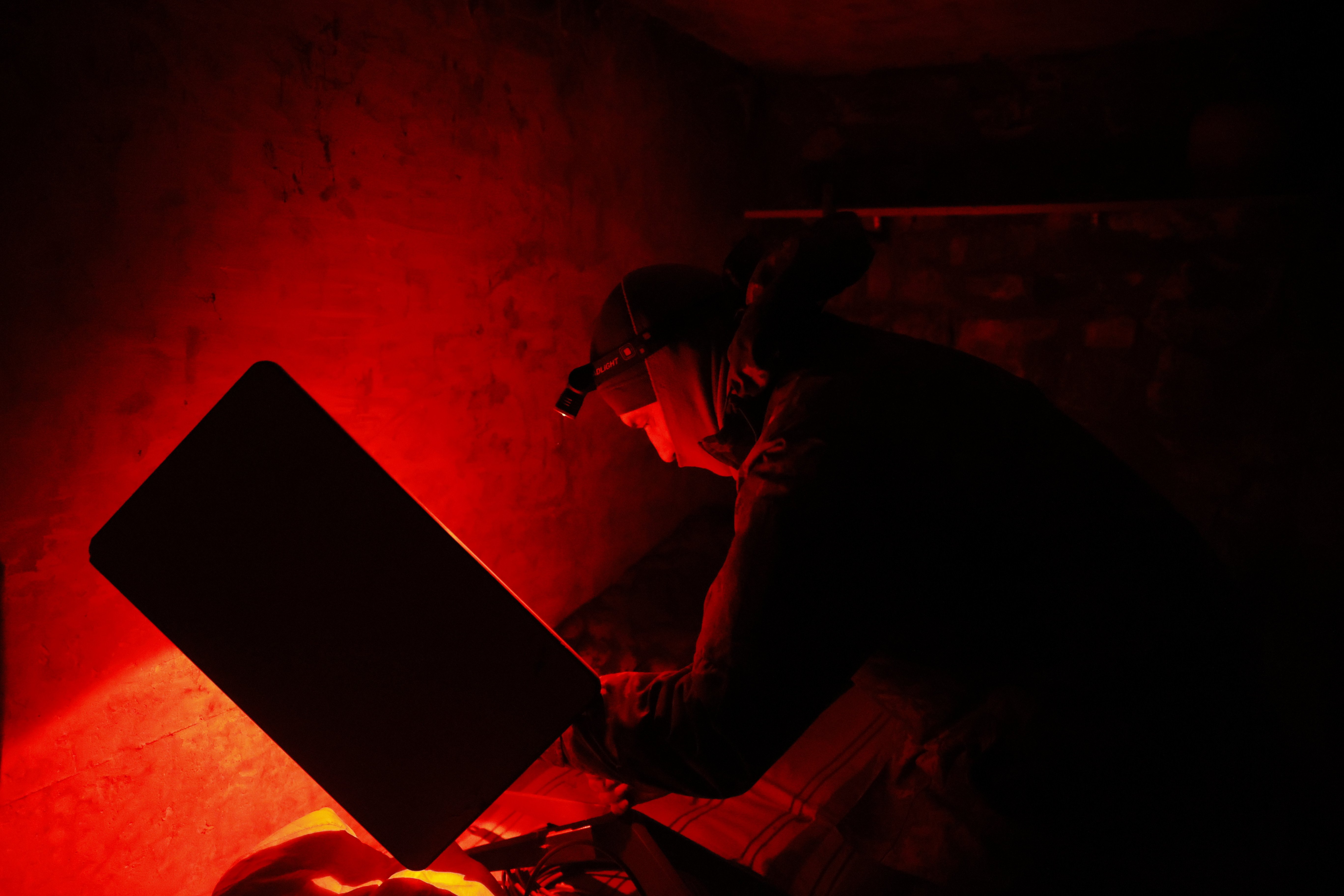
At the same time, Beskrestnov said Ukraine has been working to reduce its dependence on a single satellite communications provider following the incident. Among the promising alternatives he identified were Amazon’s satellite projects and the European Eutelsat OneWeb system.
Ukrainian forces have already established backup communications channels that allow them to maintain command and control even in the event of a potential Starlink shutdown, he said.
Losing access to Starlink creates problems for frontline aviation and military personnel stationed at remote positions who are unable to communicate with their families.
Ukrainian businesses join air defense efforts
Alongside technological development, Ukraine is expanding its ability to protect its airspace by involving the private sector. Under a government pilot project for private air defense, Ukrainian companies can invest in additional defense infrastructure and purchase equipment to counter aerial threats.
As Serhii Beskrestnov explained, the initiative does not involve transferring heavy weapons, such as German Gepard self-propelled anti-aircraft guns or surface-to-air missile systems, to businesses.
Instead, the project involves mobile fire teams, electronic warfare equipment, and turrets — weapons platforms equipped with machine guns used to shoot down Shahed drones and jet-powered drones.
An important condition is that private companies' purchases of weapons must be approved by the military. Direct control over the weapons, including target selection and decisions to open fire, remains the responsibility of military personnel.
“Private air defense builds infrastructure, implements measures, and invests money in it, but the military controls everything: selecting targets, deciding where to shoot, and how to shoot. It cannot be otherwise because this is a unified system for protecting our country,” Beskrestnov said.
This approach allows Ukraine to draw on additional private-sector resources while maintaining centralized military control over air defense.
Why is Kyiv a primary target of Russian attacks?
Russia continues to attack Ukrainian cities, bridges, energy facilities, and logistics infrastructure in an effort to inflict maximum damage on the country’s economy.
Moscow is also stockpiling ballistic and jet-powered missiles for further strikes ahead of winter, Beskrestnov said.
Kyiv remains one of Russia’s priority targets. In the presidential adviser’s view, the reason lies in the capital’s political and symbolic significance. Kyiv is Ukraine’s capital, the center of government, and a city whose developments are closely watched by the international community.
Beskrestnov believes that by striking Kyiv, Russia seeks not only to cause physical destruction but also to generate significant public and international attention.
At the same time, he emphasizes that the heightened focus on Kyiv’s security does not diminish the scale of Russian attacks on other Ukrainian cities.
Kharkiv, Kherson, Sumy, Zaporizhzhia, and other communities face serious threats to civilians and infrastructure every day. In many of these locations, the security situation remains extremely difficult.
International air defense Support remains crucial
Despite advances in new defense technologies, Ukraine continues to need additional air defense capabilities, particularly interceptor missiles to protect cities and critical infrastructure.
Russia is increasingly focusing its attacks on Ukraine’s economic and logistics facilities, said Beskrestnov, including bridges and warehouse complexes.
These strikes are intended to do more than physically destroy infrastructure. Their consequences affect business operations, employment, and tax revenues to the state budget.
Attacks on critical infrastructure pose a particular danger ahead of and during winter.
Beskrestnov highlighted the need for additional deliveries of US-made interceptor missiles for Patriot systems.
“We need about 4–5% of US stockpiles. That is a very small portion,” Beskrestnov said. “We are asking the United States: ‘Give us these missiles because the Russians will destroy our infrastructure.’ But this requires a political decision. A decision by the United States government. They can give us these missiles, and it will not affect their own defense.”
The development of drones, jet-powered attack systems, and satellite technologies demonstrates how rapidly the nature of warfare in Ukraine is changing.
For Kyiv, the response to these challenges includes developing its own technologies, maintaining a multilayered air defense system, and cooperating with international partners.
At the same time, restricting Russia’s access to foreign components and ensuring the timely delivery of defensive weapons remain essential to countering threats whose consequences could extend far beyond Ukraine.
Discuss this article: