- Category
- War in Ukraine
Ukraine Hits Russian Refineries Nine Times in 13 Days. How Bad Is Russia’s Fuel Crunch?
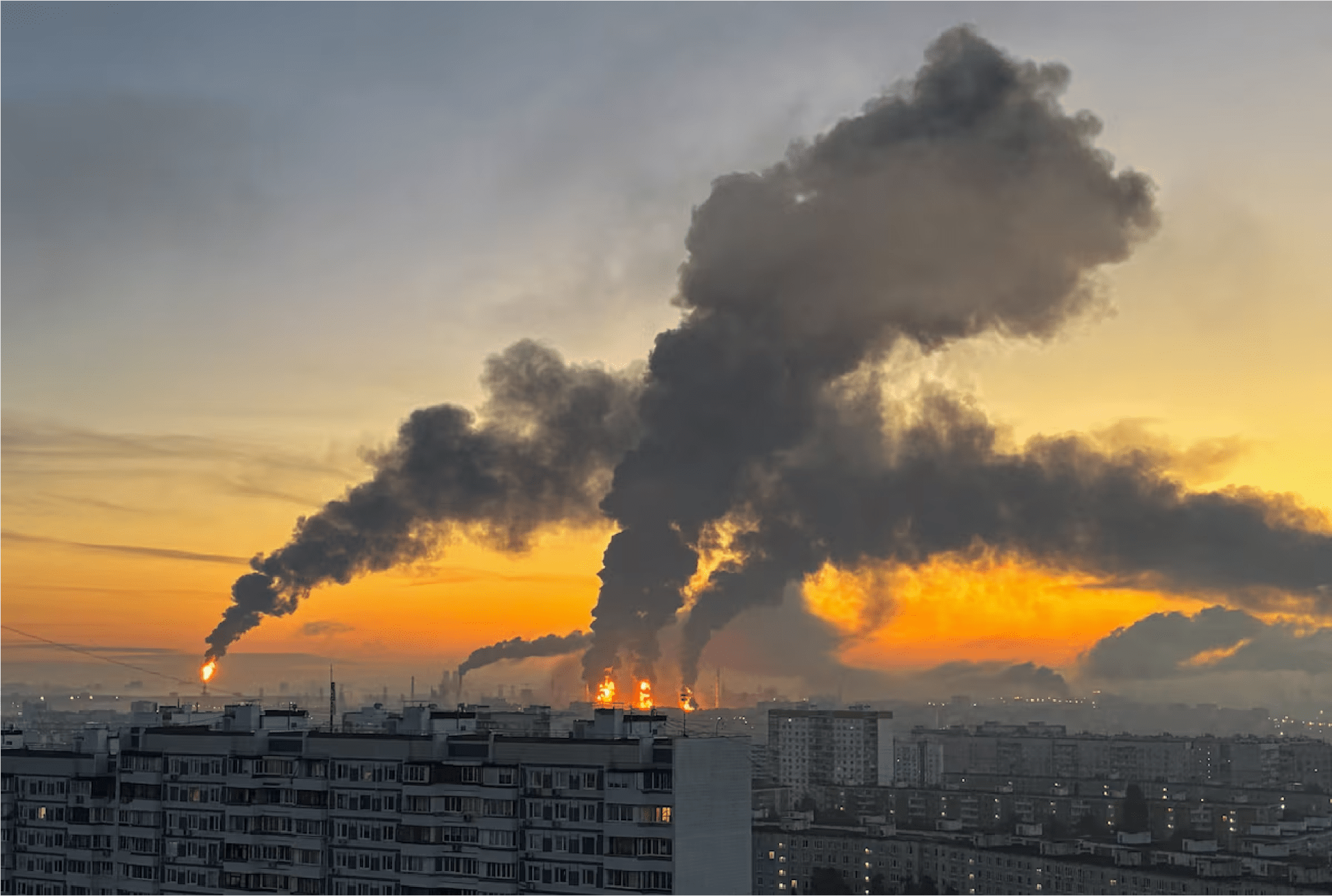
Oil above $100 a barrel should have been a windfall for the Kremlin. Then Ukraine hit Russian refineries nine times.
 Prefer U24 Media on Google
- Authors


Russia stood to benefit from higher oil prices driven by the war in the Middle East. Now, even with oil above $100 a barrel, the Kremlin cannot make full use of the additional revenue, and Russia’s oil industry is being forced to spend its earnings on repairs after Ukrainian drone strikes instead of supporting the war.
Ukraine’s deep strikes have hit Russian oil refineries nine times in the past two weeks, starting October 30. Ukraine also struck the Samara oil pipeline hub and the port of Ust-Luga. While defending the port, Russia lost two helicopters and a fighter jet, along with their crews, in a single day.
Among the targets was the Omsk oil refinery, over 2,500 kilometers from the front line. It was the third time the refinery had been hit. The full timeline follows.
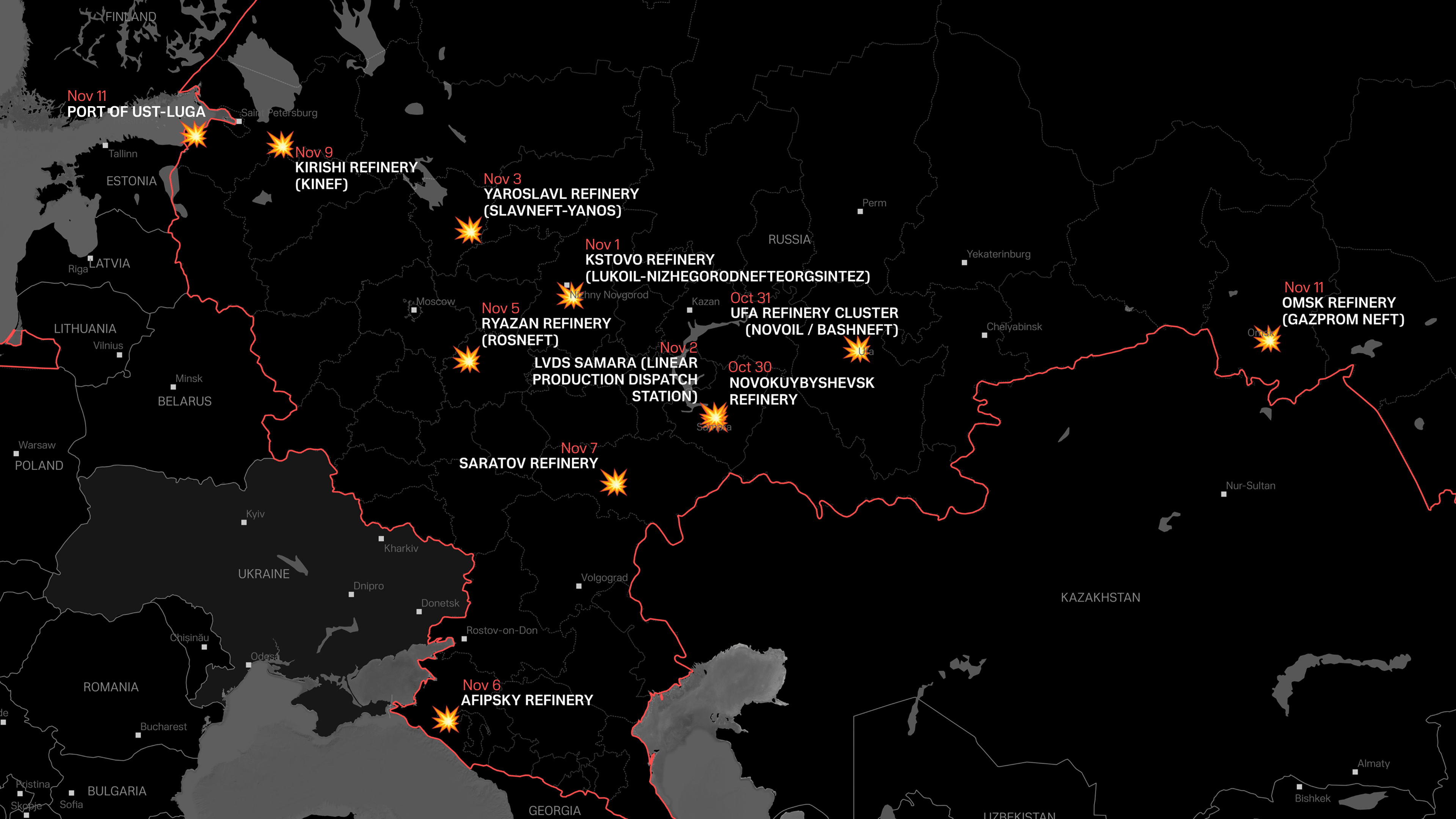
October 30 — Novokuibyshevsk oil refinery
October 31 — Ufa oil refinery cluster
November 1 — Kstovo oil refinery
November 2 — Samara oil pipeline hub
November 3 — Yaroslavl oil refinery
November 5 — Ryazan oil refinery
November 6 — Afipsky oil refinery
November 7 — Saratov oil refinery
November 9 — Kirishi oil refinery
November 11 — Port of Ust-Luga
November 11 — Omsk oil refinery
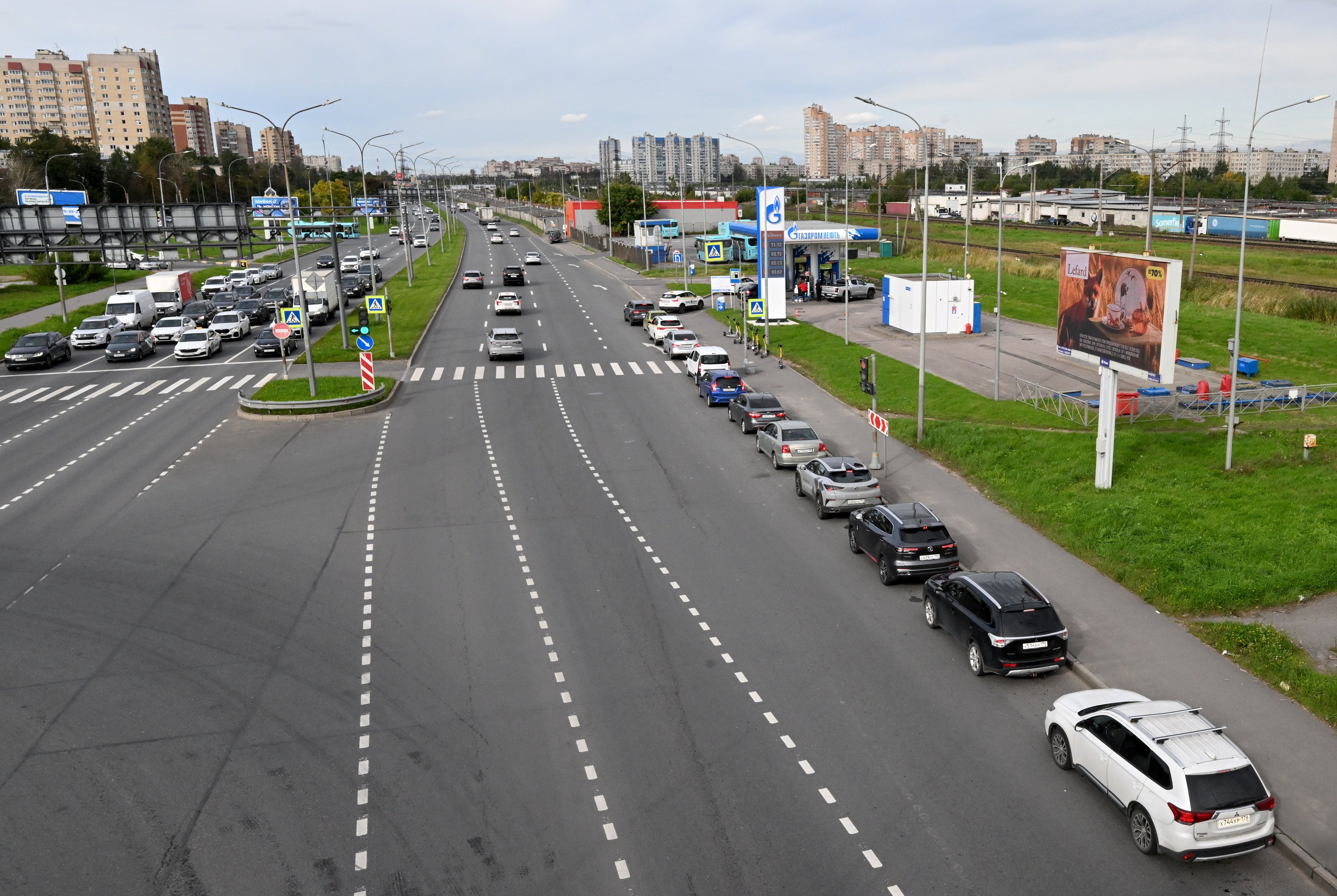
The targeted strikes are taking a toll on Russia’s oil industry. Fuel supply problems have returned, and shortages are gradually spreading across all of Russia’s central regions. The aim is both to make ordinary Russians feel the consequences of the war the Kremlin started and to deprive the Kremlin of the revenue it needs to keep fighting.
Oil prices began climbing sharply in spring 2026 and at one point topped $110 a barrel. In October, Russia sold its oil for an average of $101 a barrel, well above the previous range of $50 to $60.
Ukraine’s deep strikes on Russian refineries amount to a more aggressive form of sanctions and have all but erased Russia’s gains from higher oil prices. How does that work?
Creating pressure at home
The federal budget collected 971 billion rubles ($11.7 billion) in taxes on oil sales in October 2026, according to Russia’s Finance Ministry. That was more than double the 424 billion rubles collected in August and the 452 billion collected in September.
Much of that extra revenue went back to the oil industry. Under a special arrangement known as the “fuel damper,” the Russian government compensates oil companies for keeping gasoline prices down so consumers are shielded from rising oil prices. In October, Russian oil companies received 415 billion rubles ($5 billion) under the program, about 40% of what the government had collected.
The fuel crisis inside Russia is adding to the pressure on gasoline prices as global oil prices rise. Ukrainian strikes have left Russia without enough domestic refining capacity to meet demand, and the country has been forced to import as much as 500,000 to 600,000 metric tons of fuel a month. Imported gasoline costs nearly twice the usual price, a difference that would normally be passed on to drivers at the pump. The government is working to keep that from happening.
The Russian government also pays oil companies what it calls a reverse excise tax, an additional incentive to sell oil domestically instead of exporting it. Those payments totaled another 140 billion rubles ($1.7 billion) in October.
In October alone, the Russian government paid the oil industry more than 555 billion rubles ($6.7 billion) out of the 971 billion it collected. That was more than half of its oil revenue for the month.
The strikes also limit how Russian oil companies can use those payments. With attacks continuing, they have little choice but to spend the money on repairs. In August 2026, Russian leader Vladimir Putin signed a decree allowing the government to place a company that operates critical infrastructure under external management if it can no longer operate normally. Oil refineries fall under that definition. If management fails to repair a refinery, the government can take control of it.
As Russia deliberately terrorizes Ukrainian civilians, destroying the country’s energy infrastructure and killing at least 53 people at humanitarian aid distribution centers, Ukraine’s deep strikes aim to force Moscow to the negotiating table by depriving it of the resources to keep fighting. Oil is the Russian government’s main source of revenue. By striking refineries and cutting into that income, Ukraine aims to leave the Kremlin without the means to finance the war.

Discuss this article: