- Category
- War in Ukraine
Ukraine Moves to Create Its Own Space Force Within Armed Forces
 Prefer U24 Media on Google
- Authors



Ukraine’s parliament has approved the first reading of legislation to establish Space Forces within the Armed Forces of Ukraine, advancing plans to develop independent satellite communications, space-based intelligence capabilities, and early-warning systems against Russian missile attacks.
We bring you stories from the ground. Your support keeps our team in the field.
On November 9, Ukraine’s parliament voted 252 to approve draft law No. 13255 in its first reading, paving the way for a new military branch dedicated to space operations and defense capabilities. The legislation must still pass a second reading before it can become law.

The proposed Space Forces would focus on developing Ukraine’s ability to detect missile launches from Russian territory, establish secure military satellite communications, and develop technologies to counter threats originating from space.
The bill also outlines plans to strengthen Ukraine’s domestic space industry, including the development of reconnaissance satellites and systems capable of placing them into orbit.
According to the legislation’s explanatory note, Ukraine already possesses the scientific, engineering, and industrial capabilities needed to pursue these objectives. The document also references existing space-related cooperation with Luxembourg, Poland, the Czech Republic, and Sweden.
One of the initiative’s objectives is to reduce Ukraine’s reliance on foreign satellite infrastructure for military communications and intelligence gathering.
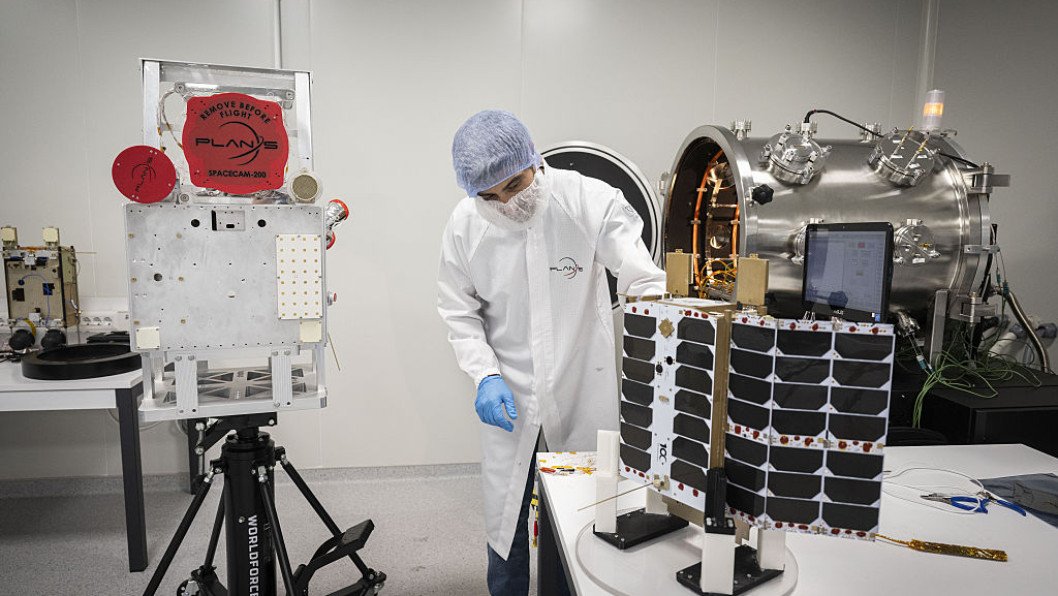
Ukrainian lawmaker Fedir Venislavskyi, one of the bill’s authors, previously emphasized the importance of establishing an independent reconnaissance satellite constellation and a national satellite communications network.
He also linked the proposed Space Forces to the need for defenses against advanced Russian ballistic missiles, including the Oreshnik system, whose flight trajectory extends beyond Earth’s atmosphere.
Ukraine has conducted at least three tests of exoatmospheric interception systems intended to counter Russia’s Oreshnik missile, including concepts involving launches from high-altitude aircraft.
Discuss this article: