- Category
- War in Ukraine
Ukraine’s Drone Swarms Are Overloading Russian Air Defense, June Sets Record for Deep Strikes
 Prefer U24 Media on Google
- Authors


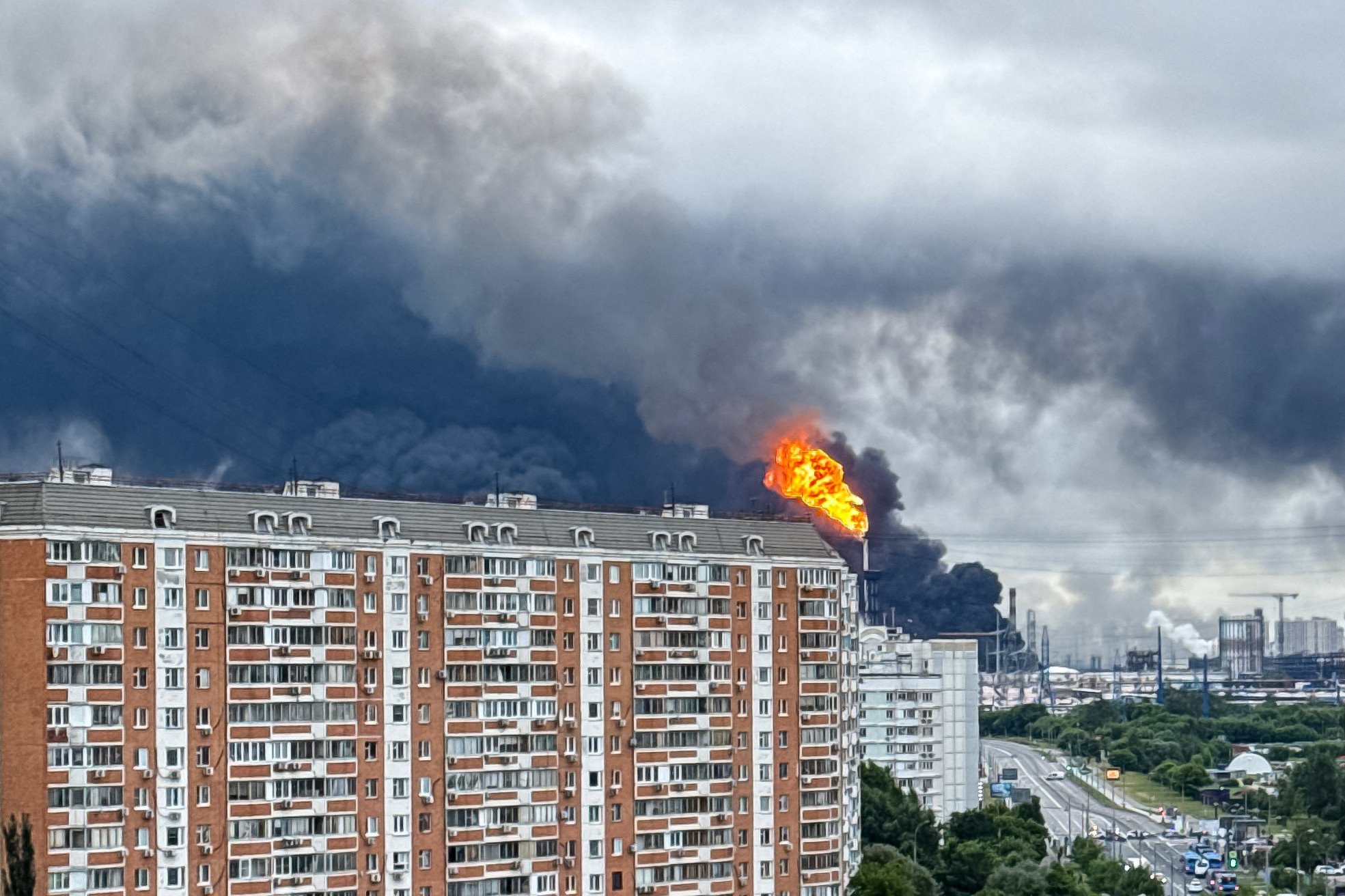
June became a record month for Ukrainian long-range strikes against Russia, as the scale of Kyiv’s drone campaign increasingly appears to be overwhelming Russian air defense systems, The Wall Street Journal reported on June 26.
Russia’s Defense Ministry has been reporting a growing number of intercepted Ukrainian drones, while local authorities often describe the damage in vague terms such as “technical problems” or “damage to infrastructure.”
We bring you stories from the ground. Your support keeps our team in the field.
But even Moscow’s own claims of rising drone shootdowns, which analysts believe may be inflated, point to a major trend: Ukraine is launching more long-range strikes, and Russia is struggling to cover its vast territory.
According to calculations by The Wall Street Journal and Ukraine’s Come Back Alive foundation, Russia claimed it intercepted 8,849 drones over Russian territory and occupied Crimea in May. That compares with 3,676 in January and 2,504 in May 2025.
🔥🛢️BREAKING: Moscow’s oil refinery, damaged in Ukrainian drone strikes, is unlikely to resume production this year and will most likely remain offline until 2027.
— Special Kherson Cat 🐈🇺🇦 (@bayraktar_1love) June 24, 2026
According to Reuters, the facility suffered extensive damage and is expected to stay shut down for at least six… https://t.co/y8HbuQy4NX pic.twitter.com/ldYzJwOJwi
In June, the number of confirmed long-range strikes nearly tripled compared with May, rising from 12 to 32, according to an analysis by Janes, a military intelligence company.
Russia’s Defense Ministry claimed that 660 Ukrainian drones were “intercepted and destroyed” overnight into June 26, calling it the largest drone attack on Russia since the start of the war. On the night of June 18, when the Moscow Oil Refinery in Kapotnya was hit, Moscow reported 555 drones destroyed.
Janes data suggests Ukrainian strikes are also becoming more effective. Around 35% of successful attacks on Russian territory this year took place in June.
-91f8cc789a82e975fd200d679189c07c.jpg)
Denys Shtylerman, co-founder and chief designer of Ukrainian defense company Fire Point, told The Wall Street Journal he was surprised by how many of his drones broke through and struck the Moscow refinery.
“We just used a big bunch of drones, and they overwhelmed the Russian air-defense systems,” Shtylerman said.
❗️🇺🇦Ukrainian drones successfully attacked the 🇷🇺Moscow Oil Refinery in the morning of June 16. The refinery is located in the Kapotnya district of the capital of the Russian Federation.
— 🪖MilitaryNewsUA🇺🇦 (@front_ukrainian) June 16, 2026
The Kapotnya plant is one of the ten largest oil refineries in Russia and supplies about 40%… pic.twitter.com/zRrtQ9N1Q2
Michael Kofman, a military analyst at the Carnegie Endowment for International Peace, said Ukraine’s strikes have become more effective because the technology is improving and Kyiv can now carry out more powerful attacks than before.
Russia’s size, long seen as a strategic advantage, is now becoming a problem for Moscow’s air defense network.
Russian air defenses must protect not only the 1,200-kilometer front line, Kofman noted, but also vast areas of territory containing military, energy, and industrial infrastructure.
-5a748c89a3e69e619f7b7eac8ce541b6.webp)
Ukraine has also adopted tactics Russia has used for years against Ukrainian cities: launching large numbers of drones to overwhelm and confuse air defenses. Ukraine, however, has built a layered defense system against such attacks and brought its drone interception rate to around 90%.
Valerii Romanenko, a former air defense officer and researcher at Ukraine’s National Aviation University, said systems such as Russia’s Pantsir can engage no more than four targets at once. Large drone salvos can therefore stretch air defenses beyond their capacity.
The first waves of an attack can also help identify the positions of Russian air defense systems, Romanenko said, allowing follow-on drones to find gaps and break through.
I thought this deserves its own post.
— Anton Gerashchenko (@Gerashchenko_en) June 18, 2026
A lid is blown off the tank by the attack on the Moscow oil refinery. https://t.co/ibupq8ofJc pic.twitter.com/q7qrZikX2Q
Douglas Barrie, a military aerospace expert at the International Institute for Strategic Studies in London, said Russia’s air defense around Moscow was designed mainly to counter crewed aircraft, cruise missiles, and ballistic missiles.
“Disposable unmanned aerial vehicles are a relatively new and difficult target for it,” Barrie said.
Ukrainian drone strikes even forced Russian authorities to restrict sales of fuel in multiple regions.
On June 22, six regions—Omsk, Irkutsk, Saratov, Voronezh, Amur, and Tambov—imposed emergency caps to curb panic buying, with Saratov restricting individuals to 30 liters of gasoline from June 23 to June 30 and Irkutsk allowing some stations to halt sales entirely to prioritize emergency services.
Later, Russia imposed fuel-sale restrictions in its main oil-producing region and three other regions, Kursk, Bryansk, and Kurgan.
Latest reports by Russian media Astra indicate that one more Russian region, Tomsk, has started to impose restrictions on fuel sales.
Discuss this article:


-7d122a07556dc8e44148079aa671b3d7.jpg "Russia Takes Five Hits in Just Two Days as Ukraine Hunts Key Defense Factories")
-29a1a43aba23f9bb779a1ac8b98d2121.jpeg "Photo of Illia Kabachynskyi")
-63c859efab550813c9d508440e946c5d.jpg "Russian Presidential Press Secretary Dmitry Peskov speaks on a mobile phone during a Russian-Kazakh forum, on July 25, 2026, in Omsk, Russia. (Source: Getty Images)")
-72b63a4e0c8c475ad81fe3eed3f63729.jpeg "Photo of Cyril Barabaltchouk")
-111f0e5095e02c02446ffed57bfb0ab1.jpeg "Photo of Roman Kohanets")
-6ac3cb1aaea7875d81a71467e6e4b7ee.png "How Russian Double-Taps Increasingly Kill Rescuers")
-605be766de04ba3d21b67fb76a76786a.jpg "Joseph Place")