- Category
- World
Russia Rations Fuel in More Than 10 Regions Amid Ukrainian Drone Strikes
 Prefer U24 Media on Google
- Authors

-111f0e5095e02c02446ffed57bfb0ab1.jpeg "Photo of Roman Kohanets")
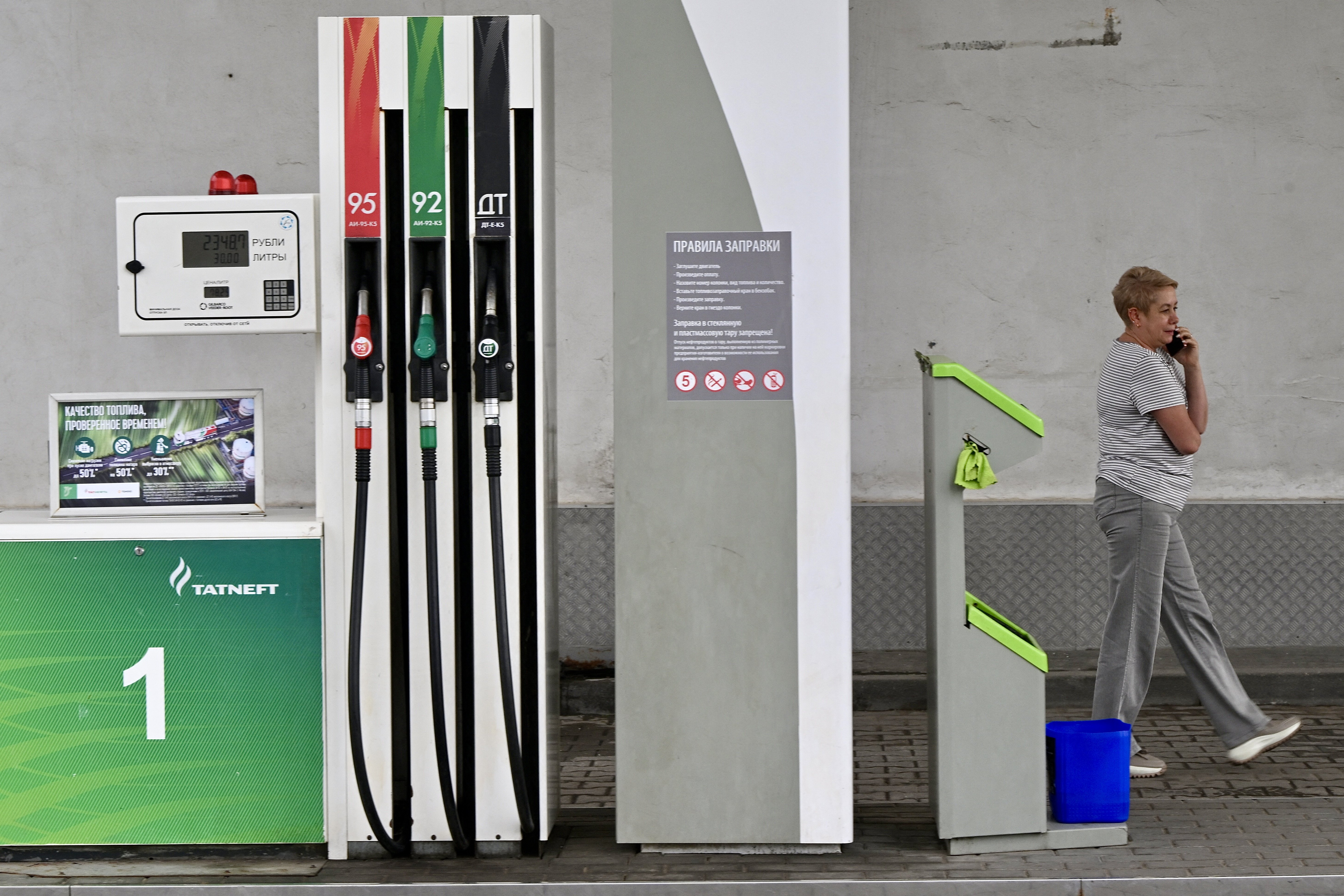
Russia imposed fuel-sale restrictions in its main oil-producing region and three other regions, deepening a gasoline shortage that is now spreading across the country, according to Ukrinform, citing the Russian outlet Current Time on June 24.
We bring you stories from the ground. Your support keeps our team in the field.
In the Bryansk region, acting governor Yegor Kovalchuk announced a ban on refueling containers at filling stations, framing it as a measure against an artificial shortage. He acknowledged supply problems near the border.
"Yes, there are certain difficulties with delivering fuel to border districts because of the threat of drone strikes, and we are resolving this issue as well," Kovalchuk stated. He had ordered officials to review prices after complaints about rising gasoline costs at some retail networks.
The Kurgan region introduced caps on gasoline and diesel sales, the outlet noted. In populated areas, stations may dispense no more than 40 liters of gasoline and 80 liters of diesel per vehicle.
Highway outlets are held to 40 liters of gasoline and up to 200 liters of diesel. Filling canisters is banned. Governor Vadim Shumkov attributed the measures to surging demand and an effort to prevent panic and speculation.
-5a748c89a3e69e619f7b7eac8ce541b6.webp)
In the Kursk region, an operational headquarters ruled that fuel may be pumped only into vehicle tanks. Regional head Alexander Khinshtein noted that he had instructed the local Federal Antimonopoly Service branch to tighten oversight of price increases across all stations in the area.
Restrictions also reached the Khanty-Mansi Autonomous Okrug, Russia's main oil-producing region, where some stations capped the volume of fuel sold. Local authorities stated:
"Given the increased demand for gasoline and diesel, and in order to prevent an artificial shortage as well as speculation and resale, limits on the volume of fuel dispensed have been set at a number of gas stations."
Moscow authorities, meanwhile, waived entry-pass requirements for fuel-tanker drivers, the Russian outlet reported, describing it as a temporary step requested by station operators in the capital and surrounding region.
-3a6c792c79e08862dff85f98a0fdc34e.jpg)
The city's transport department indicated that tanker drivers could enter and move through Moscow at any hour without a freight pass and would face no fines for lacking one.
The new curbs extend a wave of rationing that had already pushed deep into Russia's interior.
On June 22, six regions—Omsk, Irkutsk, Saratov, Voronezh, Amur, and Tambov—imposed emergency caps to curb panic buying, with Saratov restricting individuals to 30 liters of gasoline from June 23 to June 30 and Irkutsk allowing some stations to halt sales entirely to prioritize emergency services.
Earlier, by June 4, rationing had spread to at least 20 Russian regions and temporarily occupied parts of Ukraine, with the first shortages traced to the Ryazan region following a strike at its refinery.
Discuss this article:


-c439b7bd9030ecf9d5a4287dc361ba31.jpg "Photo of Katherina Popilnichenko")