- Category
- War in Ukraine
Ukraine Is Isolating Crimea. Here’s How It's Happening and Why
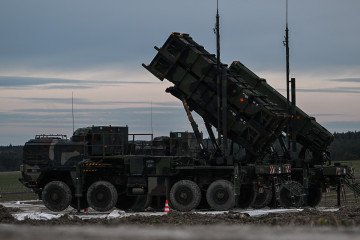
The Crimean Peninsula, illegally annexed in 2014, has become a problem for Russia. Accurate drone strikes on logistics by Ukraine have caused this territory, once a springboard for offensive operations, to lose value for Moscow.
 Prefer U24 Media on Google
- Authors

-29a1a43aba23f9bb779a1ac8b98d2121.jpeg "Photo of Illia Kabachynskyi")
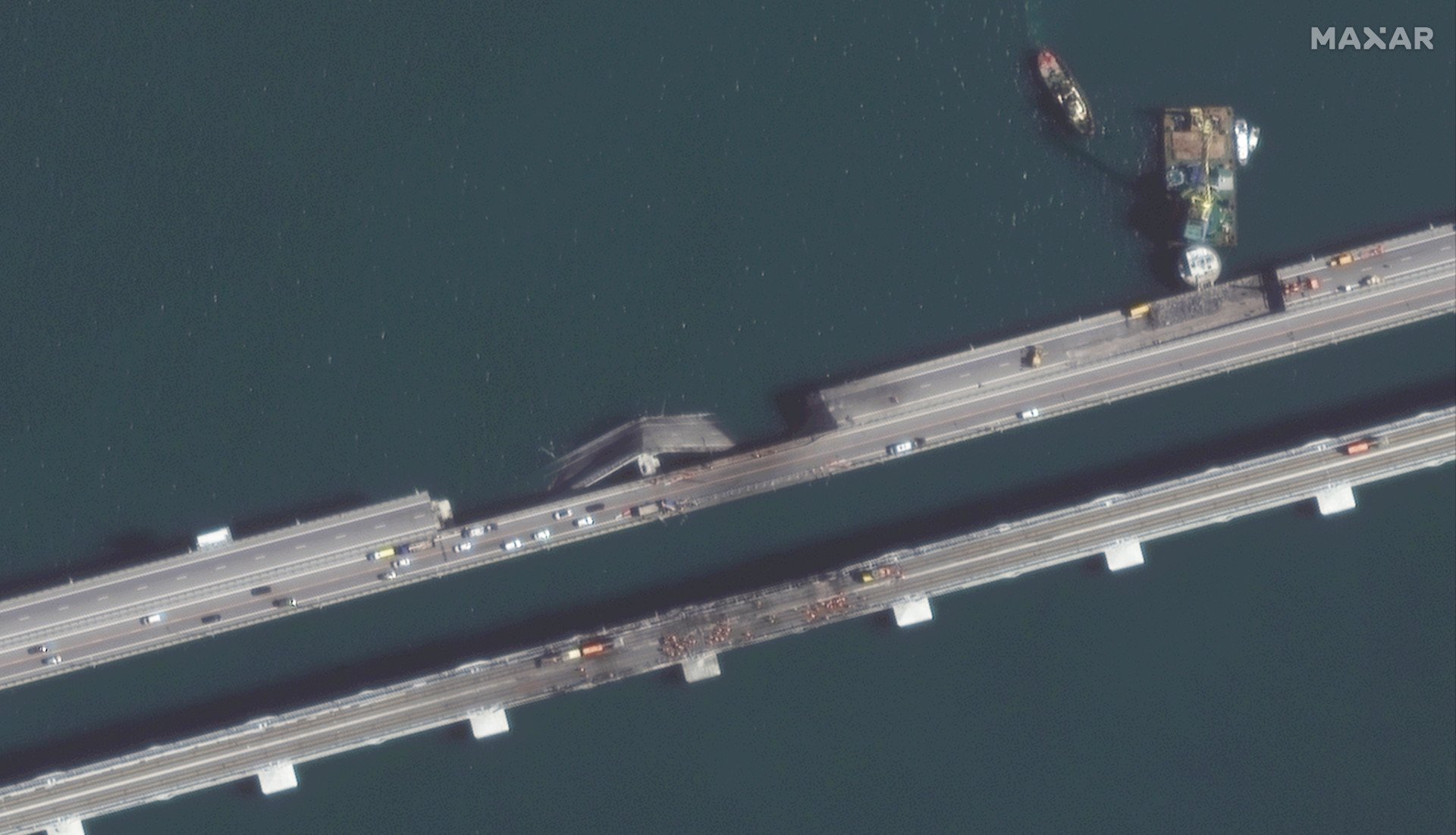
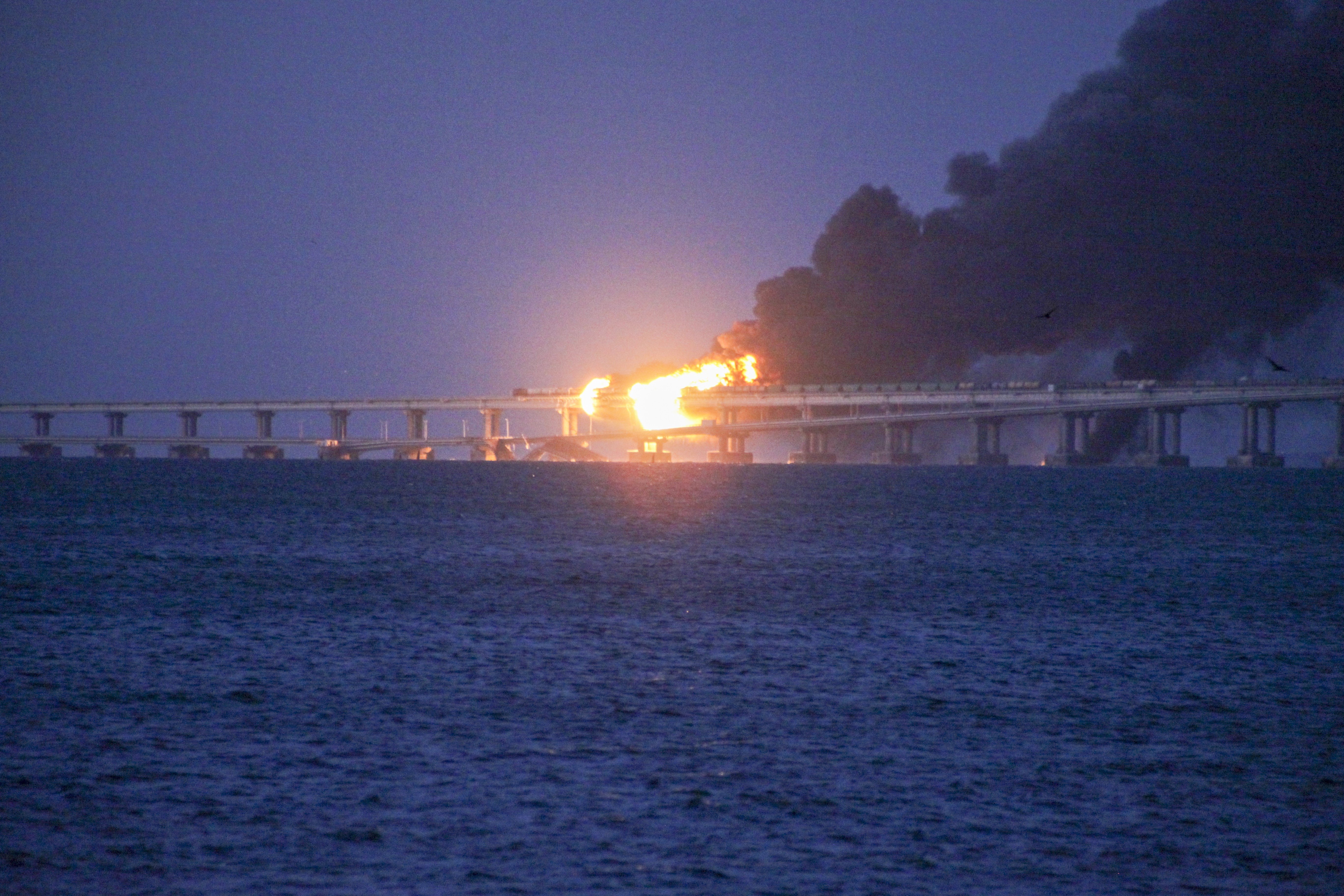
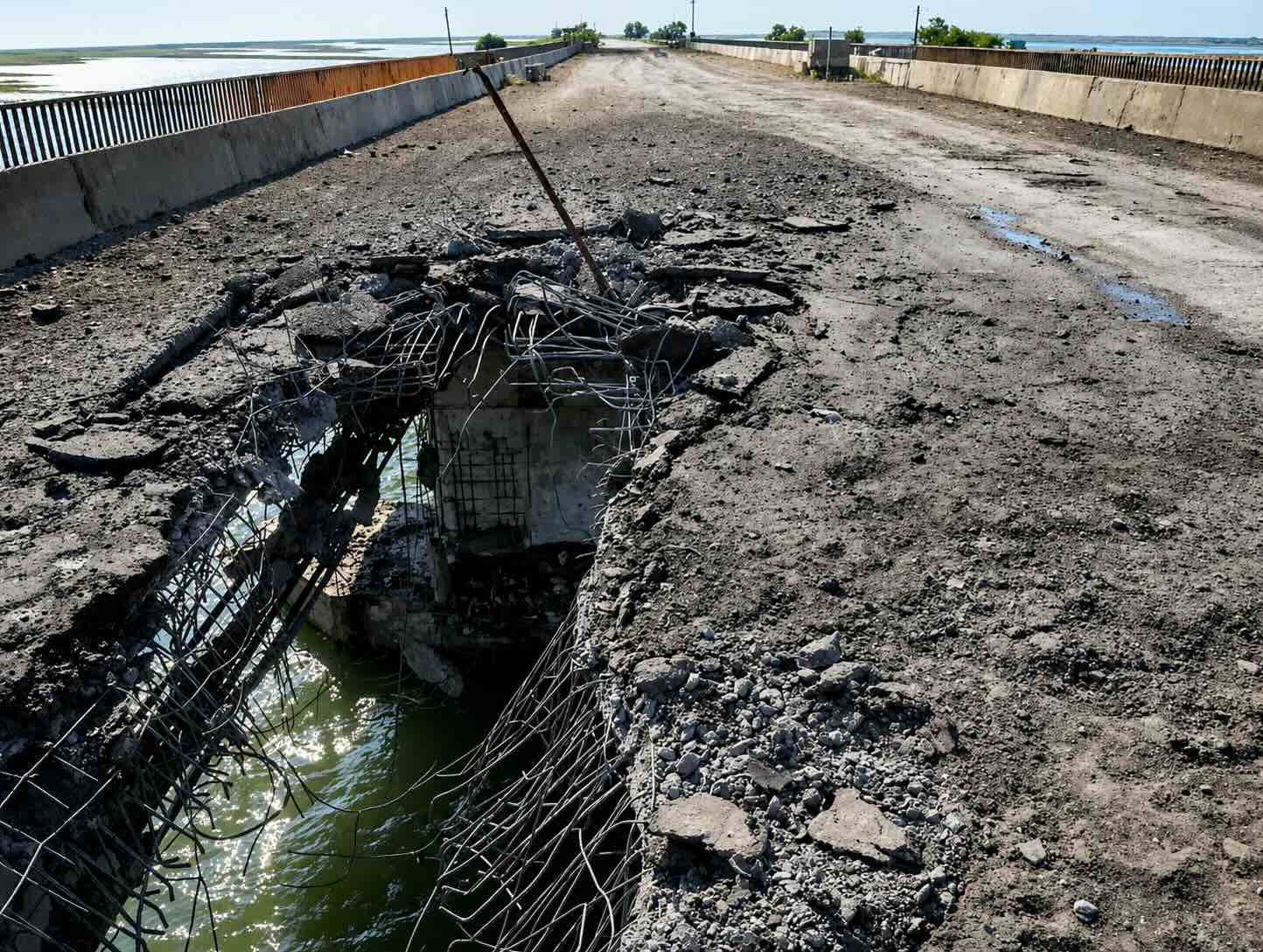
In mid-June, there was no shortage of news from Crimea, and none of it was good for the Russian military. Over just a few nights, Ukrainian assets struck bridges at several points connecting roads on the peninsula to the mainland territory of Ukraine. Multiple hits were reported: at Chonhar, near Henichesk, near the village of Myrne, and at Armyansk.
According to Robert “Madyar” Brovdi, head of Ukraine's Unmanned Systems Forces, Crimea will be isolated in the near future.
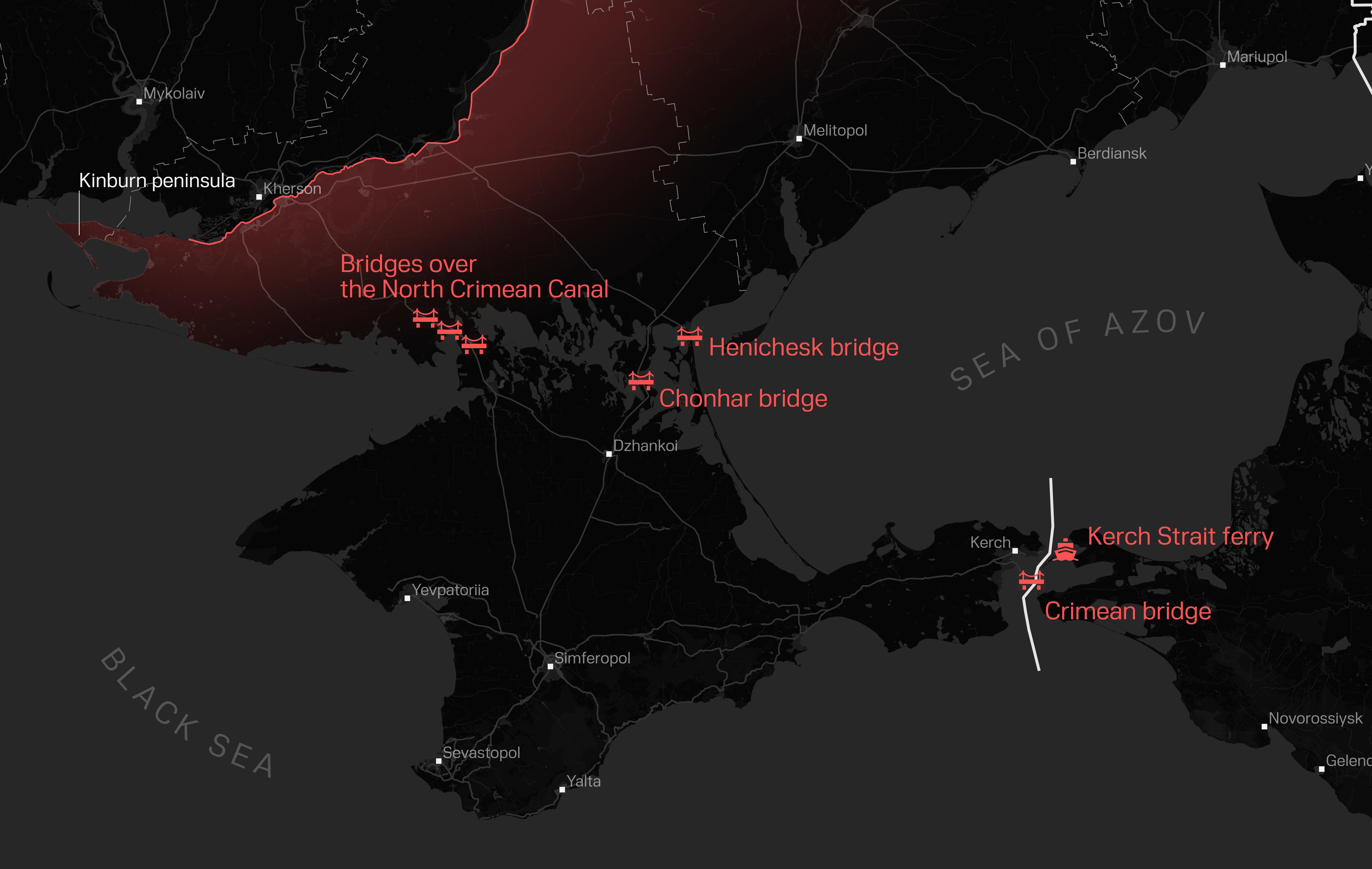
And not only from land but from the sea as well: naval drones prevent the free passage of vessels around Crimea, constantly lying in wait for any possible target. Because maritime drones have become fully-fledged platforms, they are also used to strike aerial targets, including launching drones around the peninsula itself. Drones have also managed to hit several ferries.
The crisis is being felt acutely in Crimea: local activists report that there is not enough fuel to run even the mobile groups used to shoot down drones because the shortage is significant.
We will create conditions that make it extremely difficult for any military personnel or defense industry worker to remain in Crimea, on temporarily occupied territories, or to use the access routes to them.
Robert “Madyar” Brovdi
Head of Ukraine's Unmanned Systems Forces
Isolating Crimea
In May, the Ministry of Defense, together with the General Staff, announced a strategy for the summer campaign, a logistics lockdown: seizing the initiative on the battlefield by cutting Russian army supply lines. Middle Strike drones flew to Luhansk and Donetsk oblasts, to Zaporizhzhia and Kherson oblasts, and of course to Crimea.
-0dc38916235b2c5f4485ce75aa99572b.jpg)
Cutting Crimea off from Russian logistics is genuinely a major undertaking. Since the very start of the full-scale invasion, Russia has actively used the peninsula as a launchpad for offensive operations. It hosts numerous military airfields and Russian bases, arsenals, and storage facilities for military equipment and weapons. The Crimean Bridge enabled the transfer of significant volumes of everything needed for war. The peninsula was also home to ground-based missile launchers, as well as the deployment point for warships and submarines. In addition, and this should not be forgotten, fit contains repair workshops, personnel deployment facilities, and enterprises that the Kremlin has used to bolster its military-industrial complex.
The land corridor through occupied Ukrainian territory from Russia to Crimea, established back in 2022, further expanded the Russian army's logistical capacity to substantially reinforce its southern grouping of forces.
In other words, Crimea is critically important to Russia's offensive capabilities in southern and eastern Ukraine. And it is precisely these capabilities that the Ukrainian military, along with Ukrainian drones and missiles, is aiming to eliminate.
The Logistics Lockdown of Crimea
For three consecutive months, Ukraine has been striking logistics infrastructure across occupied Ukrainian territories using Middle Strike drones, including in Crimea. The number of strikes in May exceeded April's results by 50%, and June is set to establish a new record.
One priority target is everything that allows Russian vehicles and transport to move, which primarily means fuel. Ukrainian drones, therefore, hunt fuel tankers and strike oil storage facilities in Crimea. The crisis at this point is not merely noticeable; it is in full swing: residents of the peninsula are effectively unable to buy petrol, the transport situation is severely constrained, and Russian authorities have been unable to resolve it quickly. Fuel tankers are being destroyed before they even reach the peninsula.
The isolation of Crimea will produce a positive effect along the southern front line: Crimea, as a military base, will become a source of problems rather than a source of strength. The bulk of supply operations will have to be shifted from the peninsula to Russian territory, lengthening logistics lines. Extending a route by even an additional 80–100 km reduces the volume a single truck can transport by 30% per day. That translates directly into fewer assaults and less activity at the front.
For Ukraine, the effect is direct: Crimea serves as a launchpad for attacks on the Kherson and Zaporizhzhia regions. Cutting its logistics will relieve pressure on those directions, the Ukrainian Ministry of Defense states explicitly. They confirm that strikes on logistics are directly proportional to reductions in the number of assaults.
There is a separate dimension as well: aviation and launch systems. Crimea is ceasing to be a safe place to station this equipment and conduct launches from the peninsula's territory. Ukraine is effectively carrying out the demilitarization of this territory, having previously driven away warships, and is now doing the same with other categories of equipment.
Beyond the direct military consequences, Russia also faces social pressure: the war is being brought from Ukraine onto territories controlled by the Russian Federation. Kremlin officials are forced to deal with the aftermath of Ukrainian drone strikes rather than trumpeting their own "successes." And residents of the occupied territories can see for themselves the lies in Russian government statements.
Today, strikes on logistics represent one of Ukraine's primary tools for countering Russia's ground offensive in southern Ukraine: by bringing key roads under control with Middle Strike drones, Russian logistics become secondary and less effective. And they serve as an incentive to bring the Russian army to the negotiating table.
Discuss this article:
-4a56a6b482ec132402c16ef6fcabf9a2.png)

-2386d89295678553e91e27f1a0d592e3.png "Ukraine Just Wrapped Up a Four-Season Military Operation: 277 km² Cleared, 8,000 Russian Troops Eliminated")
-c439b7bd9030ecf9d5a4287dc361ba31.jpg "Photo of Katherina Popilnichenko")
-111f0e5095e02c02446ffed57bfb0ab1.jpeg "Photo of Roman Kohanets")