- Category
- War in Ukraine
Ukraine’s Red Lines: Why Peace Can’t Come at the Cost of Surrender
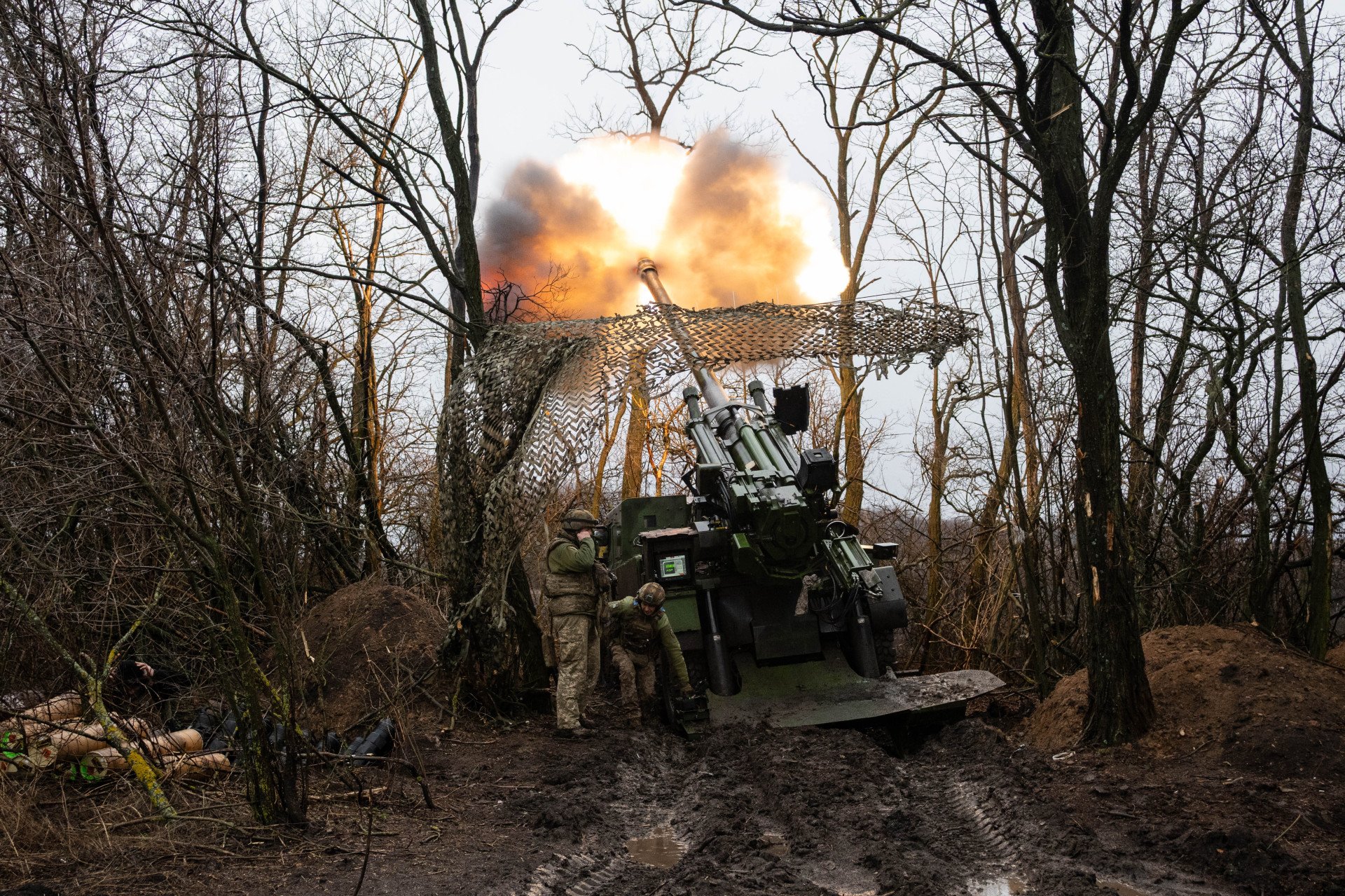
Russia is demanding that Ukraine withdraw from parts of the Donetsk region in exchange for a ceasefire—while seeking to hold on to as much occupied Ukrainian land as possible, refusing to retreat from occupied areas in other regions. The issue is not merely the 6,000 square kilometers still under Ukrainian control, but rather Putin’s broader ambition to seize all of Ukraine. For Kyiv, conceding territory would only set the stage for future aggression—hence its firm stance that certain lines cannot be crossed.
 Prefer U24 Media on Google
- Authors

-29a1a43aba23f9bb779a1ac8b98d2121.jpeg "Photo of Illia Kabachynskyi")
For over a month now, Ukraine and the United States have been working intensively on 20 Points of Peace Plan designed to halt active hostilities in Ukraine. UNITED24 Media previously detailed the negotiation process and each of the 20 points. These include provisions recognizing Ukraine’s sovereignty, its path toward European Union membership, reconstruction efforts, and crucially, the issues of territorial integrity and security guarantees. These matters are among Ukraine’s top priorities, which is why they receive such significant attention in the talks.
We bring you stories from the ground. Your support keeps our team in the field.
However, the thorniest part of the negotiations revolves around territorial issues. Two of the document’s points directly concern this:
Control over the Zaporizhzhia Nuclear Power Plant
The status of the Donetsk region: Ukraine is open to discussing a special format, such as a free economic zone.
Each of these items represents a red line for Ukraine. Any discussion of the status of Ukraine’s temporarily occupied territories must be preceded by firm guarantees against renewed Russian aggression. Ukraine is prepared to work with its key partner—the United States. Equally important, the document states that Ukraine will not attempt to reclaim these territories through force, but will instead pursue diplomatic negotiations.
Why can’t Ukraine simply give up its territories?
Russia’s aggression didn’t begin in 2022—it started in 2014 with the attempted annexation of Crimea and parts of Donetsk and Luhansk regions. And even that was not Moscow’s first attempt to undermine Ukraine’s territorial integrity:
In the early 1990s, Russia’s security services failed in a covert operation to seize Crimea.
In the mid-1990s, Russia tried to incite separatism in the east of Ukraine, organizing sham referendums that ultimately fell flat.
In the early 2000s, Russia staged provocations near Tuzla Island in Crimea in an attempt to seize it.
Russia began its aggression against Ukraine in 2014 with the attempt to annex Crimea and a military invasion in the east of Ukraine. Then, in February 2022, Russia launched a full-scale invasion from the north, east, and south. Its initial objectives included capturing Kyiv, taking control of the entire left bank of the Dnipro River (which splits Ukraine nearly in half), and installing a puppet regime across the country.
Only after facing fierce Ukrainian resistance did the Kremlin scale back its ambitions, now demanding the Donetsk region. Nearly four years of full-scale war, Russia has suffered massive losses in manpower and equipment, failed to capture a single additional regional capital, and still cannot fully occupy the region itself. Yet, despite this failure, Russia continues to demand what it could not seize by force.
How can anyone trust a regime that has repeatedly attempted to take more? A regime that has spent all 35 years of Ukraine’s independence trying to undermine it? And how can Kyiv be sure that if it cedes territory now, the aggression won’t resume later?
That’s precisely why Ukraine is pushing for ironclad security guarantees, seeking binding agreements with the US, Europe—and even demanding such guarantees from Russia itself, including a pledge of non-aggression.
Appeasement only invites more war
Global history shows that dictatorships don’t stop unless they’re contained. Hitler annexed Austria and the Sudetenland with the tacit approval of world powers. But the critical moment came in 1936 when he sent troops into the demilitarized Rhineland. The world stayed silent—and that silence emboldened him.
Ukraine is determined not to repeat that mistake. It wants to ensure that any ceasefire agreement is structured in a way that prevents future war. That’s why the draft peace document includes numerous provisions on the military, armament, soldier training, and monitoring systems. Its goal is not just peace—but a lasting peace.
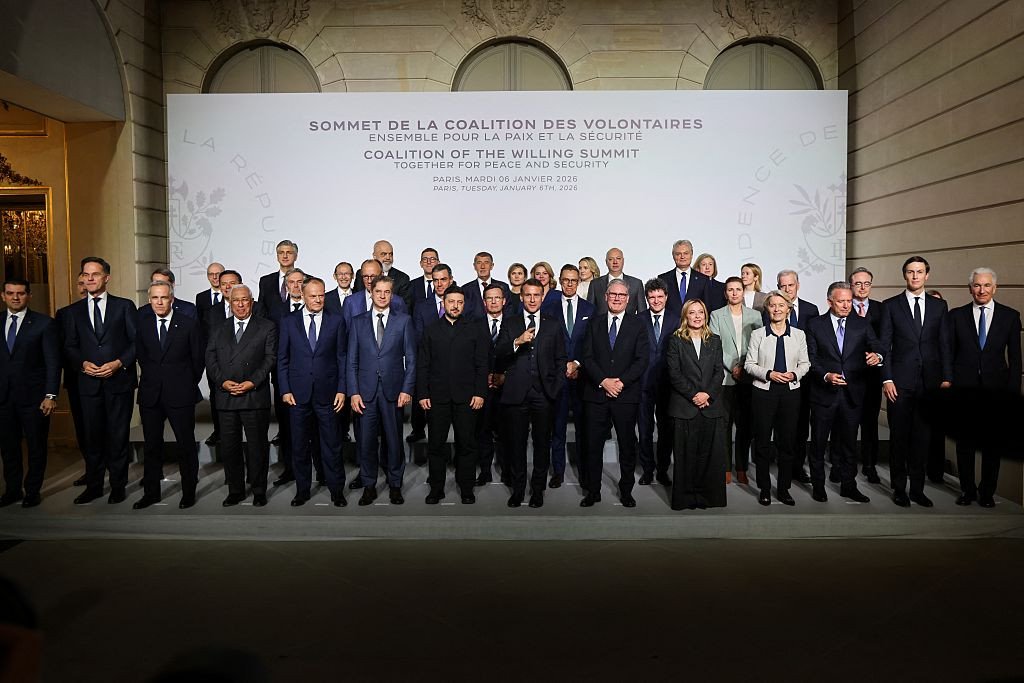
History also shows that giving up territory to an aggressor only whets their appetite. In 2014, the world did almost nothing when Russia attempted to annex Crimea. That silence led to a full-scale war, the largest in Europe since World War II. What’s more, it’s already lasted longer than the Soviet Union’s war with Nazi Germany.
In nearly four years of fighting, Russia has failed to seize the remaining part of the Donetsk region—less than 20,000 square kilometers. So why should Ukraine give up land that Russia cannot conquer? Why surrender cities still home to nearly 300,000 Ukrainians (with millions living there before the war)? Why hand over urban strongholds like Pokrovsk, which Russia has been unable to capture?
Moreover, Russia has already razed many Ukrainian cities to the ground. Why reward such destruction by giving away more land to those who scorched everything in their path?
A global precedent
It was from Crimea and parts of Donetsk and Luhansk regions, seized in 2014, that Russia launched its renewed offensive in 2022. Voluntarily giving up more territory would only create a launchpad for another future invasion.
This war sets a dangerous precedent: a nuclear-armed country invading its neighbor to seize land. Russia holds one of the world’s largest nuclear arsenals and field armies. It’s a resource-fueled paper tiger with imperial ambitions.
If the world gives in to the Kremlin—by conceding territory or appeasing its demands—it will embolden similar regimes globally.
Ukraine is open to compromise but not to capitulation. History has shown that peace built on surrender is fragile. Kyiv emphasizes this repeatedly. From World War II to modern conflicts in the Middle East and Africa, territorial concessions—presented as steps toward peace—often led to renewed warfare.
Ukraine doesn’t need to look far for proof: Crimea in 2014 became the springboard for full-scale war in 2022.
Crimea has been, since 2014, a ticking time bomb, and it's been right out in the open. It became a massive site of Russian material and cognitive militarization, and now it's this hinge of aggression. Crimea is a launchpad for missile and drone attacks that regularly kill civilians in mainland Ukraine. From Crimea, Russia attacks Black Sea vessels that are pivotal for global food security.
Rory Finnin
Professor of Ukrainian Studies at the University of Cambridge
That’s why Ukraine’s 20 Points of Peace Plan is structured as it is: with security guarantees to prevent future conflict and in a way that denies Russia a free pass to regroup and attack again.
After all, in 2025, Russia captured just over 4,000 square kilometers of Ukrainian land—while the remaining part of the Donetsk region, which it still hasn’t taken, is nearly twice that size and includes major fortified cities. These gains have cost Russia years of fighting, hundreds of thousands of casualties, and hundreds of billions of dollars.
Why should Ukraine pay the price for Russia’s losses?
Ukraine is a sovereign and independent country with a rich history, hard-won victories, and a legitimate national identity. It is no colony of Russia or anyone else. It is on that foundation that any future peace agreement must be built.
Discuss this article:

-c439b7bd9030ecf9d5a4287dc361ba31.jpg "Photo of Katherina Popilnichenko")