- Category
- War in Ukraine
Ukraine’s SBU Concludes 40-Day Campaign After Striking Over 100 Strategic Russian Targets
 Prefer U24 Media on Google
- Authors

-111f0e5095e02c02446ffed57bfb0ab1.jpeg "Photo of Roman Kohanets")
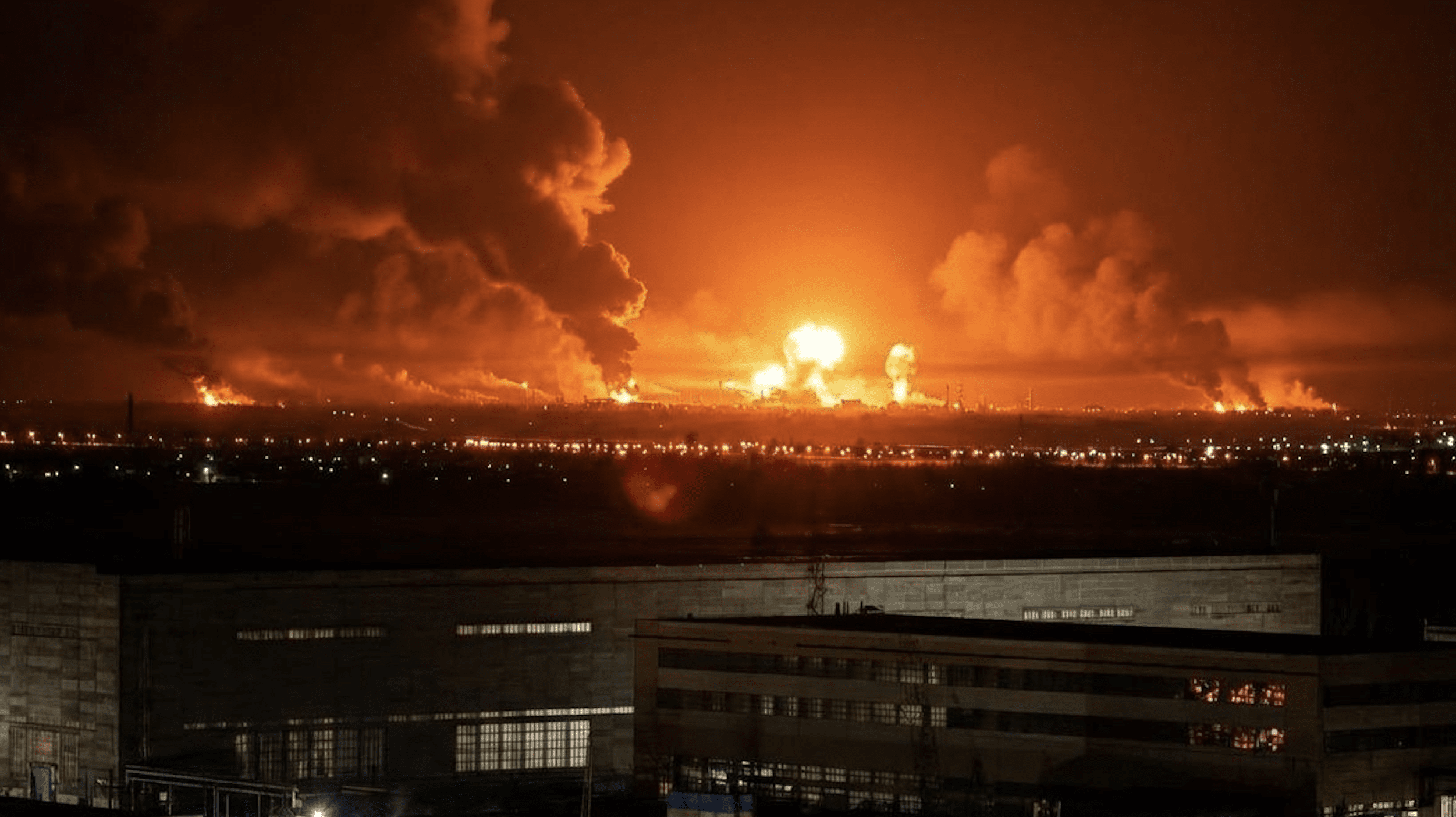
Ukraine's Security Service (SBU) has published its first full tally of a 40-day campaign of long-range and frontline operations against Russia, reporting more than 100 strikes on strategic targets and over 21,000 Russian losses at the front.
On August 4, the agency reported that the campaign, approved by Ukrainian President Volodymyr Zelenskyy, ran across Russian territory and temporarily occupied areas of Ukraine, striking military-industrial plants, airbases, air defenses, command posts, warships, tankers, oil refineries, and logistics.
We bring you stories from the ground. Your support keeps our team in the field.
Zelenskyy has since cleared its chief, Major General Oleksandr Poklad, to launch new operations, the service noted.
Frontline and rear-area units struck more than 21,000 pieces of military equipment, weaponry, and infrastructure and killed nearly 5,000 Russian troops over the period, according to the SBU.
The agency identified sustained strikes on enemy aviation as a central line of the campaign, listing hits on the Saky, Gvardiiske, Belbek, Bagerove, Engels, and Khanskaya military airfields, as well as the Yevpatoria aviation plant. Over the 40 days, the SBU stated, its operations:
destroyed a Tu-95MS strategic bomber;
confirmed strikes on two Su-35 fighters and two L-39 combat trainers;
hit hangars sheltering Su-24, Su-30, and Su-30SM aircraft;
damaged hangars holding Shahed attack drones and airfield fuel supplies.
The service also reported that Russia's air defenses were steadily degrading. Targets included a Nebo-U radar, the 92N6E multifunction radar of an S-400 system, Tor-M2 and Pantsir-S2 launchers, a Pole-21 electronic warfare complex, three Podlyot-K1 radars, and a Kasta-2E2 radar.
The SBU framed its strikes on Russia's fuel and energy sector as "kinetic sanctions," reporting hits on 14 oil refineries, as well as dozens of oil depots, tank farms, pumping stations, terminals, and an offshore extraction platform.
-067a206e85db01ee13bcdd4941b9d3fa.jpeg)
Among the most significant targets were the St. Petersburg, Yaroslavl, Nizhny Novgorod, Perm, and Volgograd refineries, as well as three refining plants in Ufa. The list also includes the Pervyi Zavod complex, the Cherkasy and Subkhankulovo pumping stations, and an oil platform at the Filanovsky field in the Caspian Sea.
The agency additionally reported striking vessels from Russia's "shadow fleet," used to evade international sanctions, naming the tankers Blue, Louise 1, Banda, and Avero, as well as two sanctioned cargo ships.
On the battlefield, the SBU detailed losses inflicted by its frontline and rear-area units, reporting the destruction of:
24 tanks and 63 armored combat vehicles;
124 artillery systems and 22 multiple-launch rocket systems;
40 air defense assets and 14 planes and helicopters;
more than 11,000 drones and ground robotic systems, including 176 Shahed-type drones.
The service also claimed eliminating 712 Russian drone crews along with their launchers and equipment, and destroying ammunition and fuel depots, command posts, communication nodes, and electronic warfare systems across the front.
The Tu-95MS, known to NATO as the Bear-H, is Russia's principal air-launched cruise missile carrier and a mainstay of its long-range aviation fleet. Modernized variants carry up to eight externally mounted Kh-101 or Kh-102 cruise missiles, the weapons Russia regularly fires at Ukrainian cities. Production ended in 1992, and with only a few dozen airframes in service, each destroyed bomber is effectively irreplaceable.
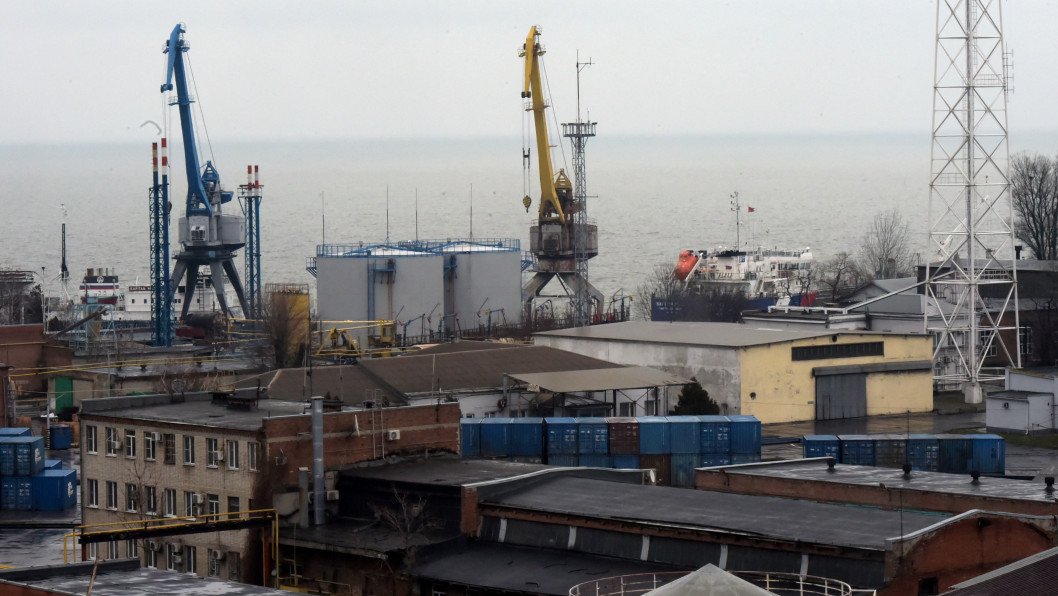
The Security Service characterized the 40-day operation as a coordinated push to weaken multiple pillars of Russia's war machine at once, and indicated that efforts to erode Moscow's military and economic potential would continue.
The refinery strikes form part of a widening air campaign against Russia's energy backbone that has stretched deep into 2026.
Ukrainian long-range drones have hit Russian oil refineries at least 194 times since the start of the year, forcing shutdowns at major plants and driving gasoline shortages across the country. A recent strike at the Omsk refinery, Russia's largest, meant that every one of the country's 11 largest refineries had by then been hit.
Discuss this article:
-9a7b3a98ed5c506e0b77a6663f5727c5.png)

-24deccd511006ba79cfc4d798c6c2ef5.jpeg "Photo of Louis Beaudemont")