- Category
- War in Ukraine
Ukrainian Drone Strikes Halt Russia’s Bid to Connect Zaporizhzhia Nuclear Plant to Its Grid
 Prefer U24 Media on Google
- Authors

-111f0e5095e02c02446ffed57bfb0ab1.jpeg "Photo of Roman Kohanets")
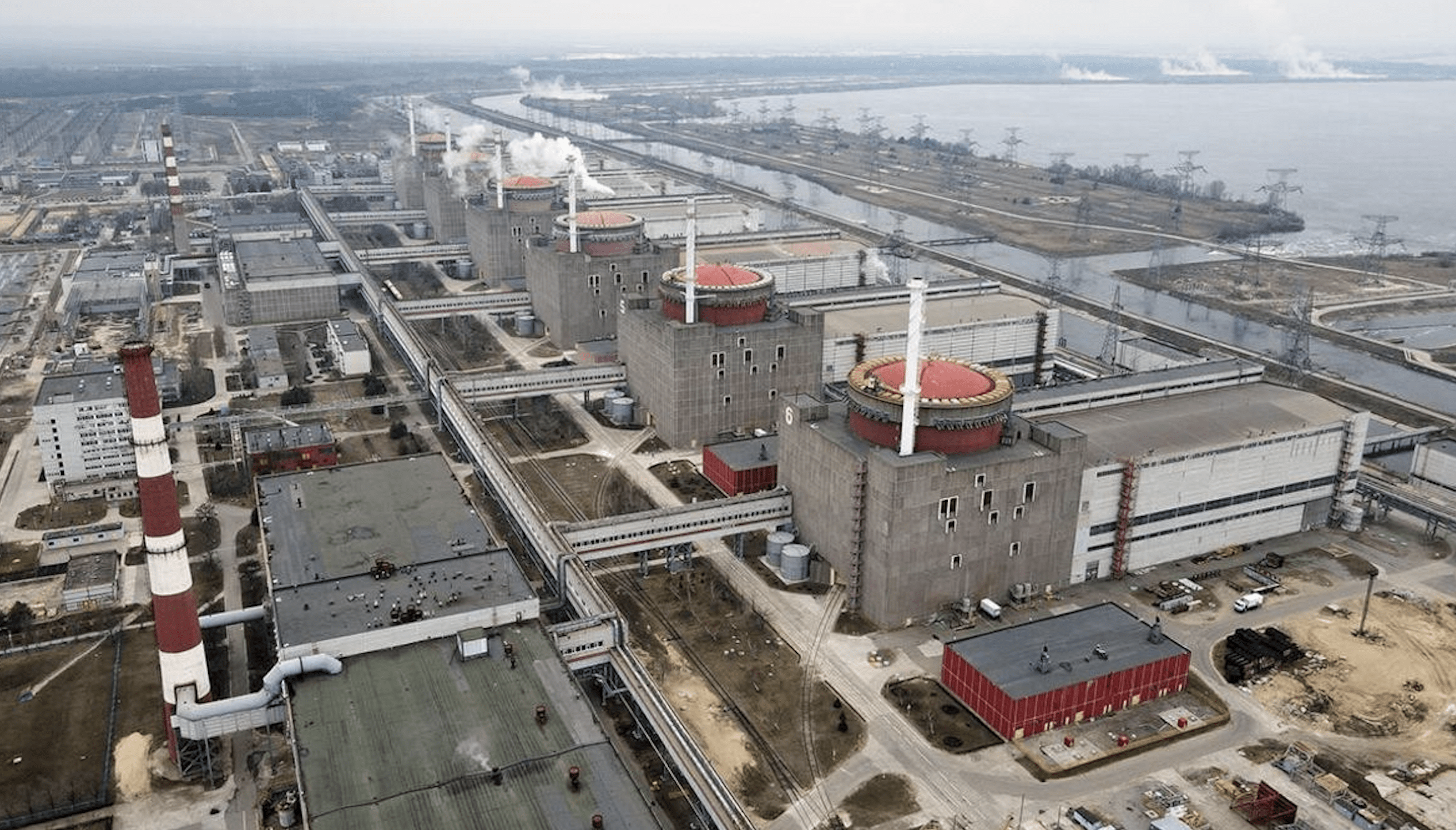
Ukrainian drone strikes have disrupted Russia’s attempt to connect the Zaporizhzhia Nuclear Power Plant (ZNPP) in the temporarily occupied part of the Zaporizhzhia region to its own energy grid through a newly built transmission line in southern Ukraine.
This was reported by Greenpeace Ukraine in an analysis published on its official website on July 21, based on high-resolution satellite imagery collected between January and July 2026.
We bring you stories from the ground. Your support keeps our team in the field.
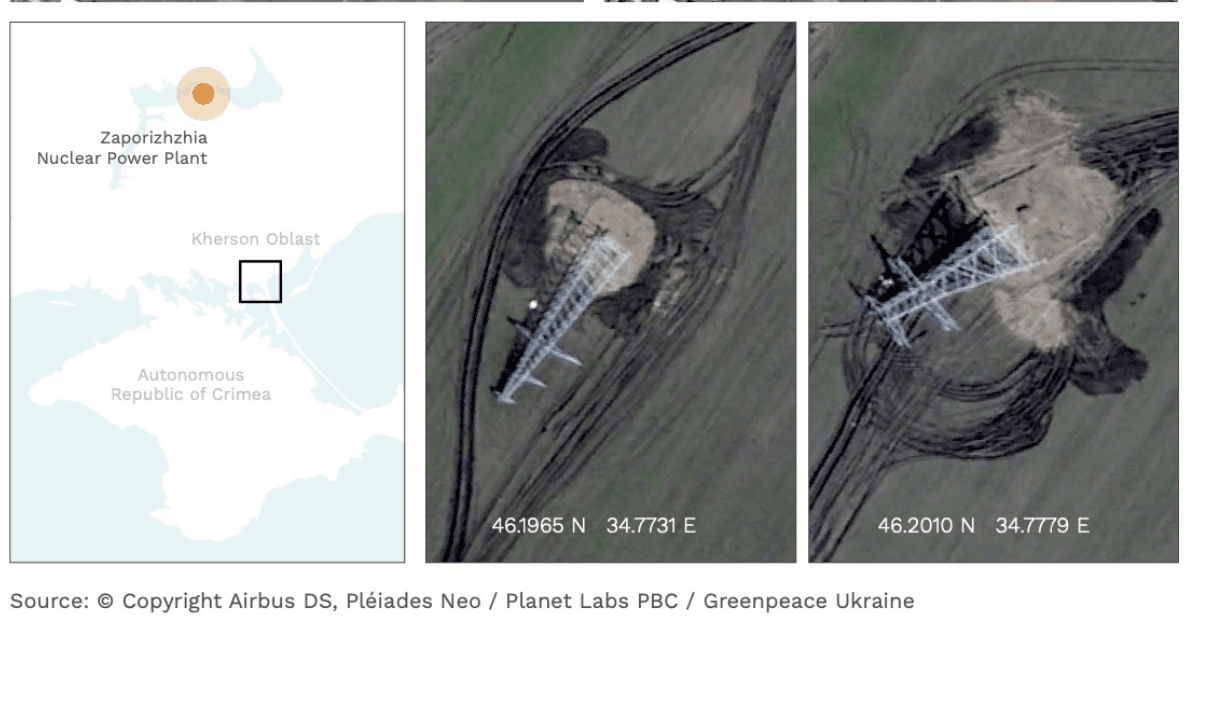
According to the organization, Russian forces have constructed roughly 86 kilometers of new 150 kV transmission line and towers between substations in the temporarily occupied city of Melitopol in the Zaporizhzhia region and in Henichesk in the Kherson region.
Greenpeace said the line runs largely parallel to the E105/M18 highway, which the organization described as the “highway of death” because of repeated Ukrainian drone strikes on Russian logistics.
The organization stated that construction began between mid-January and mid-February, advanced most rapidly in March and April, and was nearly complete by late May.
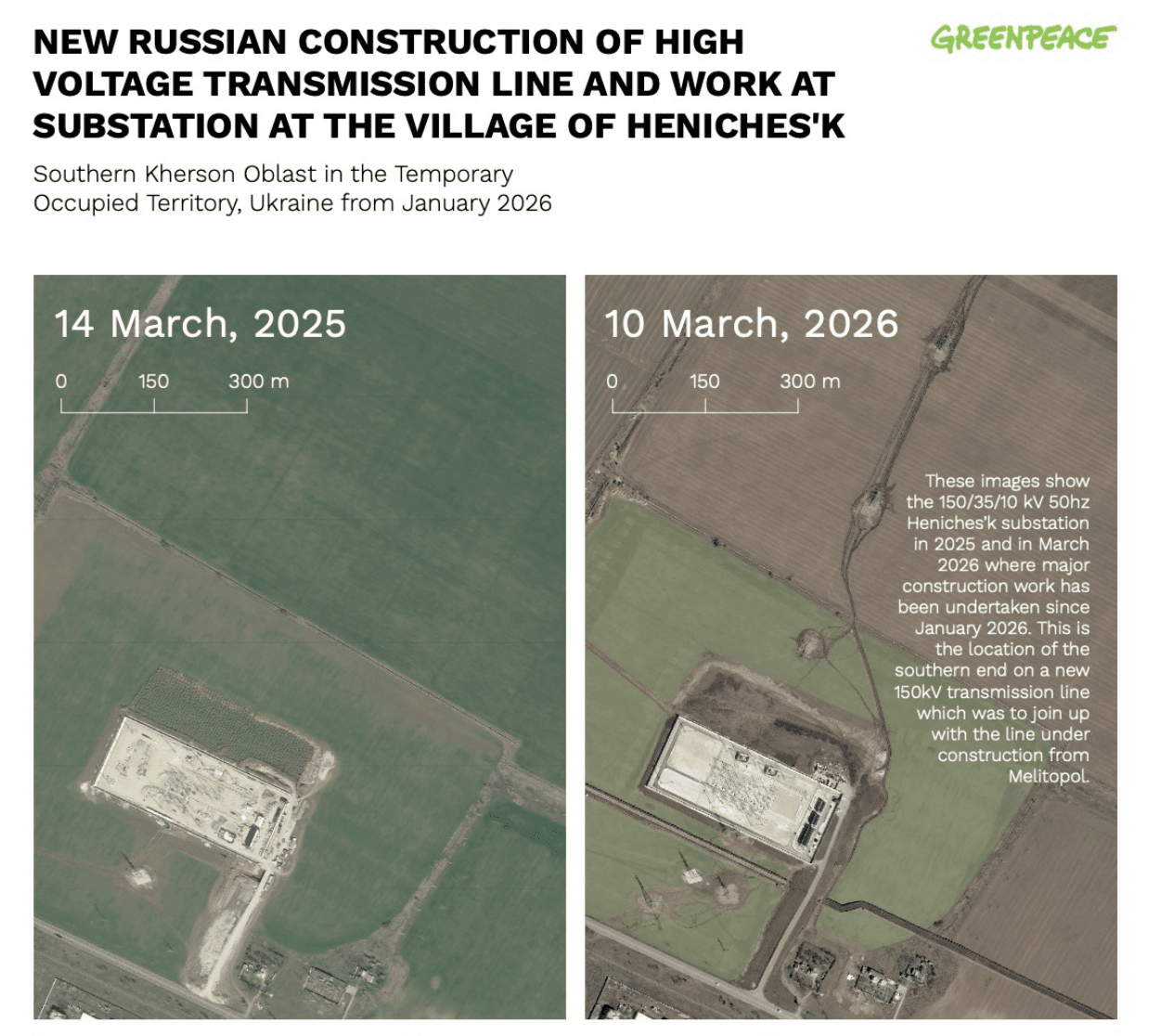
Satellite imagery from July 1 showed no further progress toward completion, Greenpeace said. The organization linked the halt to Ukrainian military operations along the highway, including drone strikes on the Henichesk substation in early July.
Greenpeace assessed that the line is a key element of Moscow's long-term plan to disconnect the plant from Ukraine's grid, restart its reactors under Rosatom control, and channel electricity to the temporarily occupied territories, including Crimea, and to southern Russia.
The analysis indicated that the power would also support Russian military logistics, mining, and agriculture in the occupied south, and that Rosatom views the seized plant as a cheaper alternative to building new reactors in Russia's Rostov region and Krasnodar Krai.
"Since 2022, Russia has used the occupation of the Zaporizhzhia Nuclear Power Plant as an instrument of nuclear terror against Europe," stated Jan Vande Putte, a nuclear energy specialist at Greenpeace Ukraine. He added that the new line from Melitopol will not change a trend that increasingly shows the Russian occupation of the plant to be a doomed project.
The plant's six reactors have been shut down since 2022, and Greenpeace has tracked Russian efforts to rebuild the occupied grid since 2024, including the installation of 201 kilometers of line between Melitopol and Mariupol by late September 2025.
The organization warned that a loss of external power or of cooling for the reactors and spent fuel pools could trigger a large-scale radiation release, a risk it described as a direct consequence of the occupation.
Greenpeace also criticized International Atomic Energy Agency (IAEA) Director General Rafael Grossi over his statements that the reactors could be restarted under Rosatom management and that joint Russian-Ukrainian use of the plant is technically possible.
The organization said the electricity would also support Russian military logistics, mining, and agriculture in the occupied south.
It added that Rosatom viewed the seized plant as a cheaper alternative to building new reactors in Russia’s Rostov region and Krasnodar Krai.
"IAEA Director General Rafael Grossi continues to undermine international efforts aimed at ending the illegal Russian occupation of the ZNPP," declared Shaun Burnie, a senior nuclear specialist at Greenpeace Ukraine.
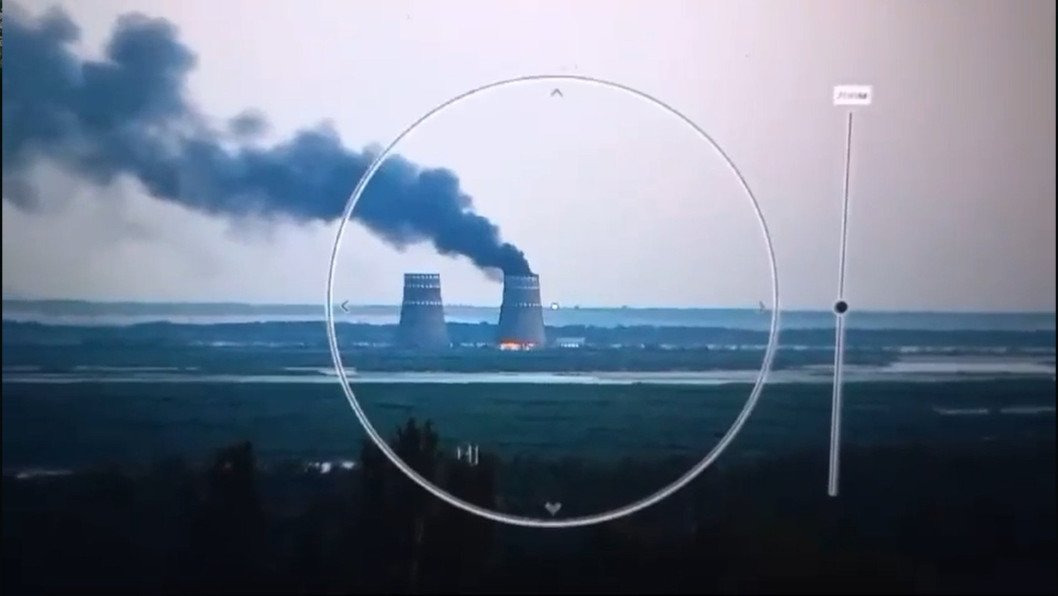
Only one of the plant’s ten prewar external power lines remains operational. The facility suffered its 21st blackout of the full-scale war on July 3, cooling pond levels have fallen below the required minimum, and staffing has dropped from about 11,000 workers to roughly 7,500.
Greenpeace said those conditions make restarting even one reactor increasingly difficult.
Discuss this article:


-c439b7bd9030ecf9d5a4287dc361ba31.jpg "Photo of Katherina Popilnichenko")

-72b63a4e0c8c475ad81fe3eed3f63729.jpeg "Photo of Cyril Barabaltchouk")