- Category
- War in Ukraine
“We Are Under Russian Fire Every Day”: Meet the Crews Racing to Repair Ukraine’s Bombed Power Grid
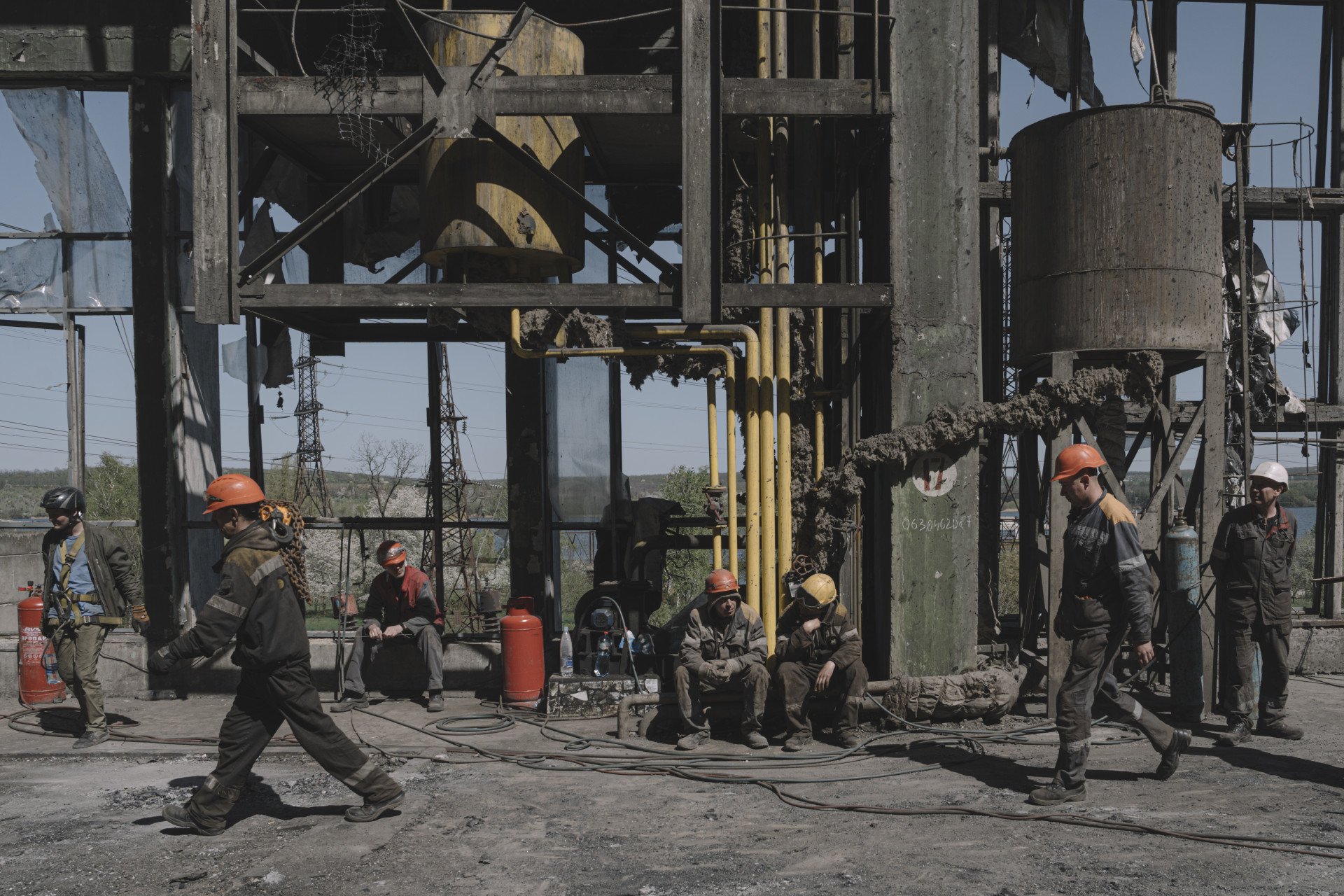
Every winter since 2022, Ukraine has lived through what people now call Blackout—mass power outages Russian missile and drone attacks caused. While Russia spends billions to plunge ordinary people into darkness, thousands of energy workers are doing the extraordinary to keep the country’s lights on.
 Prefer U24 Media on Google
- Authors

-24deccd511006ba79cfc4d798c6c2ef5.jpeg "Photo of Louis Beaudemont")
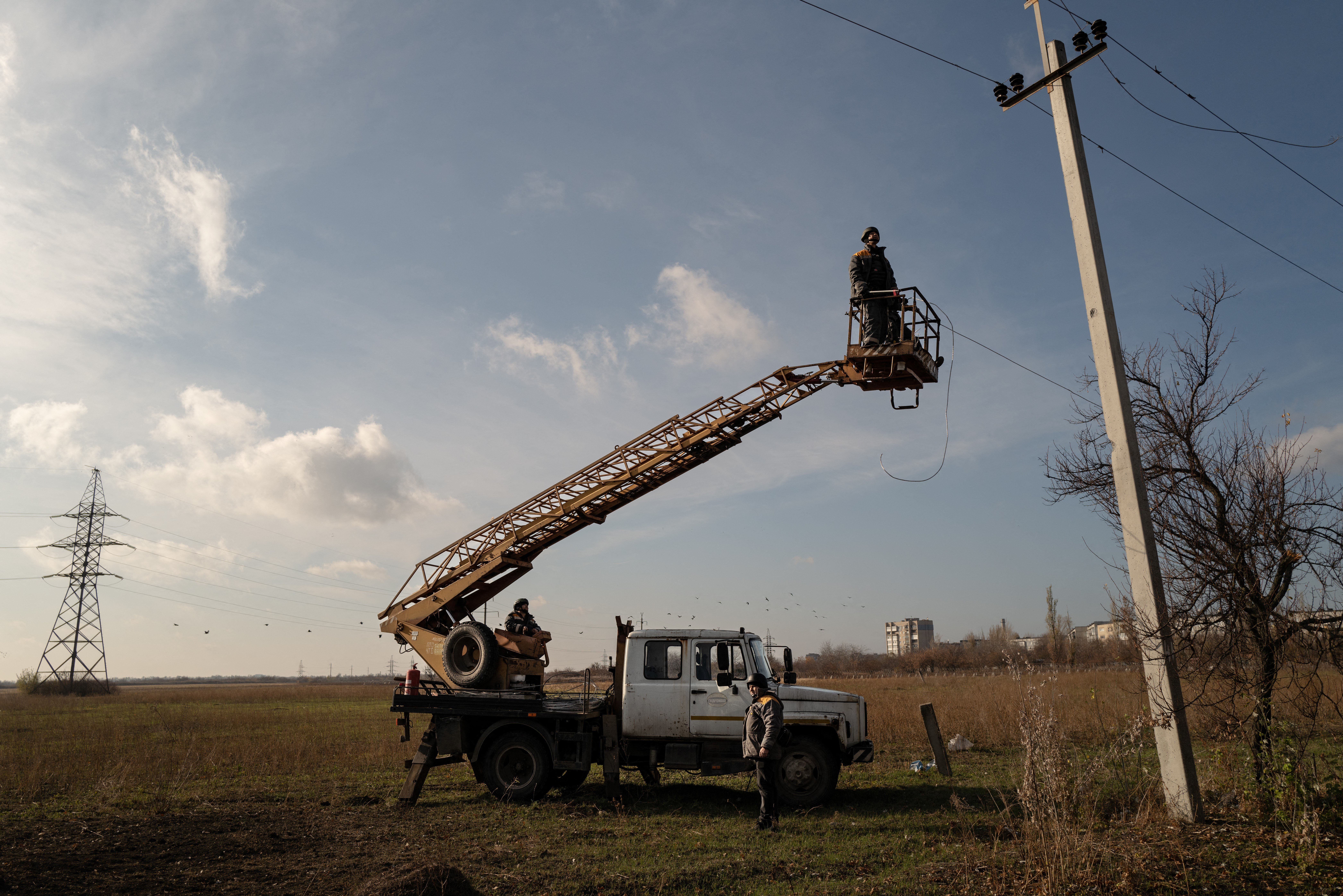
In Ukraine, because of Russia’s constant bombing, the fear isn’t a faulty meter or an unpaid bill. It’s the very real possibility of a total disconnection from every source of power.
“We work wearing helmets, bulletproof vests, and drone detectors when restoring equipment after attacks,” said Maksym Yatsenko, a master electrician working in Nikopol for DTEK, the largest private energy provider in Ukraine.
We bring you stories from the ground. Your support keeps our team in the field.
Energy workers—energhetyky in Ukrainian—like Yatsenko are the human link between power plants, households, industry and transportation. Since the Russian full-scale war on Ukraine, they risk their life for it.
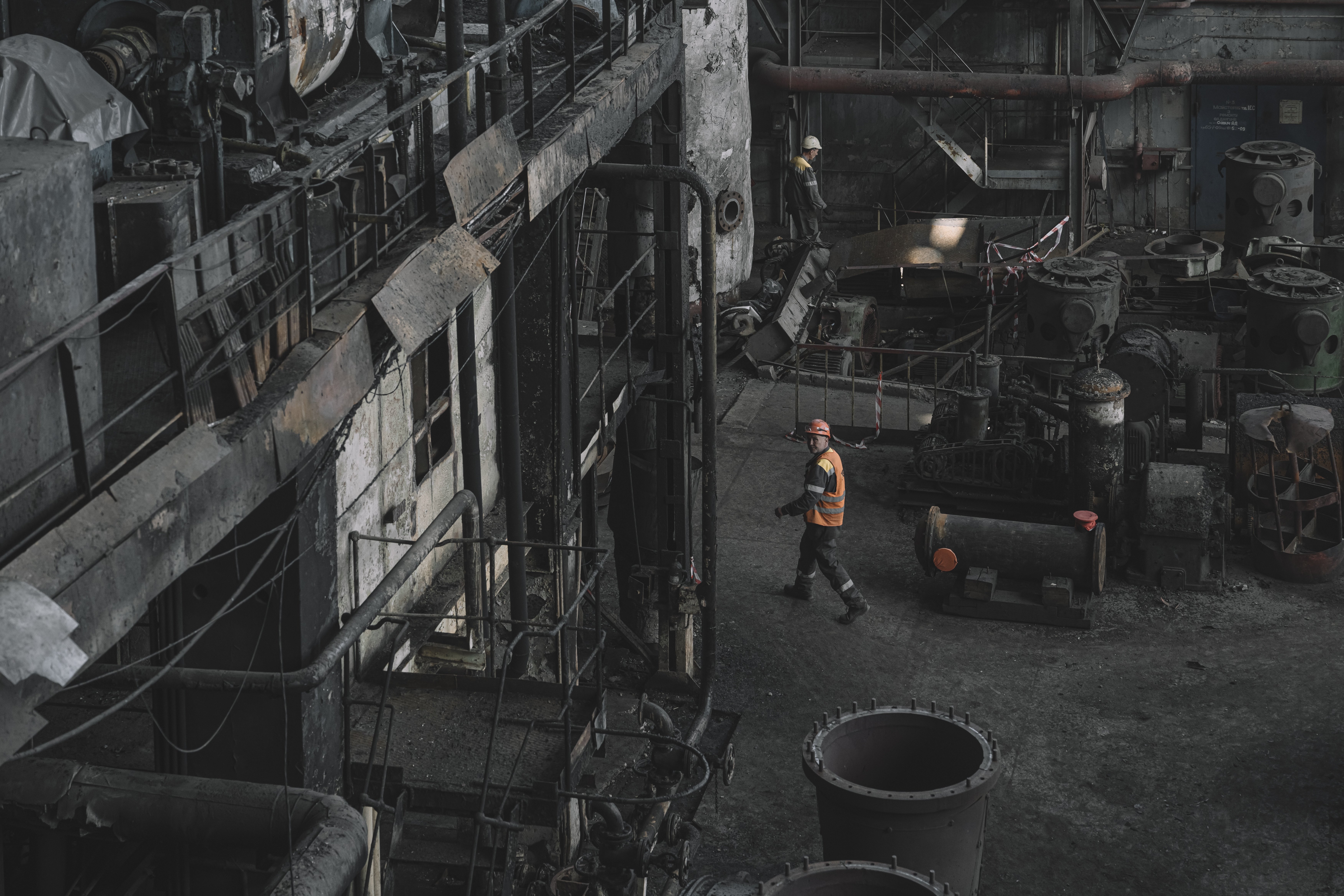
Life on the frontline for energy workers repairing the grid under fire.
When winter approaches, the Kremlin shifts its focus to Ukraine’s energy grid, aiming to push the country into darkness. These strikes affect not only industry but also the daily lives of everyone living in Ukraine.
Russia launched 36 missiles and 596 attack drones on November 29, mainly targeting Kyiv’s energy infrastructures. This attack also struck residential buildings, killing at least three people and injuring dozens more. Nearly 500,000 residents were left without electricity, heating, and, in some cases, running water. Nevertheless, DTEK managed to restore power to 360,000 customers on the same day.
In the streets of major cities such as Kyiv, Lviv, Dnipro, and Kharkiv, the hum of generators has become one of the defining sounds of winter. DTEK and other energy operators are trying to manage a grid that doesn’t have enough power or enough functioning transformers to deliver it to consumers. Cities—heavy energy users—now follow scheduled blackout zones so they don’t fall completely into darkness.
But cities close to Russian positions face even more danger: artillery, mortars, and FPV drones. There is a city in the Dnipropetrovsk region that sits on the right bank of the Dnipro River. Across the water lie Russian positions that bombard the city almost daily.
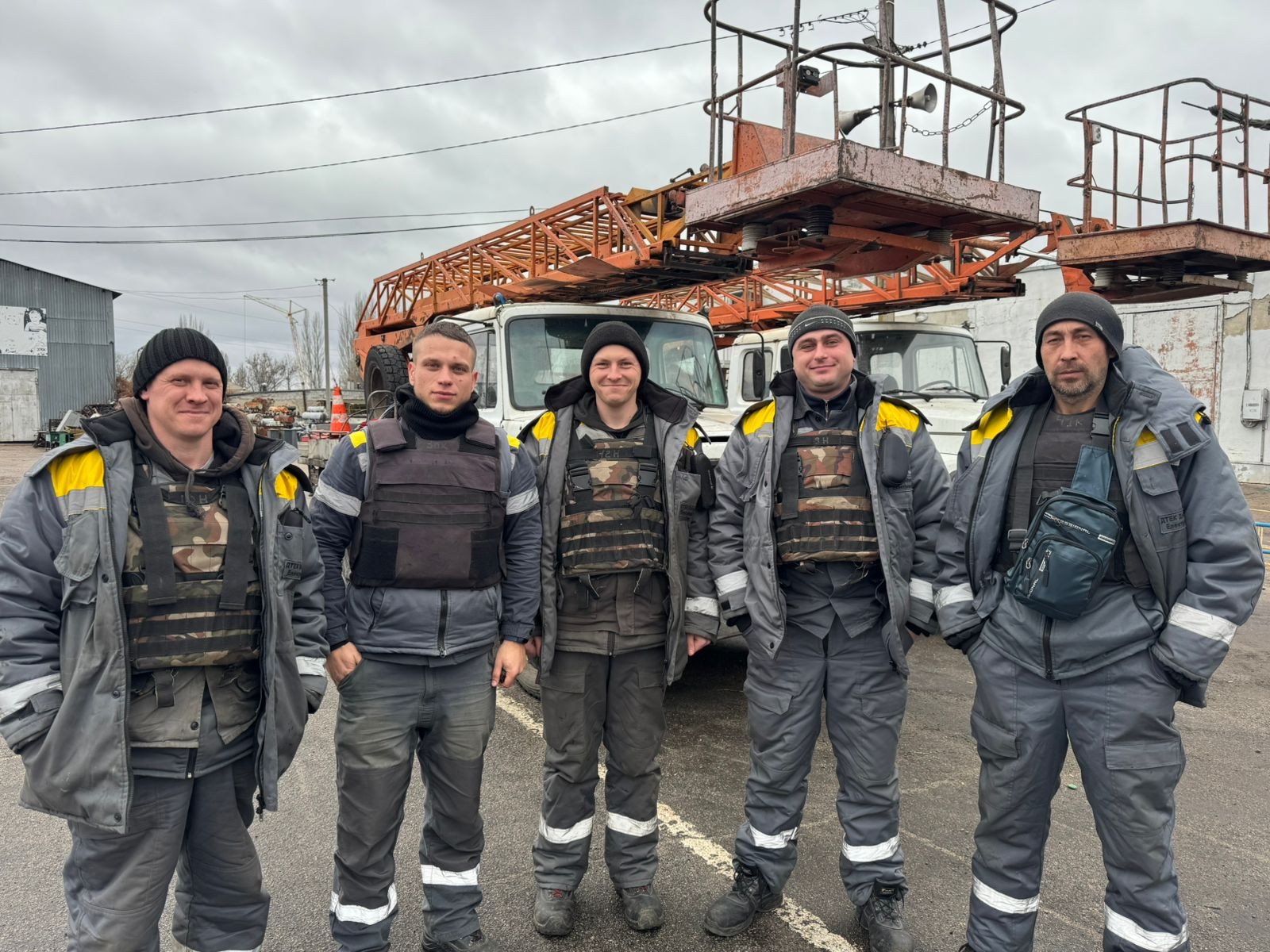
“In Nikopol, we’re not only targeted by Shaheds or missiles,” Yatsenko said. “We are also hit by drones, mortars, and artillery. They fire at us from across the river—only four to six miles away.” The risk is not theoretical. Russia has targeted his team multiple times.
Since the full-scale invasion began, Russia has damaged more than 9,000 DTEK distribution facilities—around 12% of the entire grid. Simple High-voltage power lines have been damaged more than 18,000 times.
We are under Russian fire every day—morning, evening, and night.
Maksym Yatsenko
Master electrician
One day, a salvo struck the infrastructure they had just repaired 30 minutes earlier. Another time, in 2024, a Russian FPV drone attacked them. Their drone detector picked it up just in time—allowing the crew to jump out of their truck and run to nearby trees. The FPV struck the vehicle, destroying the lift bucket.
We were lucky. We noticed the drone and managed to get away before it hit.
Maksym Yatsenko
Master electrician
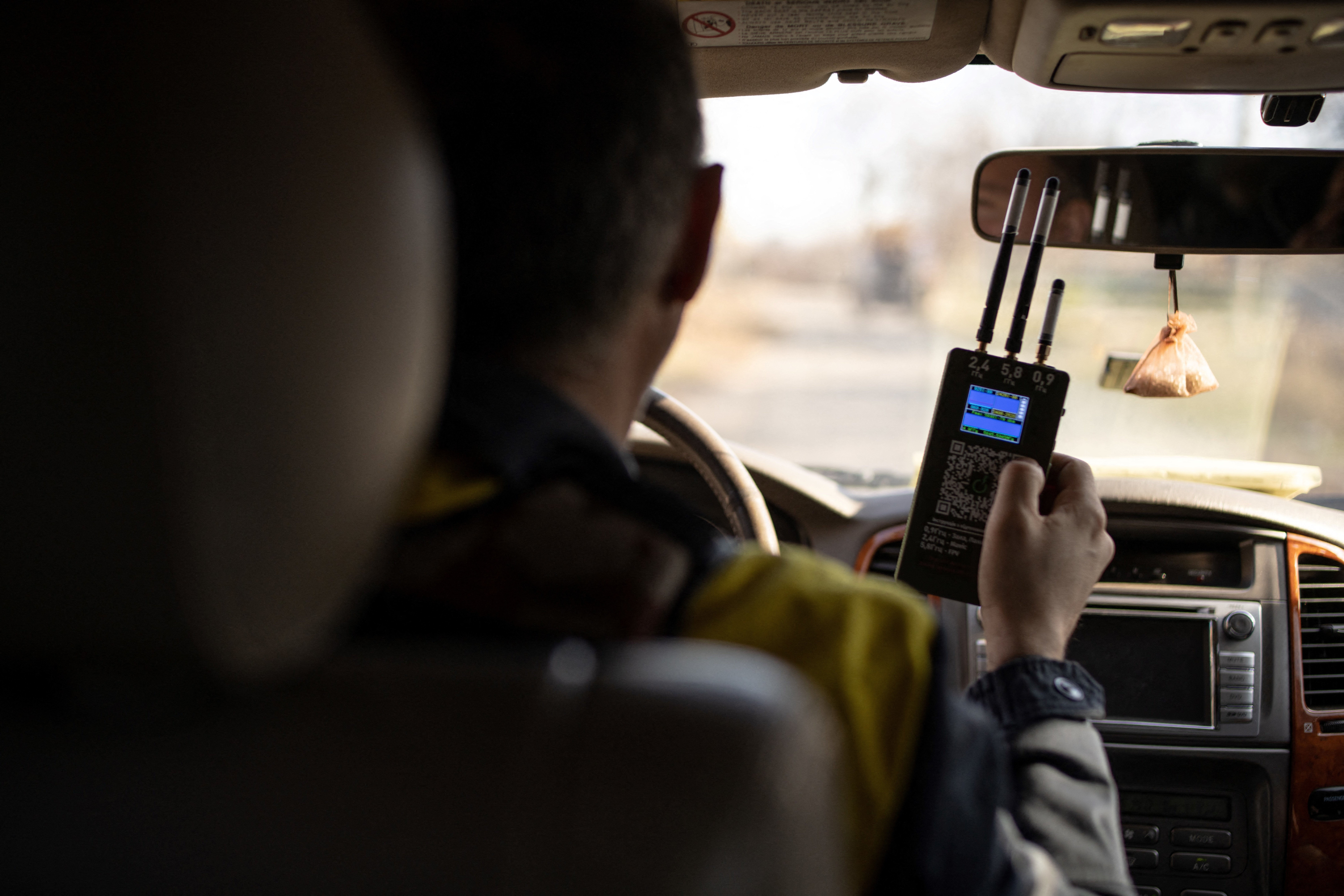
“It happened that we restored the same site three times in a single day,” he said. “We leave, go to another job, and half an hour later the dispatcher calls again.”
Just this February, a Russian attack killed Hennadii Musatov, a crane operator from Nikopol, while he was repairing power lines damaged by the previous shelling. Musatov, 56, had worked in the energy sector for more than 20 years. President Volodymyr Zelenskyy later awarded him the Order “For Courage” (3rd Class) posthumously and handed the award personally to his family.
Despite the danger, Yatsenko says moments of meaning keep them going.
When people have been without electricity for three or four days after bombardments, they’re very happy to see us. You can feel their gratitude when the lights come back on.
Maksym Yatsenko
Master electrician
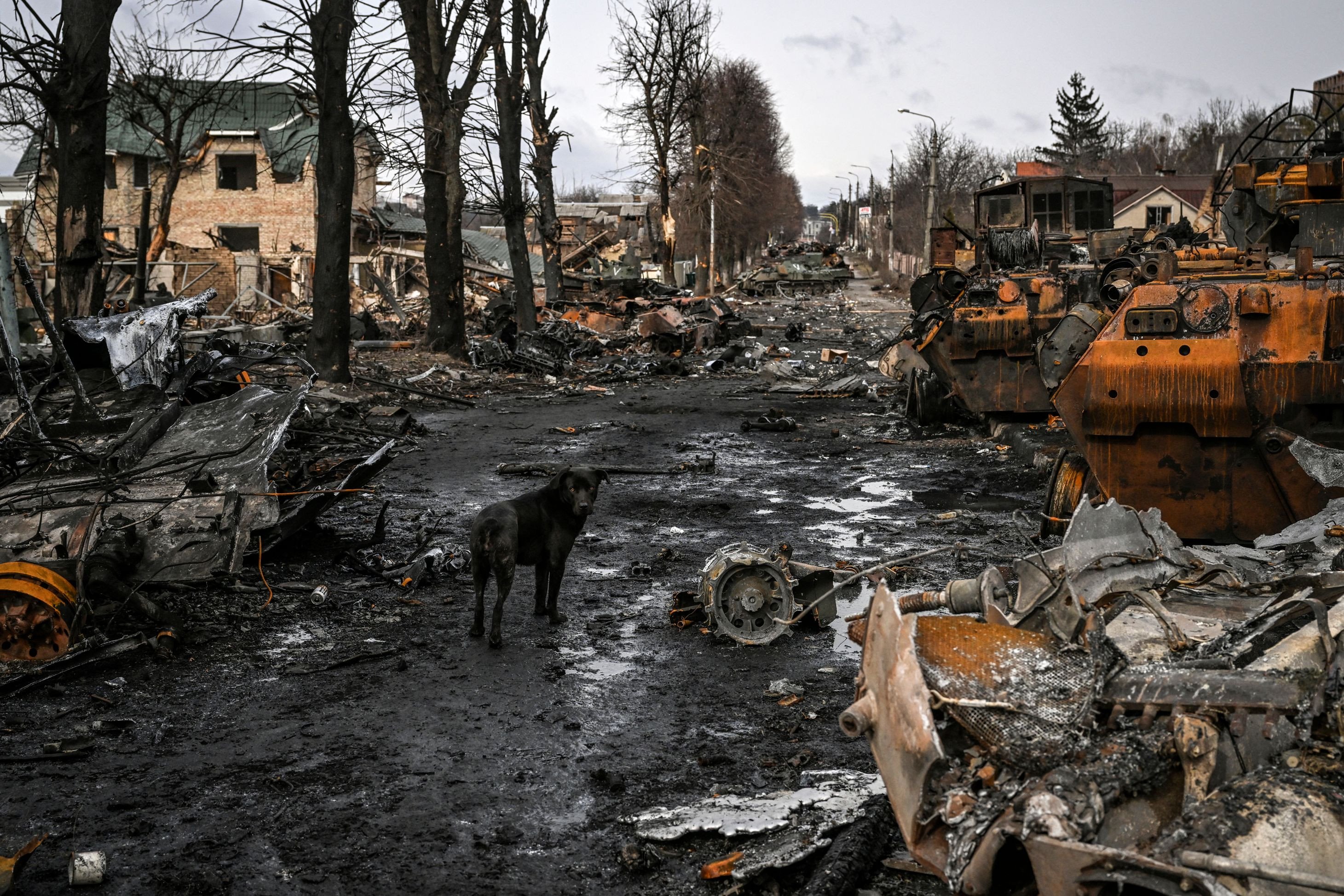
Kyiv’s electricians restored power after the Russian occupation and massive destruction
This sense of purpose is shared by Edvard Kashkov, a master electrician in the Kyiv region. When Russian forces reached the outskirts of the capital and many residents fled, Kashkov and his brigade volunteered to stay.
“The invasion started, and my brigade and I volunteered immediately,” he told us. “It was March 2022, when the Kyiv region was still partially occupied. We came under shelling several times—under Grad missile fire.”
During the occupation, around 70% of the region’s grid was destroyed.
After the region was liberated, we restored everything almost from scratch.
Edvard Kashkov
Master electrician
Together with teams from other regions, they restored electricity to more than 260,000 families around Kyiv in a record 45 days. They repaired nearly 10,000 kilometers of power lines and more than 3,000 power facilities.
Kashkov remembers entering newly liberated towns like Bucha—places that had endured Russian torture, executions, weeks of darkness, and isolation. He and his teammates were ones of the first to come to the liberated territories around Kyiv, speaking with inhabitants, just freed from Russian occupation.
“You can’t rush those conversations. You have to listen,” he said. “And then you understand even more how important our work is.”
When you leave and see the lights shining again, it warms your heart. You think: “We did this so people can have light.”
Edvard Kashkov
Master electrician
He still remembers the sound of a transformer coming back to life—its low groan replacing the silence left by Russian death and bombardments.
Honoring the workers who keep the lights on
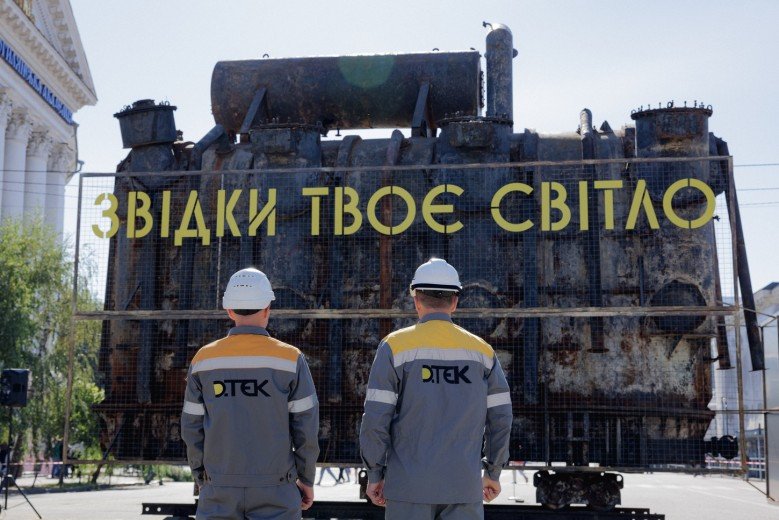
In autumn 2024, DTEK organized a public exhibition in central Kyiv called “Where Does Your Light Come From?” to show residents the real impact of Russian attacks and the work required to restore electricity.
Next to a massive transformer critically damaged by a Russian strike, passersby were invited to write what “light” meant to them.
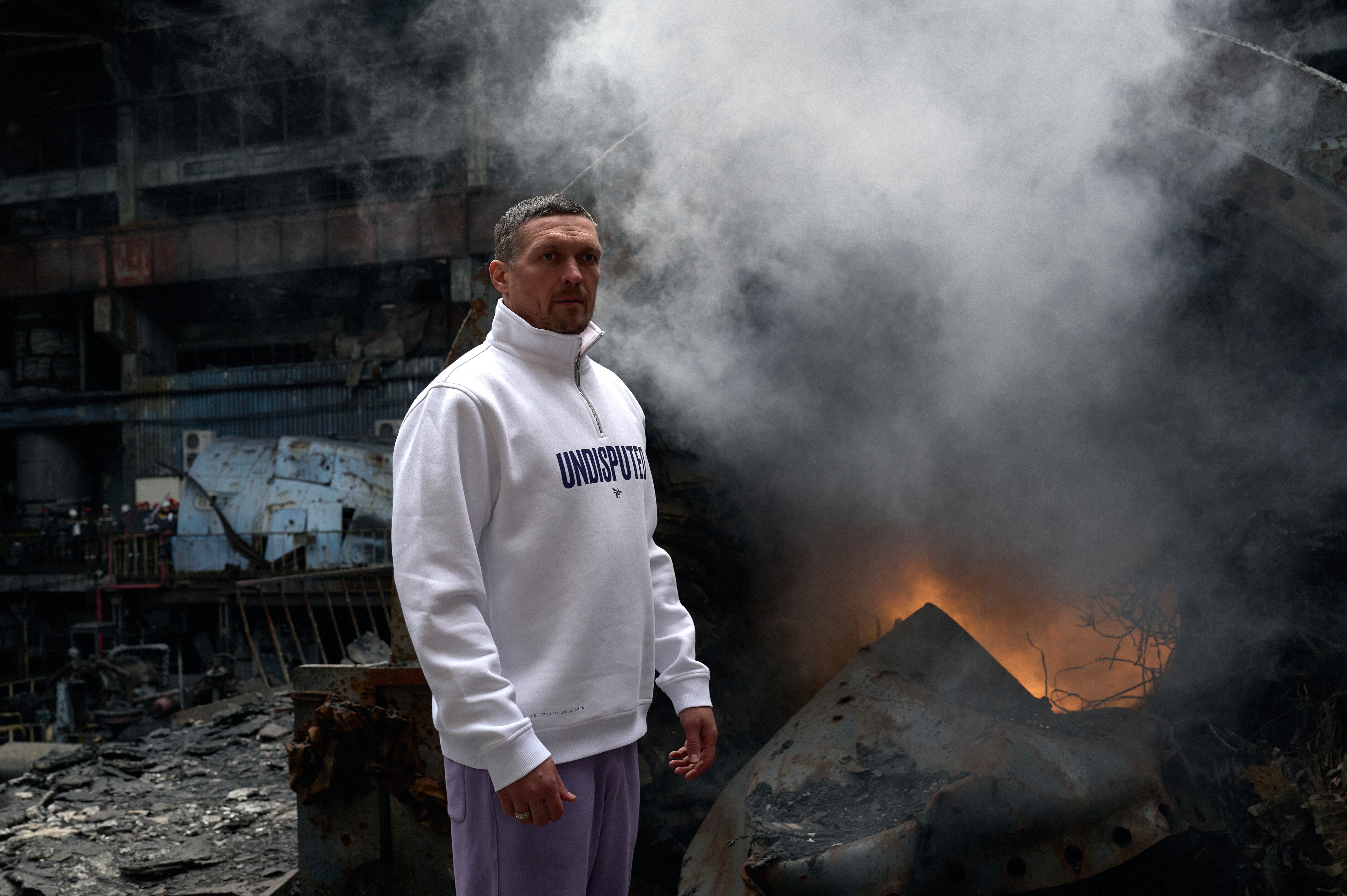
More recently, ahead of his boxing rematch against Daniel Dubois, held on July 19, 2025, at Wembley Stadium in London, multiple world boxing champion Oleksandr Usyk has joined DTEK Group’s global initiative aimed at mobilizing international support for restoring Ukraine’s energy infrastructure after Russian strikes.
Kashkov says energy work is more than a job in his family.
“My son also works in Kyiv,” he said “he’s a senior engineer finishing his master’s degree. It was his choice. My wife also works in the local energy sector.
We are an electricity family.
Edvard Kashkov
Master electrician
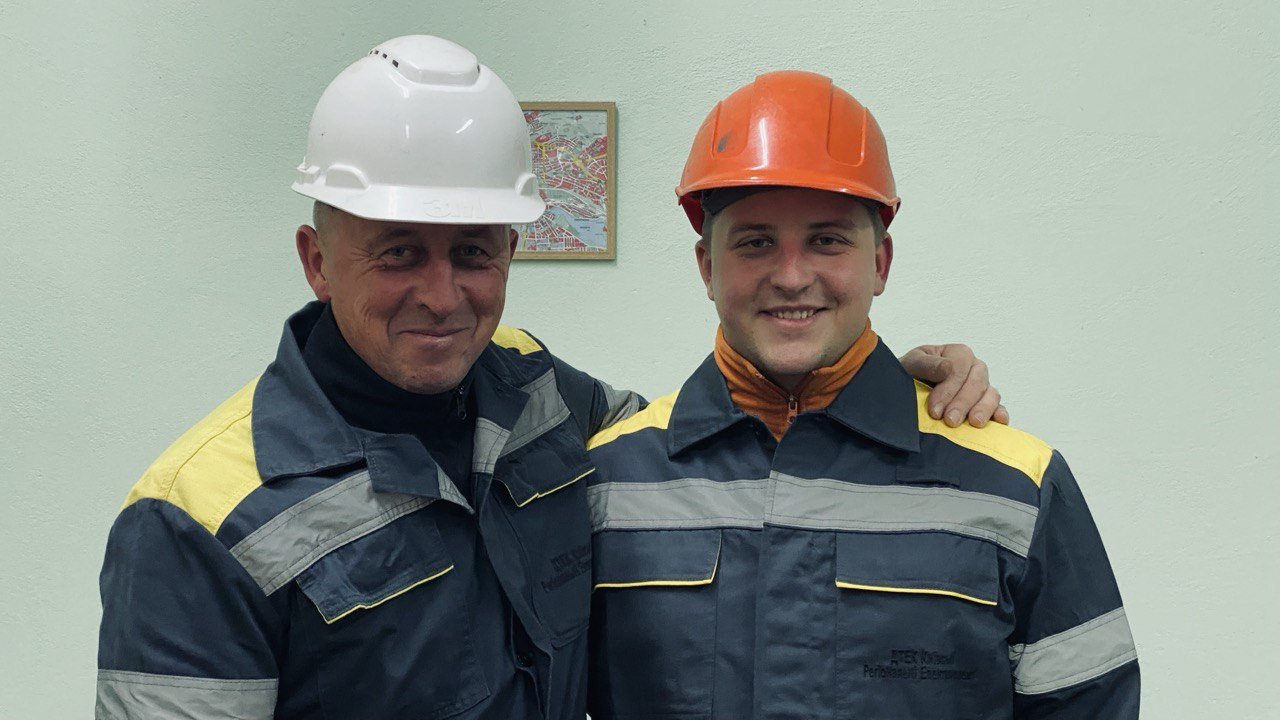
Kashkov’s story was turned into a children’s book. Meanwhile, Yatsenko was awarded an honorary certificate from Ukraine’s Cabinet of Ministers.
“I never thought about moving,” Yatsenko said. “First, because I can contribute here with my own hands. And second, there are no safe places in Ukraine right now. Every city is being hit. You can’t escape your destiny.”
Discuss this article:
-4a56a6b482ec132402c16ef6fcabf9a2.png)

-c439b7bd9030ecf9d5a4287dc361ba31.jpg "Photo of Katherina Popilnichenko")
-72b63a4e0c8c475ad81fe3eed3f63729.jpeg "Photo of Cyril Barabaltchouk")