- Category
- World
Britain’s Flying Spy Hub Returns to Monitor One of Russia’s Most Sensitive Military Zones
 Prefer U24 Media on Google
- Authors


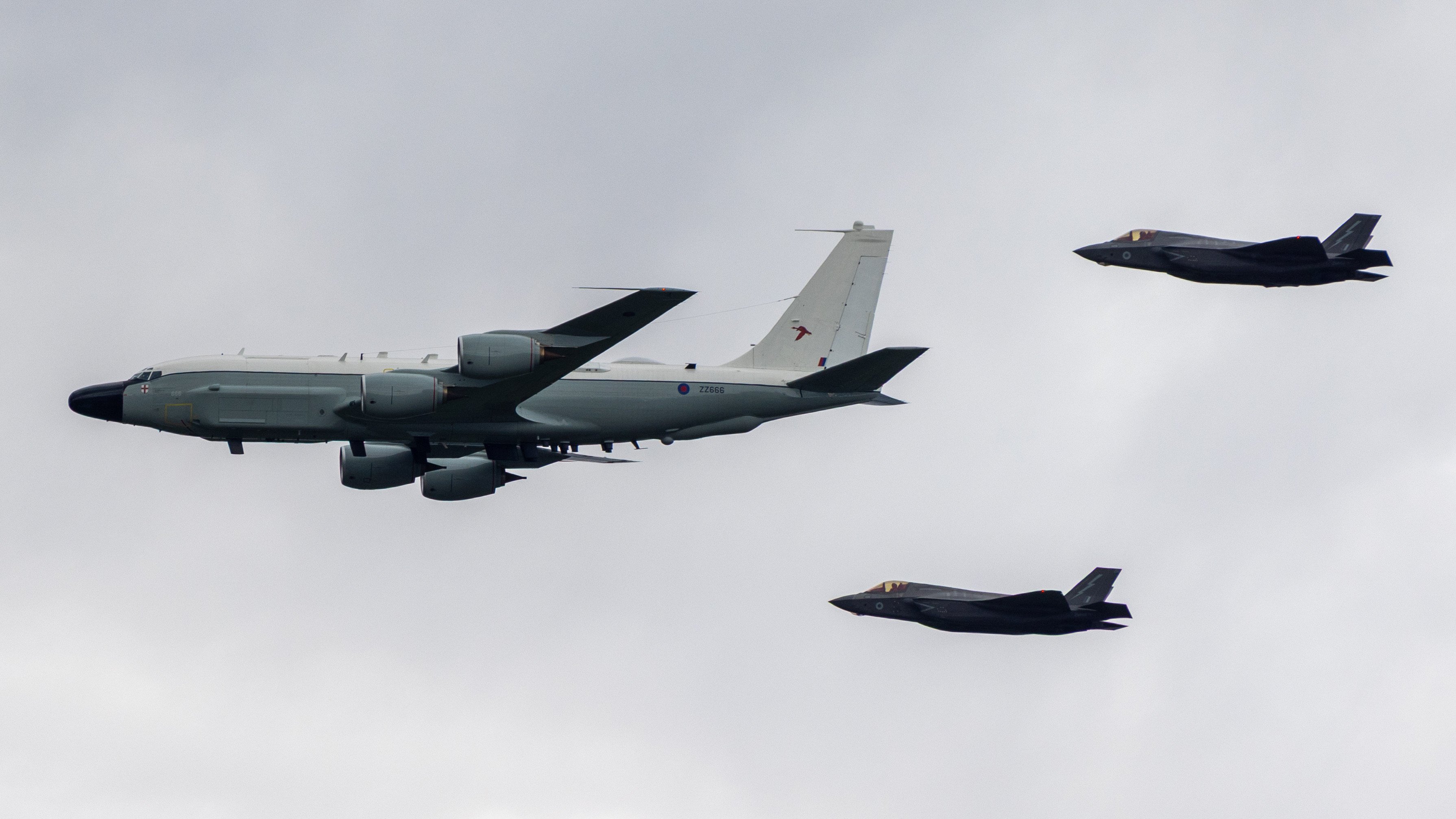
A Royal Air Force RC-135W Rivet Joint surveillance aircraft carried out an intelligence-gathering mission near Russia’s heavily militarized Kaliningrad exclave, according to reporting by UK Defence Journal on May 12.
Flight-tracking data reviewed by UK Defence Journal showed the aircraft flying a racetrack-style patrol pattern over the Baltic region, a profile commonly associated with signals intelligence collection missions.
We bring you stories from the ground. Your support keeps our team in the field.
The publication noted that such operations have become a routine part of NATO’s long-running surveillance posture near Russia’s western flank and predate the Russian war of aggression against Ukraine.
The UK, US, and allied NATO states maintain an almost continuous airborne ISR presence over the Baltic Sea, combining intelligence gathering with strategic deterrence.
Unlike covert reconnaissance missions, Rivet Joint flights are intentionally visible on public tracking services, allowing observers to monitor allied activity in real time.

The RAF operates three RC-135W aircraft under its Airseeker program, though the platform is still widely referred to by its original Rivet Joint designation, UK Defence Journal noted.
The aircraft specializes in collecting signals intelligence by intercepting and analyzing radar emissions, communications, and other electronic activity across the electromagnetic spectrum.
Derived from the long-serving C-135 airframe, the RC-135 family has been used for decades by both the US and UK for strategic reconnaissance missions.
UK Defence Journal reported that Britain introduced the RC-135W between 2013 and 2017 to replace the retired Nimrod R1 fleet, with all aircraft assigned to 51 Squadron at RAF Waddington.
The aircraft carries a crew of roughly two dozen intelligence and electronic warfare specialists and can operate at altitudes up to 50,000 feet.
Powered by four F108 turbofan engines, the Rivet Joint can fly nearly 3,000 nautical miles without refueling while conducting near real-time electronic surveillance operations, according to UK Defence Journal.
Earlier, NATO forces launched a sweeping series of military exercises stretching from the Baltic states to the Arctic.
Bringing tens of thousands of troops into coordinated drills along Russia’s borders in one of the alliance’s most extensive training efforts in recent years.
Discuss this article:



-c439b7bd9030ecf9d5a4287dc361ba31.jpg "Photo of Katherina Popilnichenko")



-72b63a4e0c8c475ad81fe3eed3f63729.jpeg "Photo of Cyril Barabaltchouk")