- Category
- World
British Taxpayers Are Already Paying for Russia’s Shadow War—Up to $3.3 Billion a Year
 Prefer U24 Media on Google
- Authors


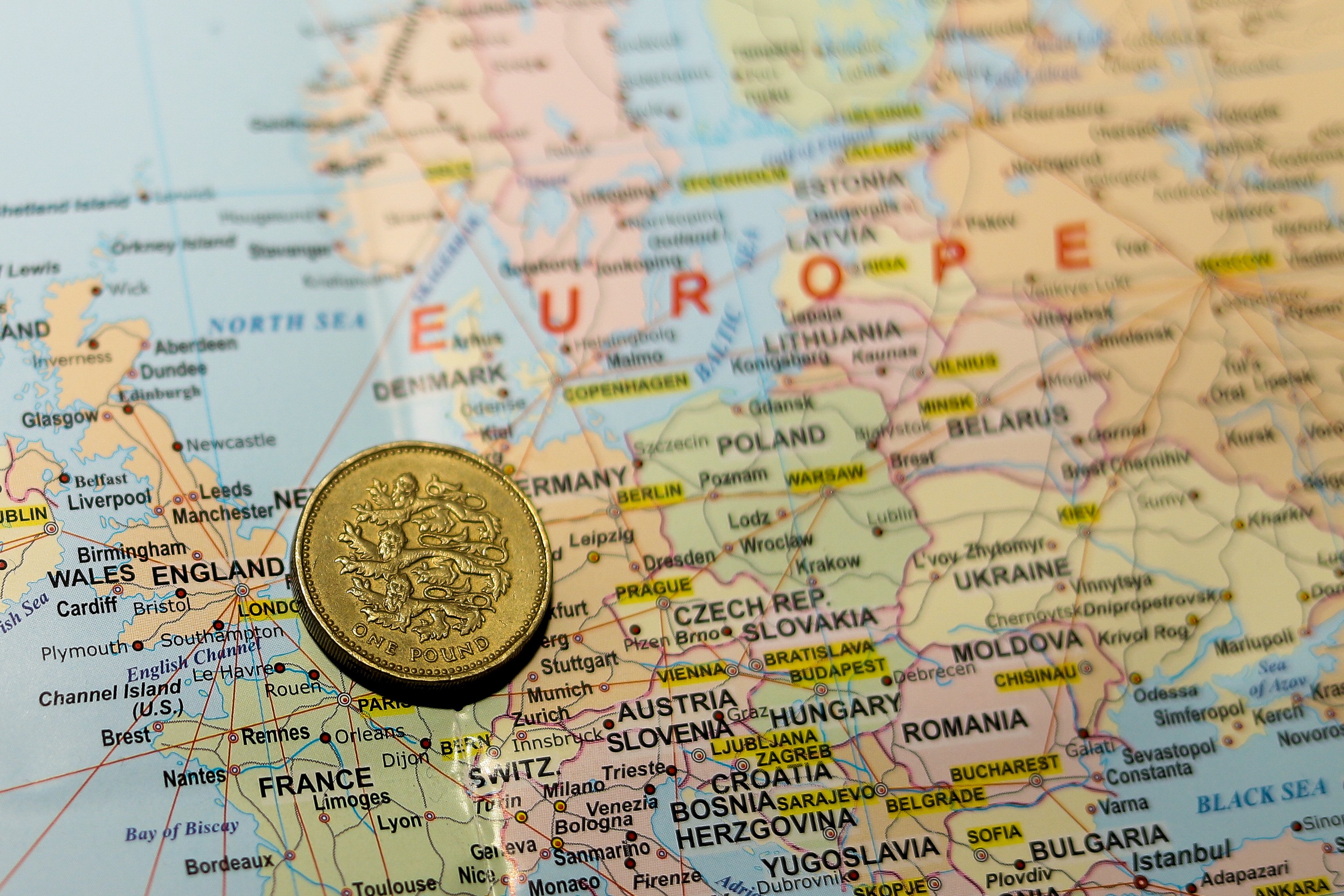
Russian hostile activity may be costing the United Kingdom as much as $3.3 billion (£2.5 billion) every year, with the burden spread across taxpayers, businesses, and public services, even though the British government does not currently calculate the total cost, according to a new report highlighted by UK Defence Journal on October 7.
The report, titled The Putin Tax and published by Labour MP Graeme Downie with Dr. Dominic Reed, describes itself as the first attempt to put a price on Russian hostile activity directed against Britain.
We bring you stories from the ground. Your support keeps our team in the field.
It estimates the annual burden at between $2.64 billion (£2 billion) and $3.3 billion (£2.5 billion), while confirmed incidents alone have already generated losses estimated at roughly $2.11 billion (£1.6 billion) to $2.77 billion (£2.1 billion).
“Far from being solely a national security challenge, Russian hostile activity represents a significant and recurring economic cost that British taxpayers and businesses are already paying every year,” Downie wrote in the report’s executive summary.
The authors call that cost the “Putin Tax” because, unlike a conventional tax, it never appears directly on household bills or government payslips.
-ca0b5e5b9bb227bd7a8d5066e6c36232.png)
“It is not listed on a payslip, and it is not collected by HM Revenue and Customs. Yet it is paid, nonetheless. It is paid when businesses are forced to spend millions recovering from cyber-attacks rather than investing in growth. It is paid when public bodies divert resources into security and resilience measures,” the authors wrote.
Three documented incidents form the minimum baseline. A LockBit ransomware attack on Royal Mail in January 2023 cost its parent company around $13.2 million (£10 million) in recovery and resilience spending.
A Russian-linked arson attack on industrial units in Leyton, east London, caused roughly $1.32 million (£1 million) in direct damage. The largest single example was the late-2025 cyberattack on Jaguar Land Rover, estimated to have generated between $2.11 billion (£1.6 billion) and $2.77 billion (£2.1 billion) in economic losses.
The report describes those numbers as “the basement of a floor, not a ceiling,” because they exclude indirect supply-chain losses, aviation disruption, spending to protect infrastructure, broader resilience investments, and incidents that were never publicly attributed to Russia.
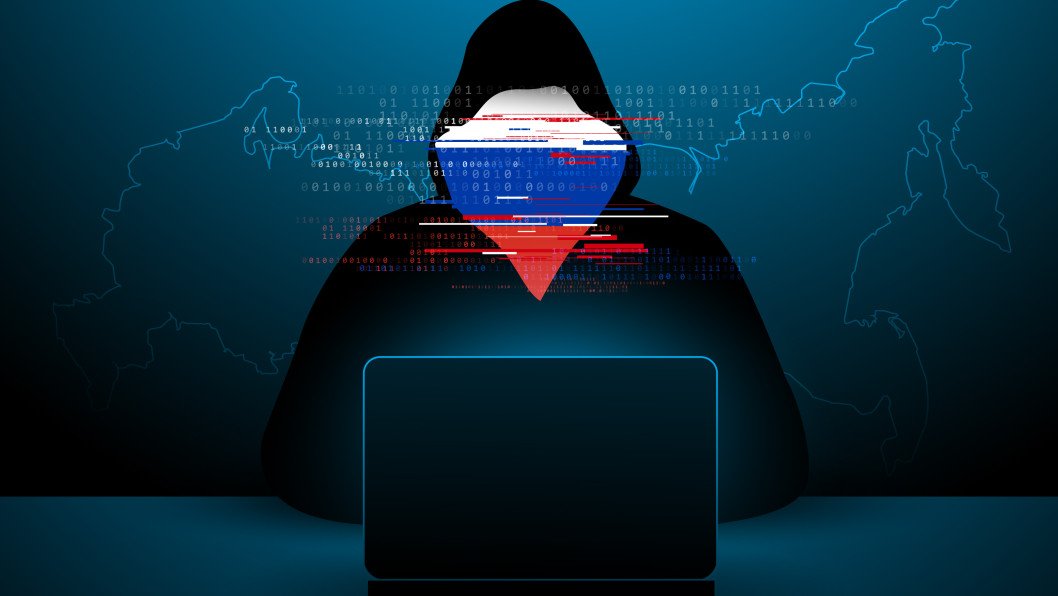
Cyber activity alone may account for a substantial portion of the burden. Cyber-risk firm CyberCube has identified more than 300 Russia-linked attacks against British companies since 2022, although it believes that figure significantly understates the actual number.
Using the UK government’s benchmark of almost $257,400 (£195,000) for a significant cyber incident would put the baseline cost of those attacks at around $77.2 million (£58.5 million)—still less than one-thirtieth of the estimated damage from the Jaguar Land Rover incident alone.
Government-commissioned research estimates total annual cyber losses to British businesses at approximately $19.4 billion (£14.7 billion), equivalent to about 0.5% of GDP. If Russian-linked activity accounted for only 10% of that damage, the annual cost would be about $1.94 billion (£1.47 billion). At 20%, it would rise to roughly $3.88 billion (£2.94 billion).
Potential exposure involving subsea cables adds another estimated $330 million to $660 million (£250 million to £500 million) annually, although the report stresses that this represents potential exposure rather than documented losses. CyberCube also estimates a 5% probability of a hostile state carrying out a single cyberattack that causes one British company roughly $4.36 billion (£3.3 billion) in losses.
A major problem, according to the authors, is that no single government body is assembling all of these costs into one national picture. “Nobody in Government is currently bringing this information together,” the report states.
“Instead, a patchwork quilt of information was found, spread across Whitehall, regulators, security agencies, infrastructure operators, insurers and private companies. Each organisation possesses only part of the picture,” the report notes.
The report argues that Britain already measures the economic impact of other national risks, including flooding and fraud, because governments need to know whether prevention measures are worth the expense. The authors say Russian hostile activity should be treated the same way, while criticizing the common description of attacks as “sub-threshold,” arguing that the language can understate their real-world consequences.
The report recommends annual reporting to Parliament on the economic cost of hostile foreign-state activity, more detailed assessments from the National Cyber Security Centre, a Ministry of Defence methodology for calculating the cost of physical hostile activity, and a national public-awareness campaign focused on foreign-state threats and resilience. None of the recommendations specifically calls for additional government spending.
To illustrate the scale, the authors calculate that $2.64 billion (£2 billion) could cover the starting salaries of roughly 62,000 newly qualified nurses or police constables. At $3.3 billion (£2.5 billion), the equivalent rises to around 78,000 nurses or police officers, or approximately 73,000 teachers.
The report also openly acknowledges its limitations. It was produced largely by a single postdoctoral researcher working within a parliamentary office, without classified intelligence, a dedicated analytical team, or a research budget.
Its estimates rely on publicly available information, parliamentary questions, House of Commons Library material, and industry research, meaning the authors present their figures as conservative rather than definitive.
GCHQ Director Anne Keast-Butler described the underlying threat during the agency’s annual lecture at Bletchley Park in May: “Russia is scaling up its daily hybrid activity against the UK and Europe, stretching from the seabed to cyberspace, relentlessly targeting critical infrastructure, democratic processes, supply chains and public trust.”
For Downie, the question is no longer whether Britain is paying a price for Russian hostile activity, but whether the government is willing to start calculating it systematically. “The challenge now is not proving that the Putin Tax exists but ensuring Britain starts measuring it,” the report says.
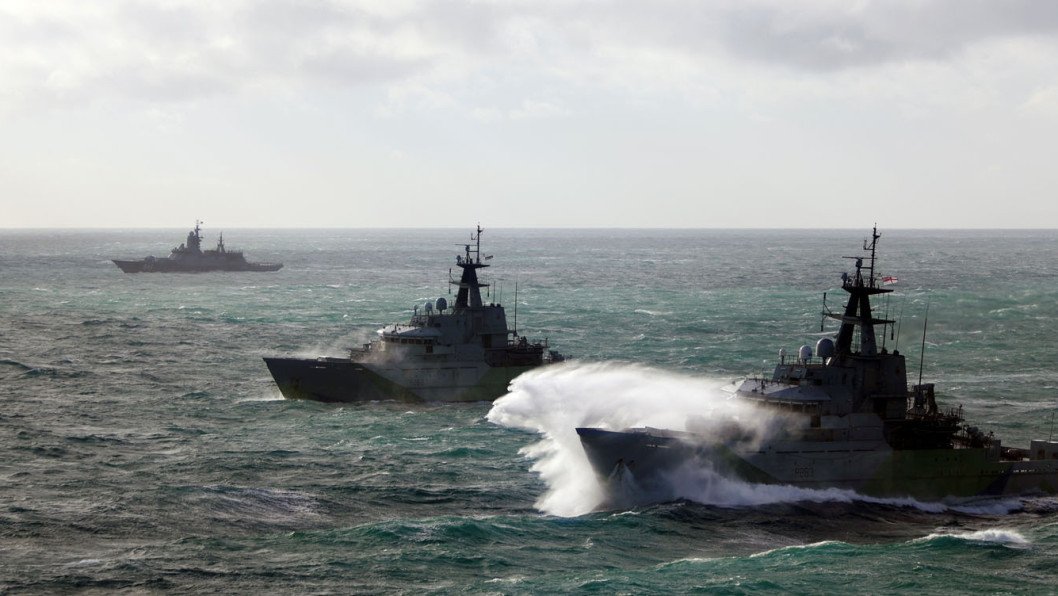
Earlier, reports emerged that British warships and helicopters spent significantly more time tracking Russian naval activity in July as Moscow maintained an elevated presence around UK waters and across the North Atlantic.
Royal Navy patrol ships and aircraft devoted 21 days to monitoring Russian vessels during the month, up 25% from July 2025, according to figures released by the British Navy.
Discuss this article:





-111f0e5095e02c02446ffed57bfb0ab1.jpeg "Photo of Roman Kohanets")

-72b63a4e0c8c475ad81fe3eed3f63729.jpeg "Photo of Cyril Barabaltchouk")