- Category
- World
Chinese “Research” Ships Reach US Arctic Waters. Here’s What We Know
 Prefer U24 Media on Google
- Authors


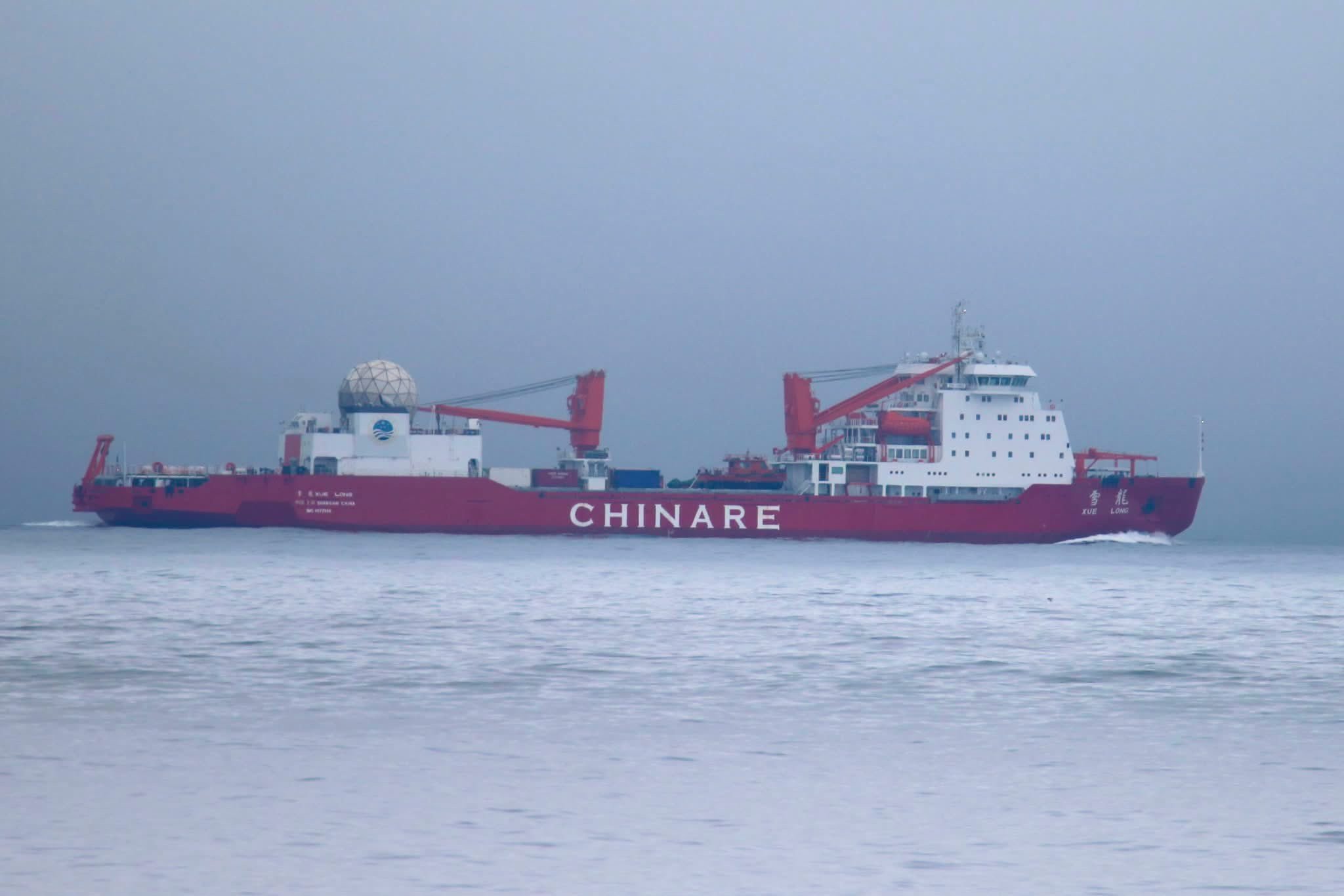
Two Chinese research vessels capable of mapping the seabed transited through the US exclusive economic zone (EEZ) and extended continental shelf in the Bering Sea while en route to the Arctic, prompting monitoring by the US Coast Guard.
We bring you stories from the ground. Your support keeps our team in the field.
According to Defence Blog, the US Coast Guard tracked the Chinese icebreakers Xue Long and Xue Long 2 as they sailed north through waters off Alaska toward the Arctic. The service deployed the Legend-class national security cutter USCGC Munro as part of Operation Frontier Sentinel, an ongoing mission focused on monitoring foreign activity in the US Arctic.
Securing the Arctic Frontier
— U.S. Coast Guard (@USCG) July 18, 2026
This week, @USCG responded to Chinese research vessels Xue Long and Xue Long 2 as they transited north to the Arctic.
Through Operation Frontier Sentinel, Coast Guard Cutter Munro actively monitored these vessels during their transit, ensuring… pic.twitter.com/J4akO9uPam
The transit marked the first time this year that Chinese vessels were tracked passing through both the US exclusive economic zone and the country’s extended continental shelf in the Bering Sea, Defence Blog reported.
While foreign vessels are permitted to transit through another country’s EEZ under international maritime law, conducting marine scientific research requires prior consent from the coastal state, and any scientific data collected must be shared with that country.
The US Coast Guard stressed that the vessels' passage itself did not violate international law. However, officials noted that ships such as Xue Long and Xue Long 2 carry equipment capable of collecting detailed oceanographic data, including seabed topography, water temperature, and salinity.
Such information can support scientific research but is also valuable for military purposes, including submarine navigation, acoustic warfare, and mapping undersea infrastructure such as communication cables.
Rear Adm. Bob Little, commander of the US Coast Guard Arctic District, said the United States was coordinating its response with multiple agencies and partners.
“Alongside the Department of War, the Department of State, and our international partners, we are actively responding to competitor activities across an increasingly contested Arctic.”
According to Defence Blog, Beijing has steadily expanded its Arctic research capabilities and icebreaker fleet as part of its “Polar Silk Road” strategy, seeking greater access to Arctic shipping routes and scientific data despite not being an Arctic state.
Earlier this year, Reuters reported that China had significantly expanded its global seabed mapping program, with research vessels operating near US military facilities around Guam, Hawaii, Taiwan, and in the Indian Ocean. Experts said the oceanographic data collected could support future submarine operations and other military planning.
Discuss this article:
-9a7b3a98ed5c506e0b77a6663f5727c5.png)


-c439b7bd9030ecf9d5a4287dc361ba31.jpg "Photo of Katherina Popilnichenko")