- Category
- World
Chinese Telecoms and Iranian Trade Fortify Territories Temporarily Occupied by Russia
 Prefer U24 Media on Google
- Authors

-72b63a4e0c8c475ad81fe3eed3f63729.jpeg "Photo of Cyril Barabaltchouk")
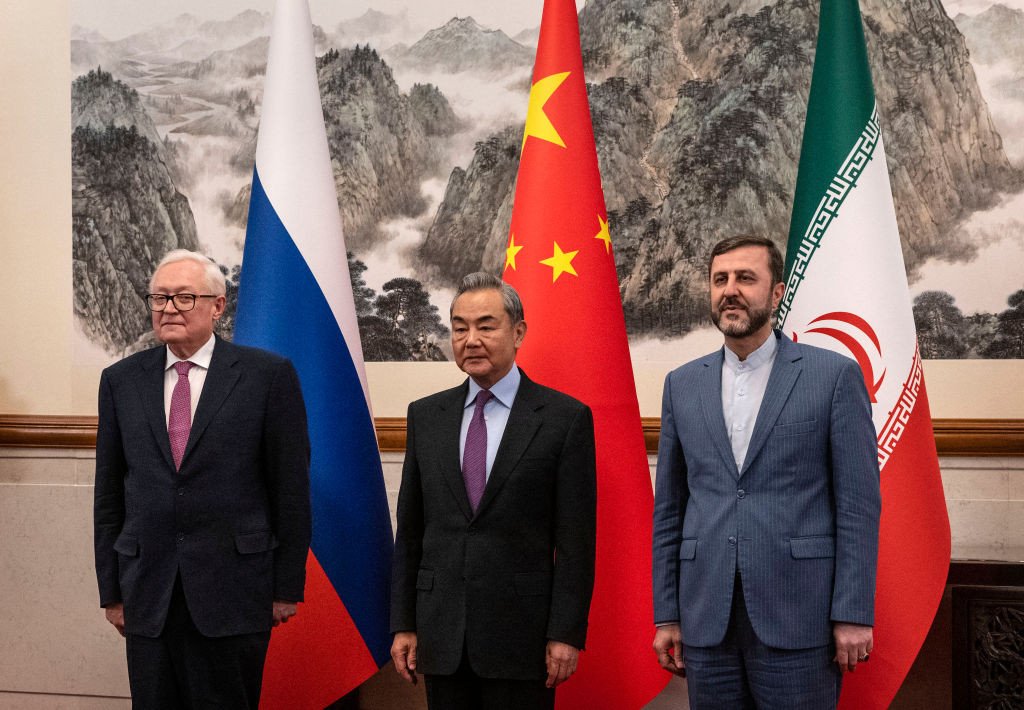
China and Iran are assisting Russia in establishing telecommunications networks, financial systems, and trade operations within the temporarily occupied territories of Ukraine, according to a newly published investigation by the Eastern Human Rights Group, summarized by Babel on April 29.
The investigation, initiated in 2025 by human rights defender Pavlo Lysianskyi and completed by his team after his death last November, relies on insider data, interviews with local businesses, and an analysis of logistics and shadow financial flows.
We bring you stories from the ground. Your support keeps our team in the field.
The findings indicate that the administrative survival of temporarily occupied Ukrainian cities such as Donetsk, Luhansk, Melitopol, and Mariupol increasingly depends on Chinese technology and physical Chinese yuan.
Digital annexation and industrial maintenance
Chinese technology forms the backbone of communications in the temporarily occupied territories. When Russian forces occupy new areas, they systematically disconnect them from Ukrainian networks, using the company Miranda-Media to establish a new digital infrastructure. Huawei has emerged as a key technological partner in this process, supplying servers, antennas, and residential routers.
This equipment has facilitated the deployment of approximately 6,000 mobile base stations across the occupied southern and eastern regions, according to Babel.
In the industrial sector, Chinese firms are providing critical maintenance. At the Karansky quarry in the Donetsk region, which supplies crushed stone for Russian road and housing construction in the occupied areas, Chinese companies installed the equipment and continue to manage its operation. To avoid international sanctions, these firms do not officially purchase or own the quarry; they strictly provide technical support and parts, without which production would halt.
-19546070e918d05de6d86daa5493db8d.png)
Financial control via the yuan
To bypass global financial restrictions, the Chinese yuan has become the primary currency for international transactions in these regions. The Russian Promsvyazbank, which controls over 70% of local financial operations, has opened 79 yuan sales points by the end of 2025. These points process an average of 12.3 million yuan ($1.79 million) per day, enabling Russian authorities to purchase goods and make international payments, the Eastern Human Rights Group reported.
Furthermore, since February 1, 2025, entrepreneurs in the occupied territories have been required to install online cash registers, nearly all of which are of Chinese origin. These terminals transmit transaction data directly to the tax service. This technology allows occupying authorities to closely monitor local financial flows.
Cultural integration and iranian trade expansion
The integration efforts also extend into the cultural and educational sectors. In Luhansk, initiatives are underway to open a private school based on Russian standards for approximately 300 Chinese students, alongside a Center for the Study of Chinese Culture aimed at residents. Additionally, Chinese bloggers and journalists operate freely in these areas, broadcasting narratives aligned with Russian state media to bypass official Beijing endorsement, according to the Babel summary.
Simultaneously, Iran has emerged as an official market for resources extracted from the occupied territories. The company Trade House Donskie Ugli, managing ten mines in Luhansk, listed Iran as an export destination for coal in 2025. Agricultural trade is also expanding, with a fish feed manufacturer in the Zaporizhzhia region receiving approval from Russian regulators to export its first batch to Iran after a year of documentation processing.
At the May 2025 KazanForum , the Iranian firm RI-Group expressed its intent to invest in construction and agriculture in the Donetsk region. By 2026, cooperation with Iran transitioned into a formalized economic strategy, featuring the scheduled participation of occupation structures in international events like the St. Petersburg International Economic Forum, Babel noted.
These economic and infrastructure projects in the temporarily occupied territories parallel Moscow’s reliance on foreign intermediaries to supply its defense sector. According to an investigation, the recent ExpoElectronica exhibition in Moscow functioned as a hub for Chinese and Russian firms, facilitating the import of restricted Western microchips for sanctioned defense contractors.
Simultaneously, Ukraine’s Main Directorate of Intelligence reported that over 100 companies—roughly a third of which remain unsanctioned—are involved in producing Russia’s Su-57 fighter jets. These supply chains demonstrate how Russia continues to secure restricted technology and materials for both its military operations and its administration of the temporarily occupied regions.
Discuss this article:




-9ac2babc22fb5599acef753ff4c50139.jpg "KN-30 ballistic missile launch.")
